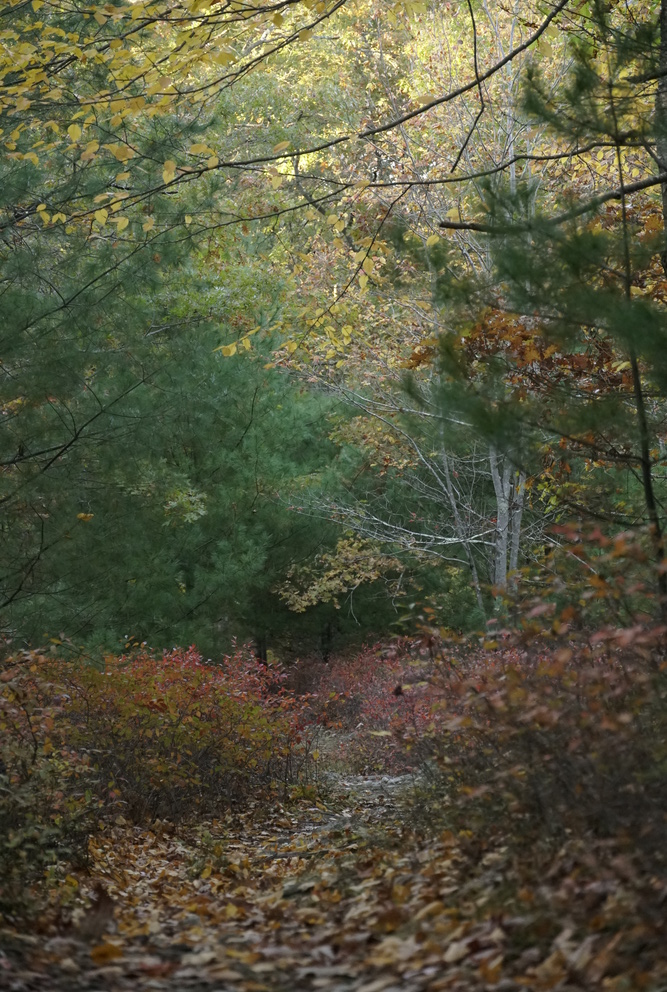
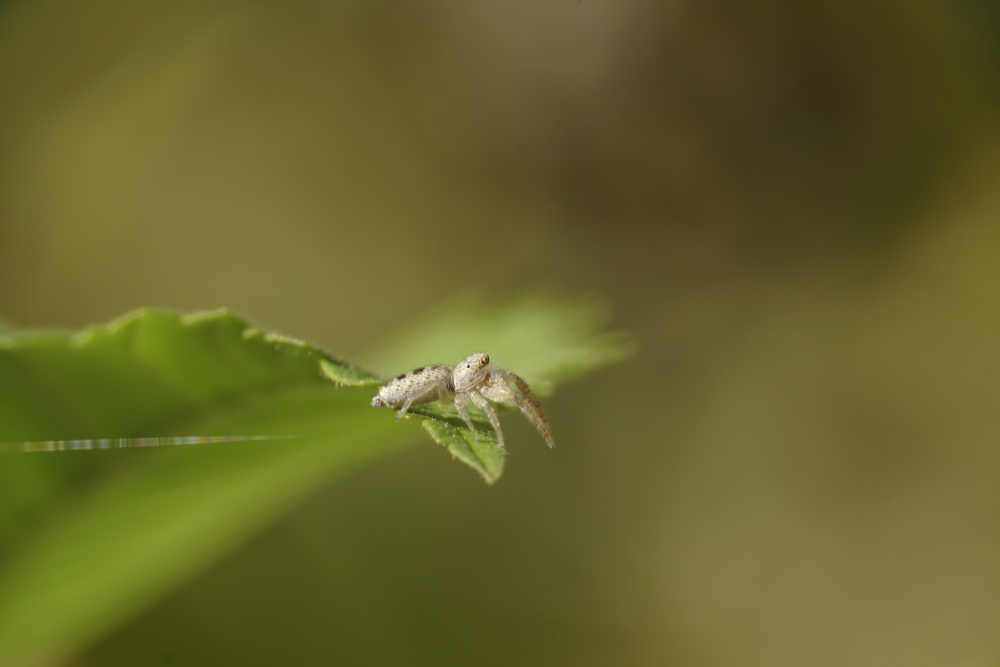
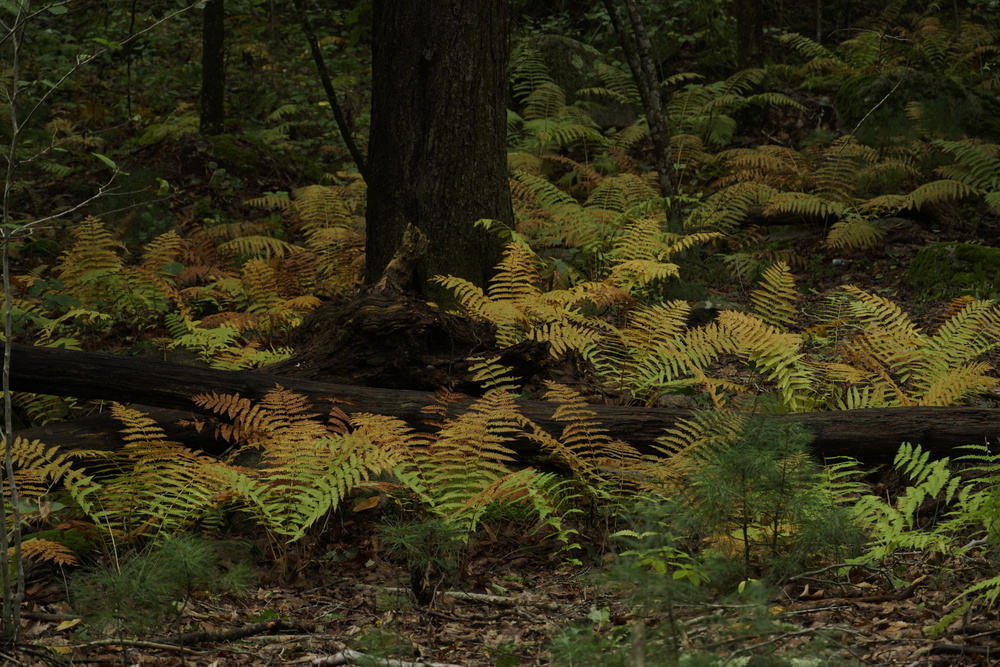
I’ve never been on these trails before! What a great place to preserve.
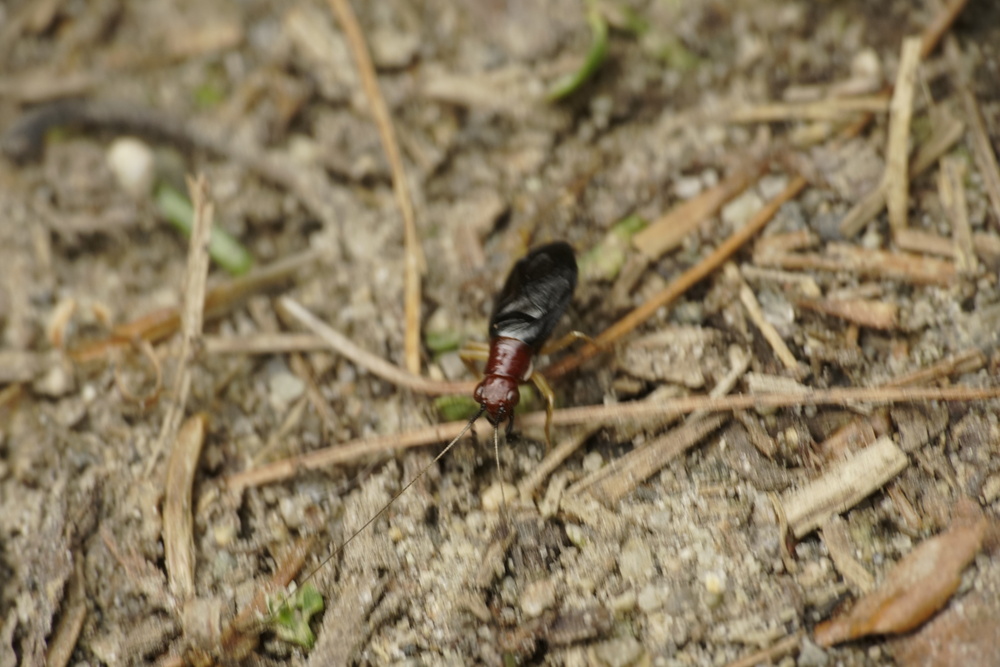
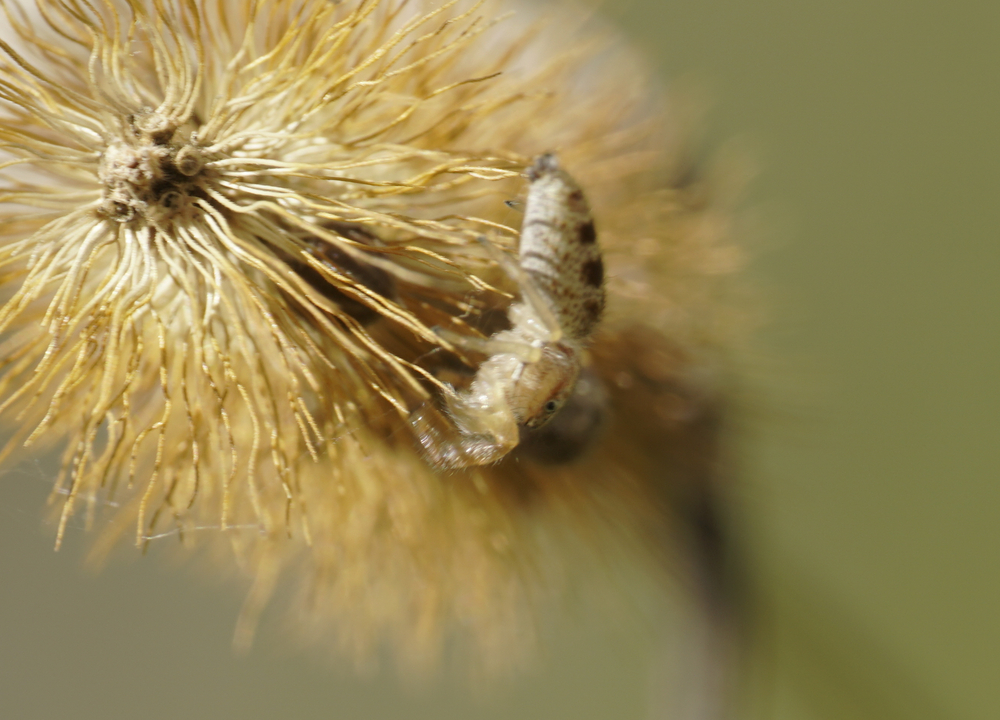
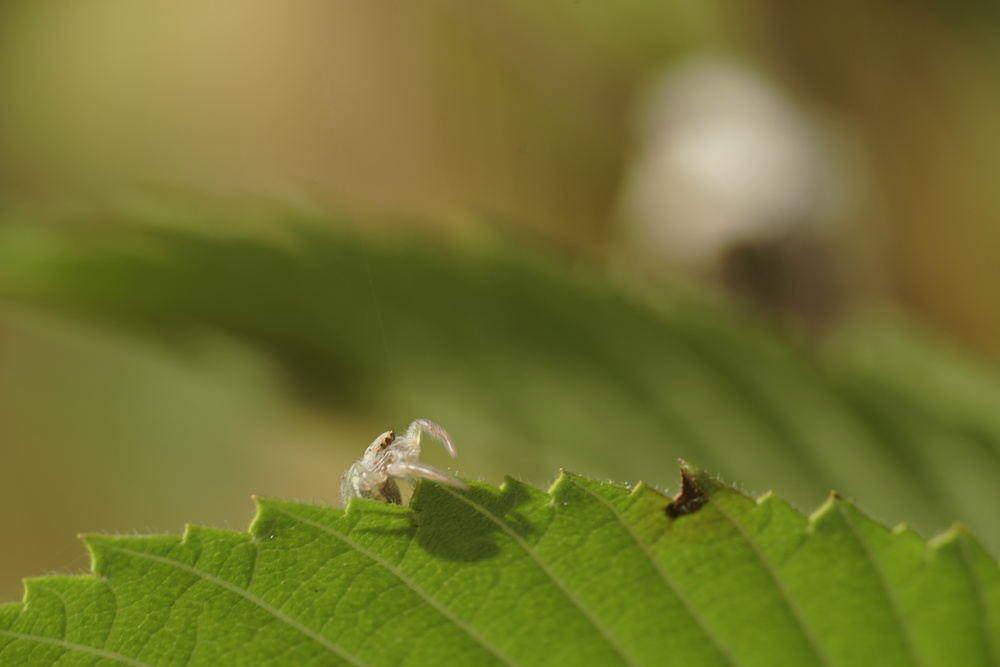
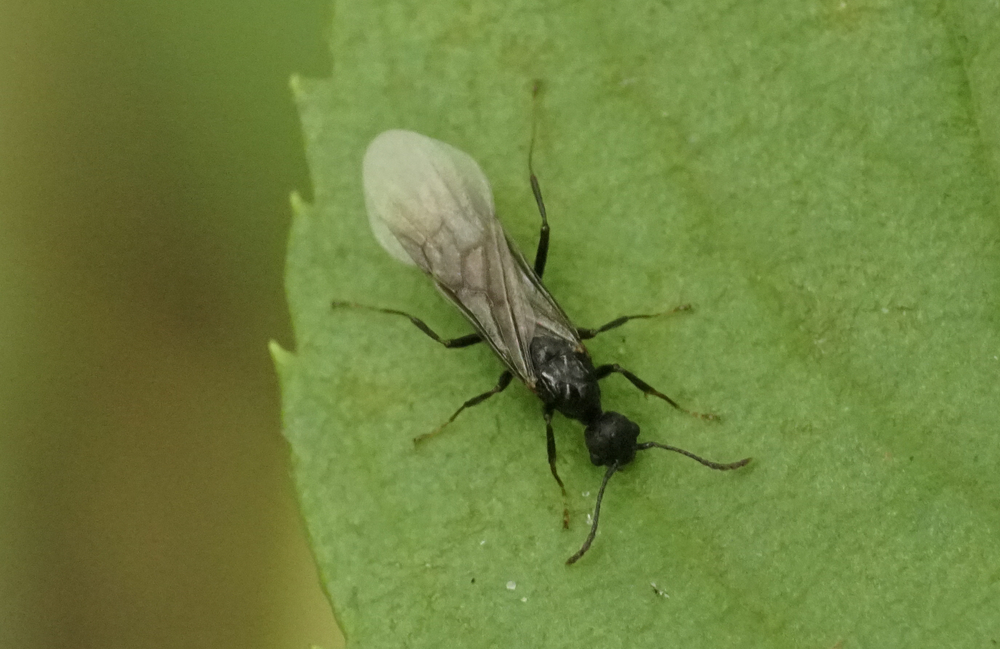
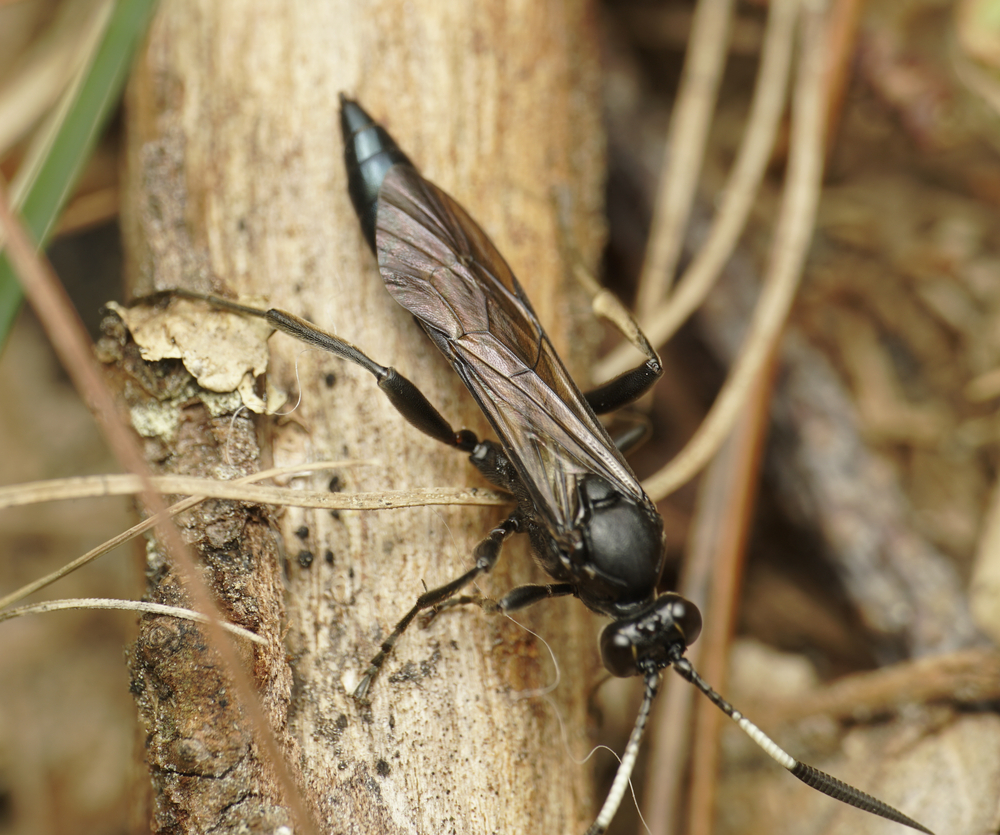
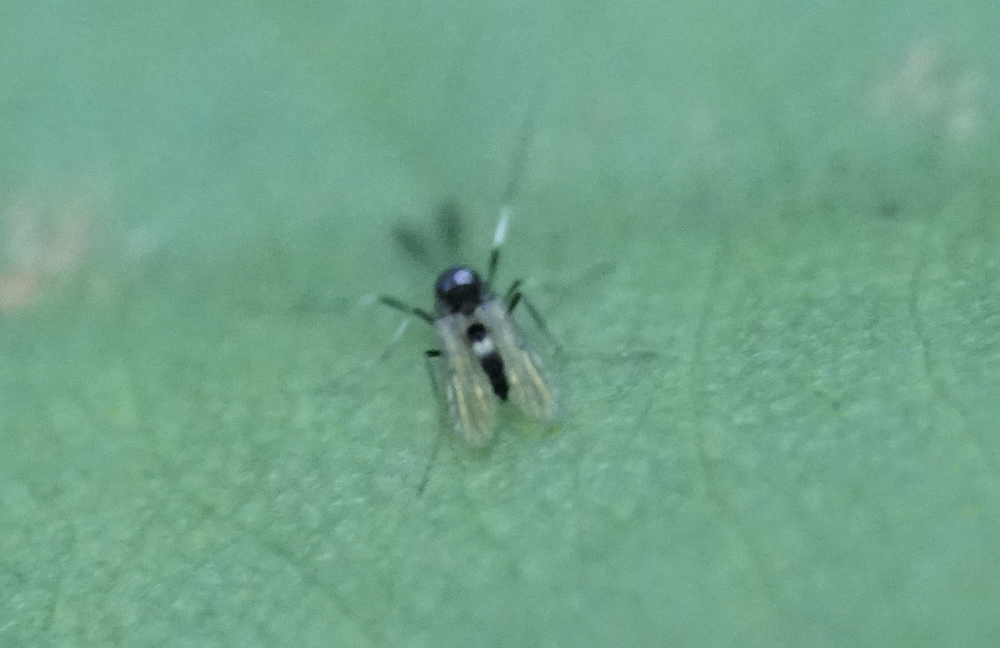
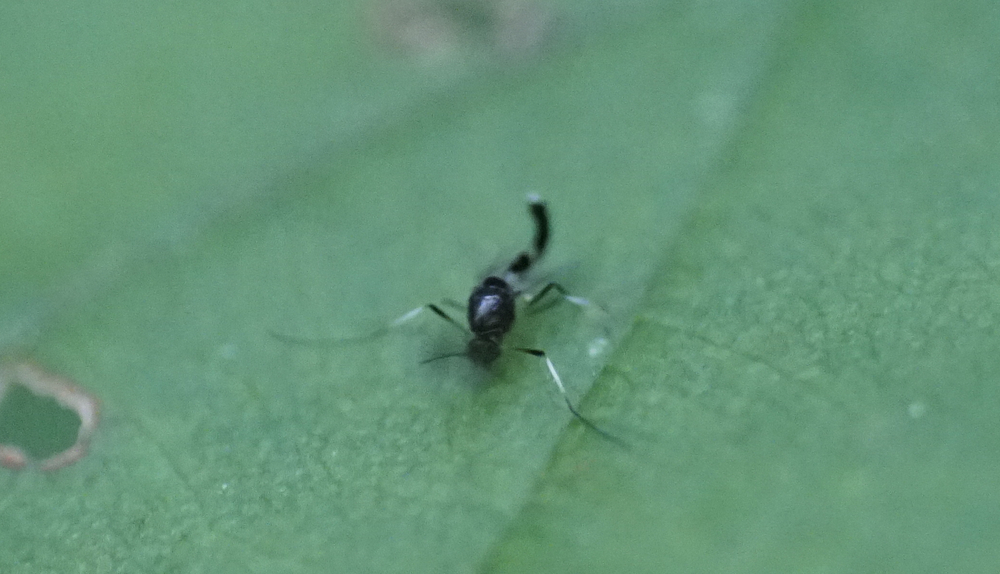
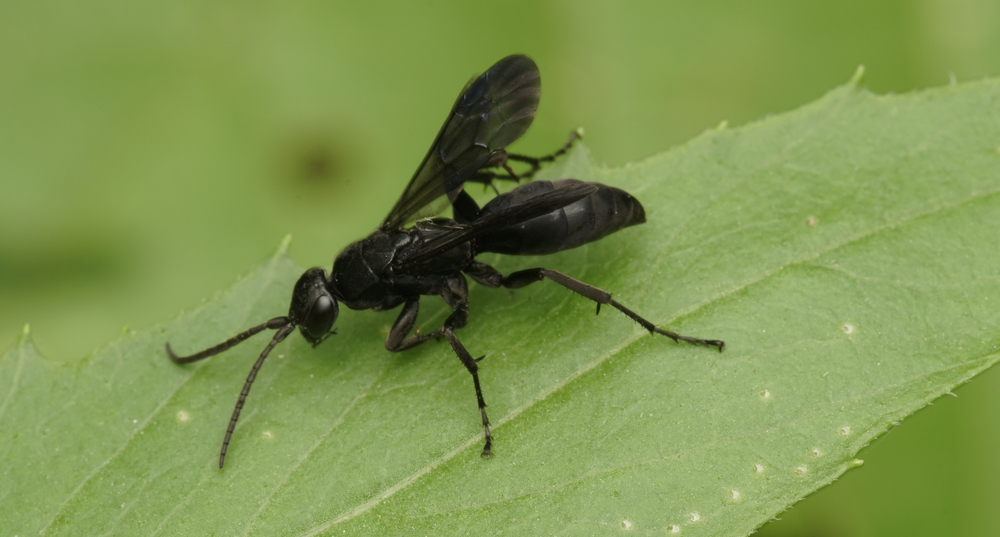
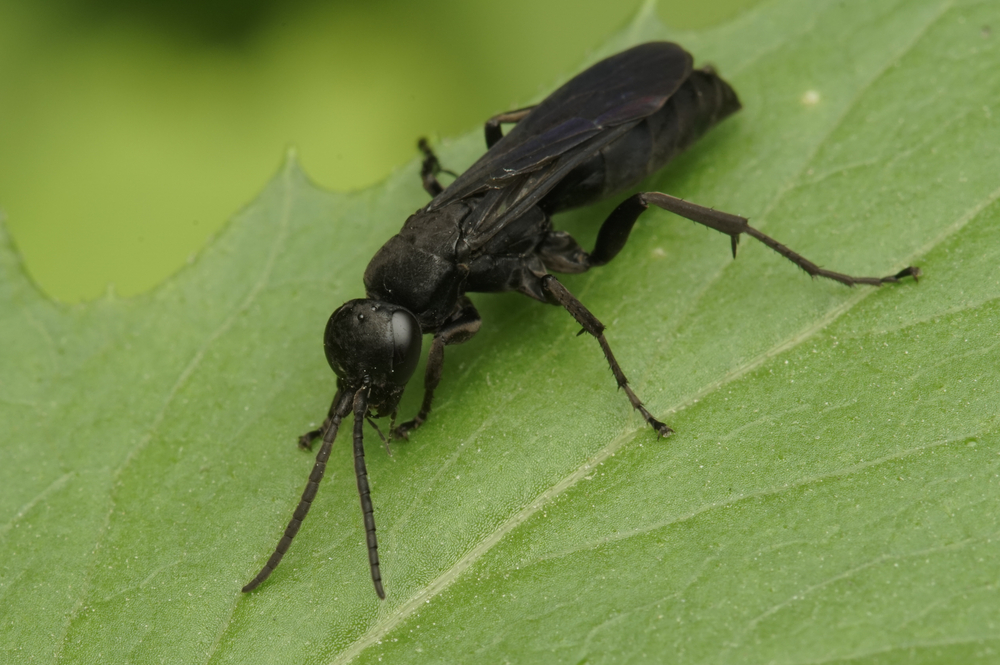
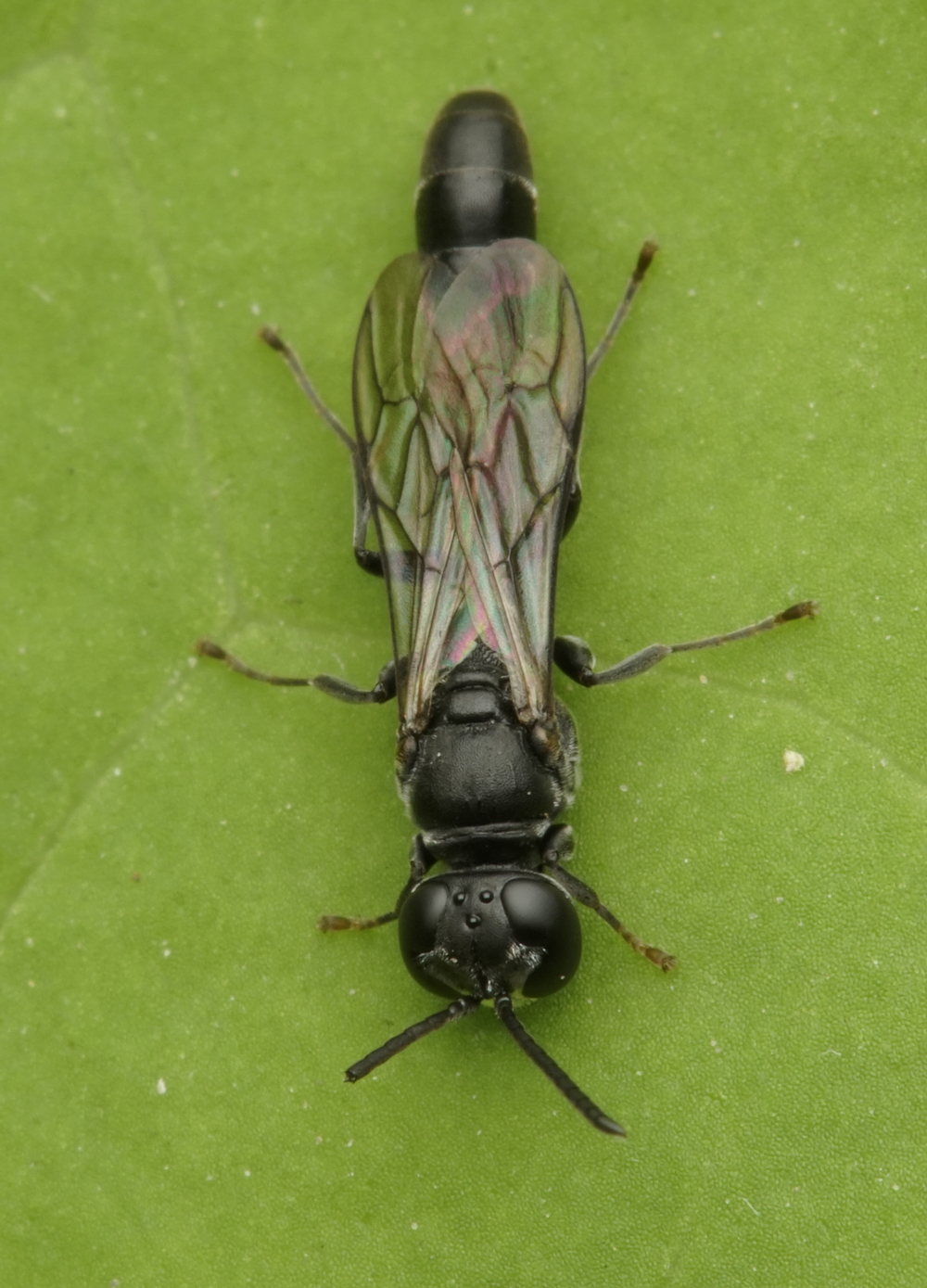
Some views of the ensign wasp (Evaniidae) that I found. They are parasitoids on cockroach eggs — except, we know almost nothing about nearly every species in this family, so maybe a lot of them are not?
I almost never see multiple Evaniids hanging out for such a long time on a bush. Frustratingly, I only realized later that my camera was set on f/3 or so, which is why my photos were so tough to take and turned out so bad.
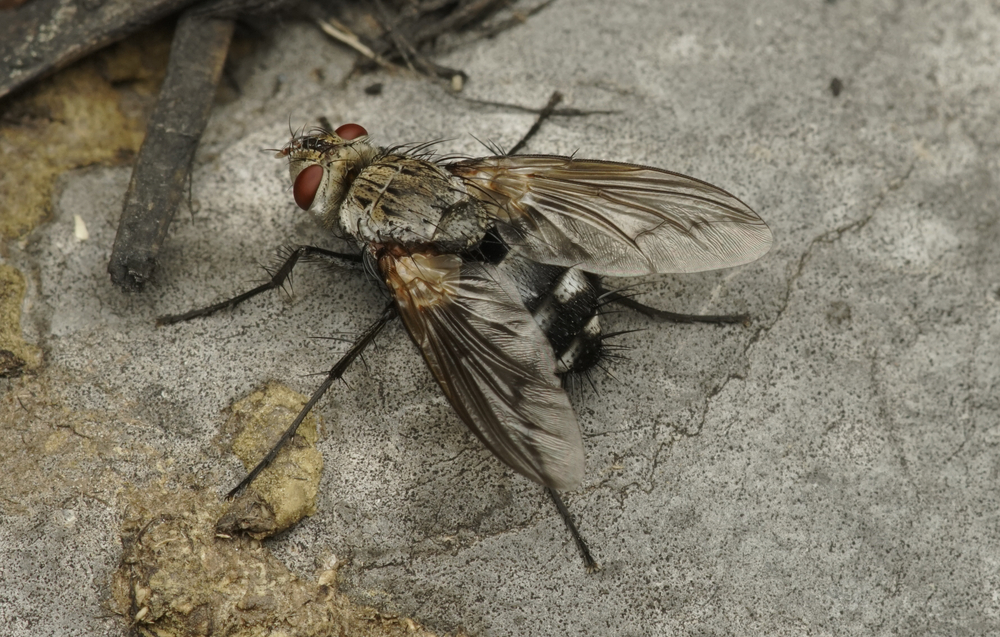
“Three species of Dryomyza sensu lato are found in eastern USA:
Dryomyza anilis, the common species with strongest wing markings and the anterior margin of the frons covering the lunule
Dryope decrepita (formerly Dryomyza flaveola), with weaker or absent wing markings and the lunule exposed
Dryomyza simplex, the only eastern species without prescutellar acrostichal bristles
All of our Dryomyza sensu lato are keyed in Steyksal (1957). Note that Nearctic D. flaveola are now Dryope decrepita and D. bergi is now Pseudoneuroctena senilis.”
Based on this, based on the list of Dryomyza species reported and identified in Massachusetts, this seems to plausibly be Dryomyza anilis?
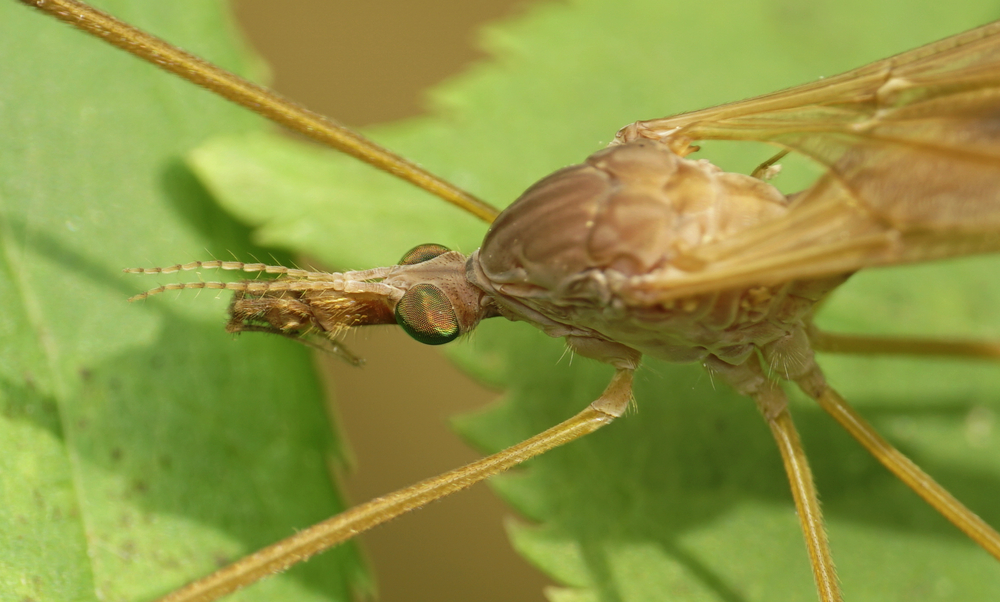
Empididae, dance flies? BugGuide says Empidoidea is correct, at least.
The long legged flies Dolichopodidae are very common but always beautiful. Presumably Condylostylus.
Hymenoptera
I think this is Ichneumonidae –> Pimplinae
Lepidoptera
Crambus
Coleoptera
Margined carrion beetle, Oiceoptoma noveboracense
Lucidota atra, black firefly
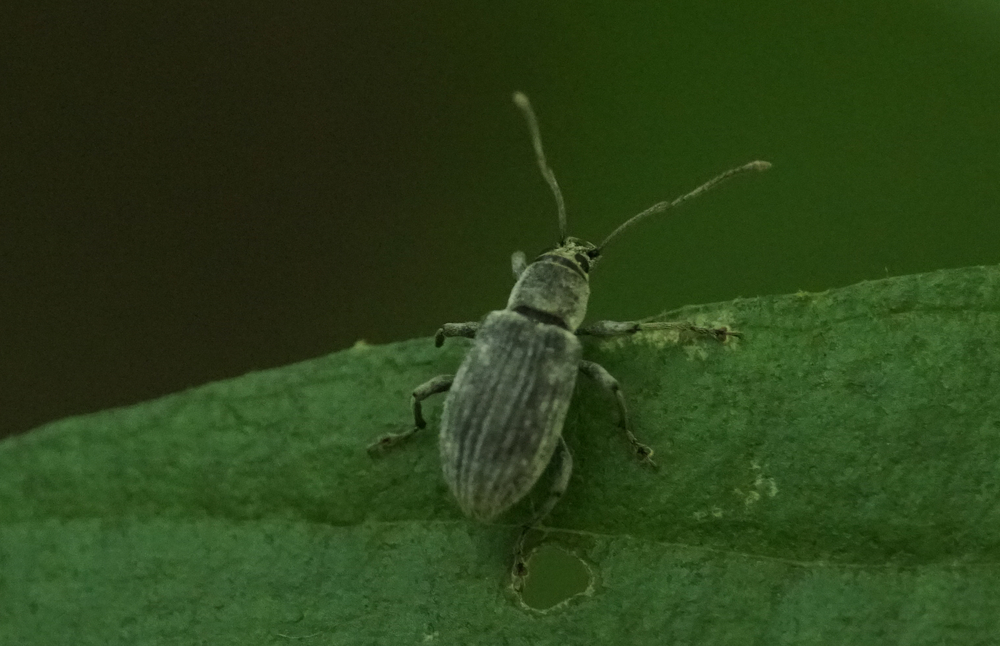
Apparently family Throscidae, “small false click beetles”. I can vouch for the smallness and that it looks like a click beetle.
I think Eropterus trilineatus, in Lycidae:
Photinus in Lampyridae, “rover fireflies”.
Odonata
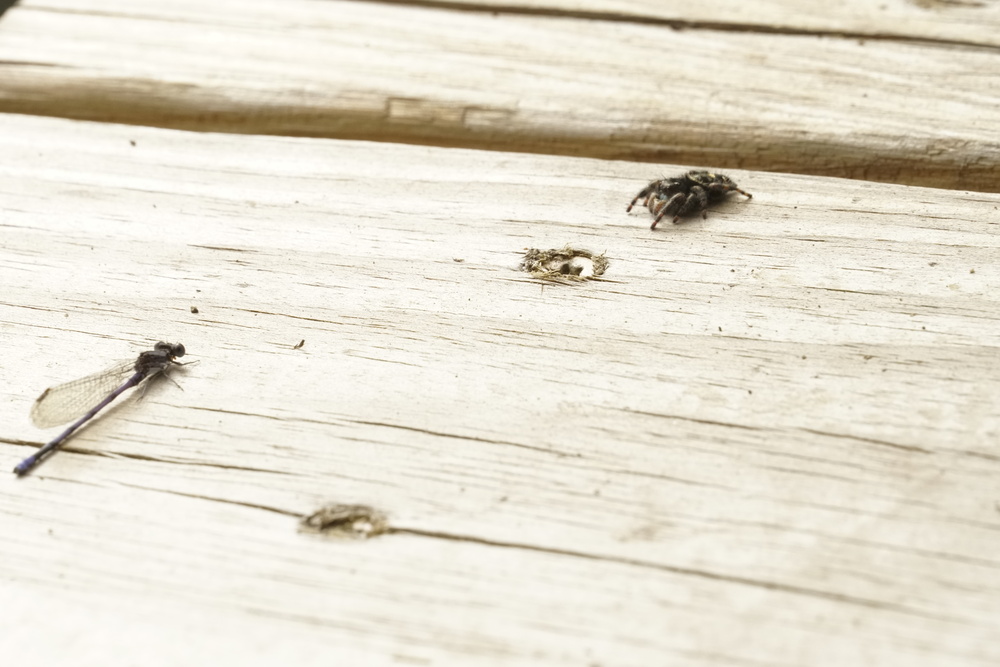
Male fragile forktail?
Bugguide: “Pale shoulder stripes resemble exclamation points—true of both sexes(1).
Males are yellow, yellow-green, or green”
Exuvium of dragonfly nymph:
Spiders
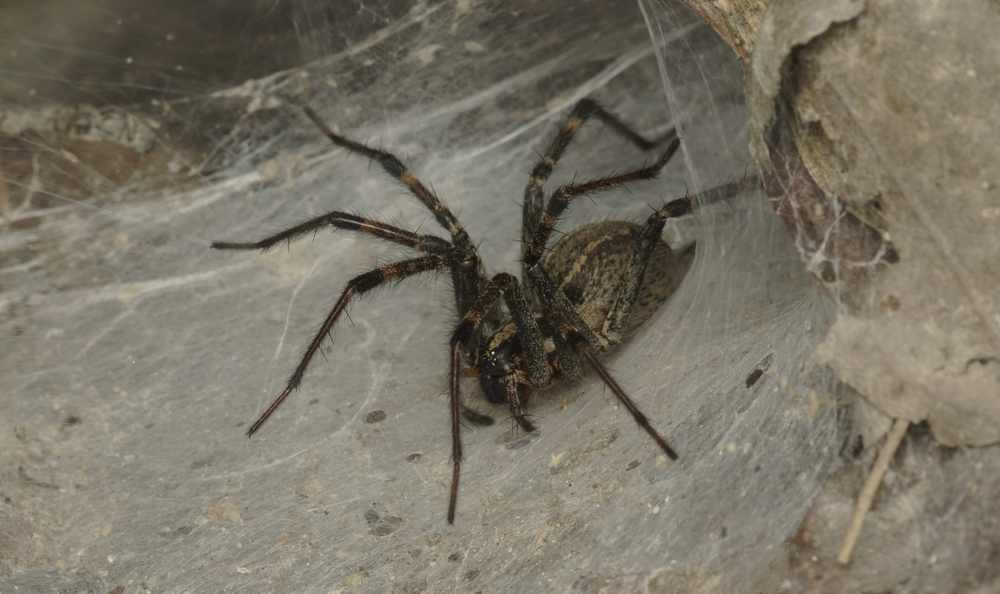
Agelenenopsis.
I was so damn excited to see this Phidippus clarus. Such an exquisite Salticidae.
Check out her green chelicerae
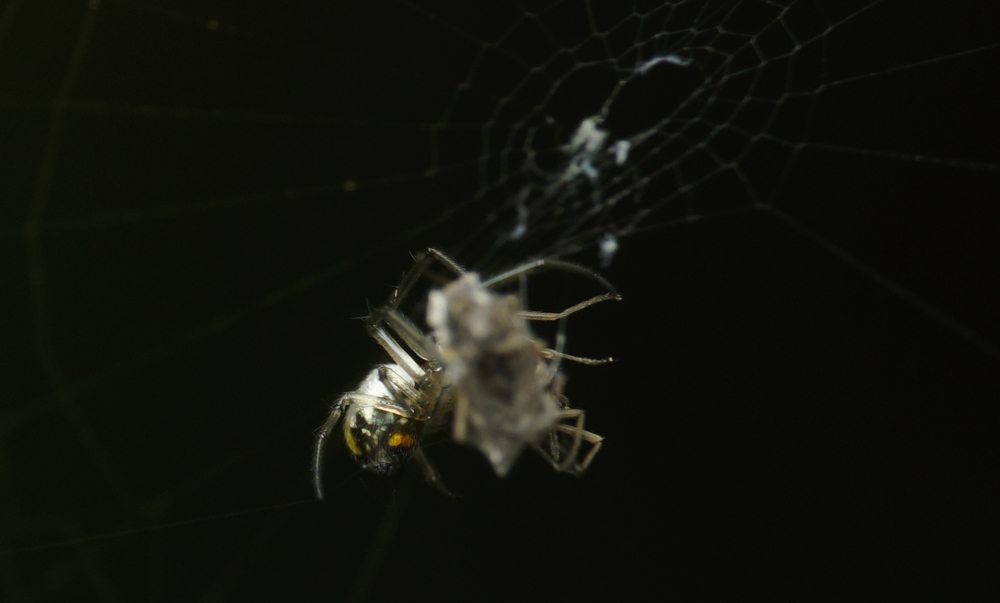
I really wish I had taken the time to get better photos. This spider was in an orb web, but was clearly not an orb weaver. Perhaps Faiditus, but that would be a very aggressive/optimistic determination. The best I can guess is that it’s in Theridiidae, somewhere in the Argyrodes/Faiditus/Neospintharus/Rhomphaea group.
But definitely a kleptoparasite! They steal food from other spiders’ webs.
If this can be validated as Faiditus, it would be the first report in New England for this species, according to BugGuide and iNaturalist.
Diplopoda
iNaturalist says Oxidus, a member of the family Paradoxosomatidae, “paradoxical keeled millipedes”, which is a very interesting name.
Archaeognatha — or Microcoryphia?
iNaturalist calls it Archaeognatha, BugGuide prefers Microcoryphia. It’s a bristletail either way.
Slime molds
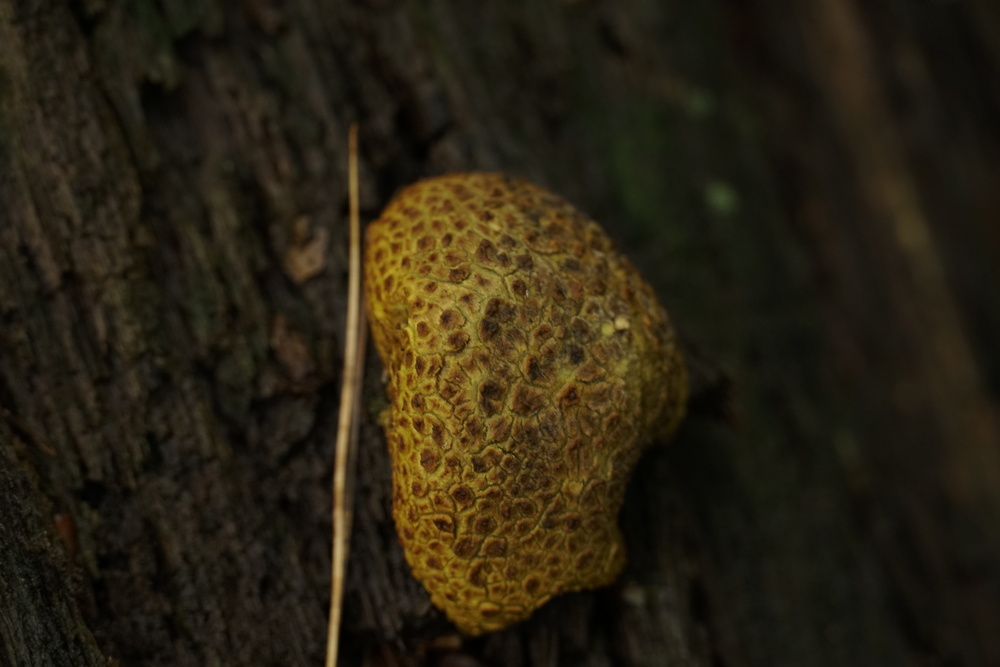
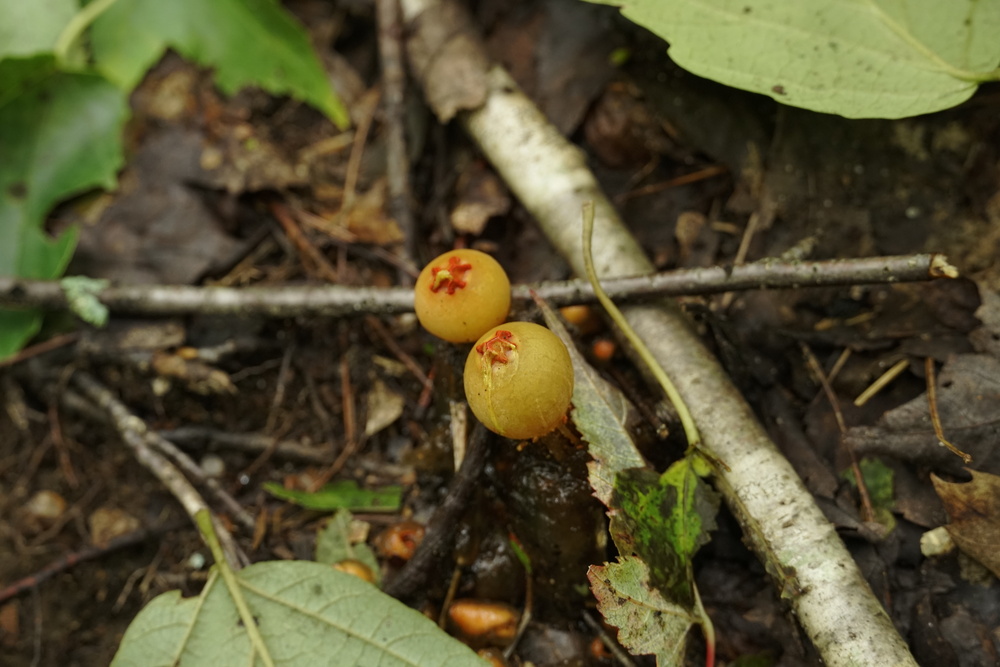
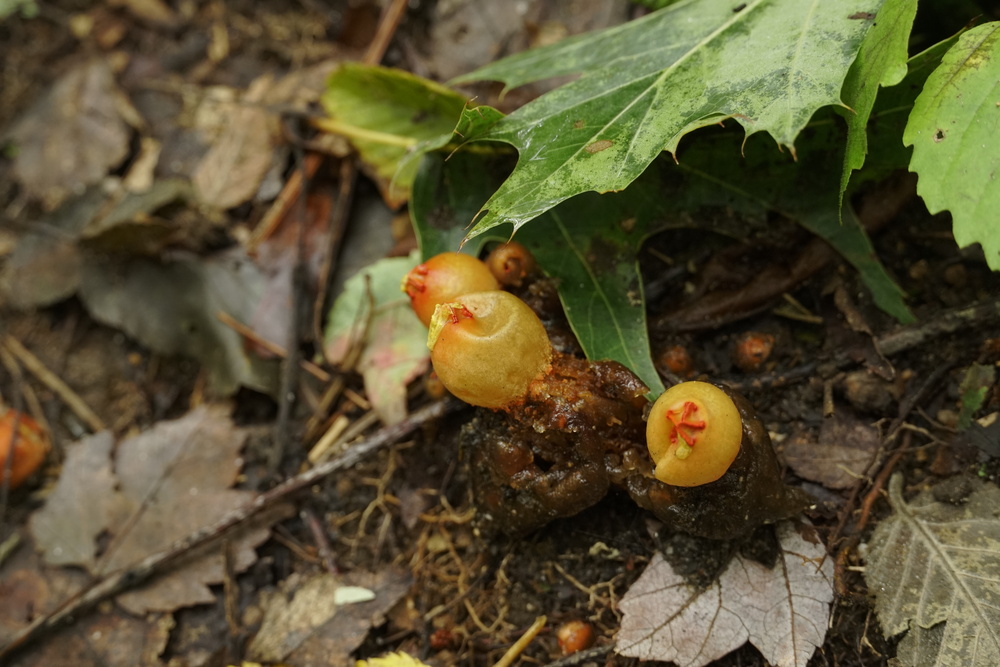
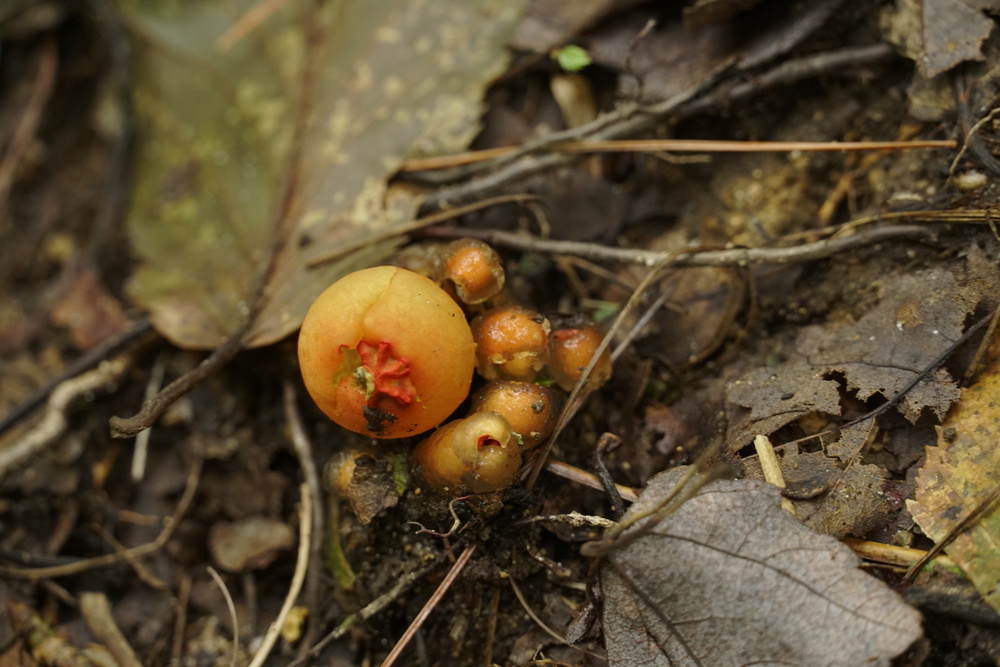
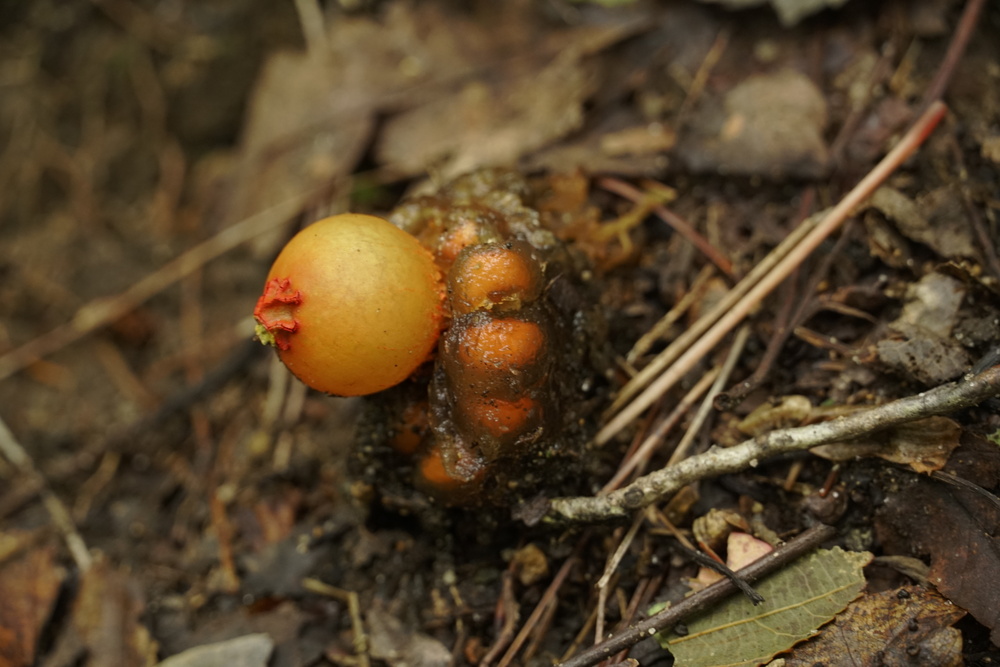
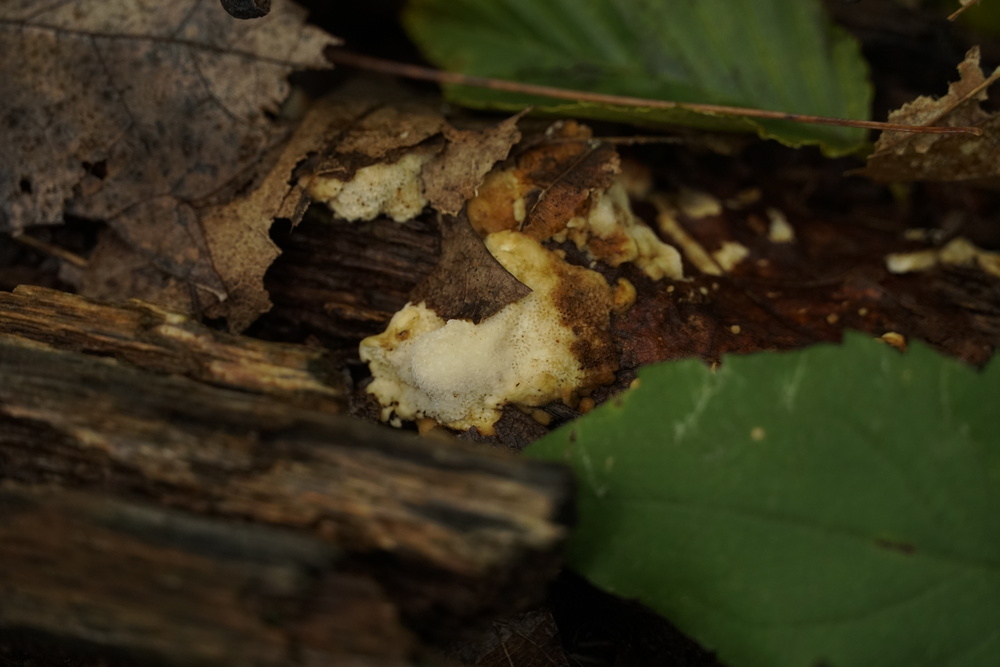
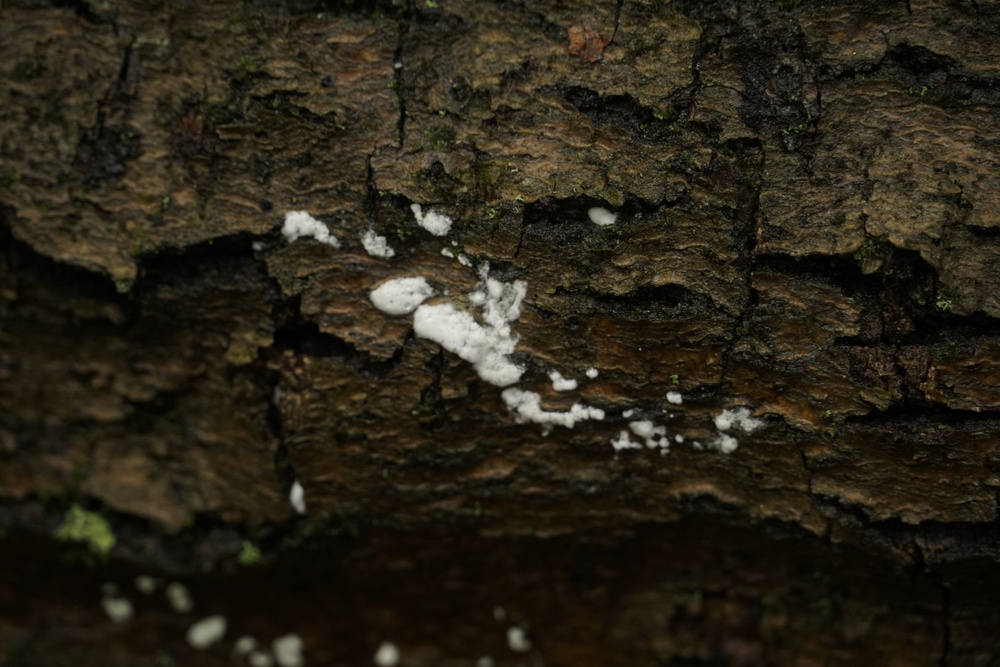
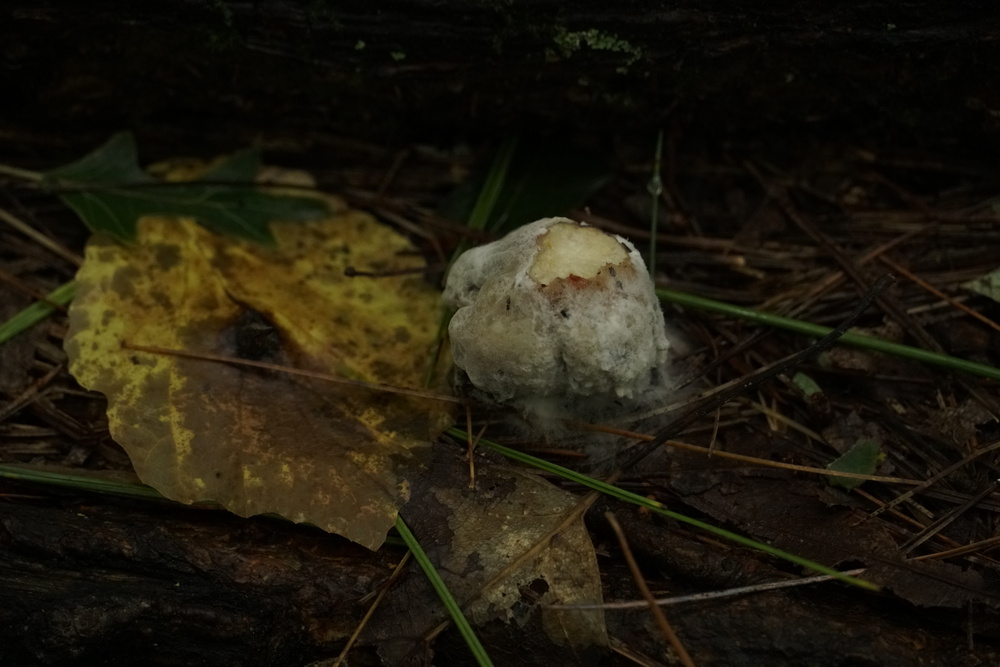
There’s no single taxon that corresponds to slime molds. I had never seen a confirmed slime mold before today, and confirming one by myself would involve ruling out every single fungus in existence, which is well beyond my abilities. So having Jef find me two was an absolute joy.
Slime molds are some of the interesting creatures on earth. They are related to amoebae. They live much of their lives as a, well, slime. In some of them, the cell walls dissolve and they become a multi-nucleate mass.
At some point, the different constituents in the slime can decide that it’s time to differentiate. Some of them develop into fruiting bodies and are able to reproduce; how is this decided, I’m not sure.
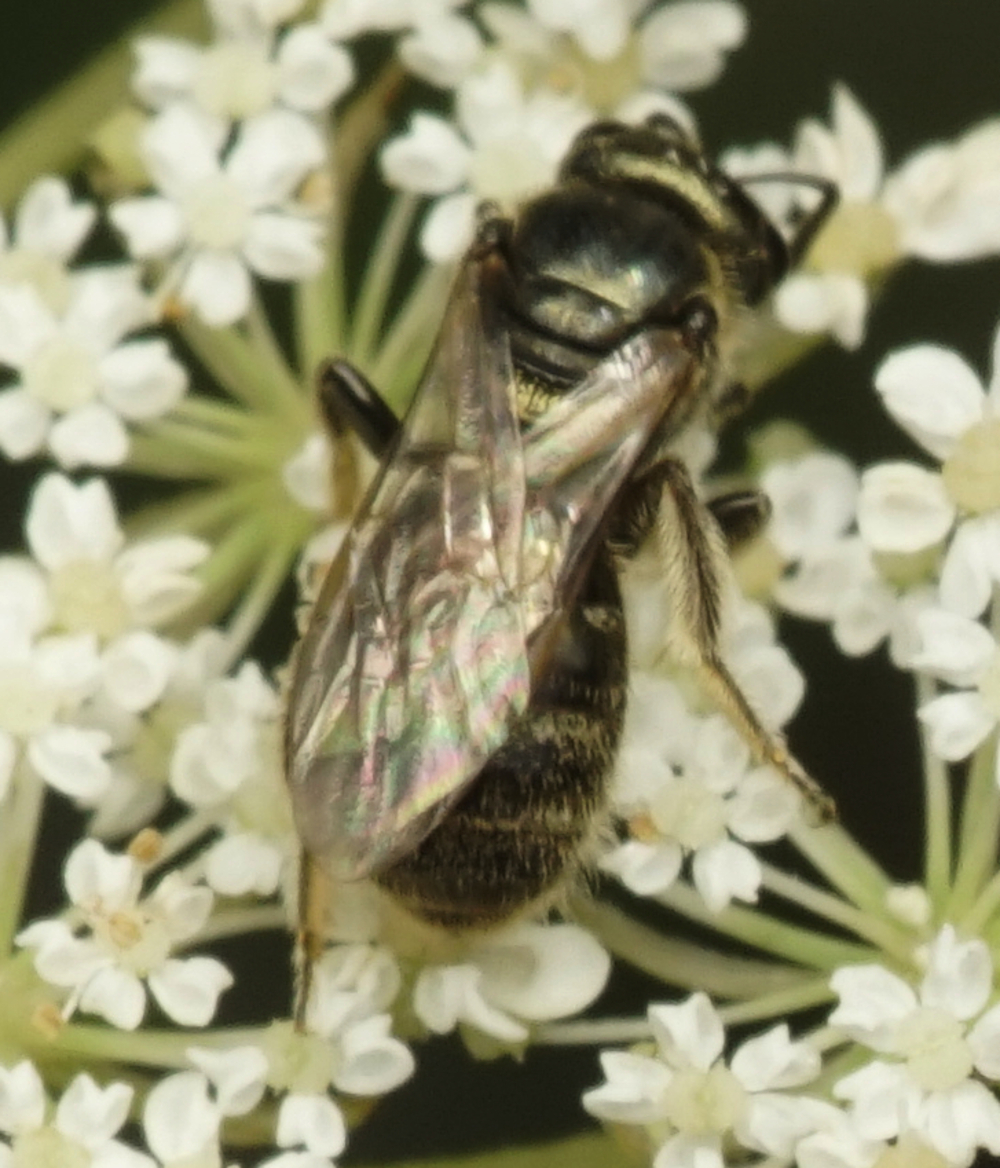
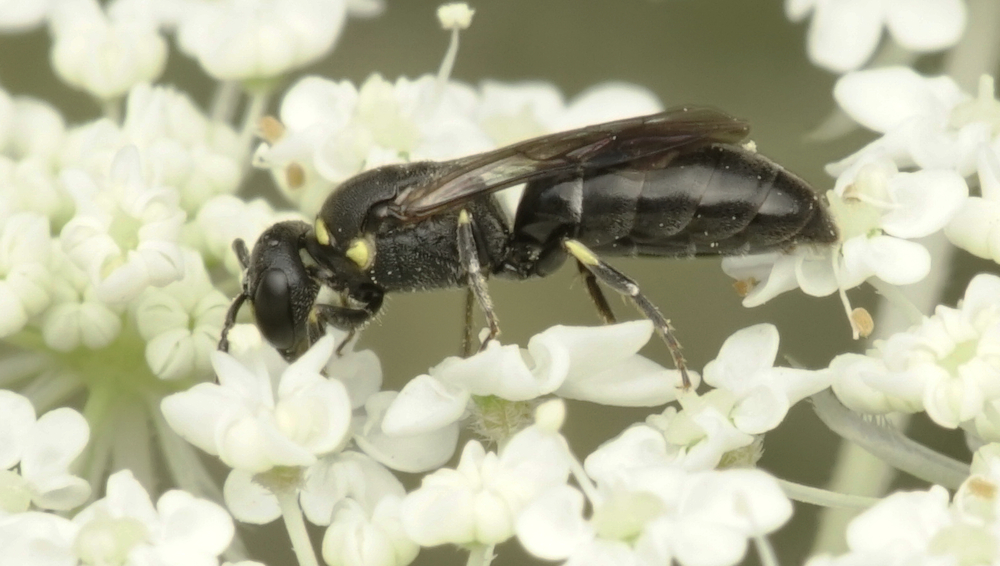
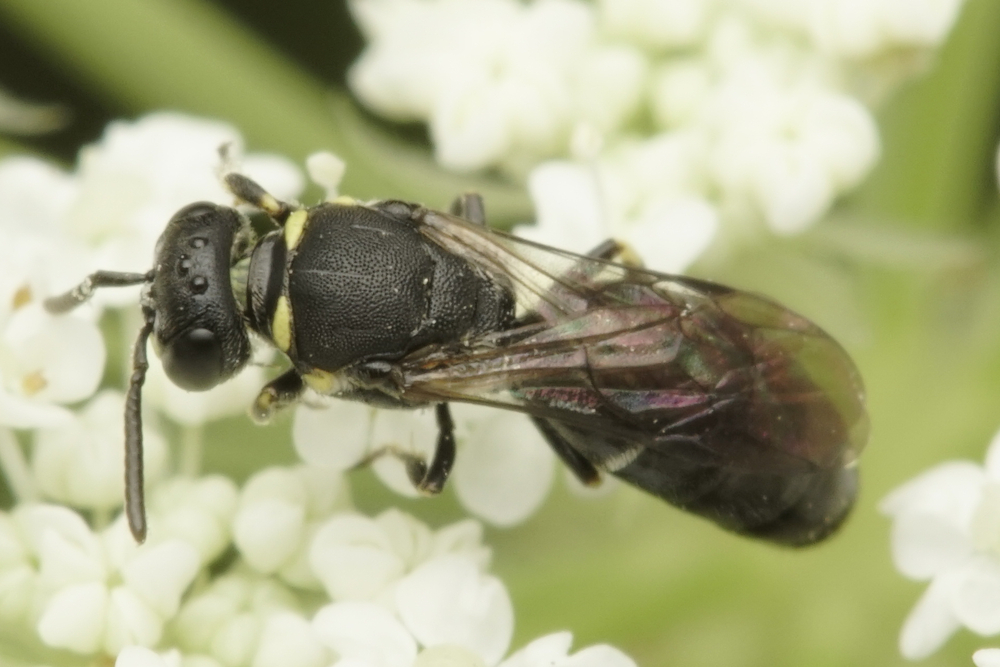
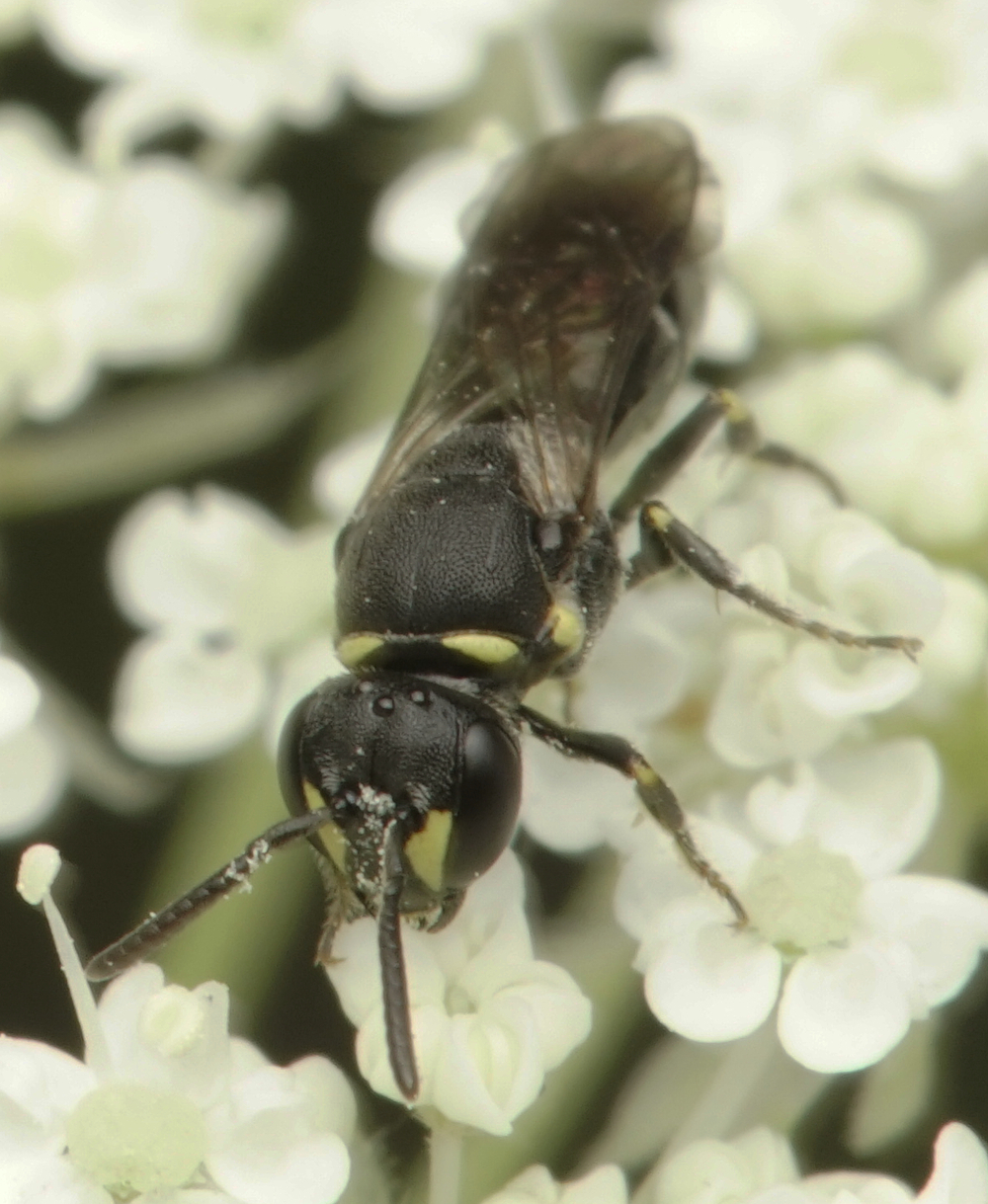
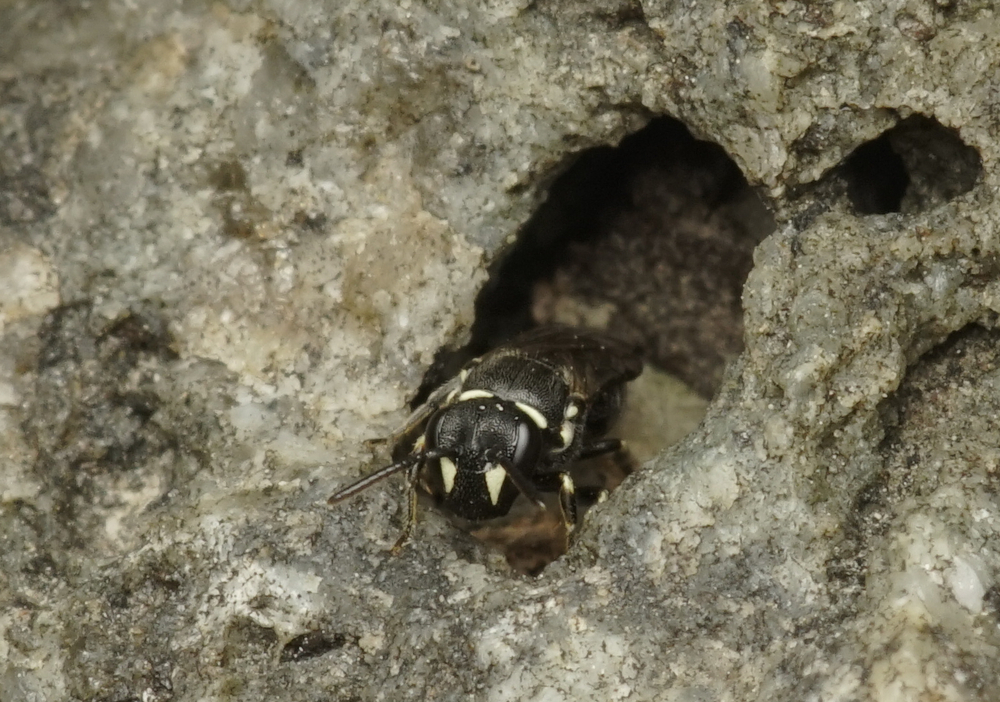
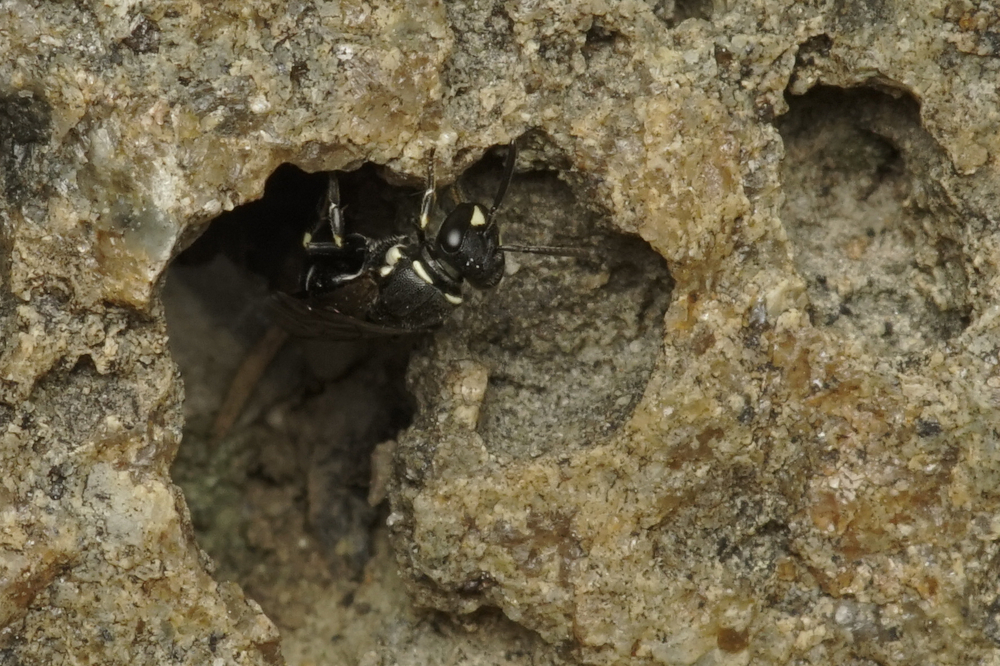
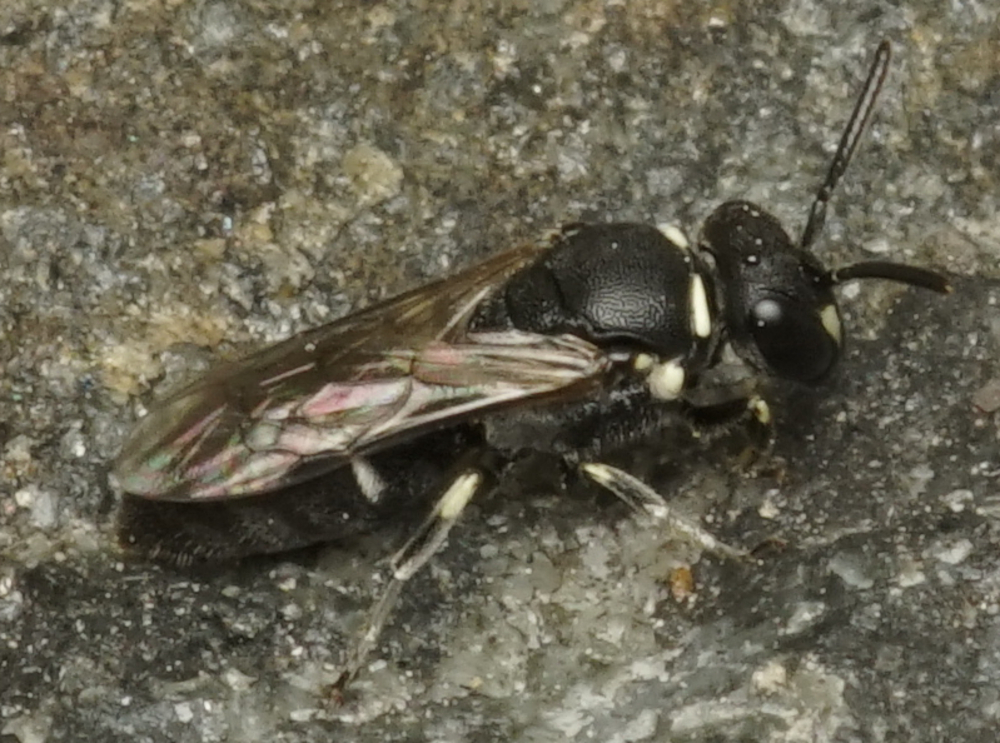
Crabronidae but tough to get any finer (EDIT: iNaturalist says Trypoxylon, which looks reasonable)
Lots of these tiny ants, a few mm in size. iNaturalist suggests Temnothorax curvispinosus, the acorn wasp, which looks about right, and is pretty cool.
iNaturalist says Lasiini –> Nylanderia flavipes. Something like this: https://www.bugguide.net/node/view/1721749 ? (“An Asian species increasingly common from NJ to DC to NE Ohio.”)
Ceratina, small carpenter bee, always lovely
Plecoptera
Rolled wing stonefly? Nemouroidea?
Hemiptera
I think this is Paraulacizes irrorata, the speckled sharpshooter
“Ozyptila and Xysticus are both distinguished from either Coriarachne or Bassaniana by the lateral profile of the carapace: as Lynette mentioned, in both Coriarachne and Bassaniana the carapace is roughly flat all the way from front to back. The side profile of the carapace for Ozyptila and Xysticus, on the other hand, will be higher near the front and will drop down near the back at around coxa three. Coriarachne and Bassaniana maintain roughly the same level height from front to back.
So, the order of things to check when separating Xysticus, Ozyptila, Coriarachne and Bassaniana is:
1) Check carapace flatness first, to separate Coriarachne and Bassaniana from Ozyptila or Xysticus
2) Then, check the ventral macrosetae on tibia I and femur I length/width ratio to separate Xysticus from Ozyptila.
Ozyptila: – no more than 2 pairs of ventral macrosetae on tibia I …. femur I length-to-width ratio is about 3:1
Xysticus: – 3 to 4 pairs of ventral macrosetae on tibia I …. femur I length-to-width ratio is about 4:1
Anyway, that’s how I’ve been separating these genera, using the information from Spiders of North America, Ubick et al. (2005) page 247. ~ John Sloan 2 Aug. 2009″
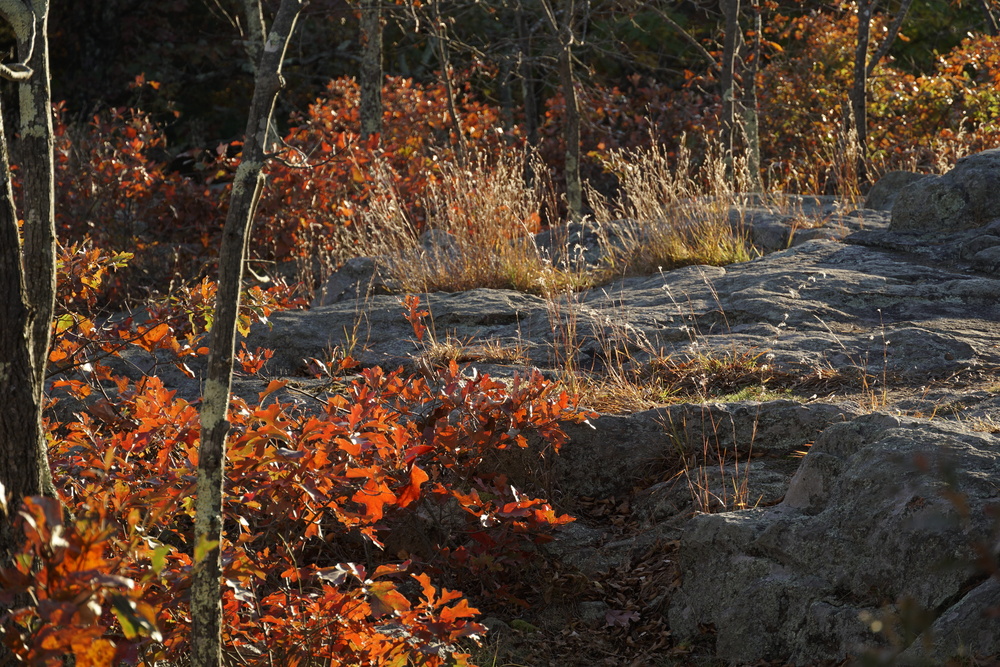
Hot day, about 32 C (90 degrees F). I go to Borderland State Park so very very often, but I always seem to go on the Northwest Trail, or near the lake. Which means that I’ve neglected all the other parts, especially the pollinator patch. Which is weird since I am all about the bugs.
An attempt to fix that today.
Diptera
Laphria robberfly with prey. EDIT: bugguide says Laphria index or ithypyga.
Syrphidae, Sphaerophoria
Hymenoptera
I think the ants are interacting with a spittlebug. This is not a symbiosis such as ants and shield bugs.
Looking closer — it appears the spittlebug is laying eggs, and the ants are going ahead and taking the eggs as they get laid.
A couple of days in Amboli. Amboli is in the western ghats, which is a world hot-spot of amphibian bio-diversity. It’s a huge tourist attraction in the monsoon season, less so in the summer.
I first looked around the guest house, Mrugaya Amboli (https://www.mrugayaamboli.com/). Our guide was Yash Patil, a terrific naturalist and, as we later found out, an extremely talented self-taught photographer and videographer. Please check out his instagram https://www.instagram.com/rah_bhatka/
Here’s an unidentified grasshopper with beautiful eyes:
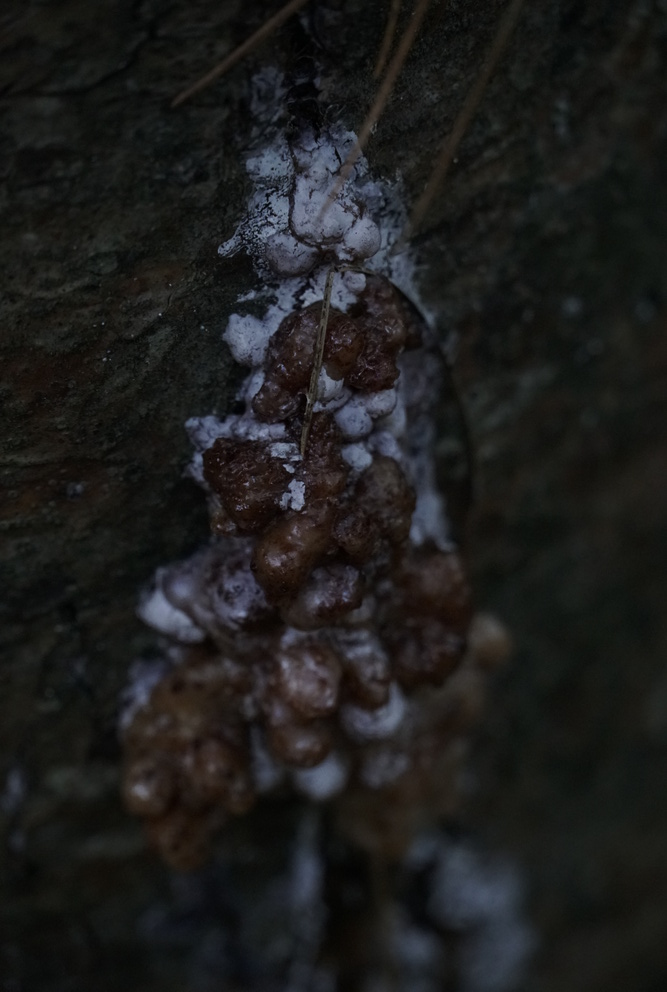
I don’t understand what’s going on here. I took the photo thinking that these were eggs, which may still be true. But it got more confusing when I zoomed in.
There are some creatures at the “head” of the long tubular “eggs”. They look too small to have emerged from the eggs. The eggs are tubular and collapsed and empty. This got a little traction from some entomologists as an engaging mystery :-).
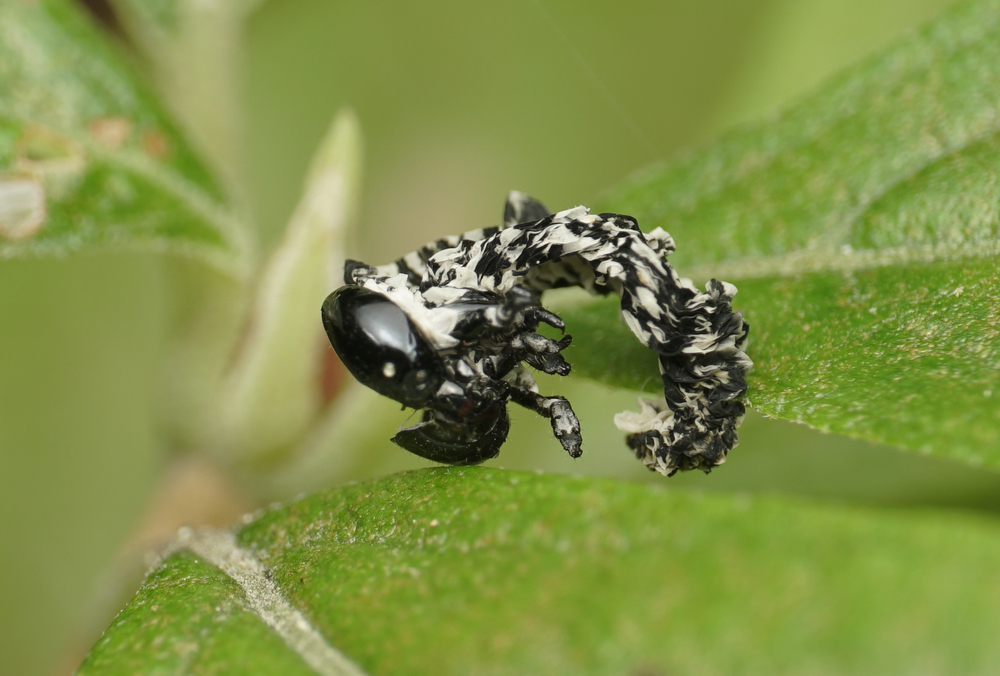
I think the consensus is wax secretions from scale insect males, perhaps Monophlebidae –> Icerya? Suggested on Facebook.
To make it more interesting, there appears to be a predatory mite munching away.
A Pompilid, perhaps Liris cf subtessalatus? The blue color on the back was very nice.
Another perhaps Liris:
Another Ichneumonid wasp, maybe Metopius or Euceros as per iNat:
A Nilgiri keelback snake:
I asked Yash for tarantulas, so he took us on a night walk. Spoiler: lots of tarantulas, but zero photographs. Maybe one day I will be more patient than the tarantulas are shy. Also, perhaps a glimpse of a tailless whip-scorpion!
BUT: my first sightings, and first photo, of a Mygalomorph!!! Please see below.
This spider is perhaps in Neoscona:
One of the stars of the night for me!!! Indian tiger centipede, huge, maybe 12 cm or so. Scolopendra hardwickei
A lovely ant-lion, one of the Giant Ant-Lions. According to the knowledgeable gentleman at iNaturalist:
This is interesting for various reasons! First of all, as a member of Ascalaphinae, it’s technically not an ant-lion, but an owlfly, which makes it the first owlfly I’ve ever seen.
Next, there aren’t a lot of Stenares found. He also suggested it might be S. harpyia, which has zero confirmed sightings on iNat, and has only recently (over the last year or two) been discovered in the Western Ghats region. Previously it was only seen in India in Tamil Nadu and Telangana.
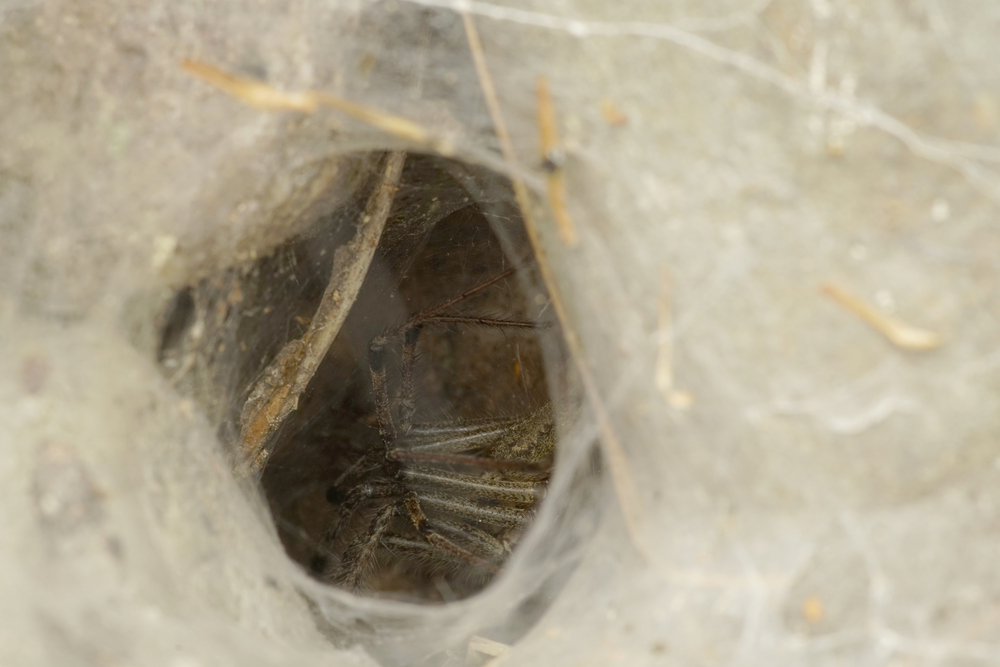
This was exciting!!! My first good sighting and photograph of a Mygalomorph!!! This is apparently family Ischnothelidae. Genus perhaps Indothele (I. dumicola suggested, but very difficult to pin down based on these photos), they are present in India at least.
Note the two very long spinnerets at the back (could be easily mistaken for legs).
There is a serious lack of information on the web about this family! And not a ton of sightings in India.
Tripathi, R., Kadam, G., Sherwood, D. & Sudhikumar, A. V. 2025. Revision of Indian Ischnothelidae (Arachnida: Araneae) and descriptions of two new species of Indothele Coyle, 1995. European Journal of Taxonomy 981: 189-212.
There are currently no reports of I. amboli in iNaturalist, but I know that Mr Atish Gawai has taken photos of a similar spider, in the same area.
Amboli leaping frog:
iNat suggests perhaps genus Thereuopoda for this centipede:
Lovely camouflaged spider in Cyclosa. I recognized it as a Cyclosa web immediately, but it *still* was tough to decide whether the lump was a spider or debris.
Another Amboli leaping frog:
Malabar spotted flat, a butterfly that spreads its wings. This is with flash, the actual view was much darker.
This was on a laterite plateau. We spent some time exploring this plateau, which is part of an biome being recognized as a fascinating and unique eco-system found nowhere else. They are characterized by very little soil cover which leads to little water retention and a boom and bust cycle in the summer and rainy season. However, since they composed of porous rock, they act as water reservoirs for the surrounding areas. See: https://roundglasssustain.com/habitats/laterite-plateaus-maharashtra
We discussed coming back in the monsoon season with a waterproof lens to investigate the life in the monsoon, which would be wonderful.
Temperatures in the range of 39-40 Celsius (102-104 Fahrenheit). There hasn’t really been much rain for the past few weeks. Yet abundant bug life, somehow. I think the daily watering of the plants may be helping?
Also, a gorgeous Pompilid wasp that seemed green, but wasn’t nice enough to pose for photos :-(. I have to come back to capture that.
Note that I used iNaturalist liberally for identification suggestions, as I’m still learning the Indian bugs.
This Oecobiidae spider had captured some prey and was running in circles around it to wrap it in silk. I don’t know what the prey insect is. I could see some Oecobiidae spider webs nearby.
If you look carefully, you can see the strands of silk coming out from the spinnerets on its butt, extending to, and wrapping up, the prey.
Plexippus cf paykulli. I understand this coloration is the females.
while here is the male
Anthomyia, perhaps:
I don’t know the ID of this cute little Salticidae spiderling:
Dolichopodidae is always gorgeous. Genus Chrysoma is suggested.
A gorgeous tiny little fly. iNaturalist suggests Rhodesiella, in Chloropidae :
Absolutely gorgeous Syrphidae aka hover-fly in Erastalinae:
Closeup of the eyes
Such a stunning gorgeous wasp. I think it’s Carinostigmus:
iNaturalist says Eulophidae, and someone suggested Entedoninae in particular.
They are exceptional in that they are one of two hymenopteran families with some species that are known to parasitize thrips.[2] Eulophids are found throughout the world in virtually all habitats (one is even aquatic, parasitising water-penny beetles).
Eulophids are separable from most other Chalcidoidea by the possession of only four tarsomeres on each leg, a small, straight protibial spur (as opposed to the larger, curved one in most other chalcidoids), and by antennae with two to four funicle segments and at most 10 antennomeres.
iNaturalist suggests Gymnochiromyia in Chloropidae:
A lovely spider in Uloboridae –> Uloborinae. Obligatory statement whenever Uloboridae is mentioned: they are the only family of spiders with no venom.
A wasp in Ropalidia, small paper wasps:
A gorgeous black soldier fly, perhaps genus Hermetia:
Closeup of the eyes:
Sarcophagid fly, perhaps genus Sarcophaga?
Apparently genus Atractomorpha:
A lovely Uloborid that has been surviving in the window in the bathroom by pretending to be detritus. I hope no one bothers it!
Apparently Lesser Meadow Katydid, Conocephalus. Note: long antennae = katydid, short antennae = grasshopper