It’s a little sobering how little I have explored of Sharon’s trail system. I pushed a little bit today, going up to Greeley Pond in the King Phillip’s Cave area, and was happy for the walk on a nice crisp December afternoon and evening.
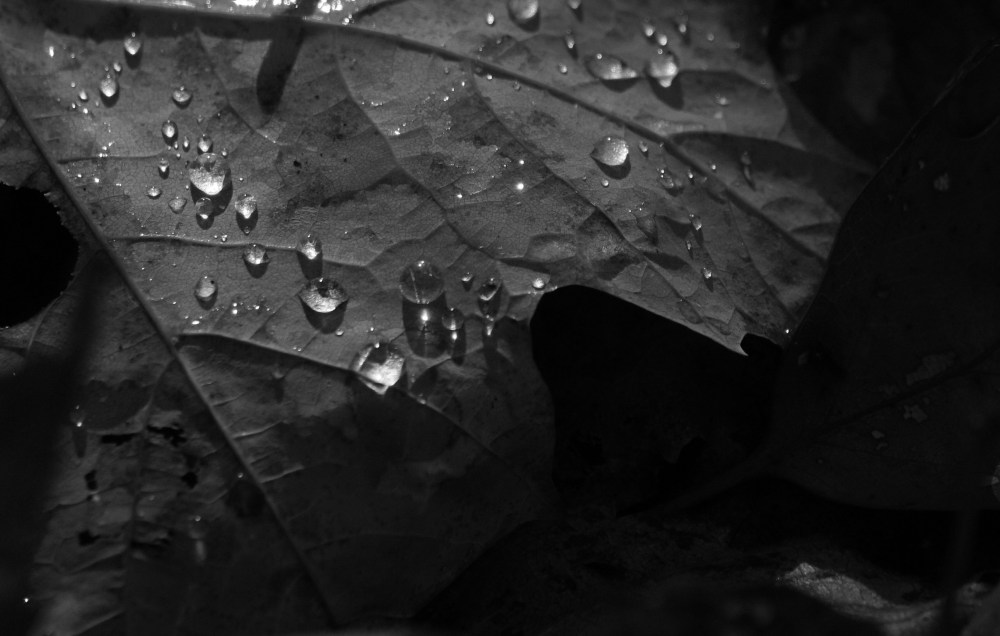
The long shadows and subdued hues of this season lend themselves well to black and white photos. You may see plenty of them in this set!
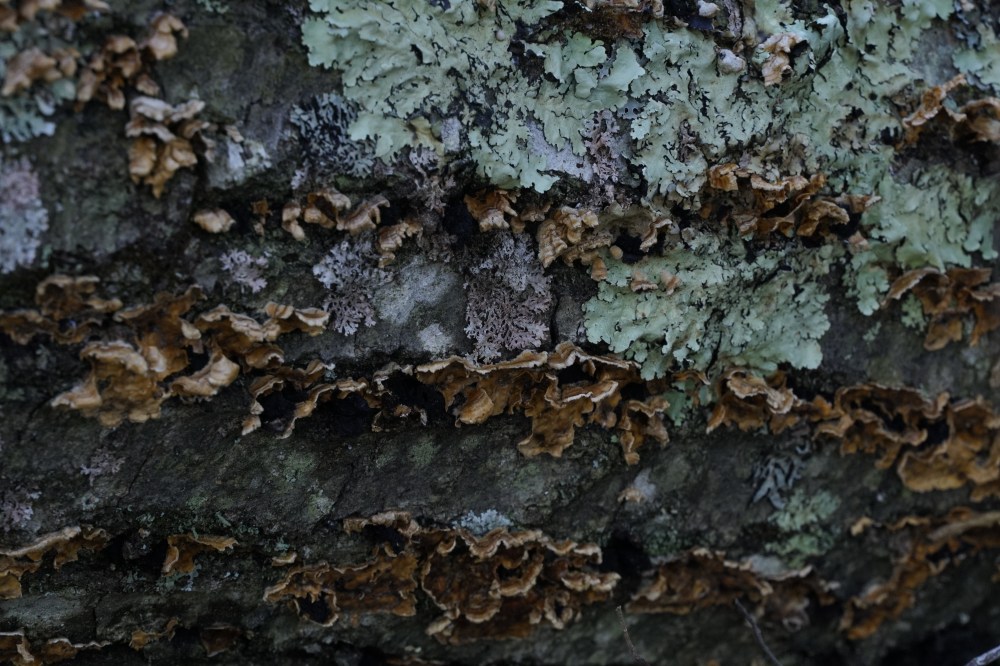
I take a lot of this photos of this particular stand of bark and undergrowth, hoping to capture the impact.




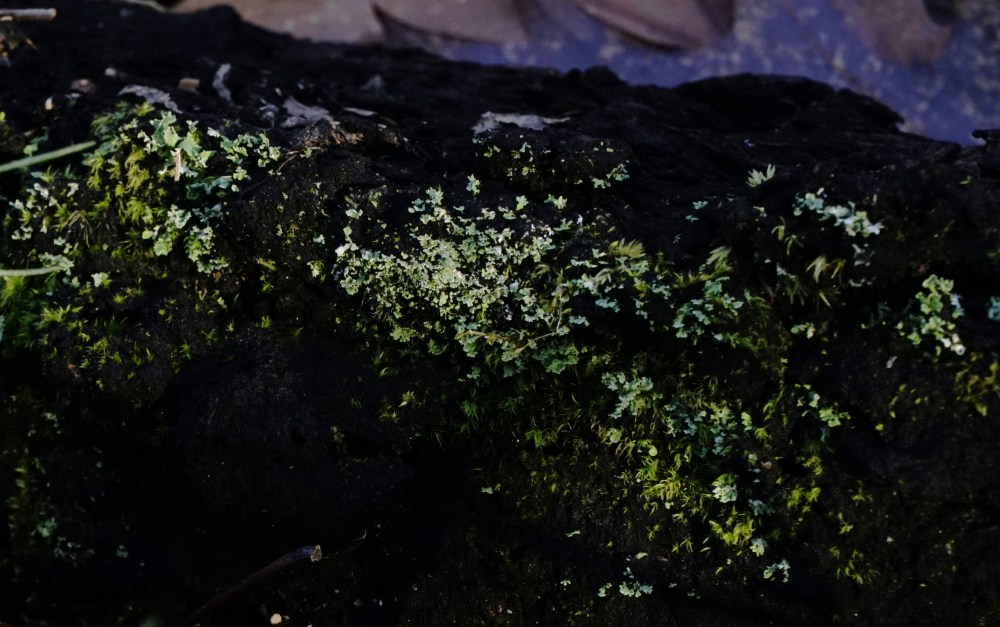
This burnt log had moss growing on it, and the green on black was irresistible.
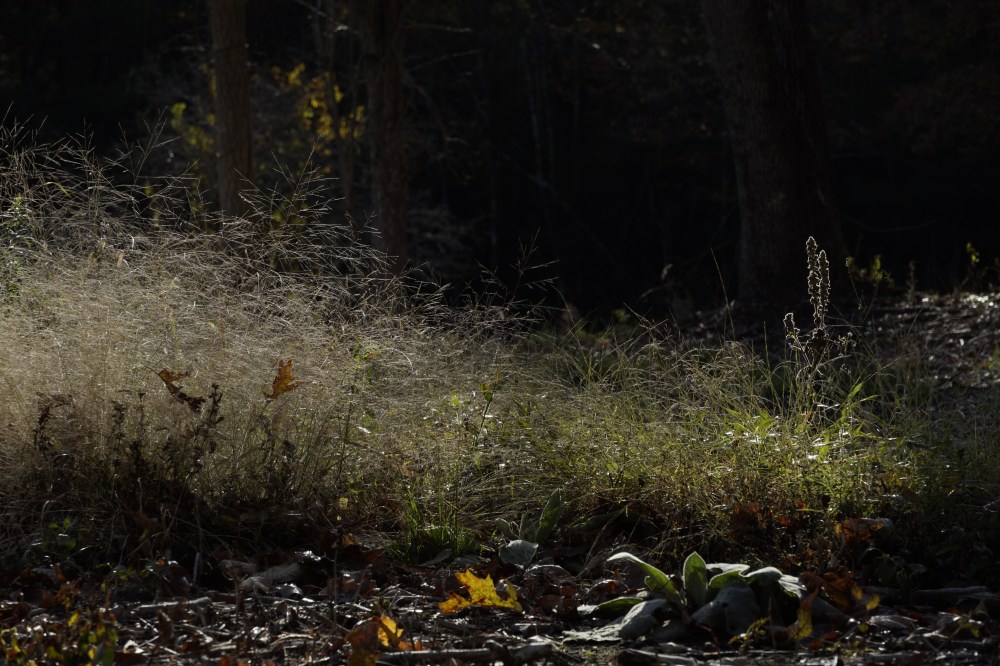
Late afternoon winter light:


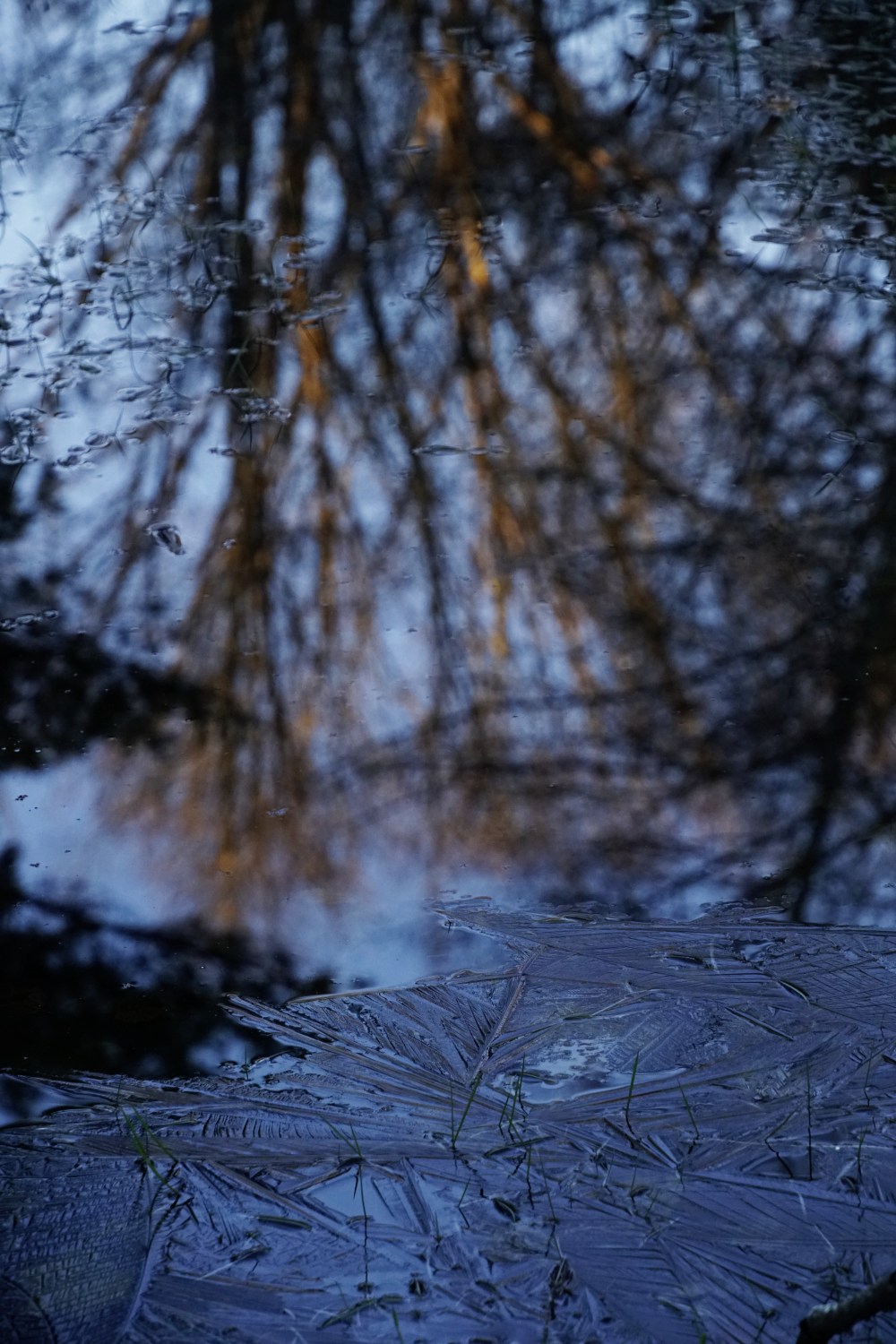
A little pond freezing:

The encroach of winter:
We get a Nor’easter tomorrow, so today was a chance to see some of the fall colors before the leaves fall off. A double shot: Moose Hill Mass Audubon, and Devil’s Rock. Moose Hill first.
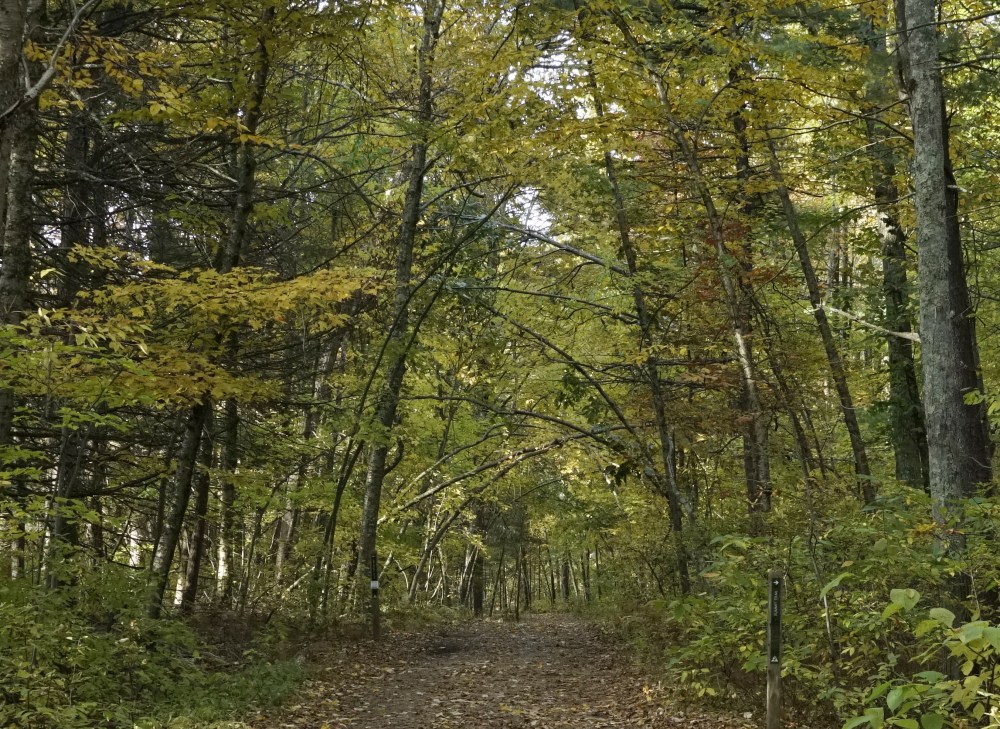
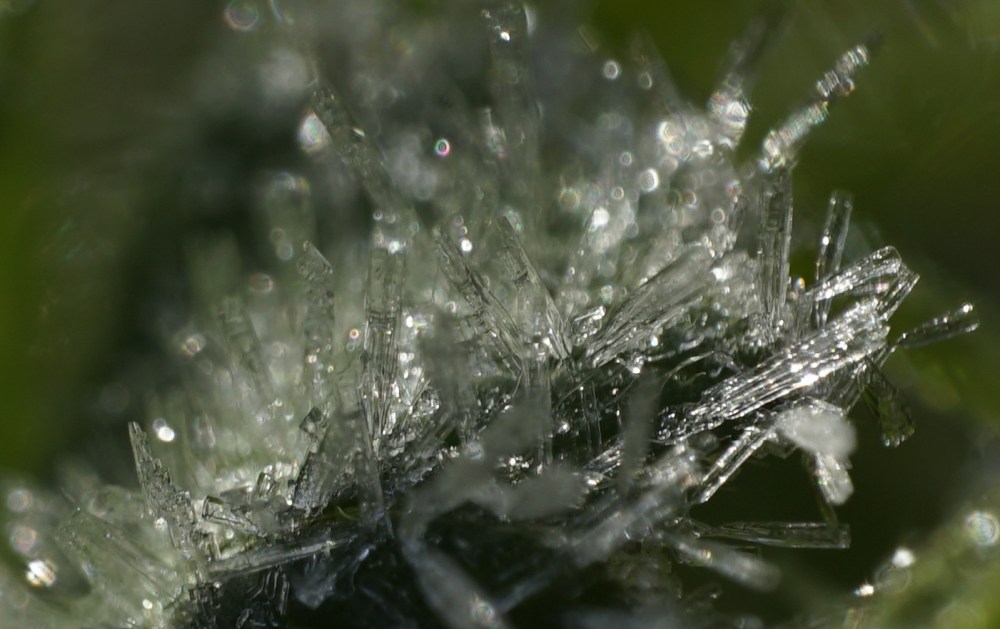
There was a nice frost:

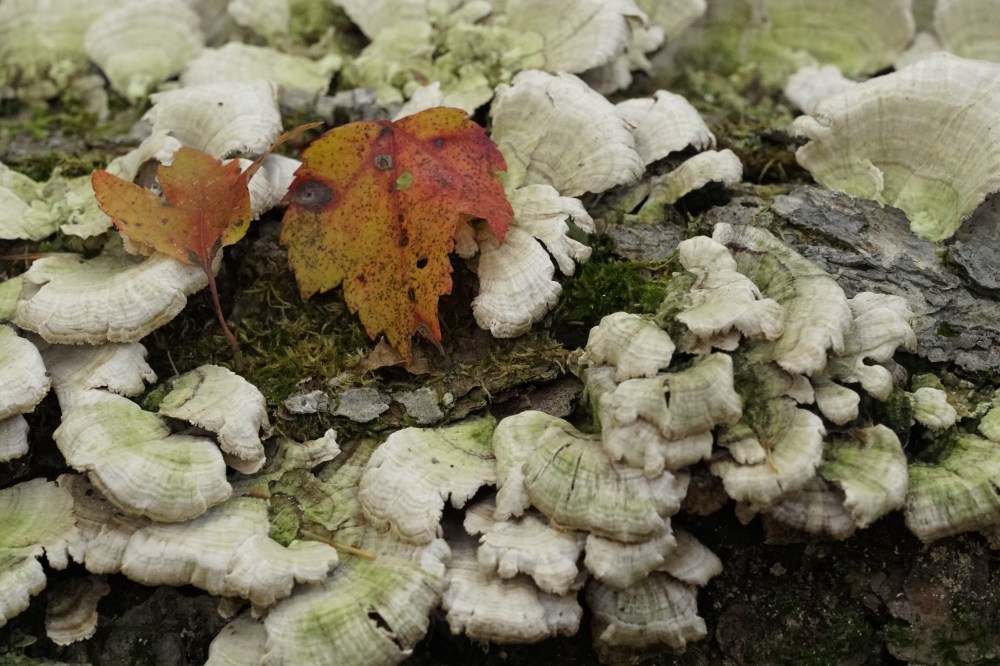
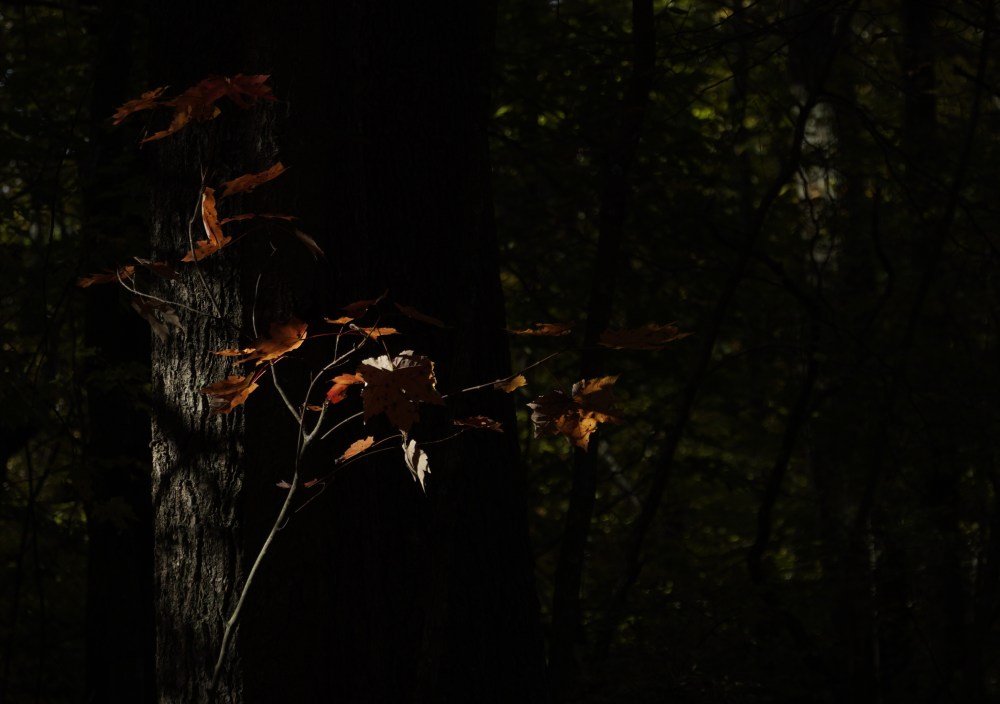
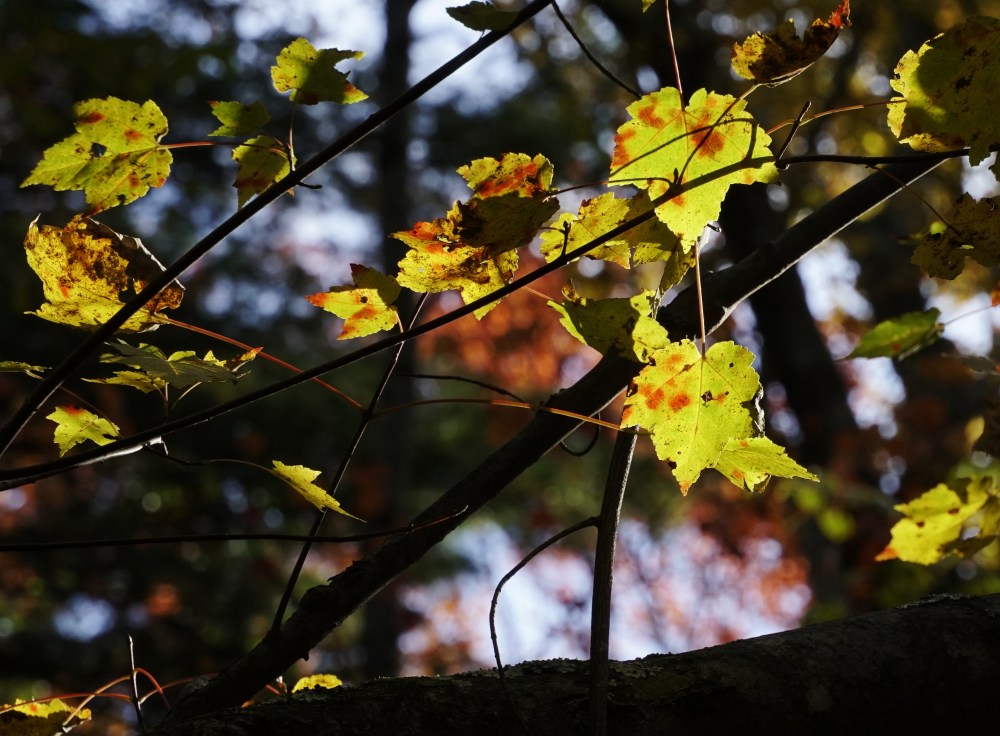
Now, Devil’s Rock.


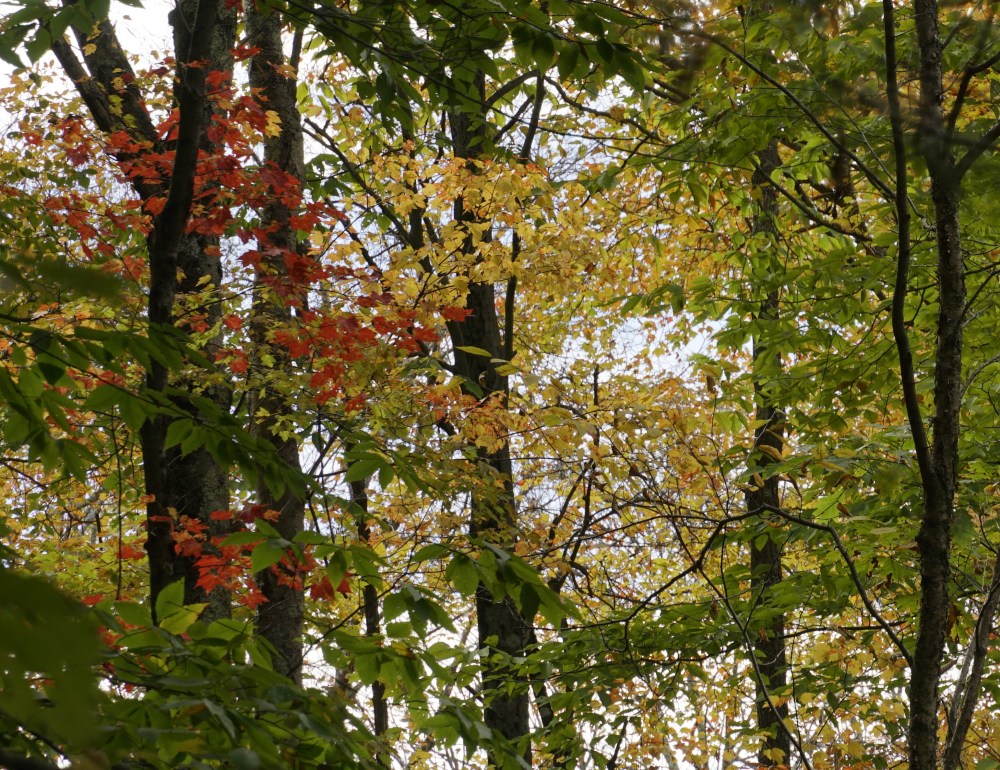
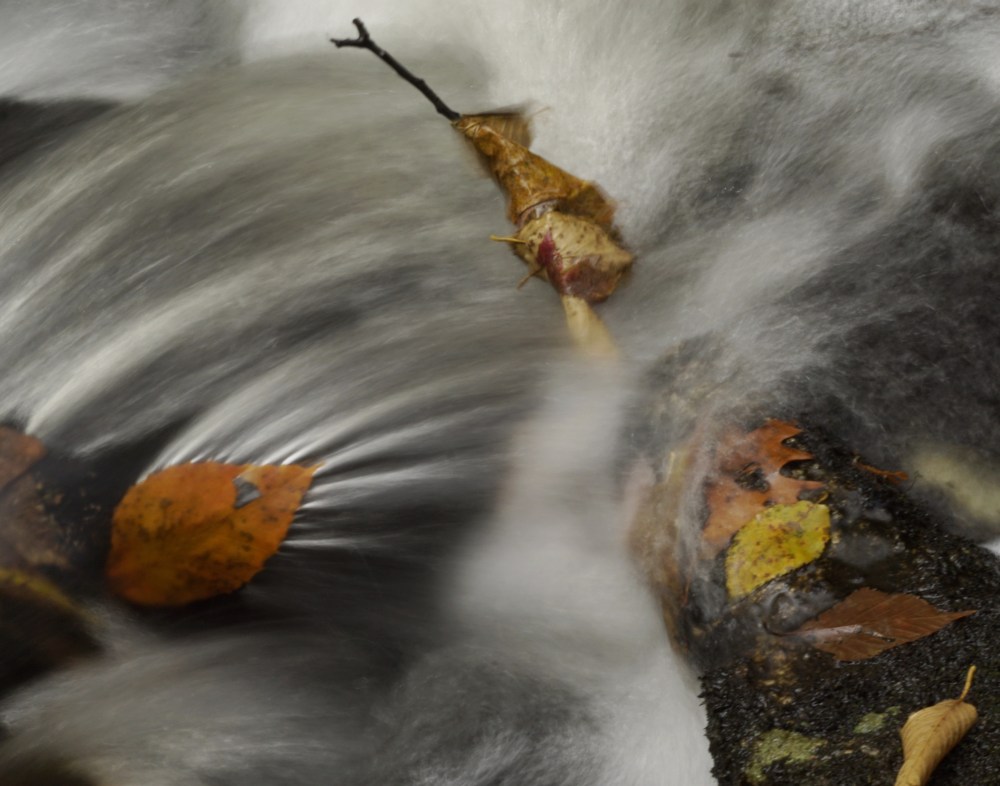

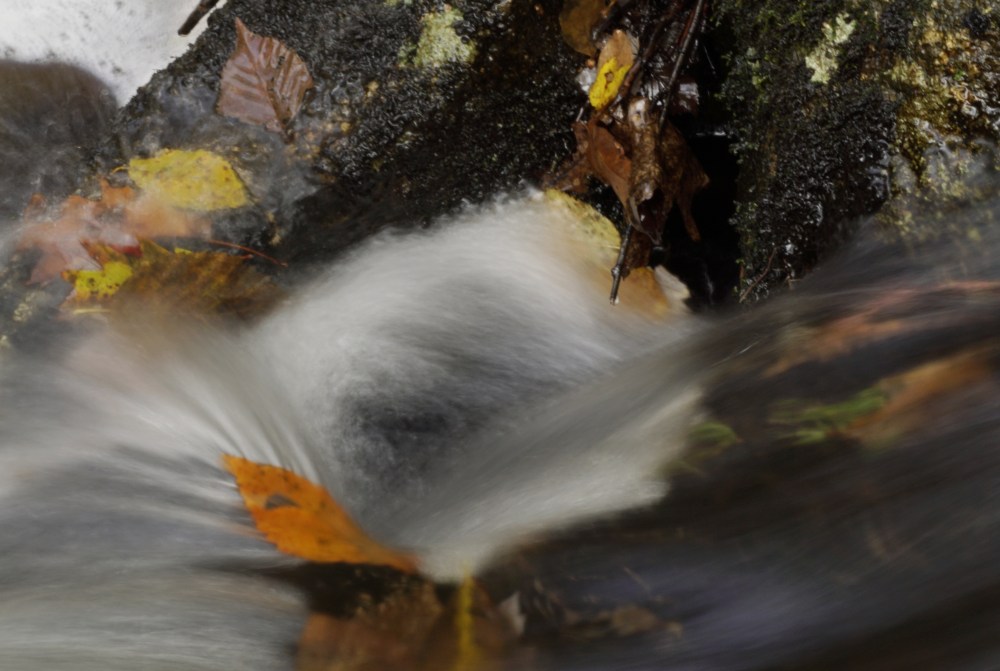
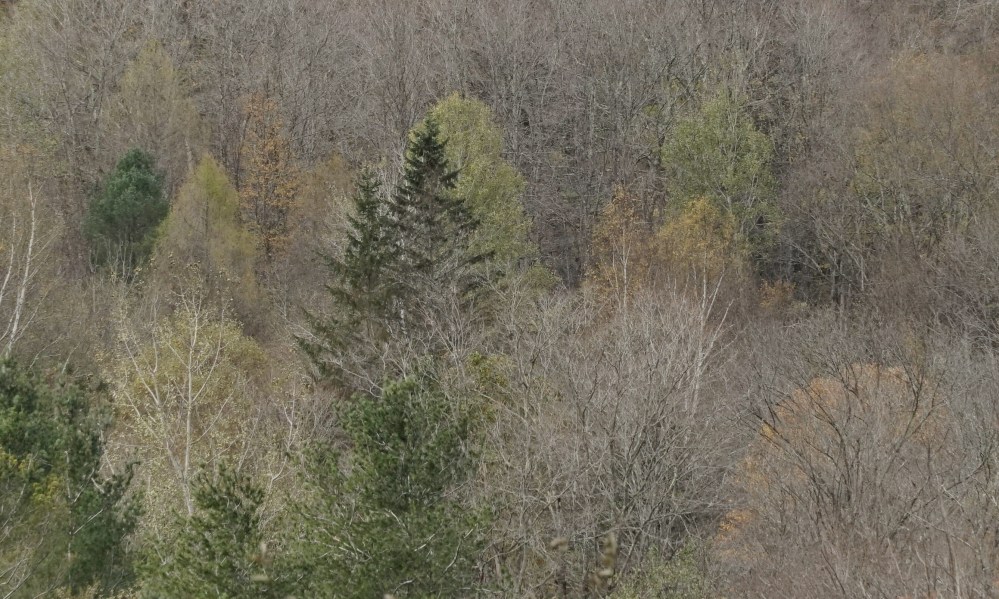
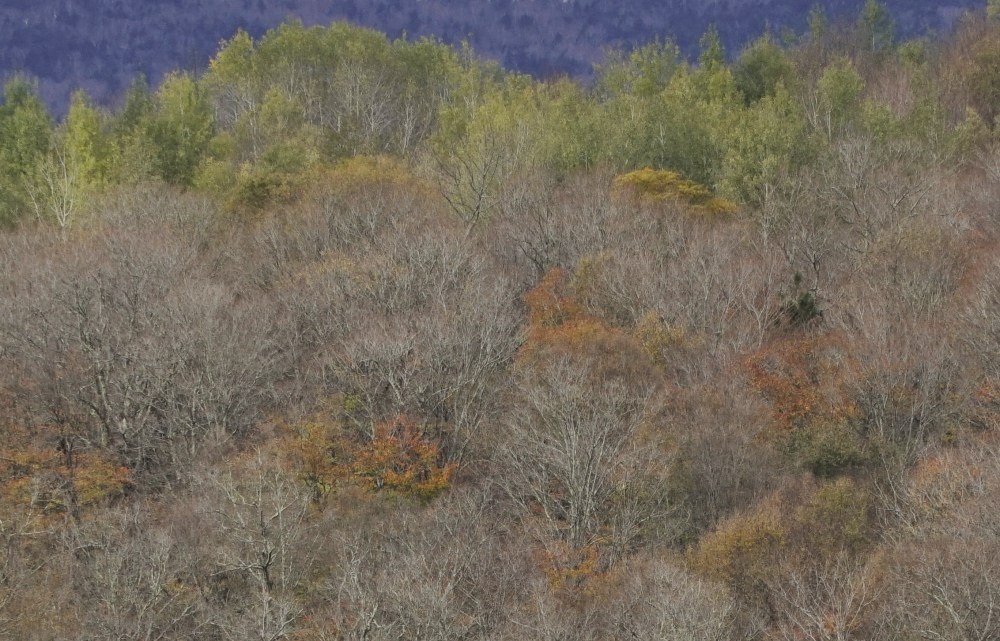
The fall colors are so late this year! I’ve never seen leaves on the trees at this time of the season, and they’re just turning colors now.
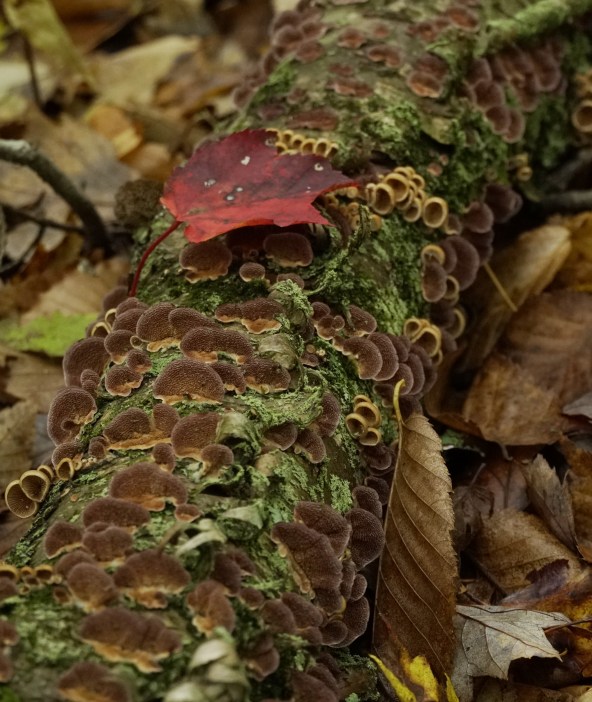
After the peak foliage. The pleasures of this season, they lie in subtle hues.
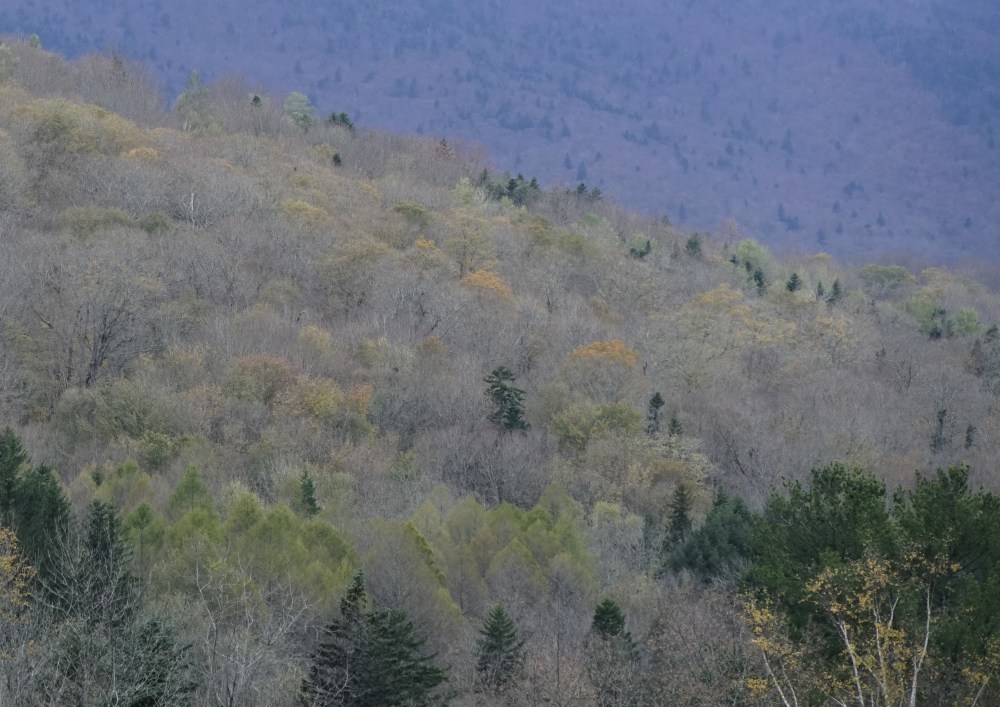
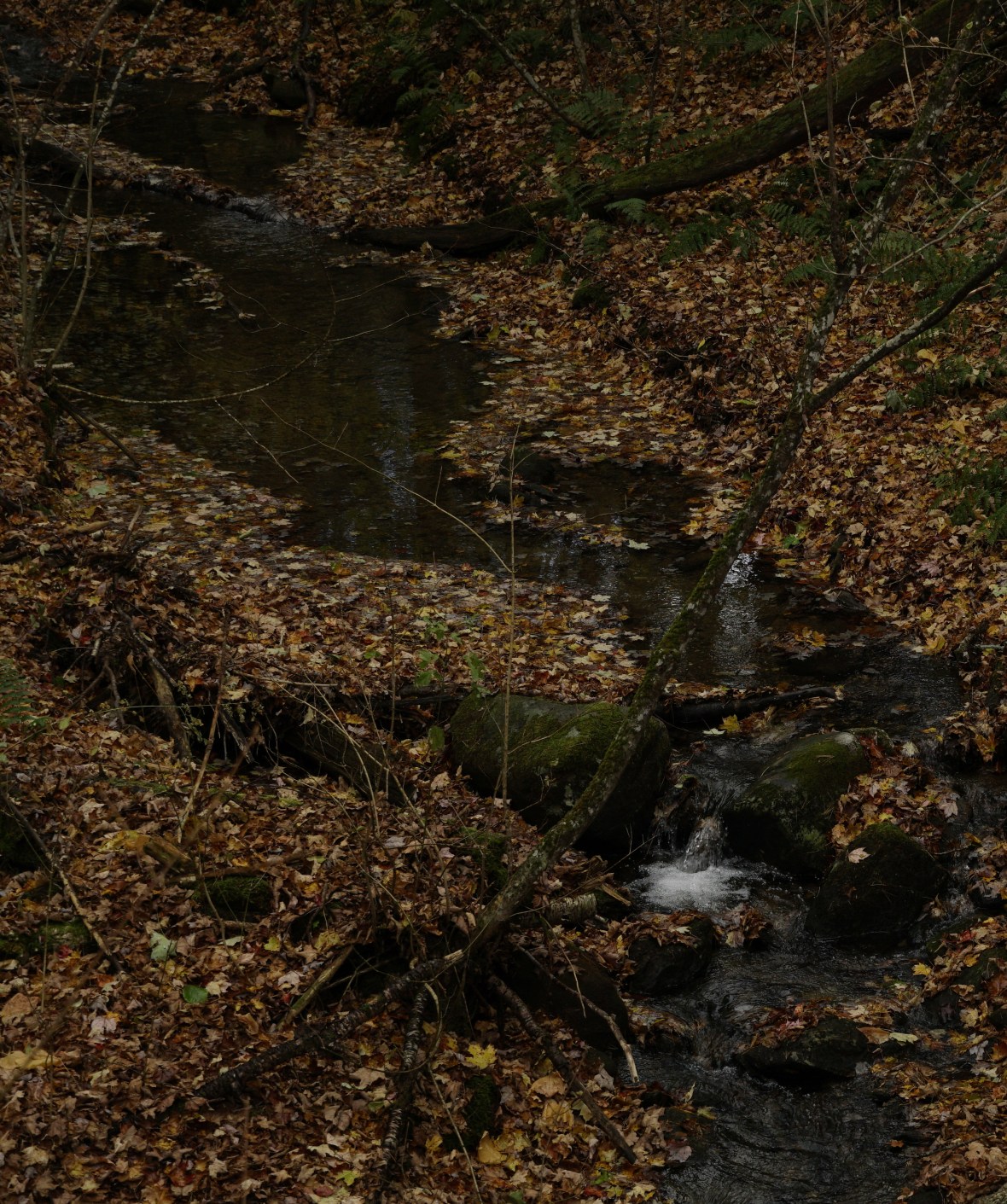

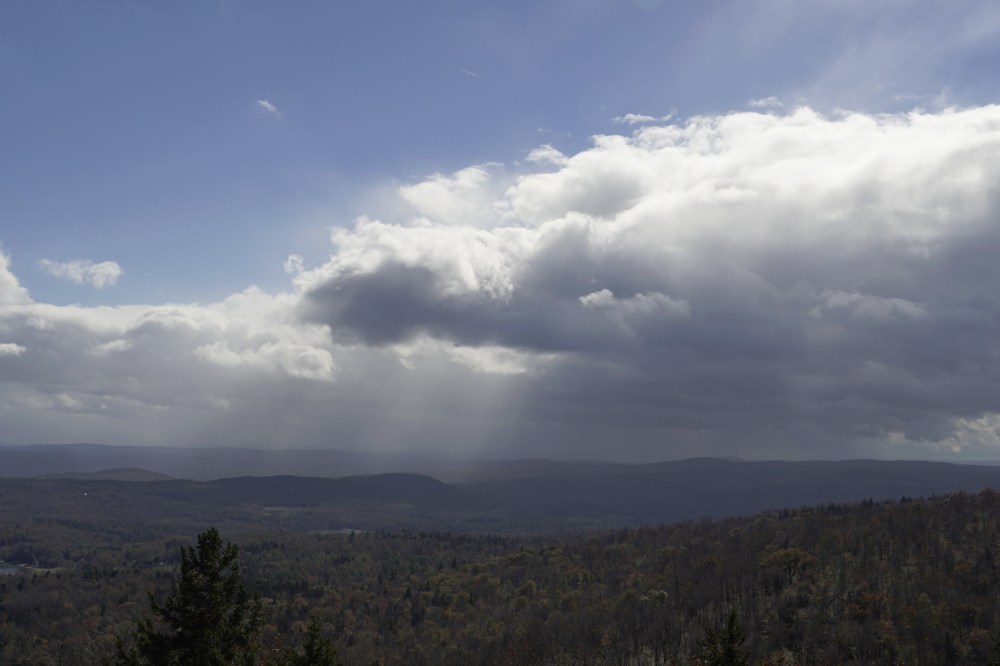






How is it that I’ve never come here before??
In the photo below, I think the apparent concentric rings occur because pine needles that are tangent to the circle formed by the sun and their midpoint, will reflect light to the camera from all along their length, while others will not.
It’s the same reason we sometimes see light streaks on windshields at night (in this case, because of striations caused by windshield wipers, and headlights from a car coming in the opposite direction).
More elegantly, it’s also why we sometimes see sun-pillars over the setting sun. In that case, it’s because snowflakes in the atmosphere often orient themselves horizontally.


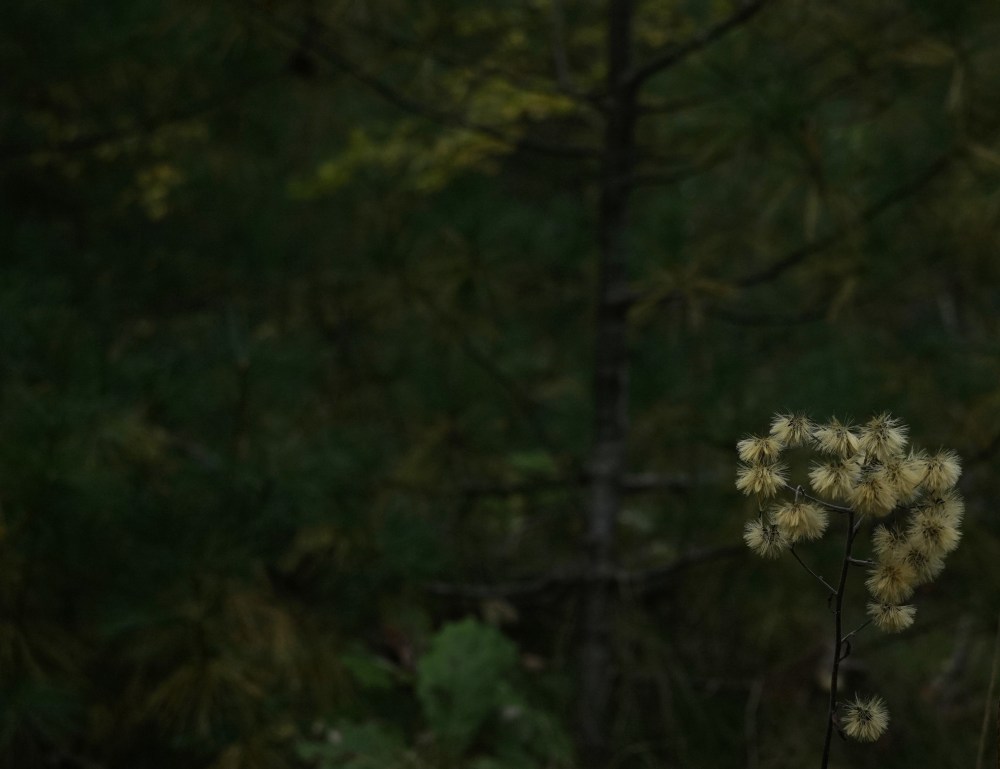
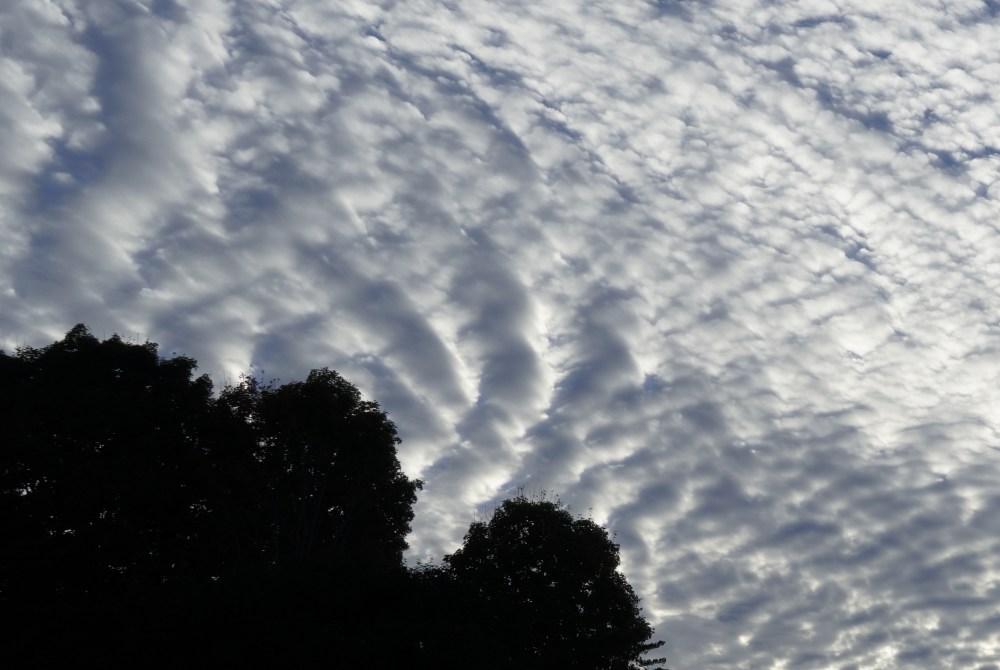
Unseasonably warm weather (80F/ 26C). I thought there’d be lots of insect action, but there really wasn’t. No matter, it was a beautiful day for a walk.

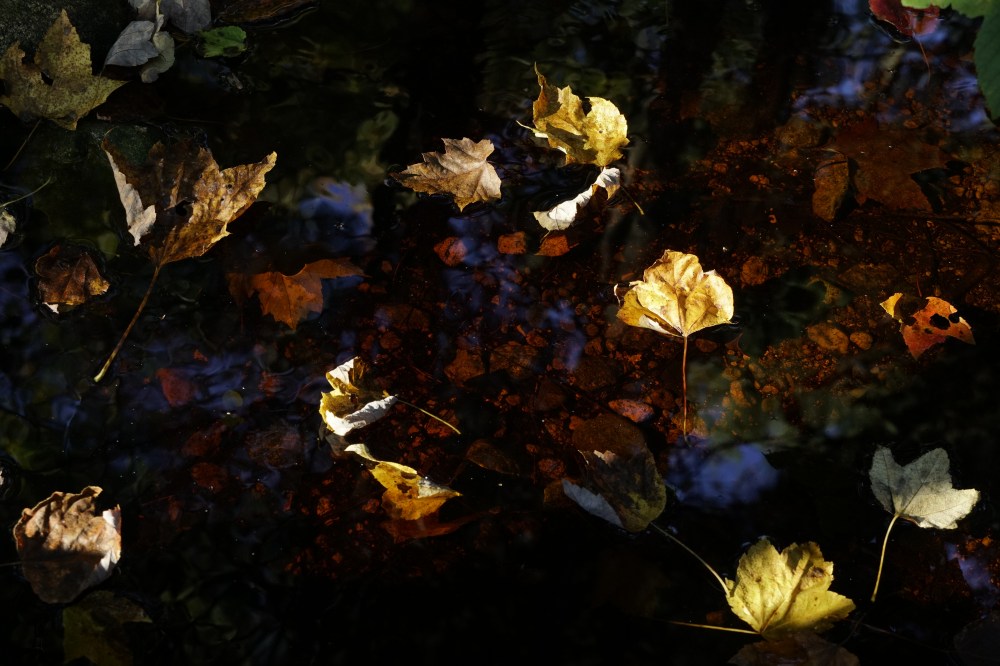
A reflection in the water:

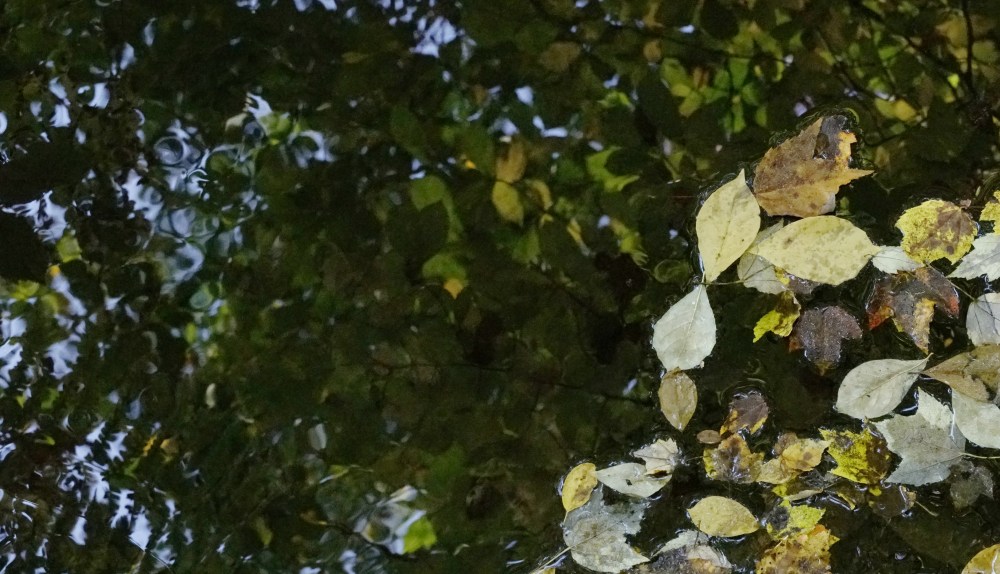
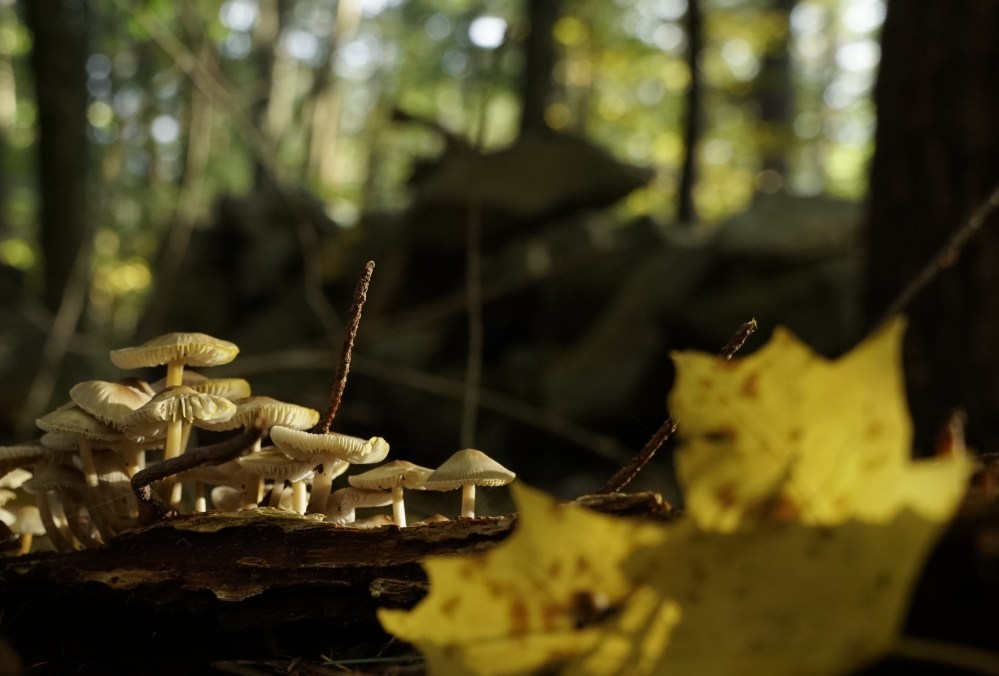
On a mushroom. Perhaps a fungus gnat? I think Mycetophila seems a good place to start in searching for the right ID.

Dead leaf in spider web; live leaf; backlit by the sun:


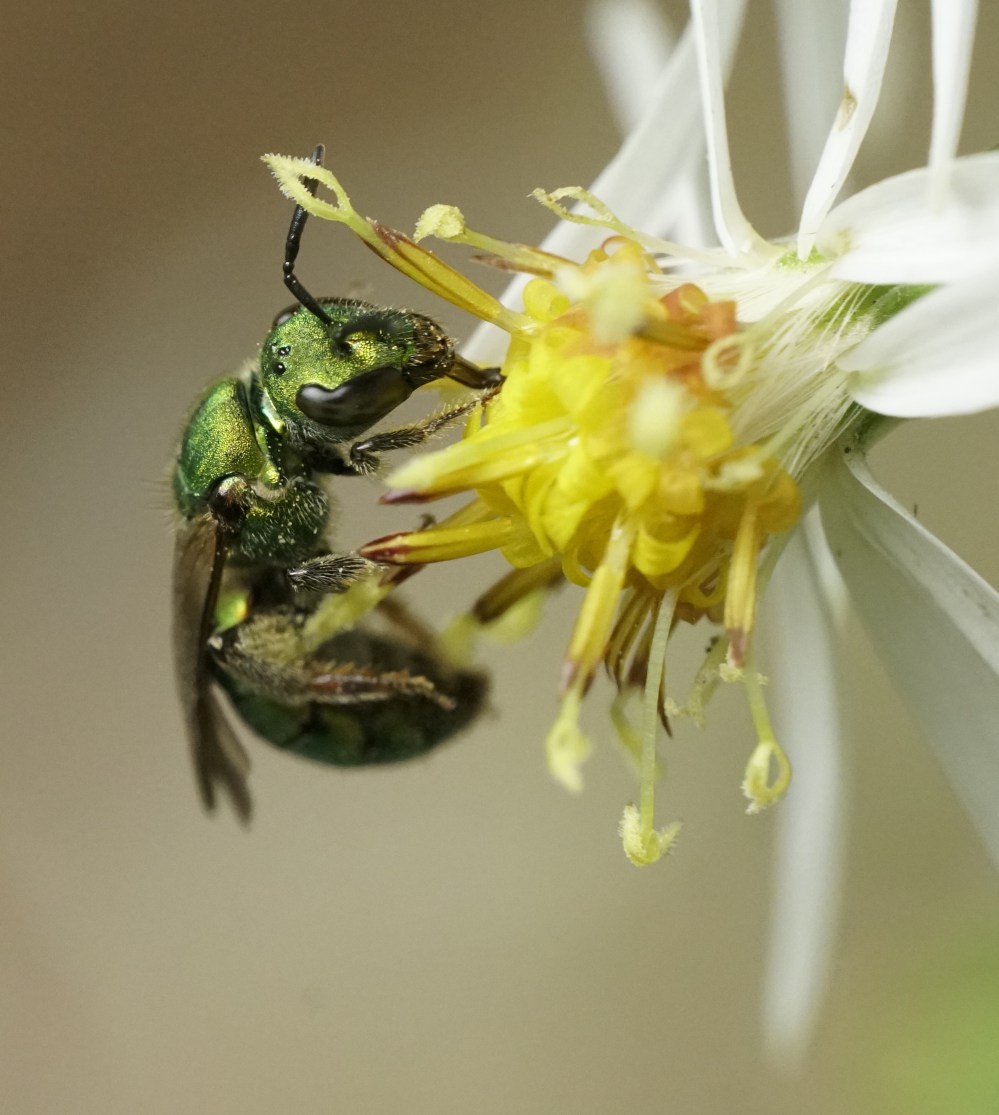
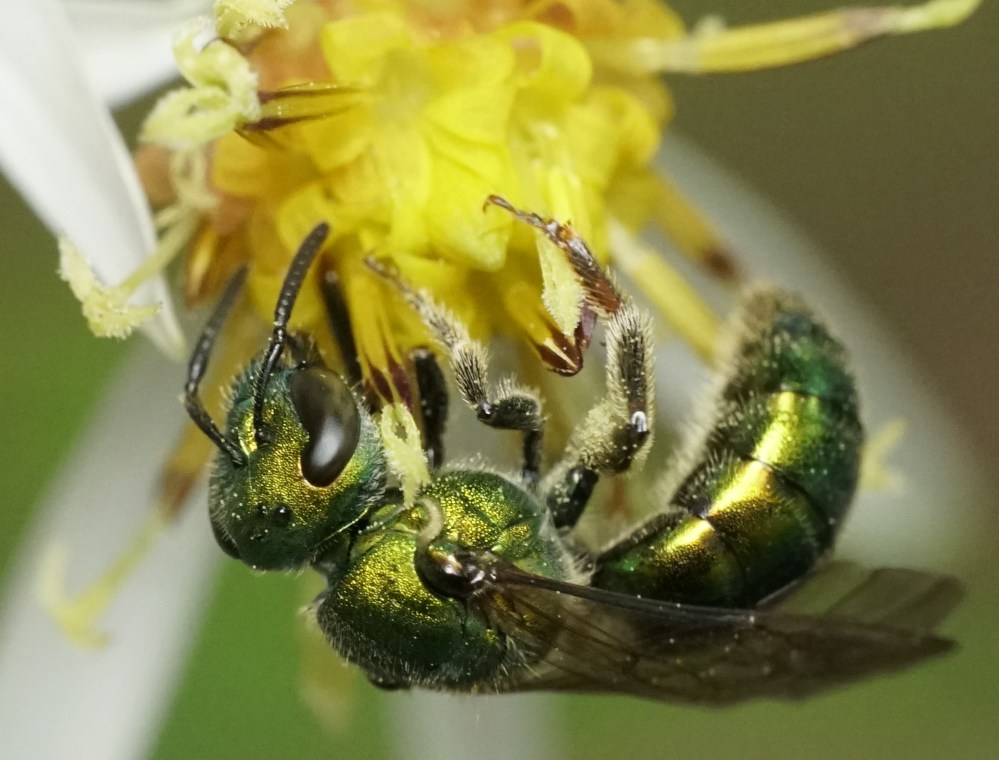
Early October in Borderland State Park means Halictidae all over the place! Not sure which species or genus these are (Auguchlora, Agapostemon, Auguchlorella?).
In this first photo, the protruding part is the bee’s glossa, similar to the tongue.

This utterly fascinating caterpillar seems to be an ant or beetle mimic on its front end! The Caterpillar identification group suggested something like Dichomeris (e.g. https://bugguide.net/node/view/26909) as a good place to start. And here is a Dichomeris caterpillar with a similar webbed leaf: https://bugguide.net/node/view/668363/bgimage.

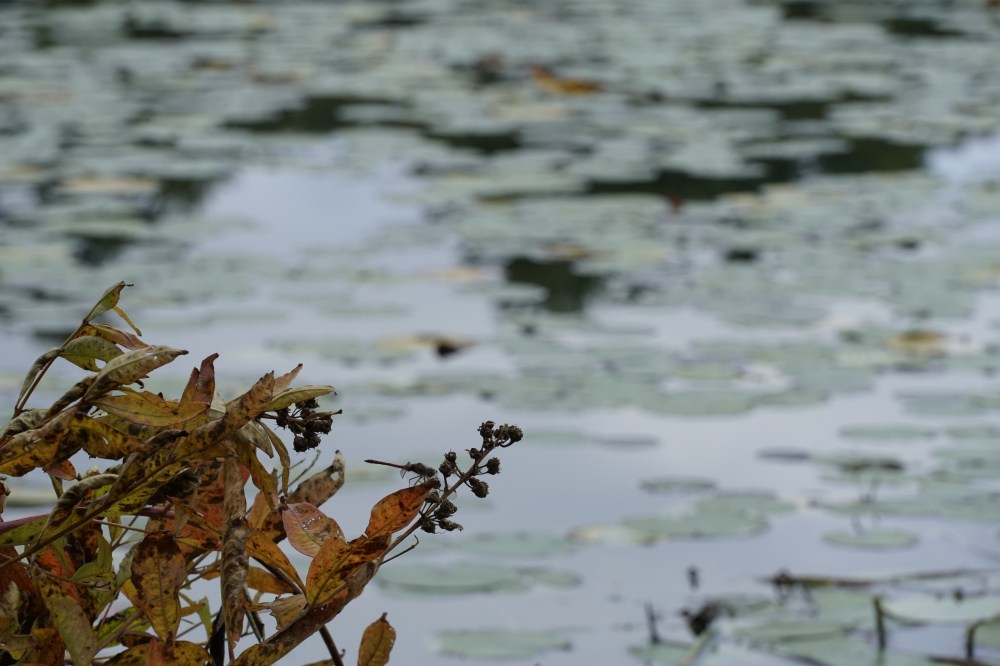
When dragonflies mate, the male tries to hold onto the female as long as possible, in order to reduce the chances another male will mate with her.

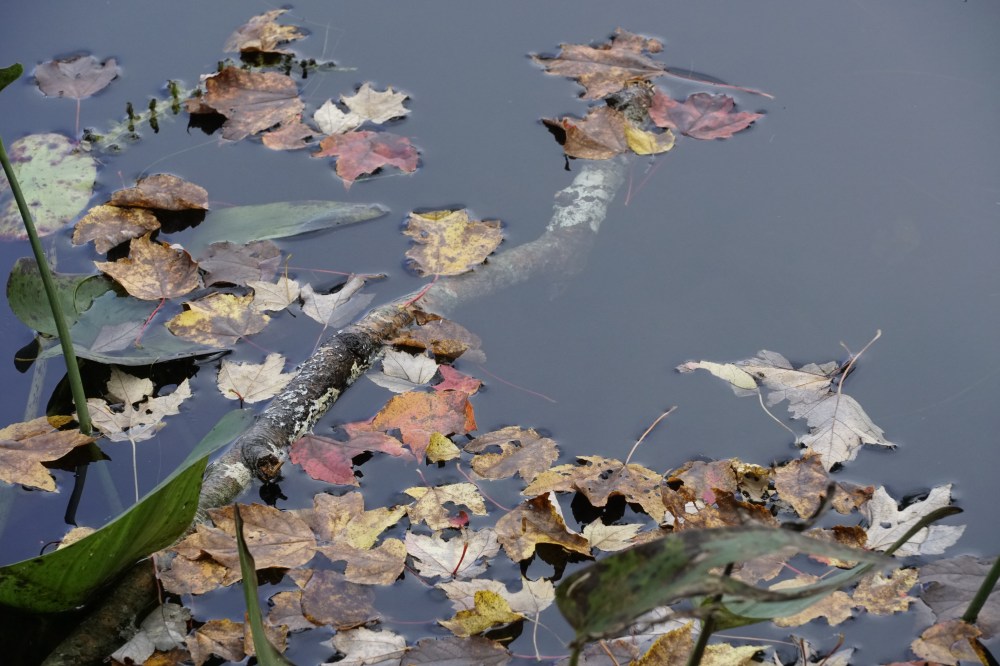


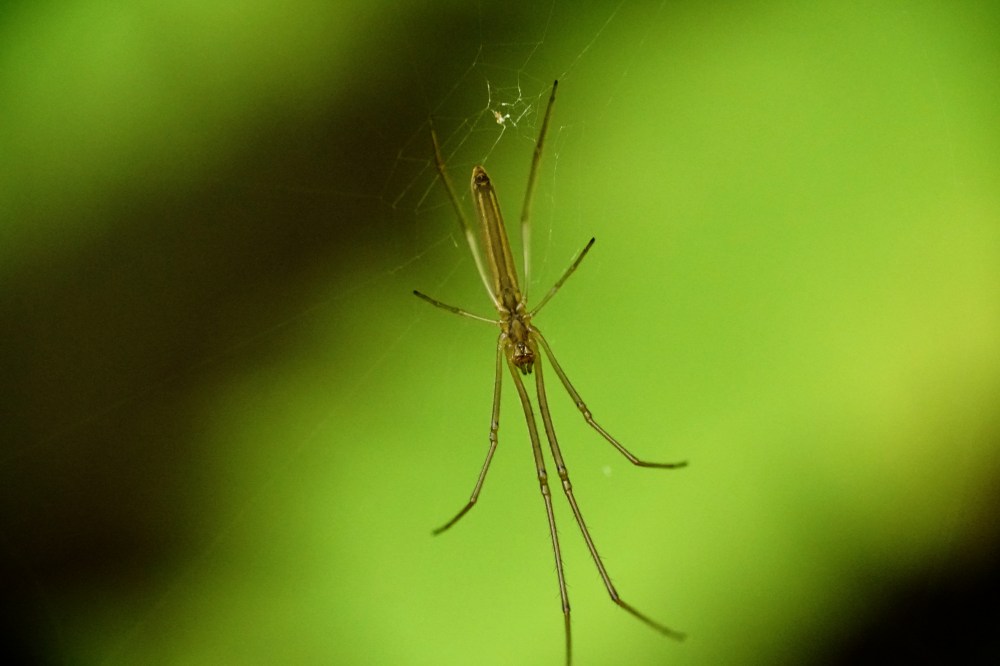
Tetragnathid spiders, Tetragnatha sp. perhaps.
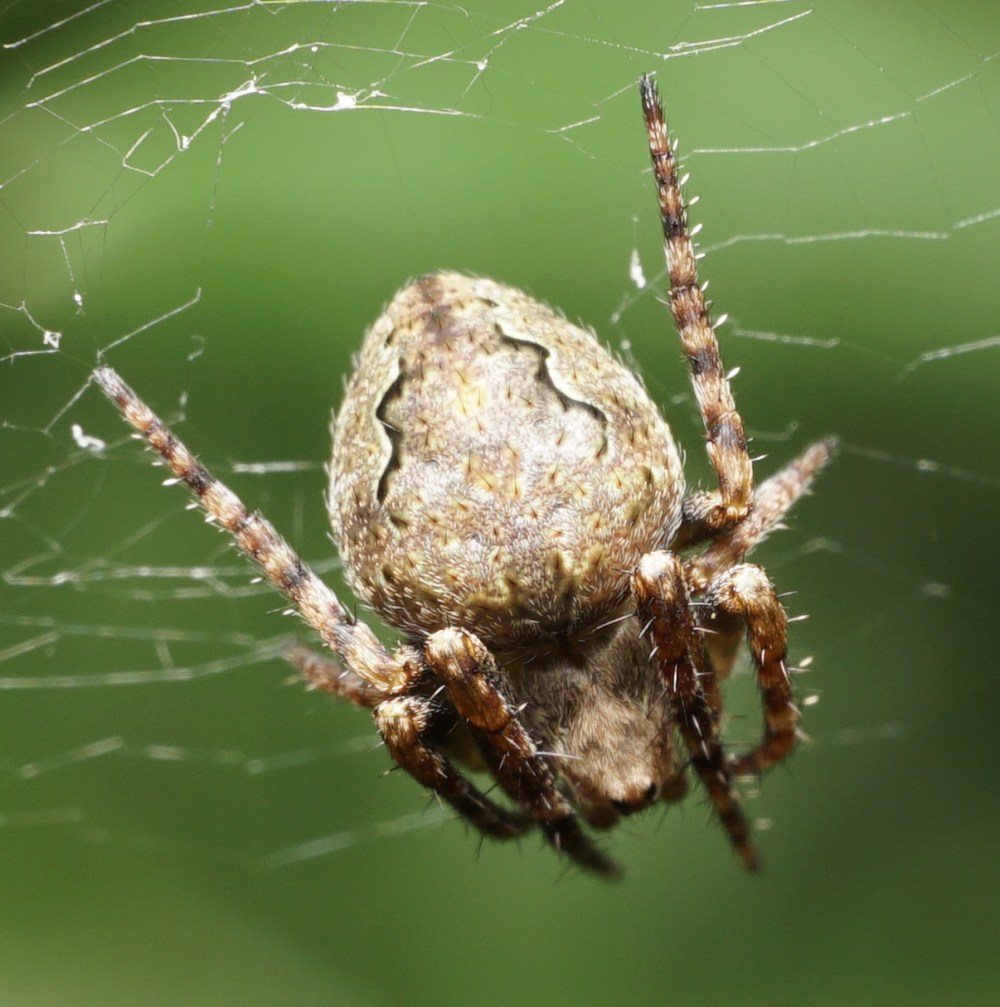
A few miscellaneous denizens from our neighborhood. An Araneidae orbweaver. Identifying them is a pain in the butt for me, they all look the same and have a large degree of variability. But this might be in the genus Eustala.

Alternative view, showing more of the abdomen:
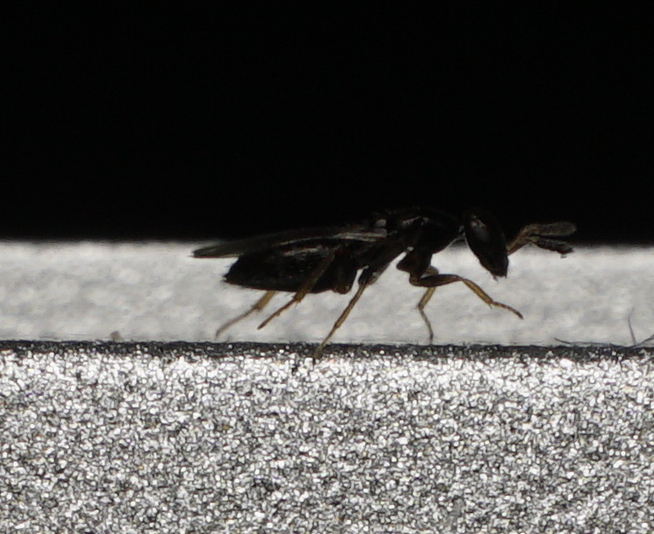
A tiny little wasp crawling on top of my computer, just a few millimeters long.

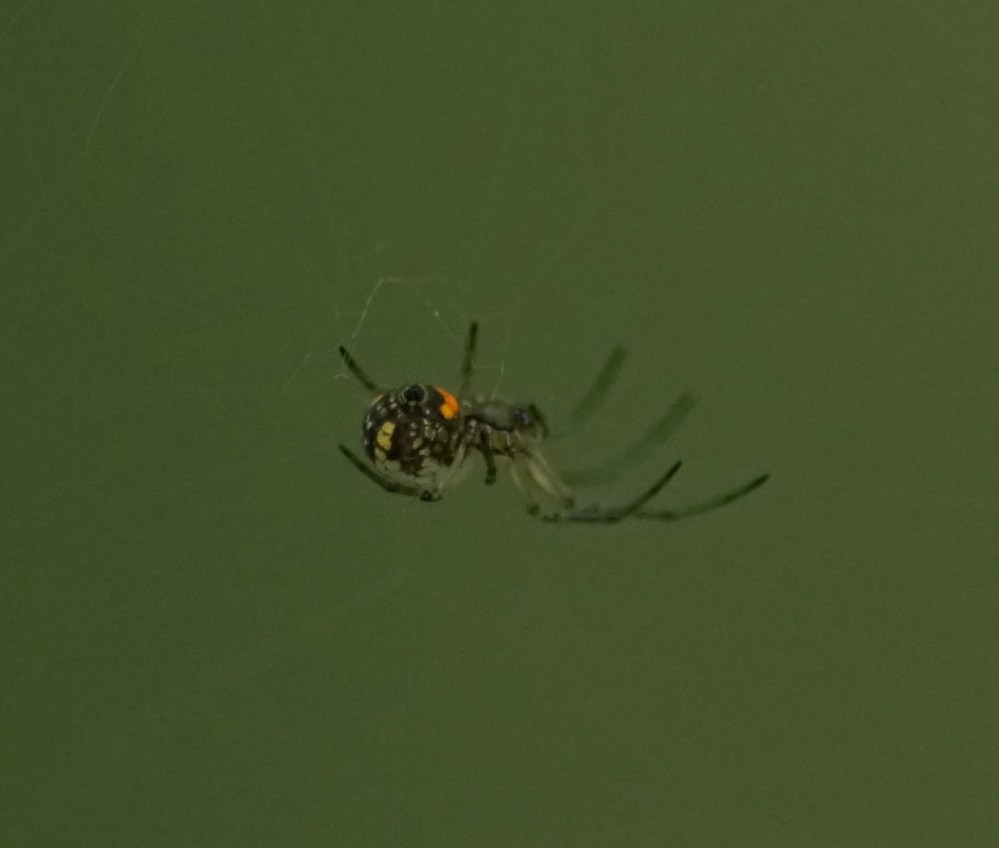
Baby Leucauge venusta
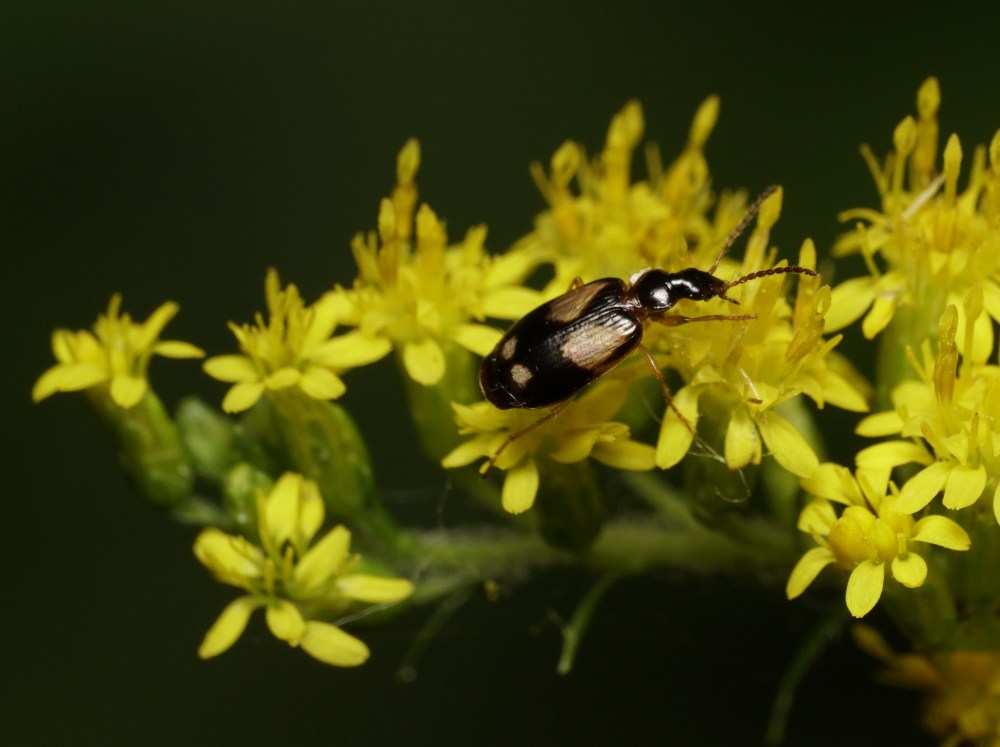
I think this is Lebia fuscata — a ground beetle, except it seemed to be hanging out in the flowers. But could it be Bembidion quadrimaculatum instead? Sure, what the heck.
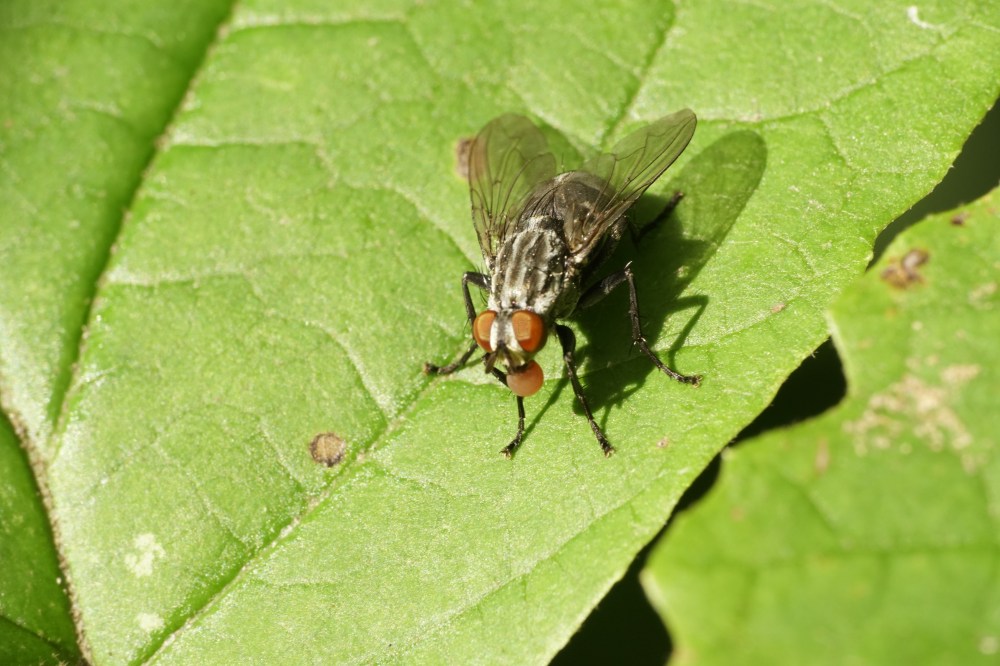
On a dead mushroom. Perhaps Drosophila.


What the hell is in its mouth?
Basilica orb-weaver, with its web (Mecynogea lemniscata)
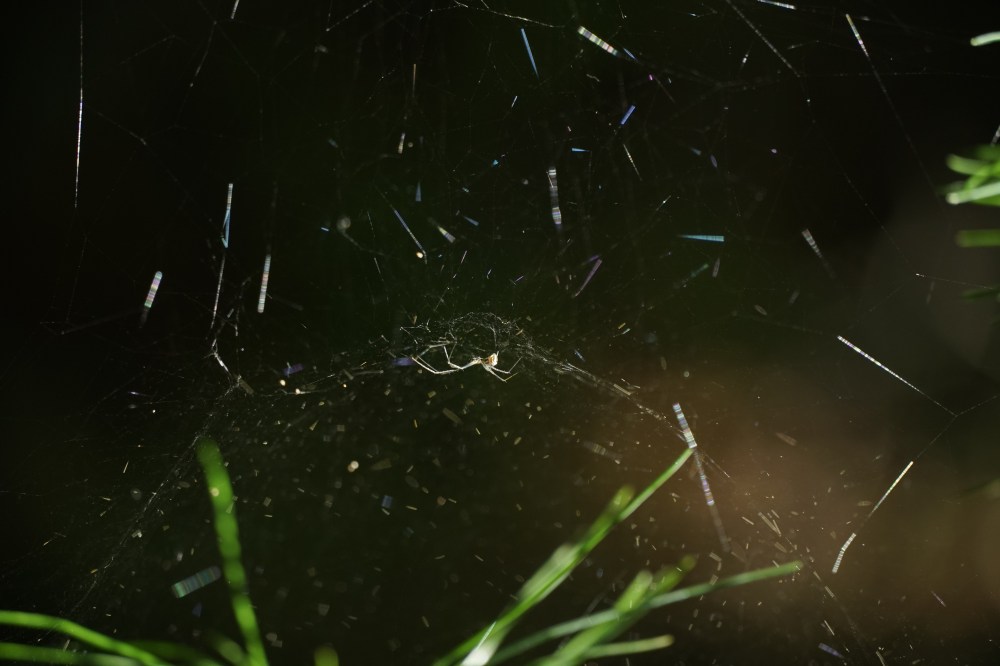
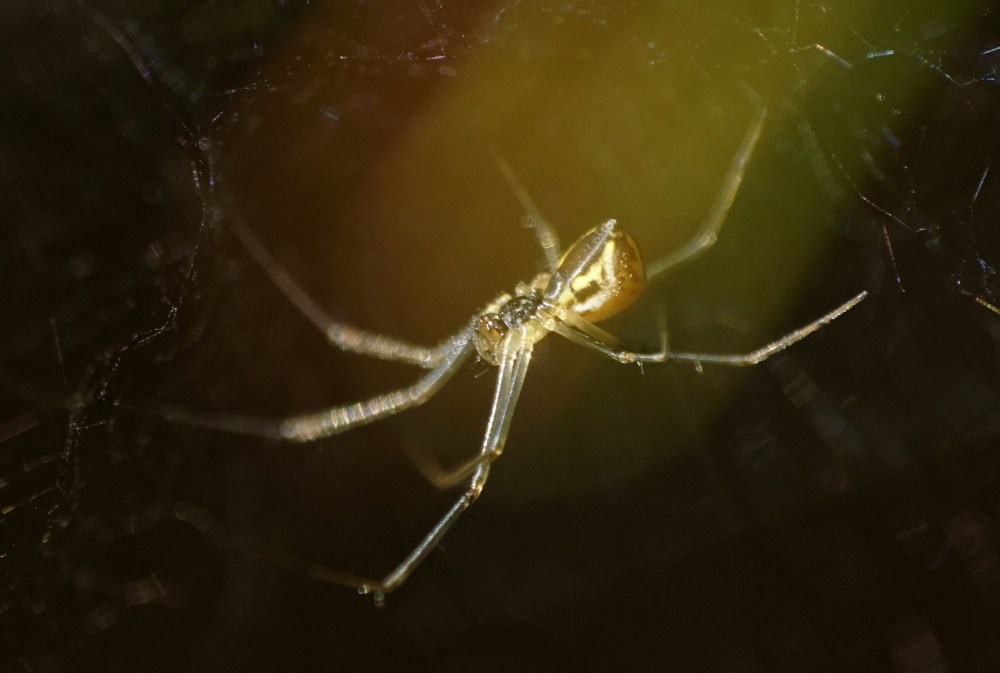
Some miscellaneous insects found around the house, and rather more insects than are strictly desirable found inside it.
First, the copper underwing, Amphipyra pyramidoides. If this photo seems a little strange, it’s because it was sitting on a mirror.

Next, a dermestid beetle larva.

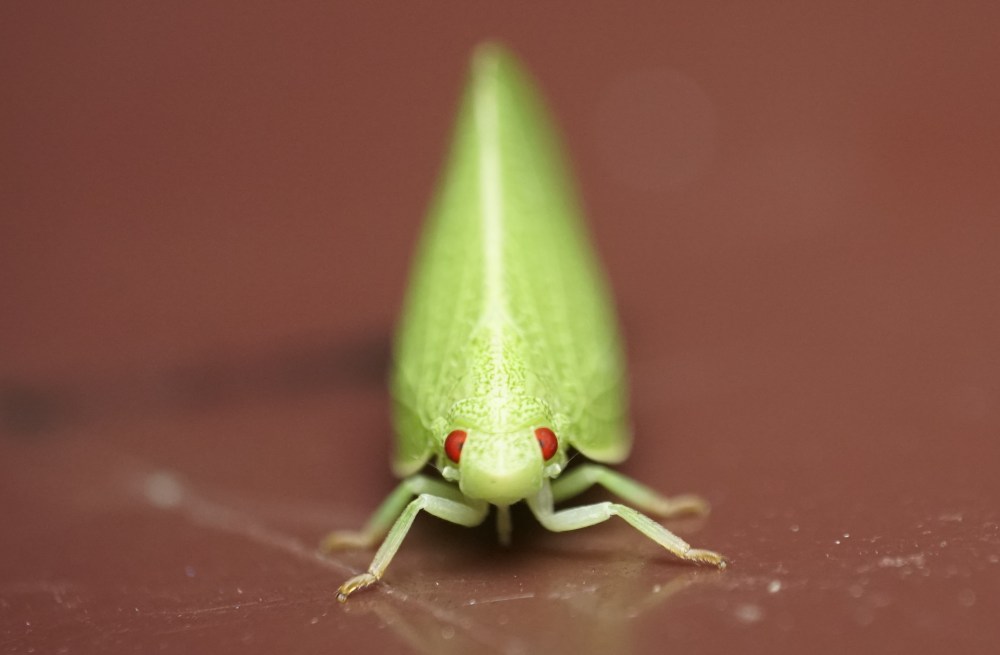
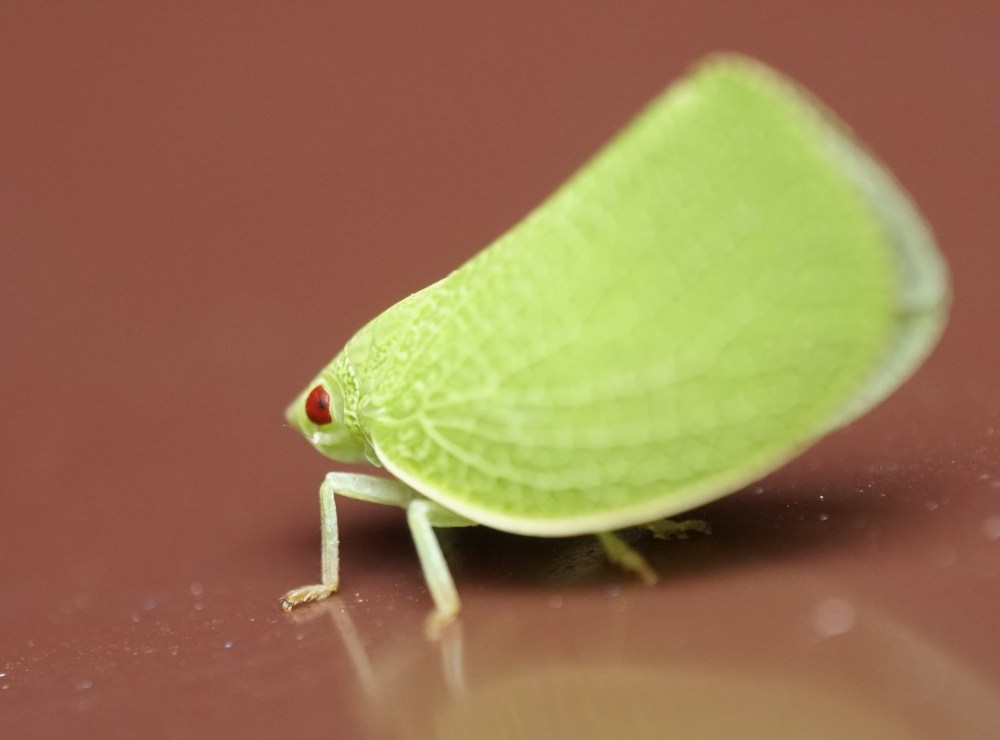
Finally, a planthopper I found when taking out the recycling, sitting on the bin. Best guess: Acanaloniidae, genus Acanalonia, maybe Acanalonia conica?
 a little wild