A good test for the night mode of my Sony A33. Venus and Jupiter were about 1/3 of a degree apart.

| From 20150630_conjunction |
A good test for the night mode of my Sony A33. Venus and Jupiter were about 1/3 of a degree apart.
| From 20150630_conjunction |
On June 23rd, we had some fantastic weather (it was fantastic because nobody got hurt and there was no damage). We saw plenty of action, and some conical clouds that did not touch the ground; but a couple of towns over, in Wrentham, there was a documented tornado at around 6 pm. Sunset, around 8:30, was spectacular.
This is a good time to remind everyone that I try to minimize the photo processing on my photos, because in the end I want to go back to nature and see the patterns where they live. This particular set has no post-processing at all. (An exception, of course, is black and white photos, where I feel justified in playing with the contrast — it’s an honest form of lying.)


| From 20150623_after_tornado |
| From 20150623_after_tornado |
| From 20150623_after_tornado |
Cast the photo black and white, crank up the contrast, and pray for atmosphere:


| From 20150620_king_phillips |
| From 20150620_king_phillips |
| From 20150620_king_phillips |
| From 20150620_king_phillips |
Love Odonates! Especially love to get them flying, which is tough.


| From 20150620_king_phillips |
| From 20150620_king_phillips |
It was a big day for beetles, too:

| From 20150620_king_phillips |
Ground beetle? Tiger beetle? This seems an awkward angle:

| From 20150620_king_phillips |
This is genus Calosoma, ground beetles (Carabidae). Looking at this shell with and without flash was interesting — see where the color comes from?


| From 20150620_king_phillips |
| From 20150620_king_phillips |
| From 20150620_king_phillips |
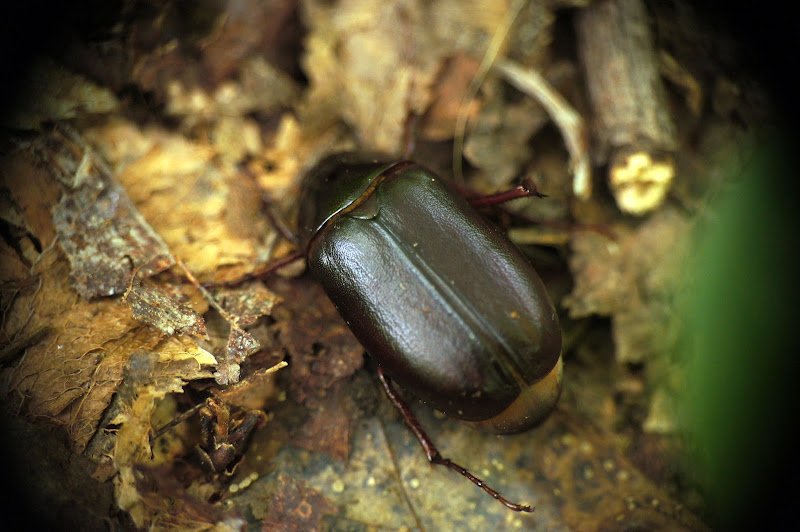
What a gorgeous scarab beetle (June bug, Phyllophaga nebulosa?).
I turned over a rock, and saw a sowbug killer spider (Dysderidae); in fact, I’ve pretty much only seen these spiders when I look under rocks. Also some interesting unidentified ants.
And finally, plenty of very mysterious insect signs:Note that in this next photo, the twigs were only on top and did not pass through the leaf. Perhaps from the bagworm, Psychidae.A very shiny egg sac for somebody:This is the cocoon of a parasitic wasp. There is a shrivelled caterpillar somewhere in this mess that has been eaten away by the wasp larvae.


| From 20150620_king_phillips |
| From 20150620_king_phillips |
| From 20150620_king_phillips |
| From 20150620_king_phillips |
| From 20150620_king_phillips |
| From 20150620_king_phillips |
| From 20150620_king_phillips |
| From 20150620_king_phillips |
A wet morning. The droplets on the grass and bushes were too inviting, so I took some time to take some photos.
I find it tough to properly frame and crop photos like these, as they are composed of an accumulation of lots of small but interesting elements. There’s not always a well-defined focus or flow to them. When you see an opportunity for a good photo then, go and grab it!


| From 20150616_droplets |
| From 20150616_droplets |
| From 20150616_droplets |
| From 20150616_droplets |
| From 20150616_droplets |
What I’ve noticed about photographing water droplets is that it’s critical to consider what’s behind the droplet, in terms of both background (flowers and leaves are nice!) and sunlight. Still trying to get better at this.


| From 20150616_droplets |
| From 20150616_droplets |
| From 20150616_droplets |
Finally, this one is the one that got away. I was really looking forward to showing the blades of grass skewing in all directions, each with its strand of droplets — unfortunately, I didn’t calculate for the foreground piece out of focus.

| From 20150616_droplets |
Here’s the best crop I could recover from it:

| From 20150616_droplets |
Another half an hour to kill while my son had guitar lessons. A trip to Devil’s Rock was the obvious choice. I saw a lot of wasps flying around, but they were very tough to photograph in flight.
I followed this particular wasp for almost the entire half hour. The long ovipositor identifies her as a “she”; she’s probably a Braconid wasp, and probably of the genus Atanycolus. No surprise, she spent a lot of time walking around a rotting log; no surprise, I followed her everywhere she went, trying to get a shot of her laying her eggs in the wood. Sadly, it was no dice.

| From 20150528_devils_rock |
What was she doing? While I don’t know anything about Atanycolus in particular, I have some general ideas of Braconids and Ichneumonids. They are parasitoids, and try to lay their eggs in beetle grubs, caterpillars, and other insects. Some Atanycolus species are wonderful at controlling the Emerald Ash Borer, which would mean a lot, since that is a major pest of our forests.

| From 20150528_devils_rock |
The beetles react by laying their eggs deep in the wood. The wasps fight back by growing long ovipositors and developing the almost supernatural ability to detect grubs deep in the wood and managing to aim their ovipositors directly into the grubs.
They tend to walk along the wood, tapping with their antennae, listening for sounds that indicate that there is something in the trunk that’s not wood, and searching for the smell. Being able to drill into the wood is very impressive — they’ve evolved to actually have metal in their ovipositors. Yes: you can call them bionic.

| From 20150528_devils_rock |
Here’s a closeup of the ovipositor, a little hairier than I expected!

| From 20150528_devils_rock |
It’s sometimes not pleasant to think of parasitoids laying their eggs in living creatures. But let’s not superimpose human standards onto these wonderful animals, and instead take the time to admire their amazing abilities.
I think of insects as wildlife that do home delivery. You don’t get orcas dropping by your house asking if you want to take photos of them, but insects and spiders are just as interesting, and are quite happy to hang out with you, whether you ask them to or not.
Summer means midges inside and outside the house. They’re pretty small, about 1.5 mm or so, so I see them all over the place, but have never got a good look at them to see what they’re like. That means I had to drag out the camera and take some photos.

| From 0000_misc |
The next few are presumably male, because of the feathery antennae.


| From 0000_misc |
| From 0000_misc |
| From 0000_misc |
A Gnaphosid spider:

| From 20150524_moose_hill |
I really loved this beetle, which belongs to the family Carabidae, or ground beetles. Iridescent colours and a wonderfully alien head.

| From 20150524_moose_hill |
Closeup of the head:

| From 20150524_moose_hill |
And here’s a closeup of the elytra (shell) of the beetle.

| From 20150524_moose_hill |
Continuing on the theme of experimenting with dandelions. As mentioned, I added the macro snap-on lens and I cranked up the aperture, in order to decrease the depth of field. This was so that the dandelion wisps in the foreground went bokeh and allowed us to see the center. Unfortunately, with the lenses I had available, this meant that I was unable to get the whole dandelion into the field of view. I should try again with other lenses.
Using flash, of course, made the background dark, which made them more dramatic.
I can’t decide which of these two (or the one in the previous post) looks best.


| From 20150524_moose_hill |
| From 20150524_moose_hill |
I had exactly half an hour to spare and was in the area, so a quick trip to Devil’s Rock was just what hit the spot.
Please forgive me for posting some more longish exposures of the stream. I’ll try to control myself in the future. Not as strong a flow as early spring, of course.

| From 20150514_devils_rock_home |
| From 20150514_devils_rock_home |

Found this dandelion at home. I cranked up the aperture to decrease size of the focal plane, and focused on the center of the flower, keeping the outside in the frame.

| From 20150514_devils_rock_home |
I don’t shoot a lot of videos, but I thought that this one was pretty cool. Water droplets on their stochastic path down the rock.


| From 20150415_devils_rock |
| From 20150415_devils_rock |
If you take a short exposure, it seems to freeze the waves, and often seems static. If you take a long exposure, it blurs all the movement and ends looking rather static, too. These exposures are about half a second or so, and to me they bring out the action and look more dynamic. I really need to use a tripod, and get a neutral density filter, though.

| From 20150415_devils_rock |
| From 20150415_devils_rock |
| From 20150415_devils_rock |


 a little wild