Lots of fungus, these identifications are by iNaturalist Seek. I know AI apps aren’t always exactly perfect, so please treat fungus identifications below with a certain amount of skepticism.
Araneus, notice the shoulder tubercles.

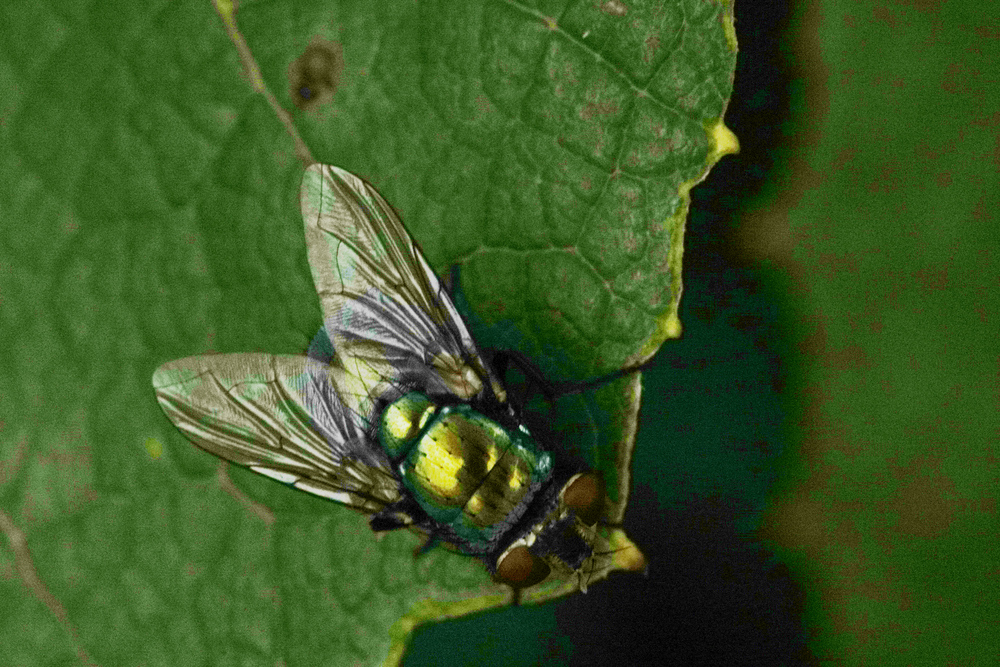
Bottle fly, Lucilia in Calliphoridae.
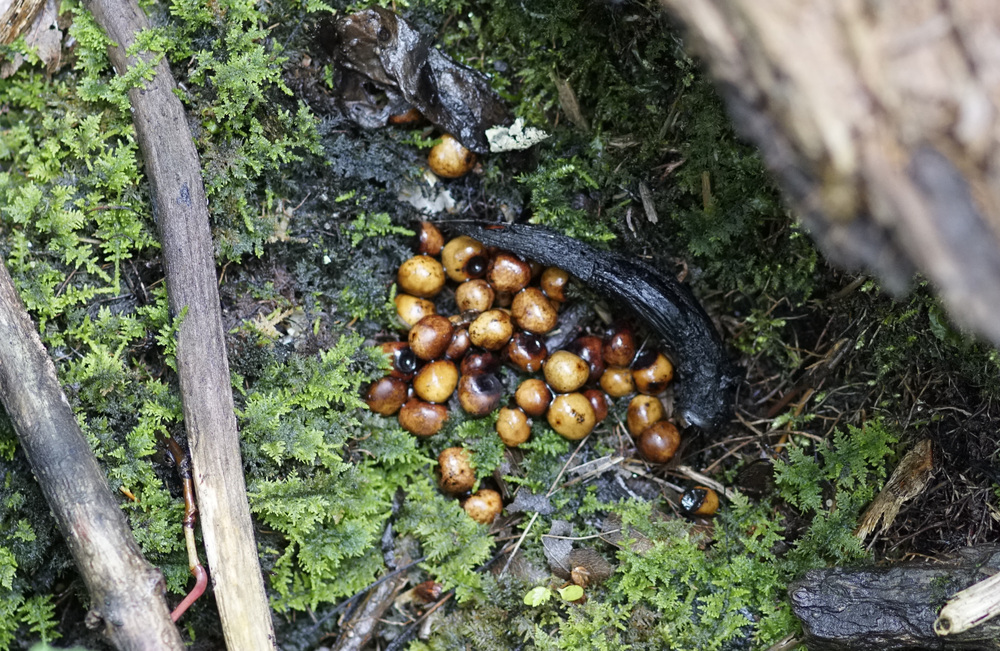
I don’t know what this is. iNaturalist says Calostoma, but I don’t know.
A glass-like mushroom. Maybe Cortinarius cf iodes.
Wikipedia:
Cortinarius iodes, commonly known as the spotted cort or the viscid violet cort, is a species of agaric fungus in the family Cortinariaceae. The fruit bodies have small, slimy, purple caps up to 6 cm (2.4 in) in diameter that develop yellowish spots and streaks in maturity. The gill color changes from violet to rusty or grayish brown as the mushroom matures. The species range includes eastern North America, Central America, northern South America, and northern Asia, where it grows on the ground in a mycorrhizal association with deciduous trees. The mushroom is not recommended for consumption. Cortinarius iodeoides, one of several potential lookalike species, can be distinguished from C. iodes by its bitter-tasting cap cuticle.
Maybe it’s just me, but the last two sentences seem to contradict each other.

This is Amanita
The genus Amanita contains about 600 species of agarics, including some of the most toxic known mushrooms found worldwide, as well as some well-regarded edible species (and many species of unknown edibility). The genus is responsible for approximately 95% of fatalities resulting from mushroom poisoning, with the death cap accounting for about 50% on its own. The most potent toxin present in these mushrooms is α-Amanitin.

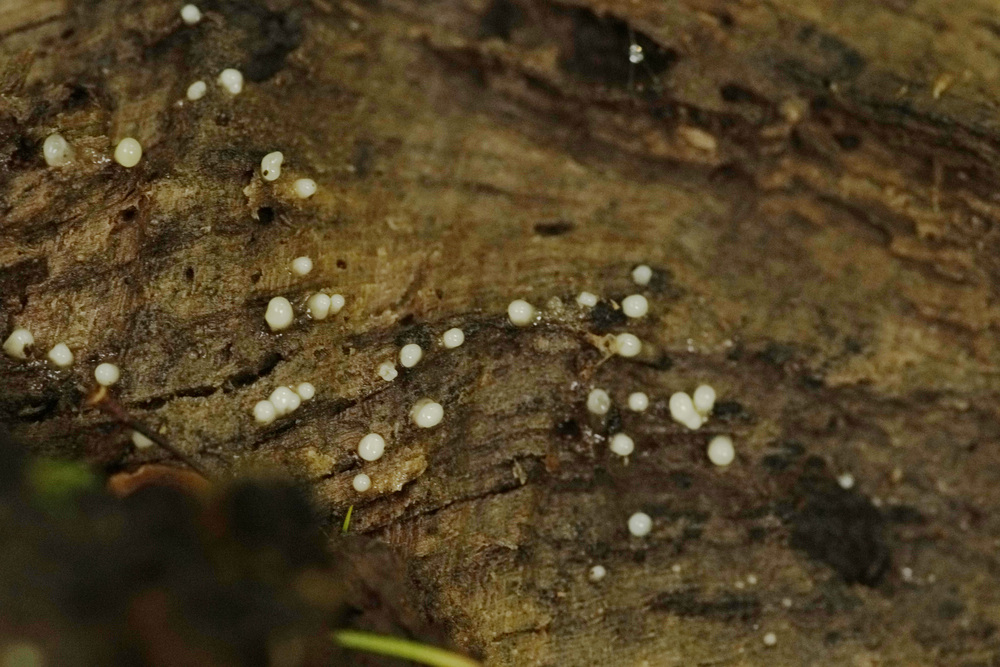
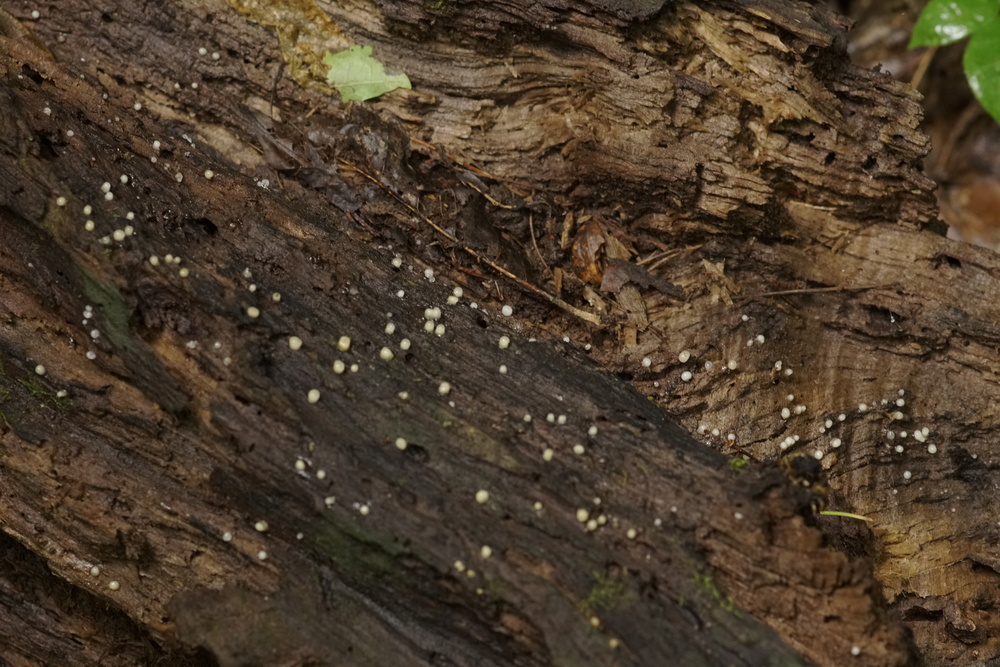
Helicogloea?
Helicogloea is a genus of fungi in the family Phleogenaceae. Basidiocarps (fruit bodies) are gelatinous, effused or pustular, and (microscopically) have unclamped hyphae and basidia that are auricularioid (tubular and laterally septate). Some species form asexual anamorphs producing conidia. The widespread genus contains more than 20 species.[1]
 a little wild
Leave a comment