Urban Nature Walk, organized by Jef Taylor, with the amazing Sloan Tomlinson talking about wasps!
(Some quick identifications now, more at leisure in a few days).
Lepidoptera
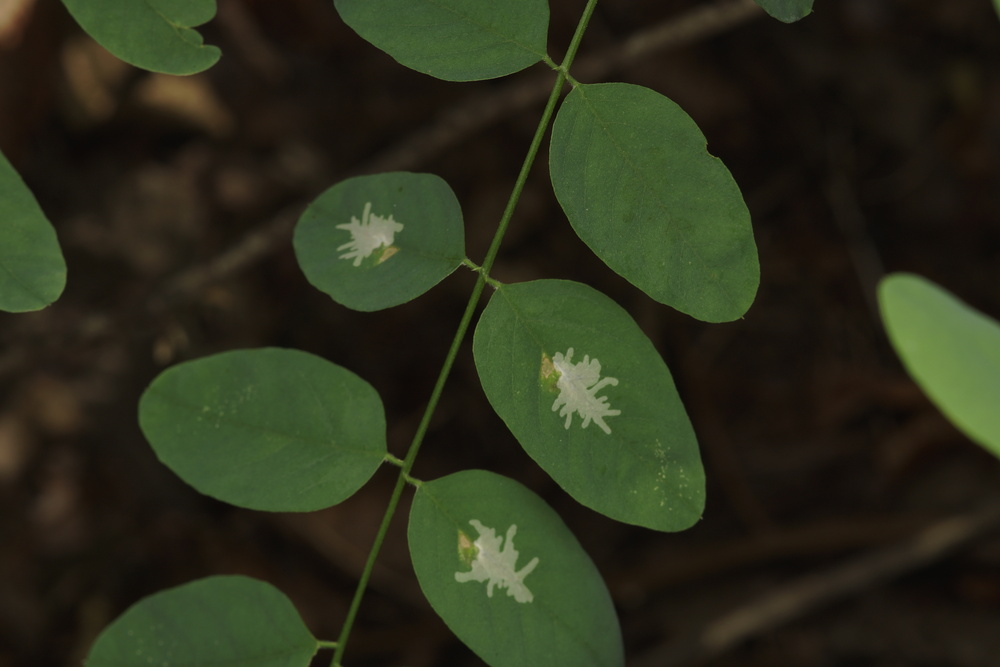
The black locust leaf miner: https://bygl.osu.edu/node/846
“Another twist to add to this story is the fact that there is another leafminer that can be found on black locust trees called the locust digitate leafminer (Parectopa robiniella), a species of moth. The adult moth is tiny with a wingspan less than 1/4″ from tip to tip. Unlike the locust leafminer beetle, only the caterpillar feeds on the leaves of the locust tree. There can be 2 to 3 generations per year.”
Jef pointed out that this one has a central spot, and then carves out the leaf innards outwards from that spot, after which it returns back there and creates another node of the star shape.
Hymenoptera
With Sloan’s presence, of course the Hymenoptera were the star of the outing. It doesn’t mean I was able to actually identify them myself, of course.
Ectemnius, in Crabronidae:

Masked bee in Hylaeus

What bee? Probably something in Andrena.
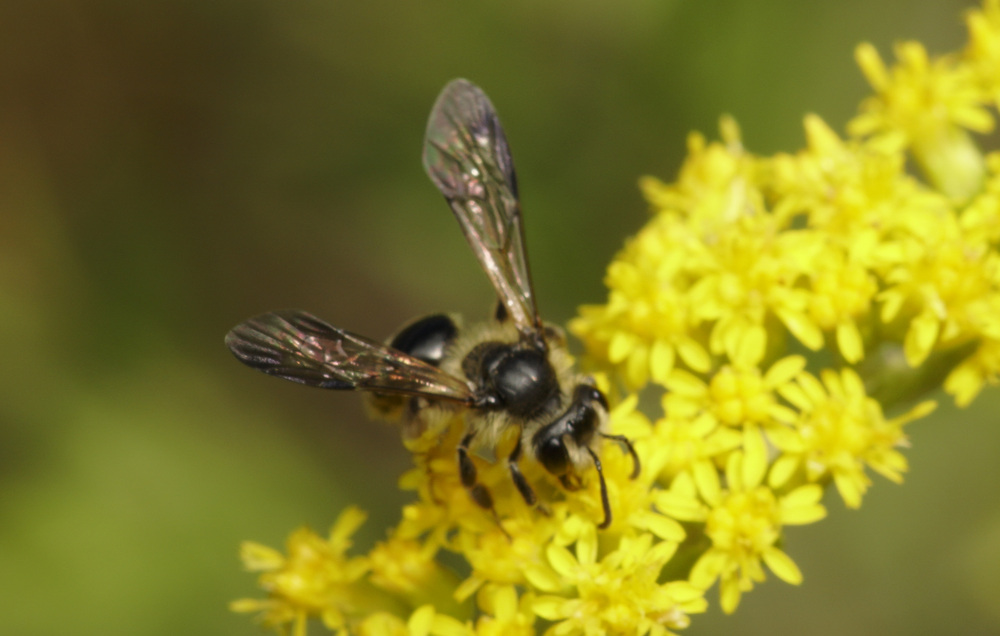
Also something in Andrena, perhaps? EDIT: Andrena nubecula
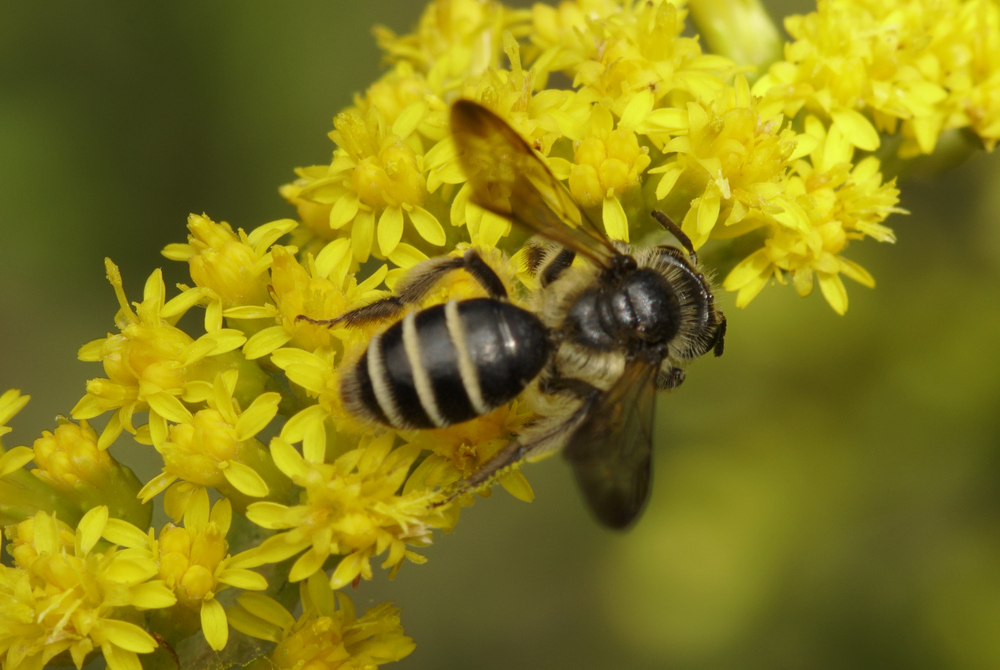

Isodontia cf mexicana

Paper wasp, Polistes

Some type of potter wasp, I think.
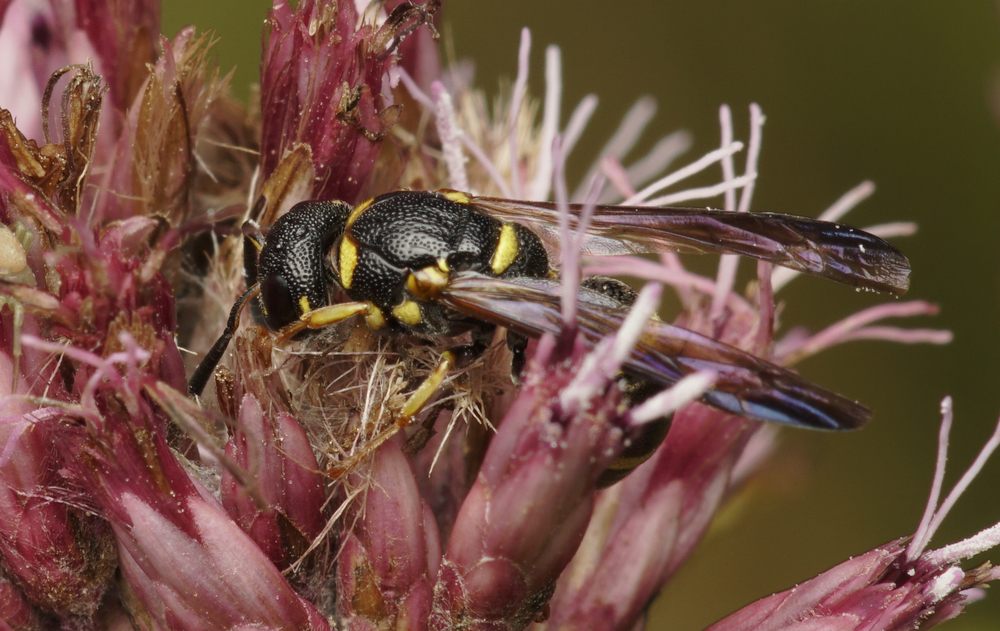
Agapostemon virescens in Halictidae, presumably:


Another Andrena?

Lovely Pompilidae wasp, perhaps Anoplius

Coleoptera
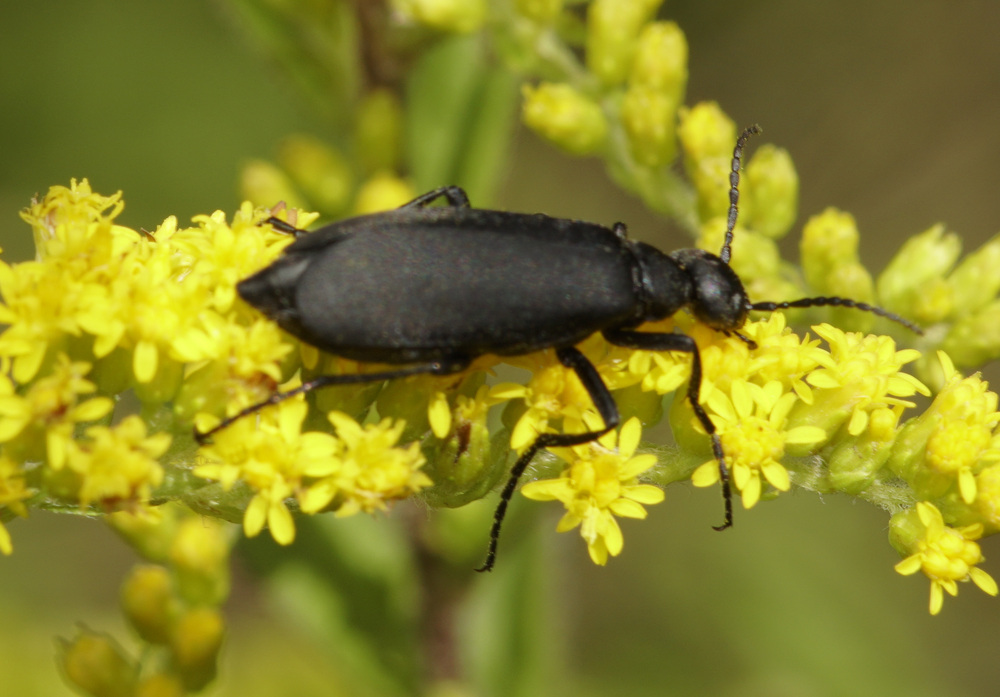
Blister beetle — Epicauta, presumably

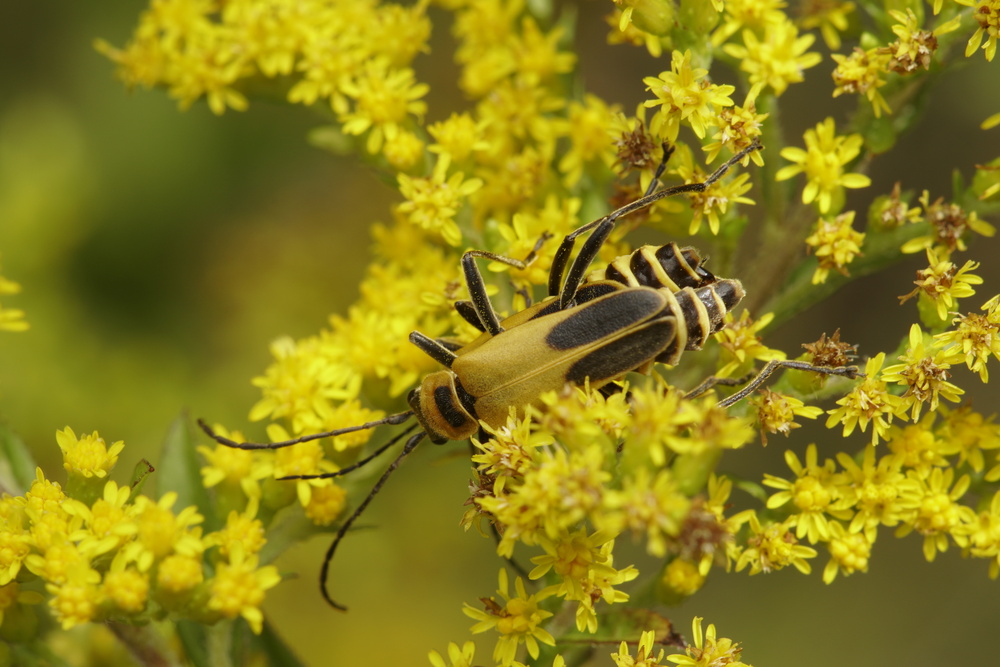
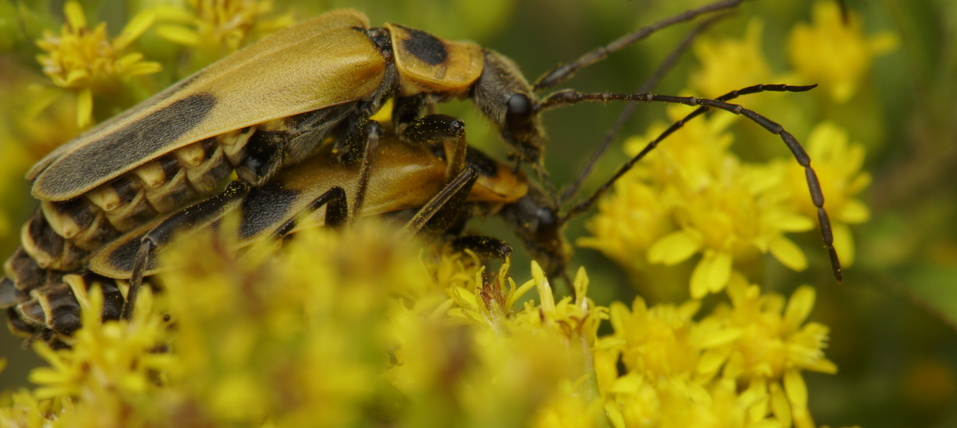
These beetles were absolutely everywhere. Chauliognathus pensylvanicus, goldenrod soldier beetle in Cantharidae. The mystery of the missing ‘n’ in pen(n)sylvanicus persists.
Diptera
Dolichopodidae

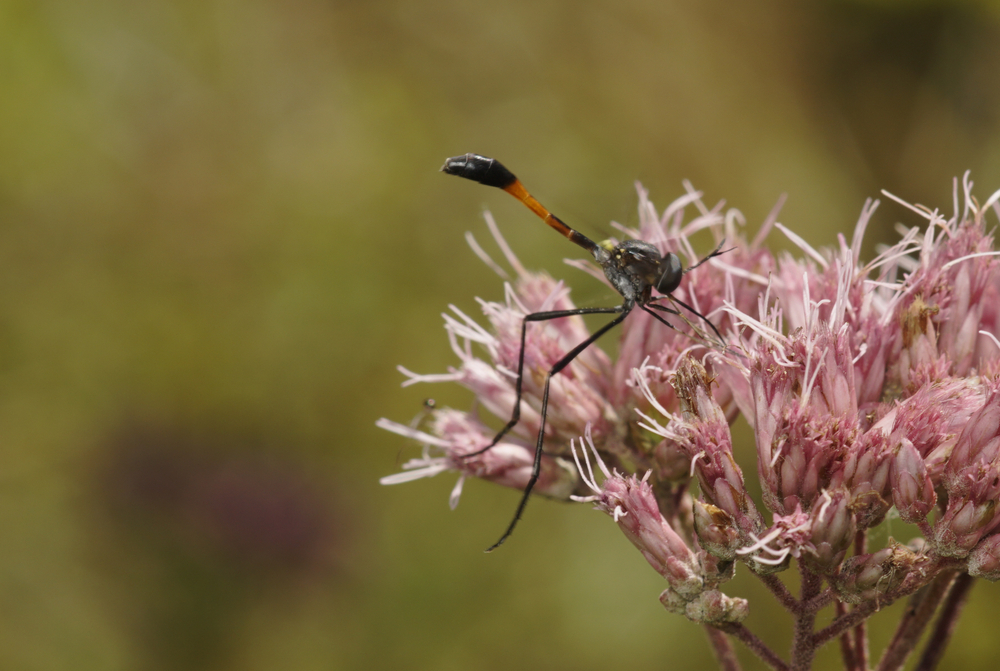
Spectacular Bombyllidae fly imitating Ammophila wasps in Sphecidae. Systropus macer, I think.
From BugGuide: “The best feature to separate this [Systropus angulatus] from the other eastern species, S. macer, is whether the propleuron (the swollen sclerite on the anterior edge of the thorax) is yellow (S. macer) or black with silvery hairs (S. angulatus).”

Hemiptera
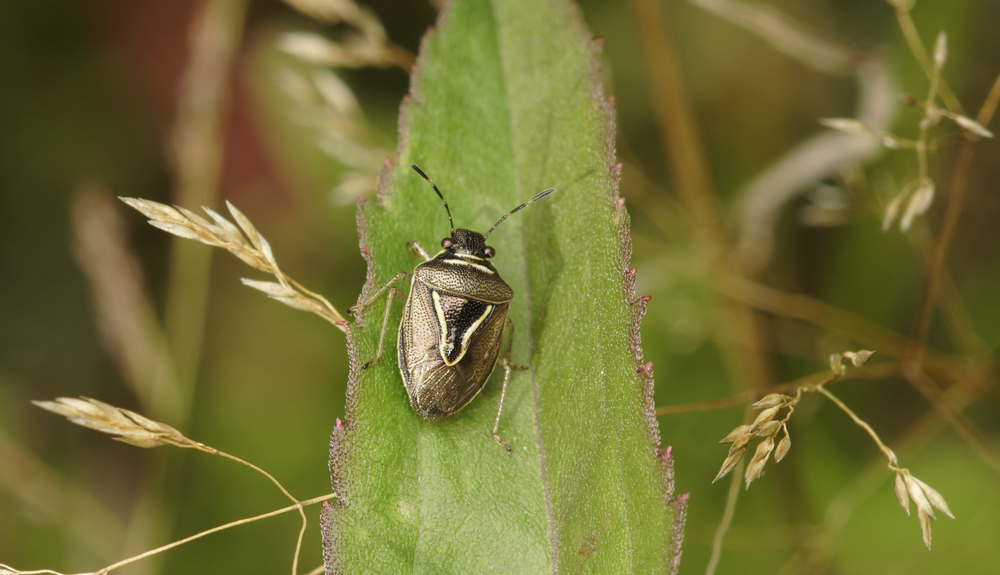
Gorgeous — Pentatomidae –> tribe Carpocorini –> Mormidea lugens, I think.
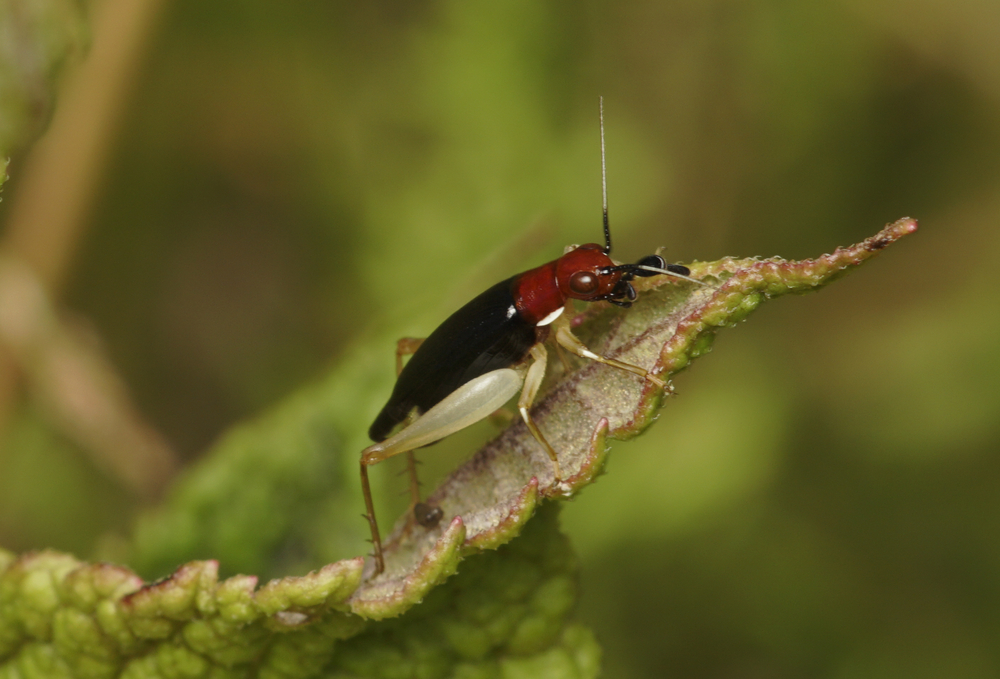
Handsome trig, Phyllopalpus pulchellus
Spiders
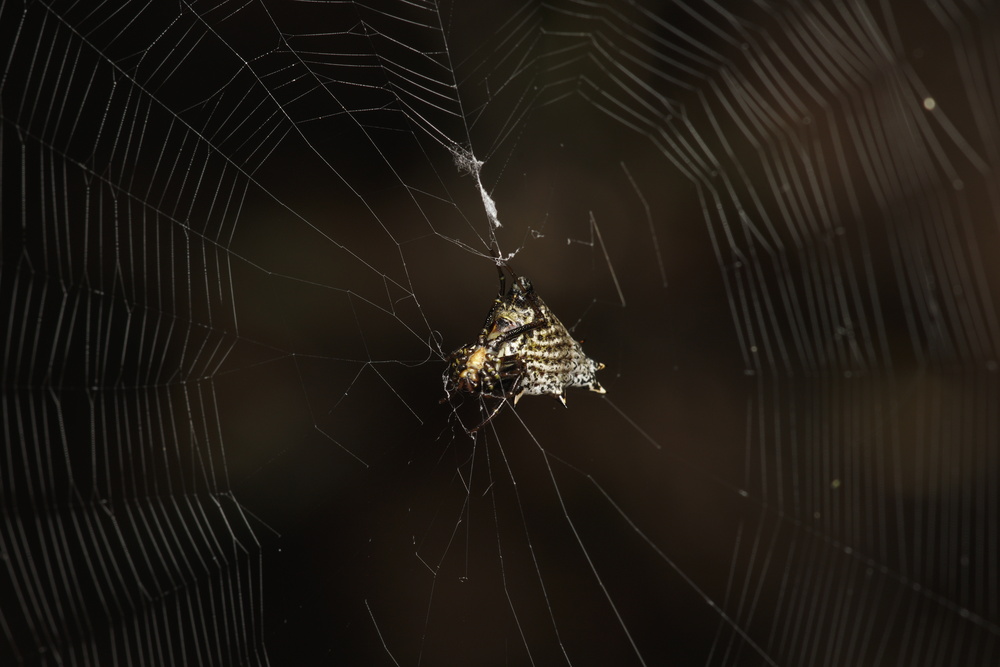
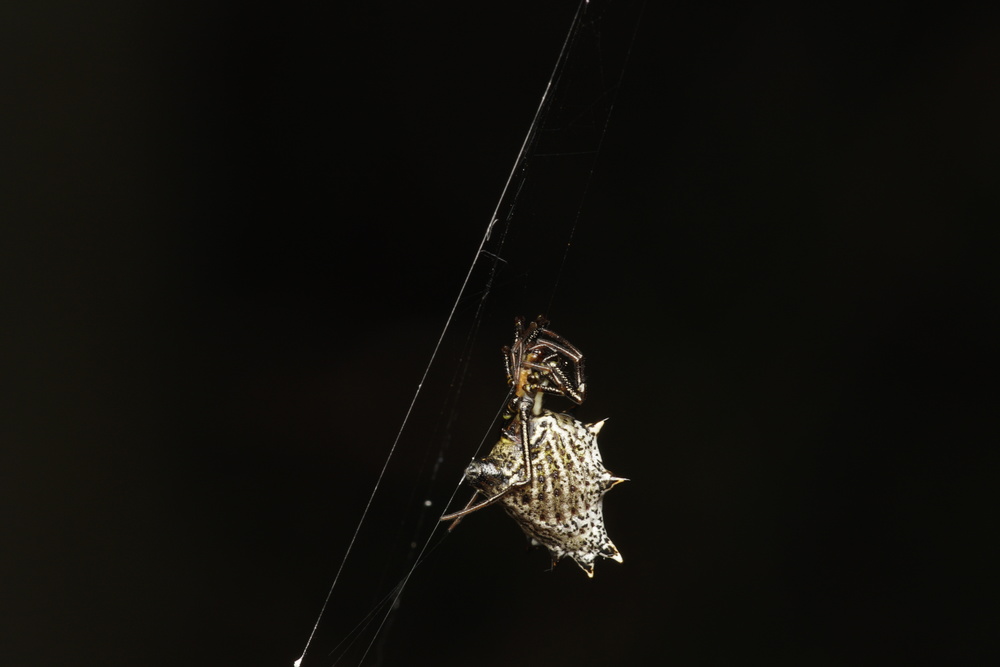
What a gorgeous Micrathena gracilis!
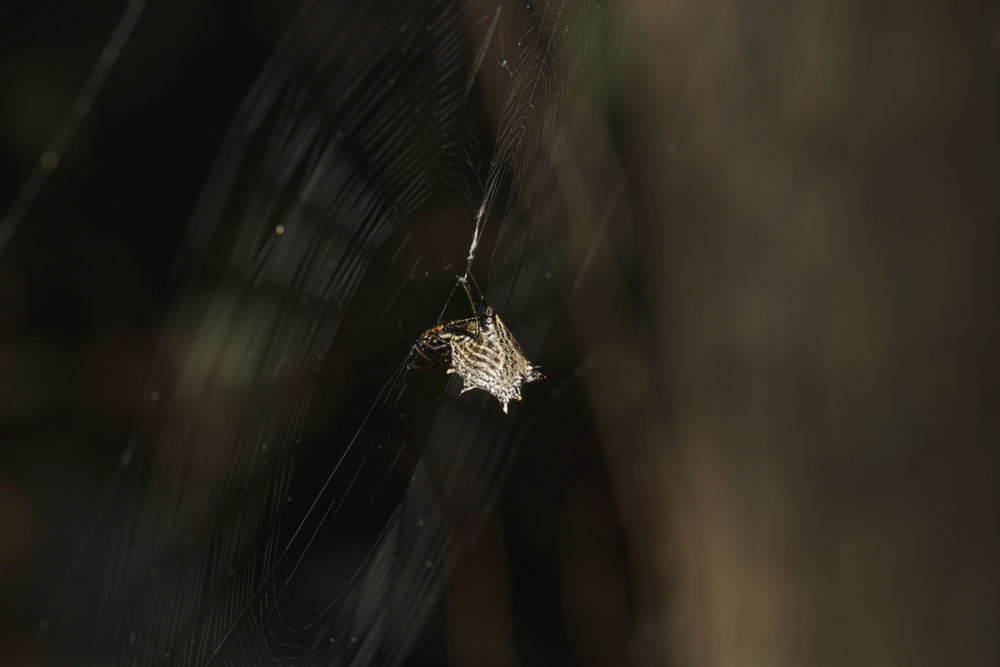
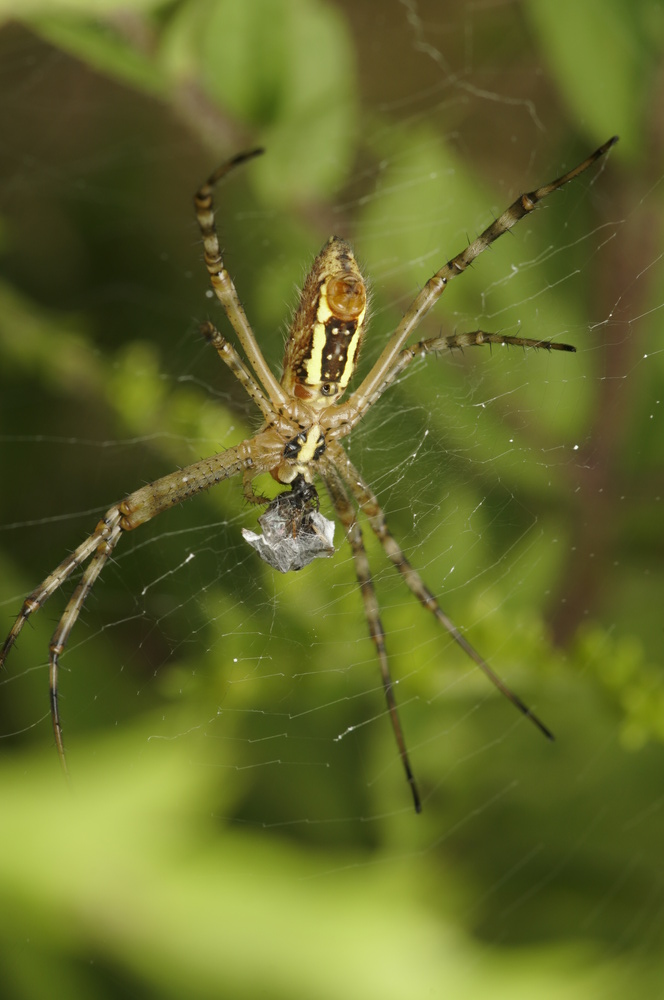
These Argiope were very common!
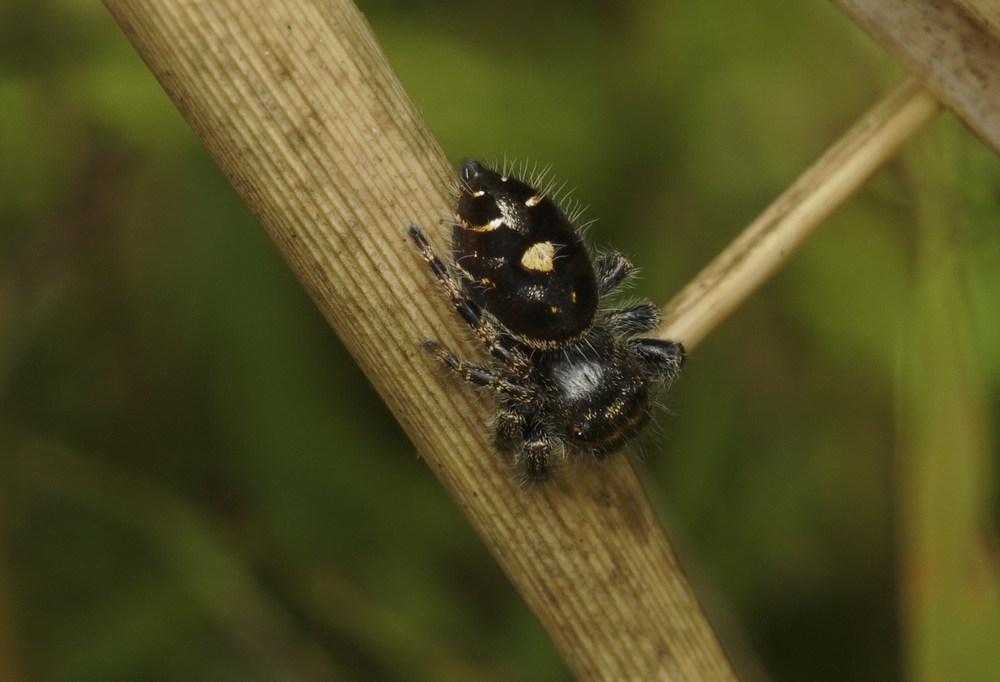
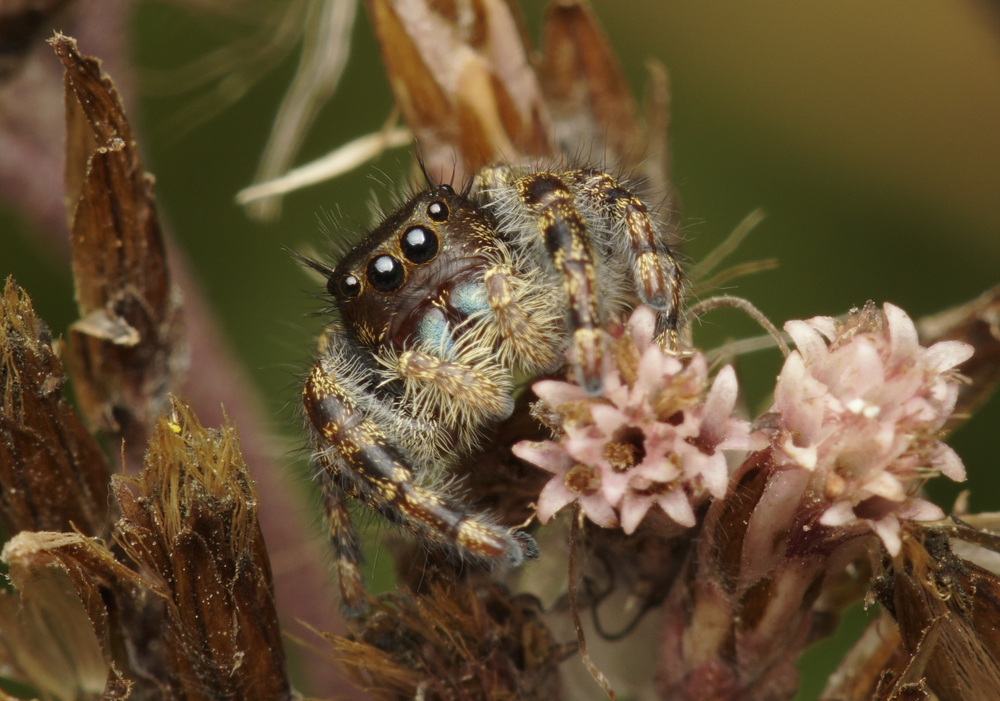
Phiddipus audax
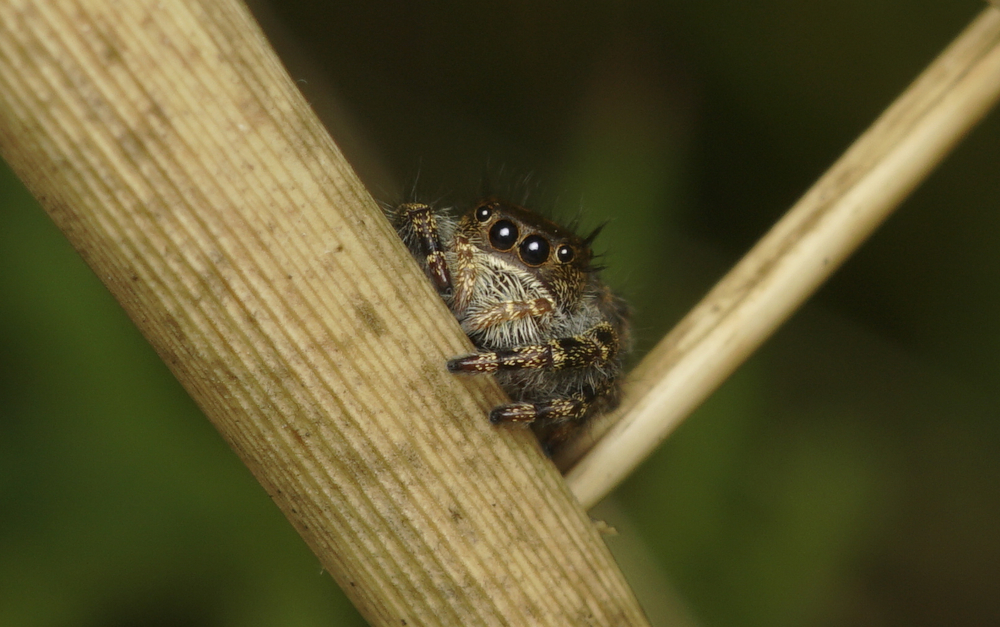
And another:

No bugs
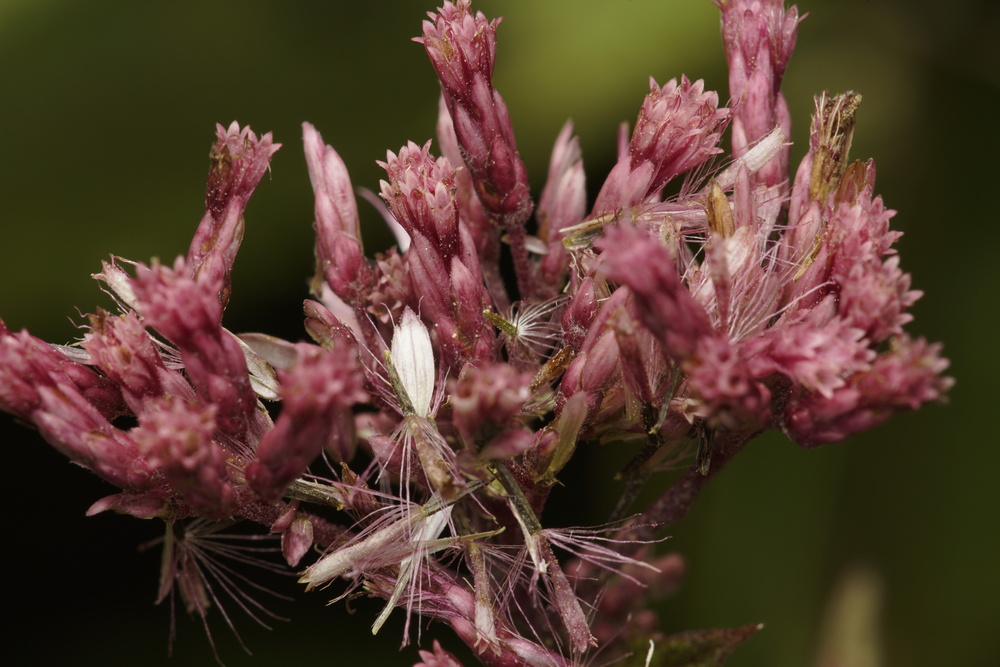
 a little wild
Leave a comment