
Found at night outside the Community Center, I believe pickerel frog, Lithobates palustris, is a good fit.
Found at night outside the Community Center, I believe pickerel frog, Lithobates palustris, is a good fit.
This dragonfly was hovering and returning. I don’t know if they oviposit at this time of year, but that was my first thought.


Autumn bird identifications are tough, but I guess some sort of flycatcher, perhaps a Tyrant Flycatcher? Maybe a phoebe? I don’t know.
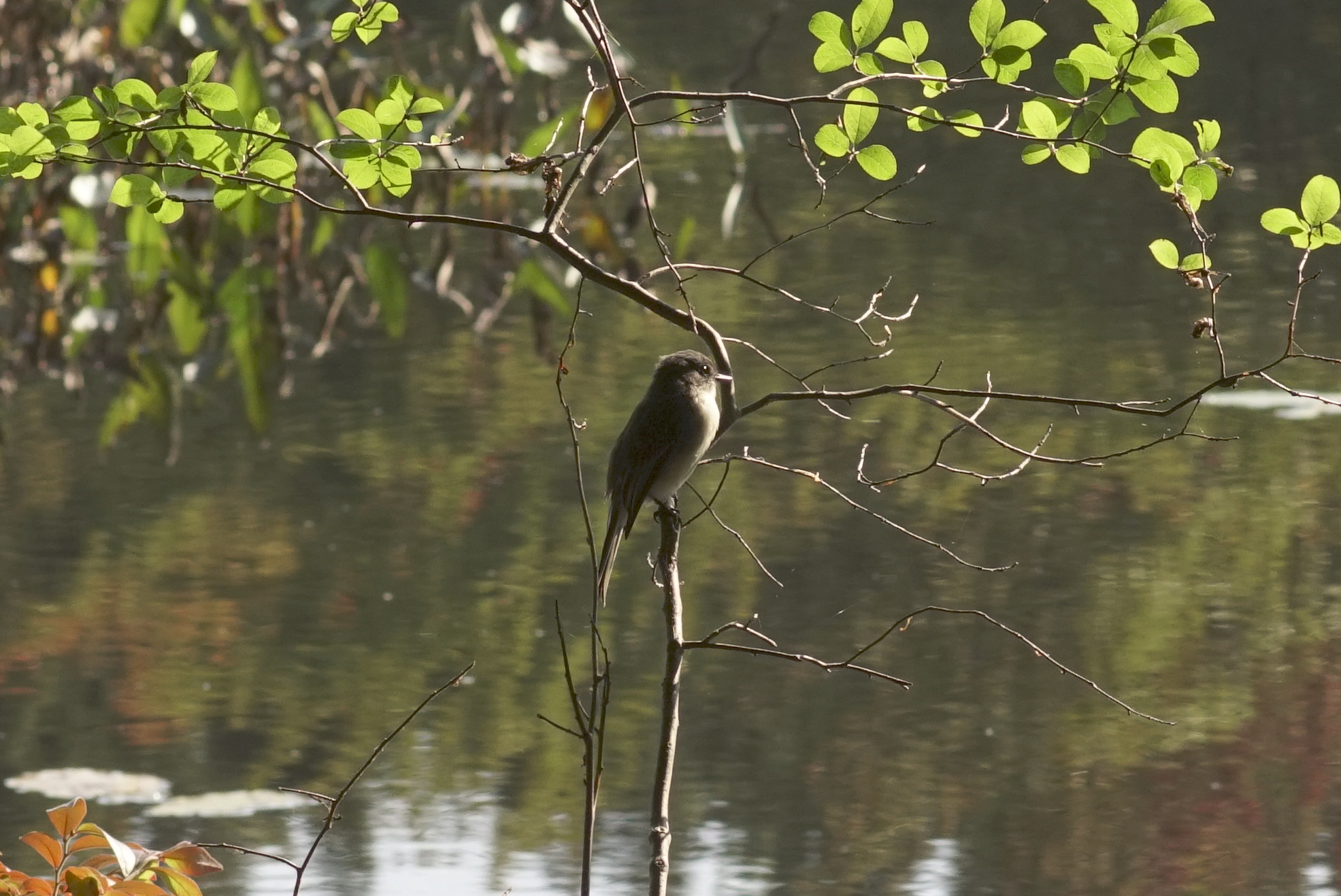
On the bank of Lake Champlain.

Lariniodes cornutus, furrowed orb weaver (furrow orb weaver).
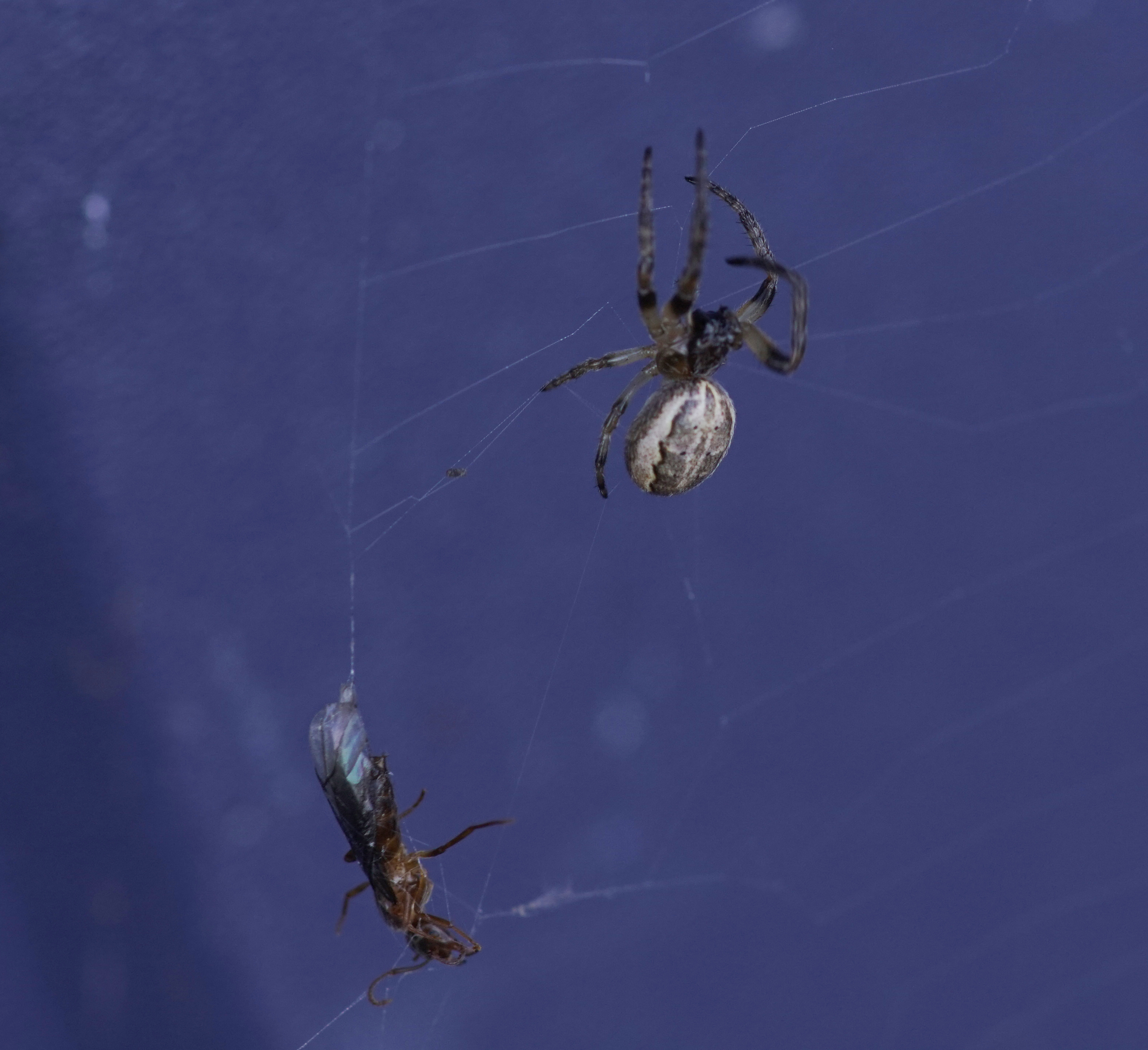
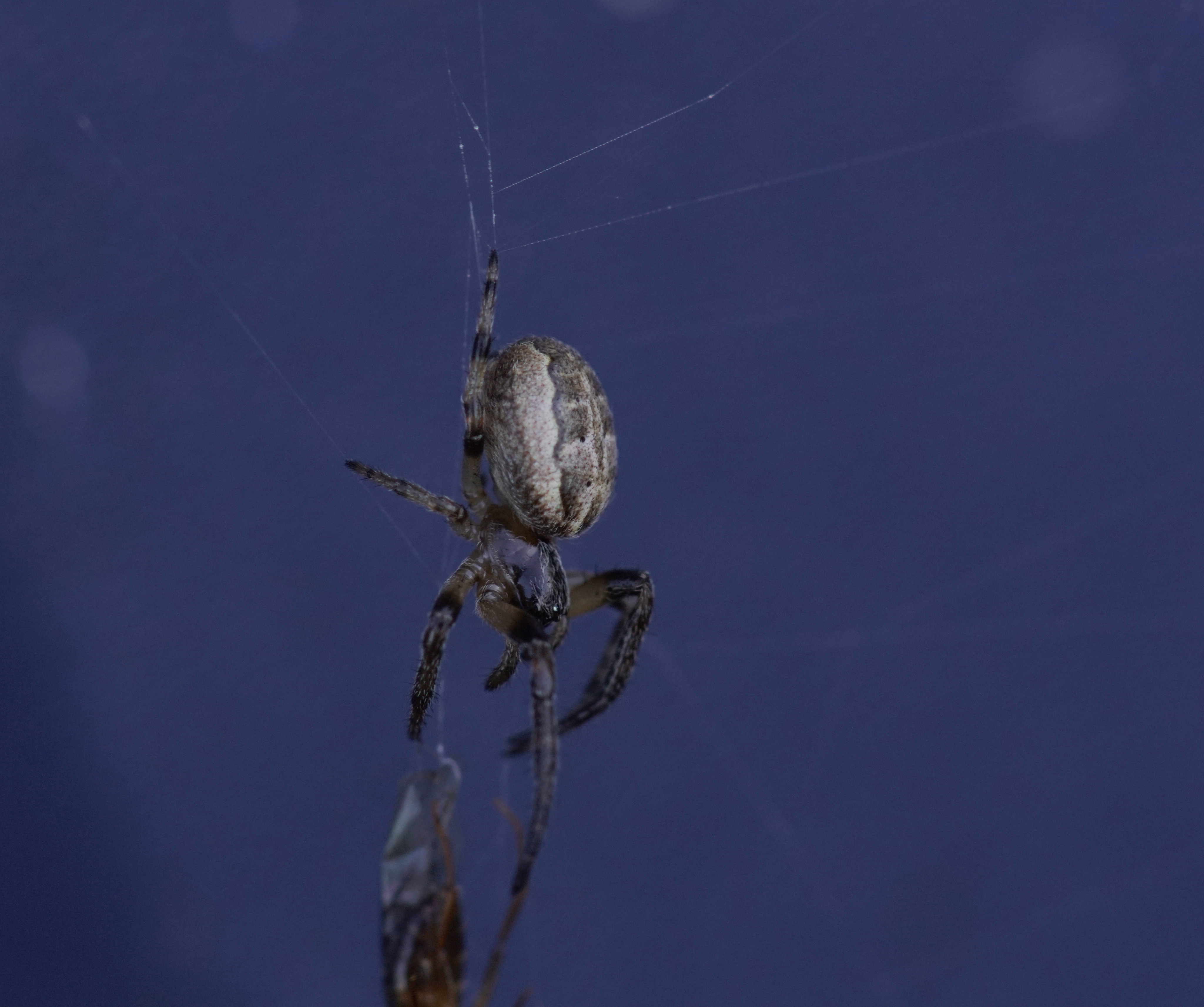
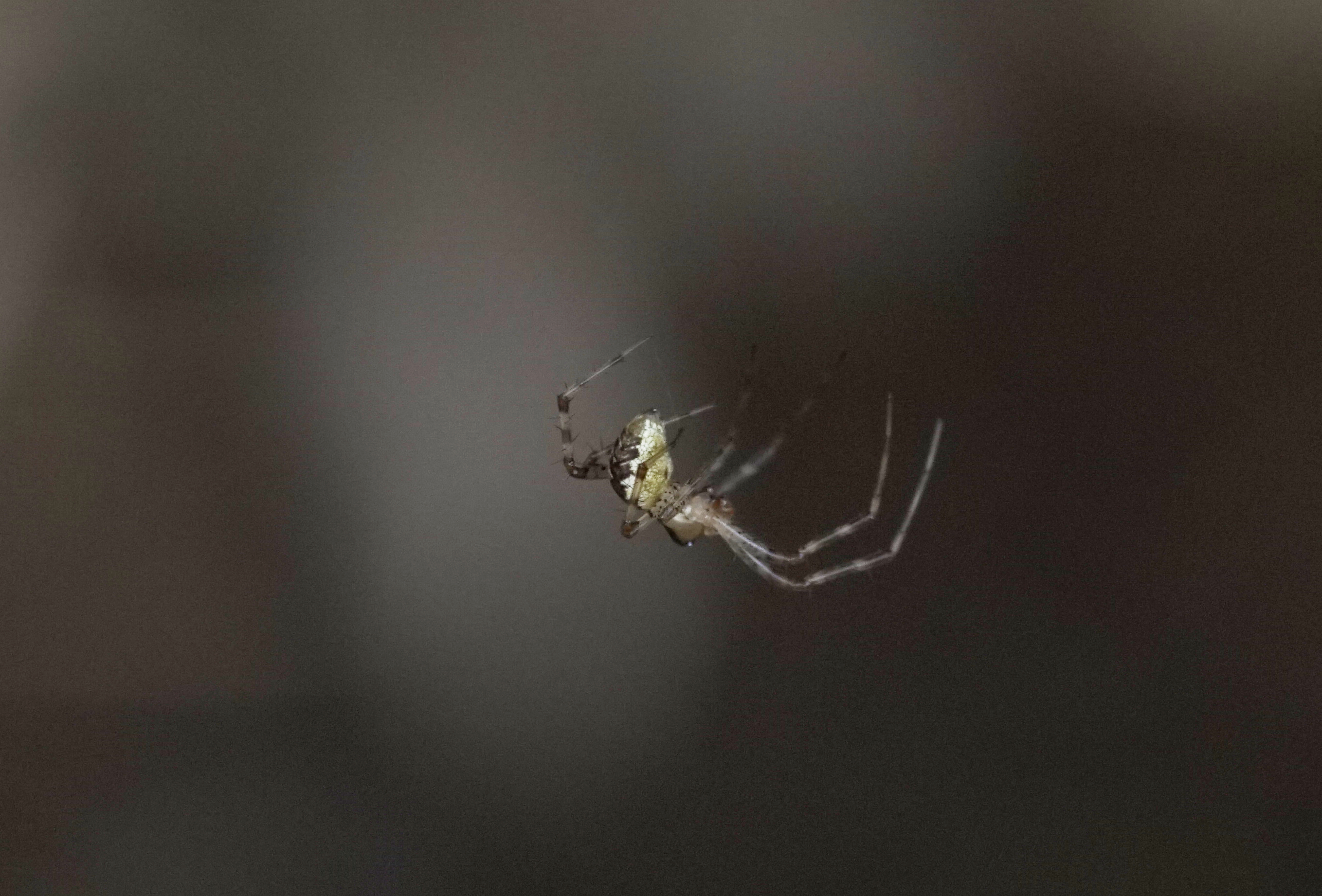
Pardosa, I think (Lycosidae):
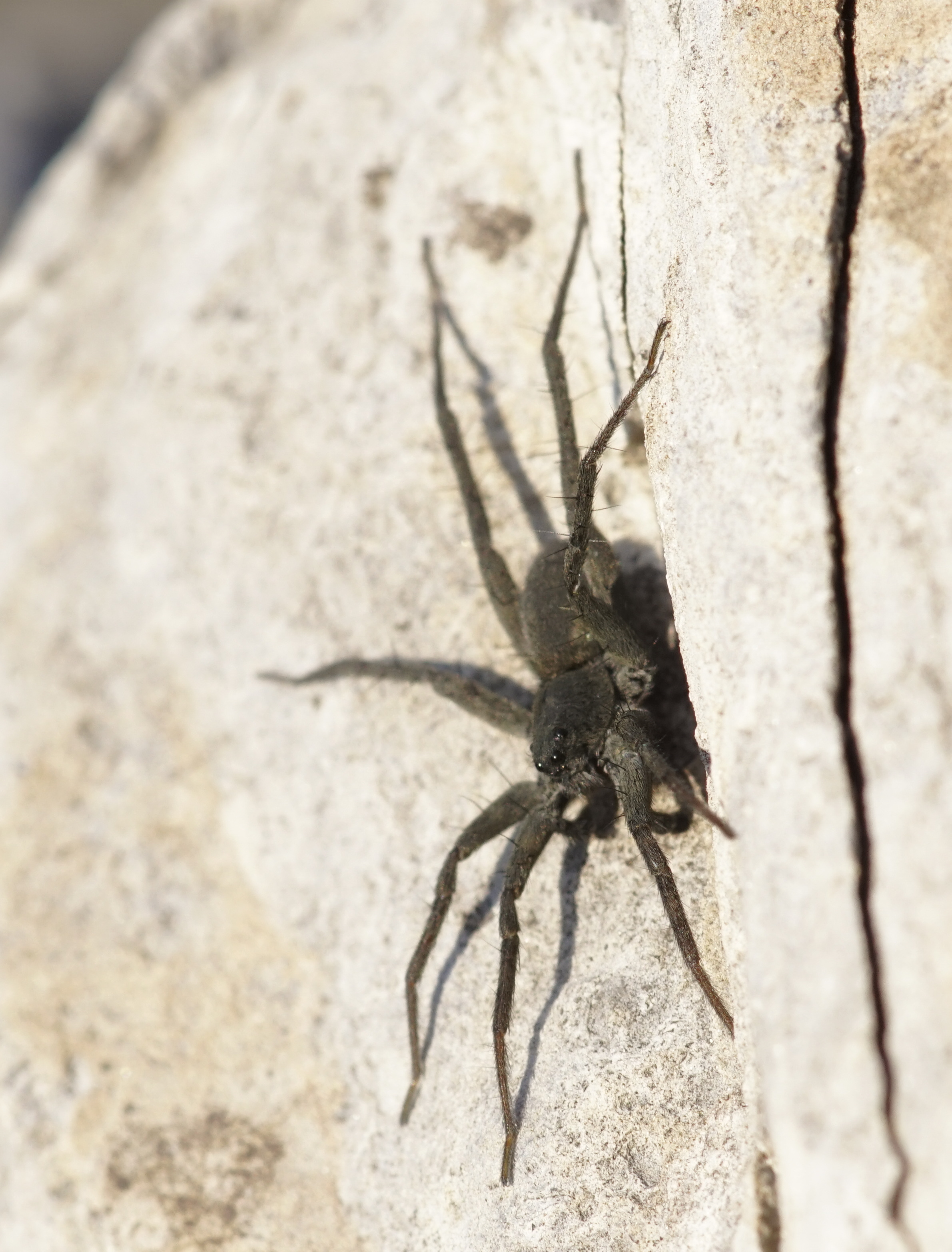

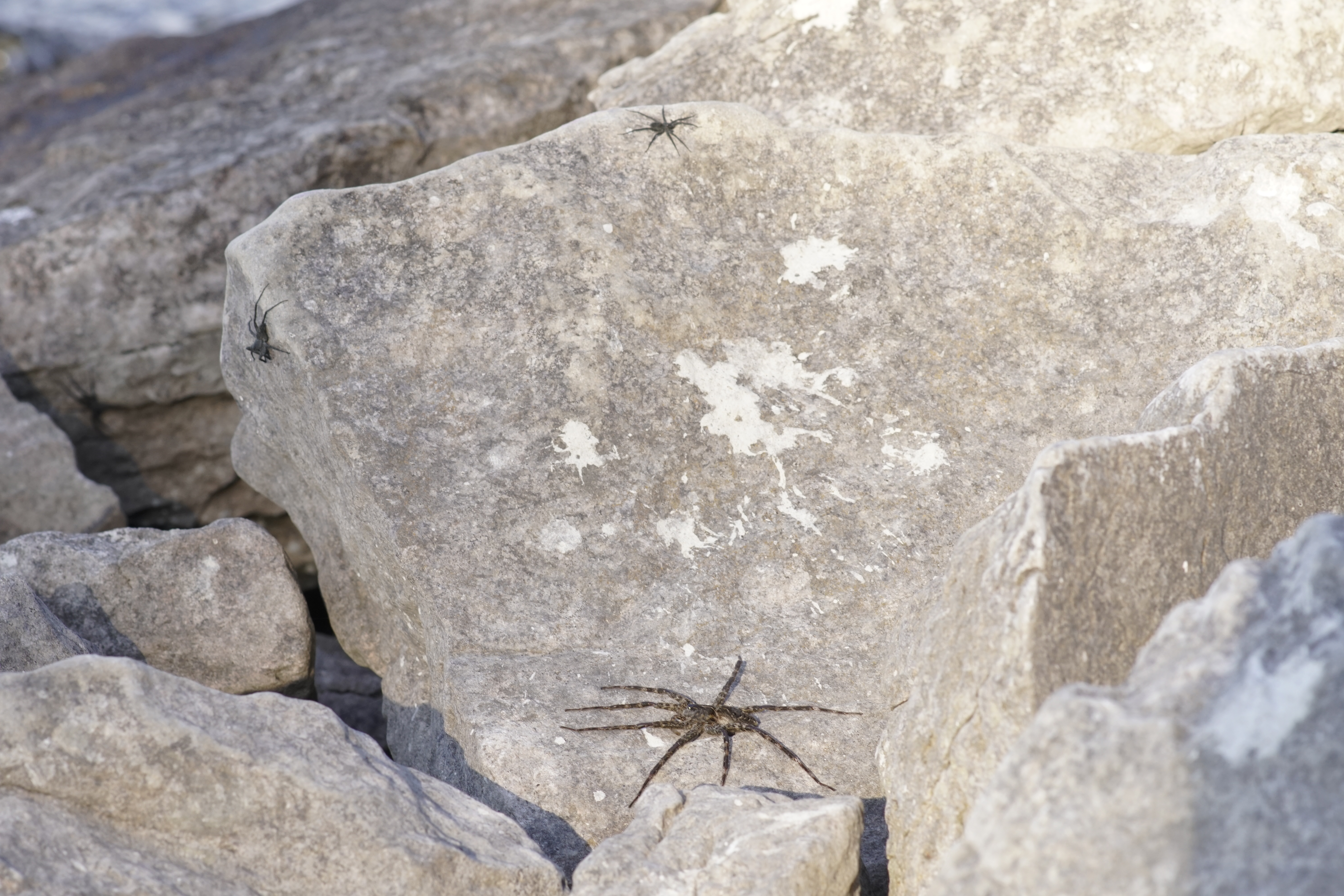
This fishing spider, Dolomedes (not sure whether D. scriptus or D. tenebrosus), was the largest I’ve ever seen. Maybe 3.5-4 inches including legspan (9-10 cm). In this photo, the two other spiders were larger than normal wolf spiders, but they’re dwarfed by this one.


The orbweaver was hiding in this rolled leaf; only the flash brought it out to be visible.

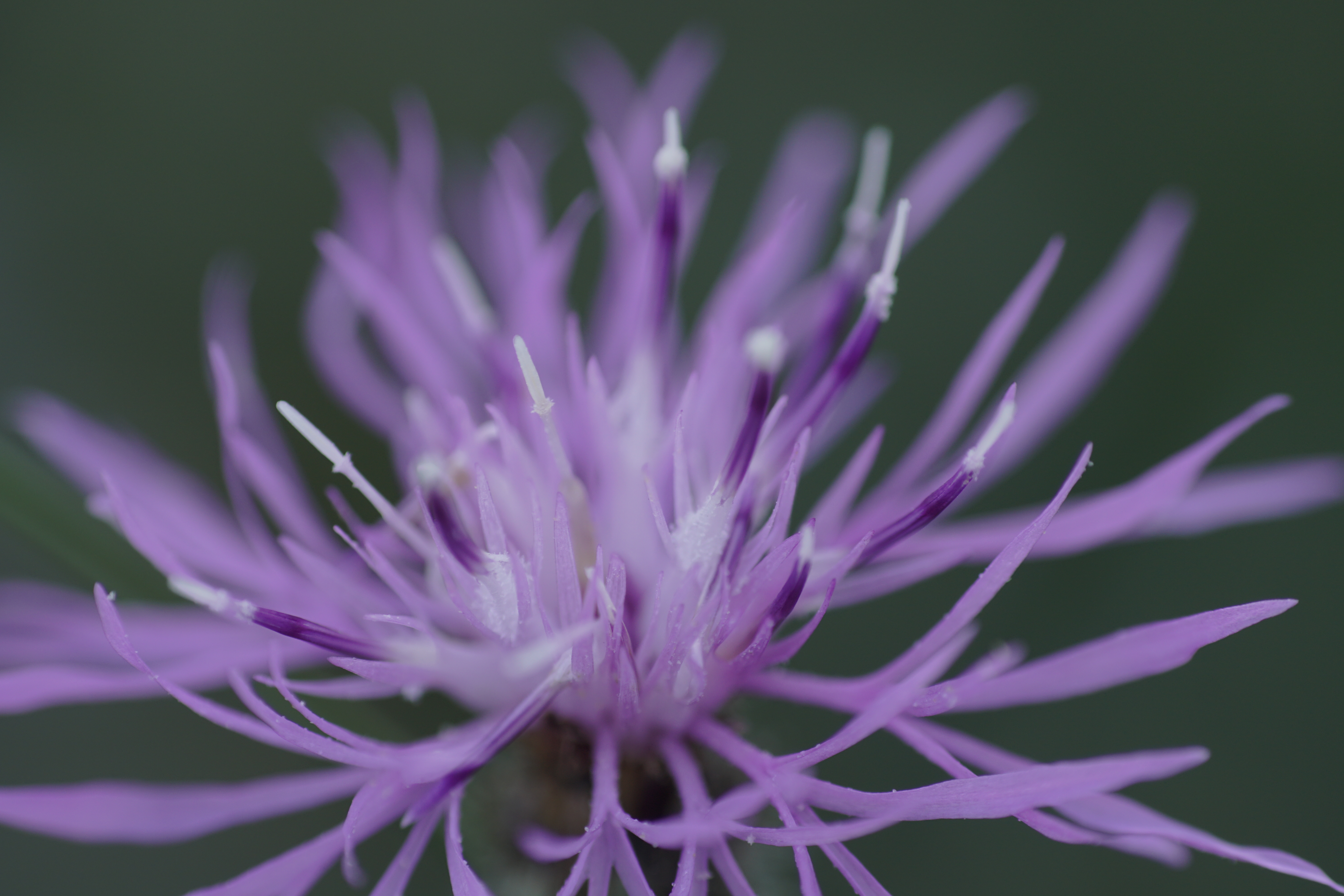
I think this is spotted knapweed, an invasive


Took the turn off of the main path to go parallel to the road, westwards. Went a total of about 100m in a couple of hours, there were too many things to see!
A note: I’ve started using smaller photos on the web site, to avoid using too much storage, so there will be some loss of detail, especially if you click on a photo to see the full size. The image seen in the post itself shouldn’t lose too much detail though.
I’ve had a few occurrences that I’ve wanted to capture for many many years, that have fallen into place over the last year or so:
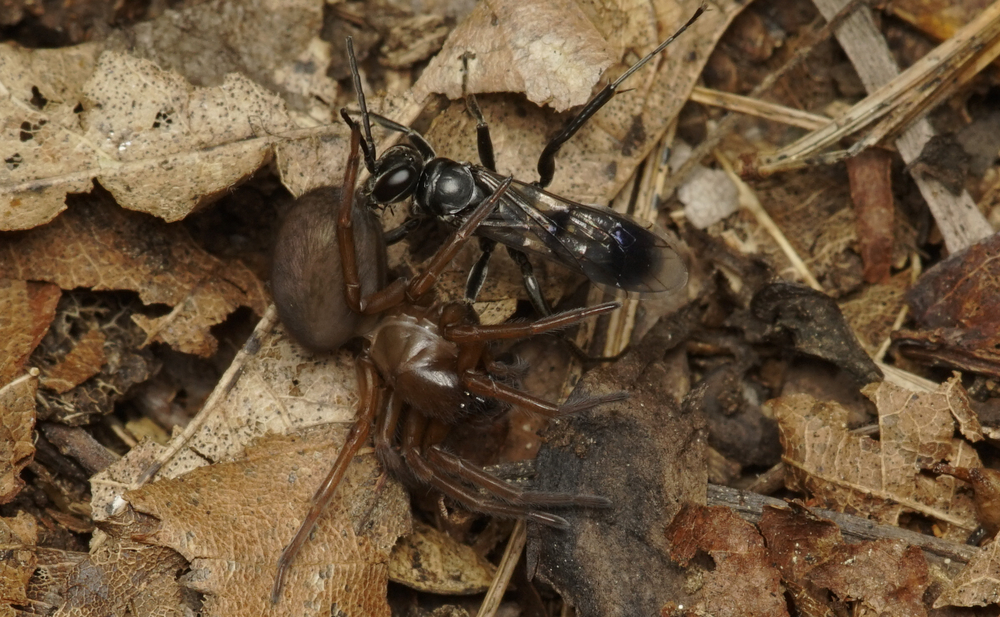
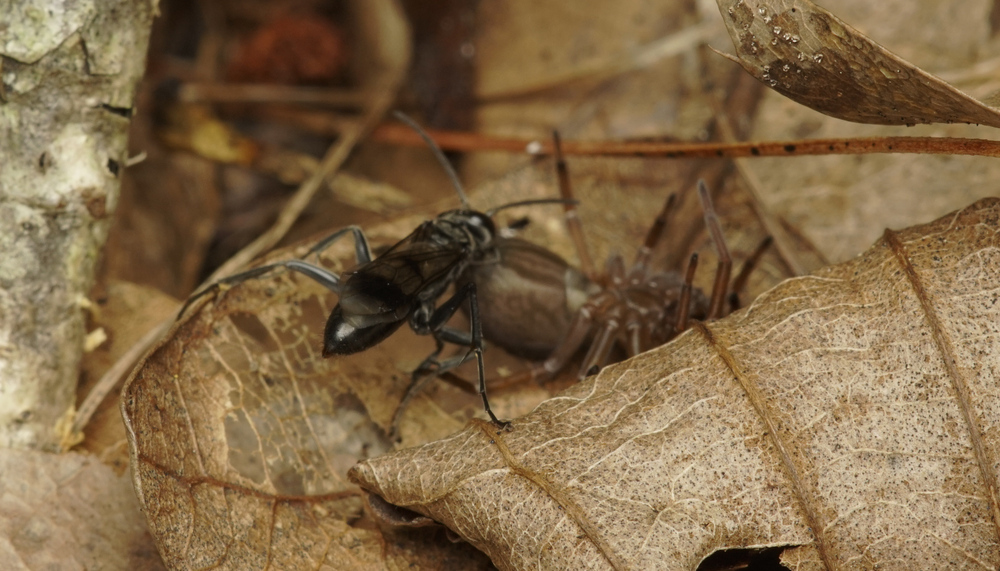
Today I was able to capture another one that everyone else seems to get but I’ve been left out of: a Pompilidae (spider wasp) dragging a paralyzed spider along. Details below!
Gorgeous cricket! My best guess: Long-horned Orthoptera (Ensifera) » Crickets (Gryllidea) » Trigonidiidae » Brown Trigs (Anaxipha) » fast-tinkling trig (Anaxipha tinnulacita). It also has a cool name: “fast tinkling trig”. BugGuide: “Southeastern US, from AL-FL, north to NJ and PA. Recently (2017) discovered in NY and MA”.
If not that, then it’s probably the more locally common Say’s trig.

Omolicna uhleri.
True Hoppers (Auchenorrhyncha) » Planthoppers (Fulgoromorpha) » Fulgoroidea » Derbid Planthoppers (Derbidae) » Derbinae » Cenchreini » Omolicna

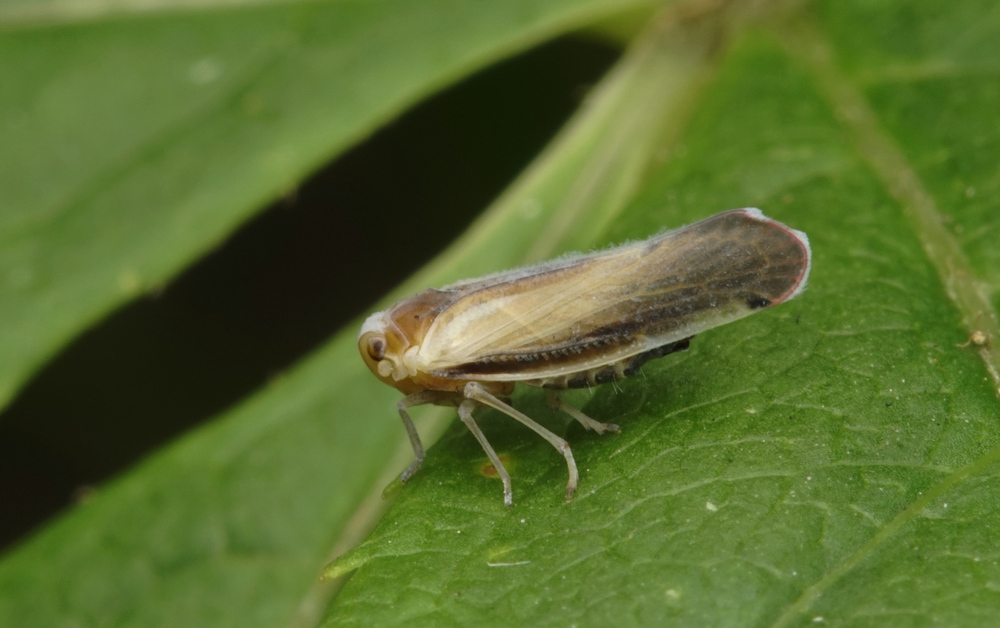
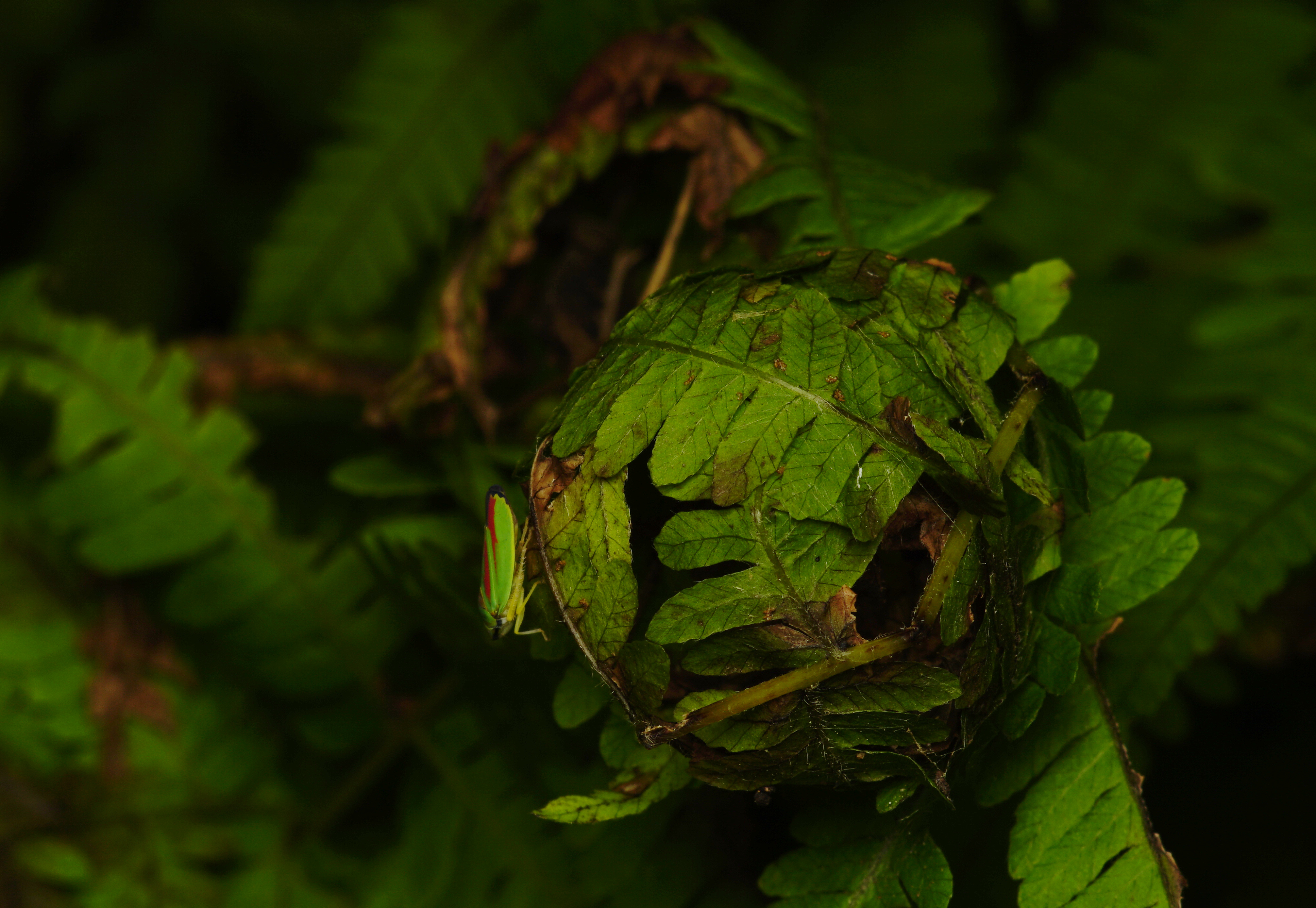
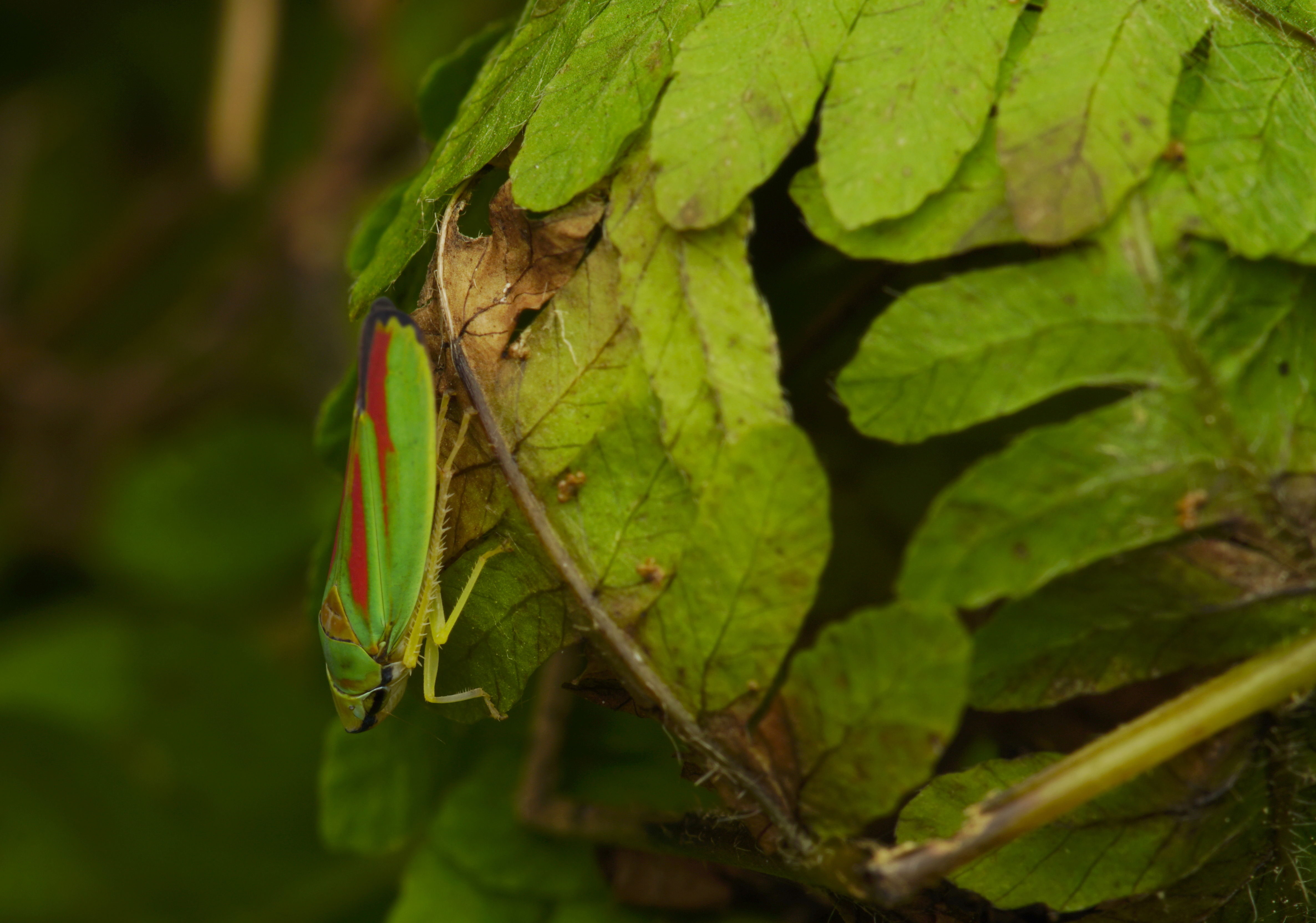
I loved the colors here. Rhododendron leafhopper, Graphocephala fennahi. The fern ball nest is likely Herpetogramma moths.
Jikradia
True Hoppers (Auchenorrhyncha) » Cicadas, Spittlebugs, Leafhoppers, and Treehoppers (Cicadomorpha) » Leafhoppers and Treehoppers (Membracoidea) » Typical Leafhoppers (Cicadellidae) » Coelidiinae » Teruliini » Jikradia

Psocidae, I think, something like Psocus leidyi.

A sequence of photos with the Pompilid and the spider. I think the spider is in Amaurobiidae — perhaps Callobius?
I was surprised to see the wasp carry the paralyzed spider up a tree trunk so incredibly fast; also, I never realized that they nested so far up in the trees. The wasp was about 3 meters high when I lost sight of it, and still going. I realize this may be a little disturbing to some people but nature isn’t always pretty and wasp babies need to eat too.
Wikipedia, https://en.wikipedia.org/wiki/Spider_wasp:
Like other strong fliers, pompilids have a thorax modified for efficient flight. The metathorax is solidly fused to the pronotum and mesothorax; moreover, the prothorax is best developed in Pompilidae and Scoliidae because wasps in these families use their forelegs to dig.[6]
Pompilids typically have long, spiny legs; the hind femur is often long enough to reach past the tip of the abdomen. The tibiae of the rear legs usually have a conspicuous spine at their distal end. The first two segments of the abdomen are narrow, giving the body a slender look. The pompilid body is typically dark (black or blue, sometimes with metallic reflections), but many brightly colored species exist. From a lateral view, its pronotum looks rectangular and it extends back to the tegulae, near the base of the wings. Most species are macropterous (having long wings), but a few brachypterous (short-winged) and apterous (no wings) species are known.[3]
Spider wasps are best distinguished from other vespoid wasps in having (in most species) a transverse groove bisecting the mesopleuron (the mesepisternal sclerite, a region on the side of middle segment of the thorax above the point where the legs join). Like other Vespoidea, they have antennae with 10 flagellomeres in the female and 11 in the male. Most Pompilidae have straight inner eye margins. The hind wings do not have a distinct claval lobe, but they have a distinctive jugal lobe. The hind leg has a tibial spur with a tuft or row of fine hairs. The legs are long and slender with the tips of the tibia (metatibia) long enough to extend beyond the tip of the abdomen (metasoma). Sexual dimorphism is not pronounced, although females are often larger than the males. Coloration and wing appearance vary greatly among the many species. General coloration is aposematic (warning off predators), generally based on black, often with markings of orange, red, yellow, or white.[5] Larvae can also be identified by physical examination.
And BugGuide:
Typically dark colored with smoky or yellowish wings; a few are brightly colored.
Slender with long and spiny legs, hind femora typically extending beyond tip of abdomen.
Tibiae of rear legs have two prominent spines at apex (distal end, next to tarsi)
Wings not folded flat on top of abdomen.
Mesopleuron with a transverse suture
Like the Vespidae, the Pompilidae have the pronotum extending back to the tegulae, the pronotum thus appearing triangular when viewed from the side and horseshoe-shaped when viewed from above.
Further comments: Dipogon sp. I believe. Many hunting wasps who hunt large prey climb up trees with it to glide down towards a nest site
And here’s BugGuide about Dipogon:
“Identification
Three teeth on the inner side of the mandibles (apical point counted as a tooth).
Both sexes with smooth dorsal edge of hind tibiae.
Female with a fascicle of bristles arising from each side of the maxilla.
Similar genera::
Ageniella, Auplopus, and Phanagenia are all similar to Dipogon and are found in the same habitat. These three species have the sides of the first tergum concave, when viewed from above. Some species of Dipogon may approach this, but the sides are at most straight. Also, some species of Ageniella have the dorsal edge of the hind tibiae serrate, and females lack strong bristles on the maxilla. All female Auplopus have an oval bare area on the last tergum; this is absent, and often very setose in Dipogon. All similar species in the Pepsini have the dorsal edge of the hind tibiae serrate and none have strong setae on the maxilla. The most similar genus in the Pepsini is probably Priocnemis, but females always have serrate posterior tibiae and both sexes have the posterior half of tCu2 (forewing) curved, but this vein is straight in Dipogon.”
I can make nothing of this, myself.
Also, Wikipedia: “Their generic name (“two beards”) comes from the characteristic long bristle tufts just below the mandibles, which are used to carry material to construct the cells in the nest, and for constructing the nest.[2]“
Started climbing up the tall tree trunk:


Climbing up out of sight (wasp and spider on the left of the tree):

An Ichneumonoidae. My best guess is Ichneumonid Wasps (Ichneumonidae) » Pimplinae » Ephialtini but of course I’m not sure at all.

Another Pompilidae, I think.

Vespula cf flavopilosa, but I can’t rule out V. maculifrons. Vespula are ground nesters, and they are correctly called yellowjackets.

Megaspilidae is suggested: “I think I can see a semicircular stigma, making this a Megaspilidae.”
“Parasitica” – Parasitoid Wasps » Ceraphronid and Megaspilid Wasps (Ceraphronoidea) » Megaspilidae

My best guess is Cryptinae
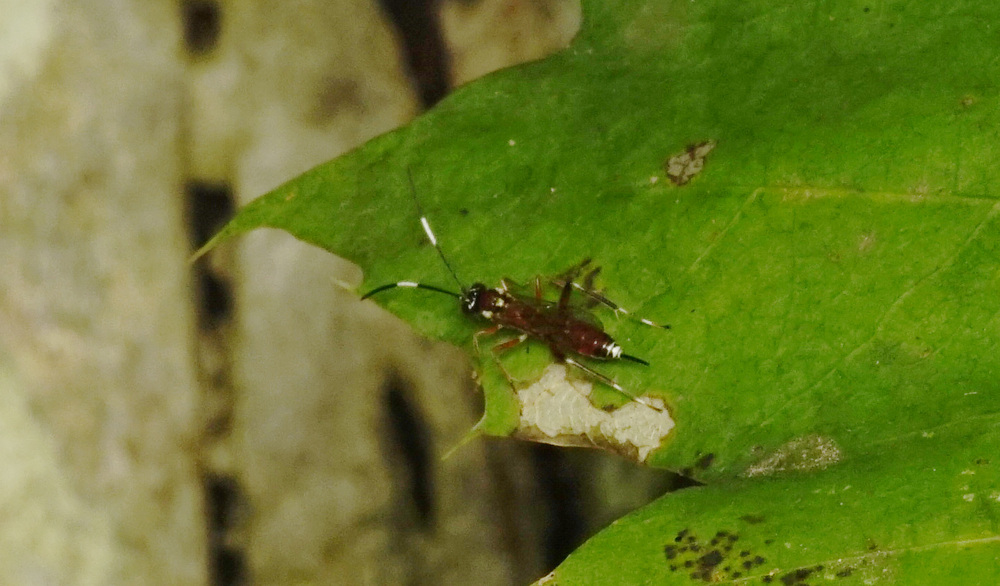

I’m always shy to take and share photos of ants, because I assume that they will be trivial and boring. This one looked interesting, though. Not sure I’ve seen the black head before, although that could just be a caste thing.
iNaturalists says Camponotus americanus, which I should have known.

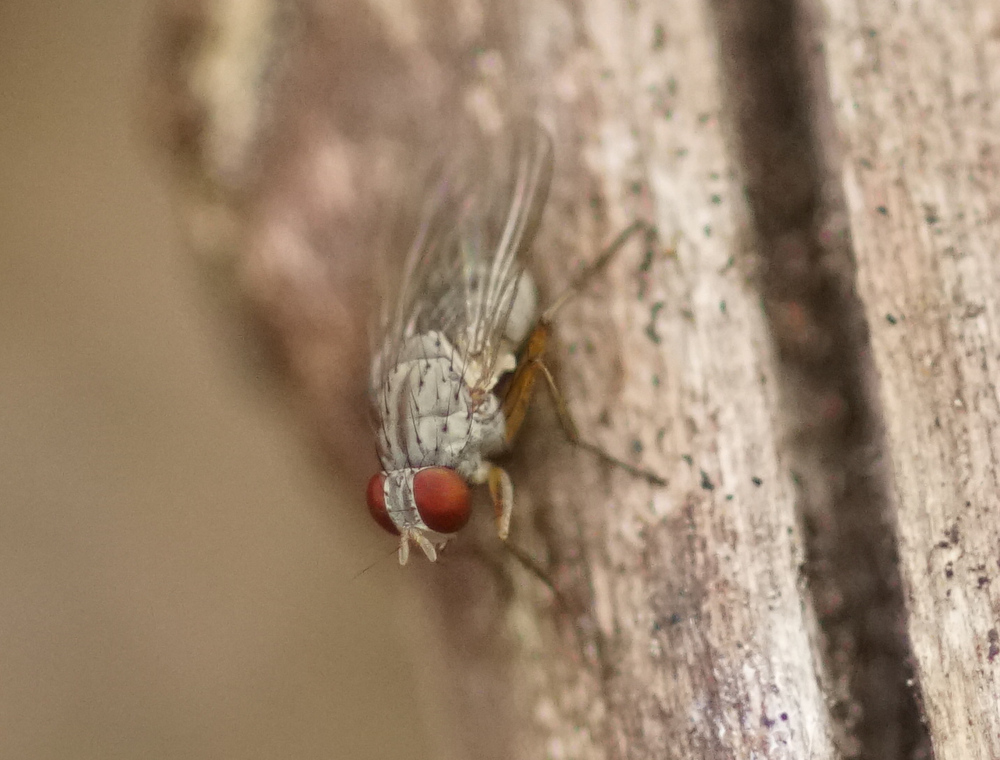
iNat says Neodexiopsis, which I had not heard of before.
Calyptratae » Muscoidea » Muscidae » Coenosiinae » Coenosiini » Neodexiopsis
There aren’t many observations of this, and flies are incredibly difficult to identify, so please treat with skepticism.
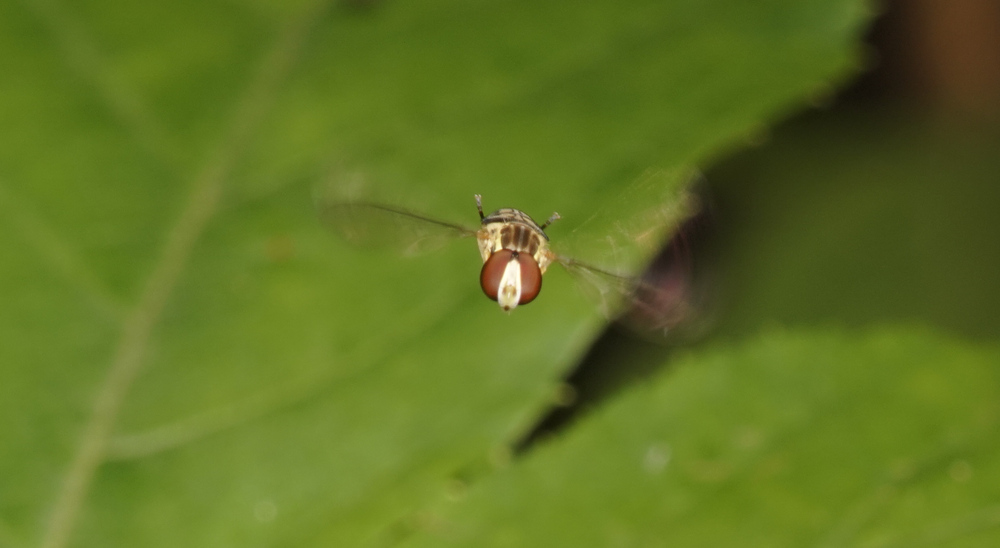
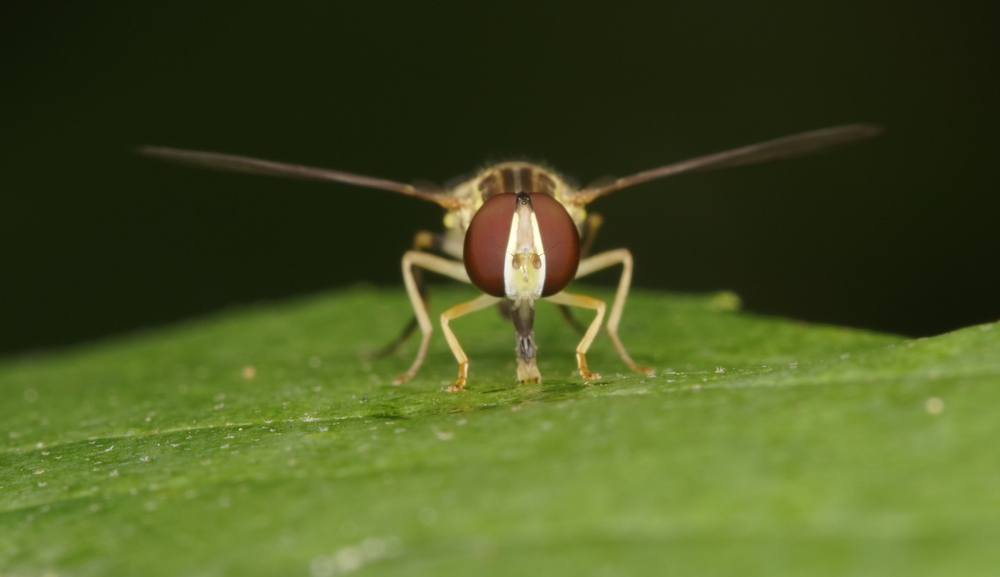
Toxomerus geminatus photos:


I love Sepsidae flies, gorgeous purple coloring. Sepsis cf punctum.


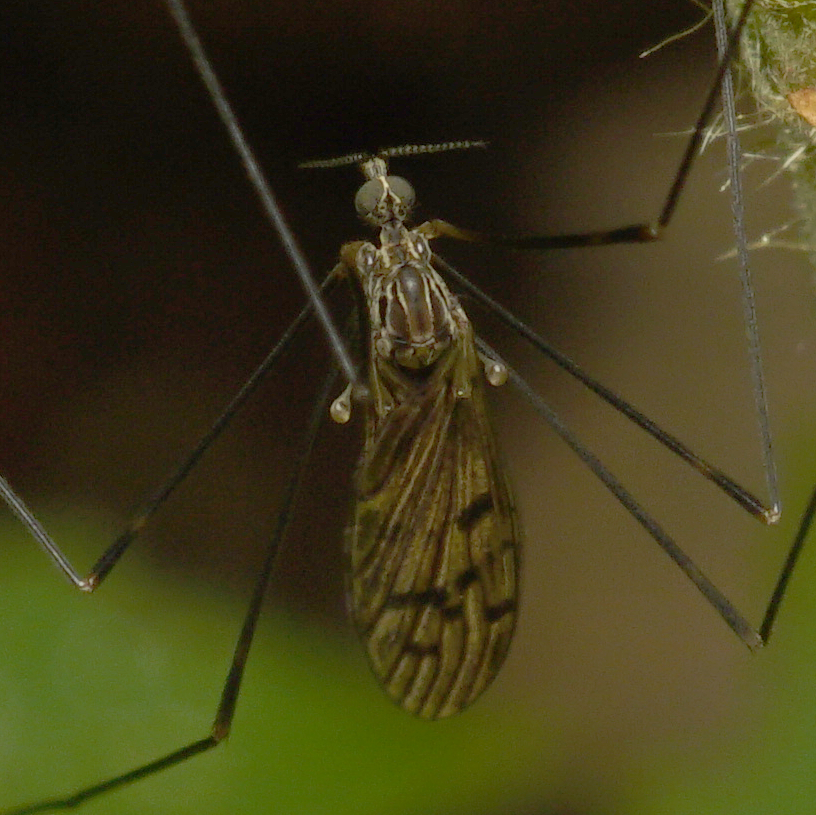
Crane fly, perhaps Limonidae:
There was a little town of Uloboridae. There were about ten to fifteen of their distinctive webs (horizontal orb webs) in close proximity. I don’t know if this is usual (I’ve never seen it before), and if this just happens to occur from lack of dispersal or if they do this on purpose. Uloborus glomosus is what we have here.

Hammer jawed jumping spider, Zygoballus rufipes:
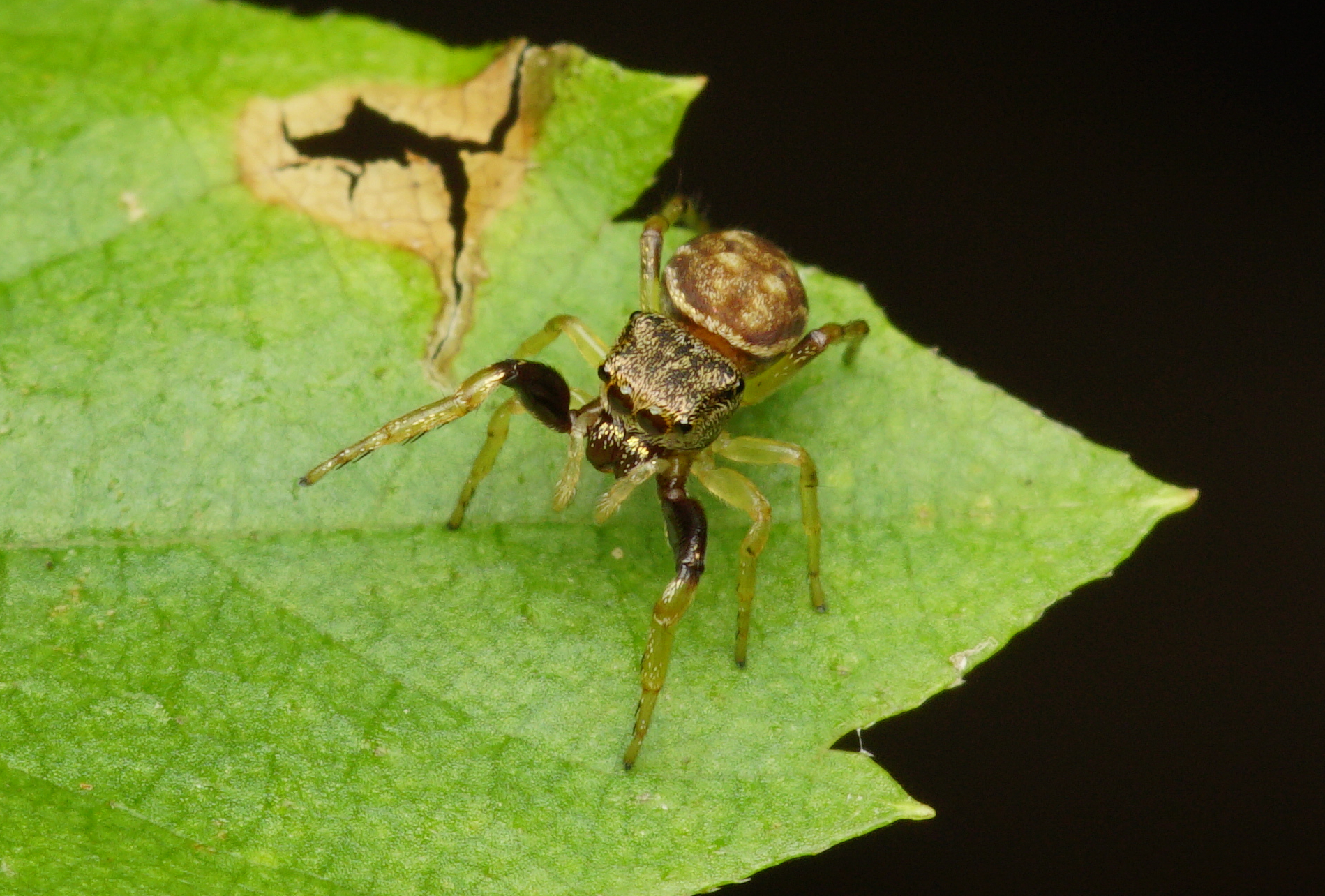
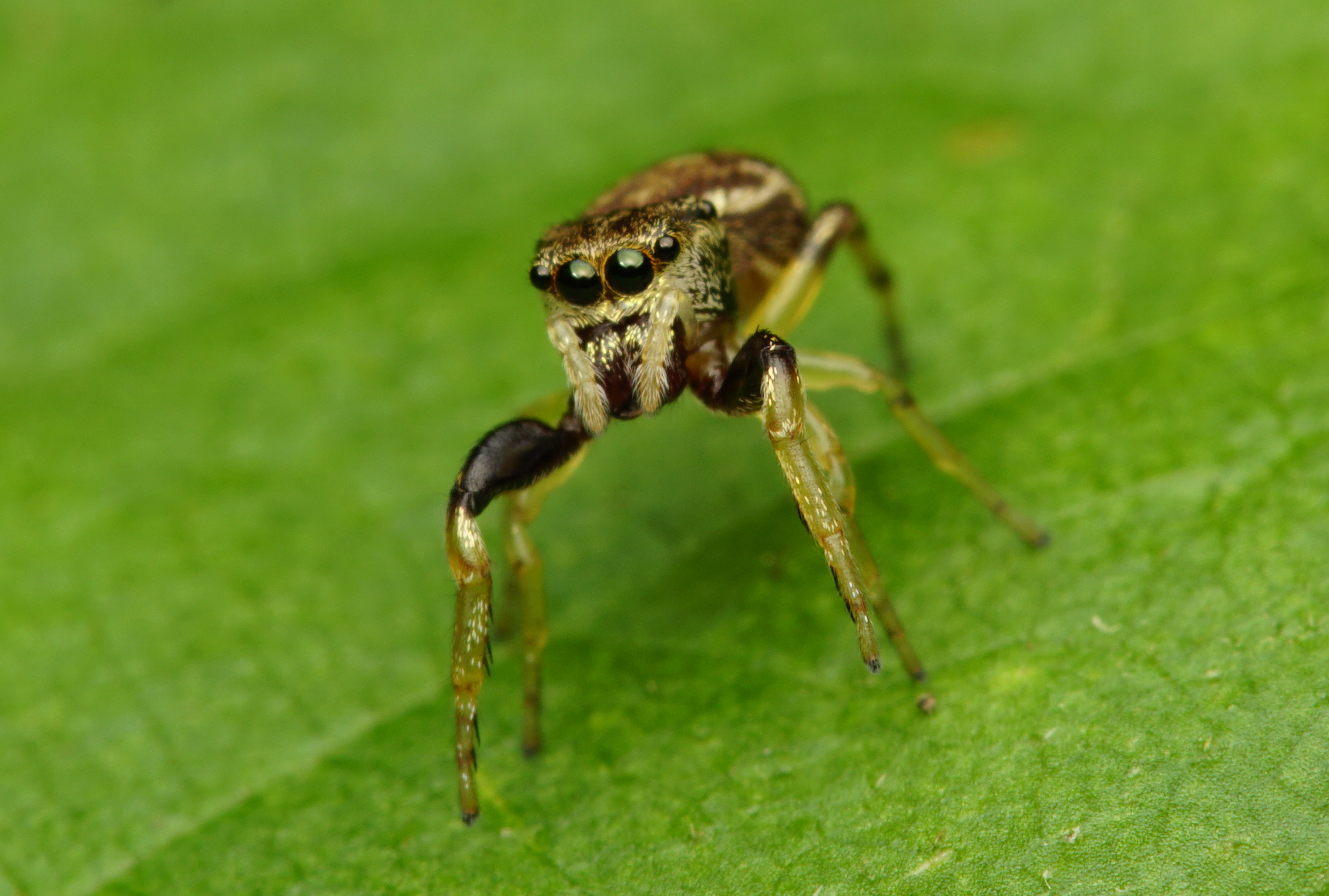
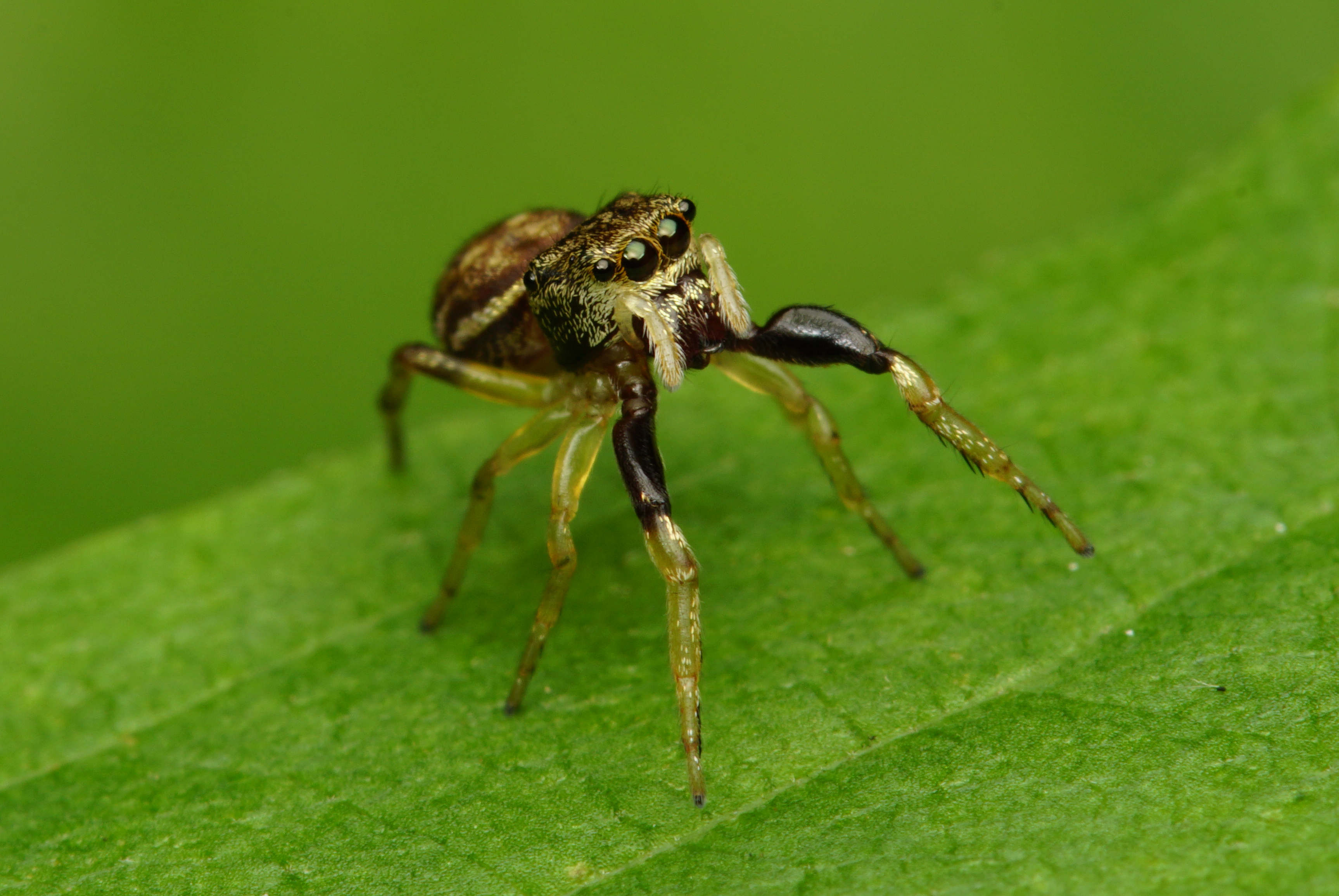
Probably Pityohyphantes?


Mangora?

Linyphiidae. Maybe Neriene radiata?
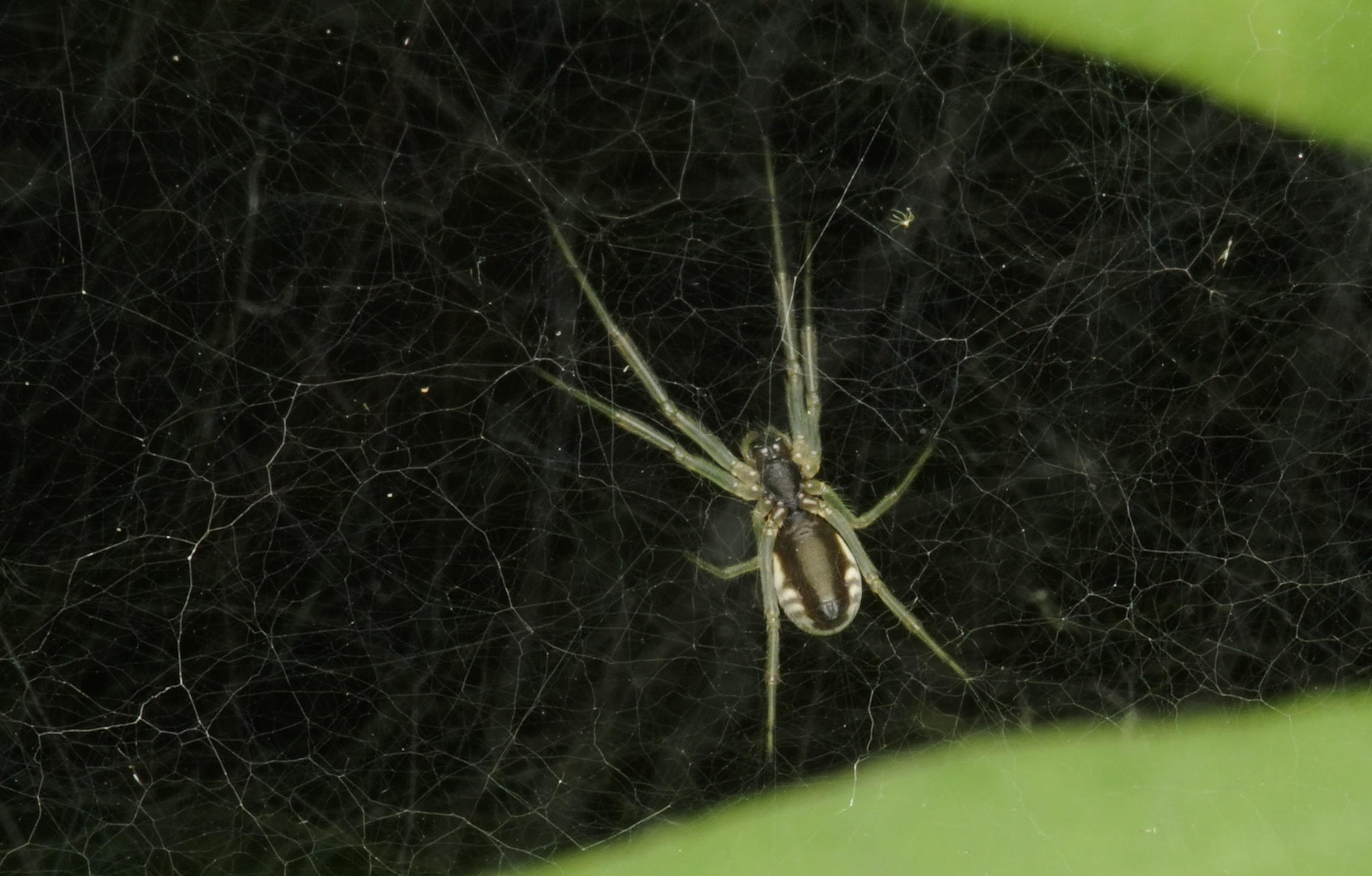


I don’t know where this complicated bit of frass comes from, but it belies the “no exoskeletons” sub-heading


Skunk cabbage remnant:

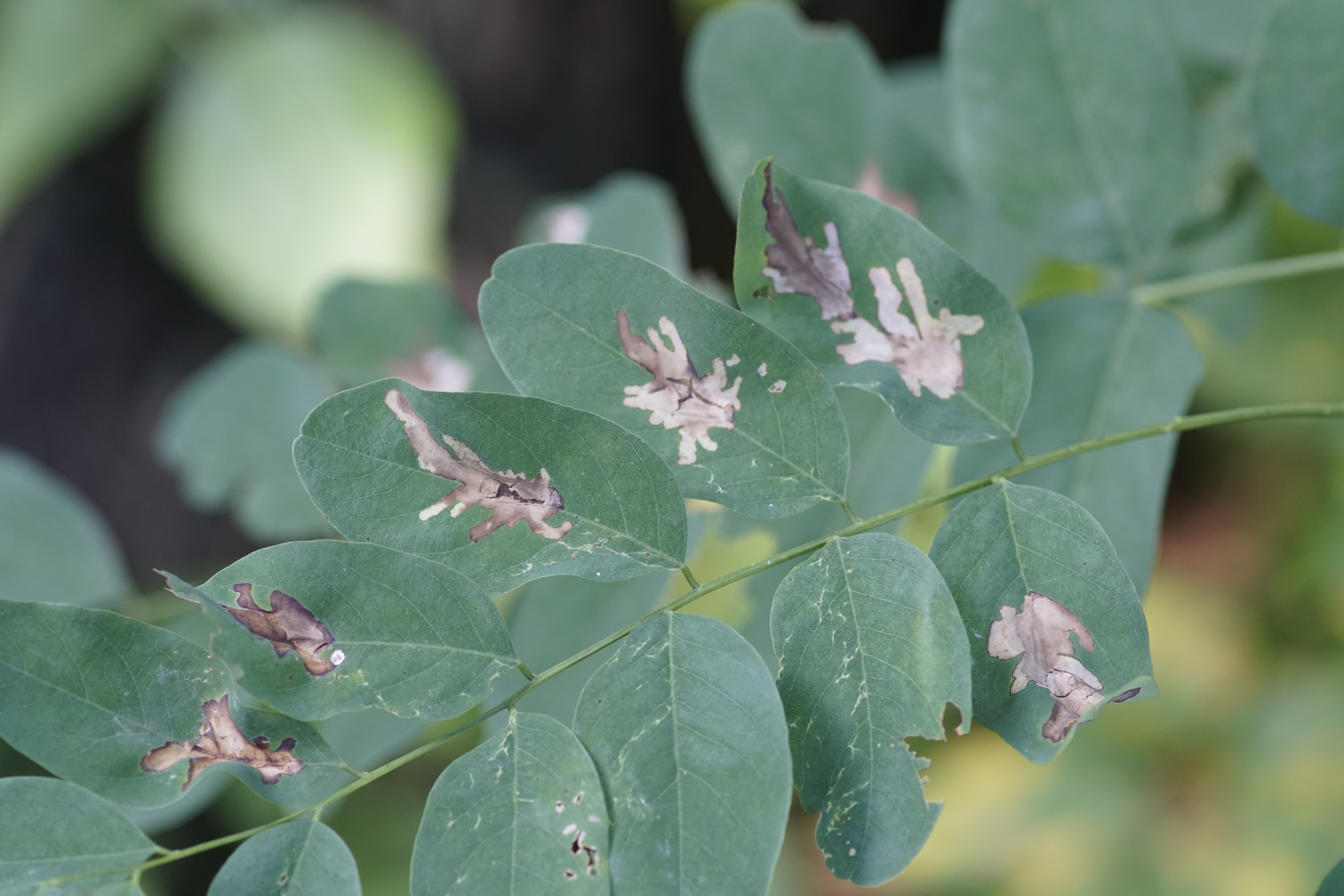
Some lovely leaf miners:


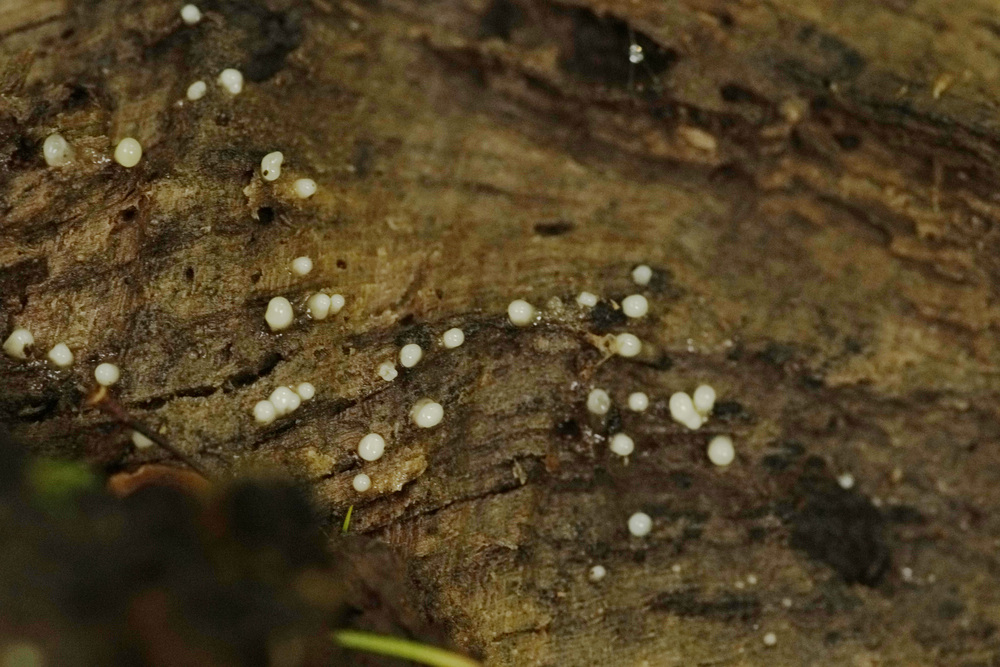
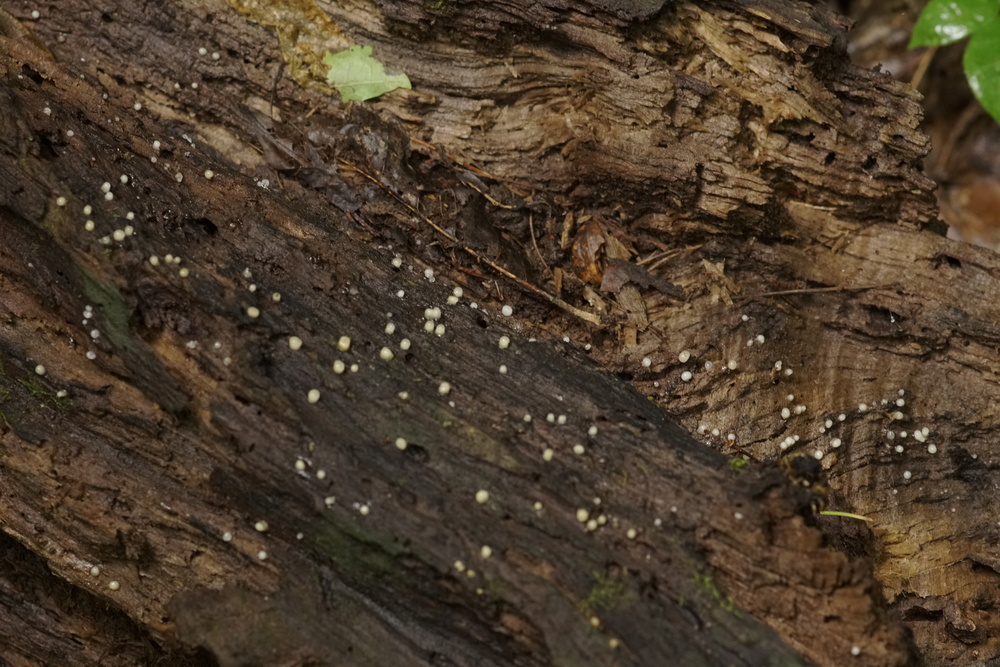
Lots of fungus, these identifications are by iNaturalist Seek. I know AI apps aren’t always exactly perfect, so please treat fungus identifications below with a certain amount of skepticism.
Araneus, notice the shoulder tubercles.

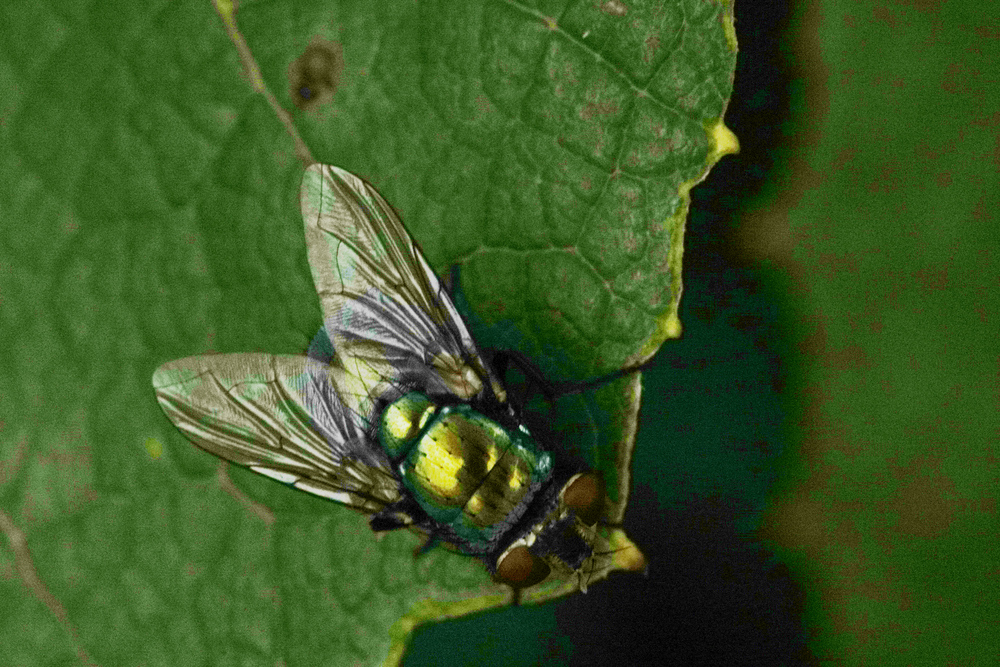
Bottle fly, Lucilia in Calliphoridae.
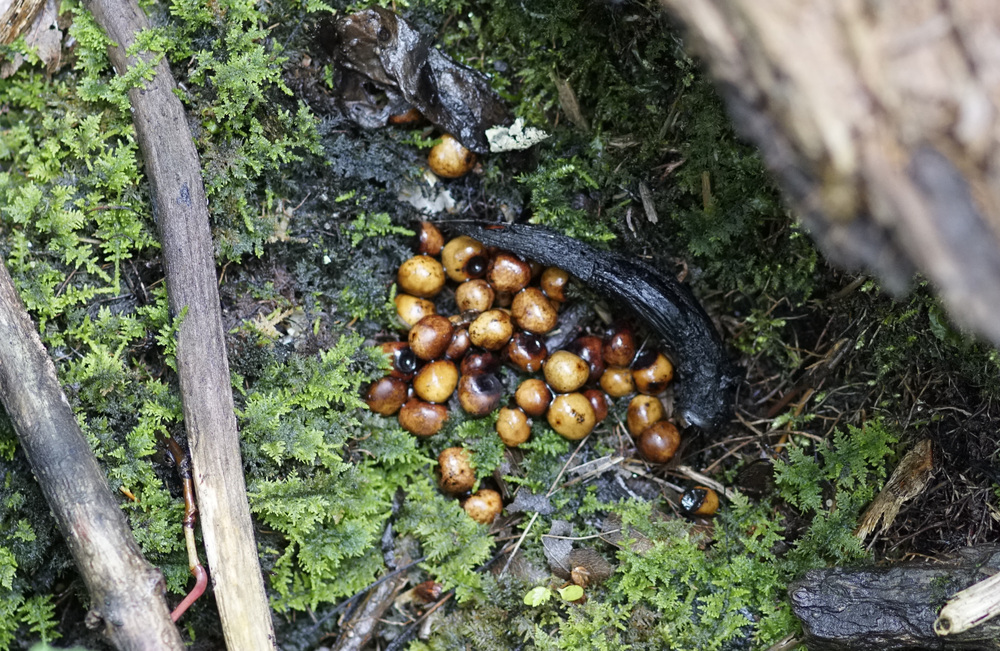
I don’t know what this is. iNaturalist says Calostoma, but I don’t know.
A glass-like mushroom. Maybe Cortinarius cf iodes.
Wikipedia:
Cortinarius iodes, commonly known as the spotted cort or the viscid violet cort, is a species of agaric fungus in the family Cortinariaceae. The fruit bodies have small, slimy, purple caps up to 6 cm (2.4 in) in diameter that develop yellowish spots and streaks in maturity. The gill color changes from violet to rusty or grayish brown as the mushroom matures. The species range includes eastern North America, Central America, northern South America, and northern Asia, where it grows on the ground in a mycorrhizal association with deciduous trees. The mushroom is not recommended for consumption. Cortinarius iodeoides, one of several potential lookalike species, can be distinguished from C. iodes by its bitter-tasting cap cuticle.
Maybe it’s just me, but the last two sentences seem to contradict each other.

This is Amanita
The genus Amanita contains about 600 species of agarics, including some of the most toxic known mushrooms found worldwide, as well as some well-regarded edible species (and many species of unknown edibility). The genus is responsible for approximately 95% of fatalities resulting from mushroom poisoning, with the death cap accounting for about 50% on its own. The most potent toxin present in these mushrooms is α-Amanitin.

Helicogloea?
Helicogloea is a genus of fungi in the family Phleogenaceae. Basidiocarps (fruit bodies) are gelatinous, effused or pustular, and (microscopically) have unclamped hyphae and basidia that are auricularioid (tubular and laterally septate). Some species form asexual anamorphs producing conidia. The widespread genus contains more than 20 species.[1]
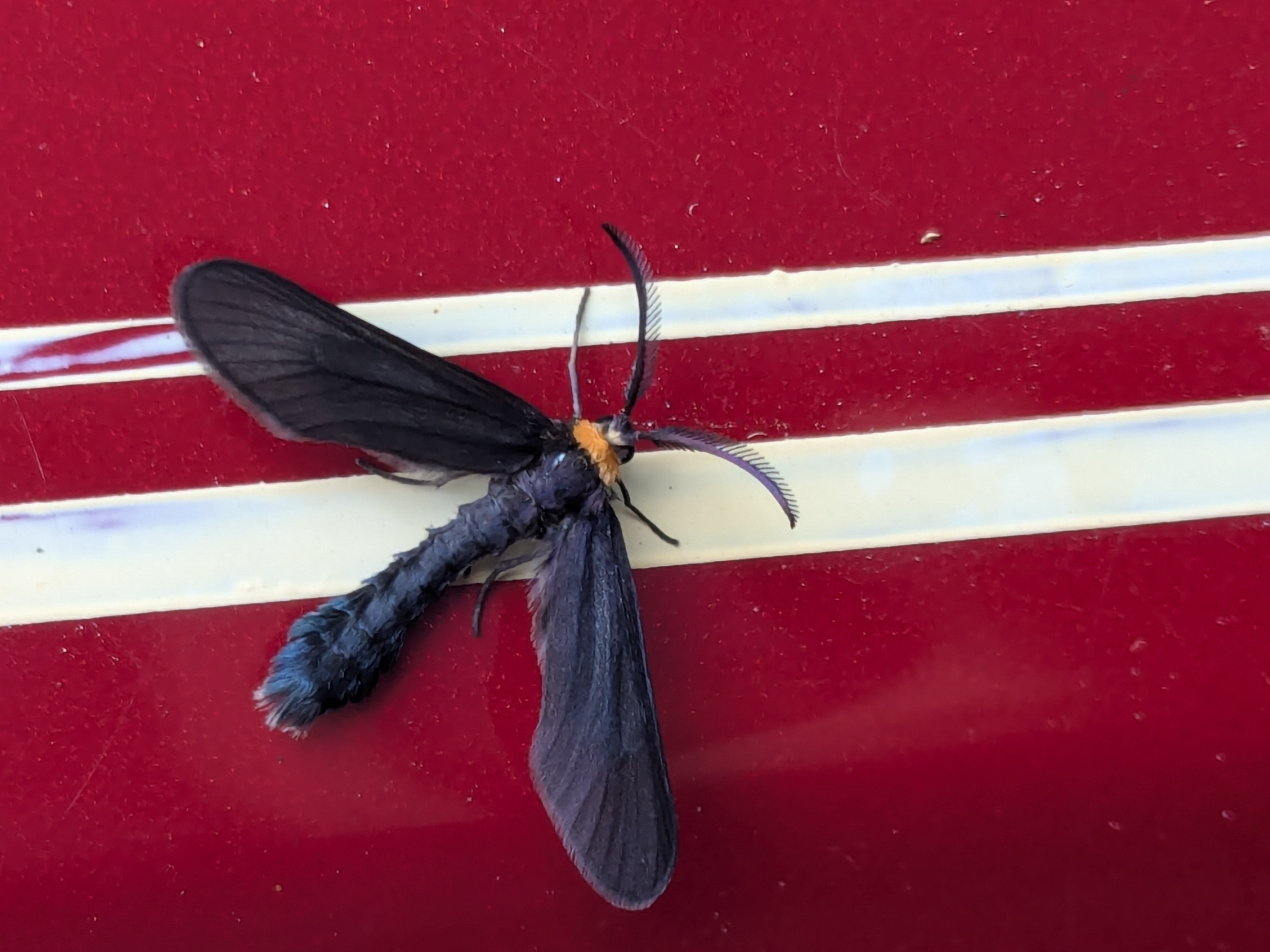
In the center of town, Sharon MA. Harrisina americana; wikipedia: https://en.wikipedia.org/wiki/Grapeleaf_skeletonizer
“Members of this family all produce HCN (hydrogen cyanide) a potent antipredator toxin.[2]“
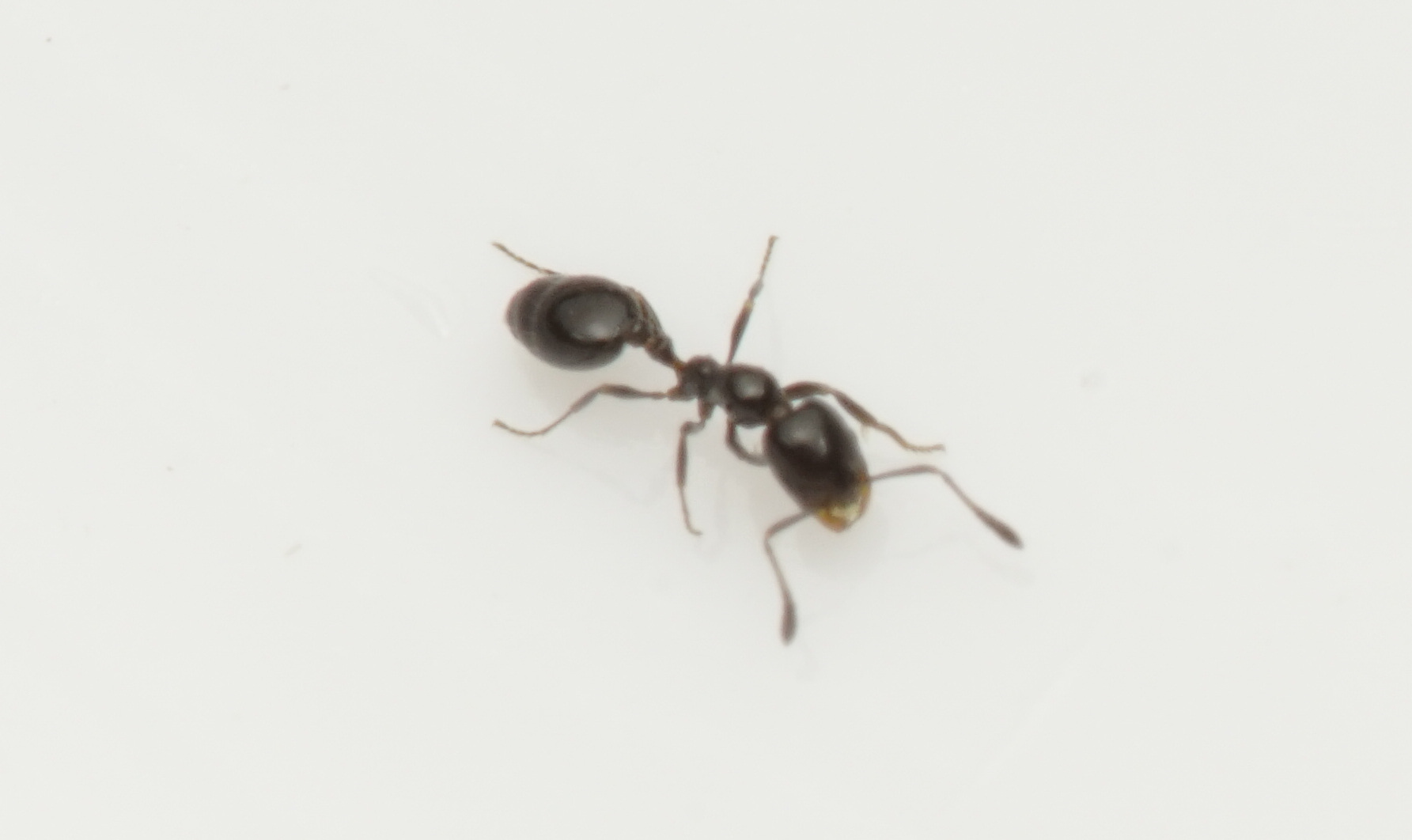
An ant walk that was incredibly fascinating. My ignorance of ants is vast, which makes this particularly helpful.
All photos of ants being held in someone’s hand were being held by our wonderful hike leader.
Monomorium (probably M. emarginatum), or perhaps M. minimum.
Camponotus pennsylvanicus


Formica

Formica sp
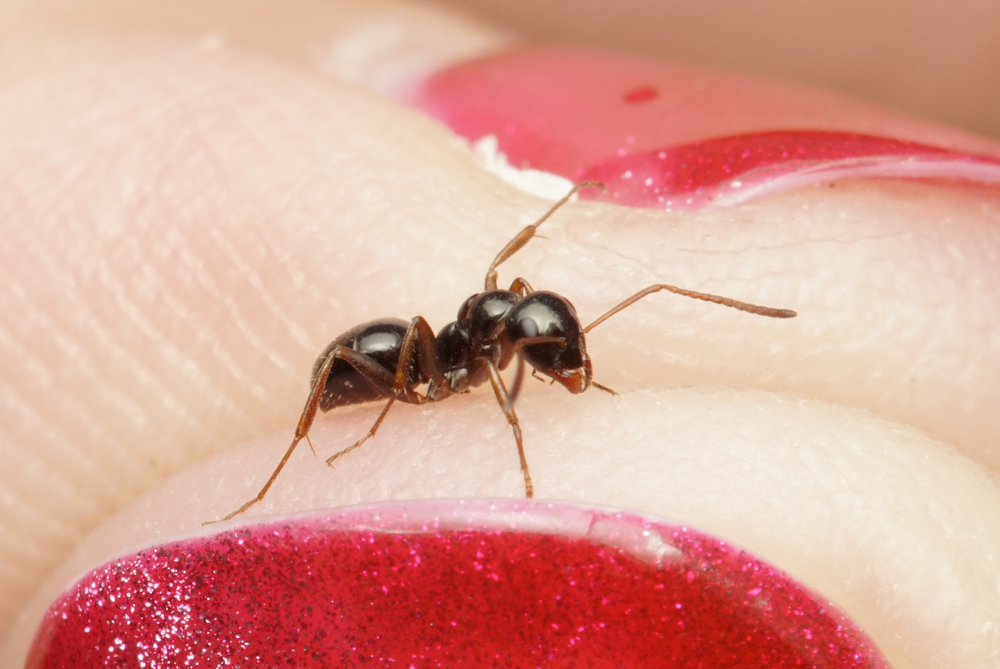
Lasius americanus or L neoniger
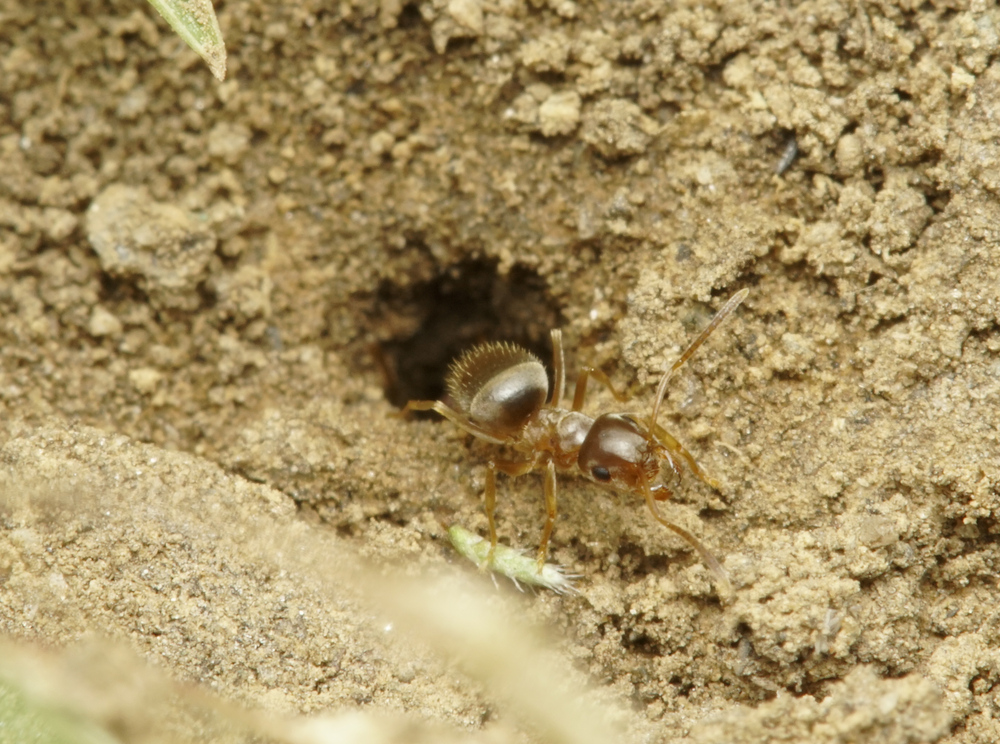
Myrmica queen

I believe this one is carrying a springtail. It’s Myrmica.
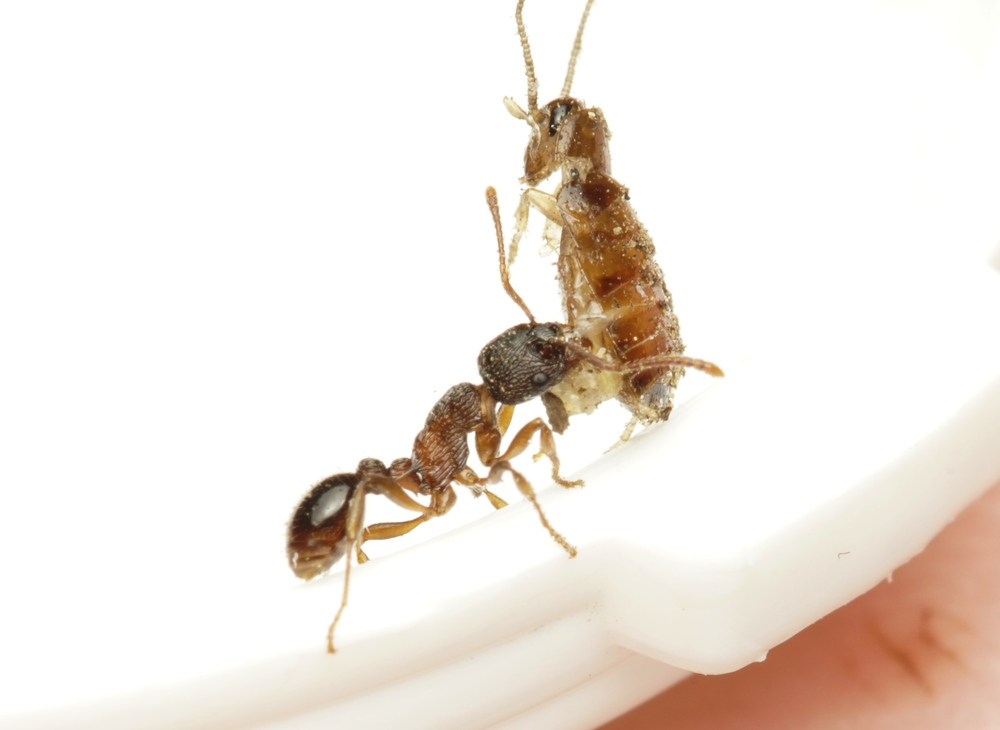
And a Myrmica carrying a weevil:
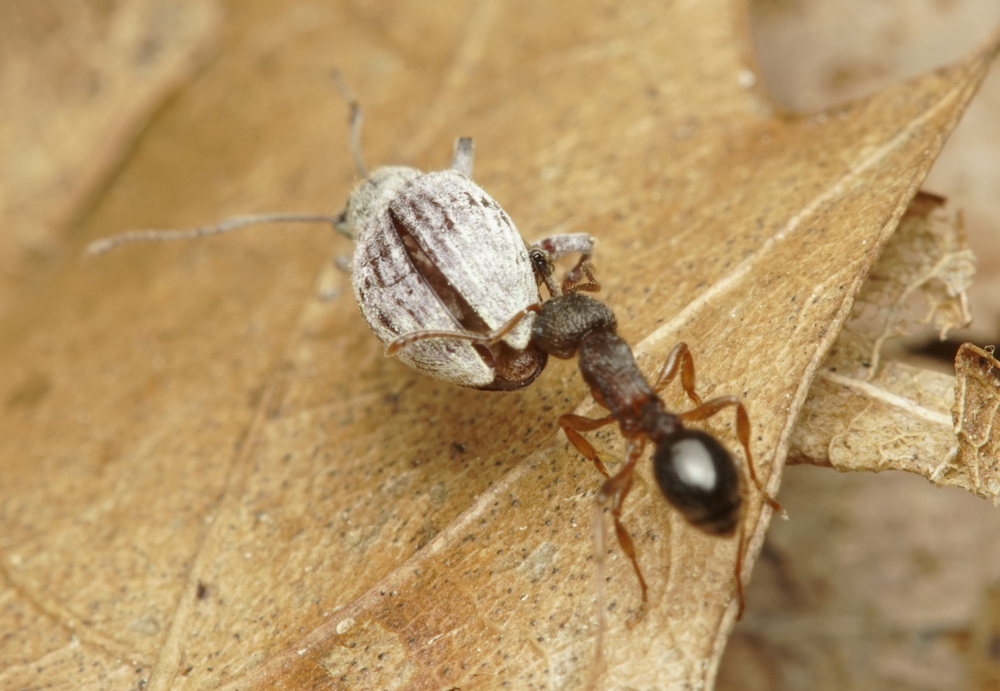
In an acorn, but not an “acorn ant”. This one is Ponera pennsylvanica.

These were actually acorn ants, I think (https://www.antwiki.org/wiki/Temnothorax_curvispinosus)
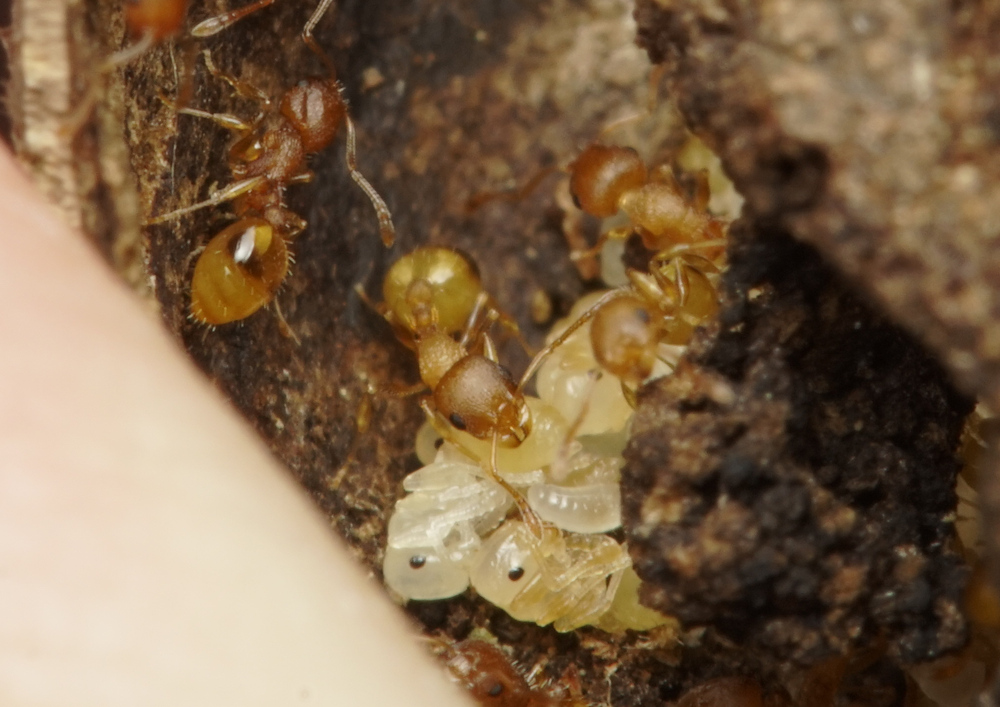
These were found near a dead mouse’s head, Monomorium.
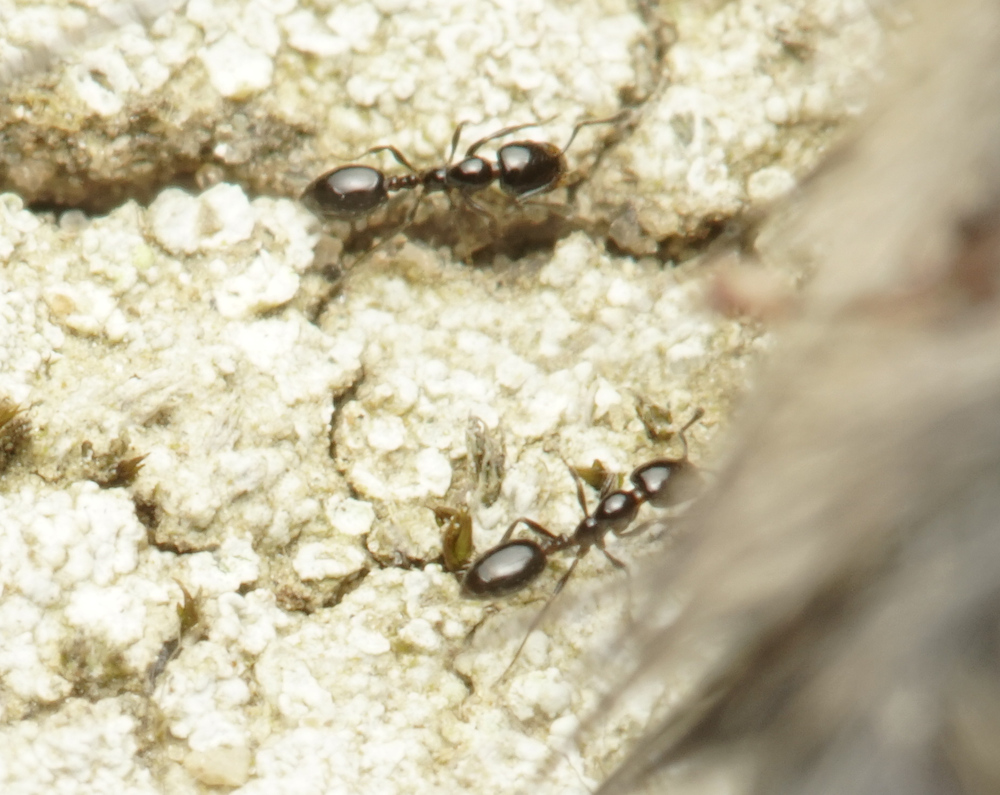
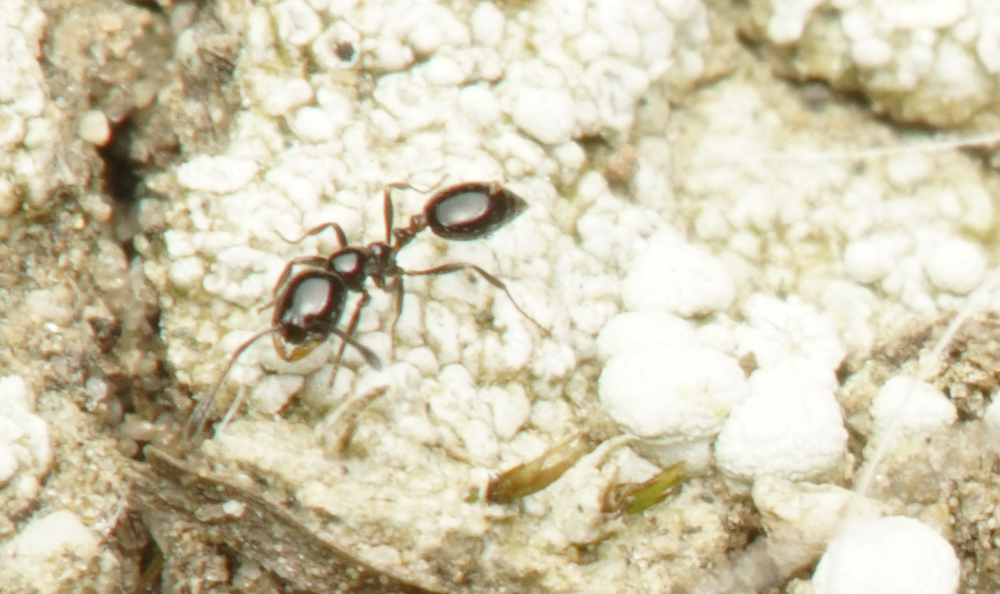
This one was described as the bottle can opener ant — notice the projection at the end of the mesoma (hope I’m right with the terminology). Dolichoderus pustulatus or D. plagiatis.
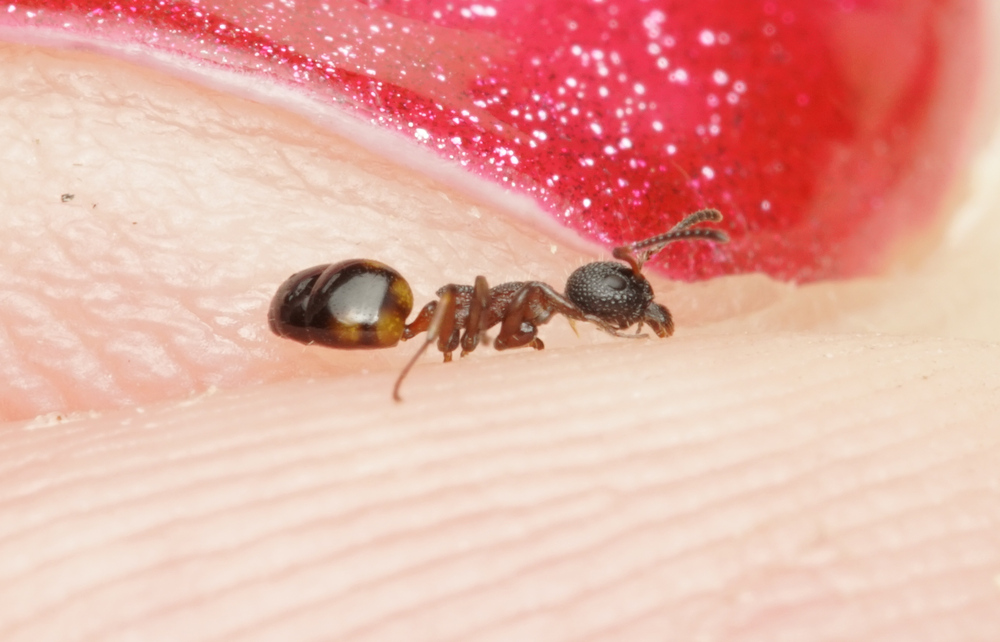
Another view
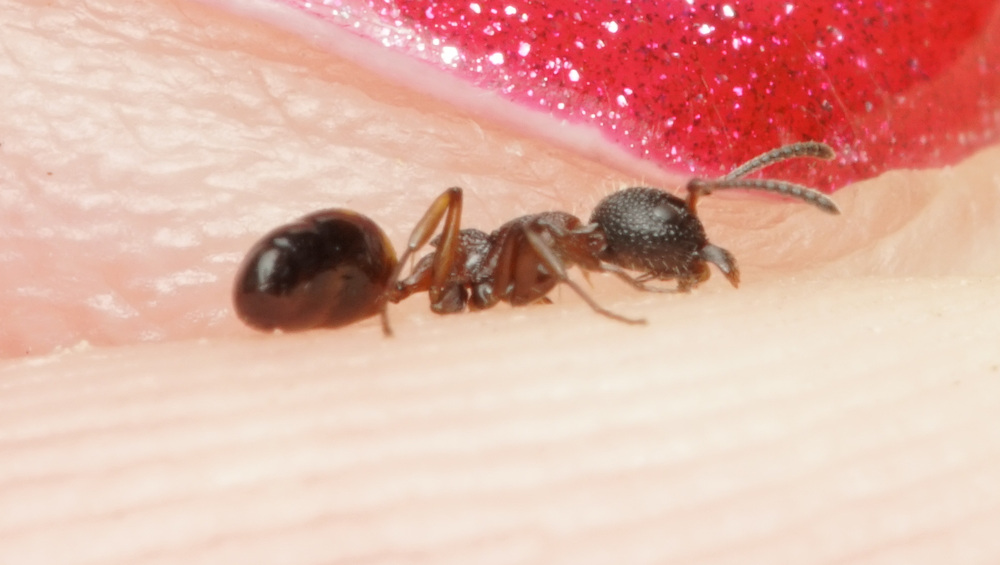
https://bugguide.net/node/view/1068332, Microcentrus nymph

“a really worn Lucerne moth”


Pimplinae wasp?
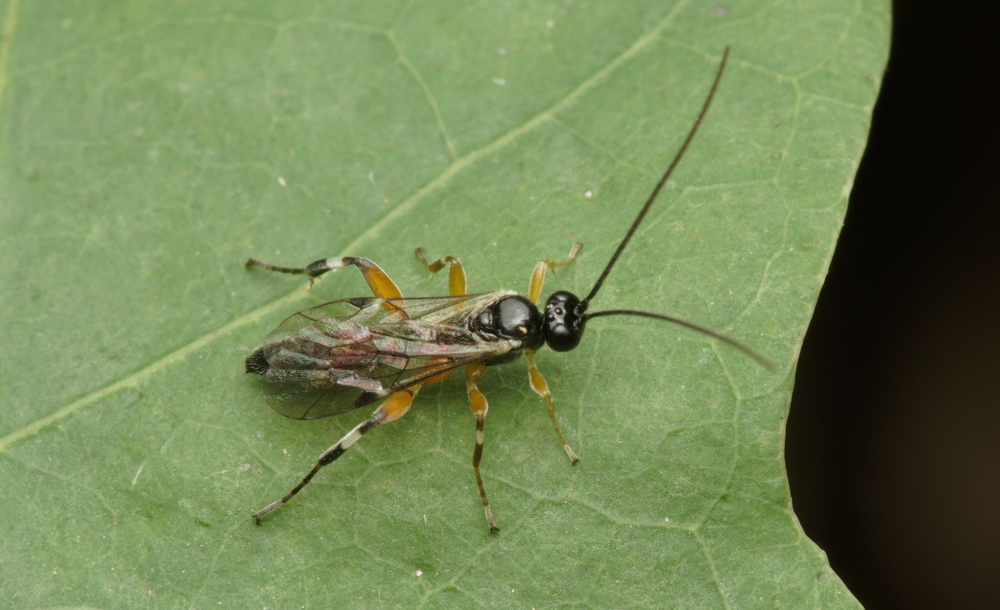
A wonderful outreach event! A rather stunning number of visitors, maybe 100 or so? Lots of kids, and enthusiasm everywhere. The one thing relatively lacking were moths, but a good time was had for all.
Here is the first set of photos, with identifications to come at leisure later.
First, though, a Platycryptus undatus at home. These are very common in this particular spot: outside the kitchen window. The lights at the window attract prey; the flat environs give the jumping spiders’ superior eyesight the space to find prey; and there are places for the spiders to hide while stalking.

Okay, time for the moth ball
Spiders
I think in Erigoninae (dwarf spiders)
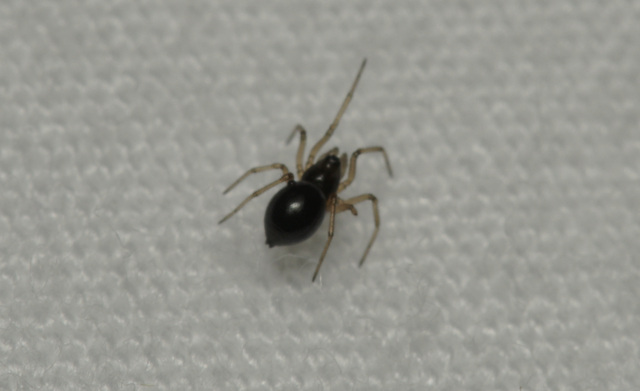
Orb weaver spiders, all in Eustala I believe.
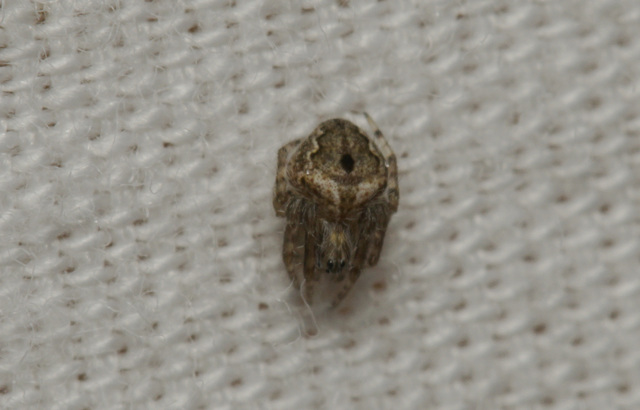


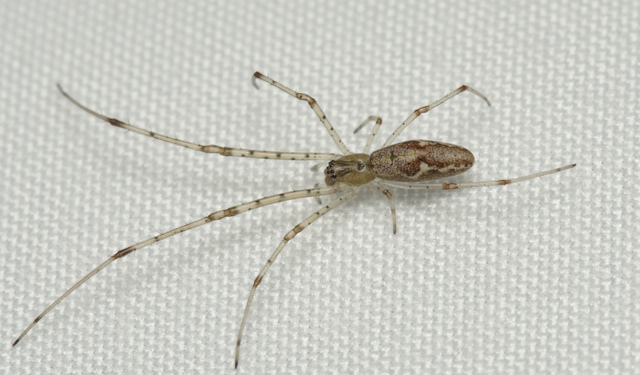
Tetragnathid, long-jawed orb weaver
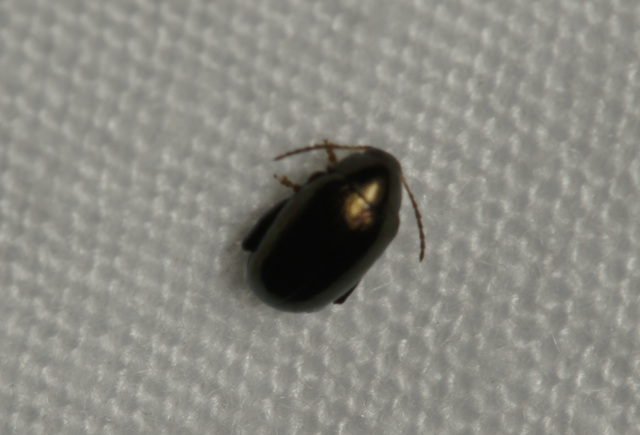
A leaf beetle
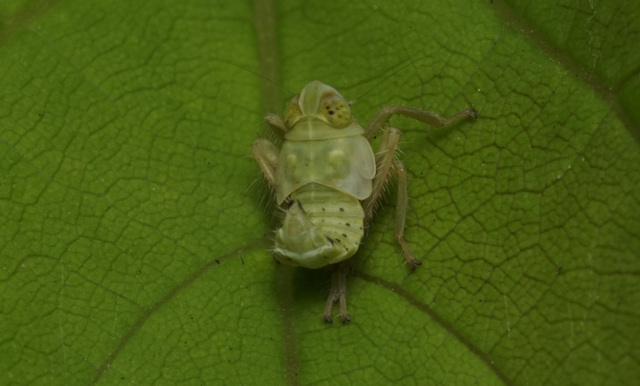
Leafhopper nymph
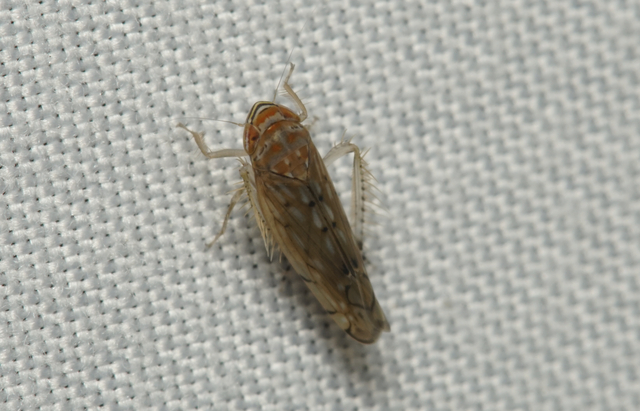
Leafhopper
Caddisflies


Weevil
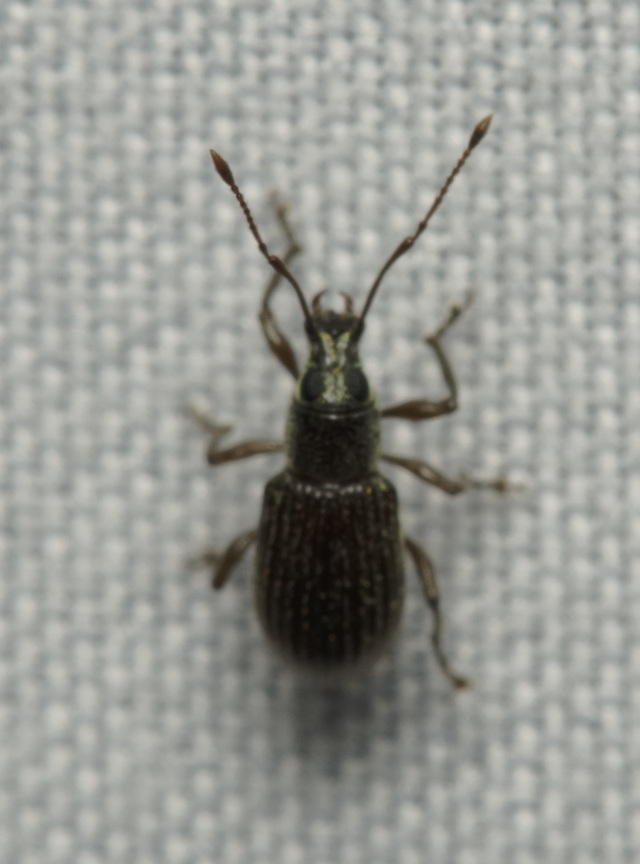
And another weevil

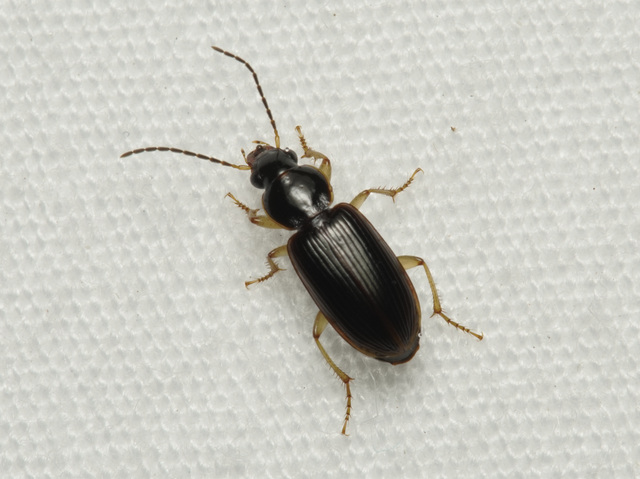
Carabidae, ground beetle

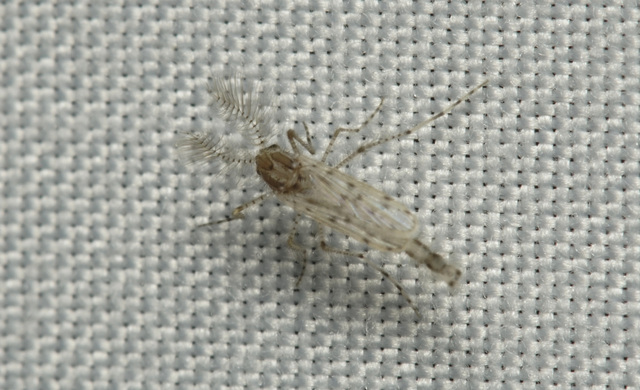
Chironomid midge
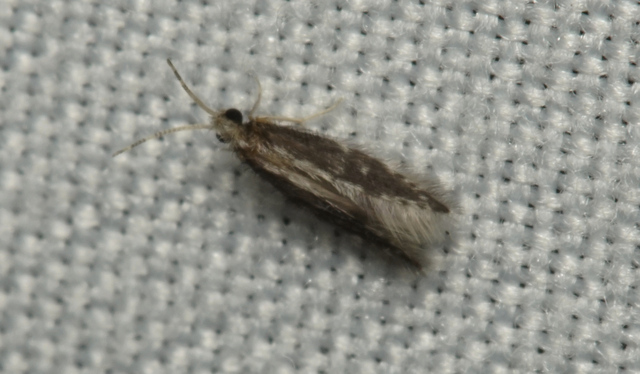
Micro-moth, very well spotted by one of the youngsters!









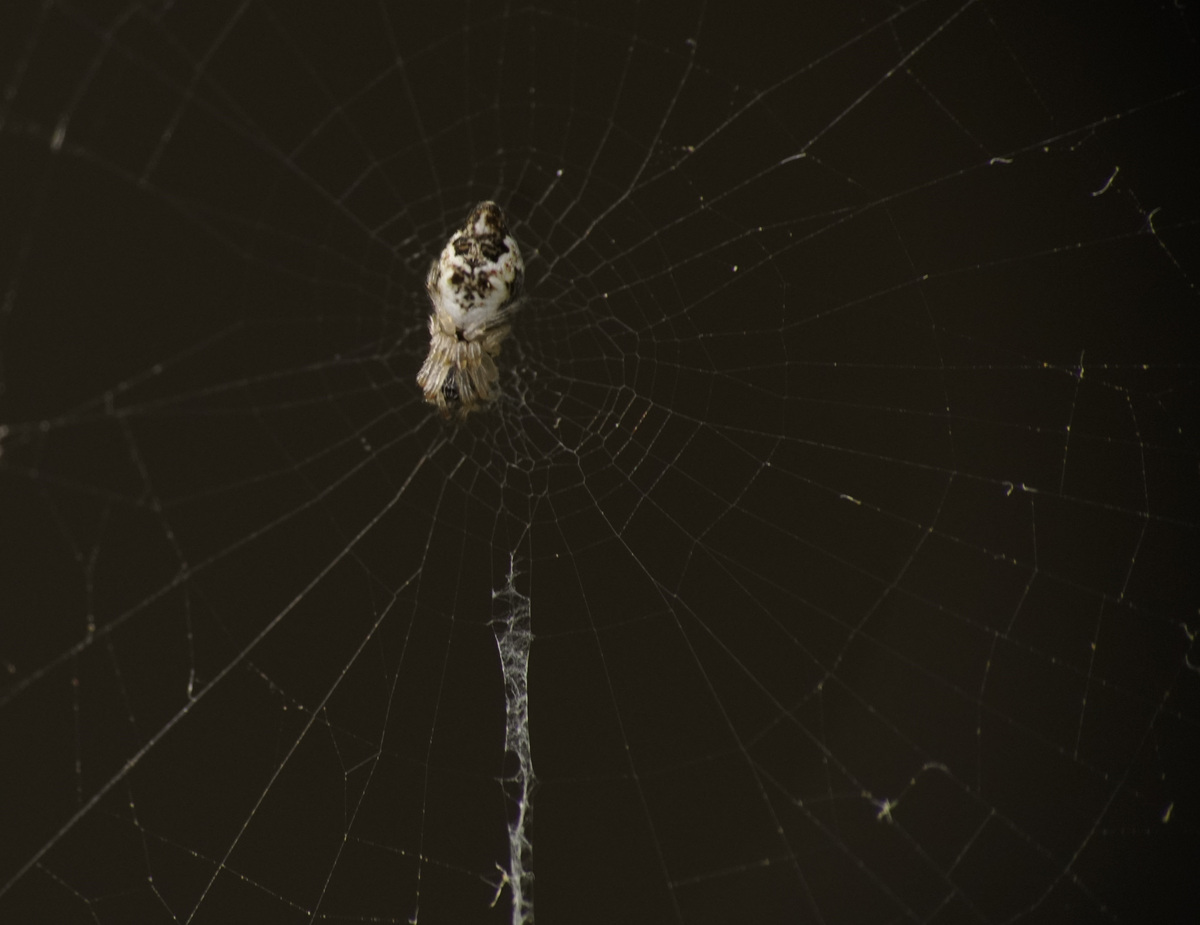
Cyclosa sp


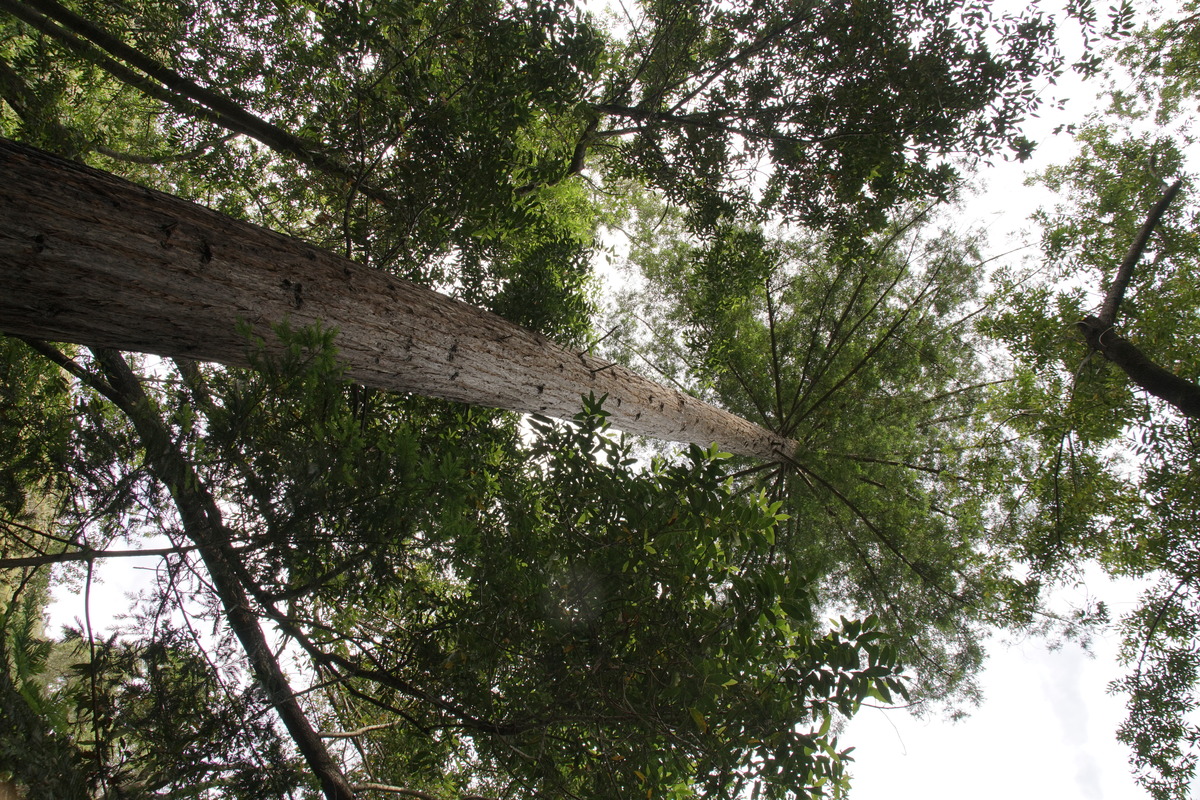

Spider webs up the grooves of the trunk






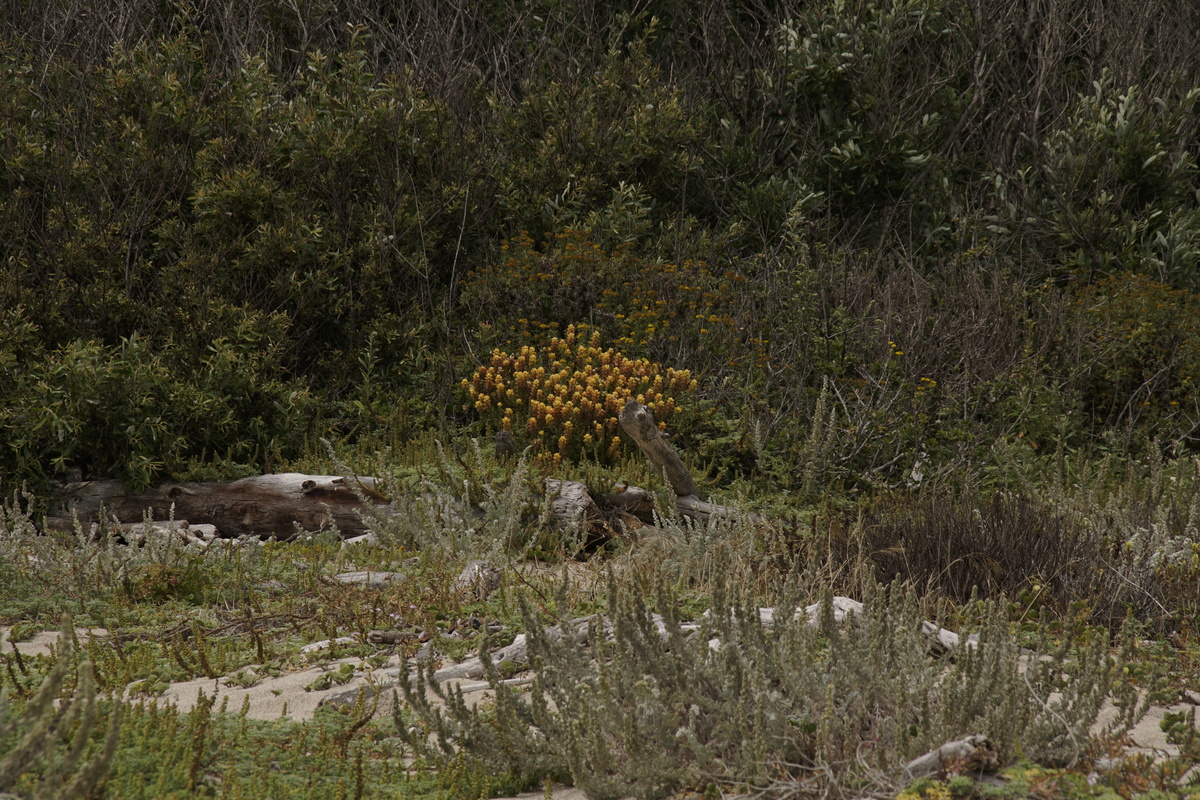
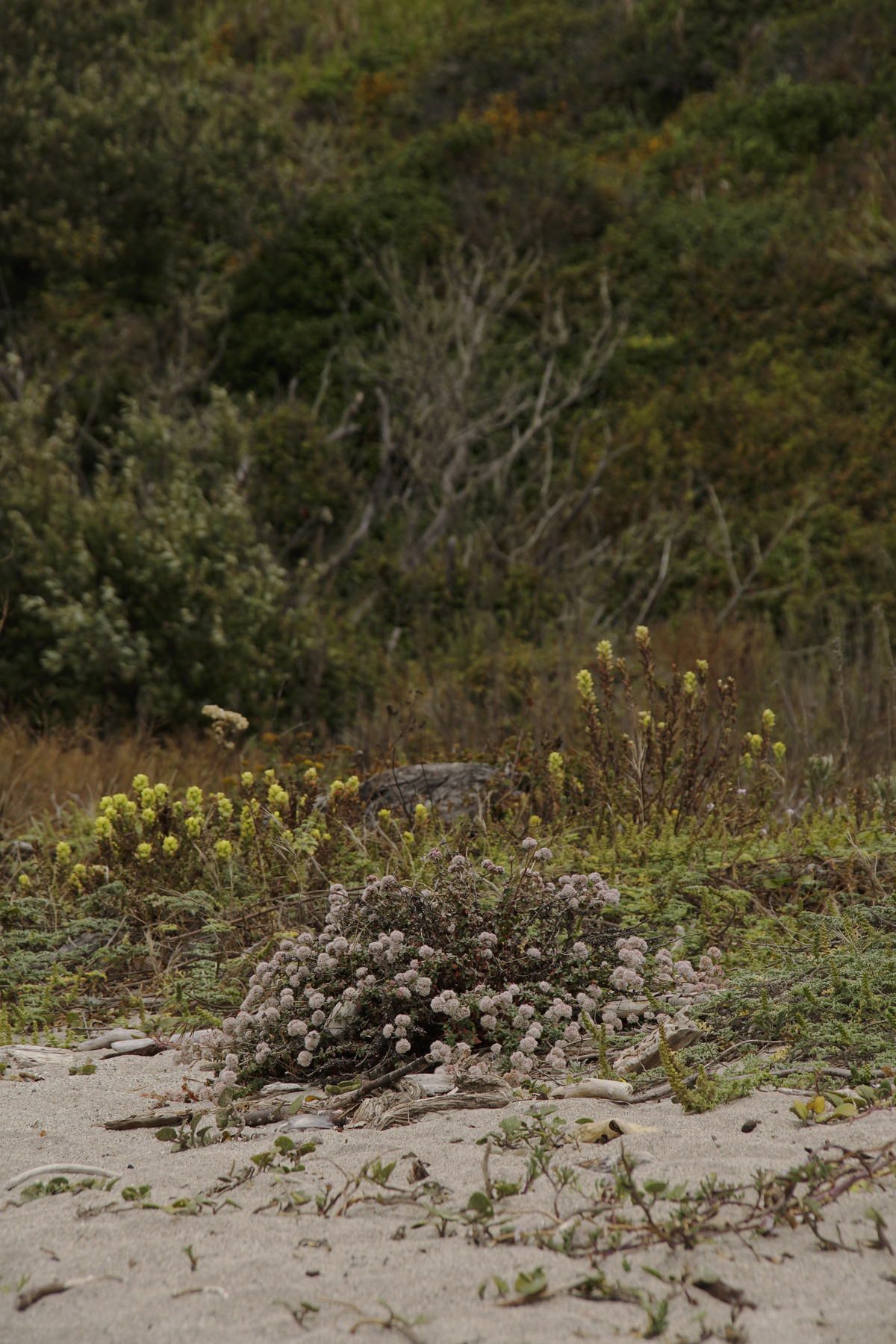


 a little wild