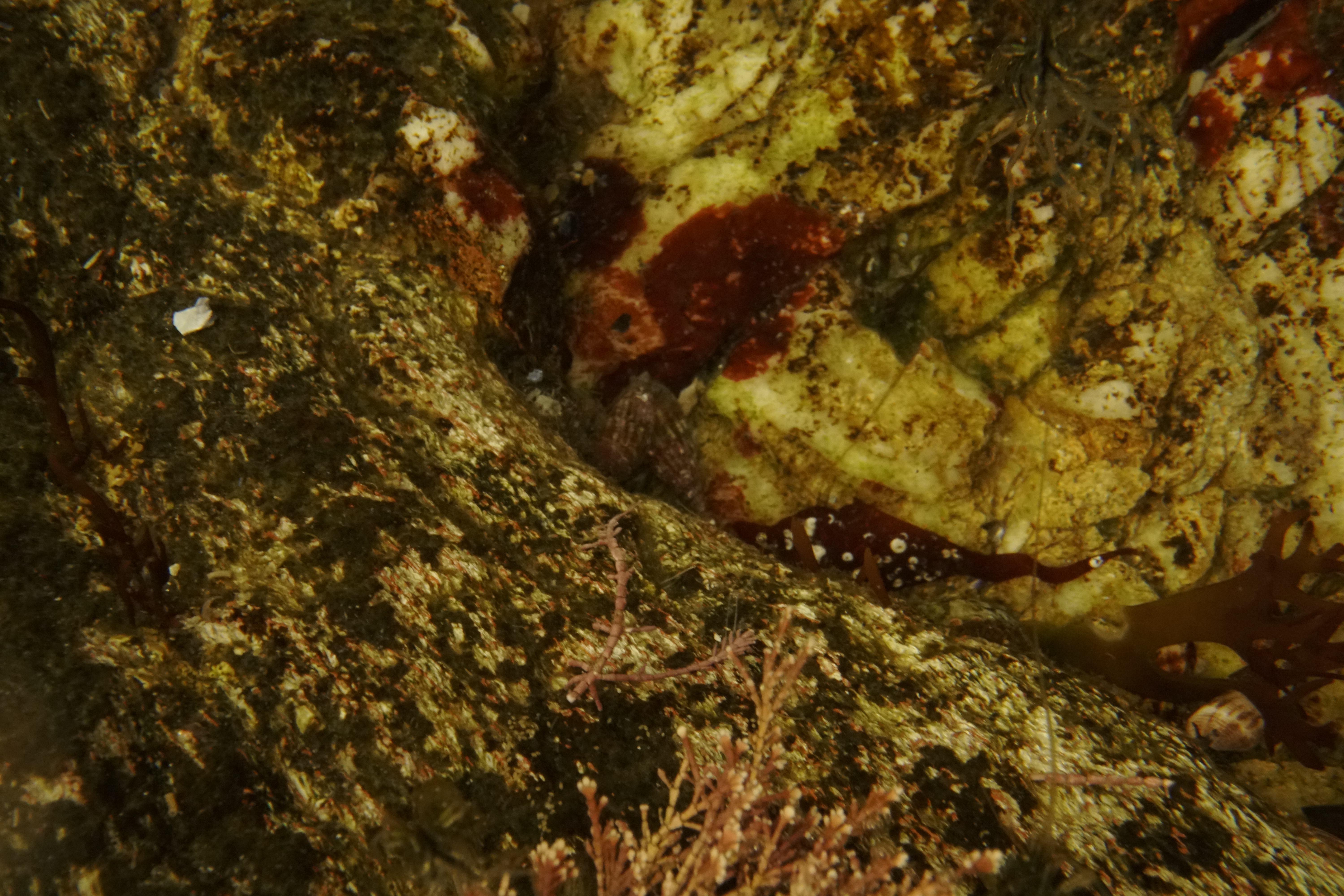
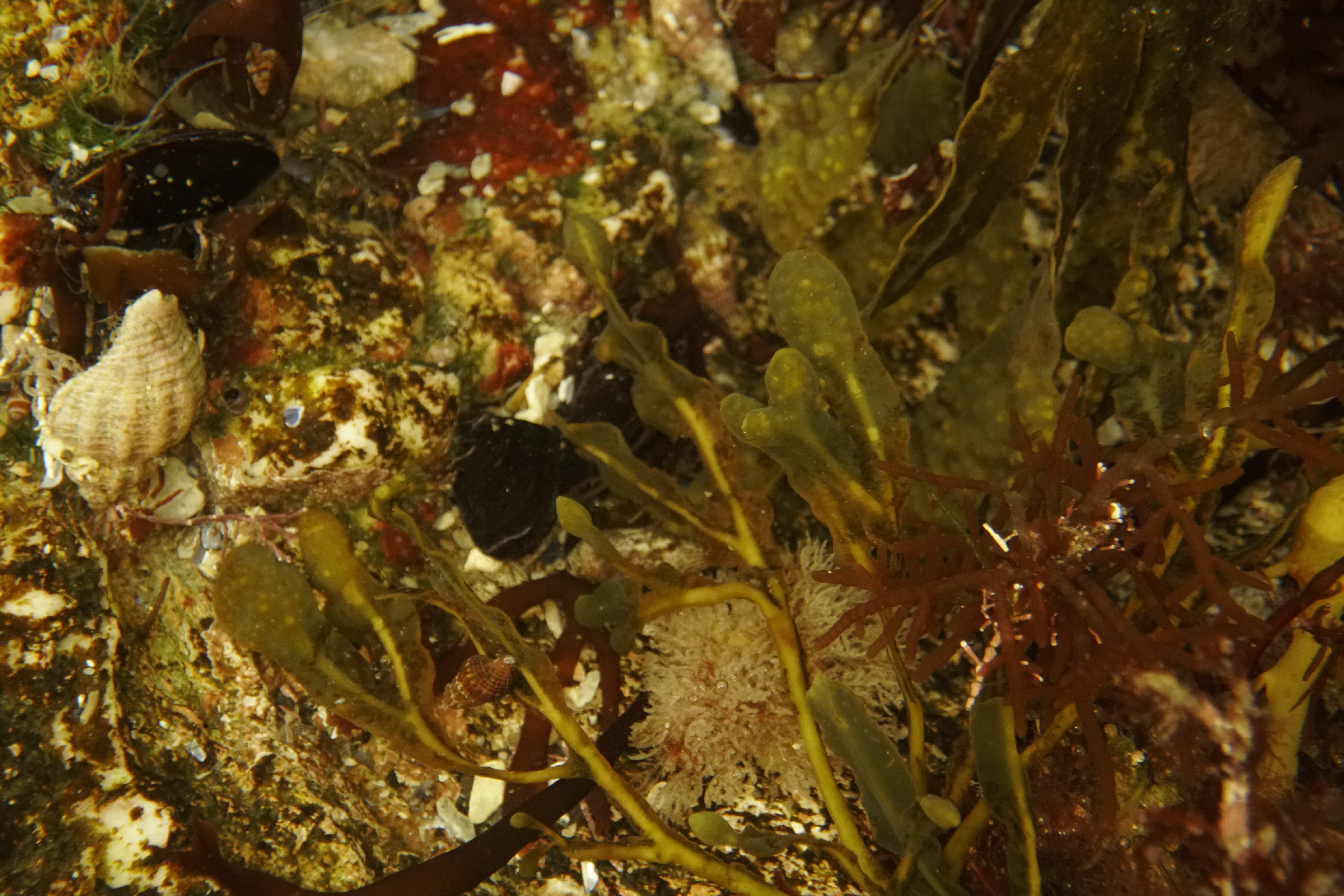
My first time taking the Laowa 24mm probe lens to a tide pool. As a reminder, the tip is waterproof and can be introduced underwater. It has its own light source, and can focus down to 2:1 magnification.
Beavertail State Park is in Jamestown, RI, at the southern tip. Deserves a lot more time — I didn’t know we had sea arches that close by!
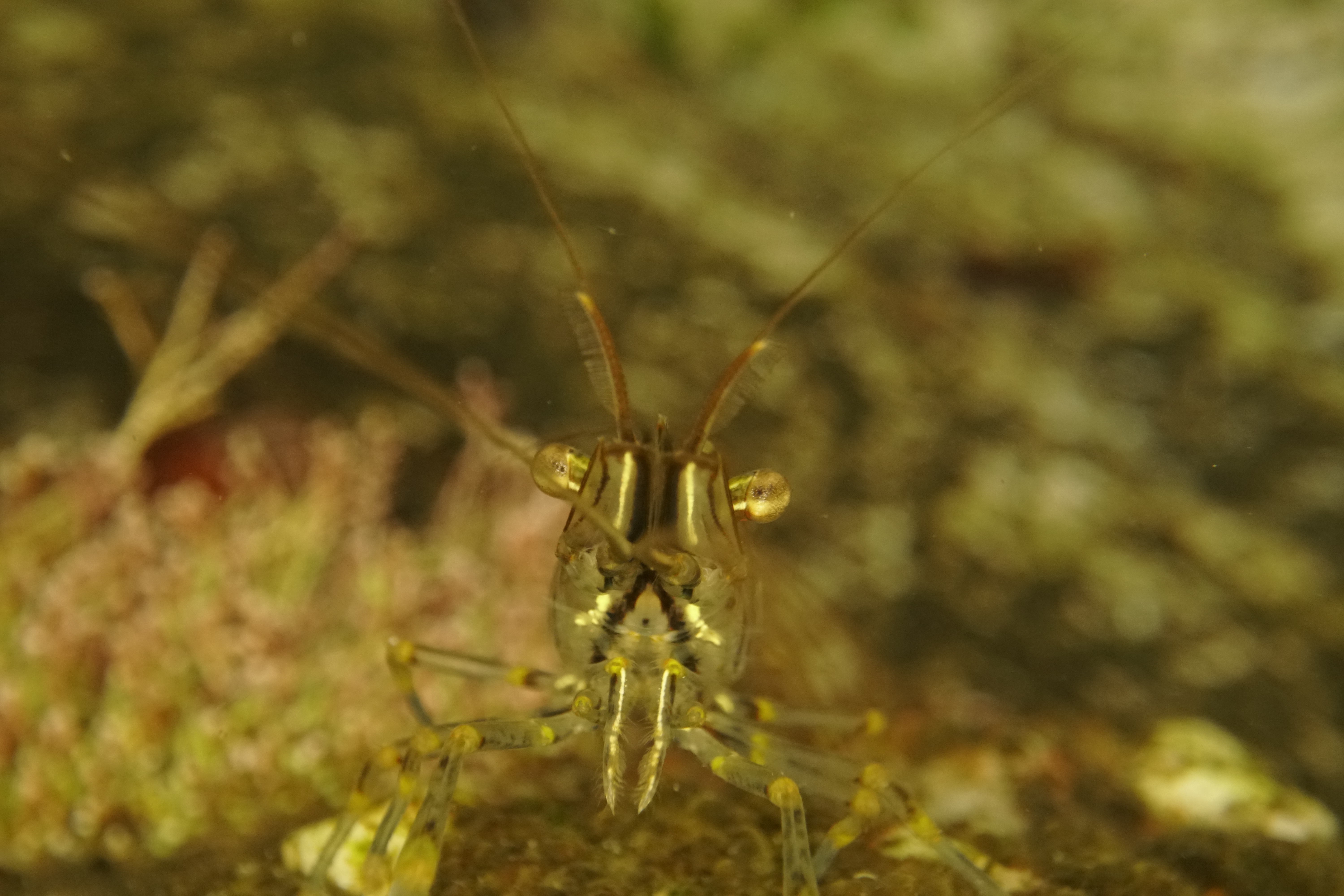
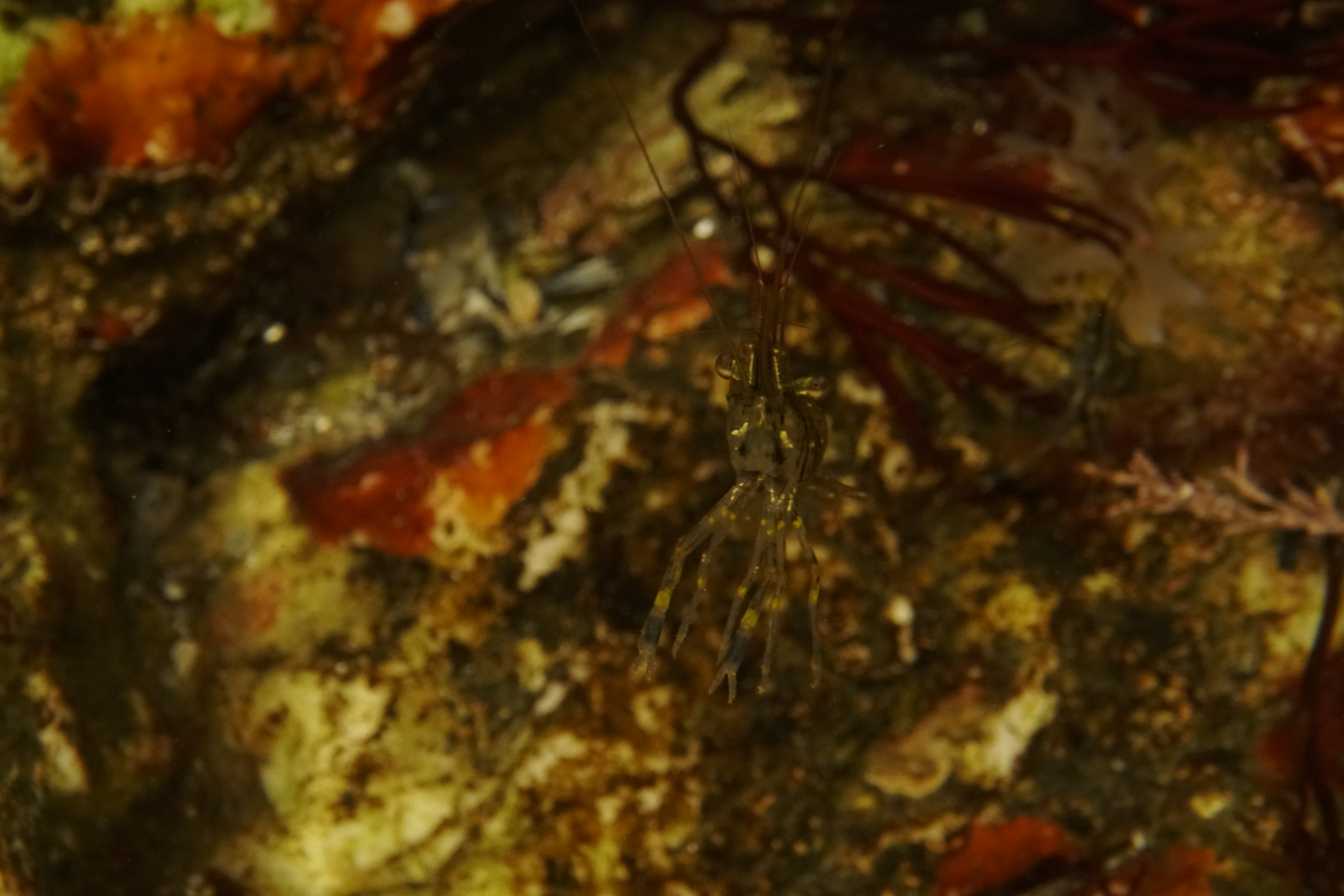
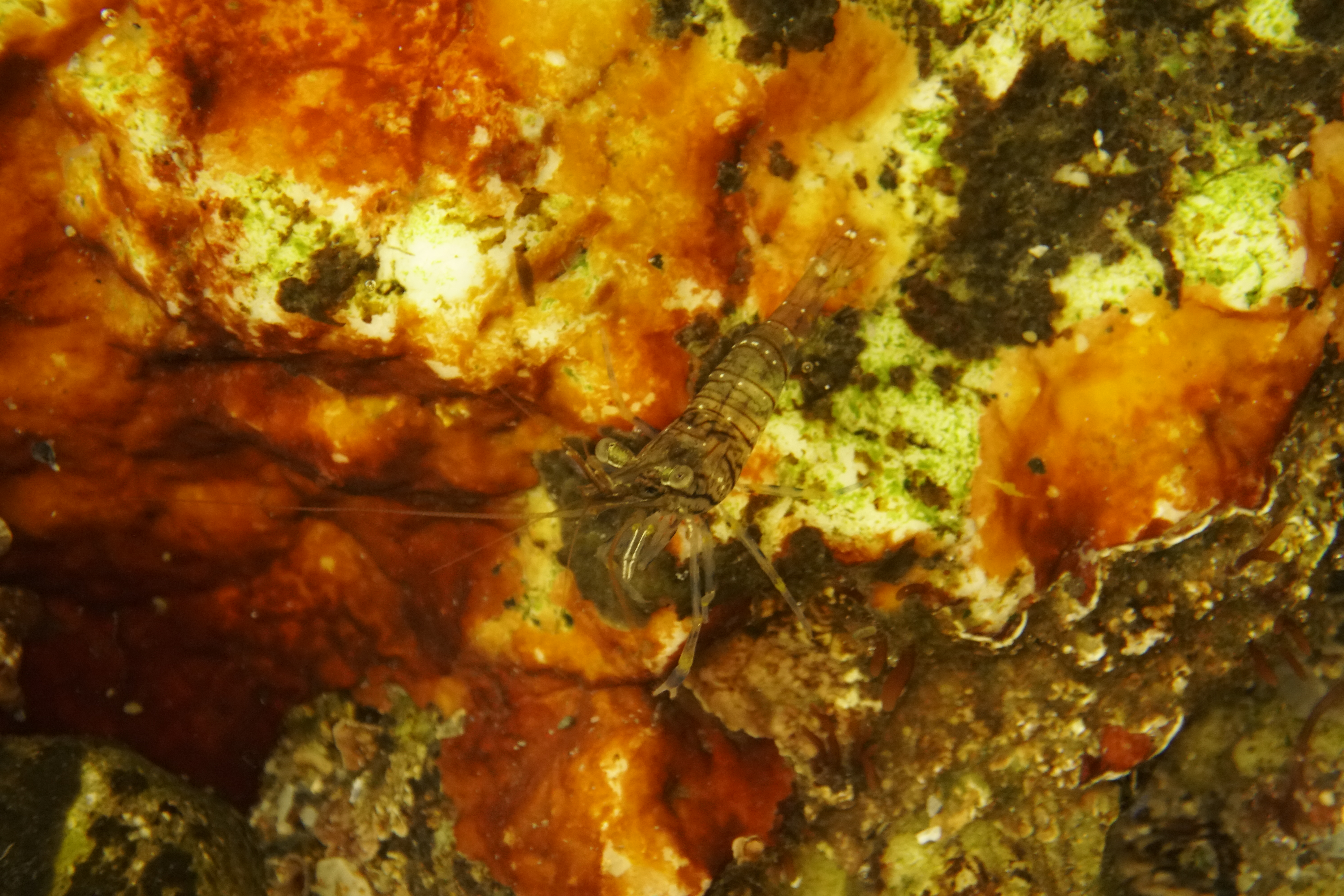
Usually, I have to chase my subjects, especially with the razor thin depth of field in macro photography. However, the tide pools were full of shrimp, and the shrimp were full of aggression. The moment I tried to take a photograph, they came right up to the lens, presumably to attack it. Which meant that they were close enough it was tough to get the whole shrimp in the field of view. And a lot of the photographs of other objects had shrimp photobombers.
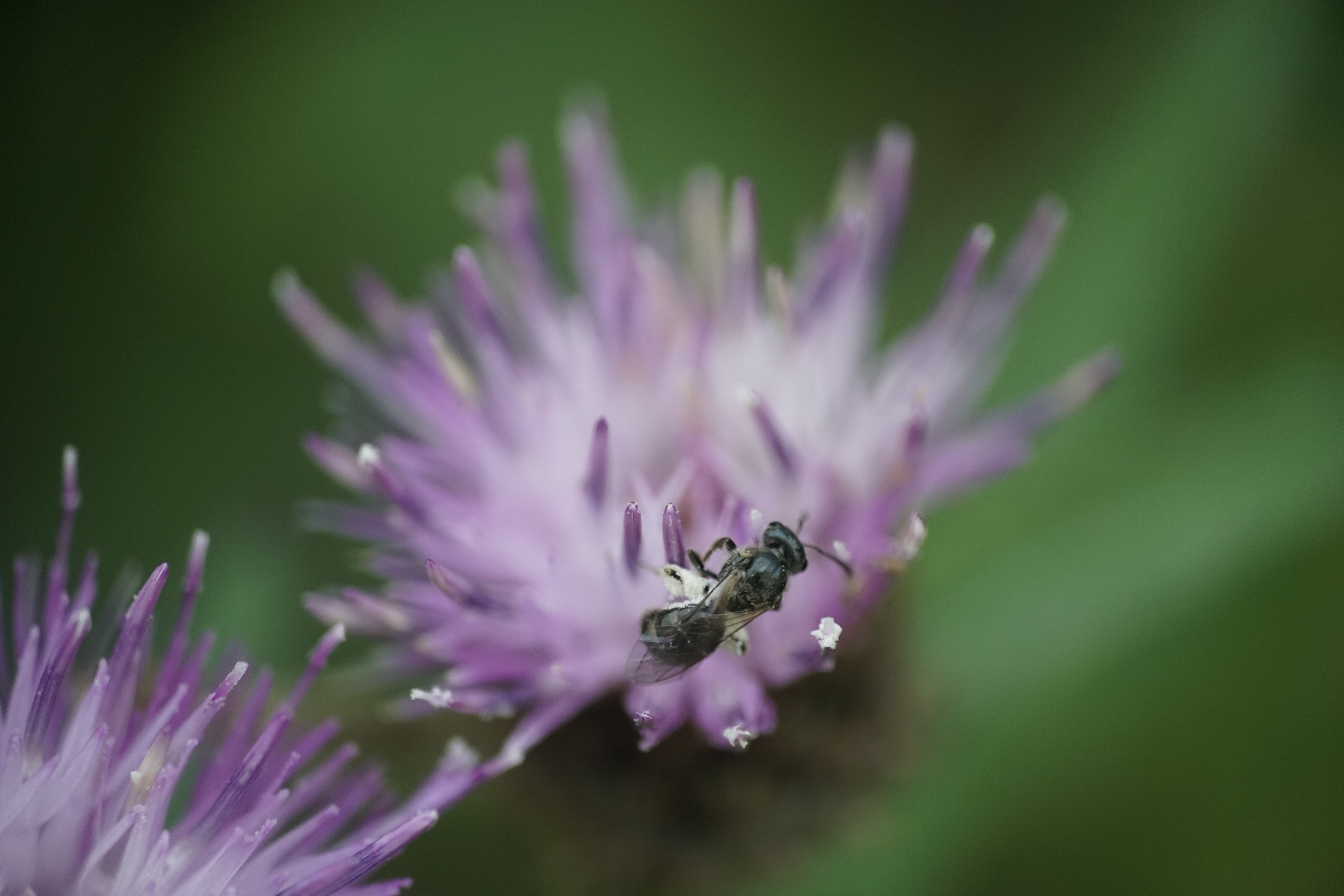
This is a bee, Hylaeus, aka the masked bees. The front view is very distinctive.
One of the stars of the show: a cuckoo wasp, Chrysididae. This particular one is in genus Chrysis. I’ve gotten photos of them before, but they were the type you wouldn’t show anyone else, because they would silently pity you.
I haven’t been able to narrow down the identification. The gorgeous combination of iridescent green and iridescent blue over the thorax should stand out, but I haven’t found a match yet.
The reason I was able to get some decent photos this time (ahem, besides my outstanding skill and perseverance) was that it seemed to have found an area to investigate and stayed there for a while. I can only presume that that area was a nest for some other wasp, but it didn’t seem to be so to my own eyes.
The iridescence (?) on the antennae is something that shows up in several of my photos. Not sure whether it’s a reflection of her body or something else.
Further investigation of the purported nest:
Side view
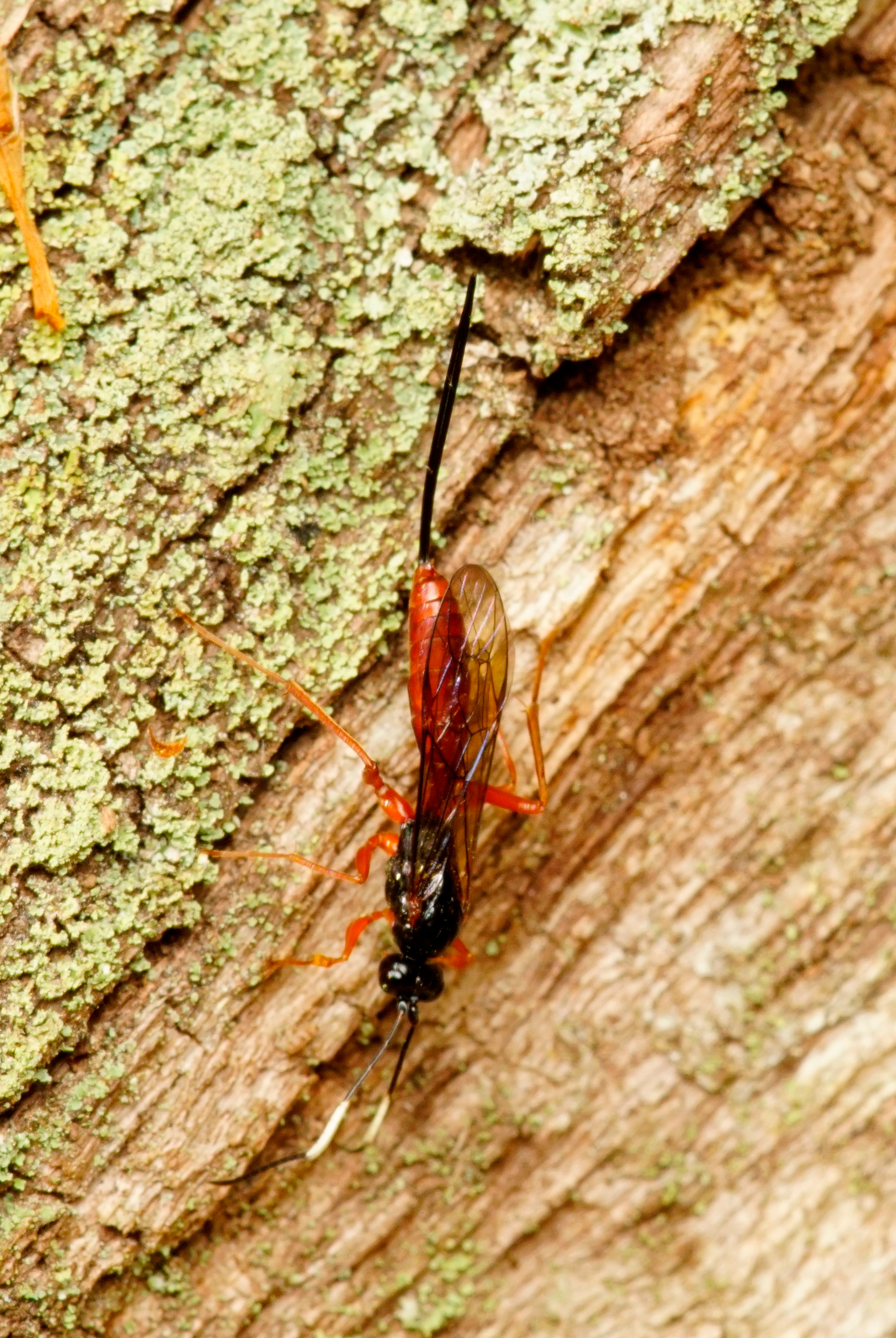
My best guess for this next wasp is Ichneumonidae –> Cryptinae
Lepidoptera
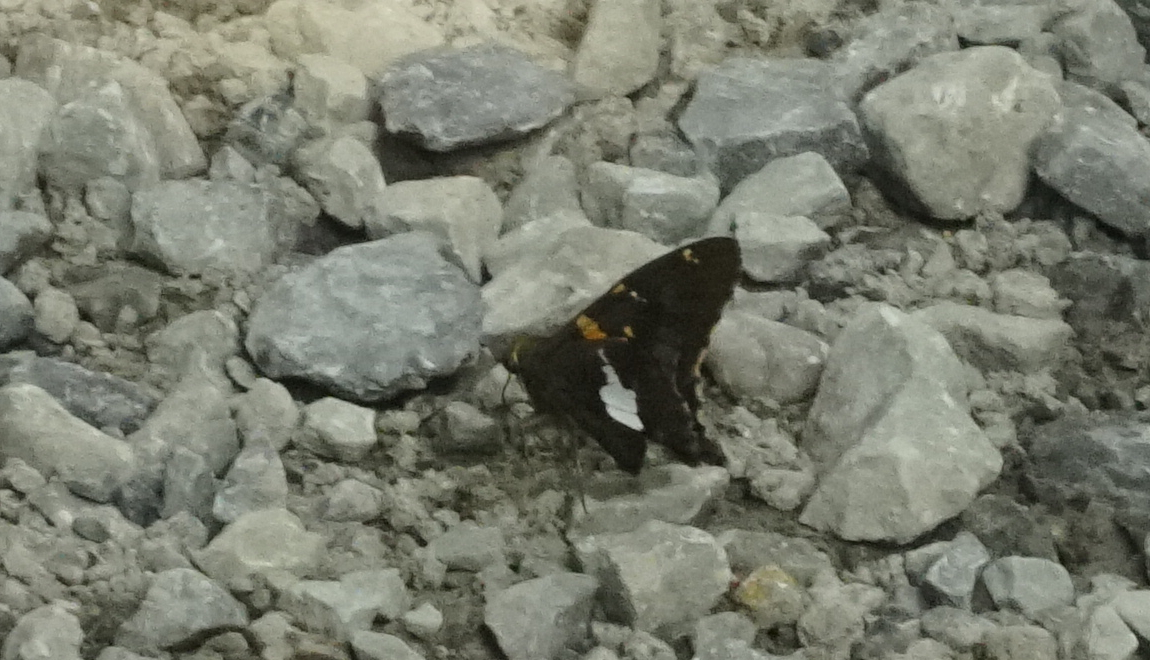
I have no idea what this one is. Which is no surprise because I don’t know my Lepidoptera at all.
EDIT: identified for me as a silver-spotted skipper.
“Epargyreus clarus, the silver-spotted skipper, is a butterfly of the family Hesperiidae.”
Ephemeroptera
This mayfly was swinging its (his?) cerci all over the place. I presume that it was trying to smell a mate?
Hemiptera
Coreidae (aka leaf-footed bug) nymph
I wish I had taken the time to get a better photo of this bug:
Arachnida
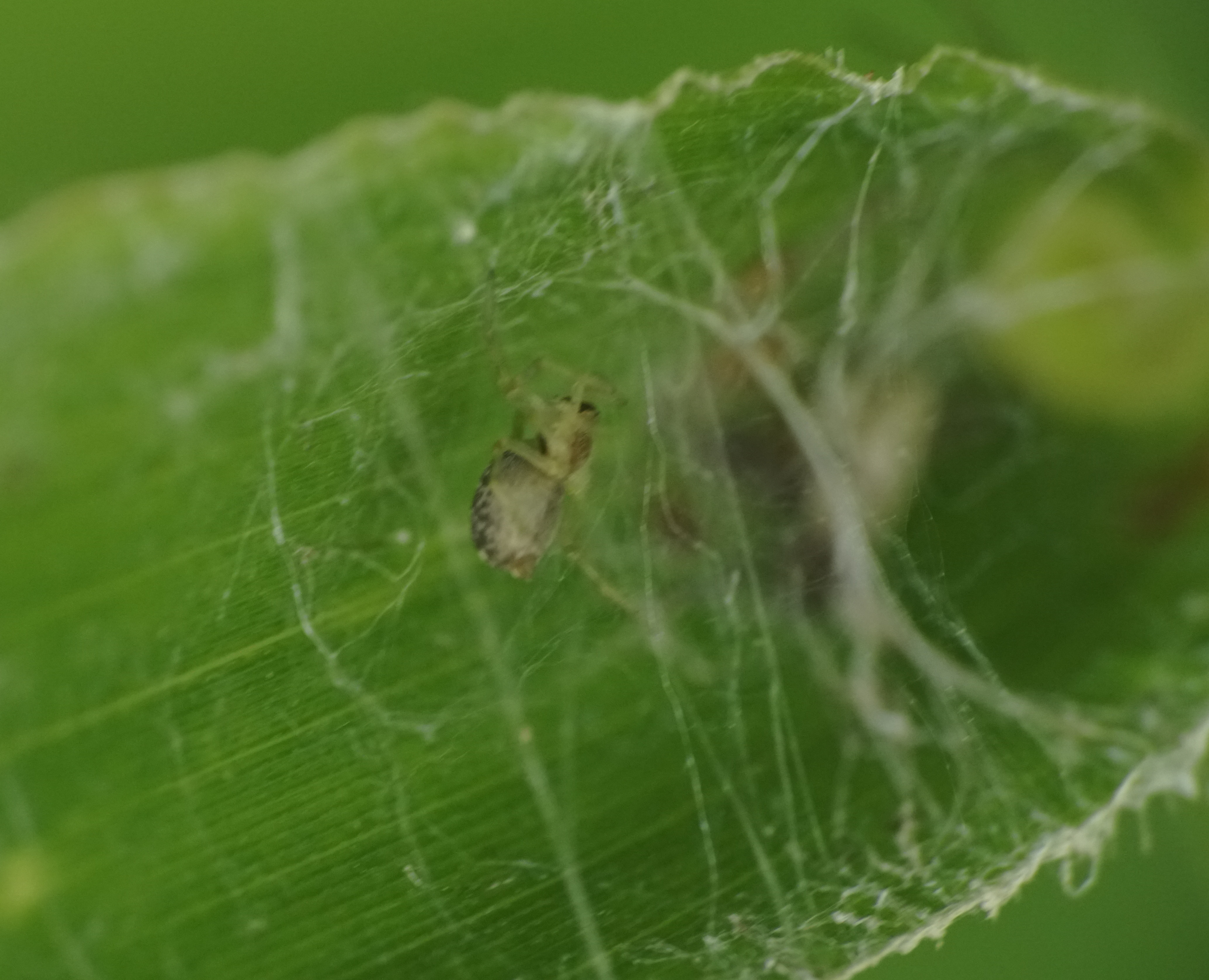
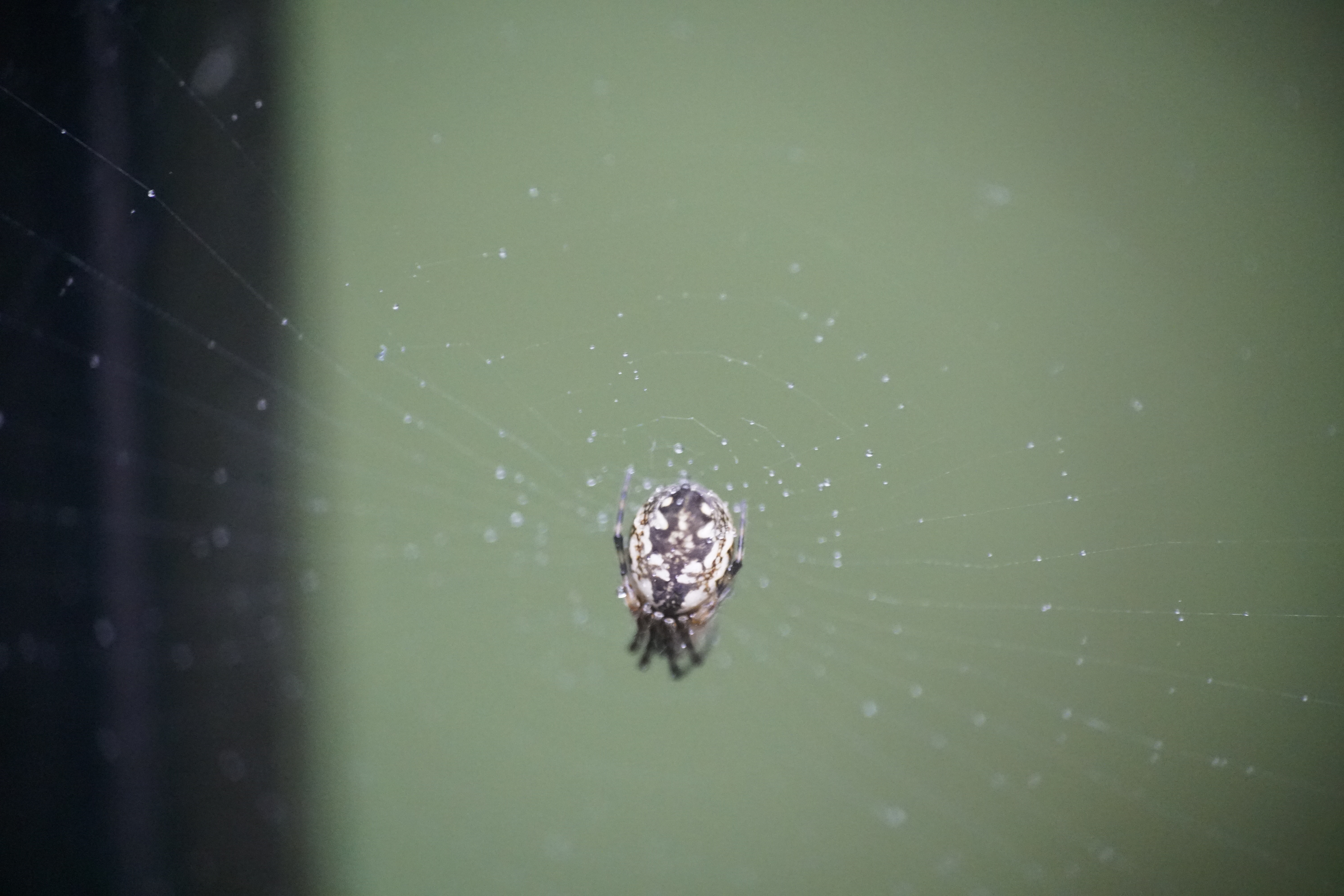
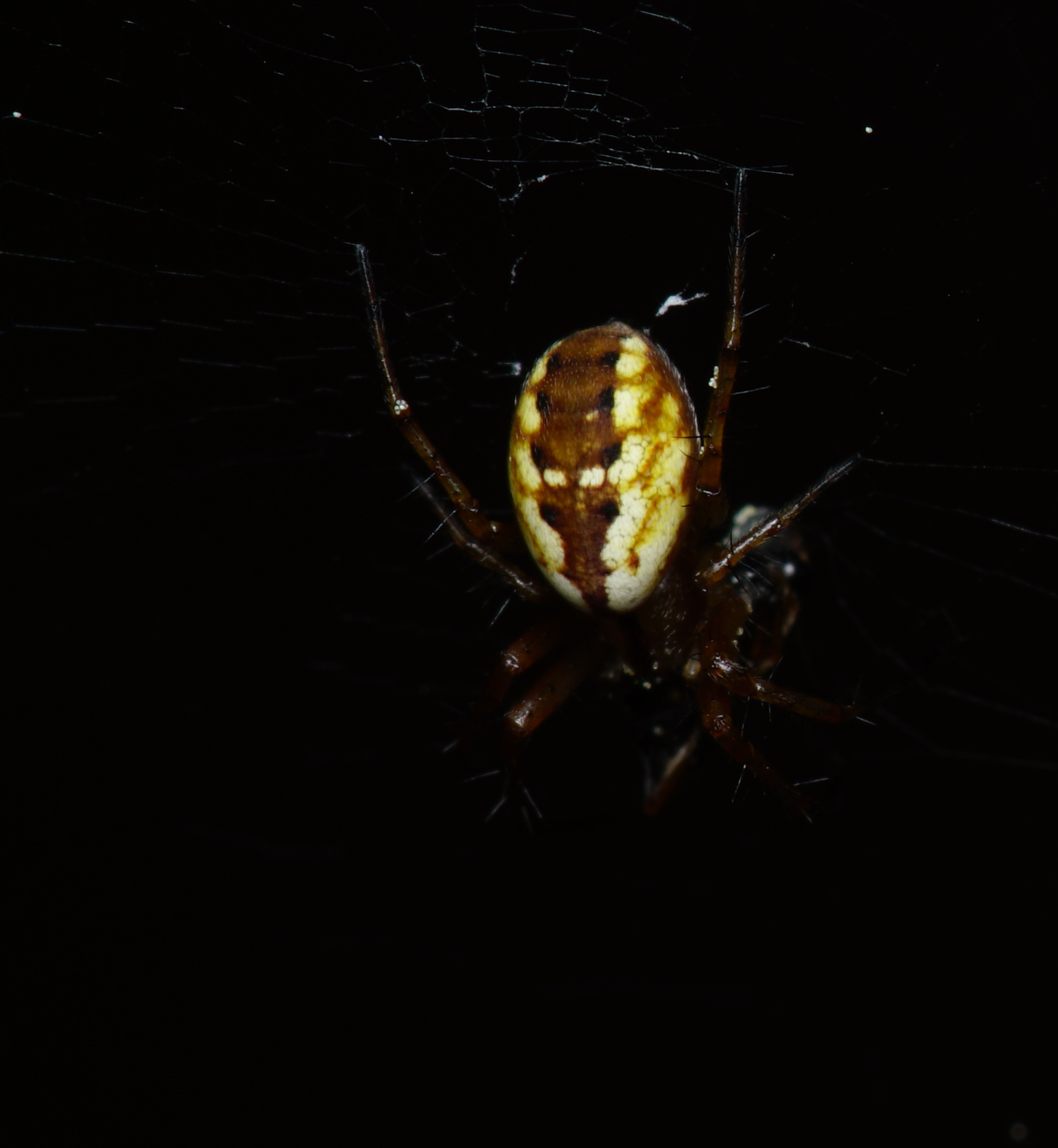
Agelenids always look spectacular in their webs, especially after the rain
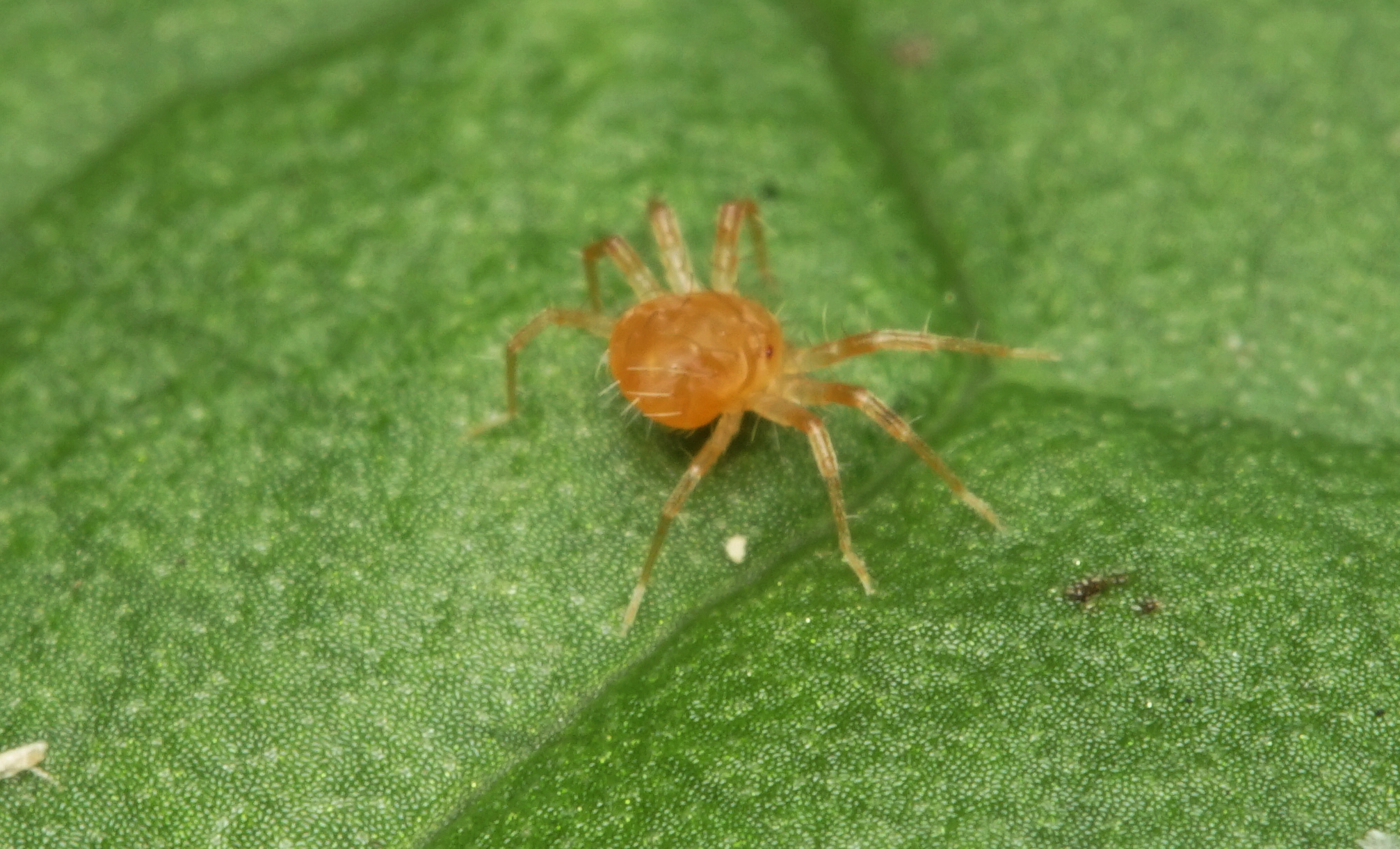
I really really tried hard to get a good image of this presumed Acariform. Compare with Erythraeus. Wikipedia: “These are large red mites with two pairs of eyes and long legs (the first and fourth pairs are often longer than the body).”
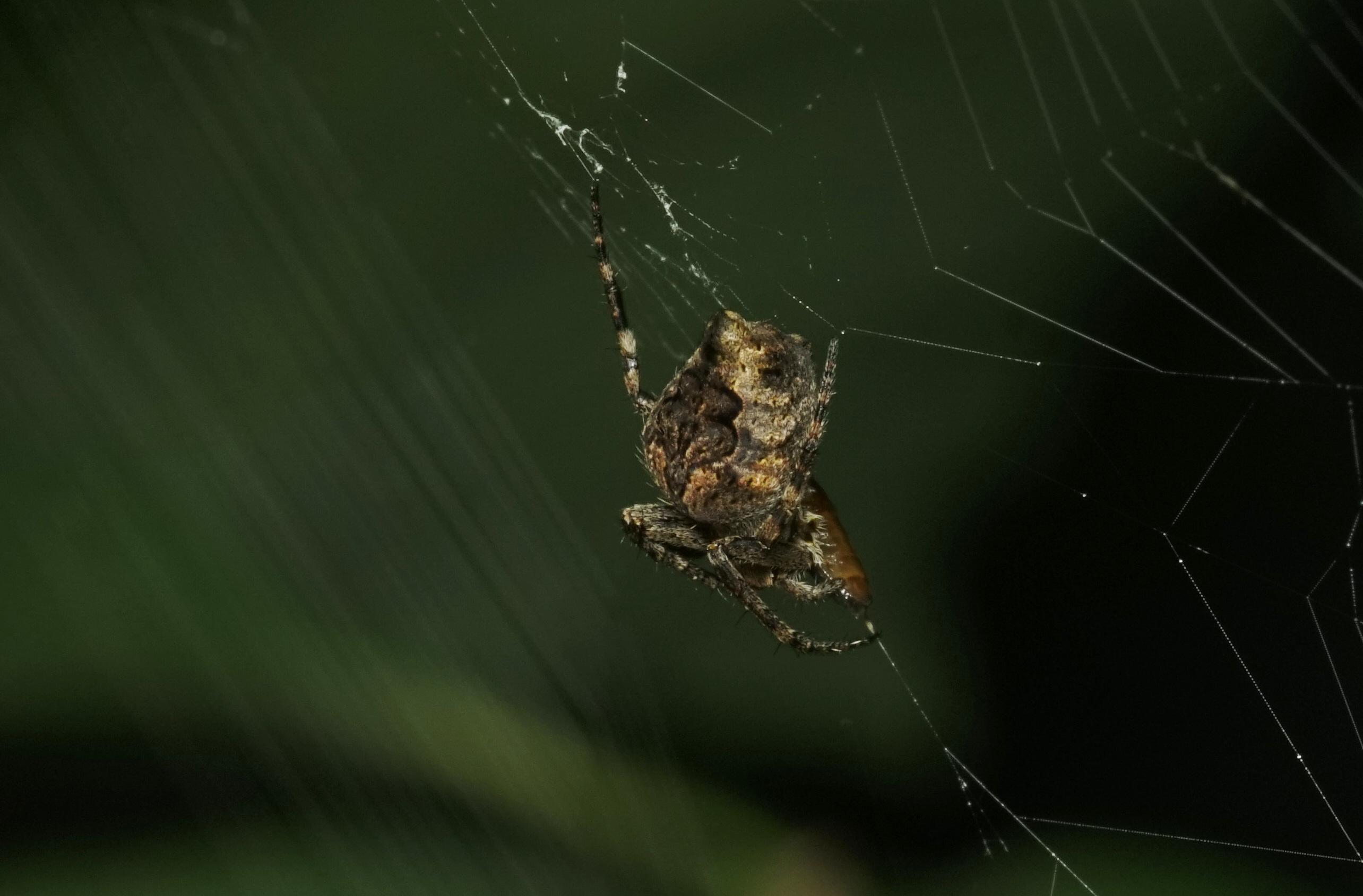
This spider spent quite a bit of time hauling its prey up. I’m guessing Parasteatoda. It’s weird seeing them actually in nature, outside a house or garage.
It looks like a mite on the left side of the cephalothorax.
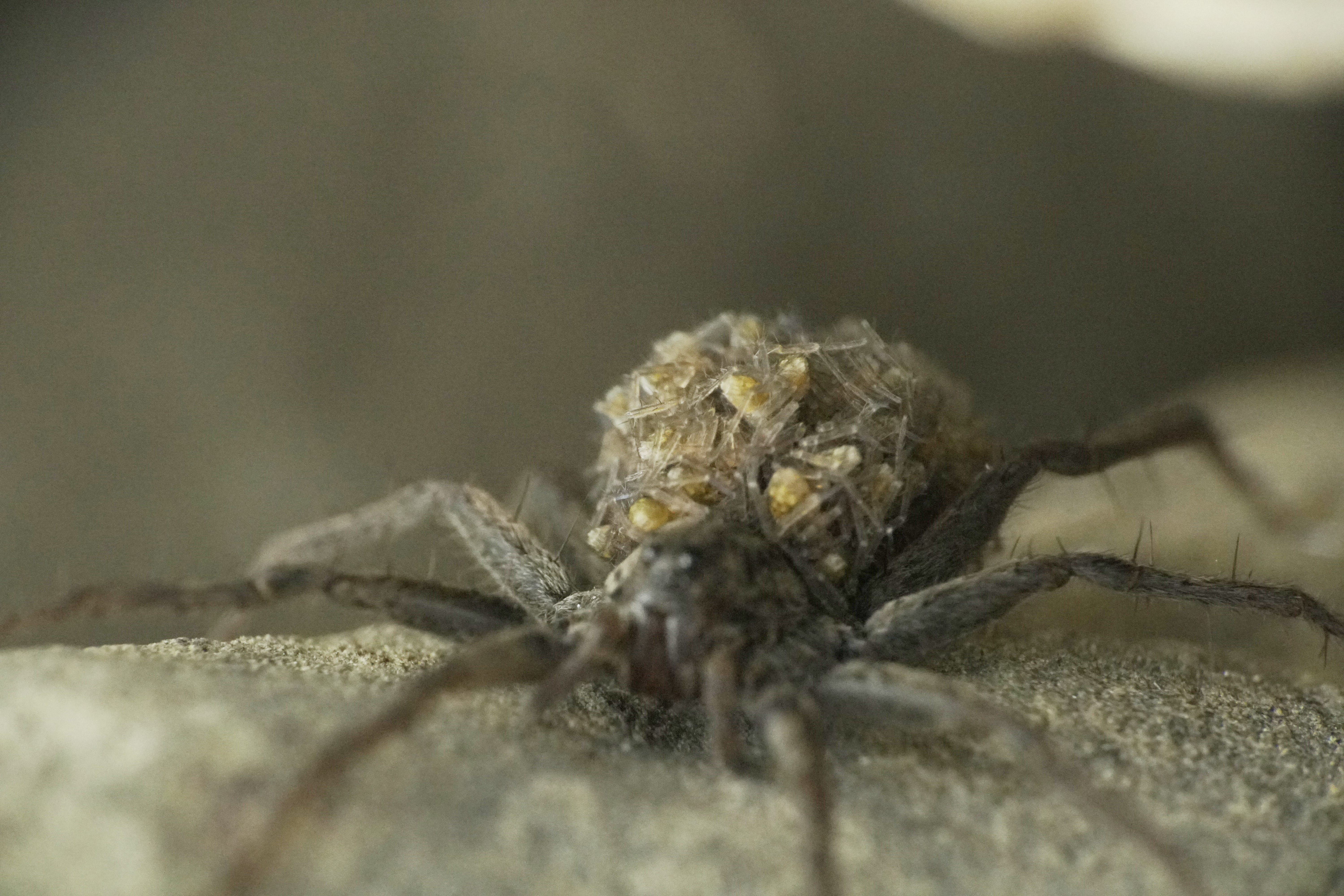
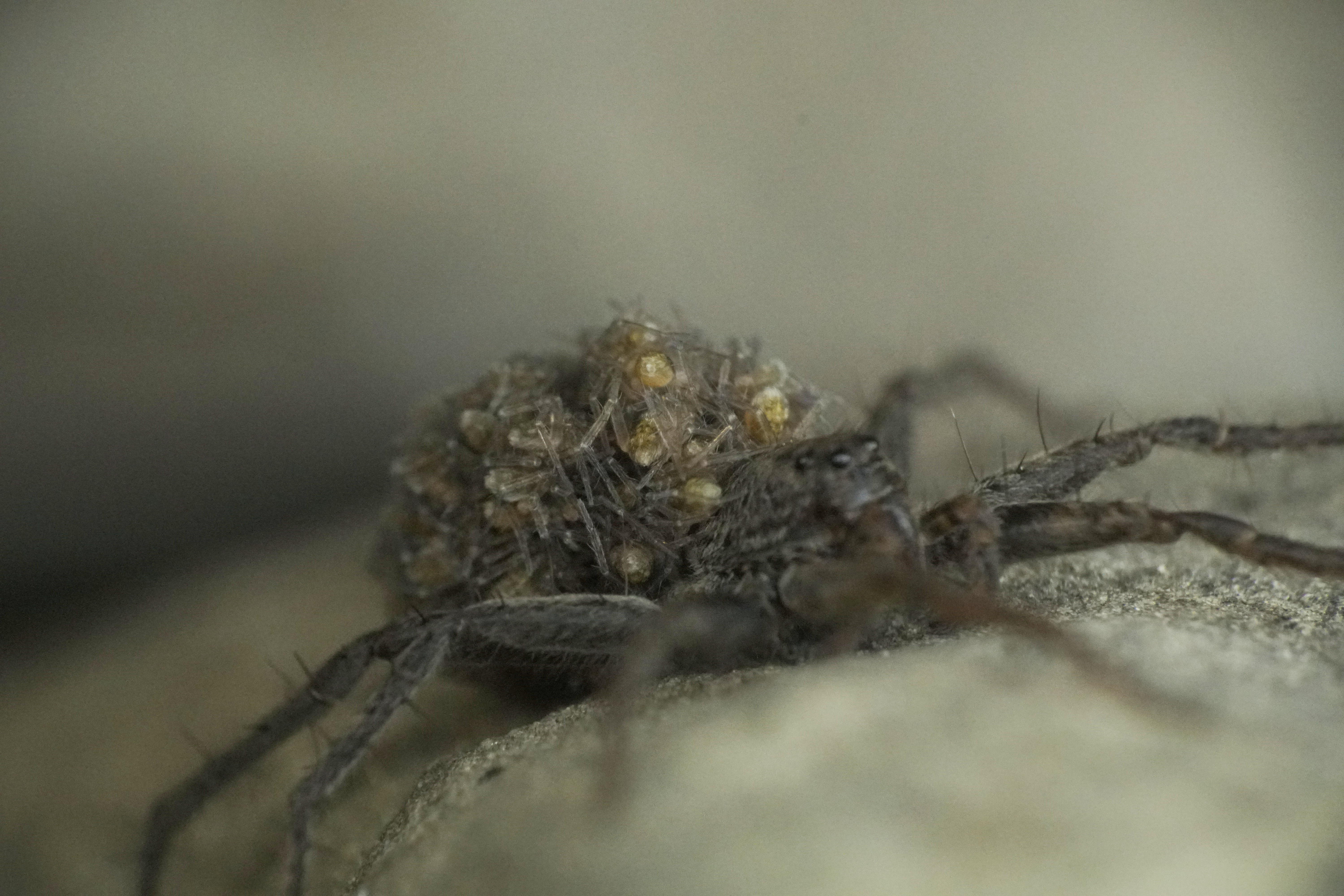
Another star of the show! I’ve been trying for so, so, so long to get photographs of a mama Lycosid (wolf spider) with all of her many spiderlings on her back. It was exciting finally getting them!
Pardosa sp., in Lycosidae, aka wolf spiders. The main genus that could be confusing is Arctosa. Two points of difference are the legs spines and the shape of the face: “[Pardosa have a ] narrow cephalic area. Arctosa have a chunky face”
Other
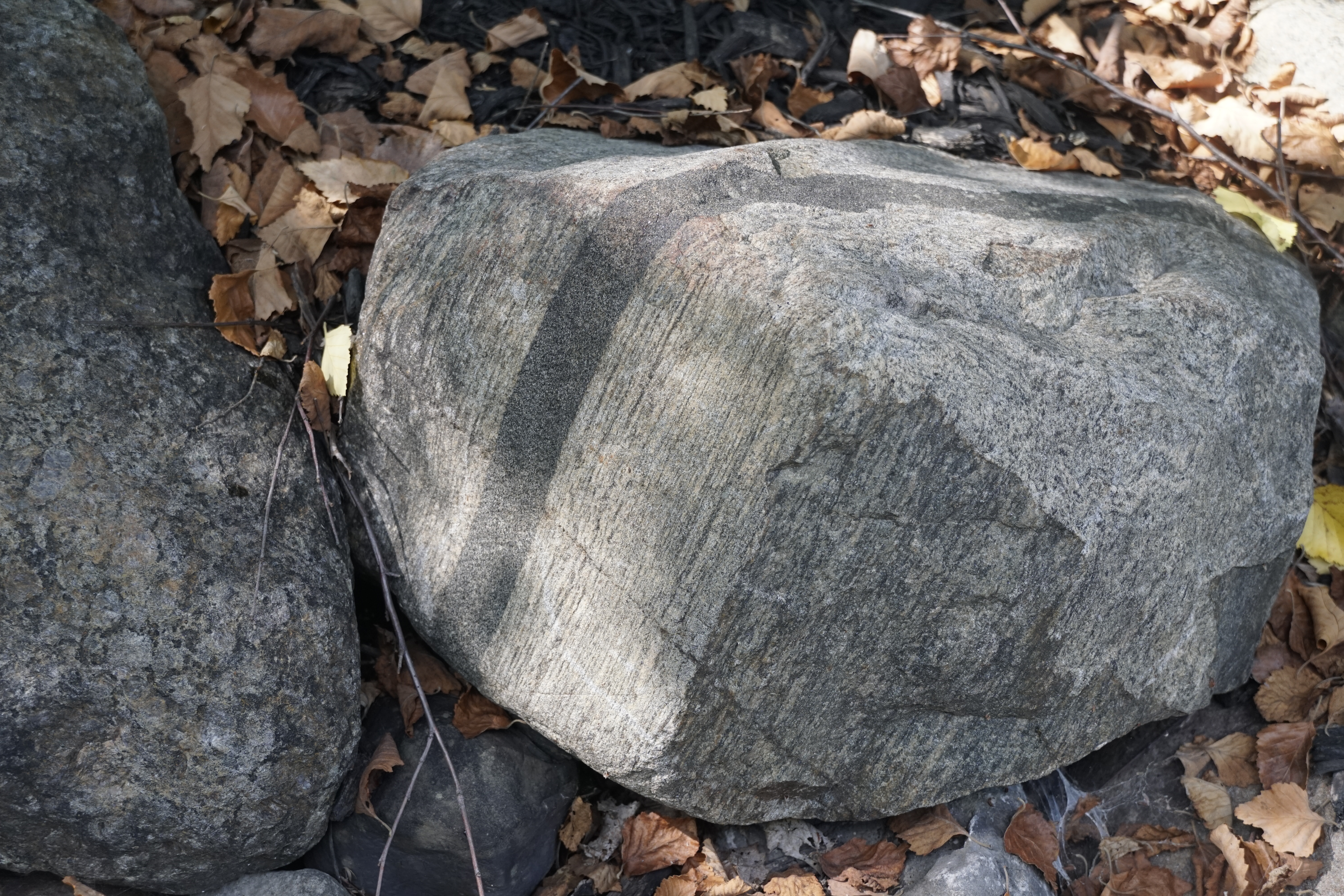
I just liked this very prominent layer in the rock. Not sure what geological transition it corresponds to. Although, could it just be an intrusion joining together two pieces?
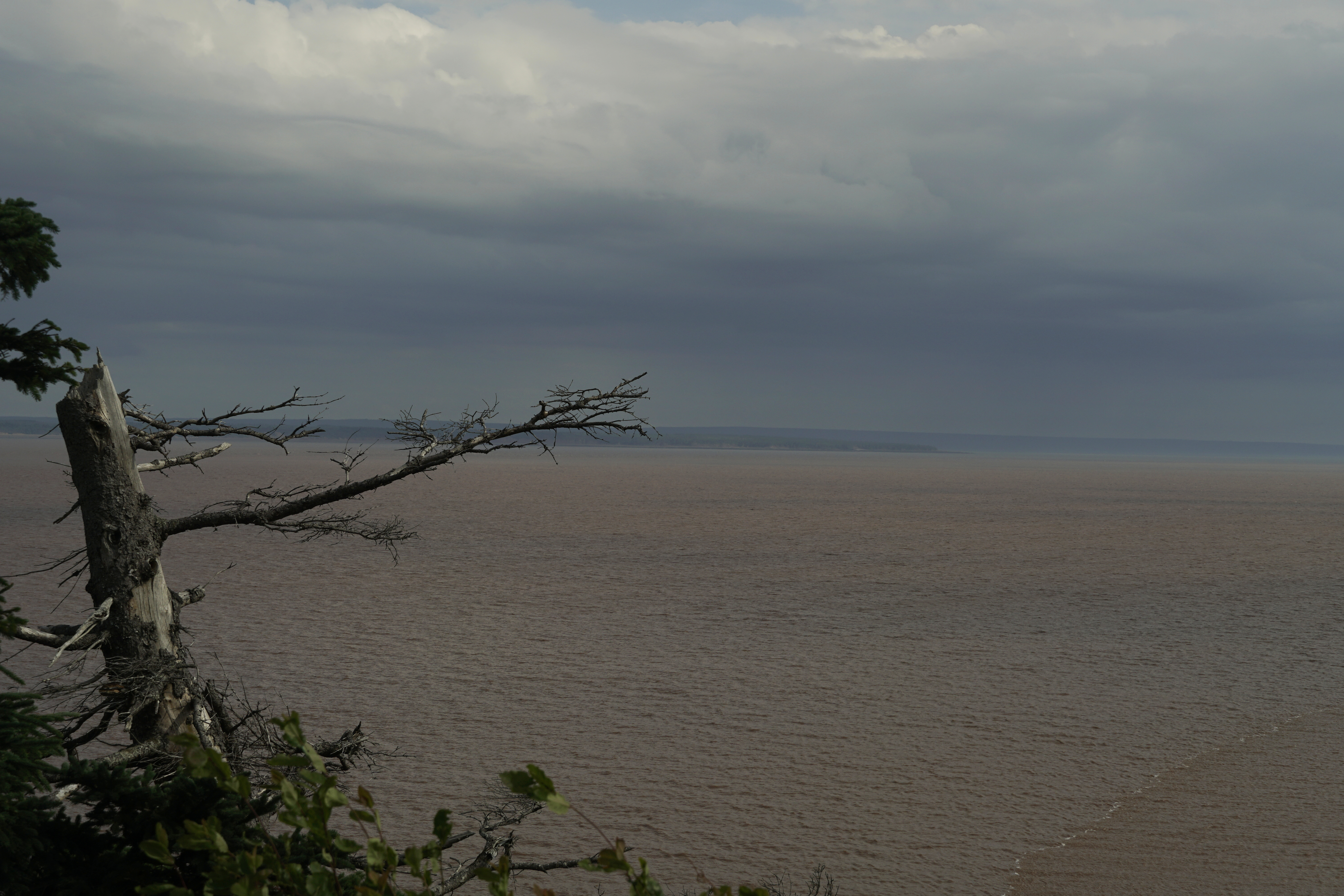
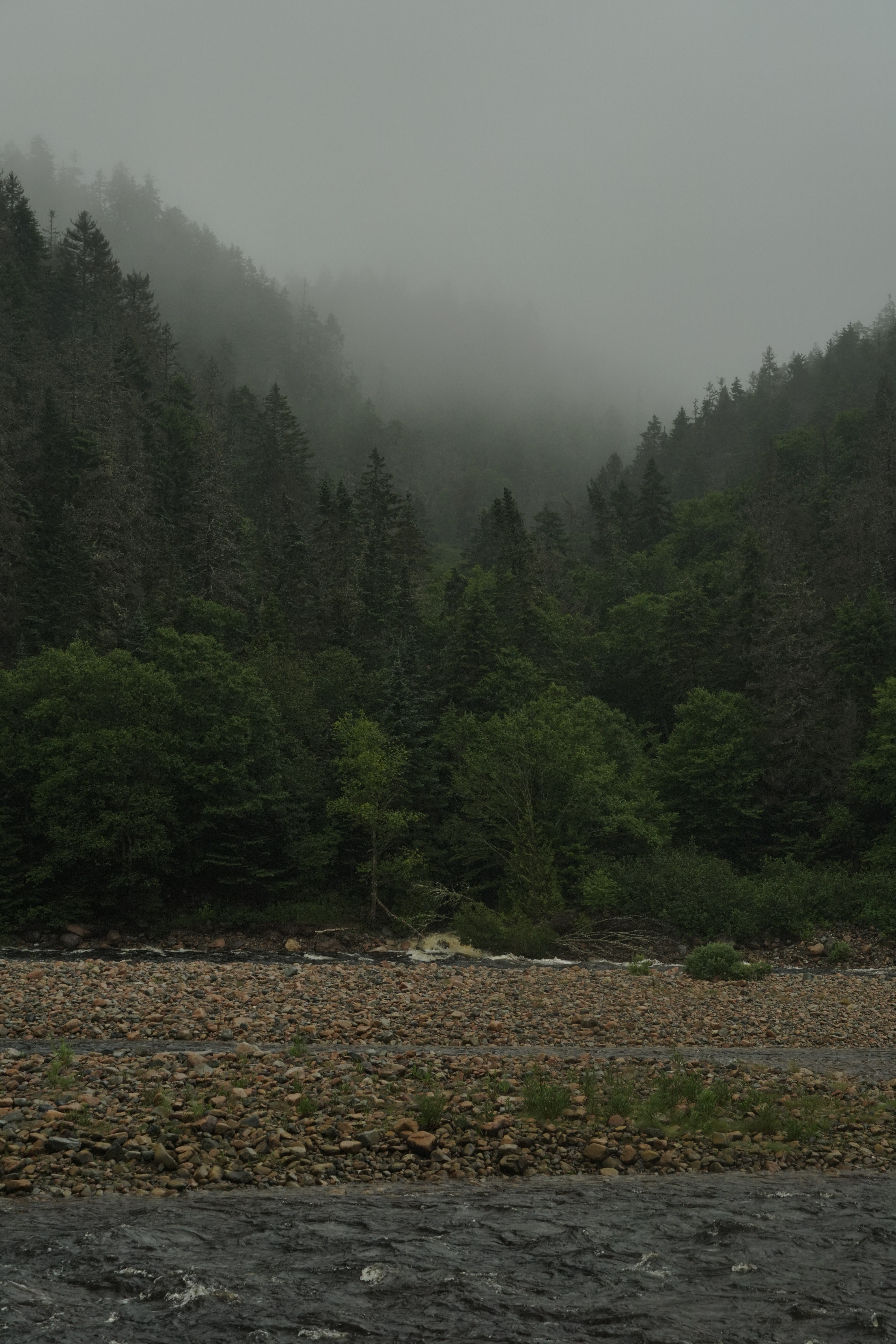
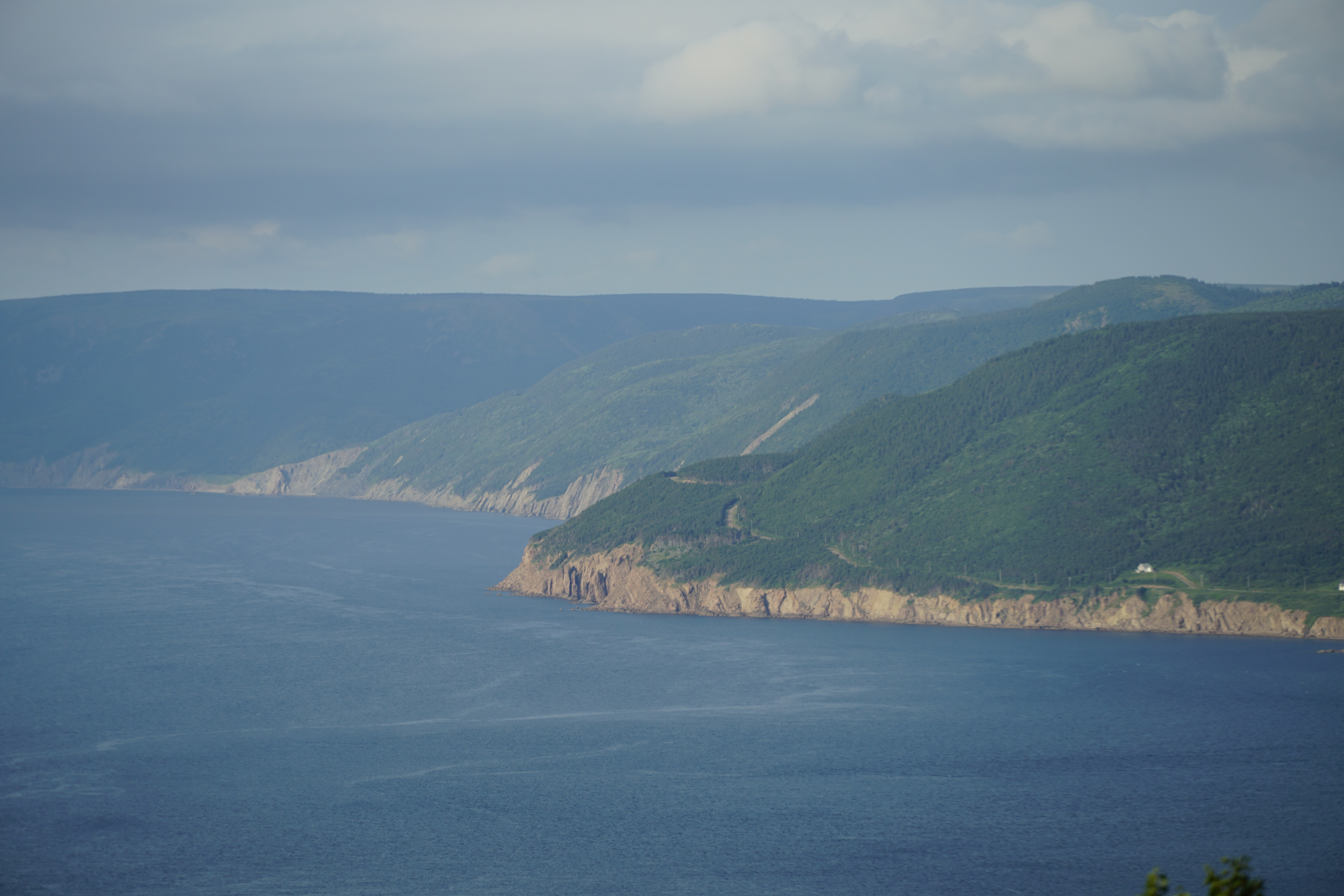
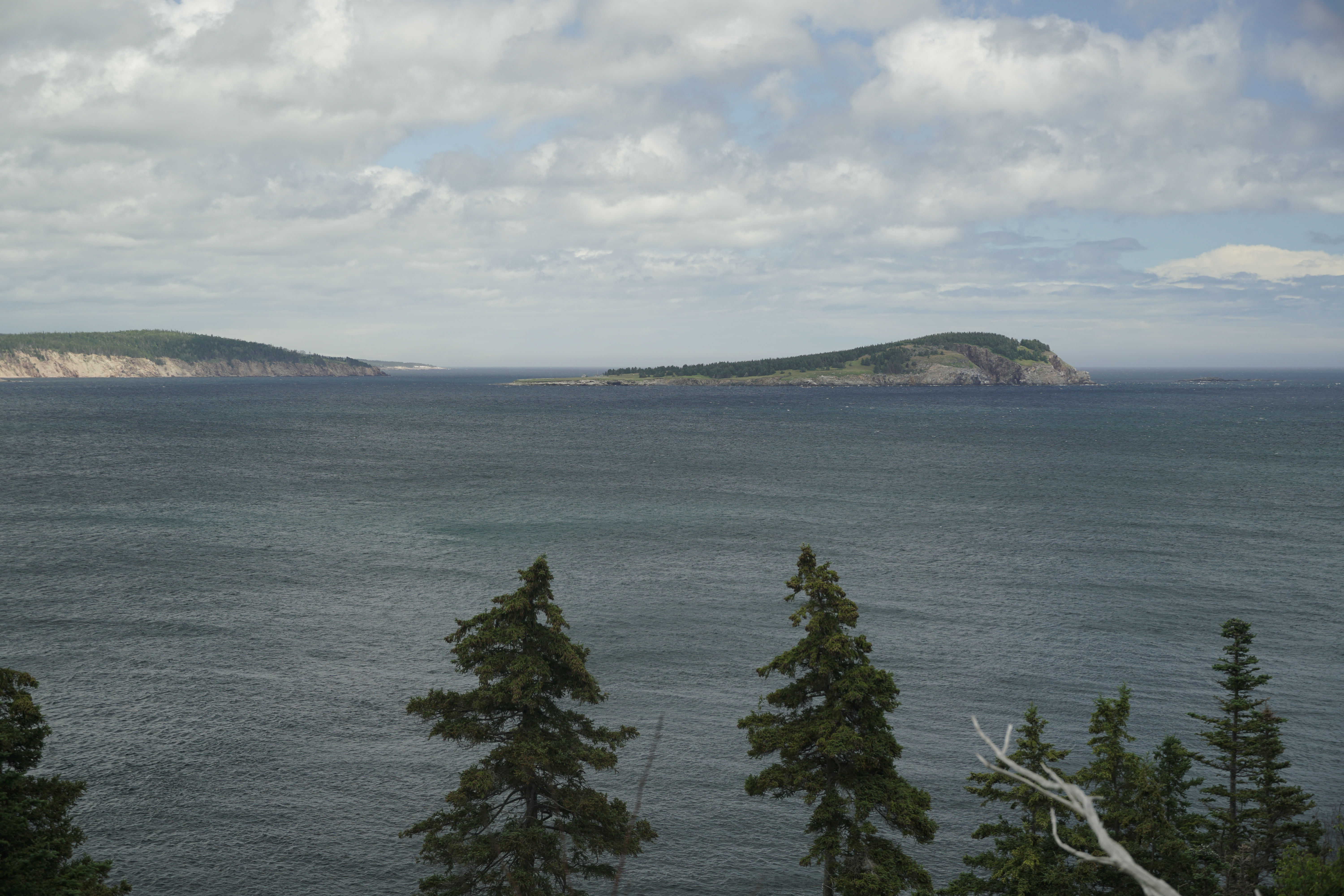
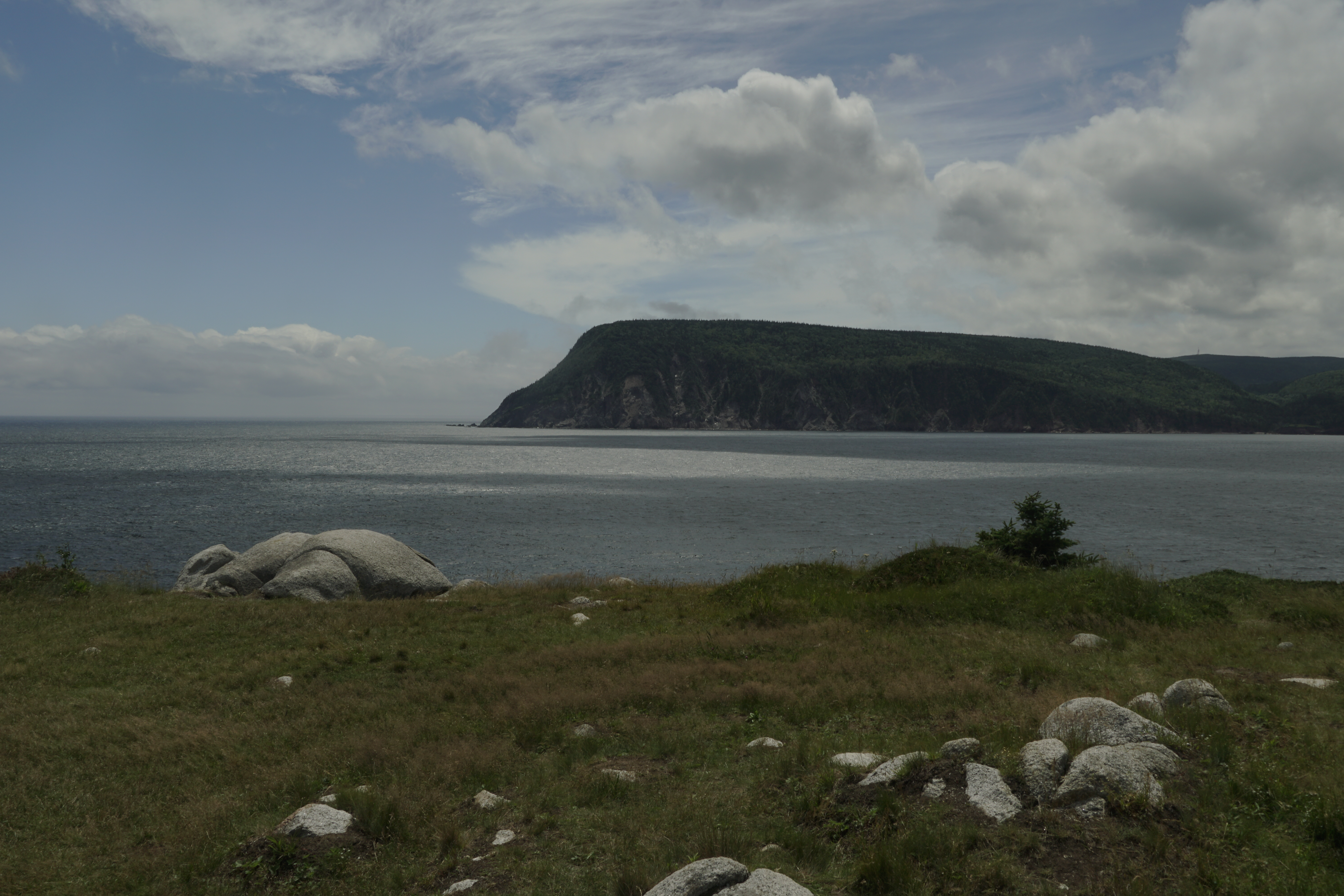
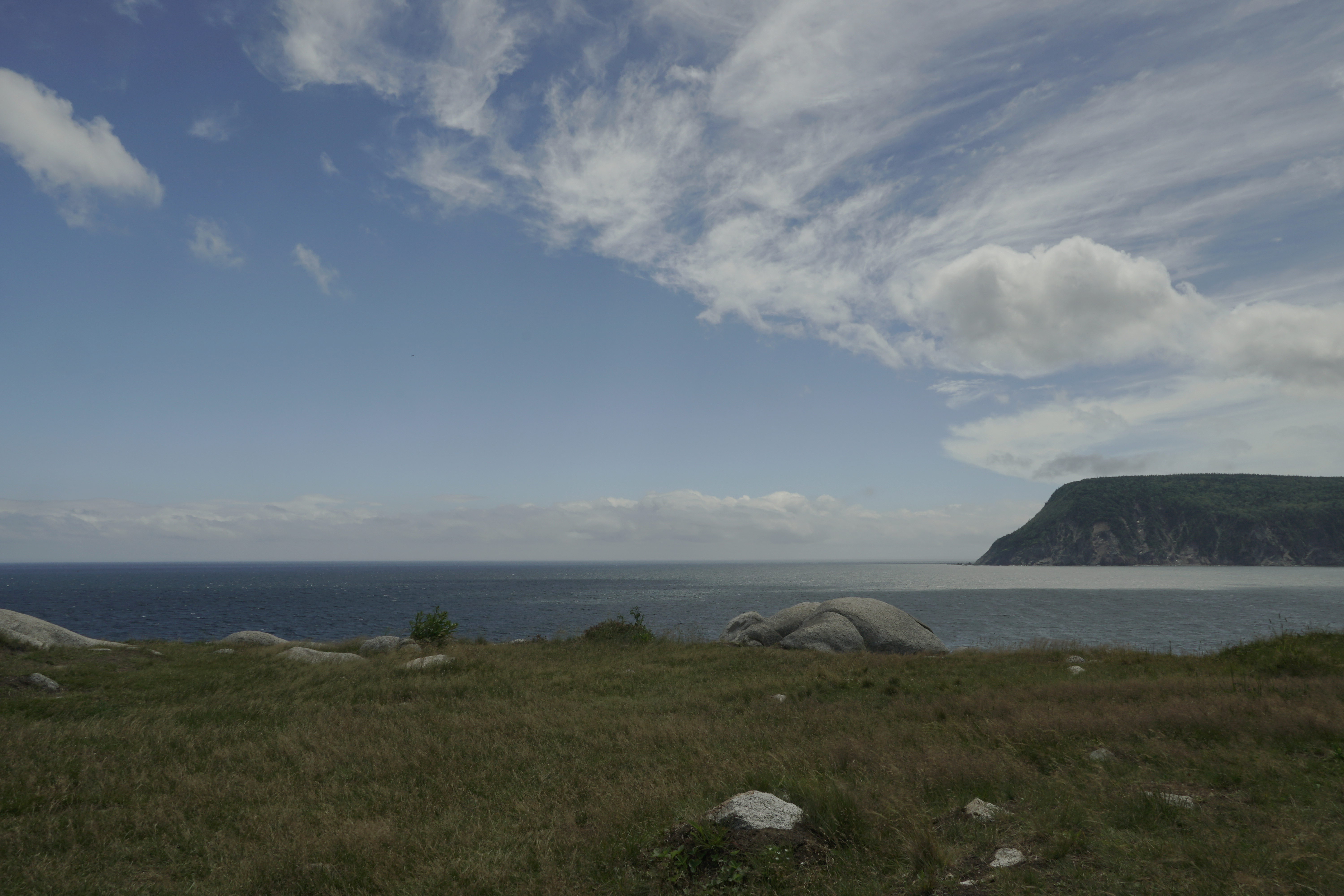
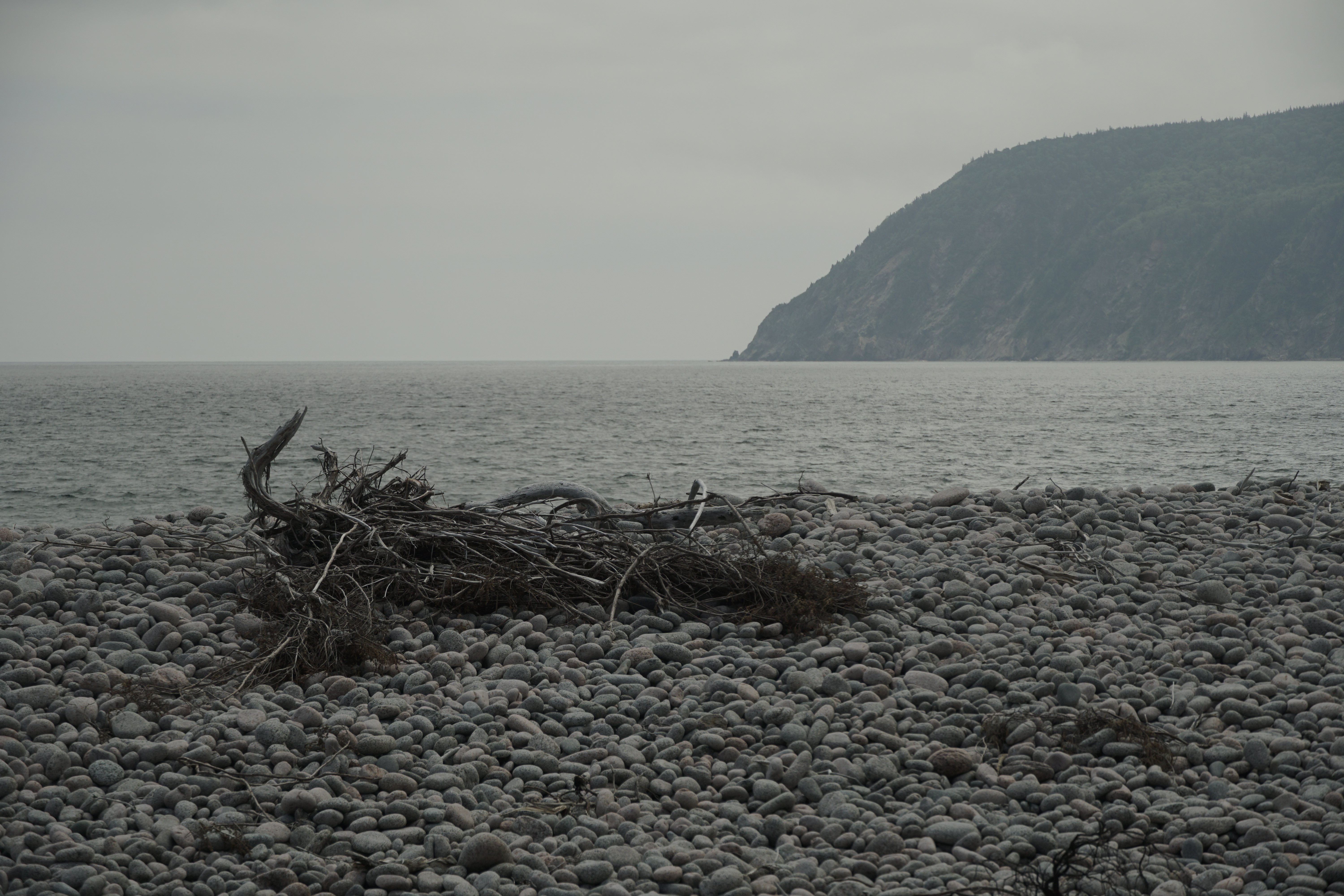
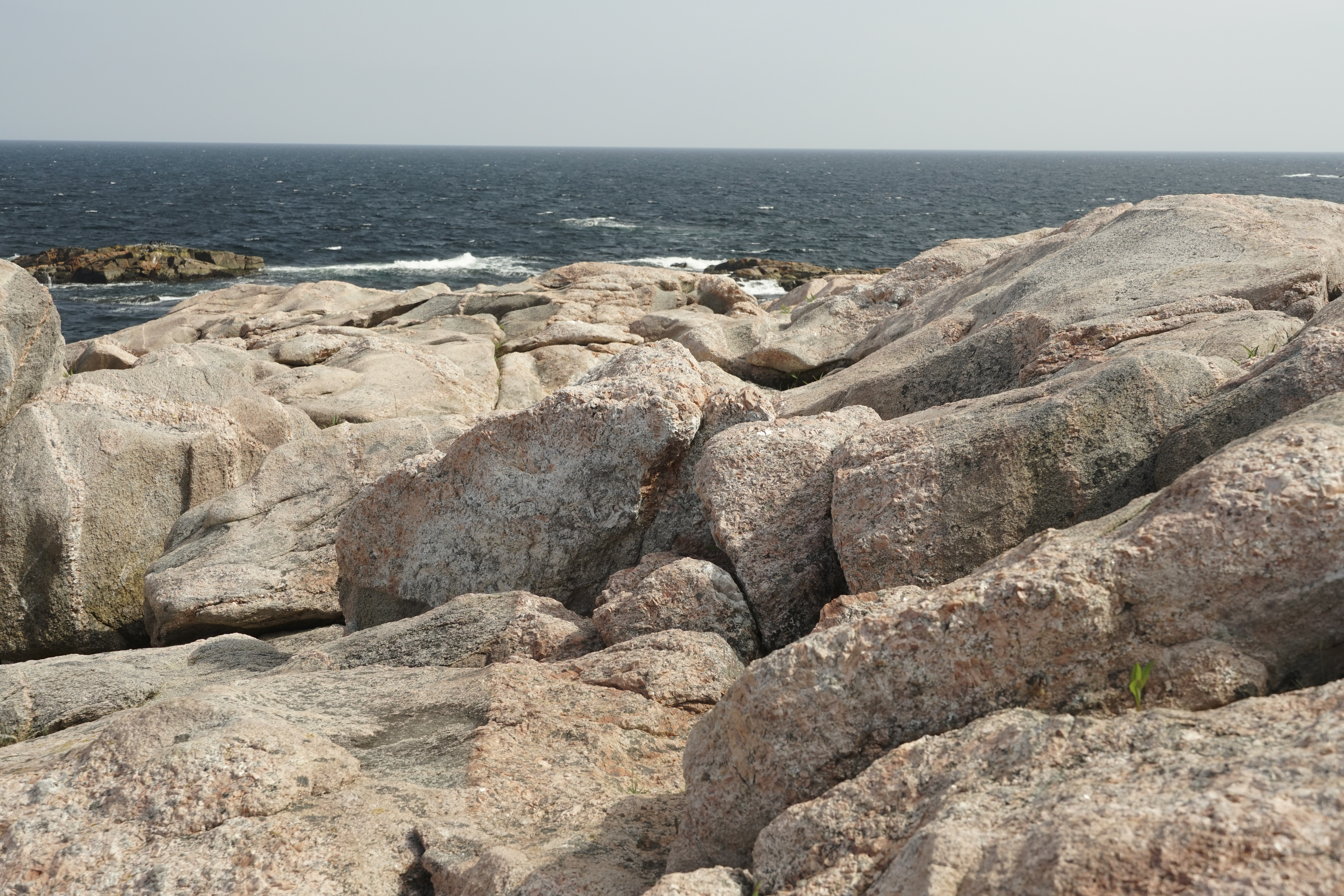
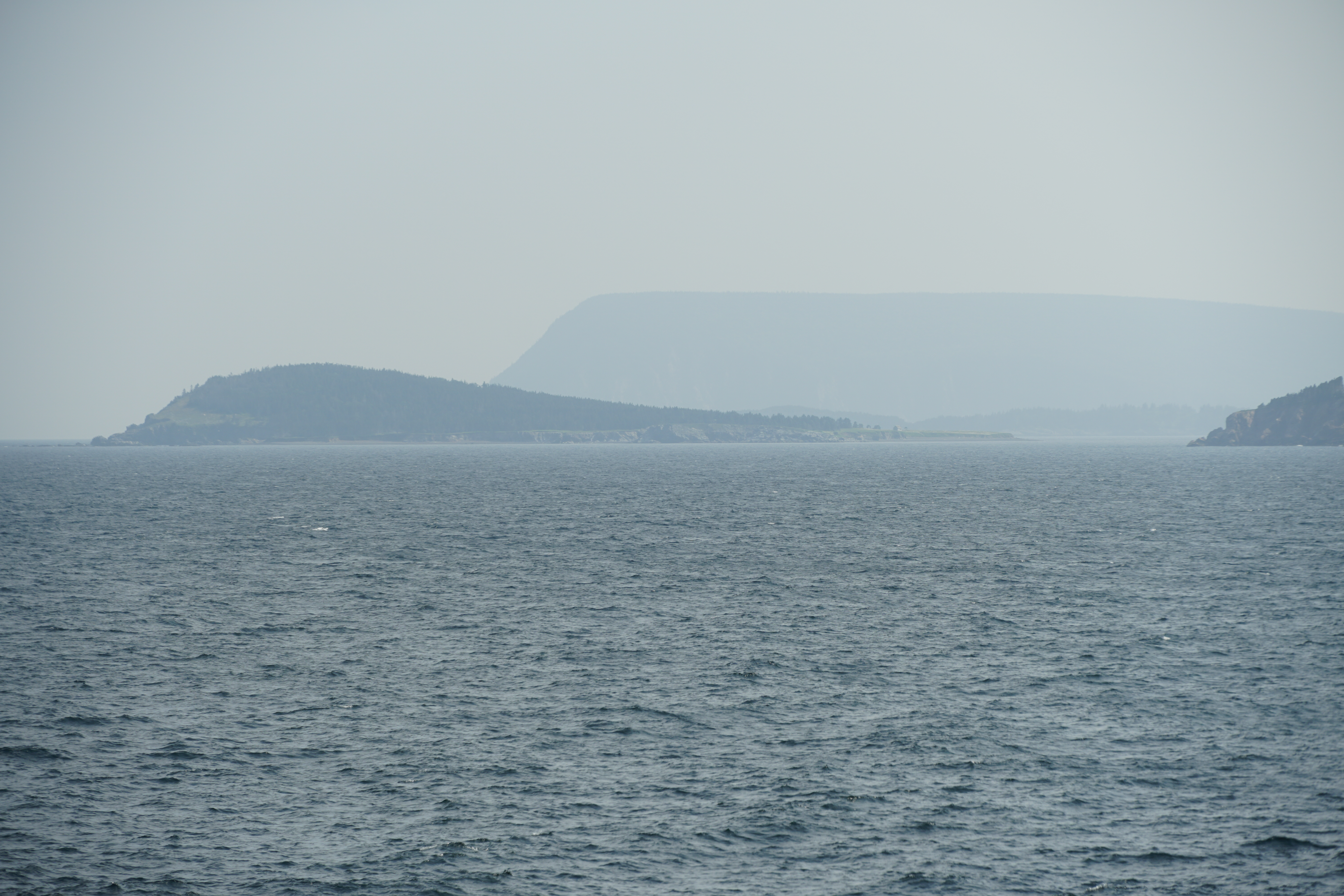
First time ever to the Maritimes. Amazing place, loved it. It was a particularly rainy stretch of a particularly rainy summer, but so what? Part of the beauty.
Something of a challenge for photography, though. Cloudy skies can look dull; there were no shadows to add drama; and “golden hour” and “blue hour” were non-existent. Again, doesn’t matter, it was gorgeous and I hope some of that comes through in the photos.
Section 1: No Bugs!
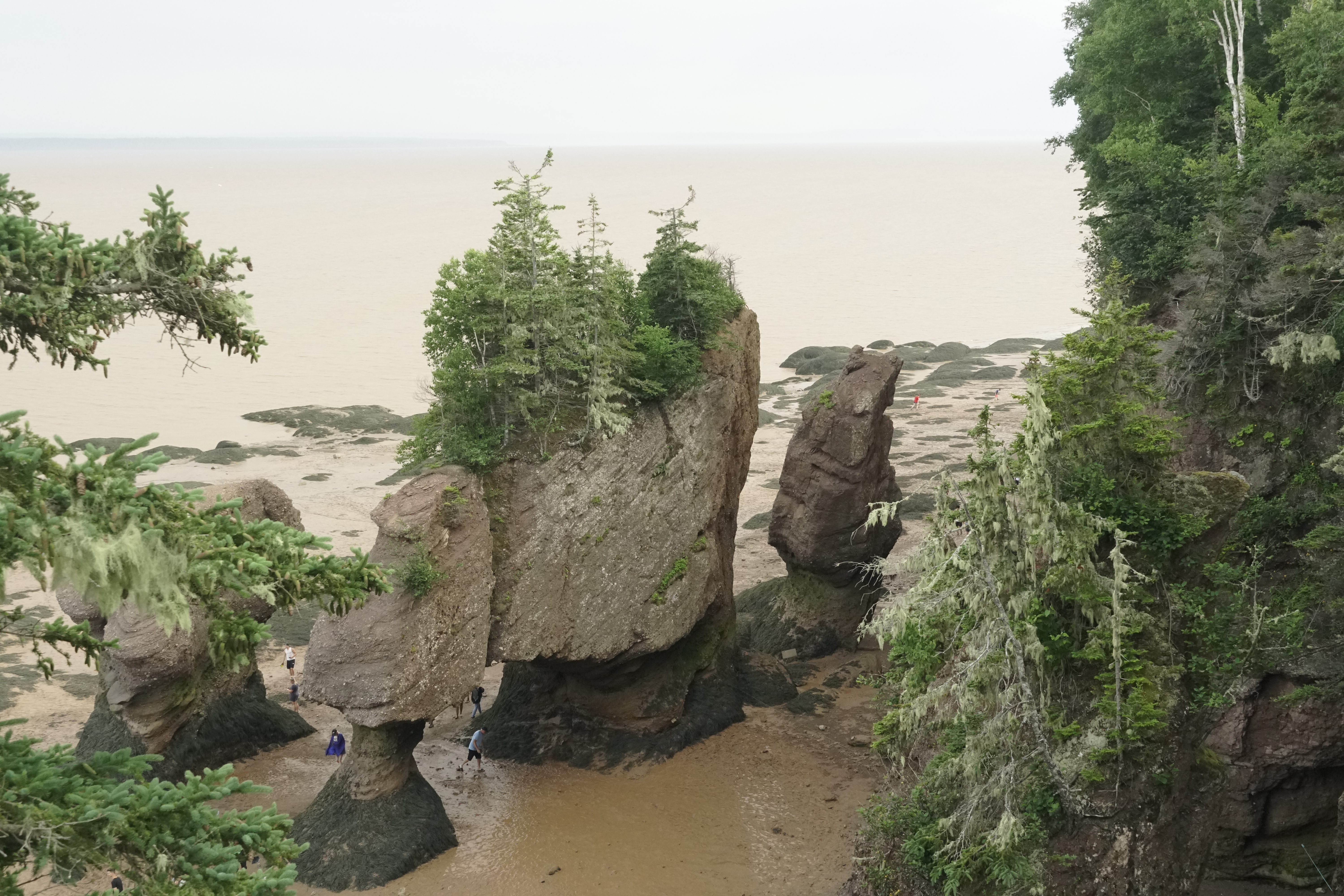
Hopewell Rocks, Bay of Fundy
Some interesting geography behind the inclined layers?
Walton Glen and Fundy Parkway
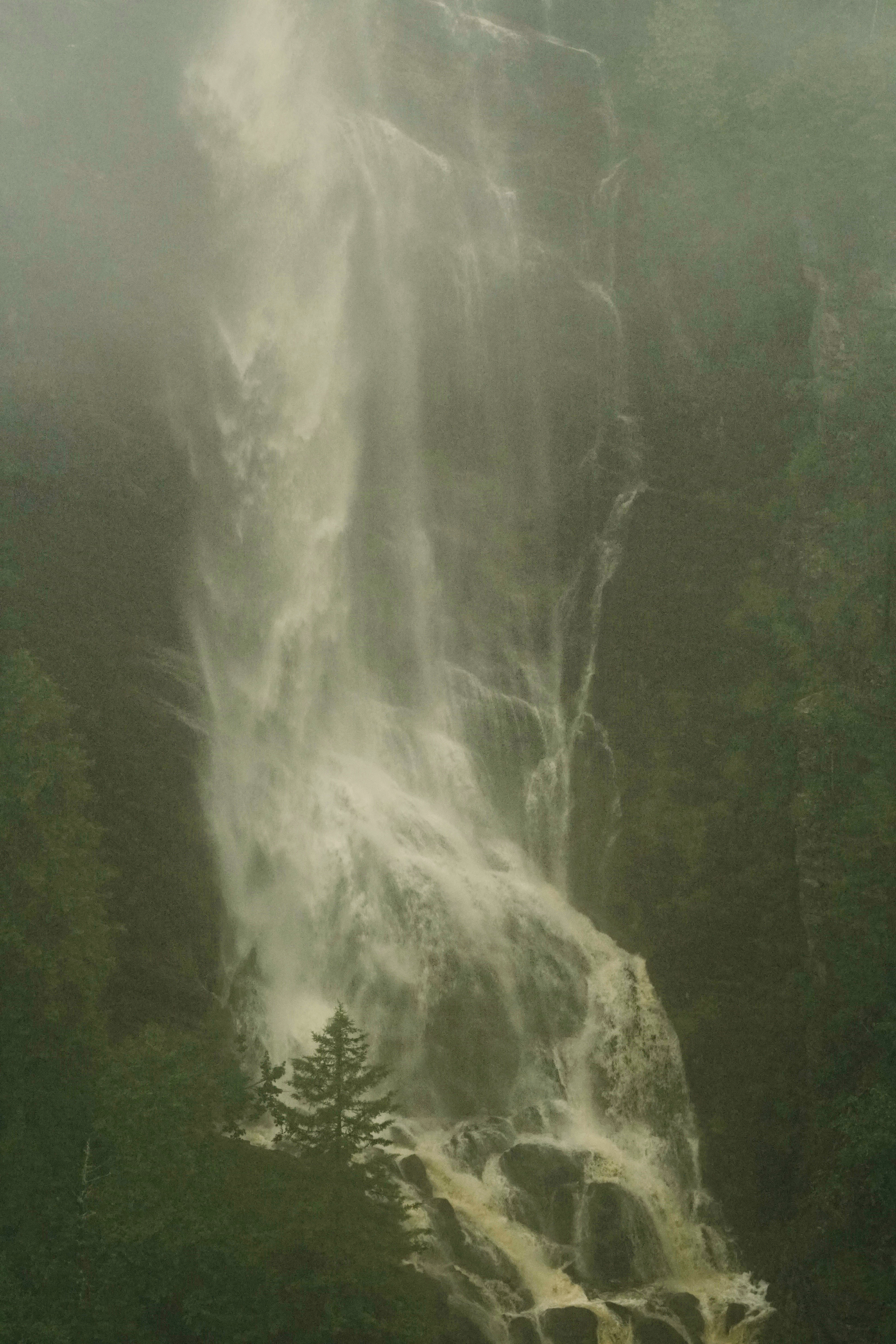
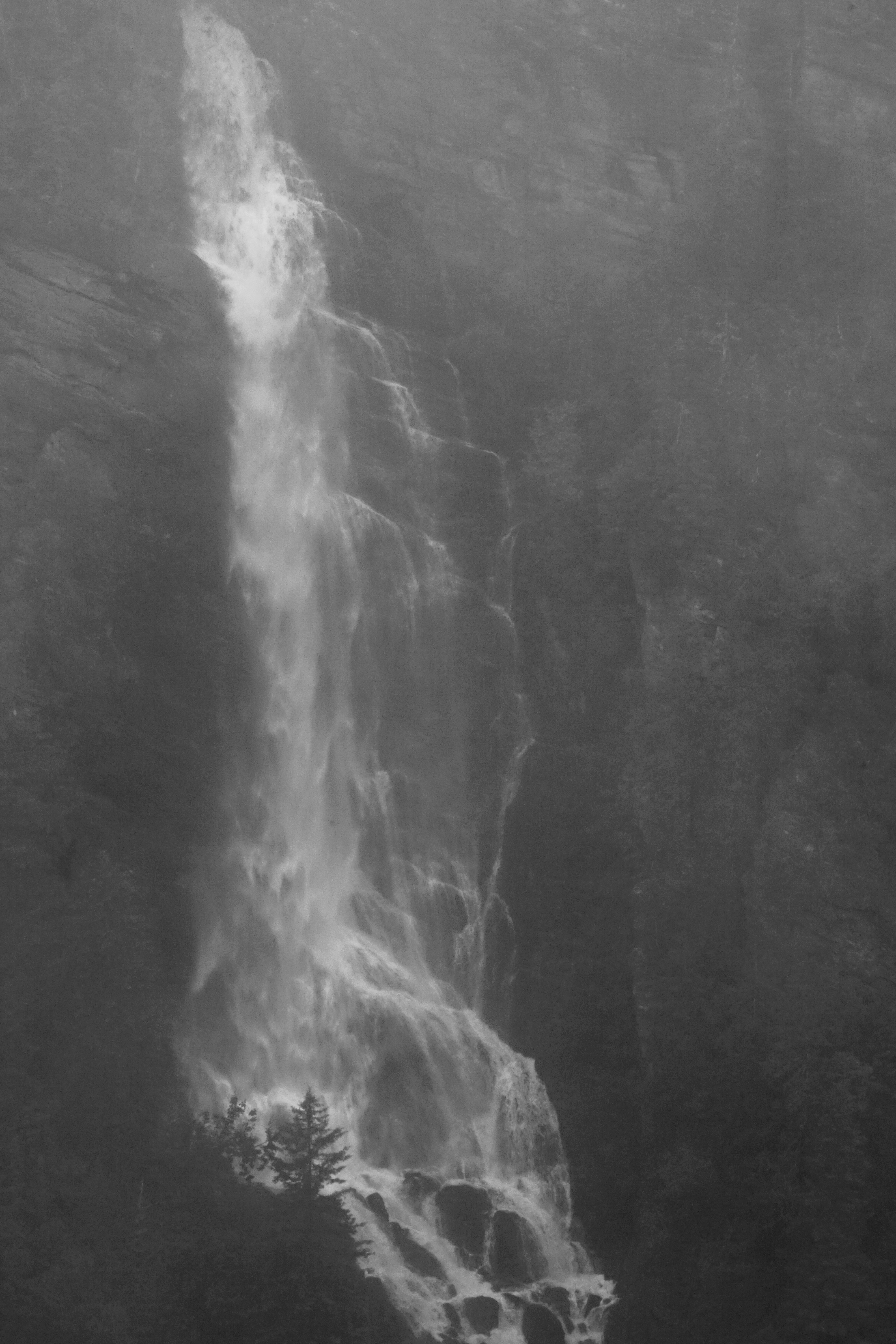
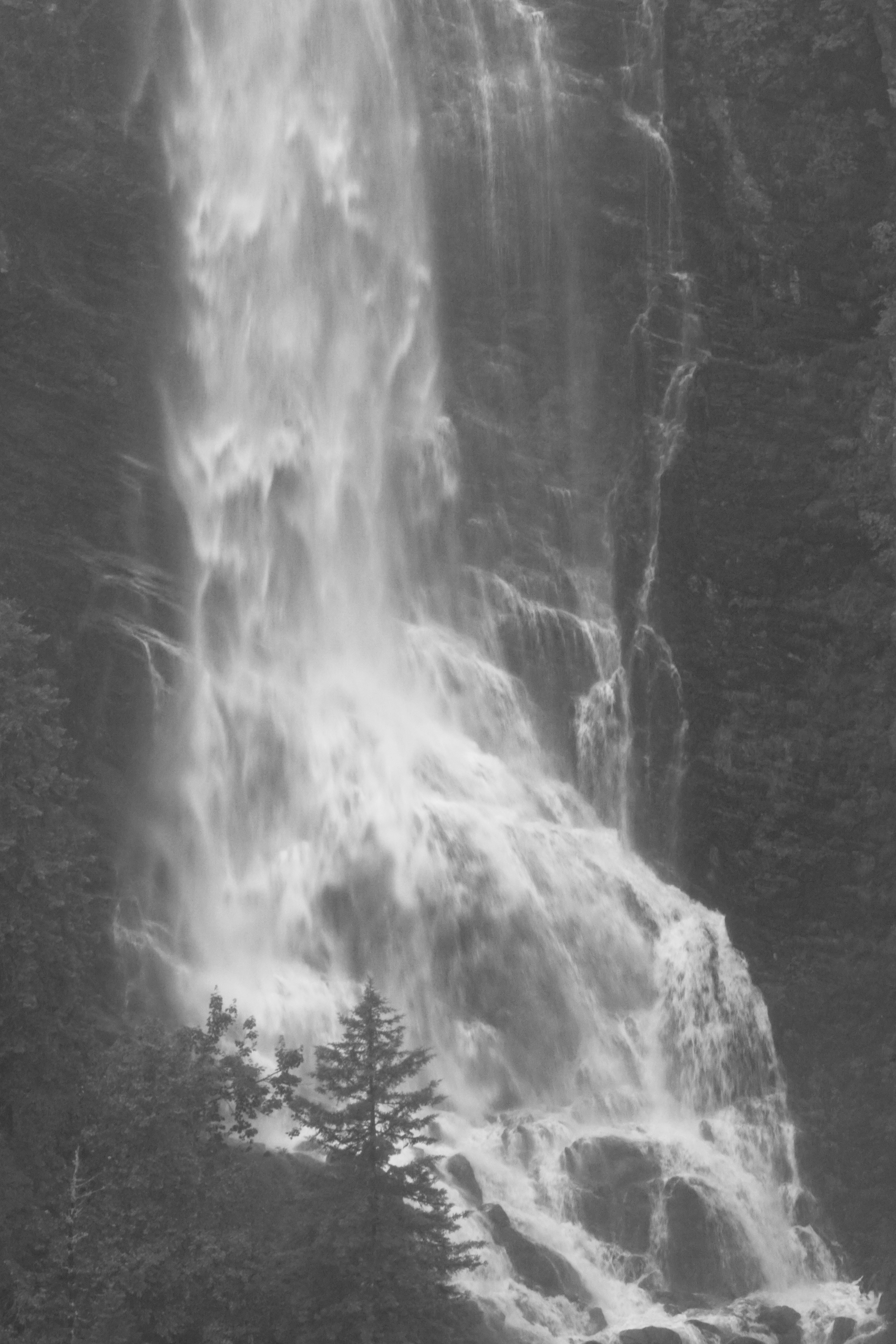
Walton Glen: an amazing waterfall vista!
Cabot Trail
Bog Trail
So many, many pitcher plants!
Middle Head Trail, Cape Breton National Park
Freshwater Lake
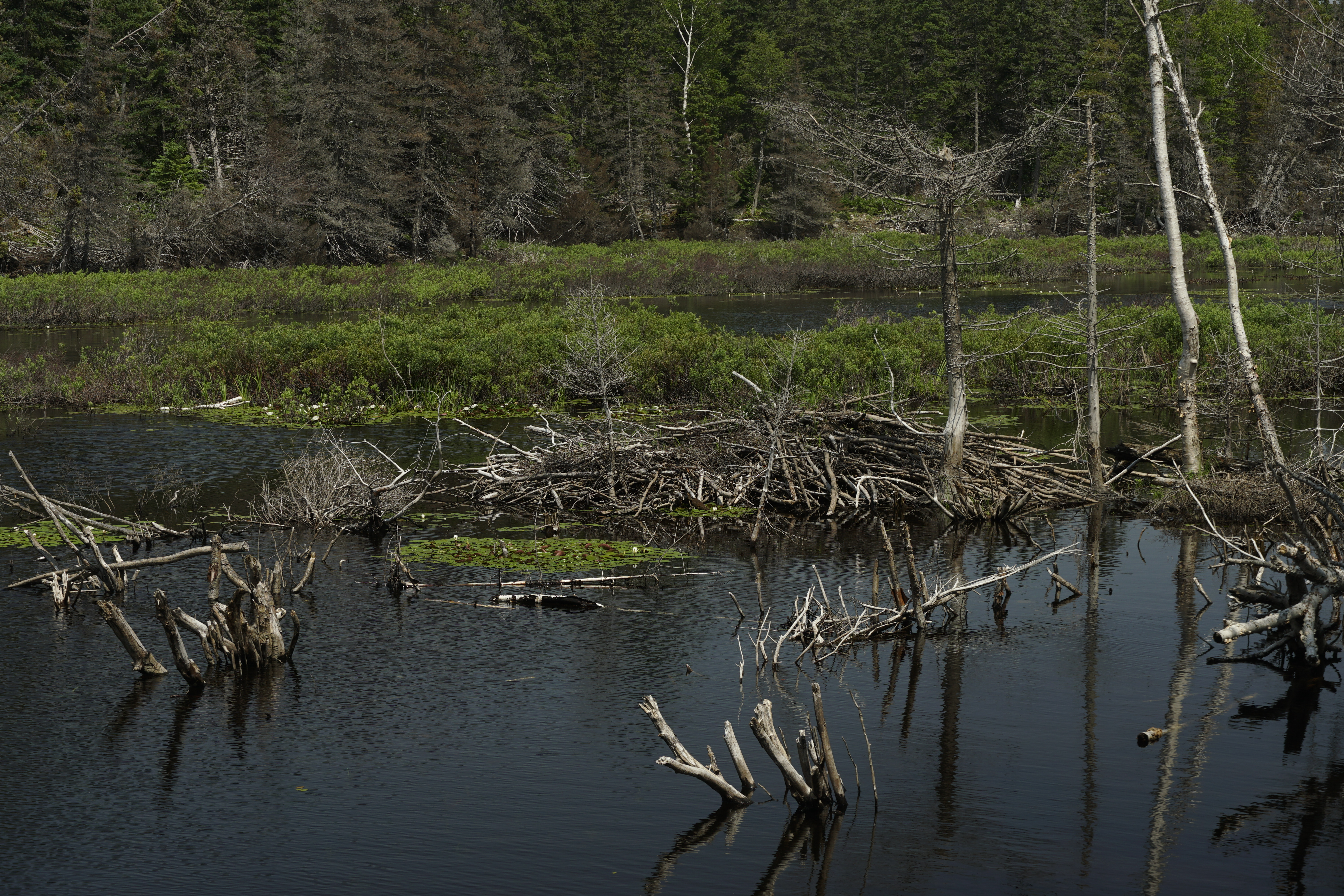
Beaver dam
Green Cove
Keltic Lodge
Got up and tried to catch a sunrise. It was too cloudy for that, but that had a mood of its own.
Section 2: Bugs
Hopewell Rocks
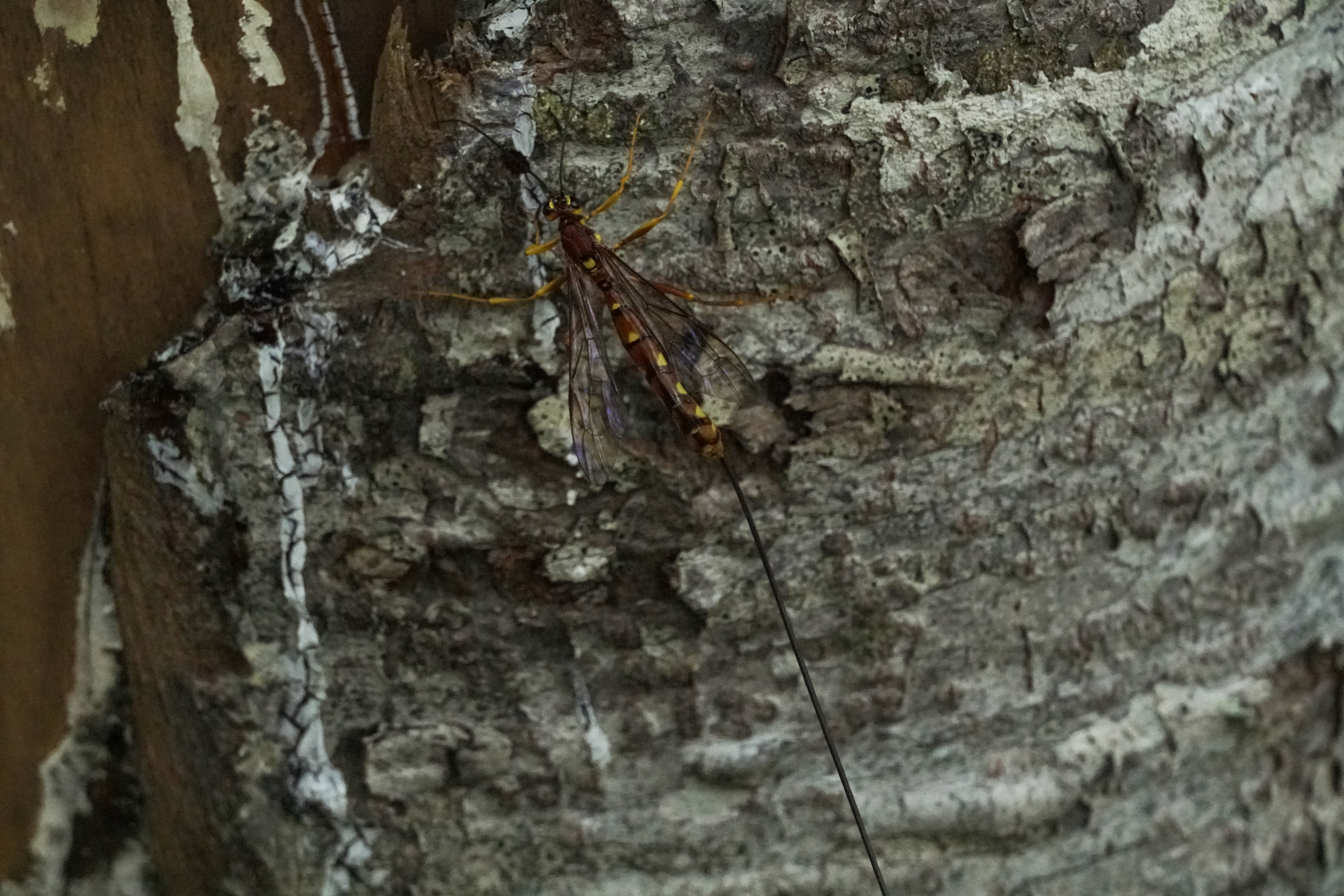
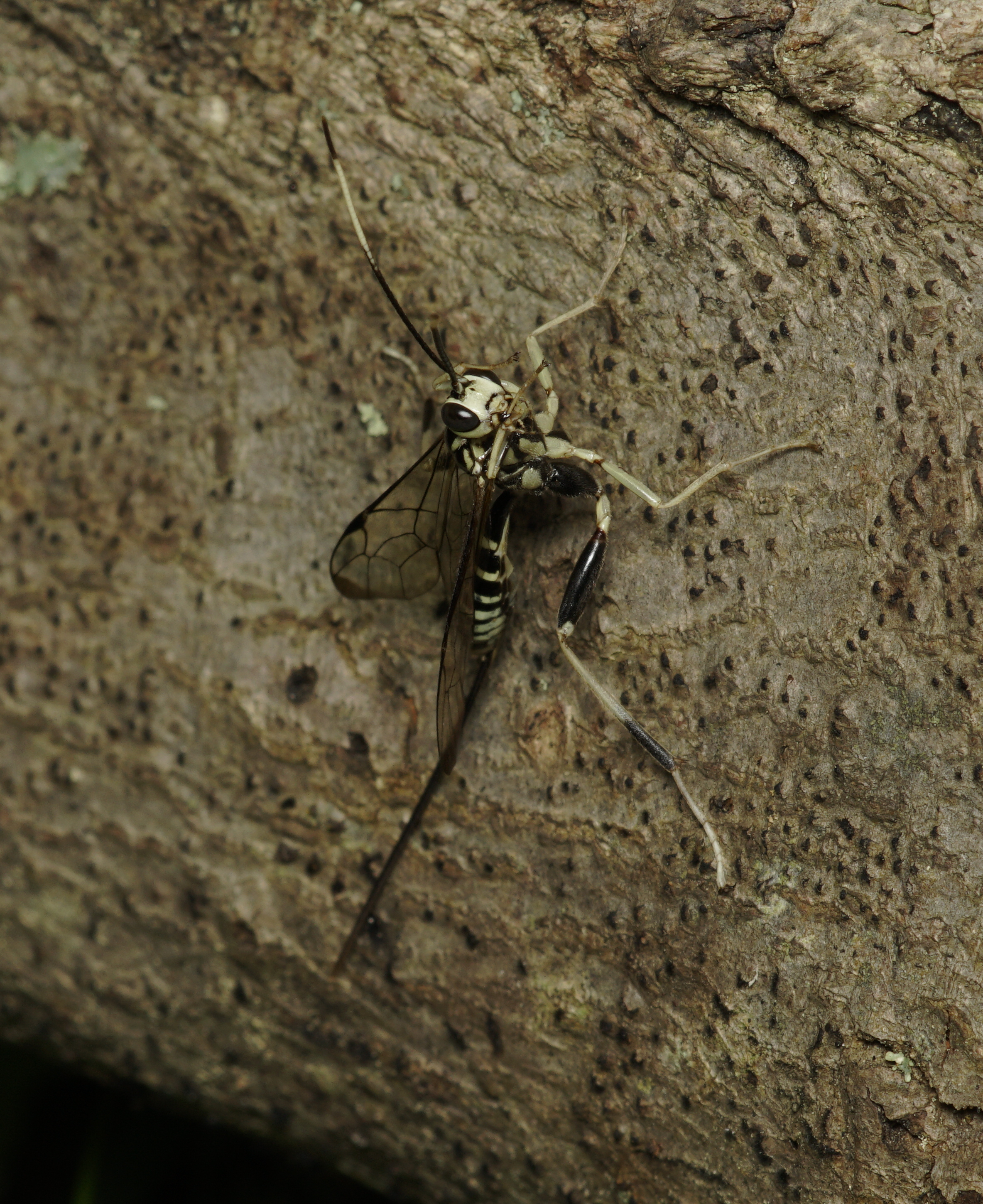
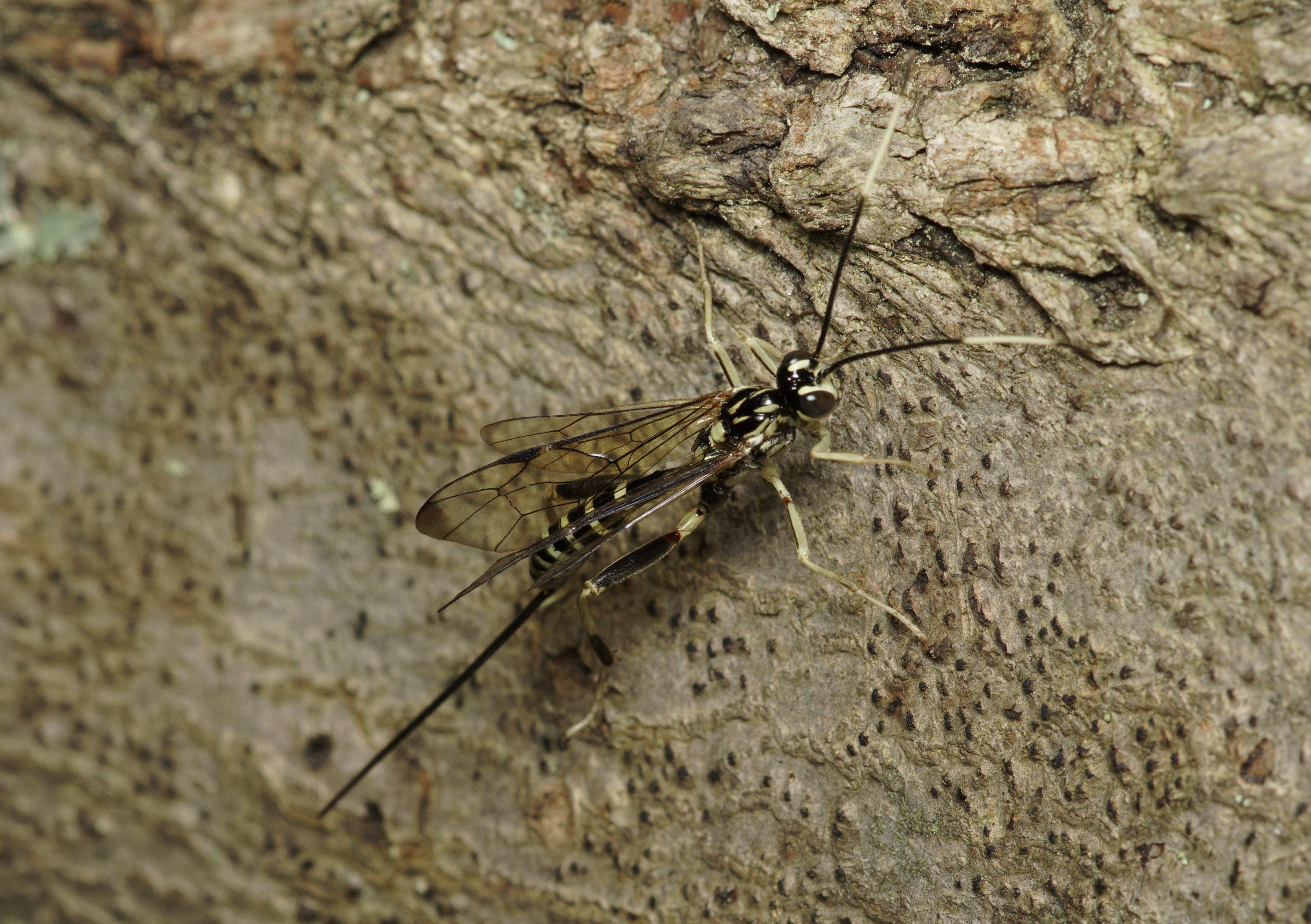
I’ve spent about 15-20 years interested in bugs, and never managed to see a Megarhyssa wasp, even though I looked for them everywhere. I visit New Brunswick and about 100m into my first walk, there it is. Not only that, but it was kind enough to wait for me to take photos. I guess it’s true that Canadians are nicer!
Walton Glen
Araneid, need to identify. This is a Cyclosa sp., the trashline orb weavers.
Cabot Trail
Eastern Pine Sawyer, Monochamus notatus
Perhaps a carpenter bee, like Ceratina? Or Lasioglossum coeruleum? There are other possibilities too.
“Some of the most noticeable traits are in terms of the head. One is the presence of hairs on the temple (absent in Chlorion – though it does seem that males can have hairs on other parts of the head). The hind margins are also different. With Chalybion, there’s a narrower space behind the eyes (and ocelli) to the back of the head, and the edges have a fairly strong curve when viewed from above. It’s also thinner when viewed from the side. This makes for a bit more of an “inflated disc” shape to the head. Chlorion have a fairly broad space behind the eyes (and ocelli), and the edges are more squared off as viewed from above. It’s also thicker as viewed from the side. This gives for a more thickly-rounded, almost stereotypical alien appearance.”
One of two genera in our area notable for their distinctively metallic-blue bodies. Chlorion differs from the superficially similar Chalybion as follows:
Head and thorax sparsely hairy, the vertex of the head particularly lacking dense setae
Antennae inserted lower, well below the halfway point of the eye.
The head is more produced at the temples and vertex (different head shape)
Mandibles are dentate rather than simple and sickle-shaped
Pronotum not as strongly notched
Tarsal rake present (females only)
Wing with the hind margin of the third sub-marginal cell meeting the marginal cell at nearly the same point as the fore margin, resulting in a strongly triangular cell rather than a rhombic cell
Propodeum with U-shaped dorsal enclosure defined at least posteriorly by a semicircular sulcus/furrow (Chalybion has at most a median sulcus or pit)
Generally larger
What does that mean for this individual? I can see hairs on top of the head, and the head shape looks flatter, so Chalybion, I think.
Assuming this is correct, here’s what Wikipedia has to say:
“Females can build their own nests, but often refurbish nests abandoned by other wasps and bees,[4] particularly those of Sceliphron caementarium,[5] removing any spiders captured by S. caementarium and the larva, replacing it with an egg of its own and freshly caught spiders.”
Which is interesting, because there are photos of Sceliphron caementarium further down below.
Earwig
Middle Head trail
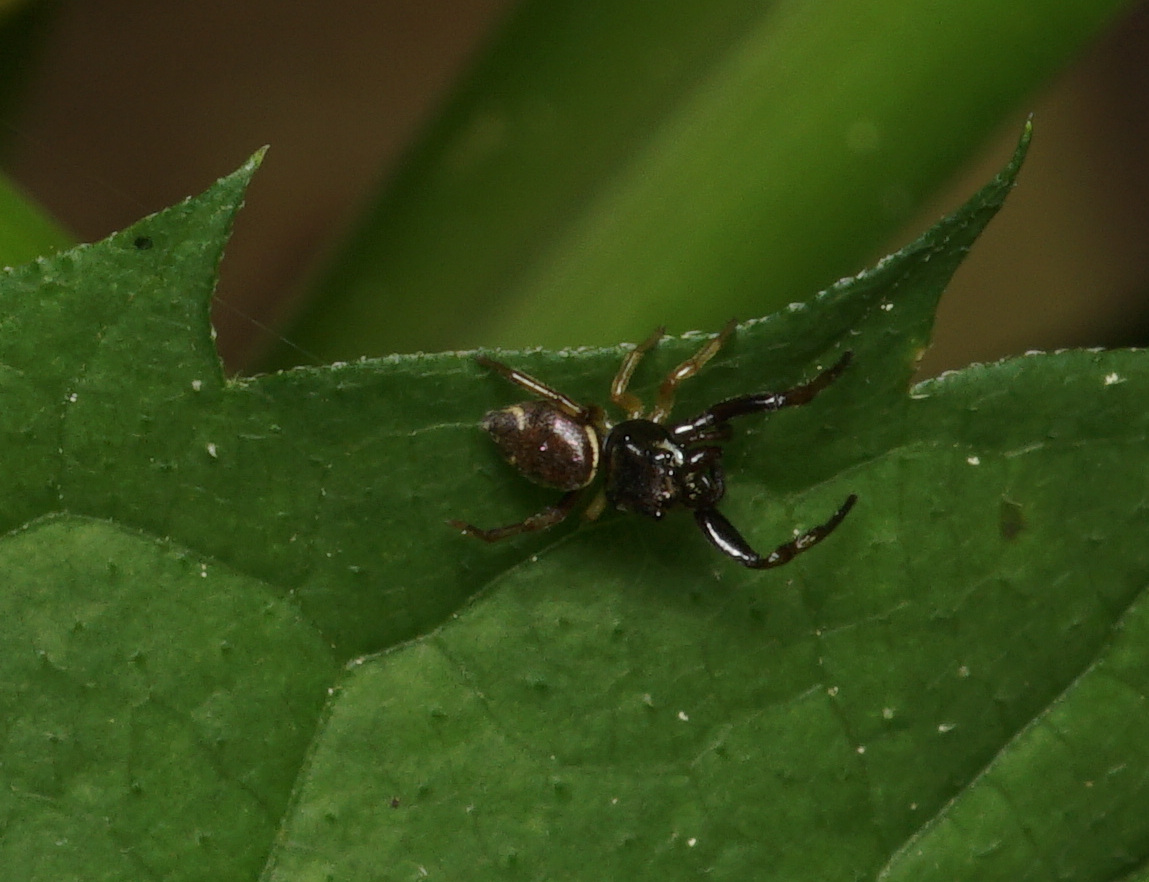
Salticid spiderling, Pelegrina or something? If it’s actually Maevia inclemens, I will be embarrassed.
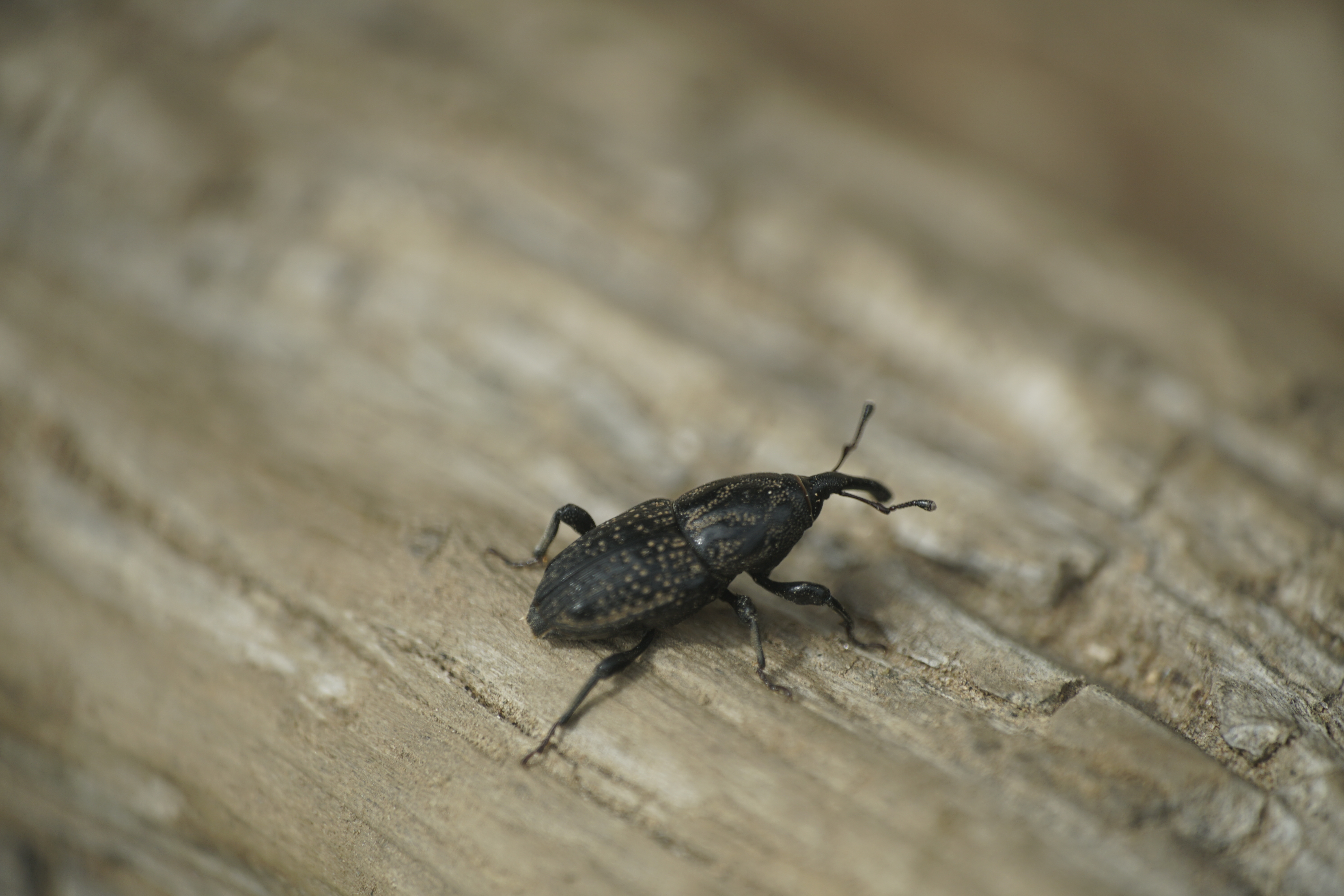
Broad nosed weevil, Entiminae? Polydrusus cervinus is a possibility but not sure at all.
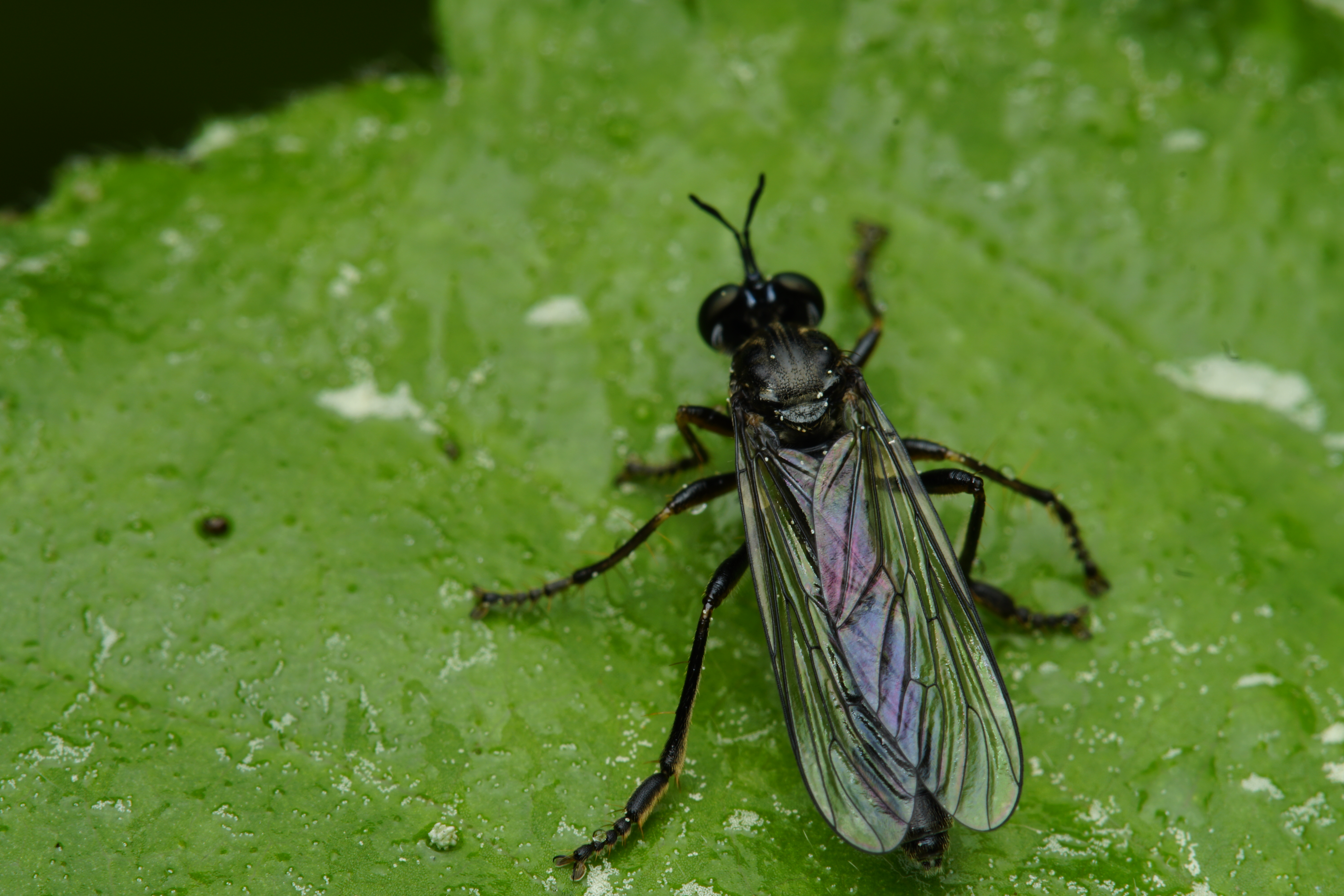
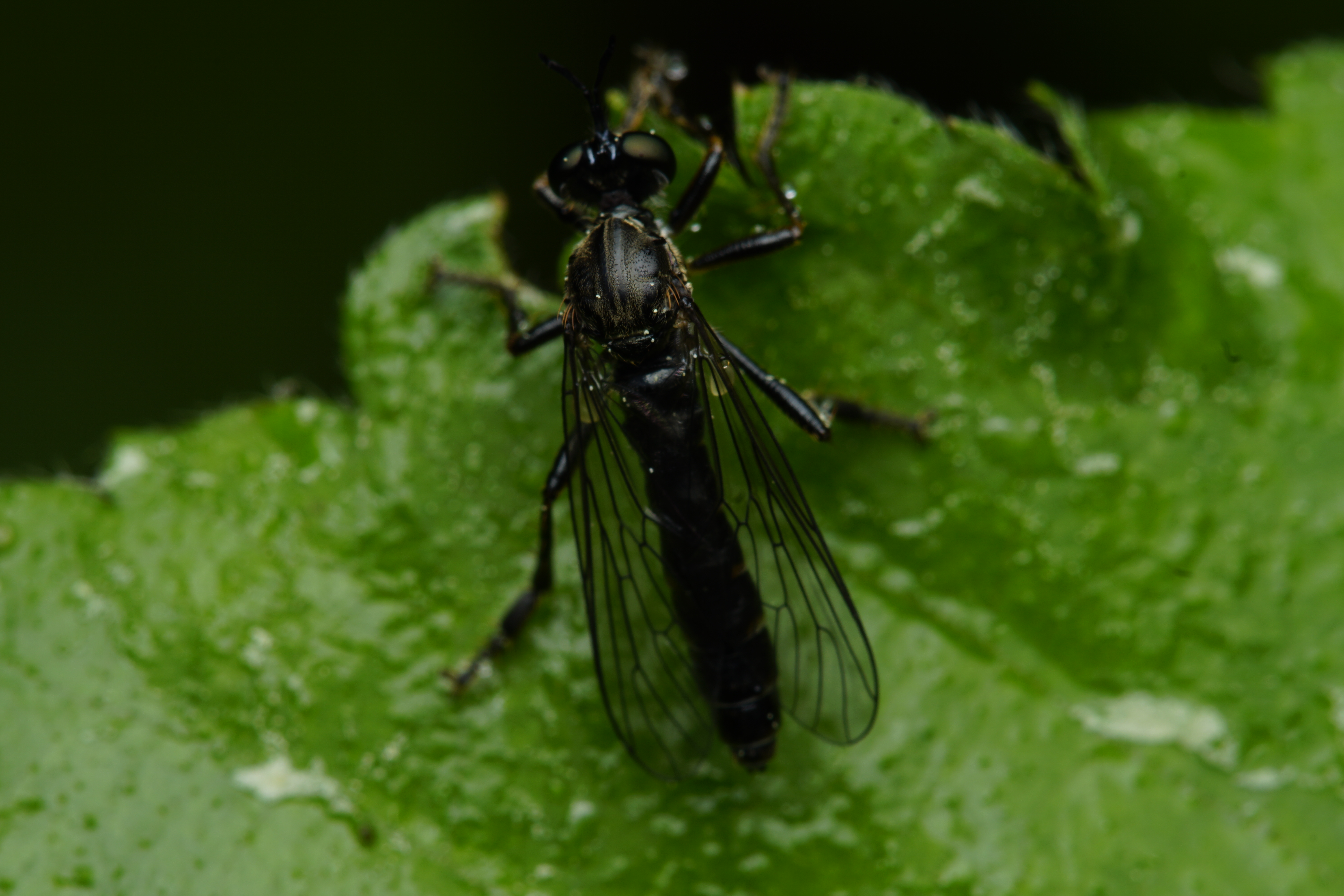
Asilidae, something like Dioctria hyalipennis?
I can’t find an exact match for this wasp, and even when I do find photos in BugGuide, it doesn’t get any finer than tribe level. I think this might be in Ichneumonini, but even that is tricky. I’ve seen Vulgichneumon and Orgichneumon as names proffered for broadly similar looking wasps.
I think this is a black and yellow mud dauber, Sceliphron caementarium. They were wallowing in the puddle collecting mud to build their homes. They will later bring spiders to provision the nests for their babies.
Note that the Chalybion wasps later re-use the nests for their own spiders for their own babies.
Green Cove
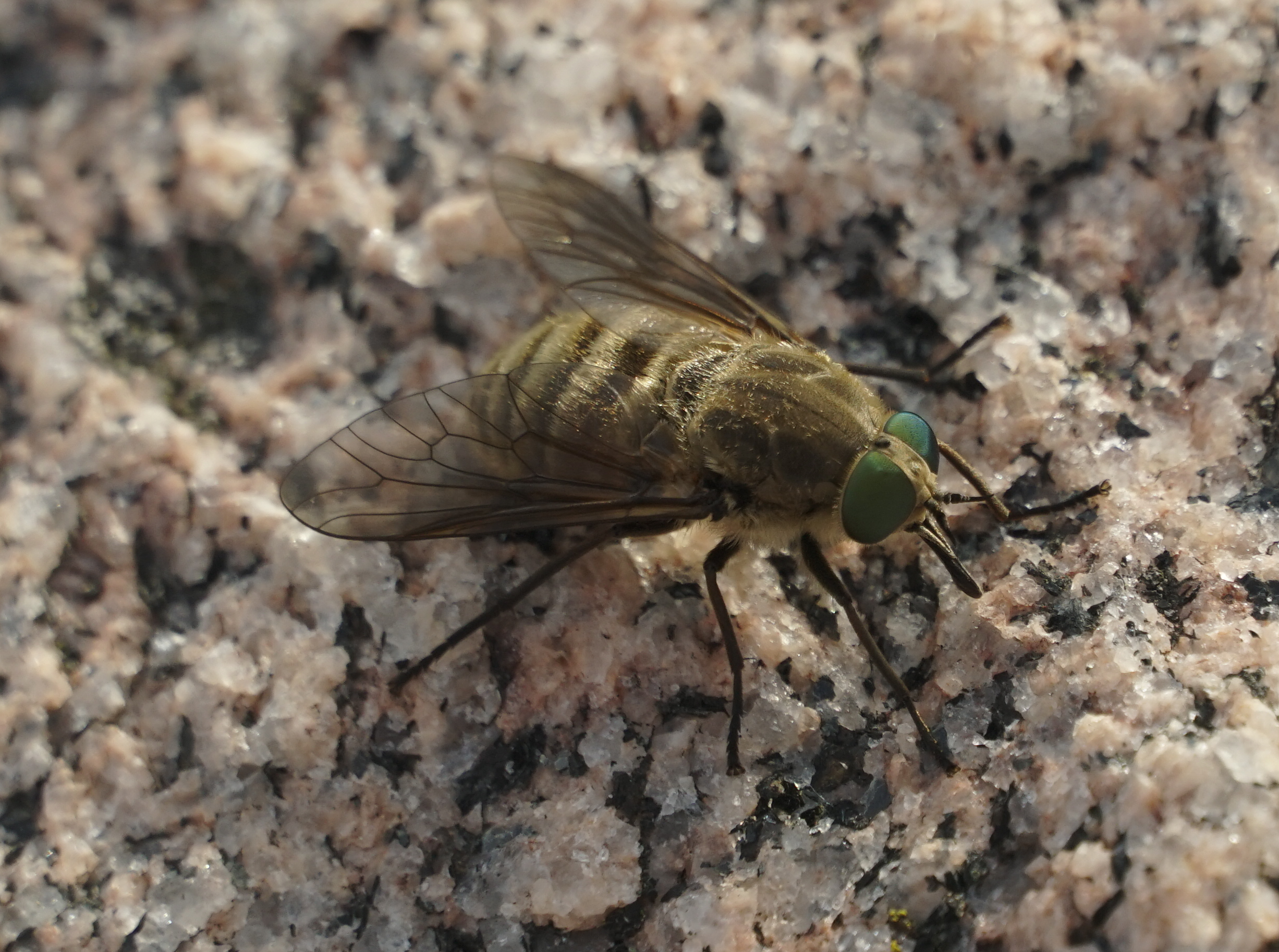
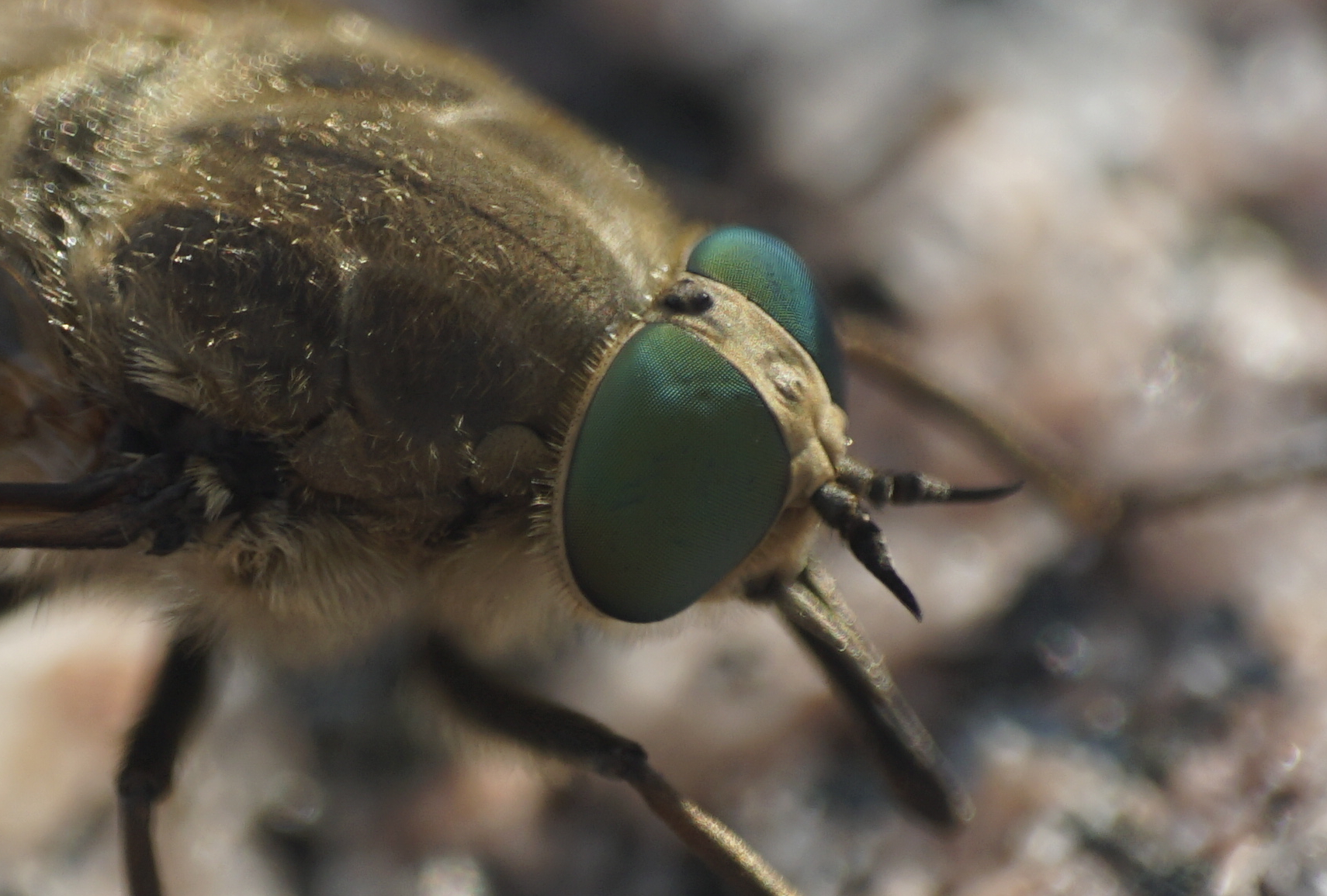
Gorgeous green eyes, but usually not a lot of fun to get close to. This could be a female horsefly, Tabanidae. (The separation between the eyes is the sign that it’s a female.) I think genus Tabanus is likely.
From the trailhead on Billings Street. Purely through wetland area. Also spent a lot of time at one dead log busy with a lot of activity, especially some Ichneumonidae wasps who were ovipositing.
I’m still in the process of trying to identify a lot of these, so this is a work in progress. Please bear with me!
Diptera
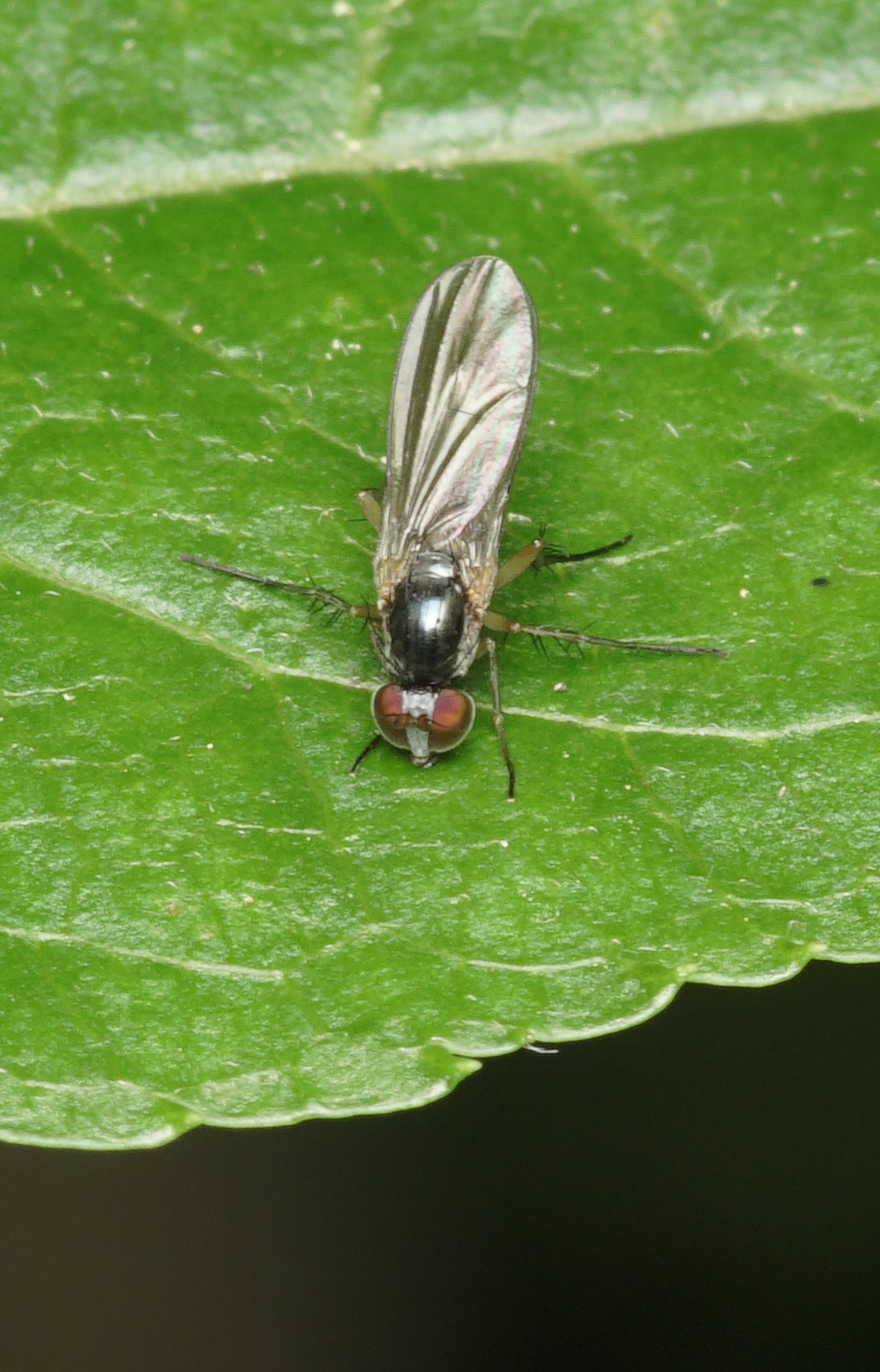
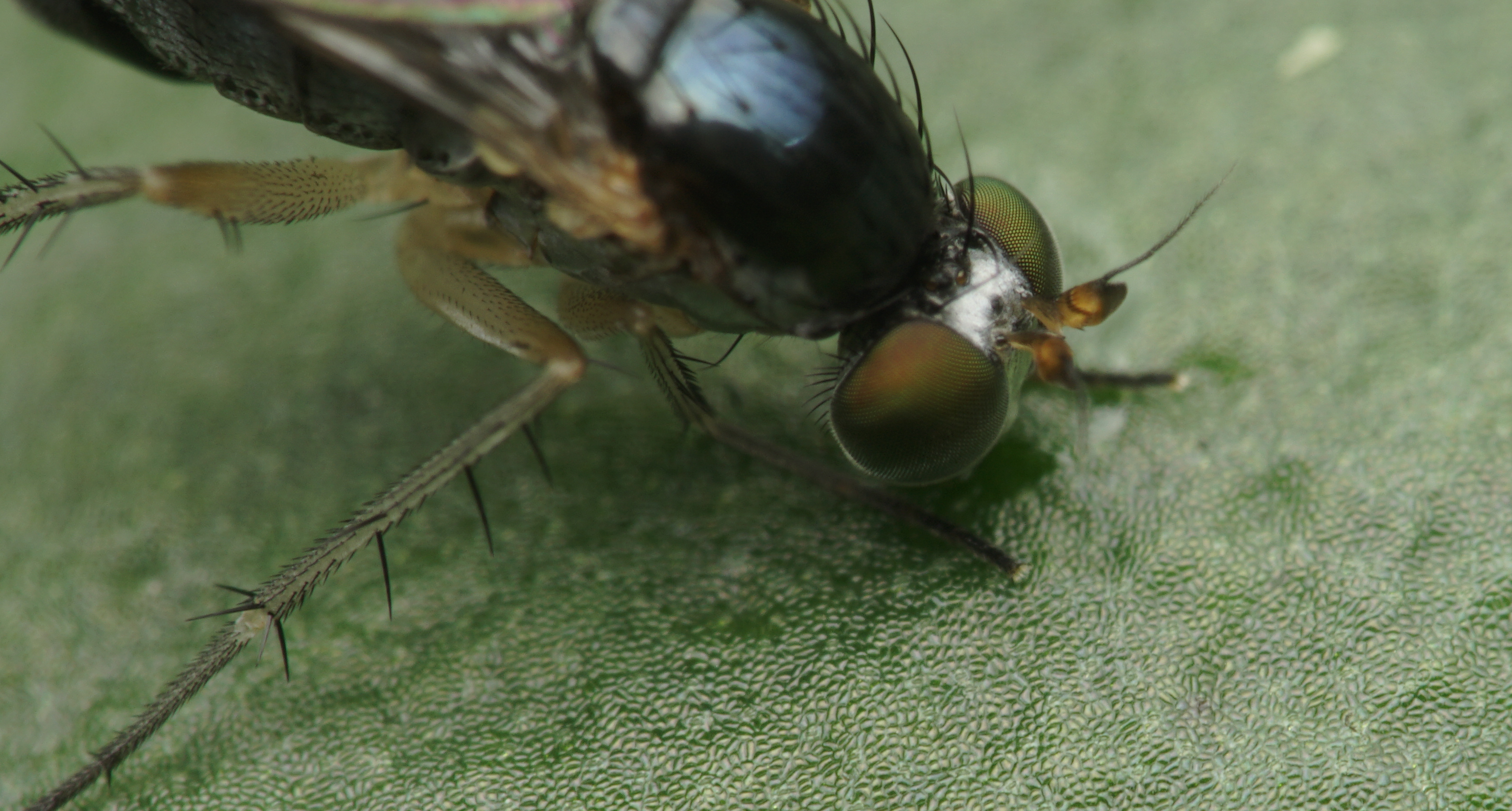
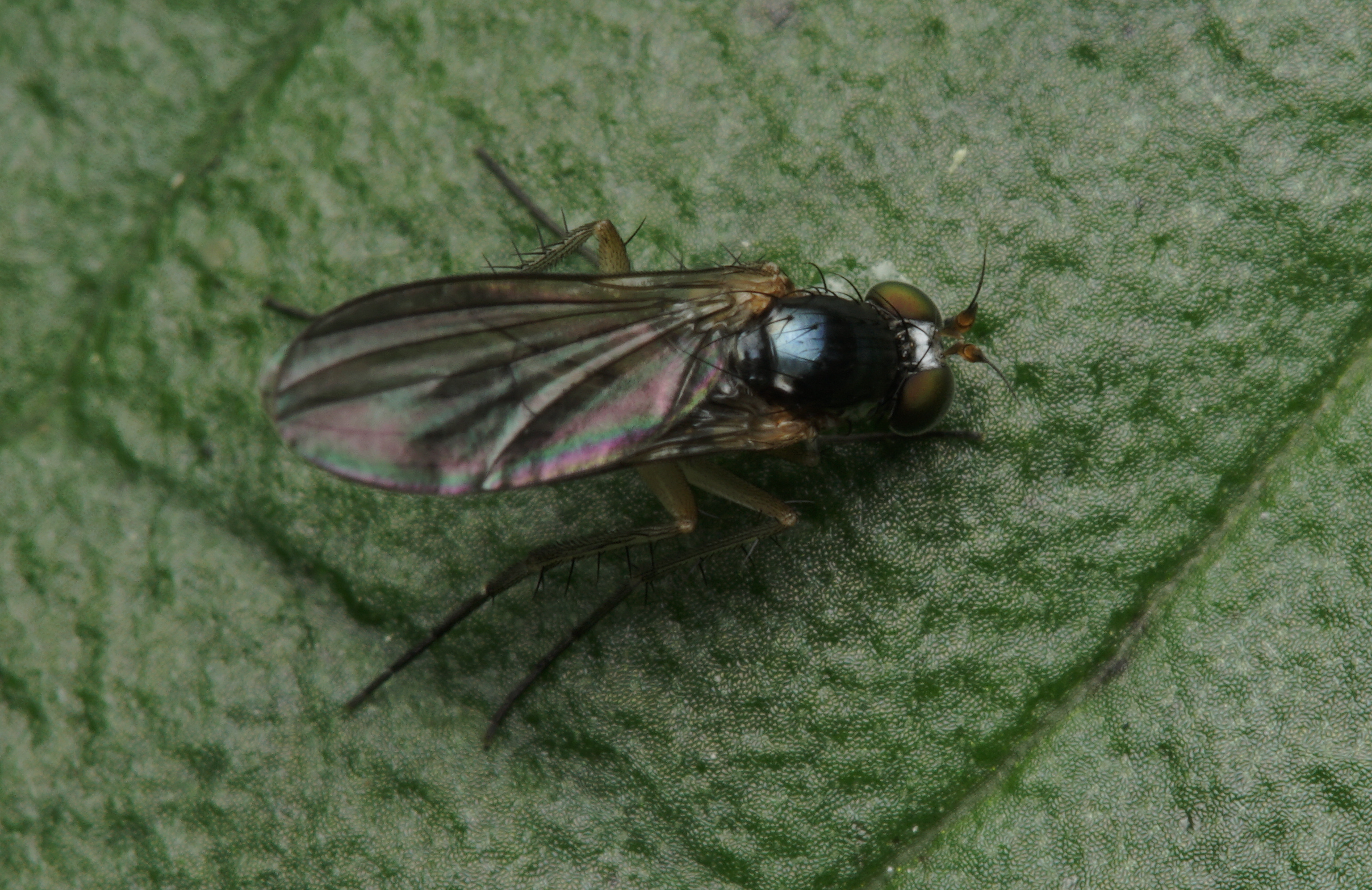
I think a Dolichopodid, but I really have no idea which.
And another:
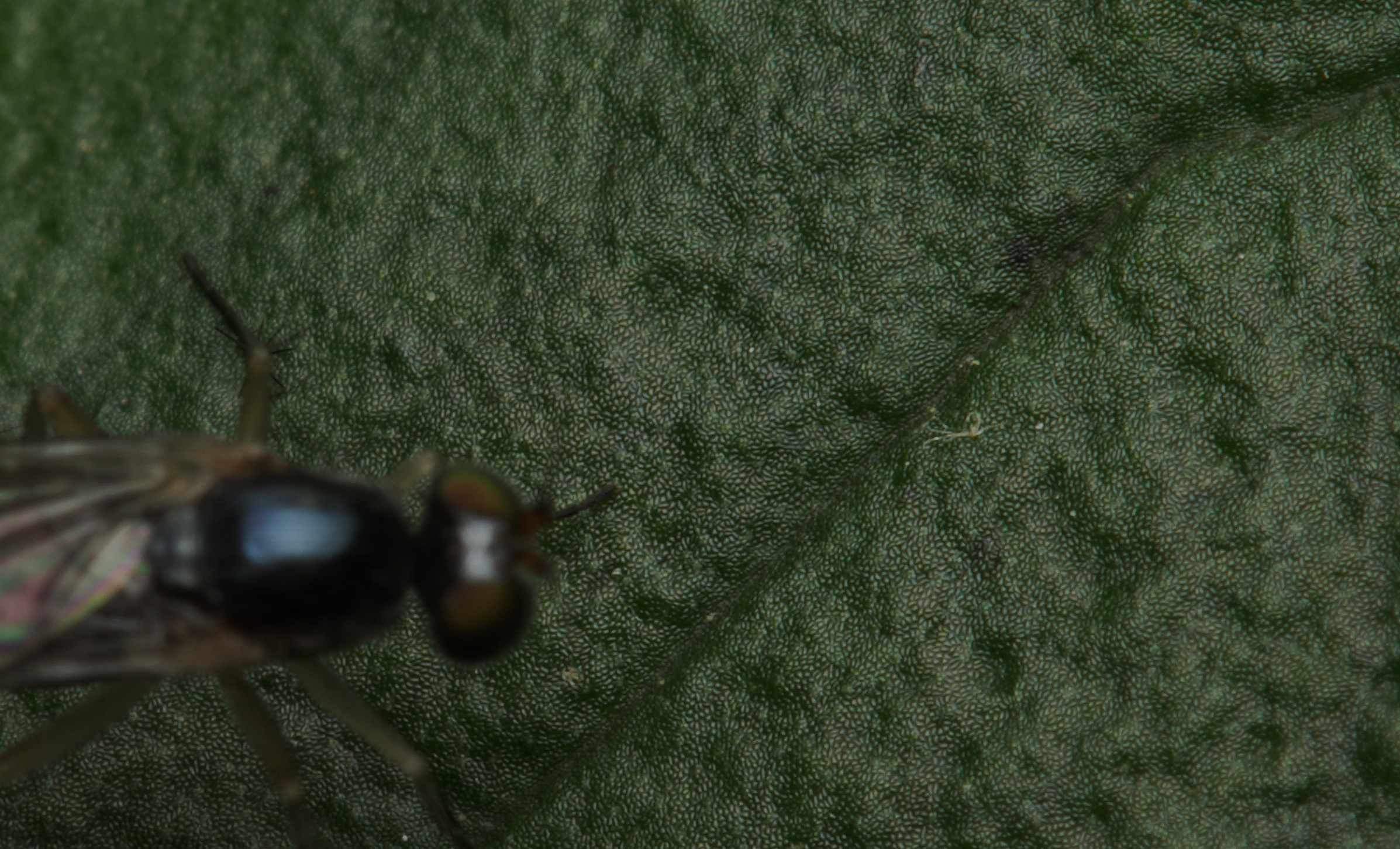
I missed the focus on this, so let’s call it an interesting study of leaf texture, okay?
Didn’t miss the focus on this one:
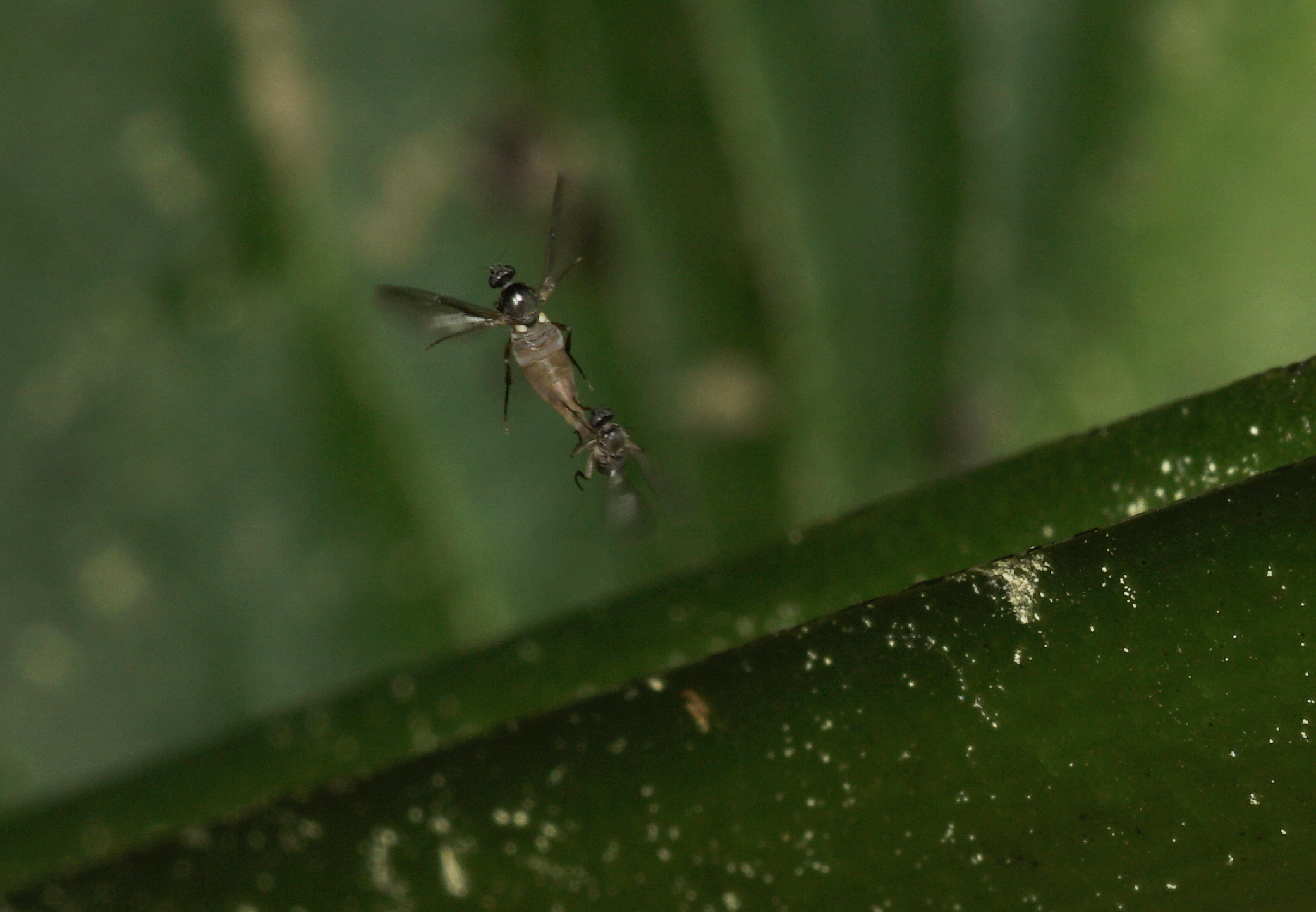
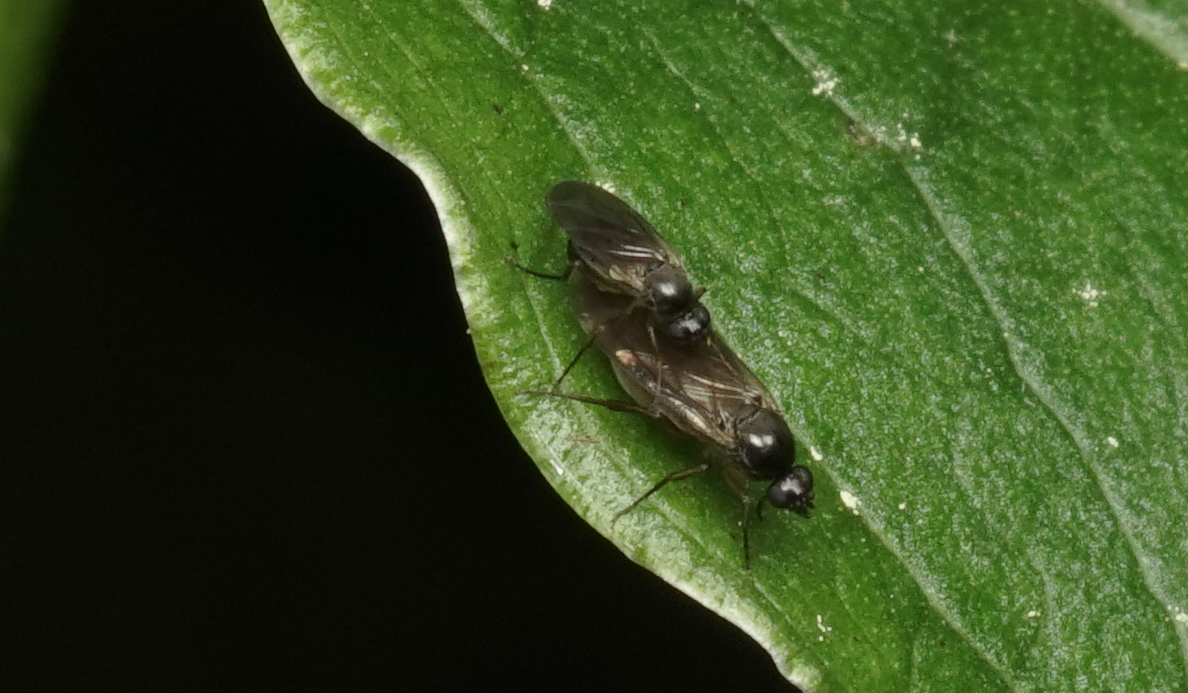
Caught these two flying while mating:
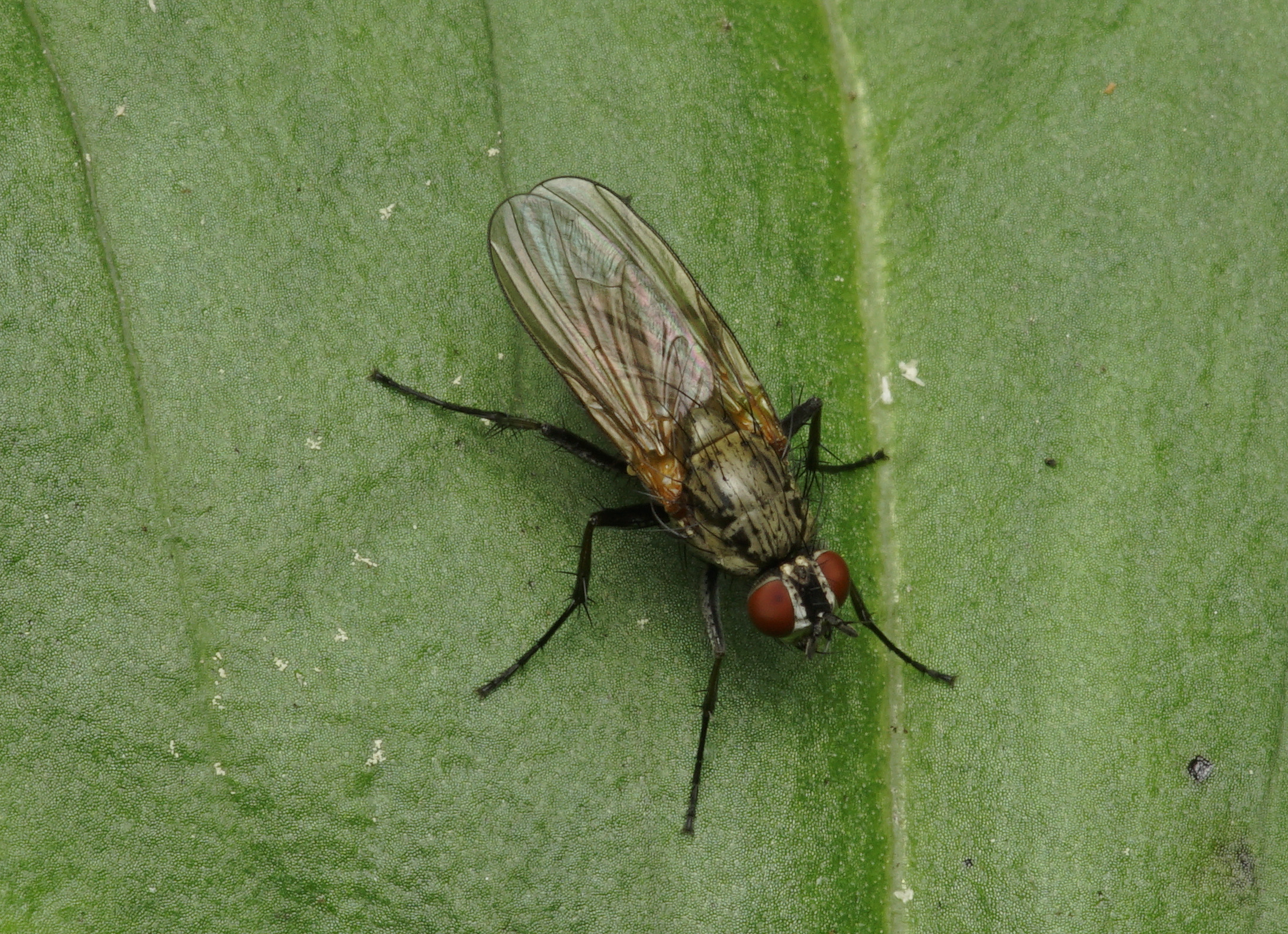
Muscidae?
Crane fly, Tipulidae
Is this a Limoniid crane fly? Bugguide on Limoniid fly identification:
“Identification
terminal (fourth) segment of maxillary palpus short or subequal to third segment (elongate, longer than first three segments combined in Tipulidae)
antennae usually with 14 or 16 segments (13 in Tipulidae)
Interpretation of the wing venation can be difficult, especially on the subcostal and radial fields. See Alexander (1927, 1929-1930)(4)”
Chironomus cf ochreatus?
wing pattern:
Perhaps Platypalpus in Hybotidae
Very low confidence in identifications. But I’ll say that the root-maggot fly, Anthomyia oculifera, looks very similar to this.
I dunno. Anthomyiidae?
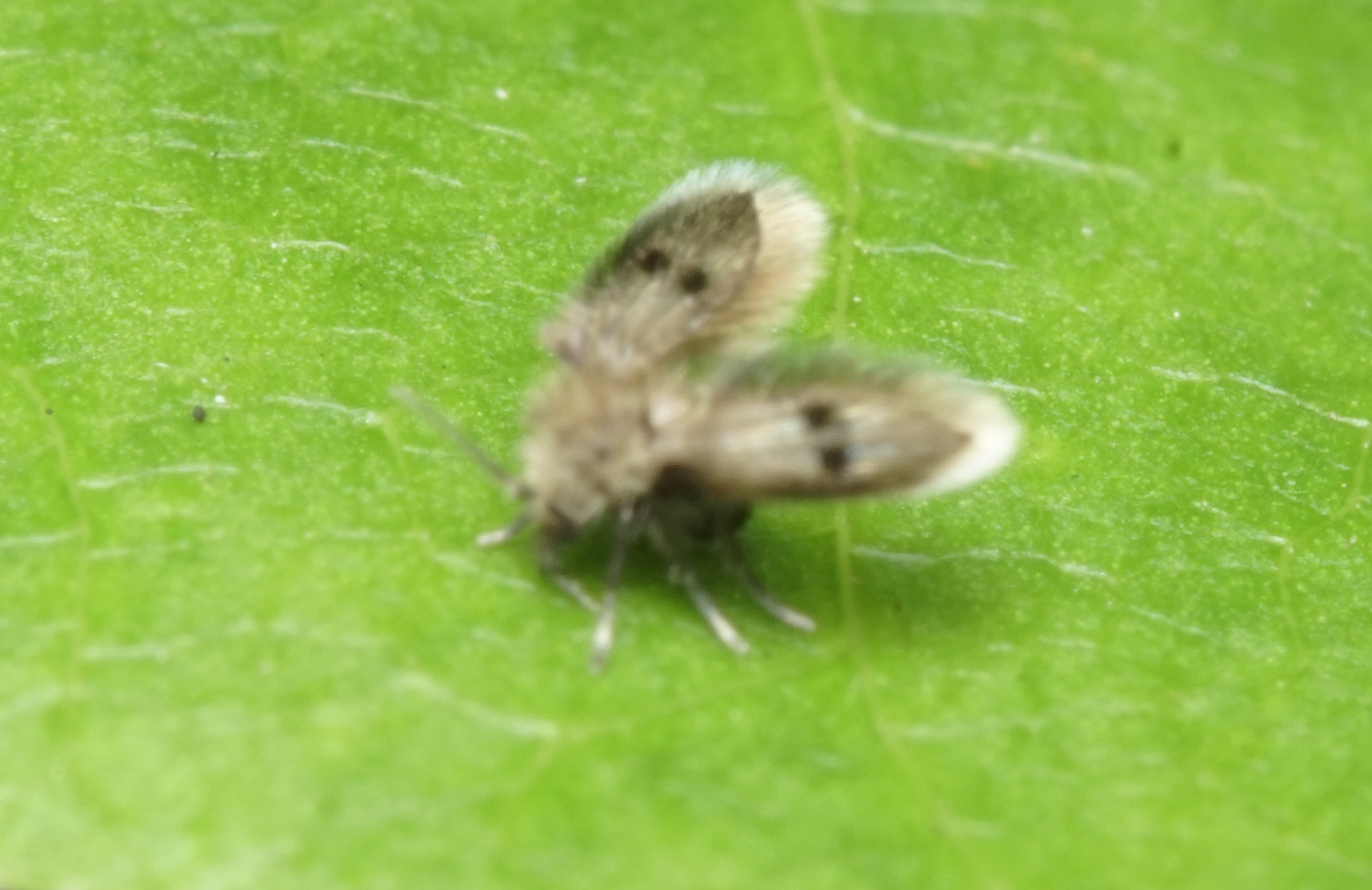
Psychodidae, Pericoma? Pericoma cf signata? Wait, is Pericoma being re-categorized to Pneumia, so Pneumia cf signata?
Interestingly, there’s only one record of Pericoma in BugGuide, and two in iNaturalist, although of course Tom Murray has a record of it in his book.
Why is this crane fly so white? Is it…tenebrous?
Coleoptera
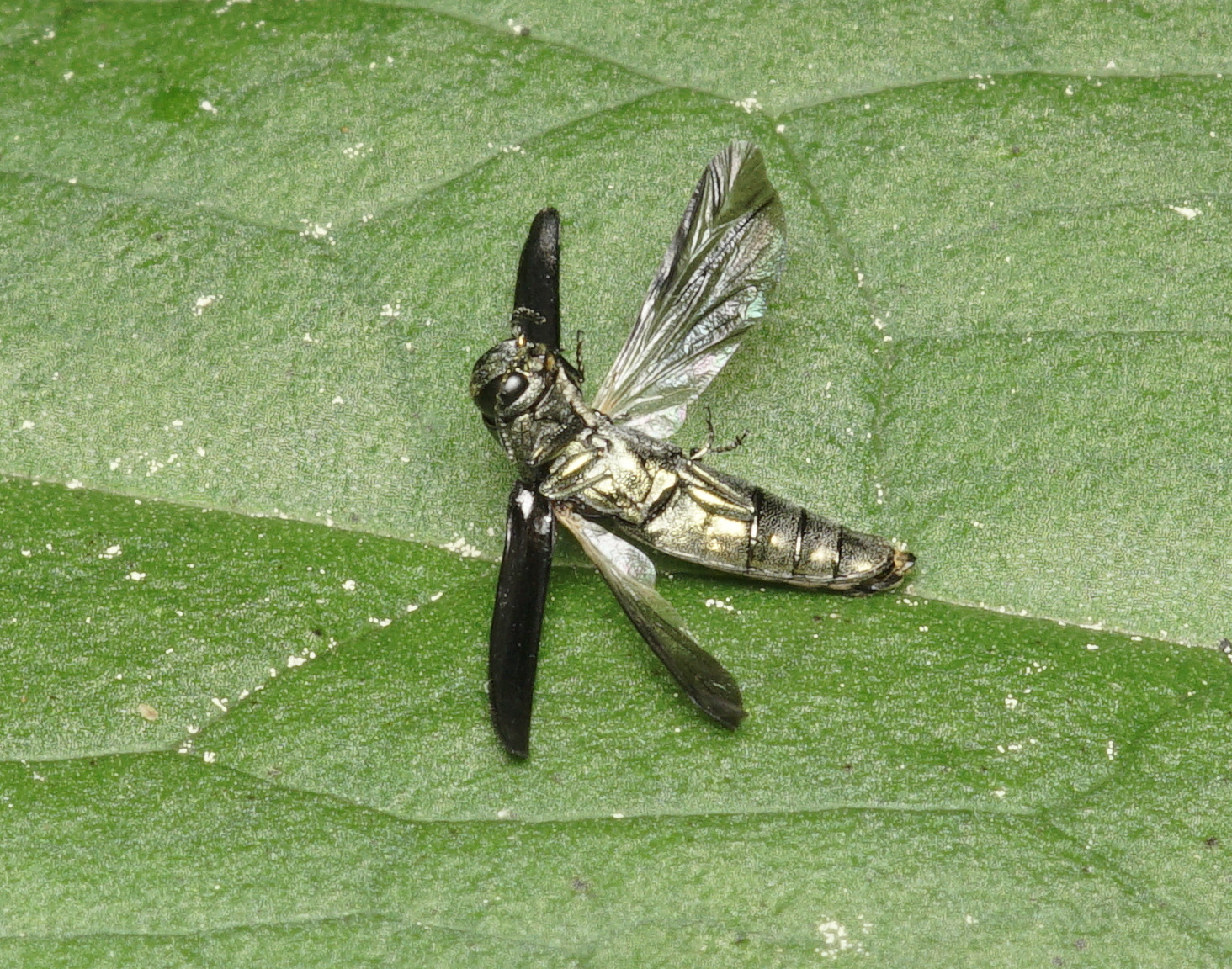
A dead buprestid?
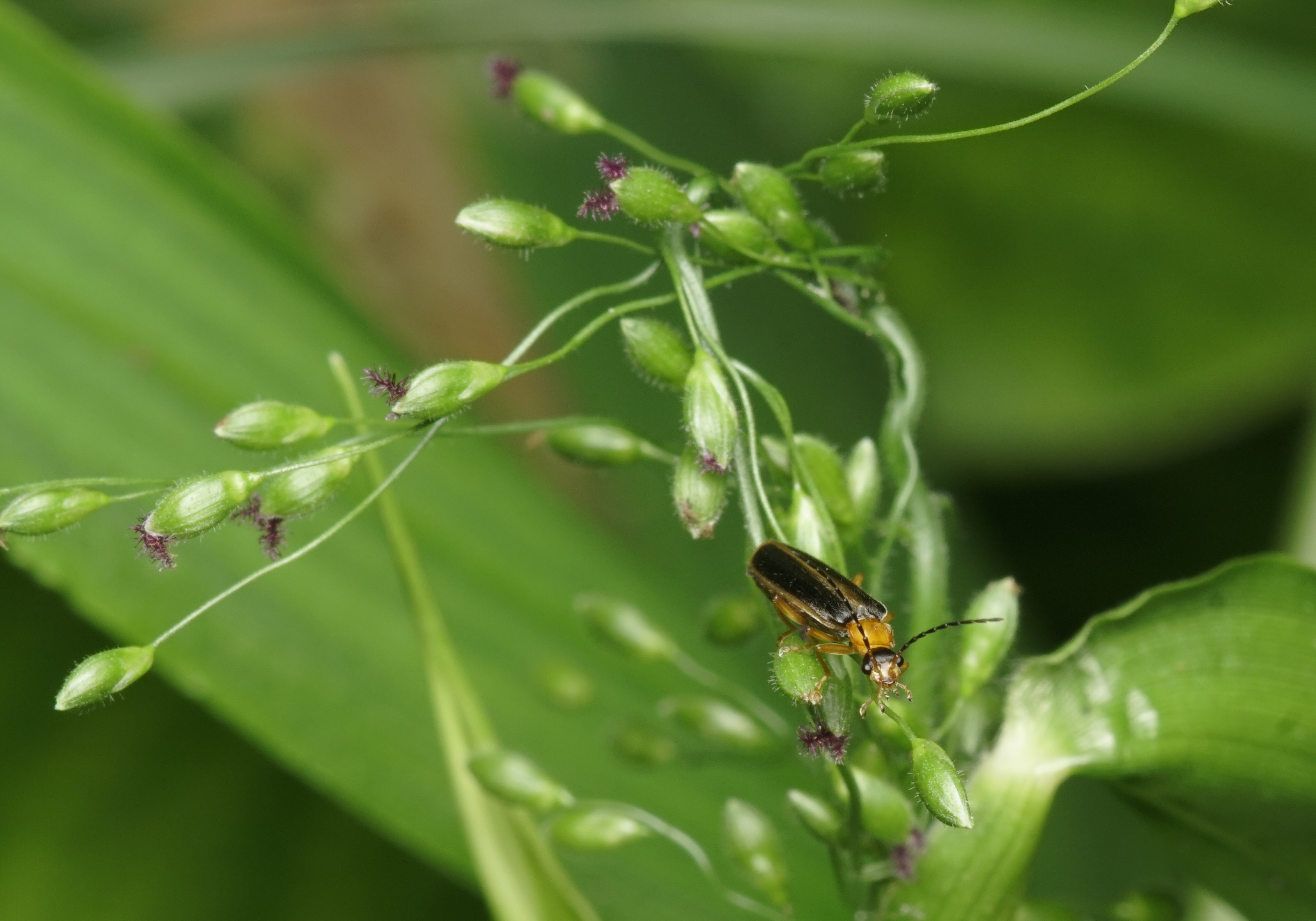
Cantharidae, something like Rhagonycha
Podabrus?
And another:
Lampyridae, firefly. Photinus. Some advice on distinguishing different genera:
“Photinus is small and will often have the elytra outlined. Pronota will be more rounded
Pyractomena generally have their pronota shaped triangular or shovel shaped
Photuris are larger species and legs will look very “spidery.” But they’ll usually have faint lines on their elytra, like stripes. They will also be more “hump backed.@
I think Pyractomena stand out very easily from the previous two. But you can usually separate the two based on perceived size and other characteristics.”
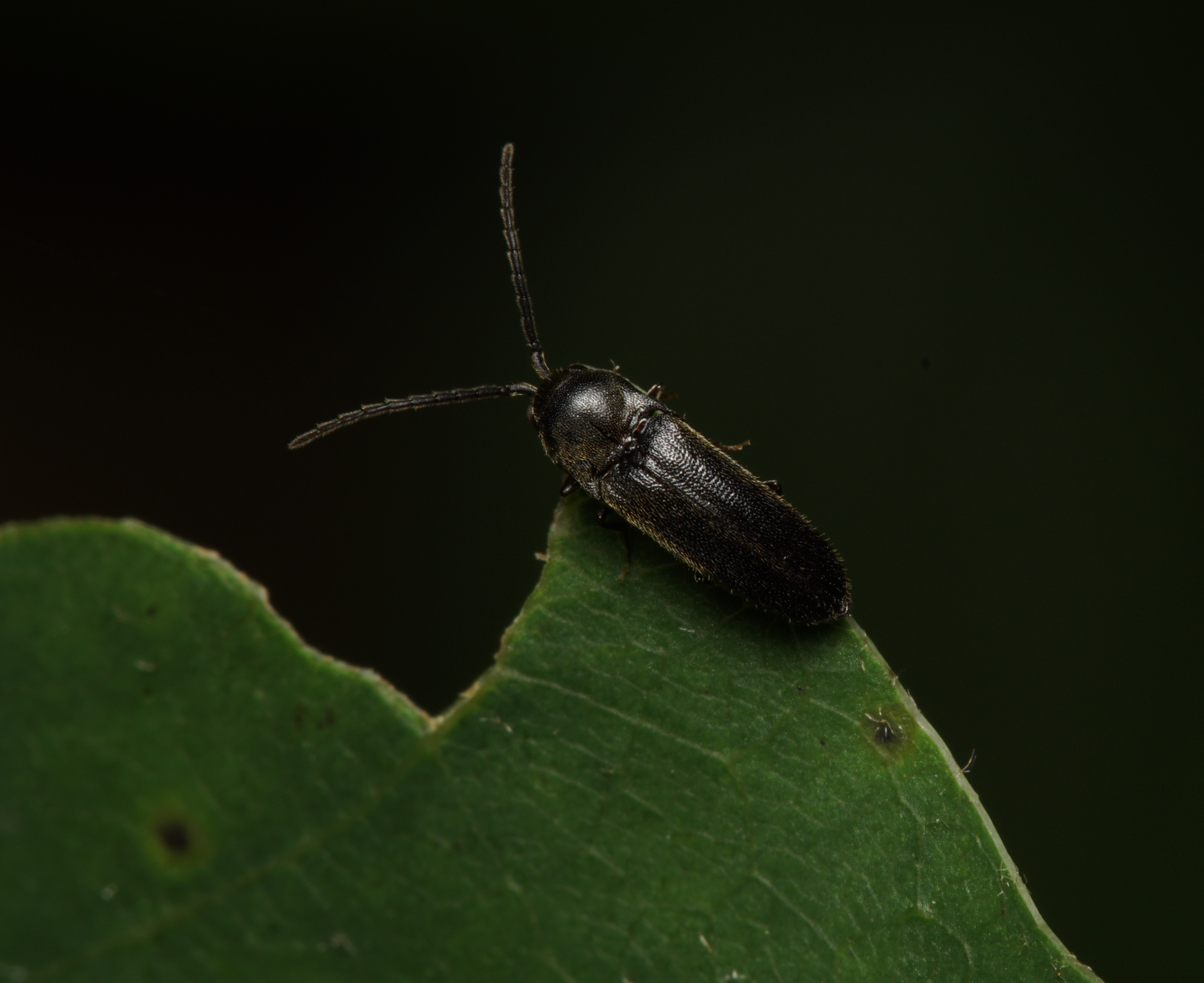
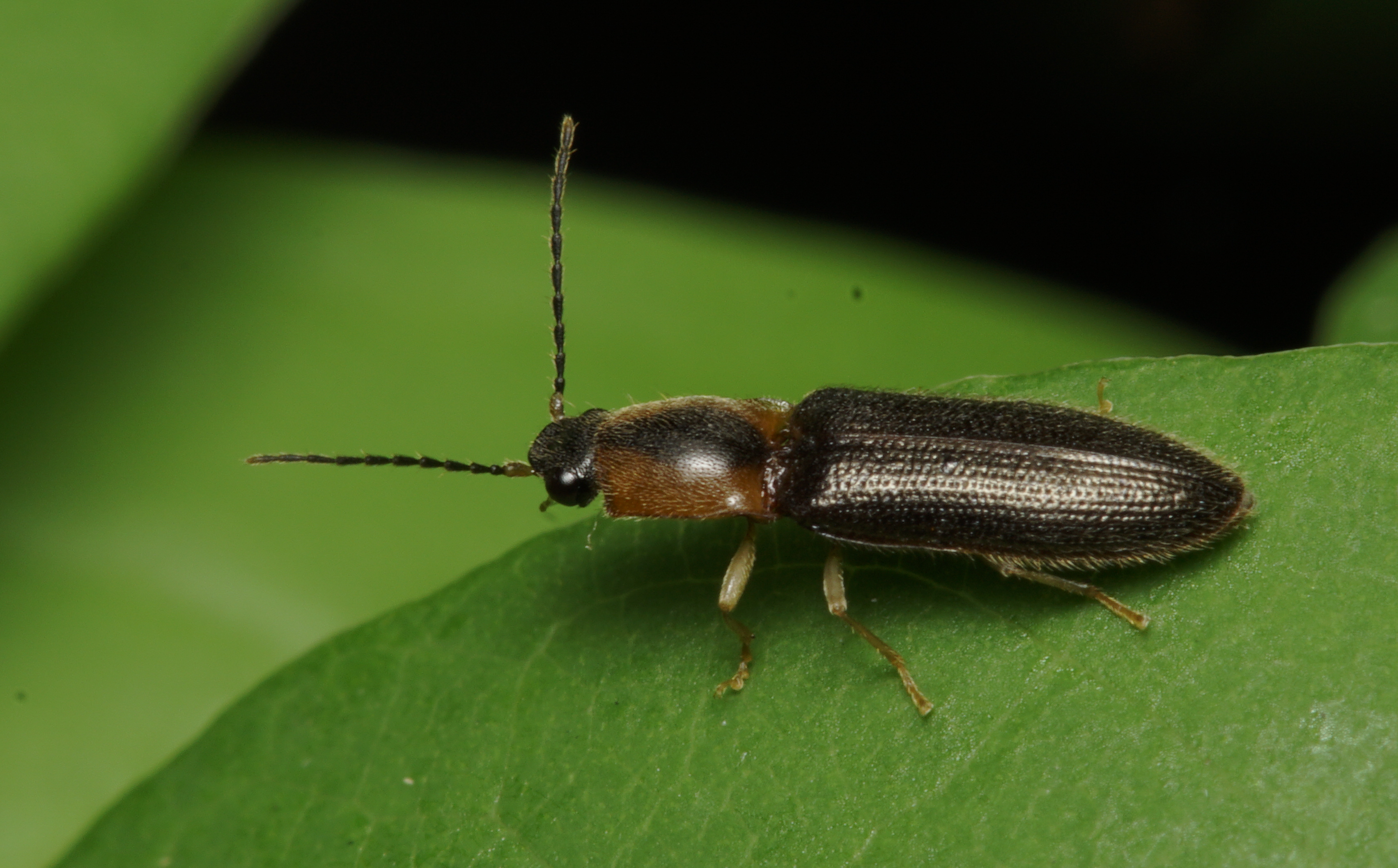
Elateridae:
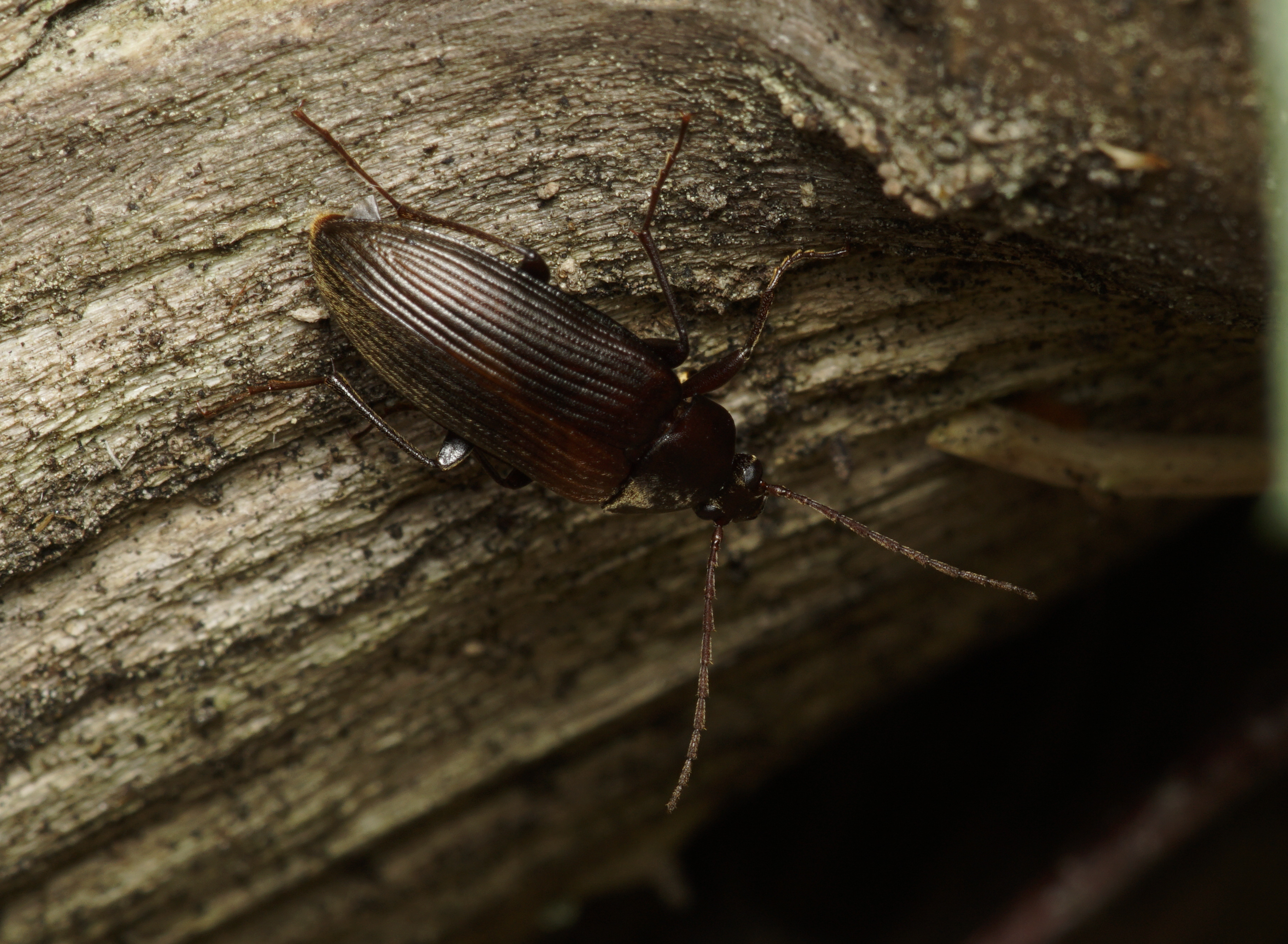
EDIT: I found a *lot* of wasps nearby that seem like a very good fit to Arotes amoenus. BugGuide says that their host is Melandrya striata (“false darkling beetle”, Melandryidae), which actually seems pretty close to this. I think I might need to change my mind on this.
ORIGINAL: Maybe Tenebrionidae, Capnochroa cf fuliginosa? Maybe Androchirus instead? Capnochroa is “comb-footed”, but I don’t have enough details on the feet.
These beetles were everywhere. I’ve seen them before and I seem to have a tough time identifying them, even to family.
EDIT: Wait, it could be Isomira cf sericea, in Tenebrionidae! I’m excited that there’s a reasonable candidate for this beetle, now.
Elateridae:
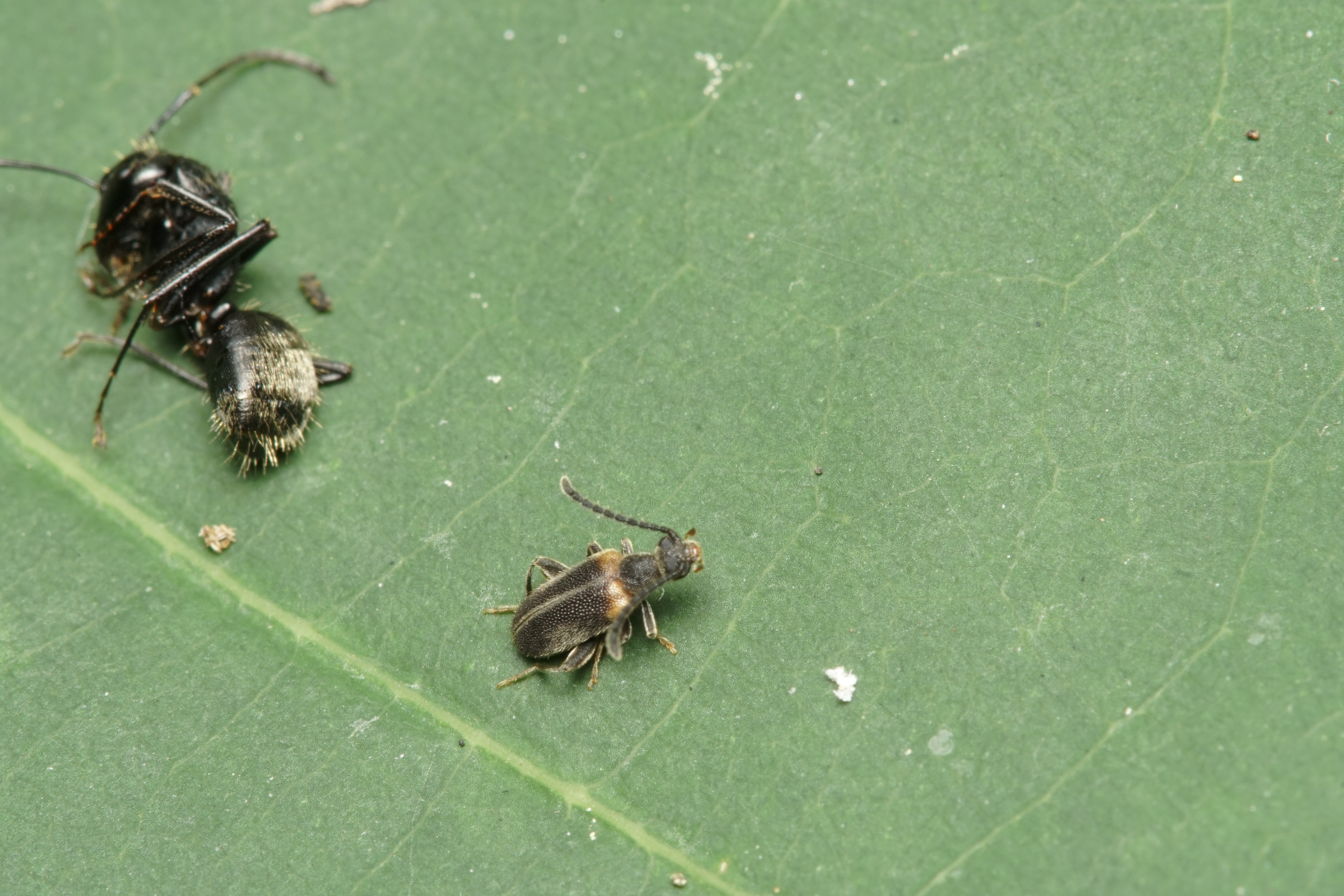
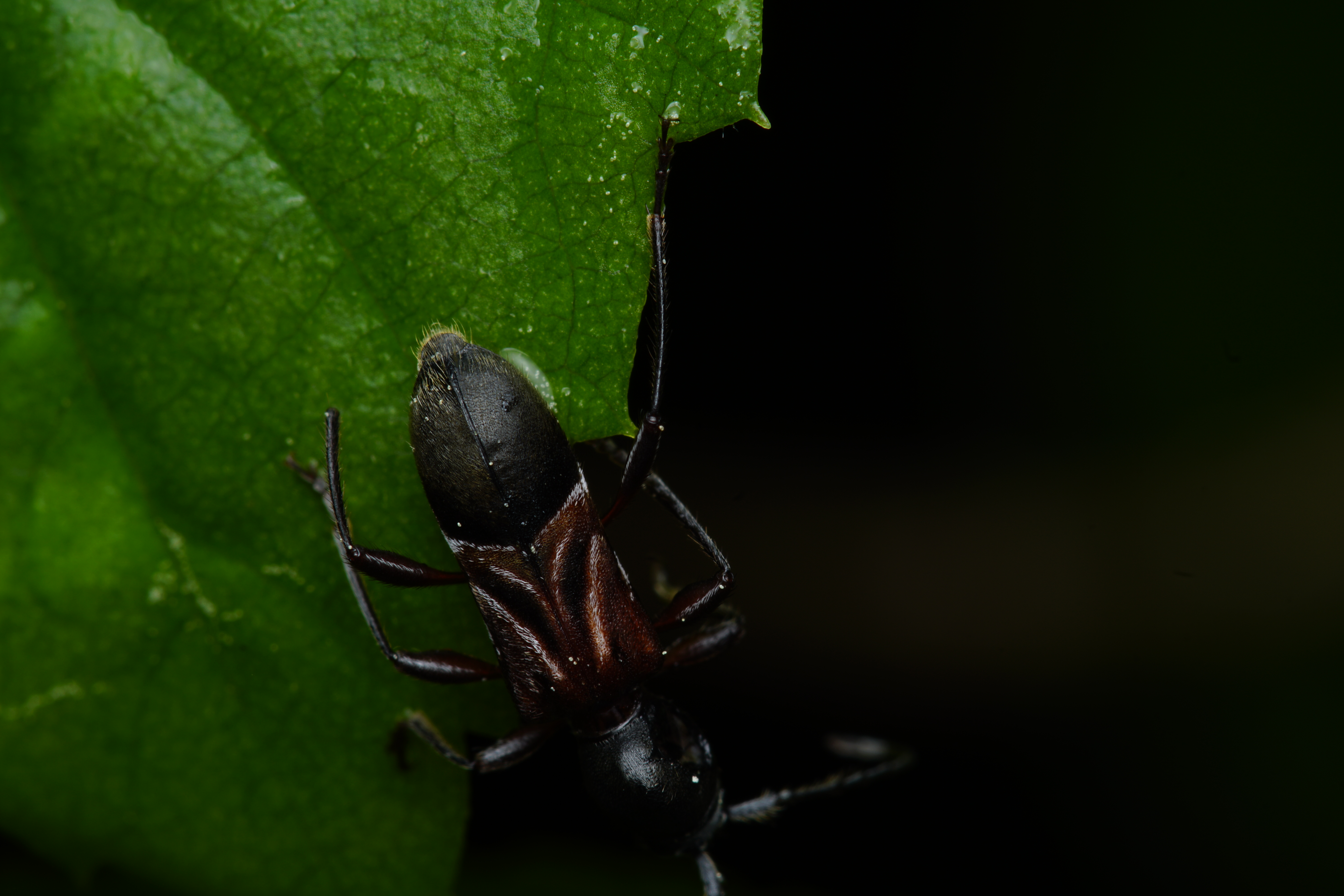
A crime scene? Not sure why there are a dead ant and a dead beetle right next to each other. Any good detective will tell you they don’t believe in coincidences!
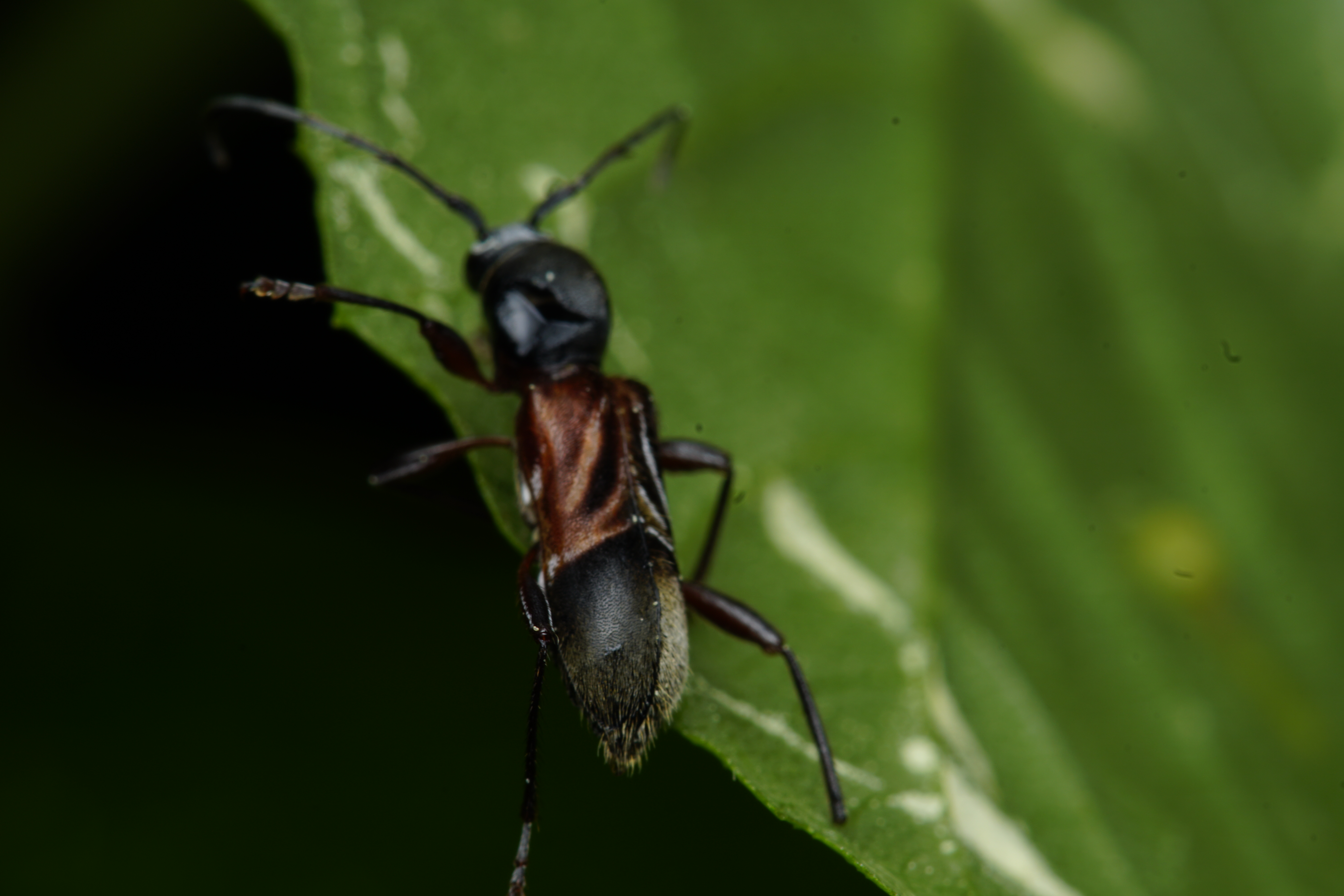
Looks to be Elonus, in Aderidae, the “ant-like leaf beetles”.
Trichoptera
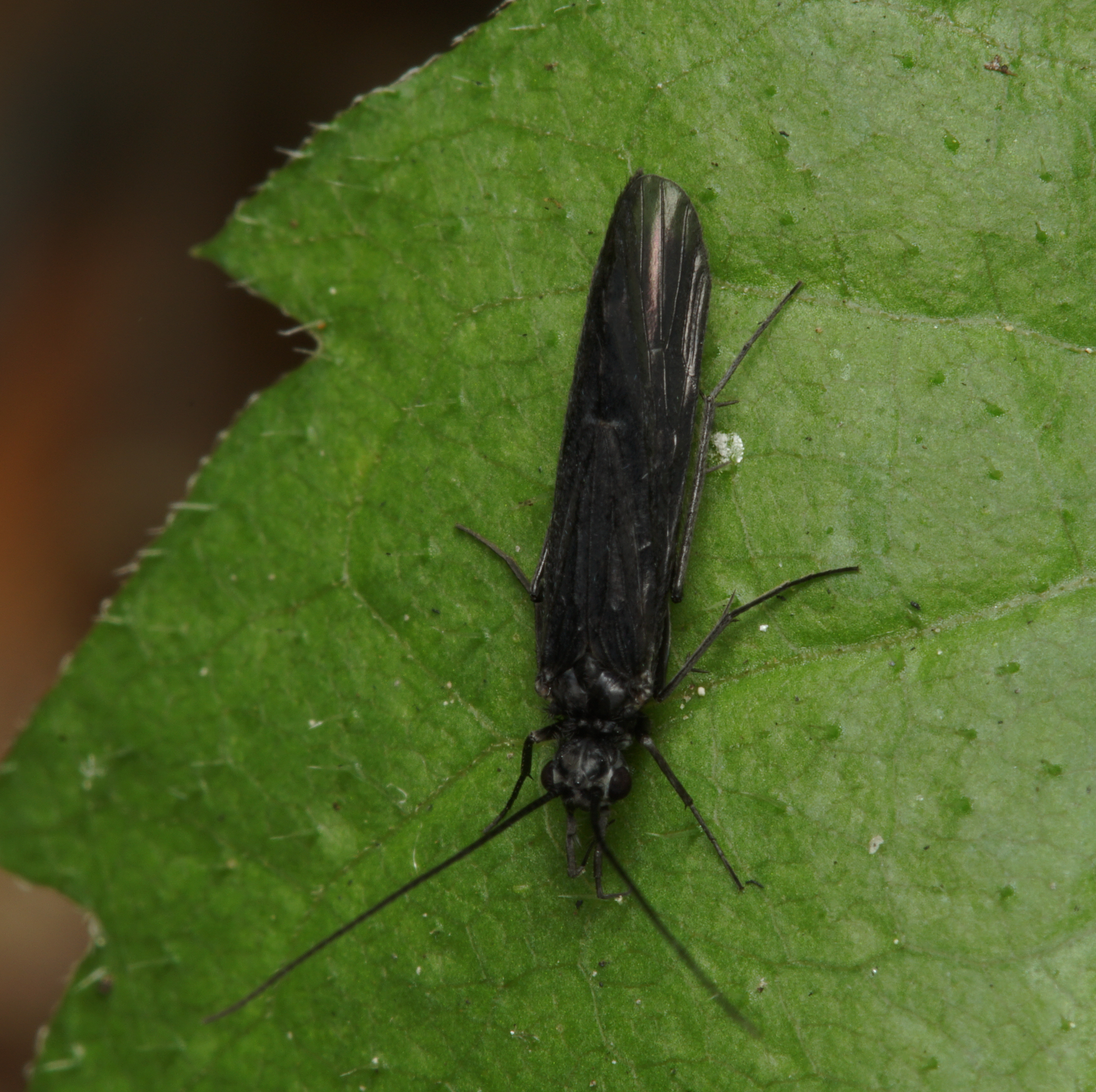
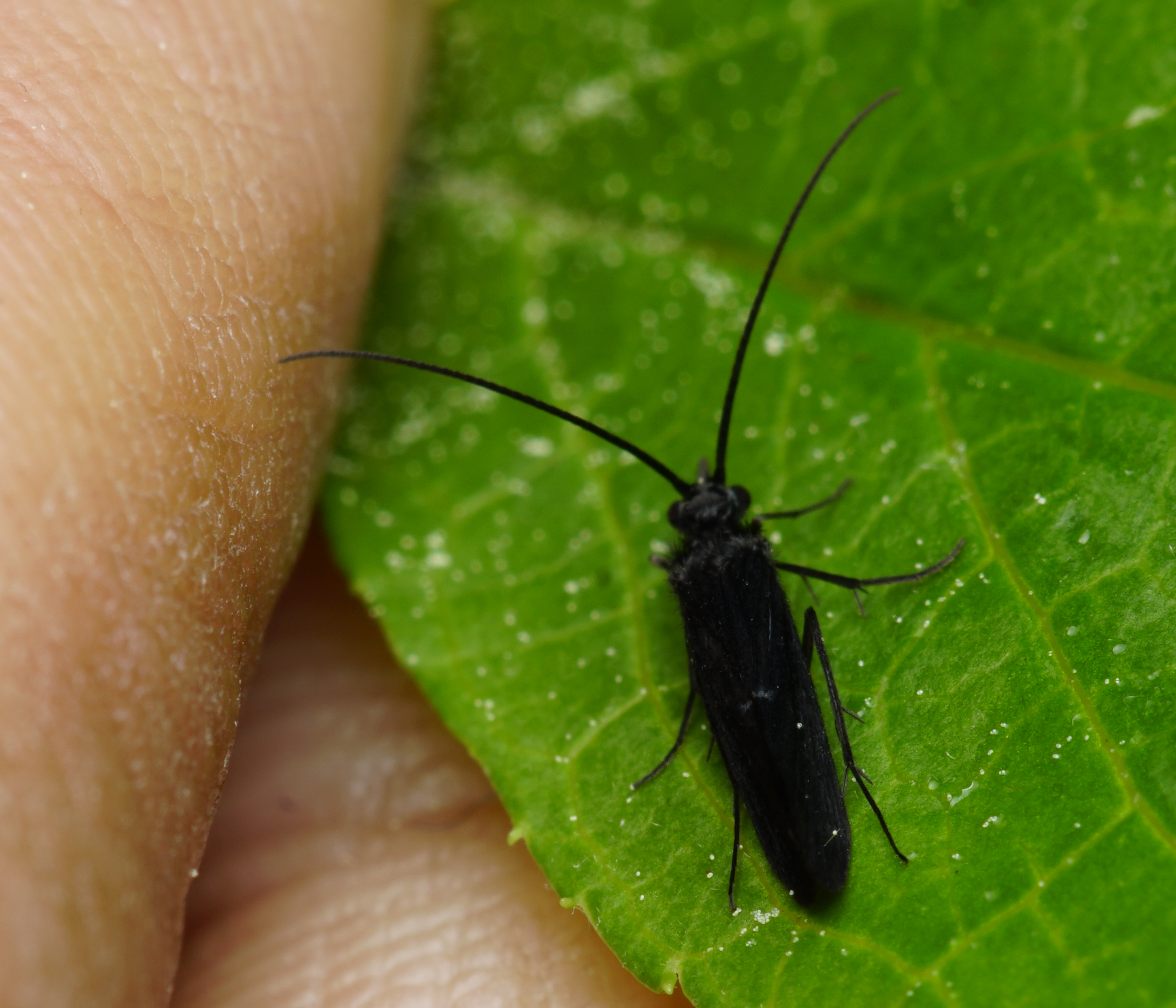
Caddisflies:
Lepidoptera
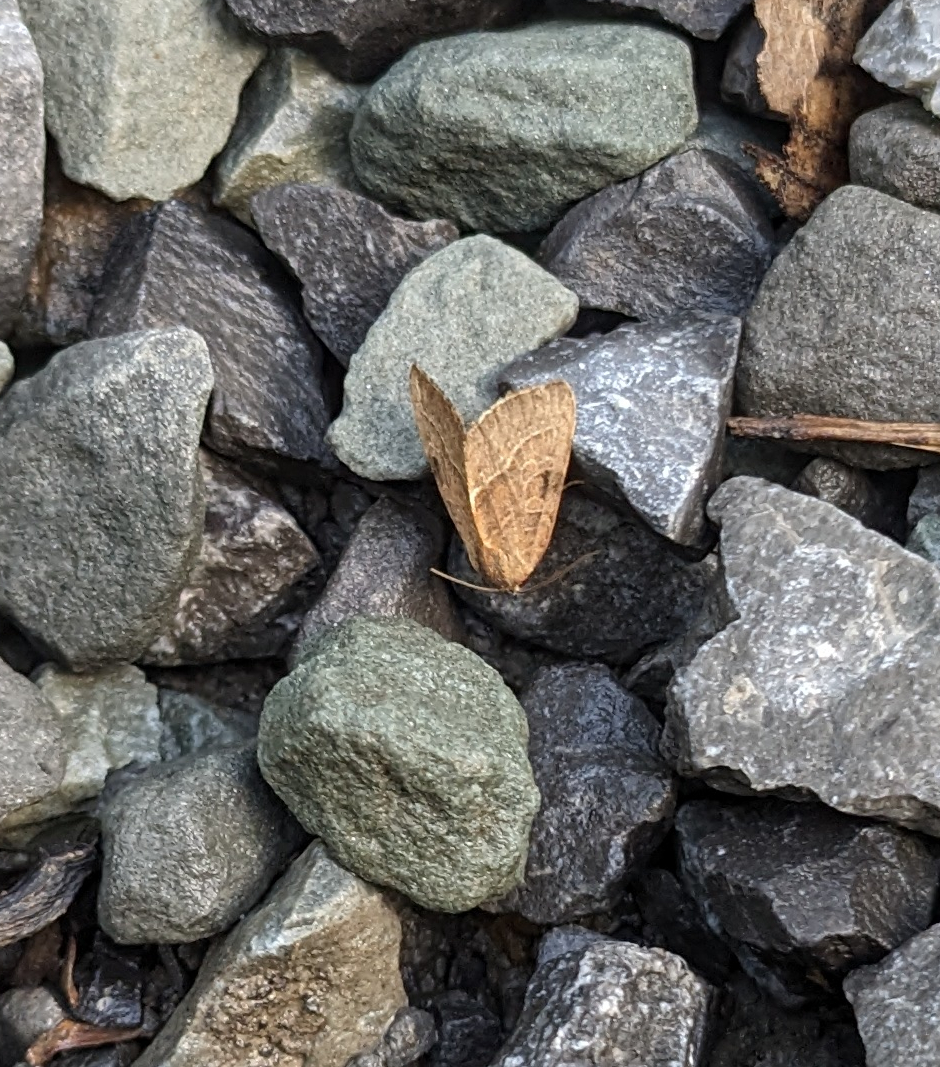
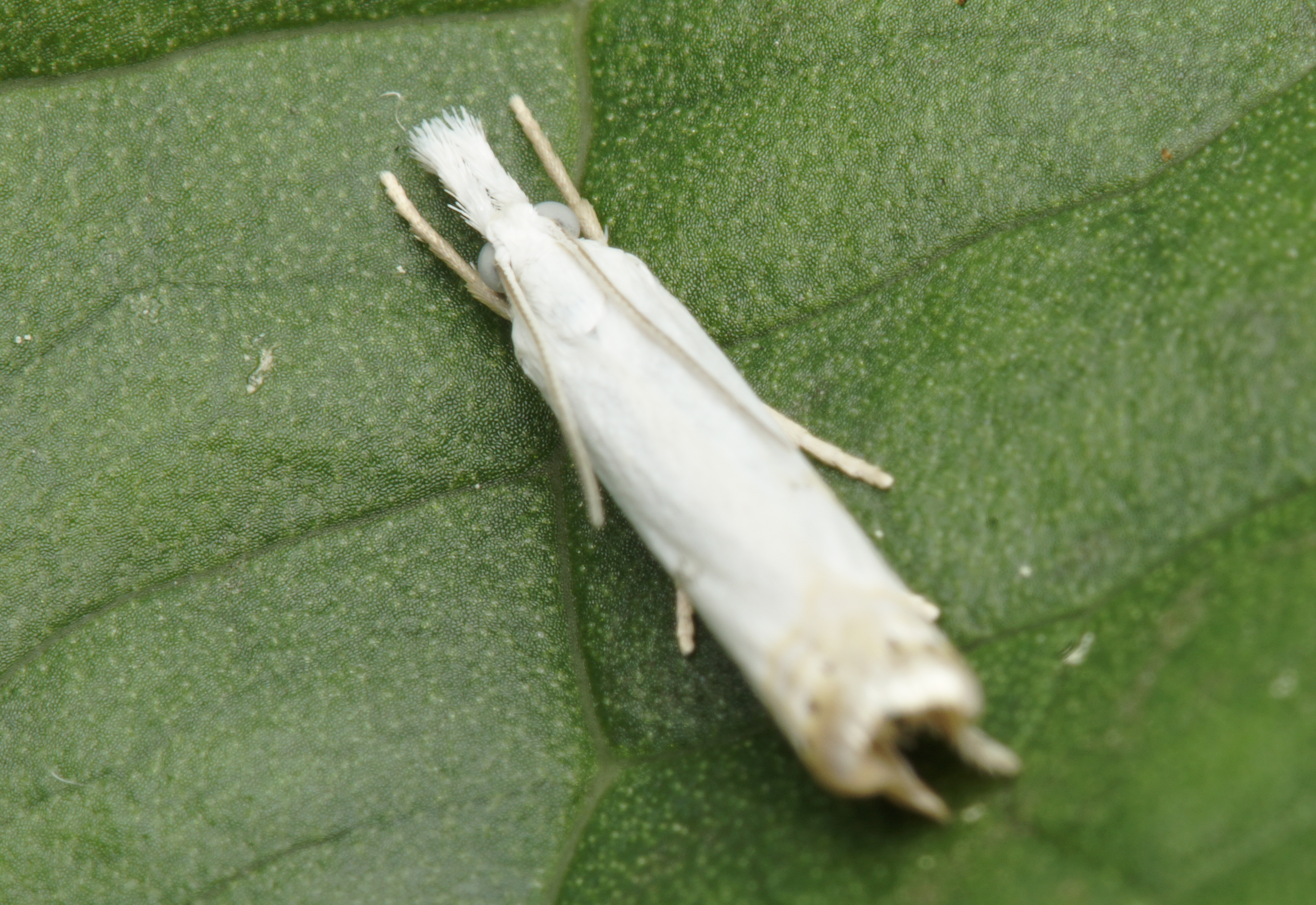
Is this a grass veneer? Immaculate grass veneer does not seem to fit exactly.
Tortricidae –> Olethreutes? I think Banded Olethreutes.
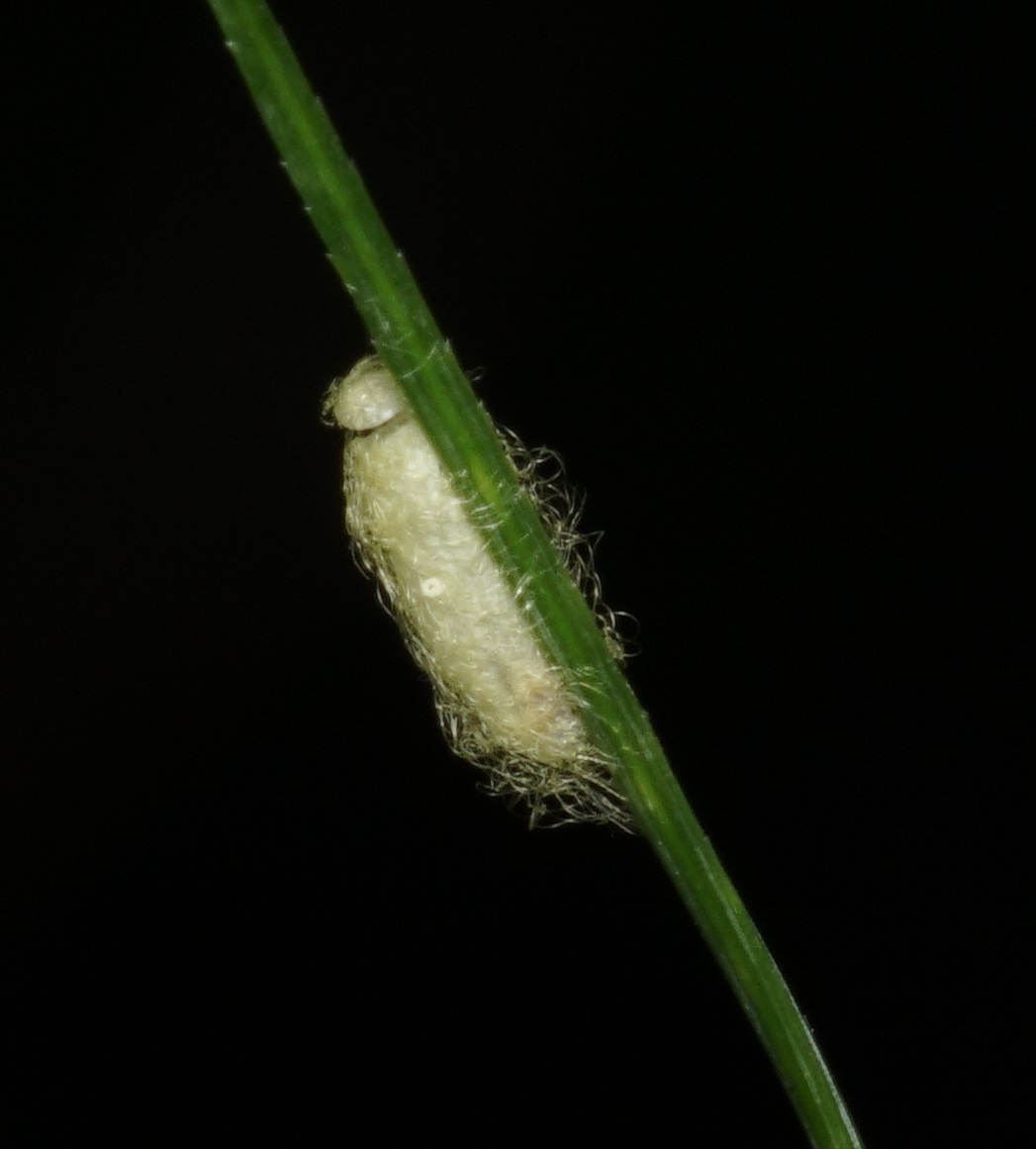
Not even sure this is Lepidoptera:
And I don’t know if this is Lepidoptera:
Hymenoptera
Ichneumonidae –> Pimplinae?
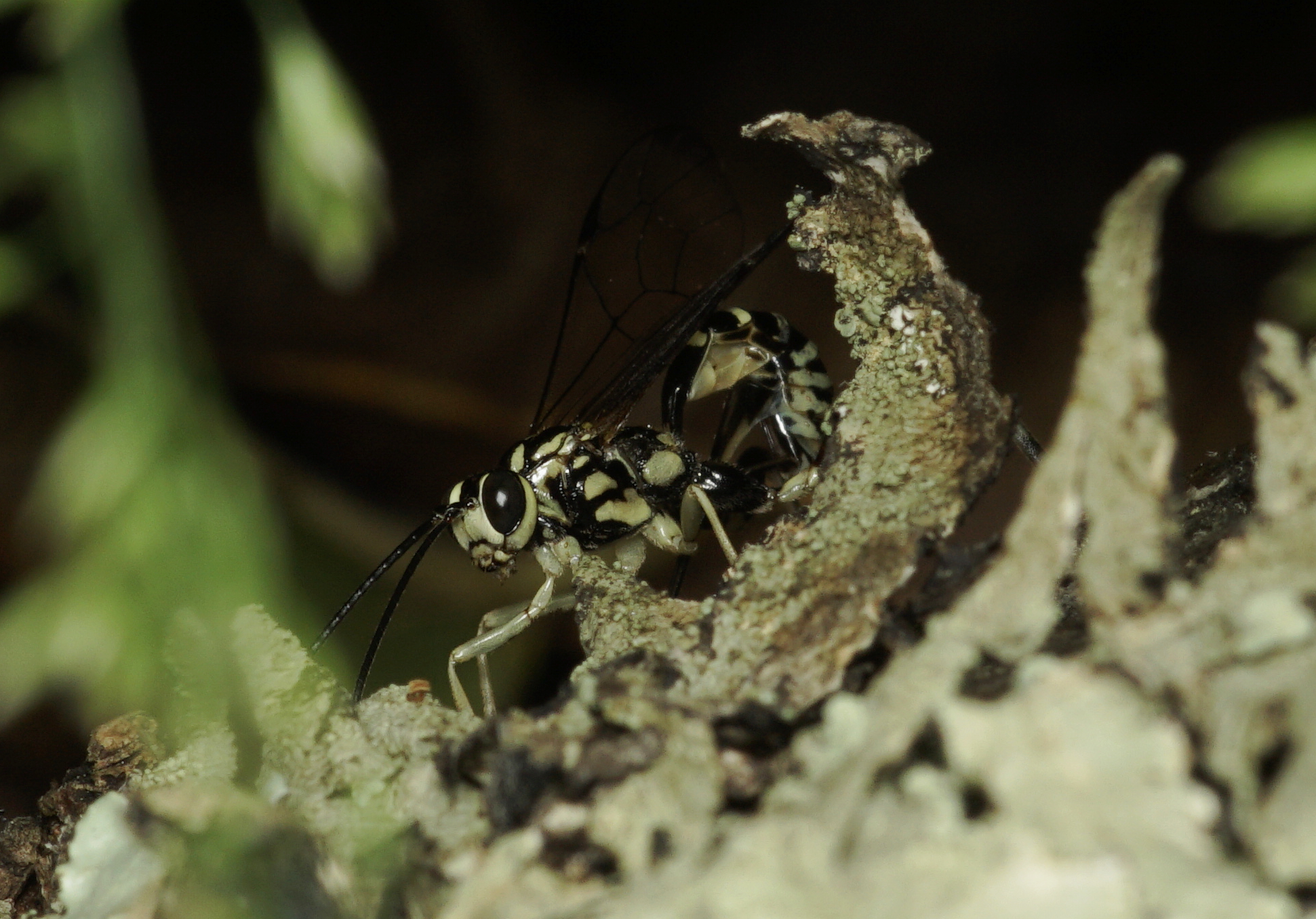
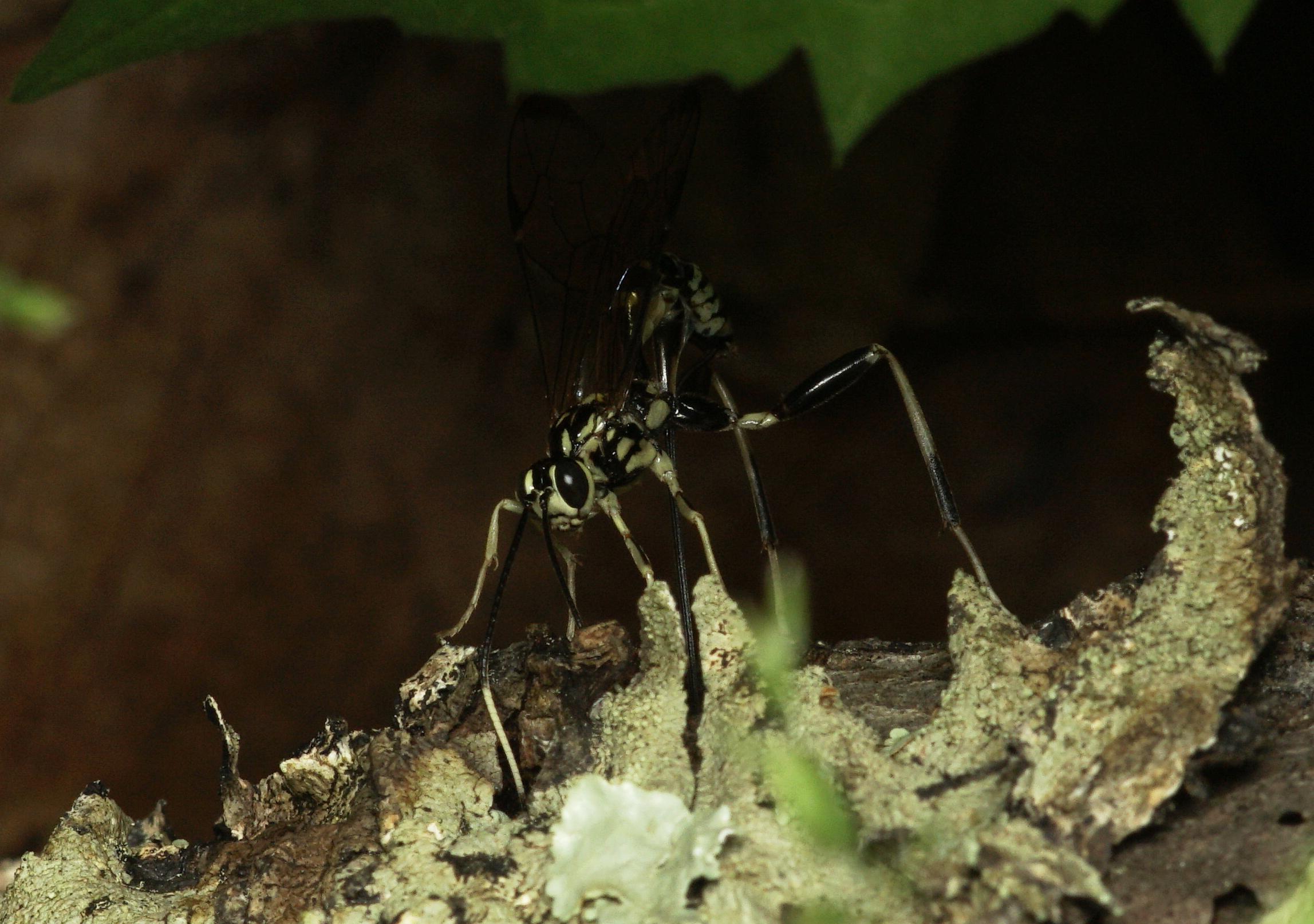
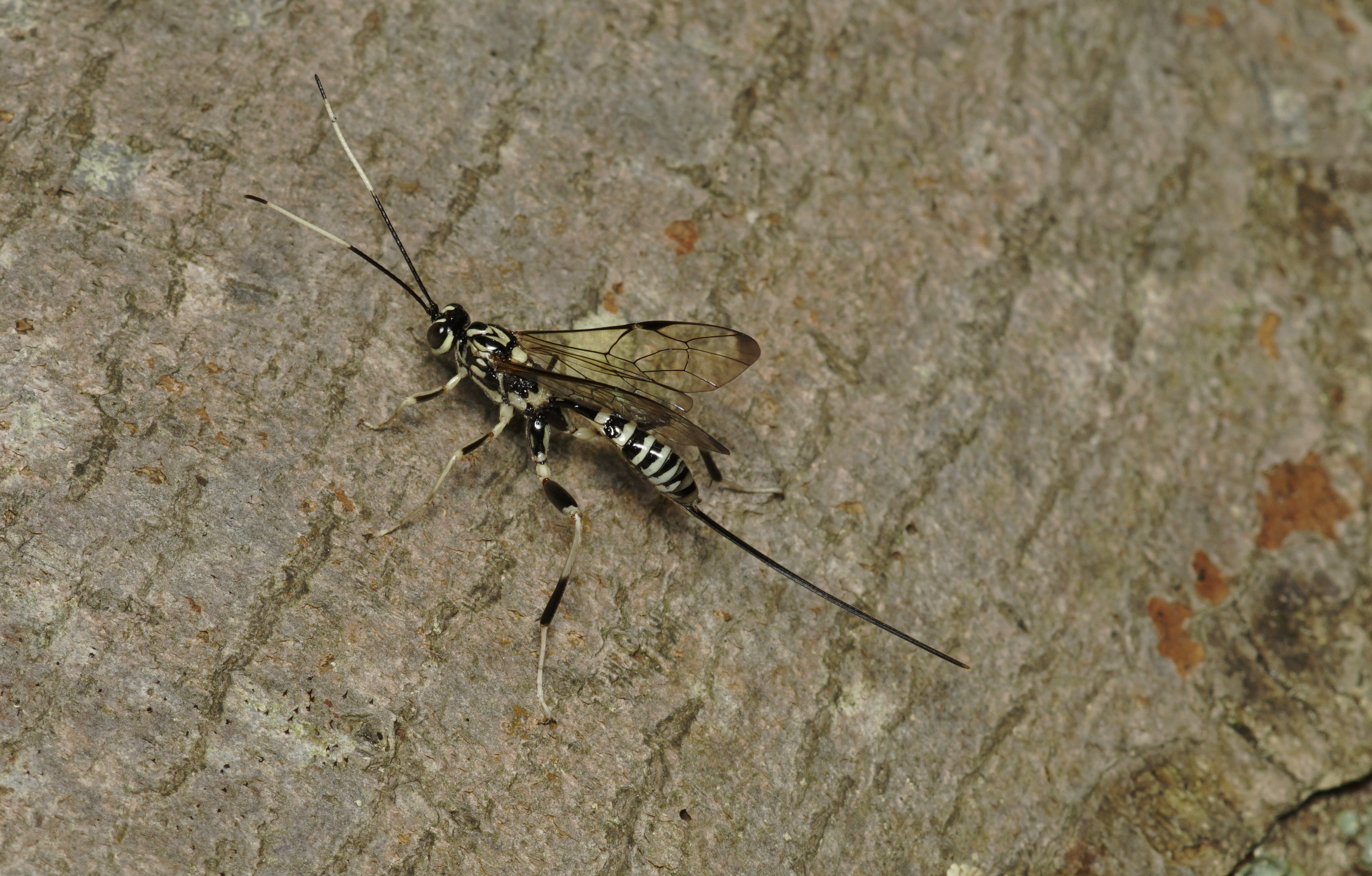
Here’s the ichneumonid, . Please forgive me for so many photos, but I was very excited to finally get photos of ovipositing!
There were several of these females. They were flying and walking all over, flicking antennae, looking for someone in the dead wood to lay their eggs in.
A group of boldly-patterned, medium-sized ichneumonid wasp. See photos.
Black and yellow coloration, long ovipositor, dorsoventrally depressed abdomen with apical portion laterally compressed, the first tergite narrowed anteriorly and broadened posteriorly and apical dark wing spots.
Here’s some ovipositing!
Wing venation:
Pimplinae?
Spiders
Spider seen but not photographed: dark morph of Maevia inclemens.
I think Theridiidae, not sure which:
Theridion cf frondeum, perhaps, as T. albidum is rarer, but could be that too. Male.
Philodromidae, Philodromus marxi
Uloborus glomosus. Whenever you display one of these, it is mandatory to mention that Uloboridae is the only spider family lacking in venom.
So gorgeous!
Theridiidae –> Euryopis, perhaps E. funebris? Looks okay-ish, but the opisthosoma is supposed to be teardrop shaped. Maybe gravid?
Castianeira:
Zygoballus rufipes, hammer-jawed jumping spider?
Eustala
Theridiosoma gemmosum, Theridiosomidae egg sac
Not a spider, some sort of mite. Just possibly Anystis, in Anystidae?
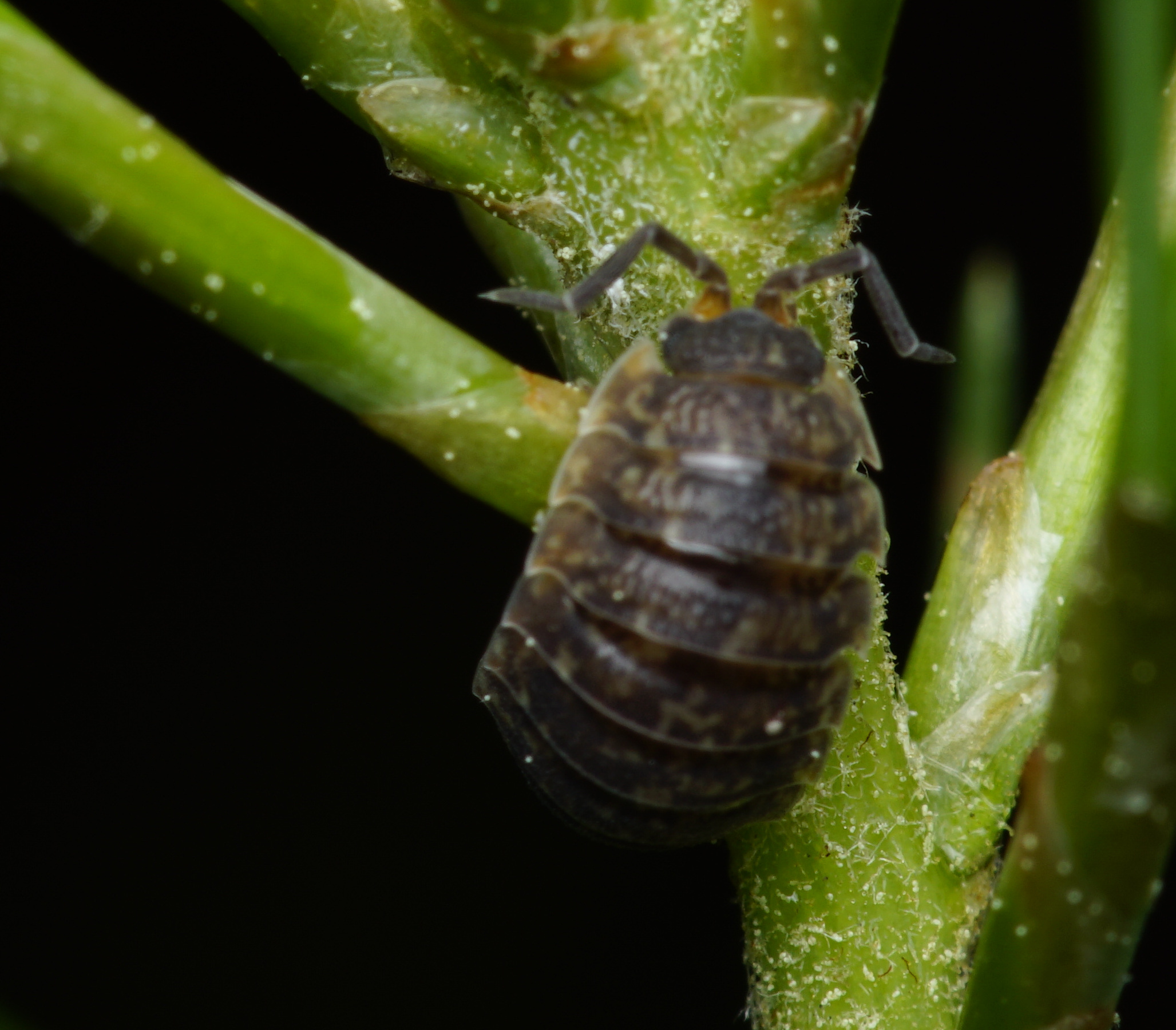
Not a spider, a woodlouse:
No bugs
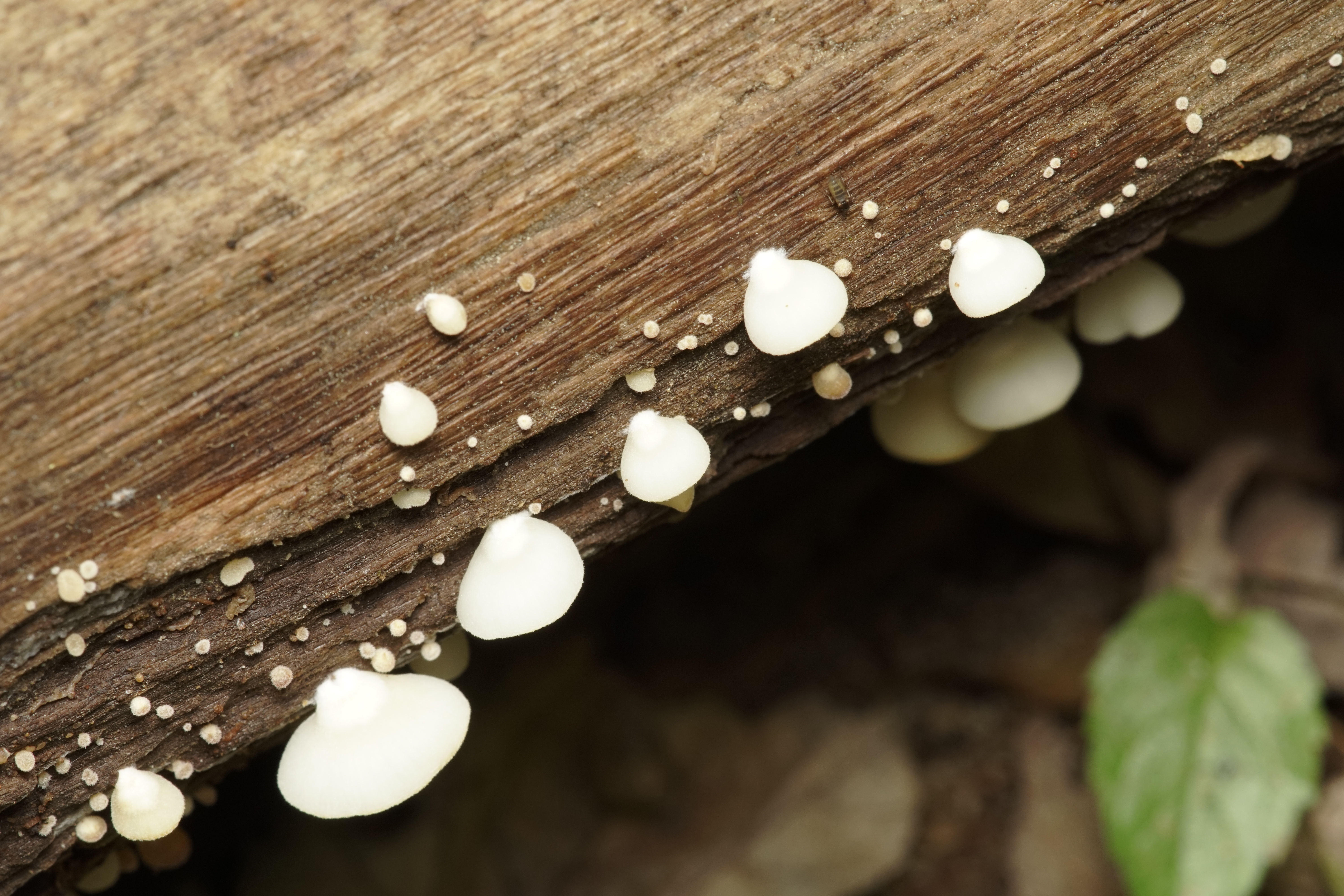
Probably crown-tipped coral, Artomyces pyxidatus, suggested to me.
A very rainy day, with a walk in the evening after the rain tailed off. Not too many bugs, but the ones we did see were a little more docile and accepting of being photographed, I think. Except for the Dolichopods, they never stand still, ever.
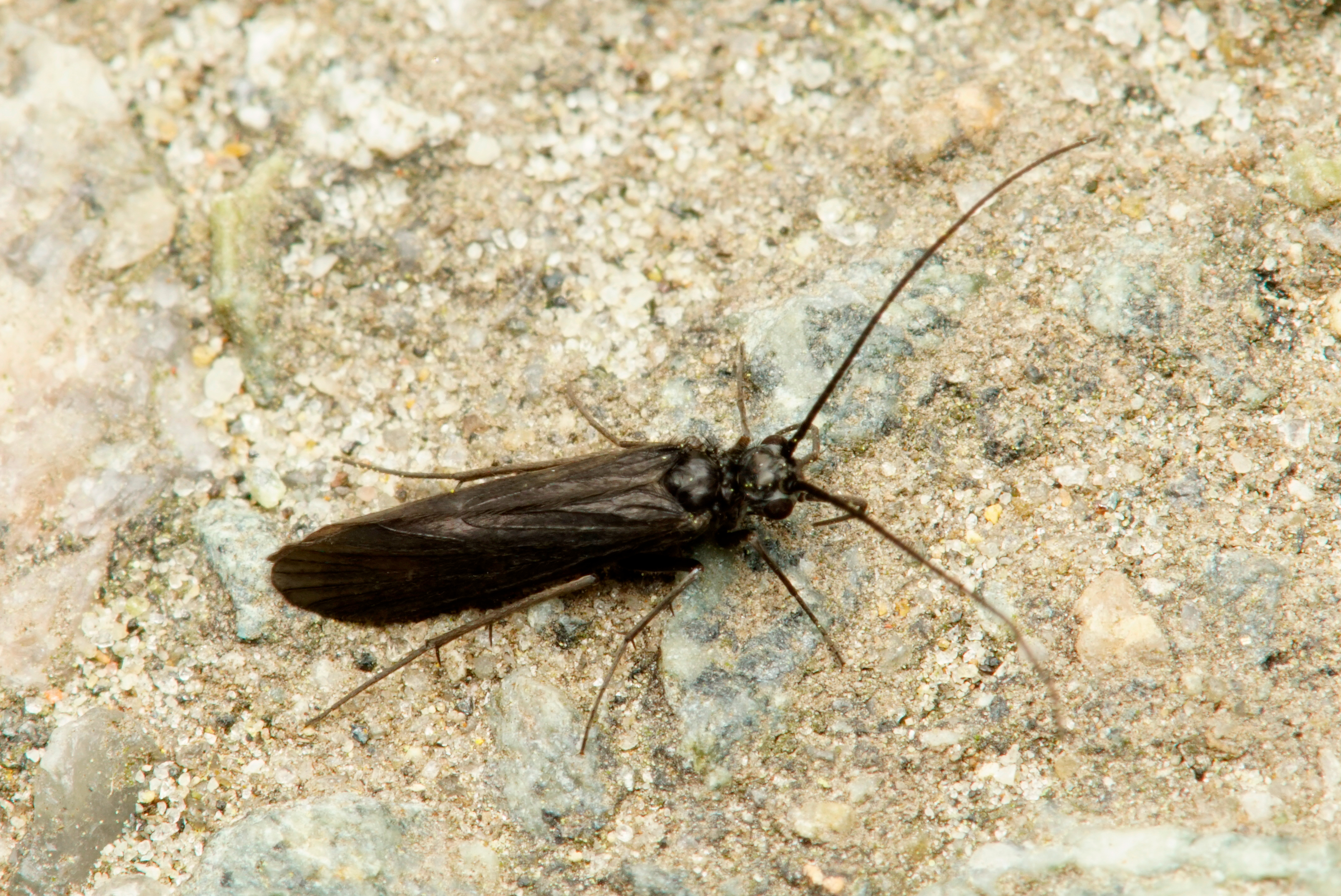
A caddisfly, Trichoptera. I always have a tough time identifying Trichopterans to genus.
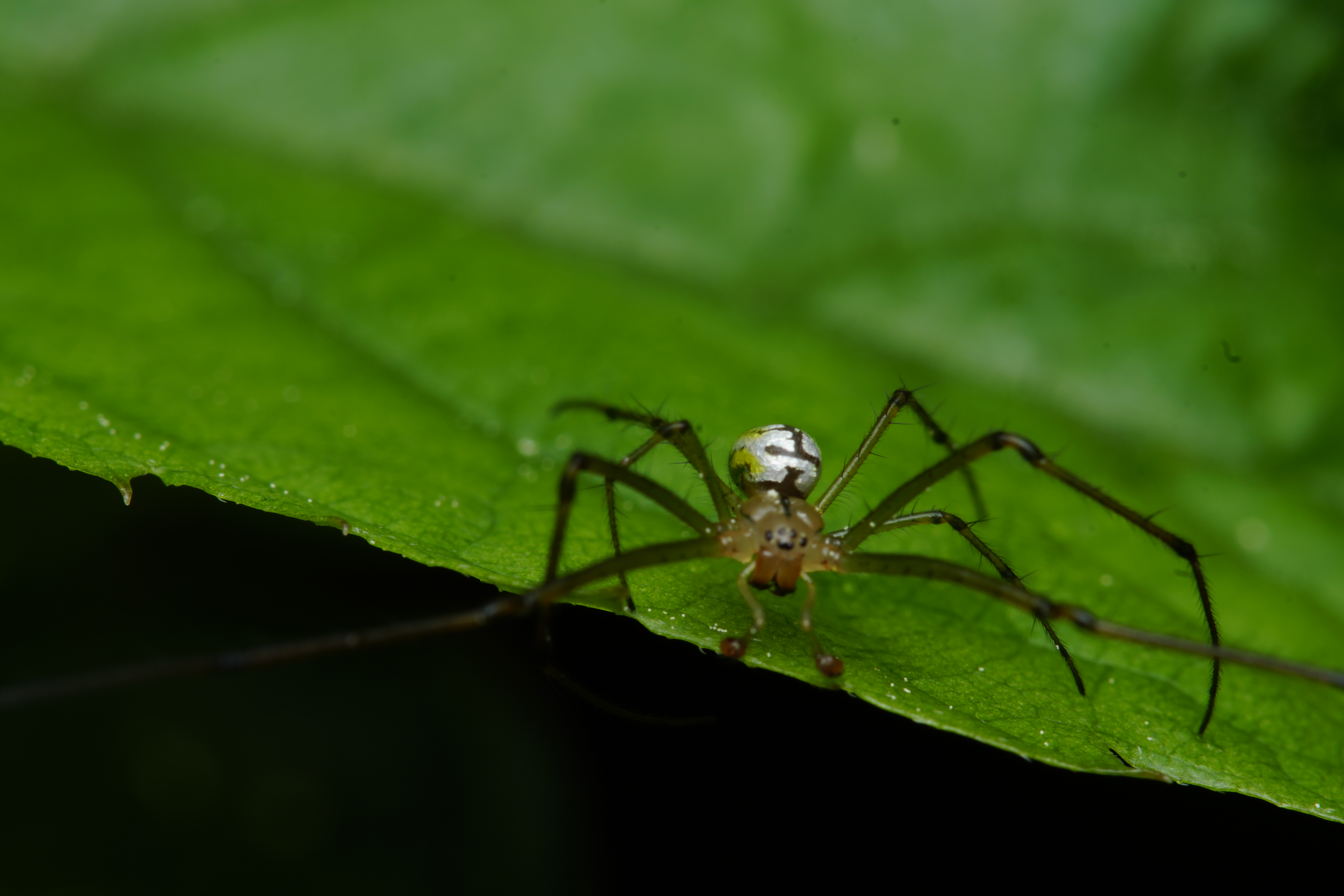
Araneus diadematus? Mangora placida. Took me longer to find the identification than it should have :-).
An unusual angle for a Leucauge venusta:
Philodromidae. In fact, all the similar Philodromids were classified as Philodromus, so there’s a strong chance this one is too.
Molorchus bimaculatus Cyrtophorus verrucosus, in Cerambycidae, I think. This one fooled me the first time I found it, as it seems very atypical for Cerambycidae, and it fooled me again this time. Took a long time scrolling through Staphylinidae and Cleridae to finally get the answer.
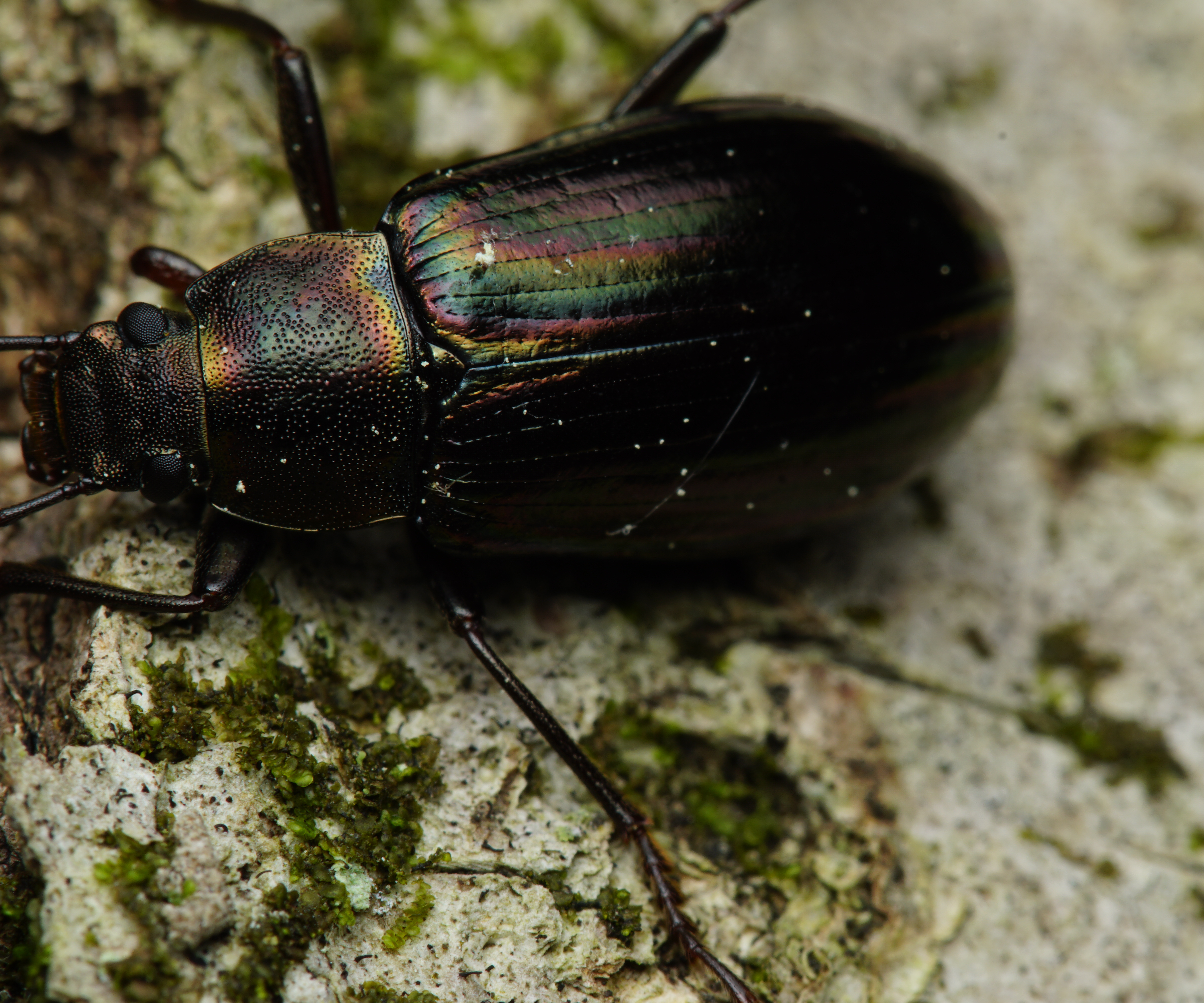
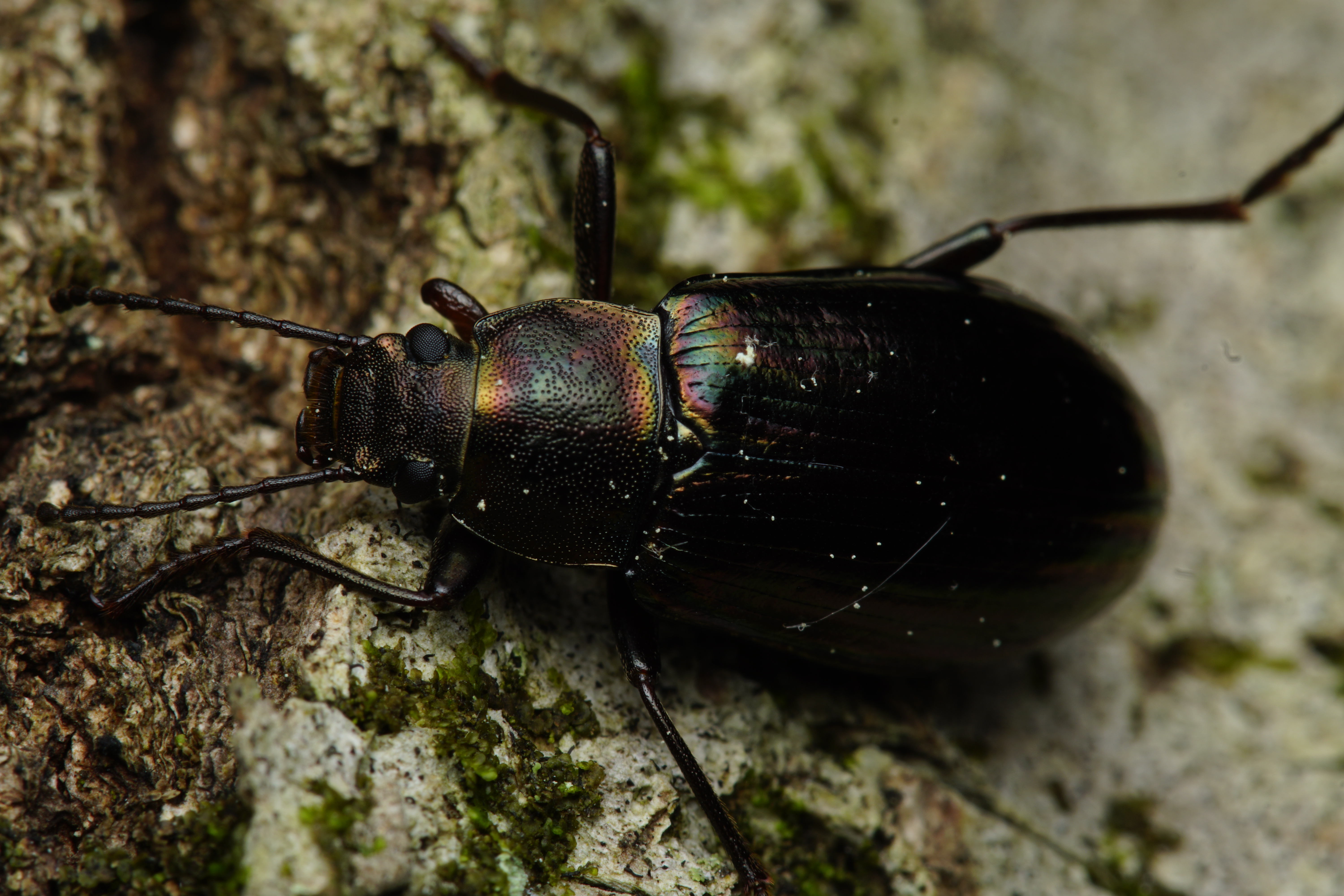
Tarpela micans (Tenebrionidae) displaying its typical rainbow coloration, appropriate for Pride month:
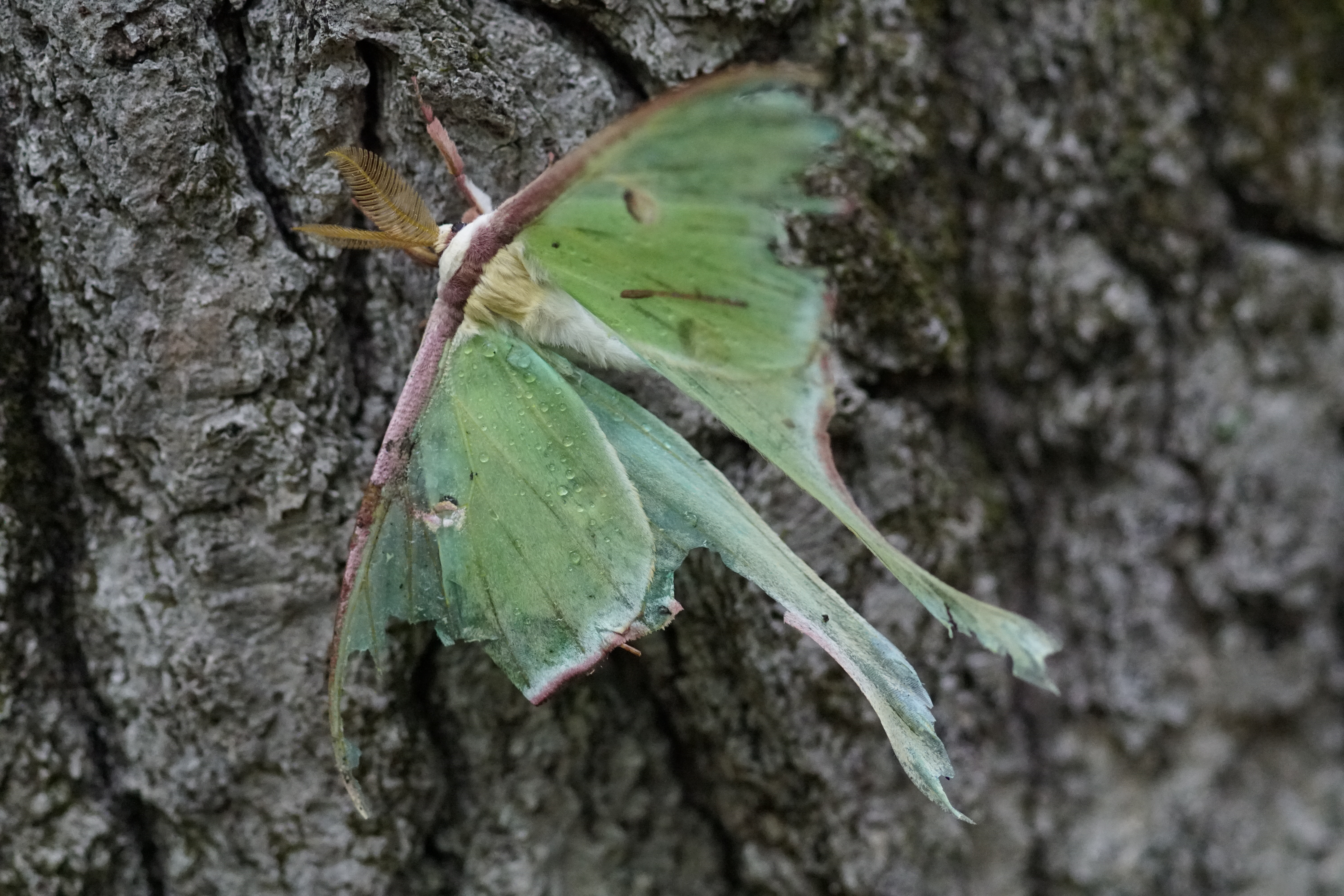
The star of the show! A Luna moth. He (male, look at the antennae) has been through a lot, as seen by his wings. I hope he had a good life and reproduced!
Braconidae? Don’t know how to distinguish from Ichneumonidae from this photo, given lack of wing venation.
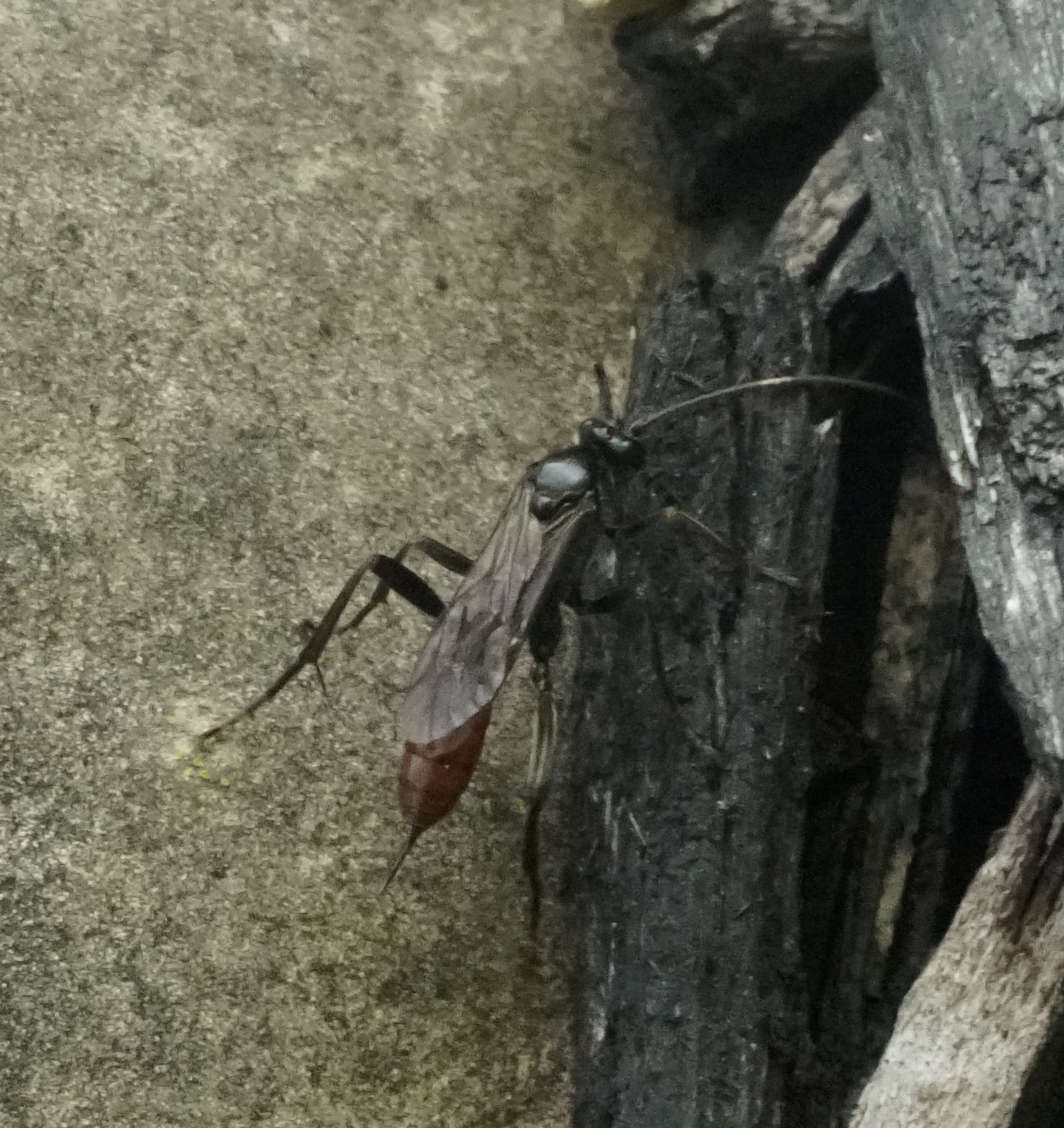
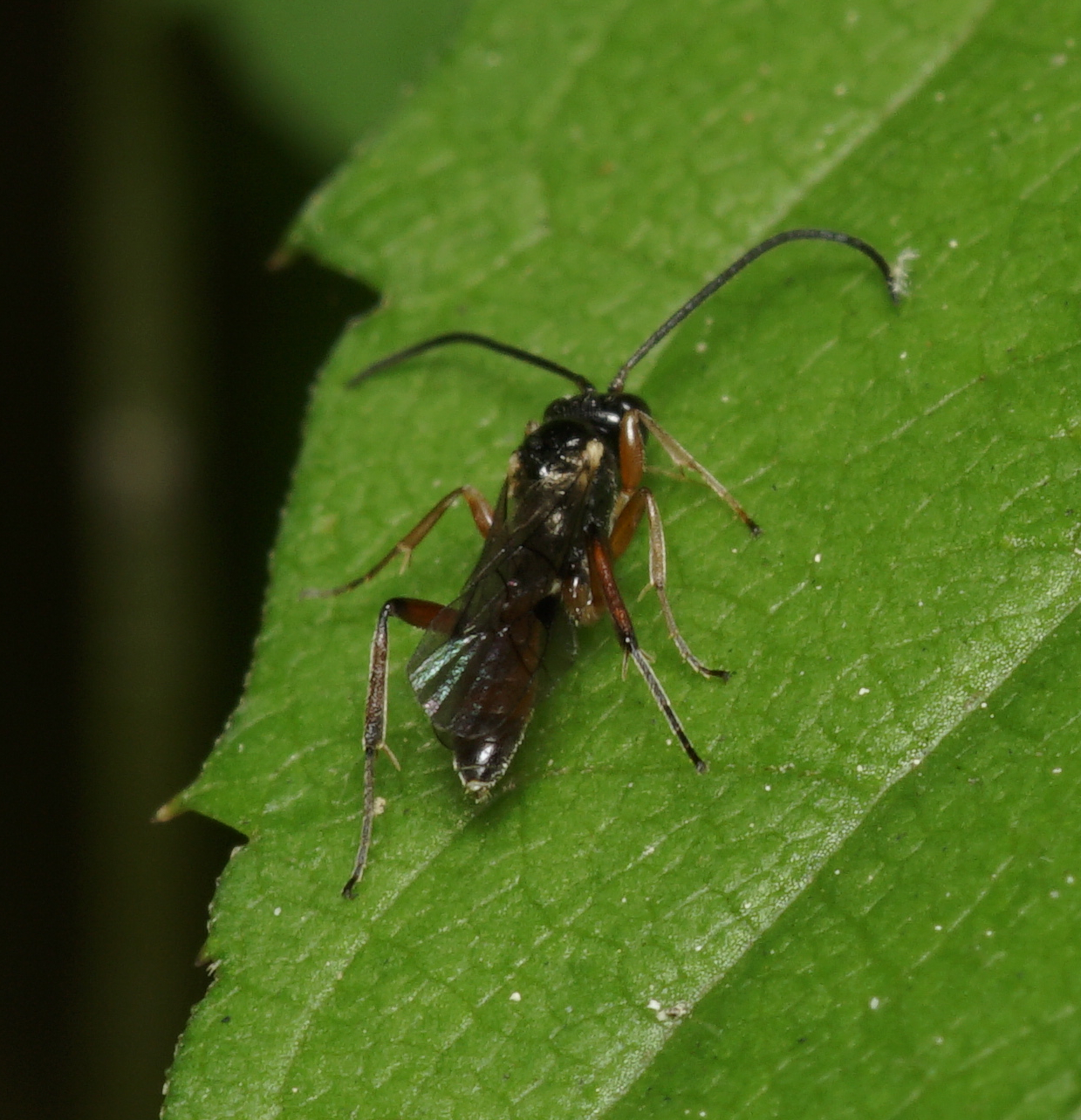
My best guess for this one is family Ichneumonidae, perhaps Cryptinae. Will need to look further to see it I can find a fit. Note the large ovipositor as a clue.
Lycosidae (wolf spiders) –> maybe Schizocosa sp.?
Looks like a hammerjawed jumping spiders, Salticidae –> Zygoballus cf. rufipes. Genus looks solid, but being confident of species level identification may be tricky.
a blurry view, but you can see the eponymous jaws:
This is probably a Melandrya cf striata, in Melandryidae (false darkling beetles). Not too many instances of them in the US, so something of a nice sighting!
Lovely mayfly, and for once, it’s actually May!
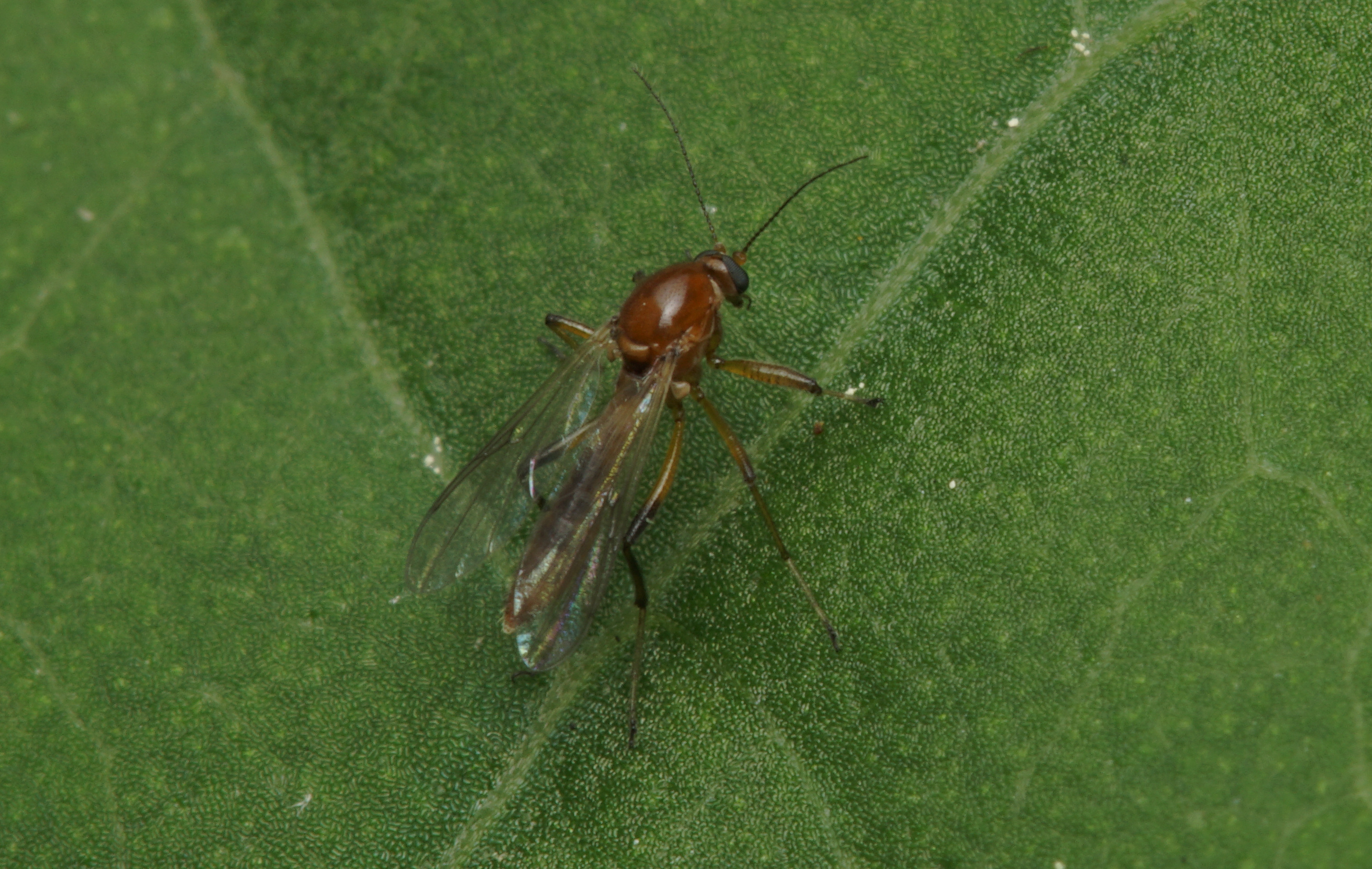
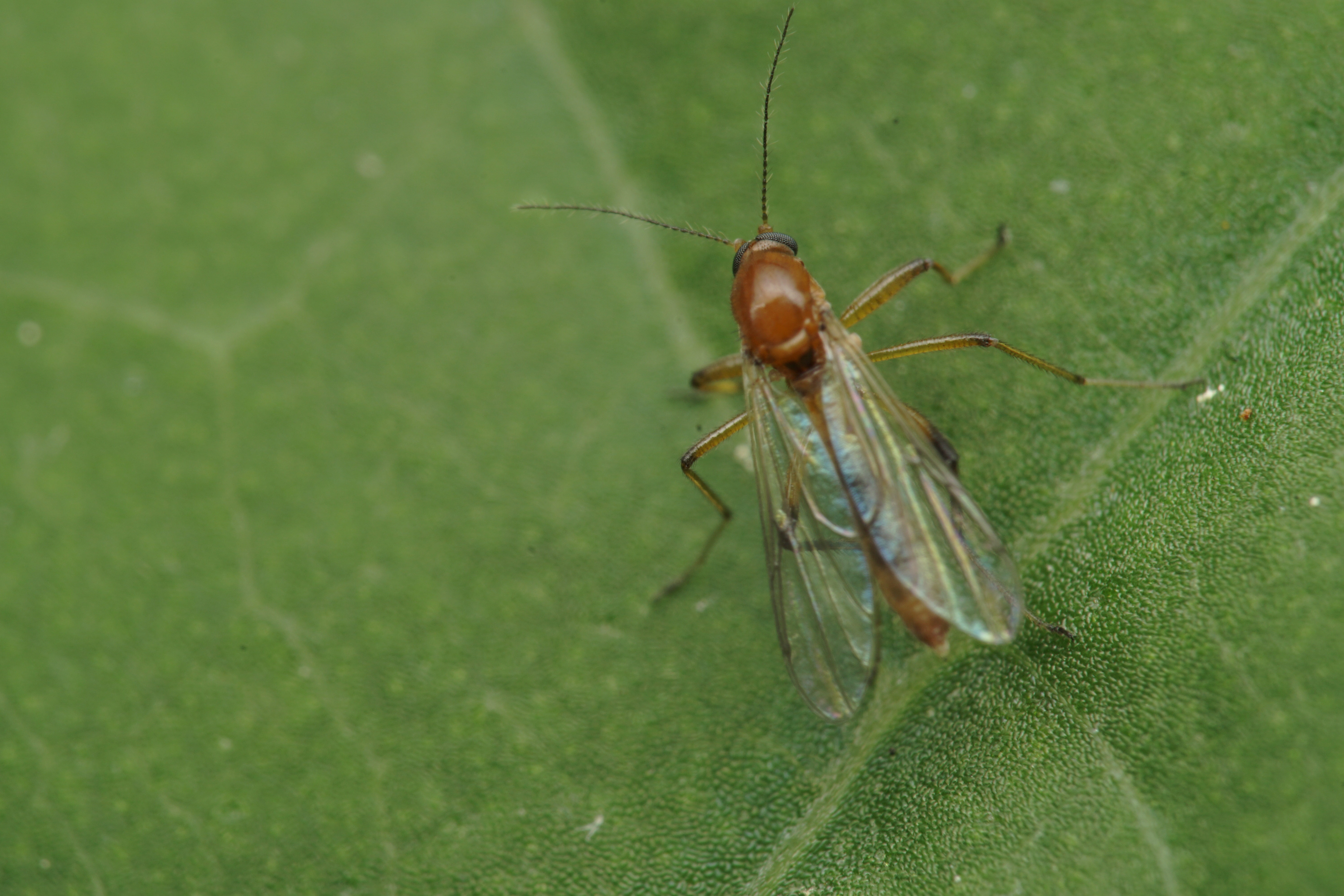
Maybe Xylophagidae? If this turns out to be Rachicerus genus, it would be a state first for Massachusetts.
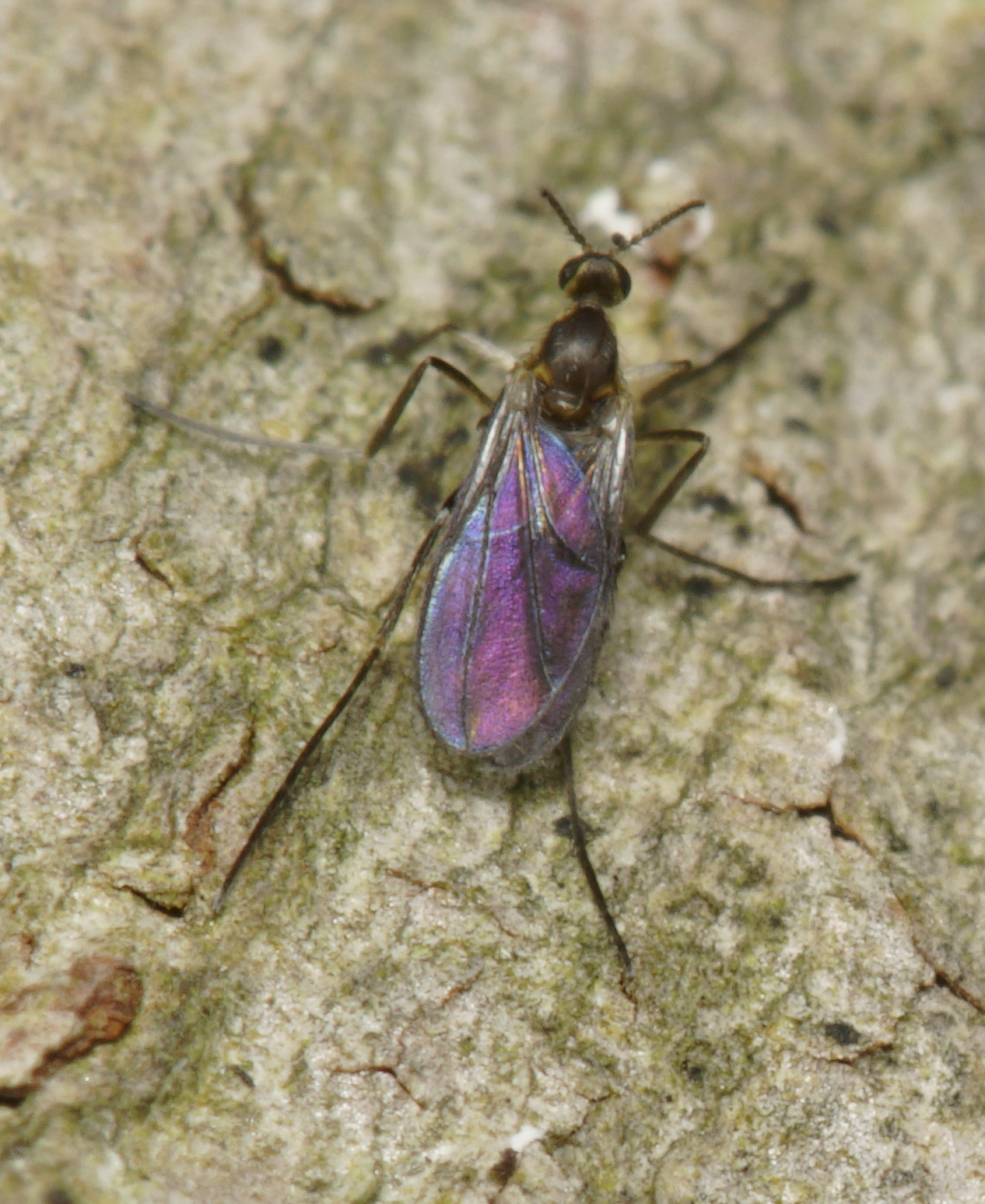
Some sort of Trichoptera (caddisfly). Best guess, something like Chimarra? There aren’t that many reports of adult Chimarra in Massachusetts.








































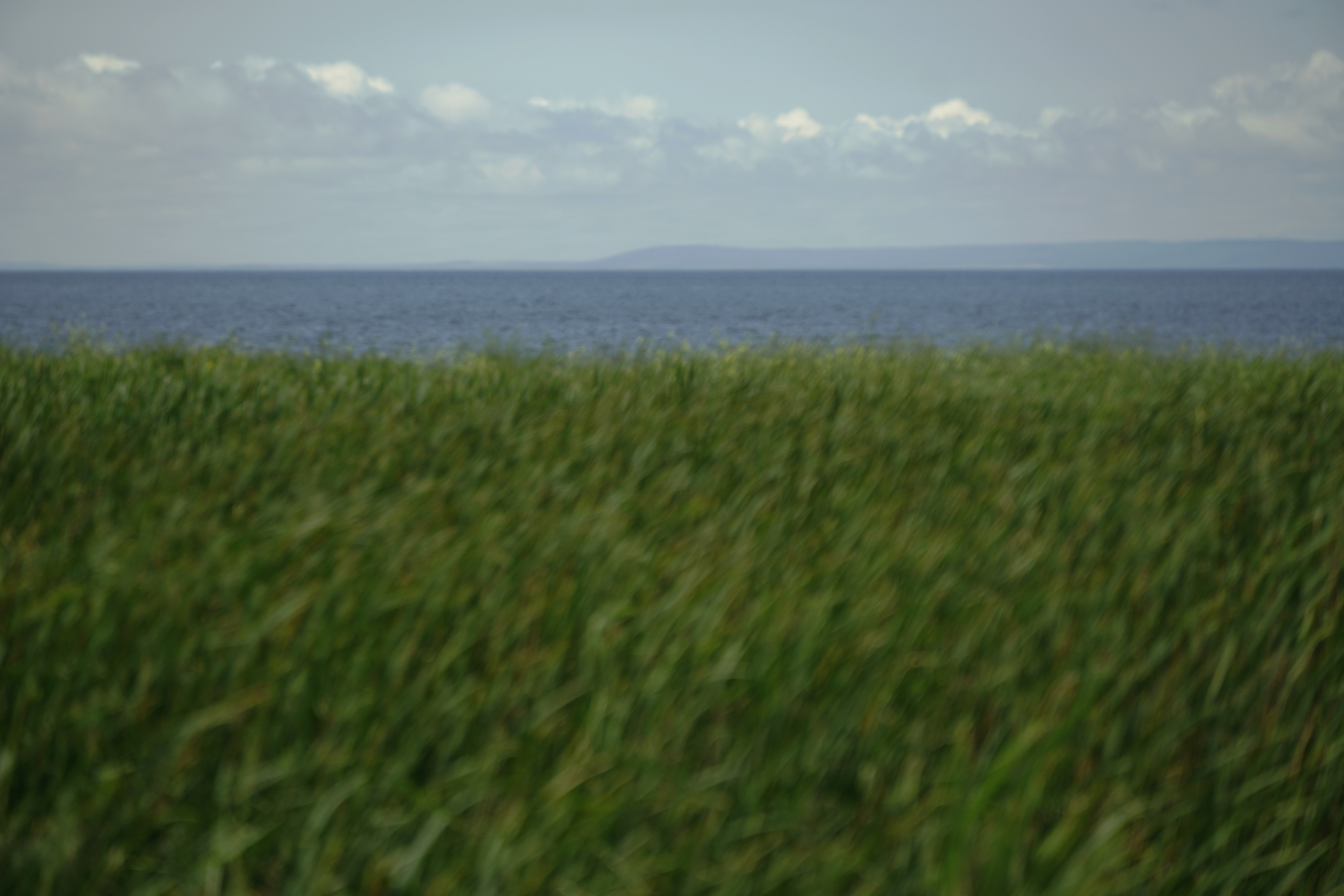
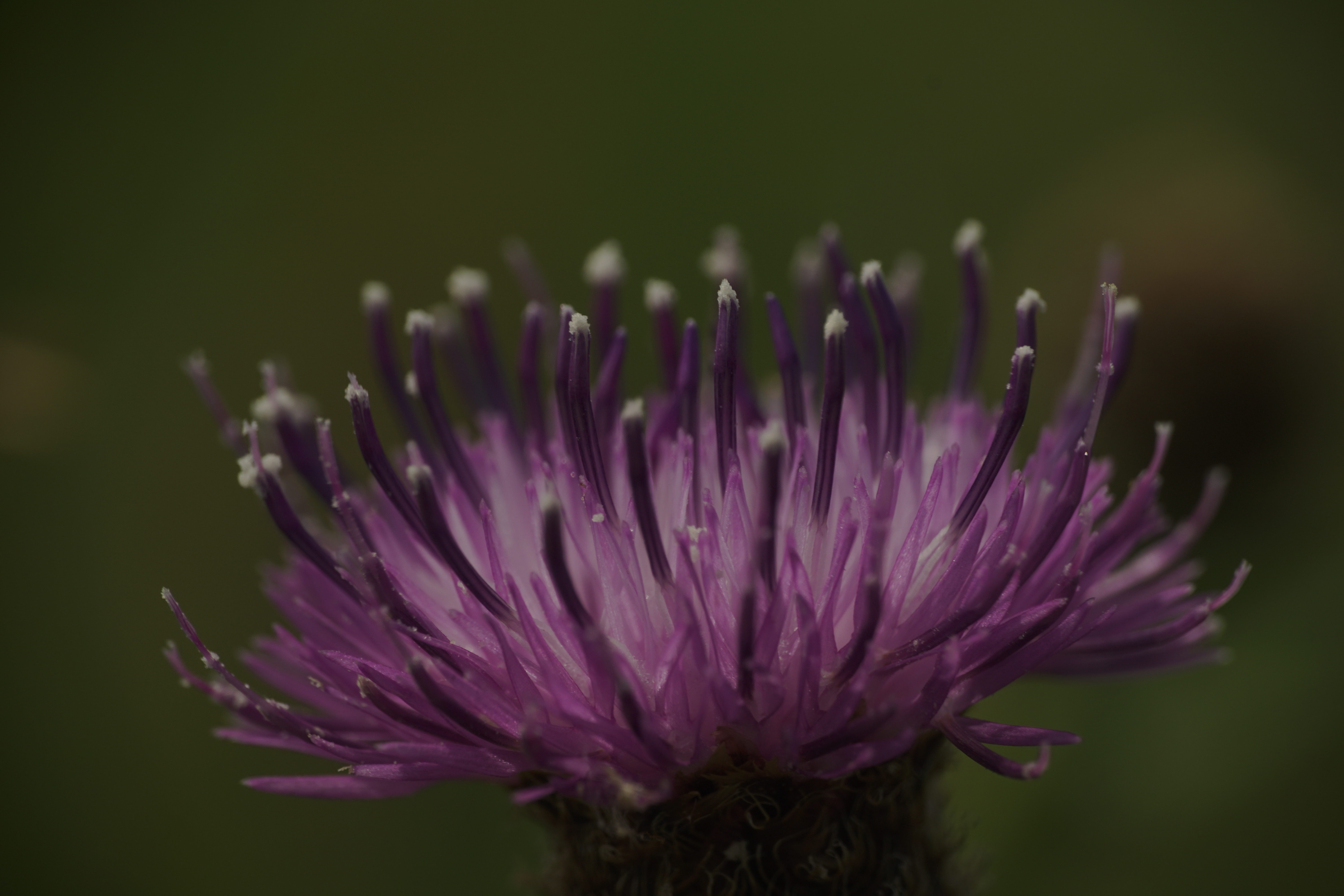

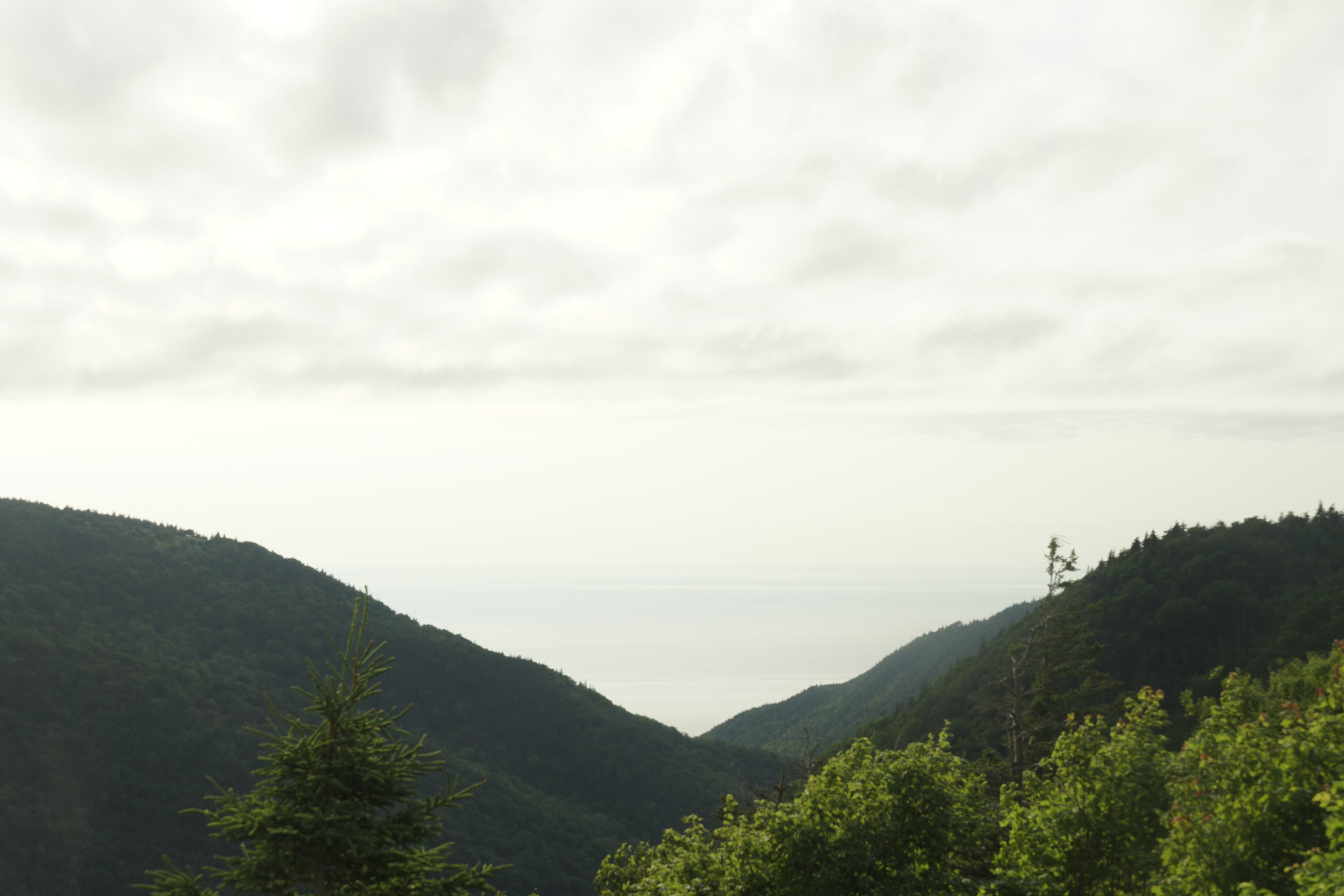

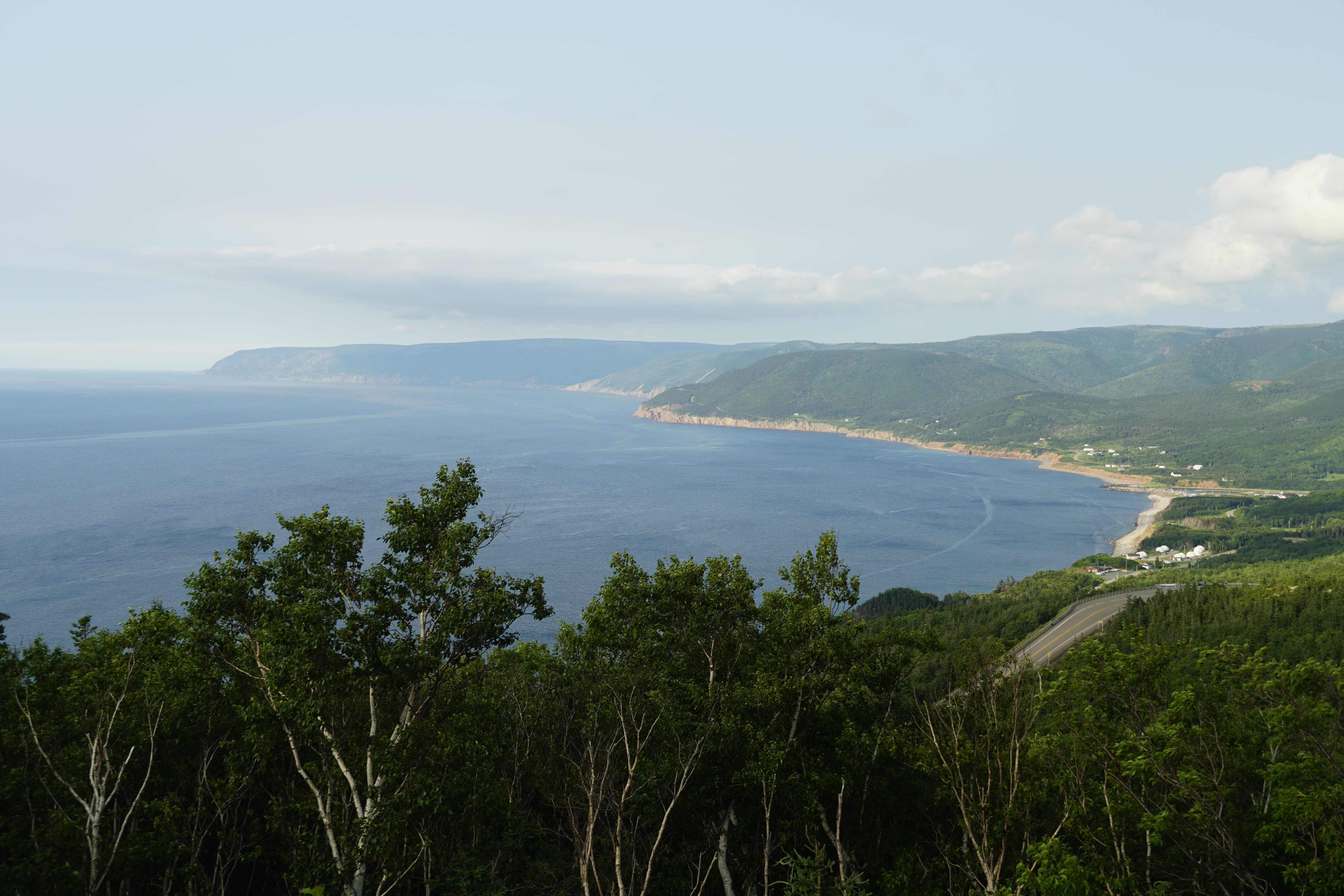

















































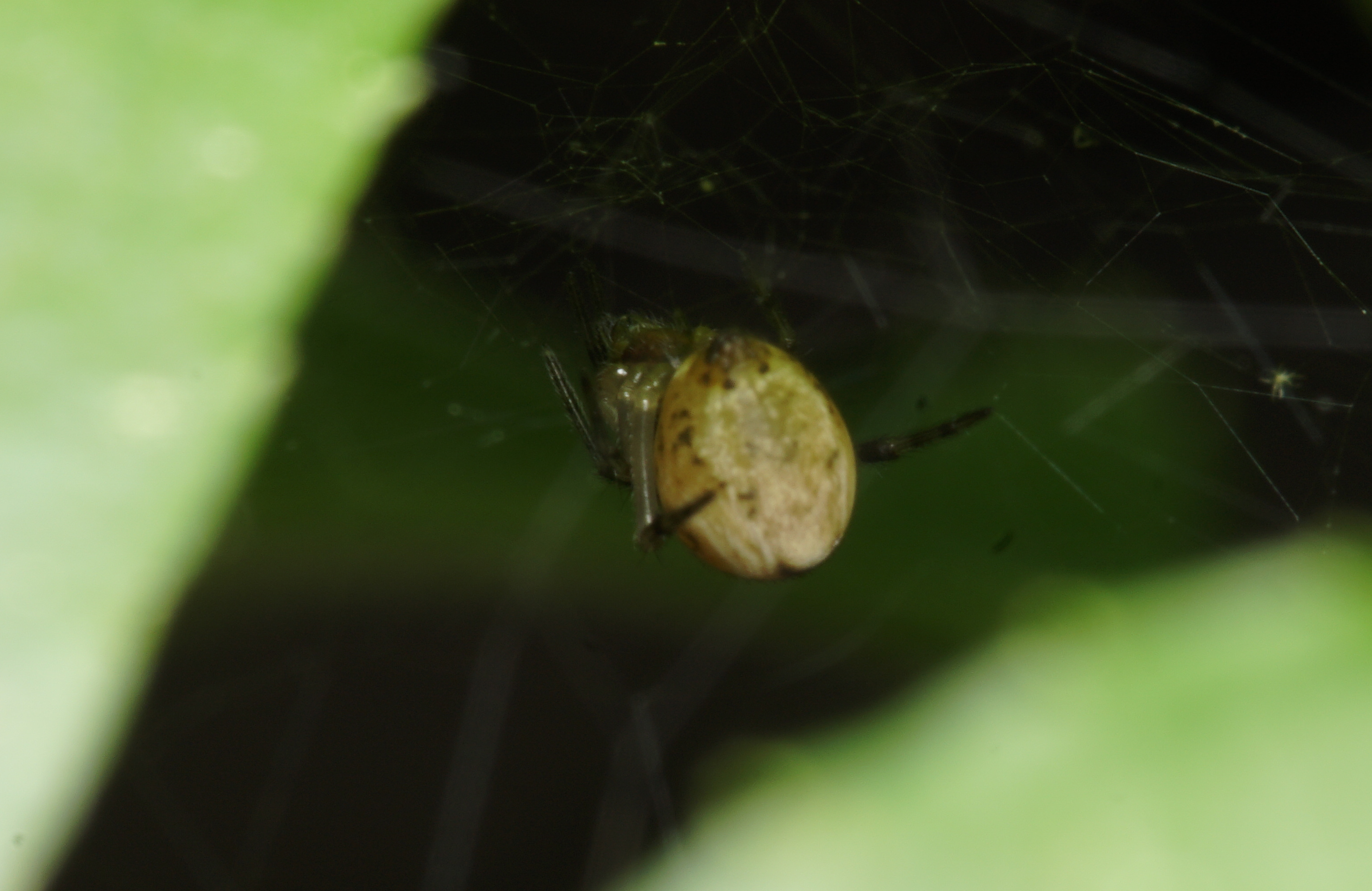
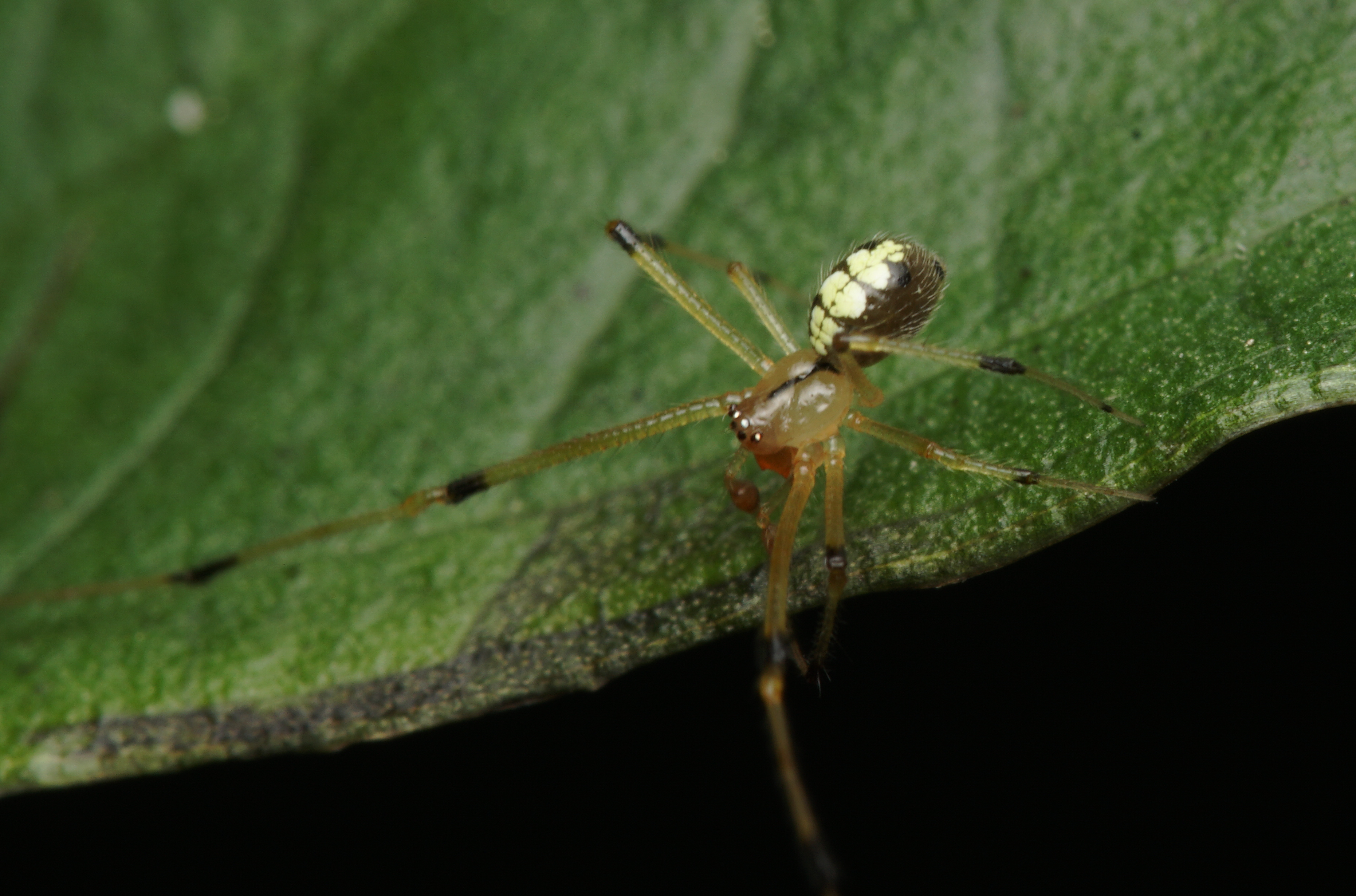


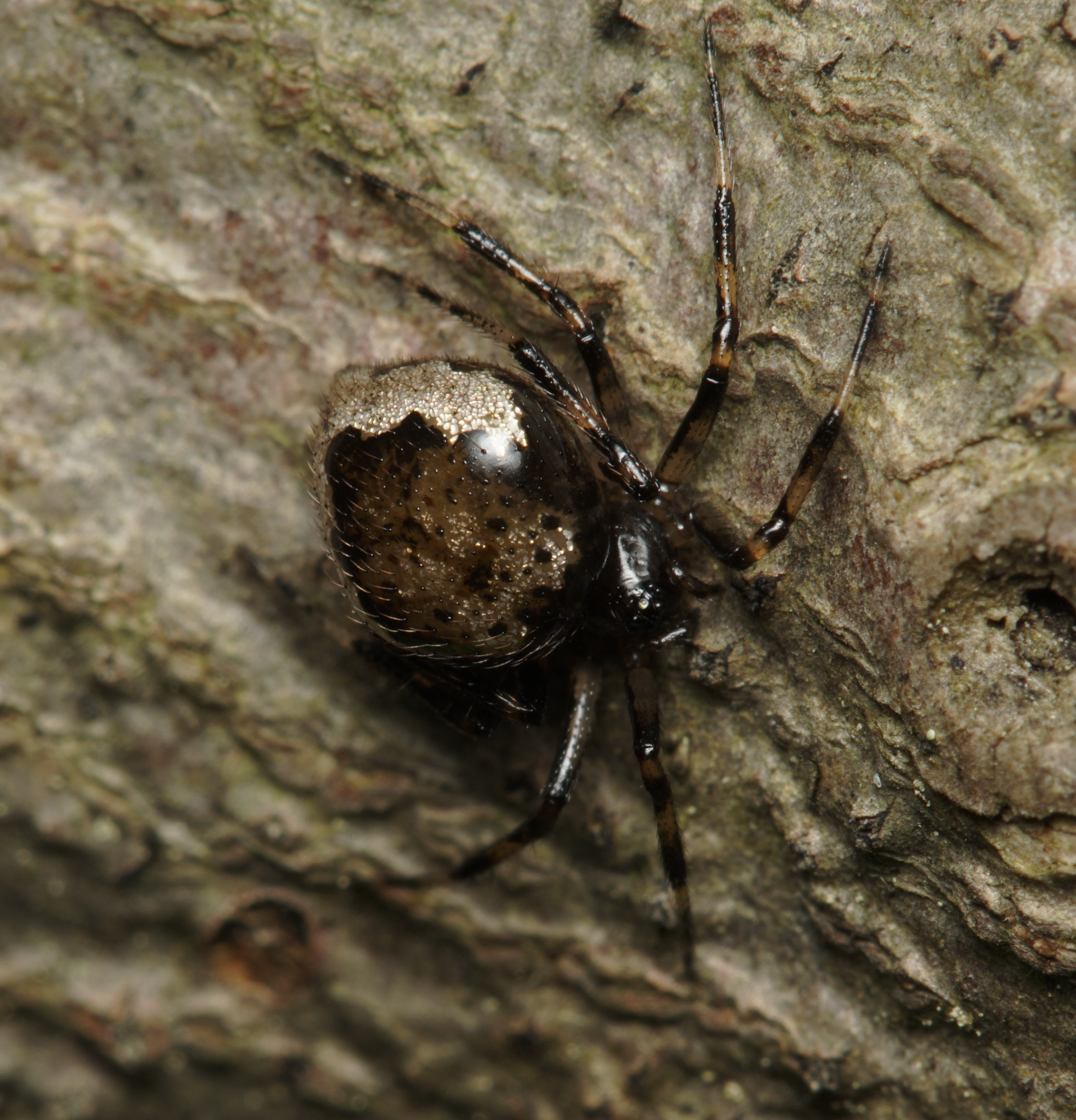
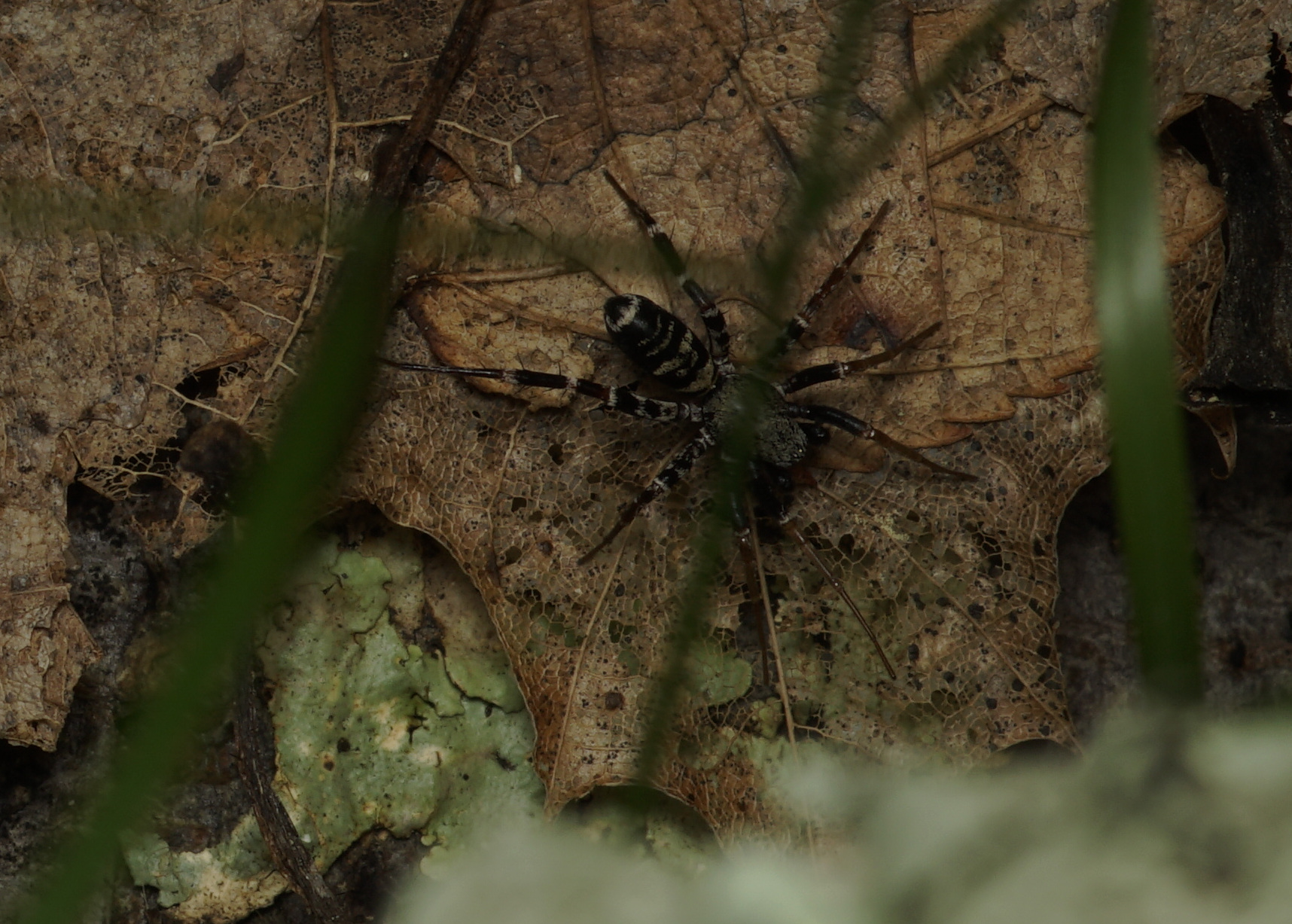









 a little wild