Two weeks at Keuka Lake in upstate New York! Pretty much all the photos were taken on the property of the house we stayed in, itself. Some woods, some leafy plants, some flowers.
Hemiptera
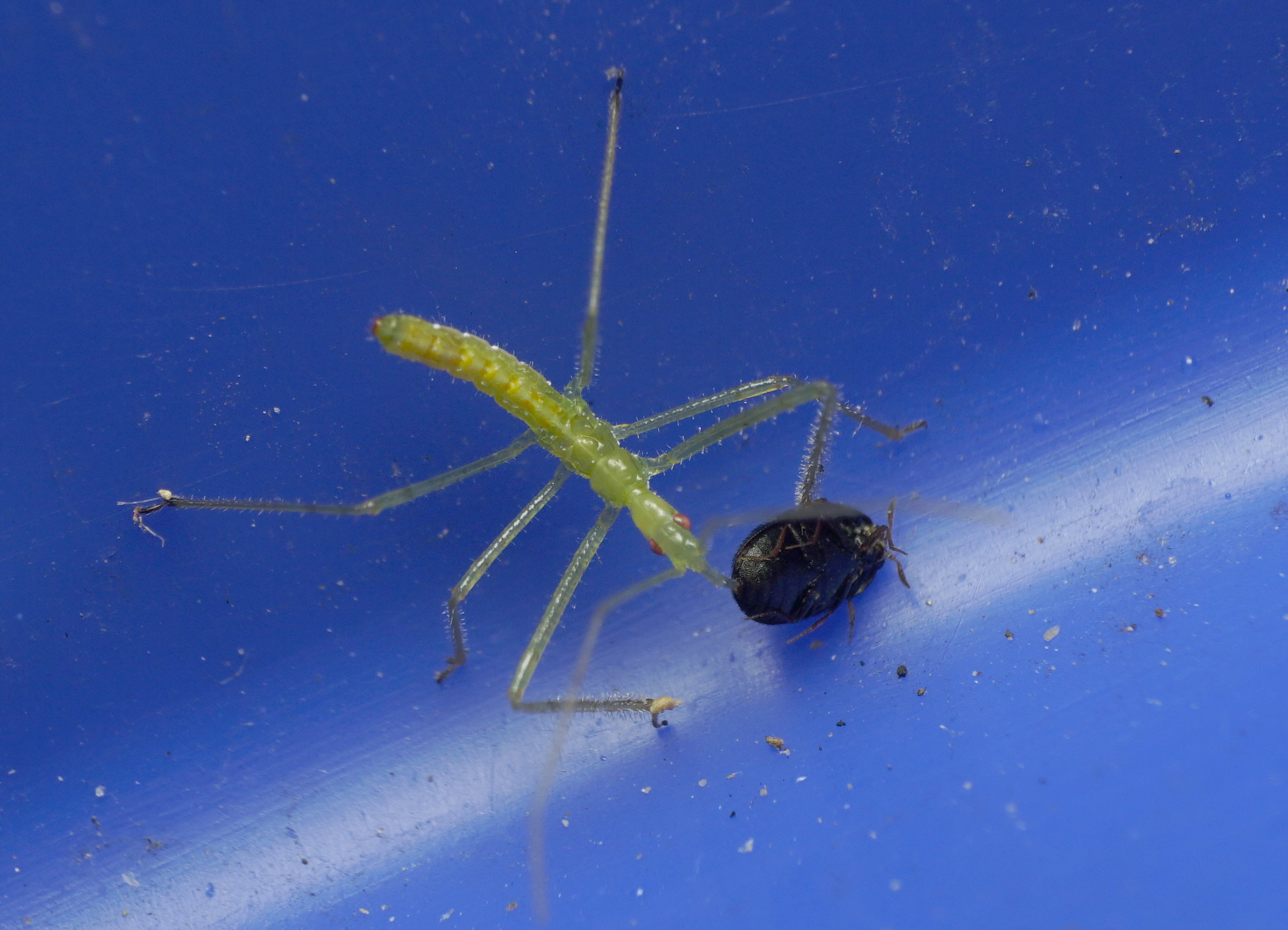
Beautiful Reduviidae nymph, probably Zelus luridus, and prey.
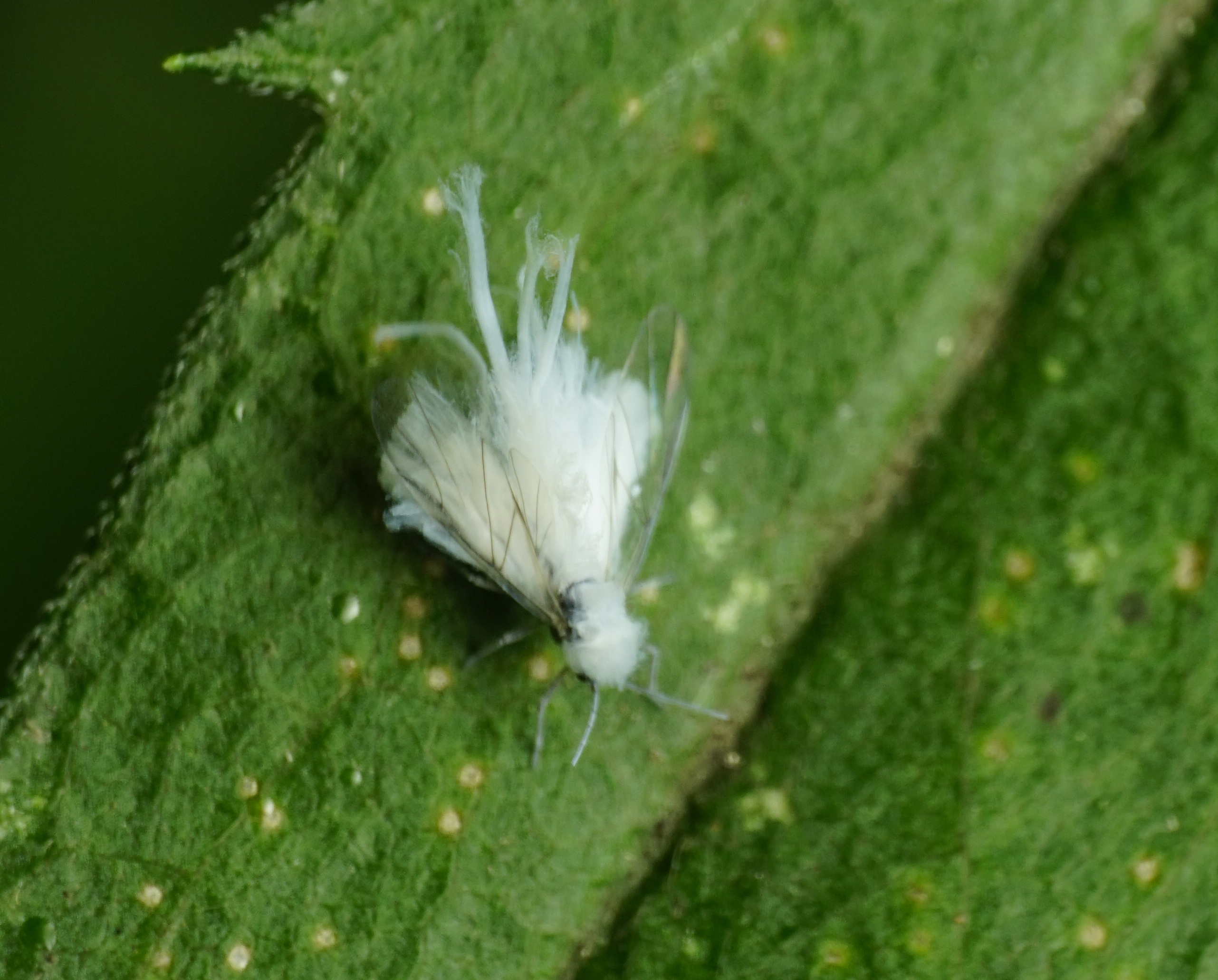
Woolly aphid, Eriosomatinae, perhaps Eriosoma?
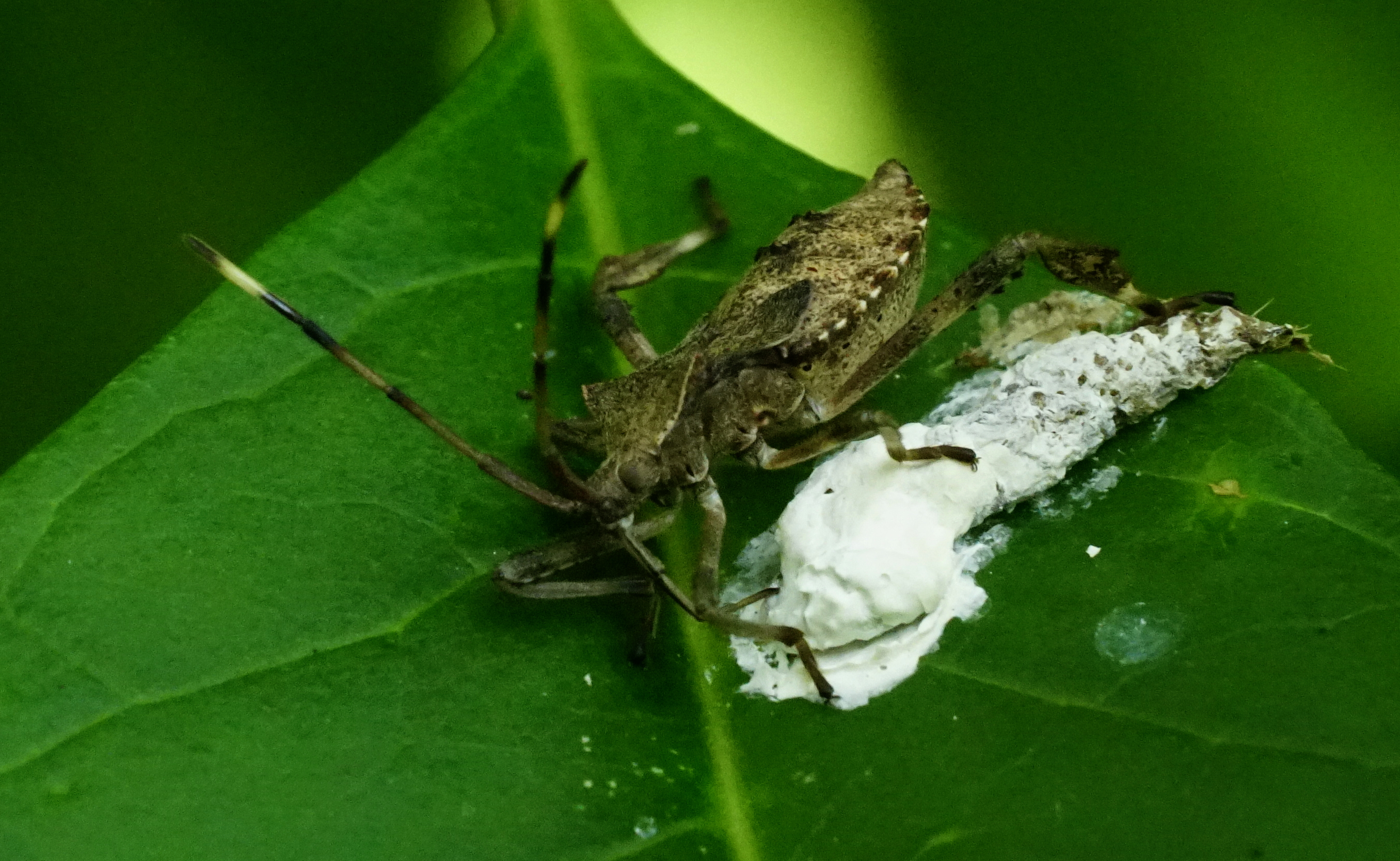
Acanthocephala:
Reduviidae, Phymata pennsylvanicus. And the beetle is Typocerus velutinus.
This has to be the world’s laziest ambush bug, and the world’s most oblivious beetle. They stood there in this proximity for at least ten minutes.
Coleoptera
Is it in Carabidae? I don’t see a match.
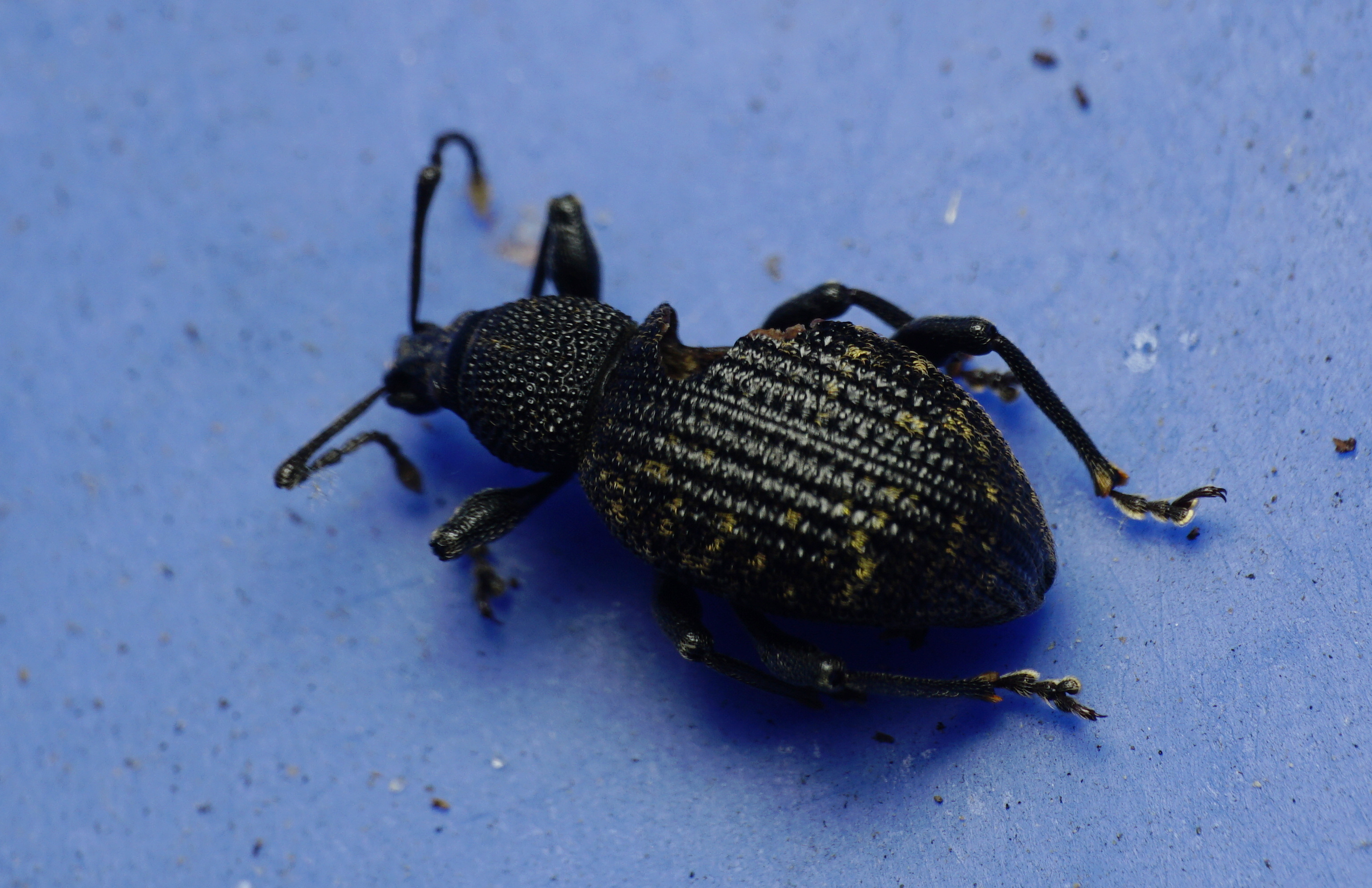
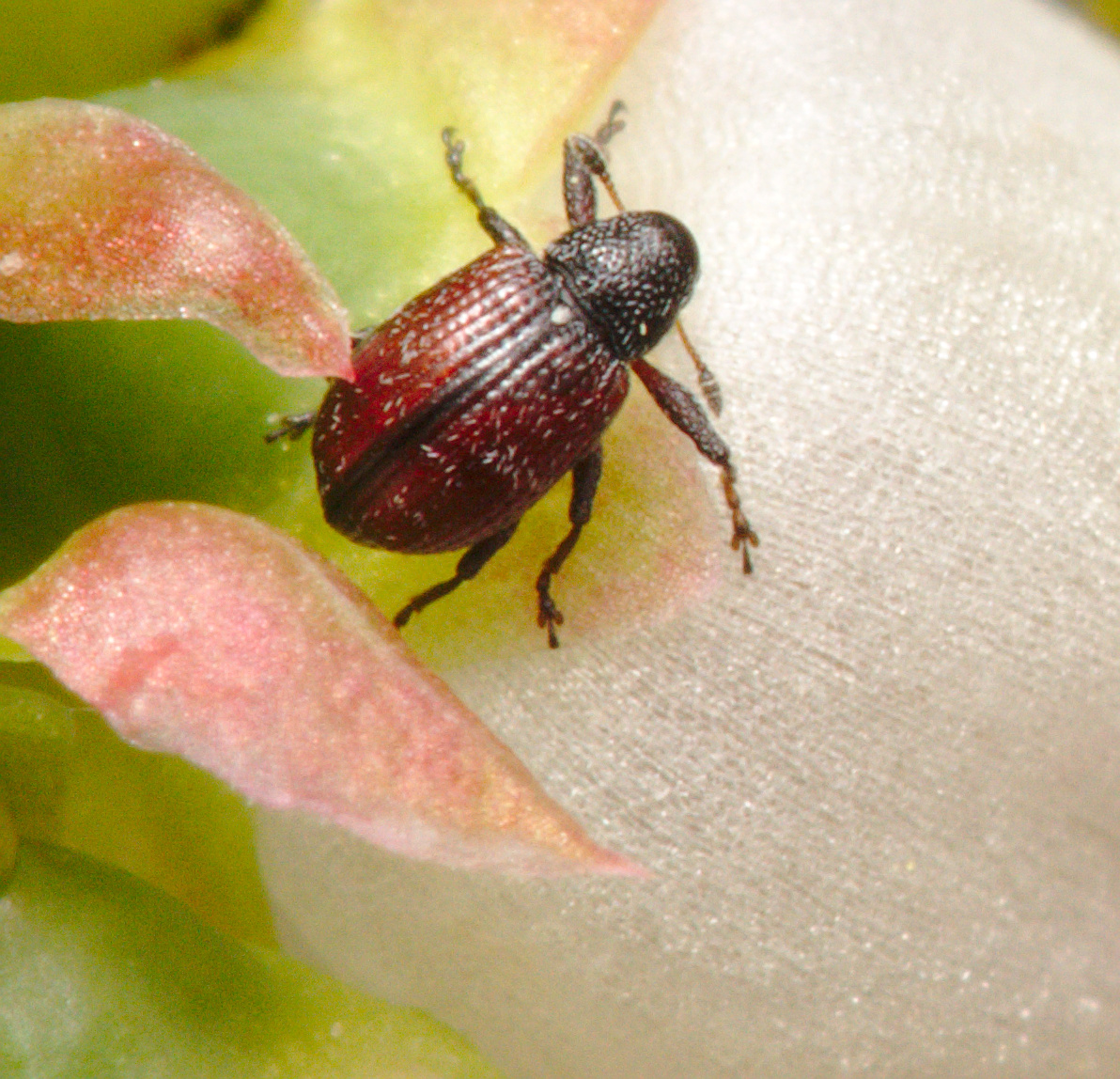
Is it a Curculionid? The size of the spots on the pronotum don’t seem to match. The antenna is unusual for Curculionidae, but seems to match that best. Cryptorhynchinae? Entiminae?
Maybe something like Otiorhynchus sulcatus? That actually looks perfect, I’m happy with that ID.
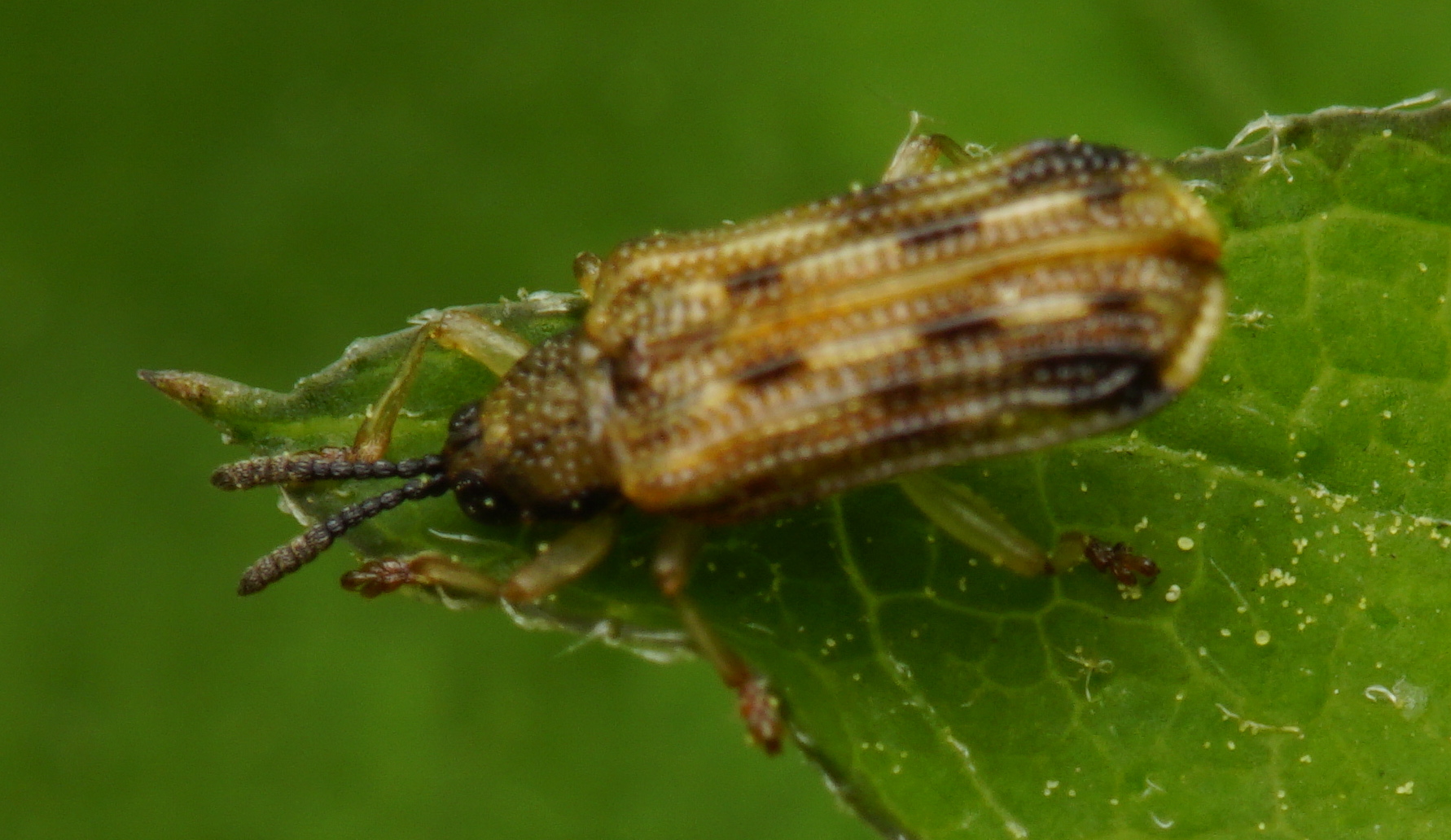
Sumitrosis inaequalis
Chrysomelidae, Galerucinae, Trirhabda. Not sure what species.
Cleridae, Enoclerus nigripes.
Diptera
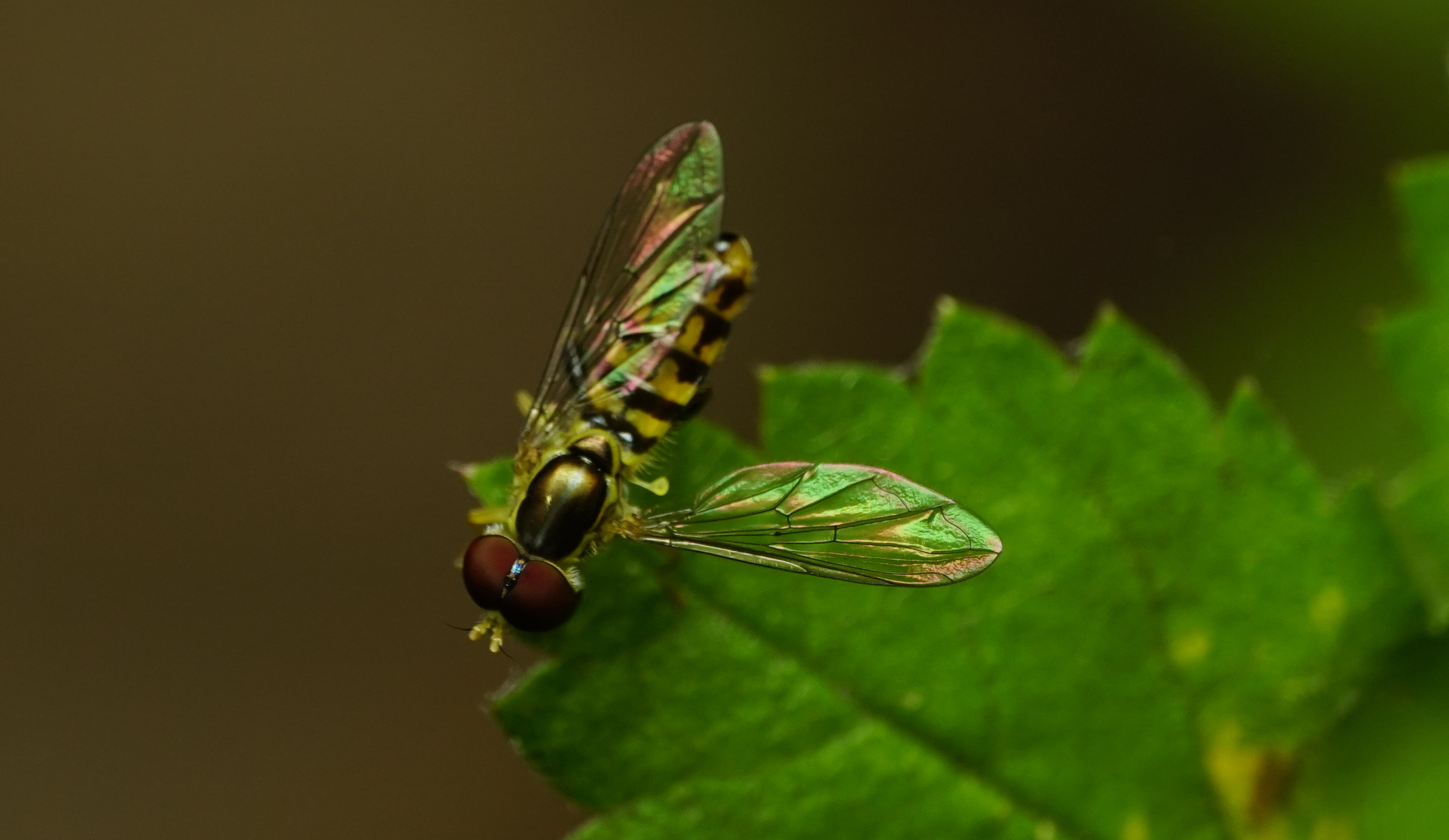
Syrphidae, Toxomerus geminatus.
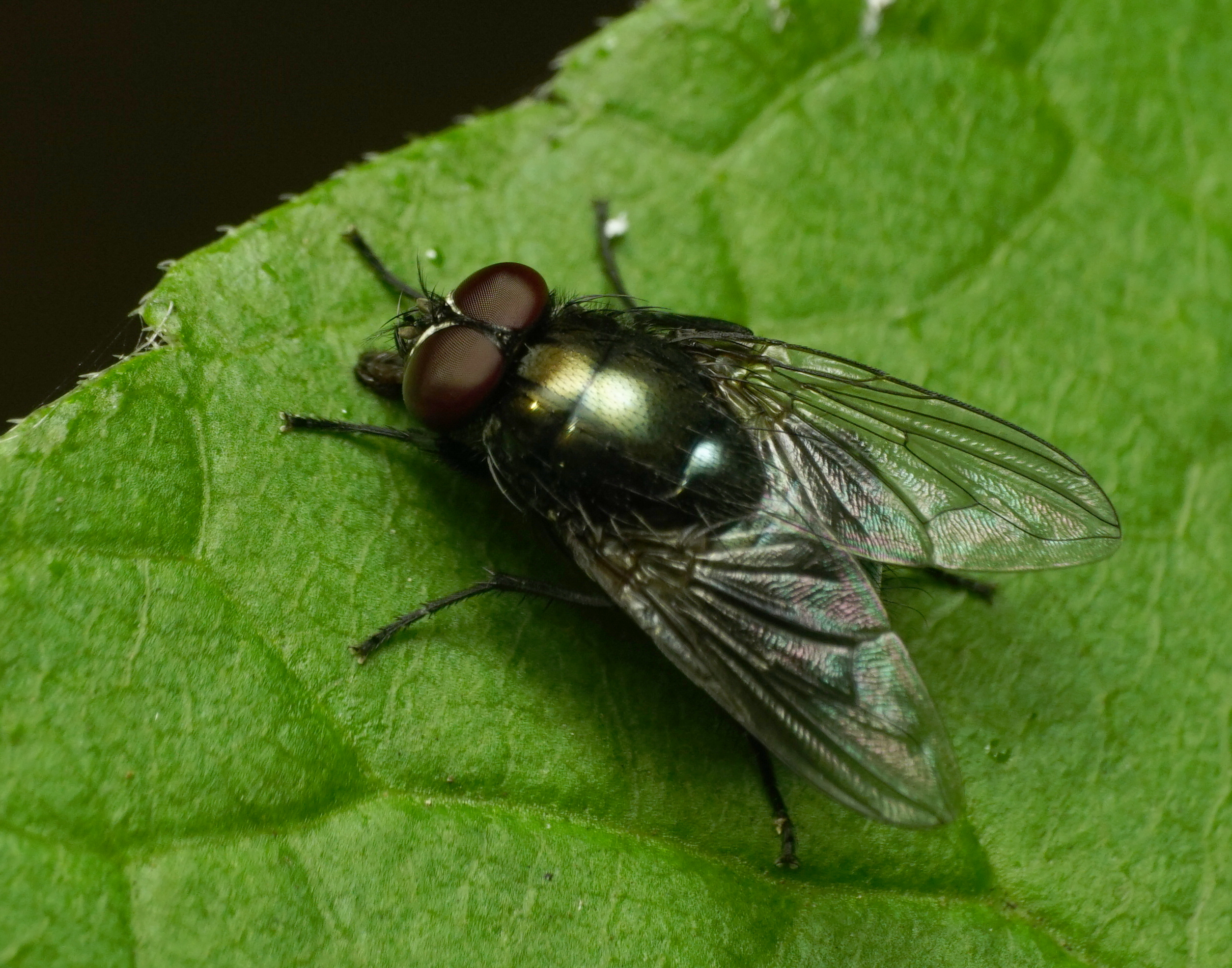
Calliphoridae? Wing venation details would be useful, note the straight-ish vein. Maybe Lucilia sp.? I really know so little about Diptera.
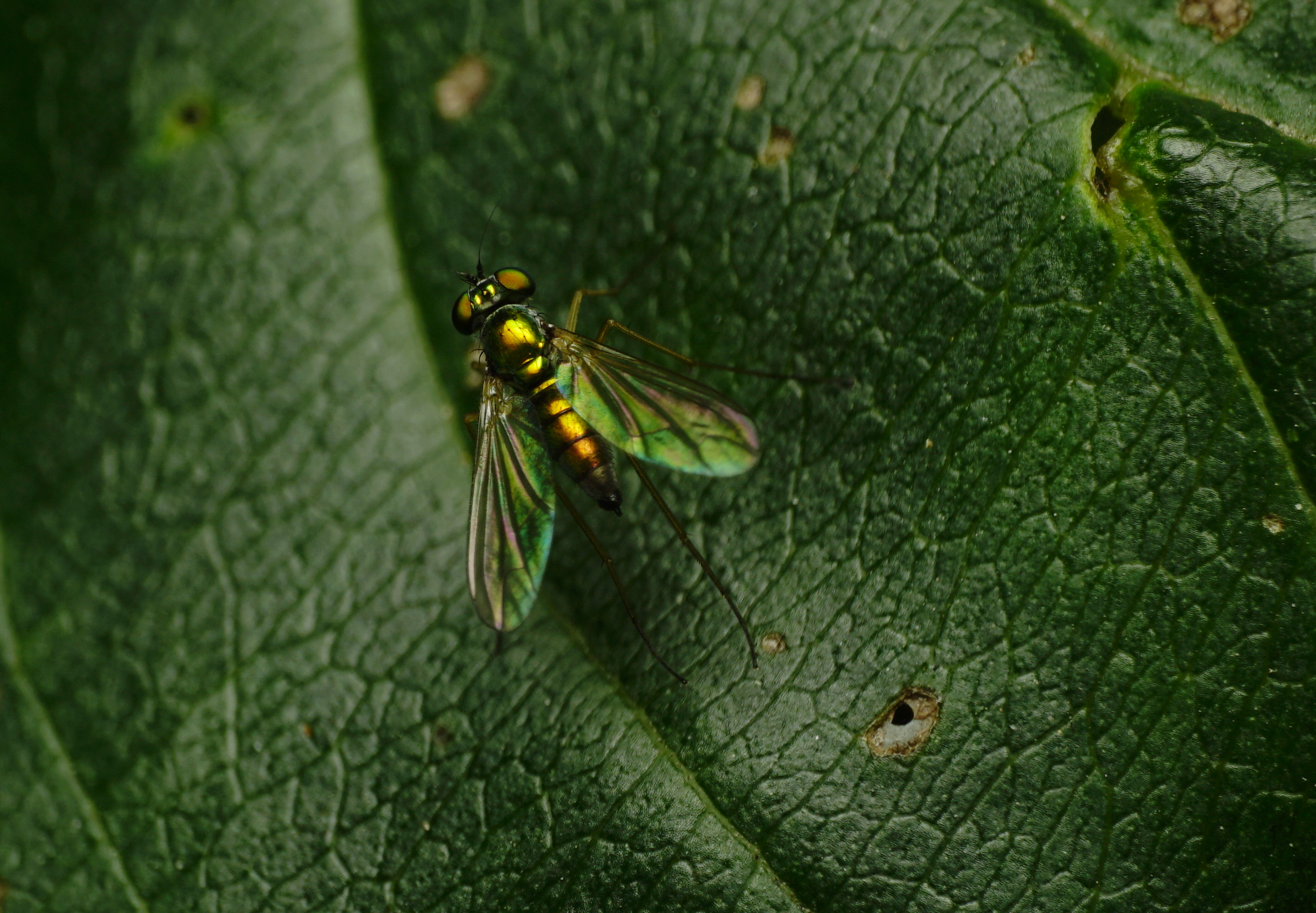
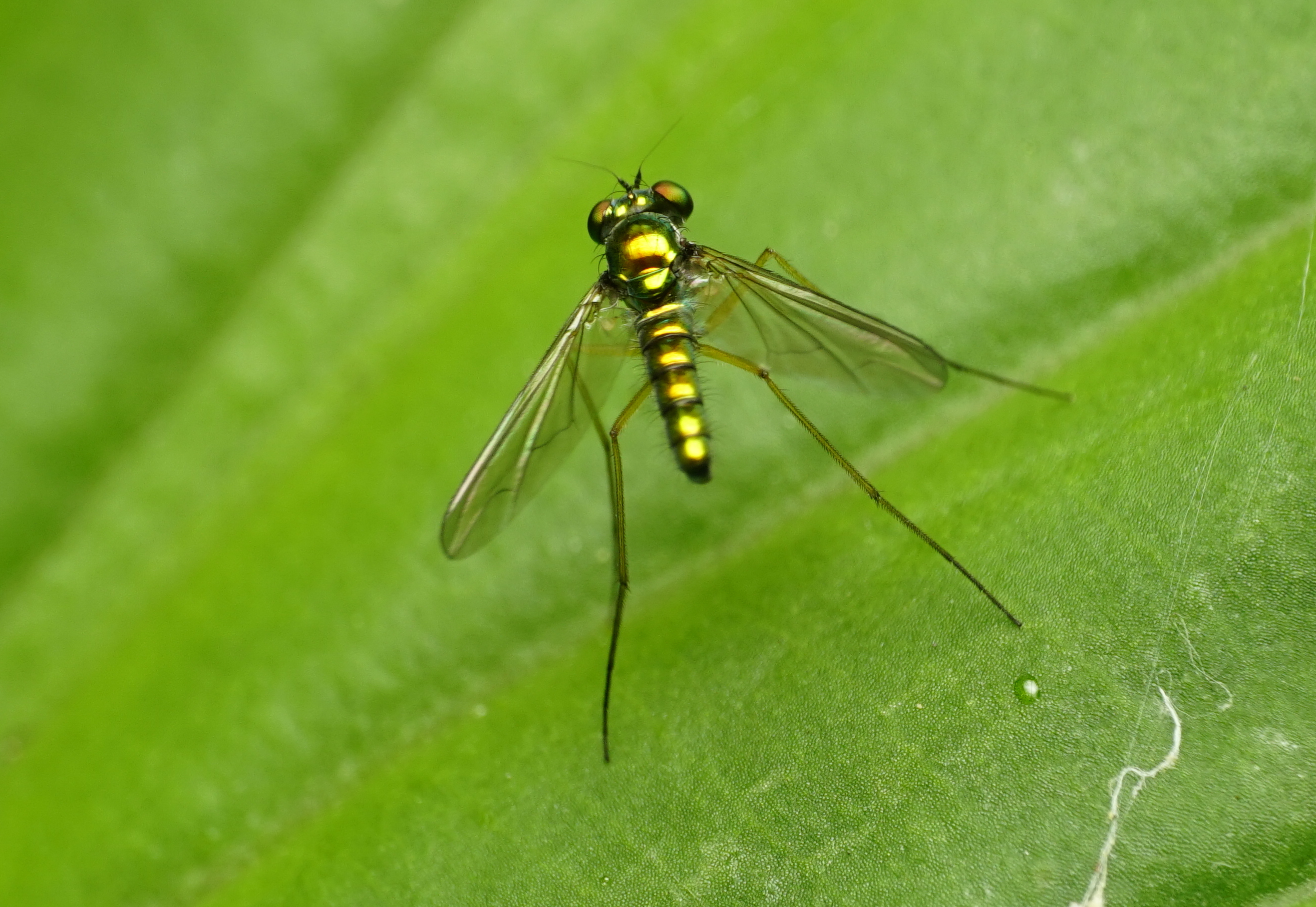
Dolichopodidae. Condylostylus is the most usual genus to classify them into.
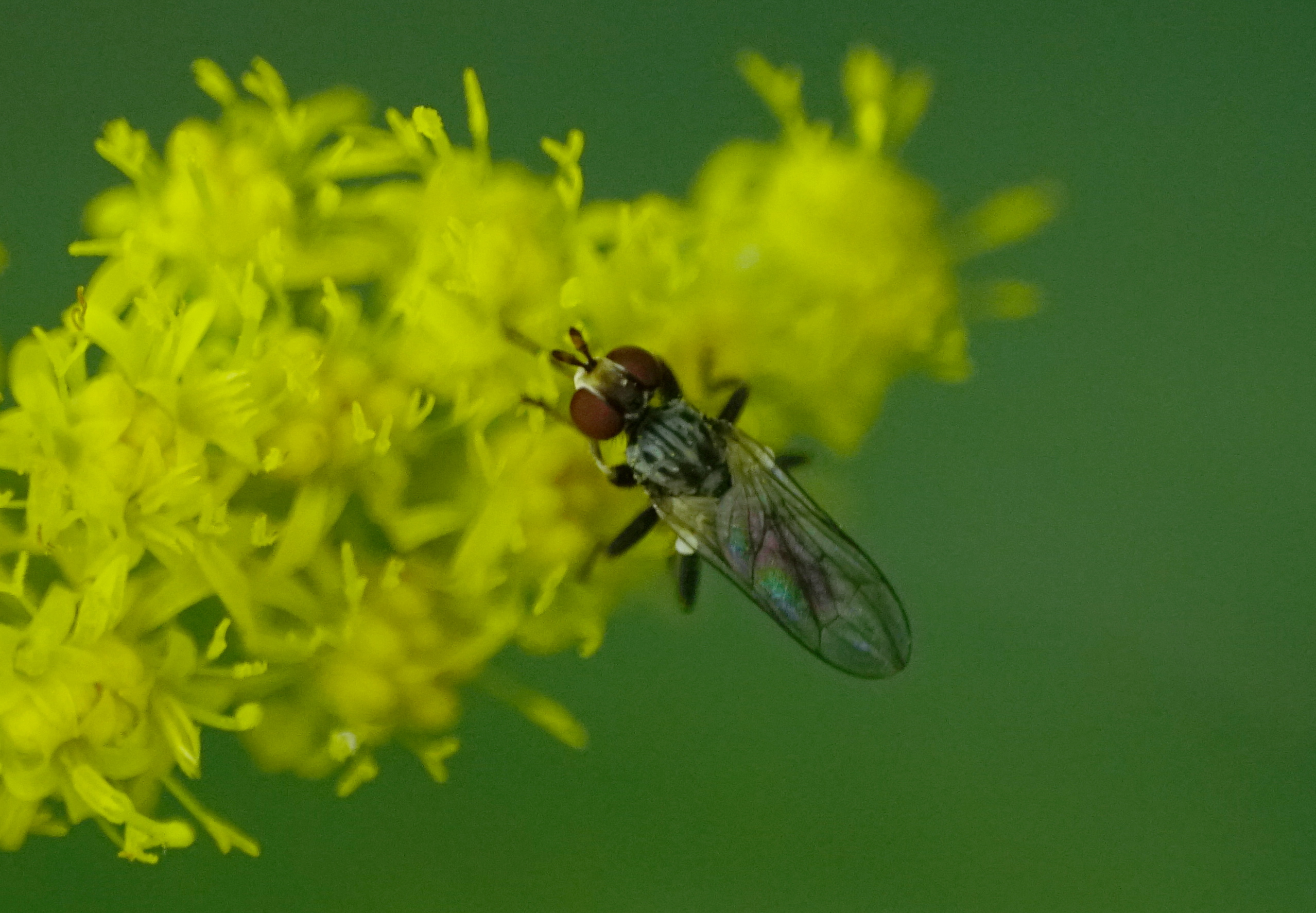
I’m hesitant to even guess Anthyomyiidae, because it’s such a long shot and a I’m not really basing it on anything concrete.
Love these Condylostylus, assuming that’s the correct Dolichopodidae.
Not a clue.
Dolichopodidae.
Hymenoptera
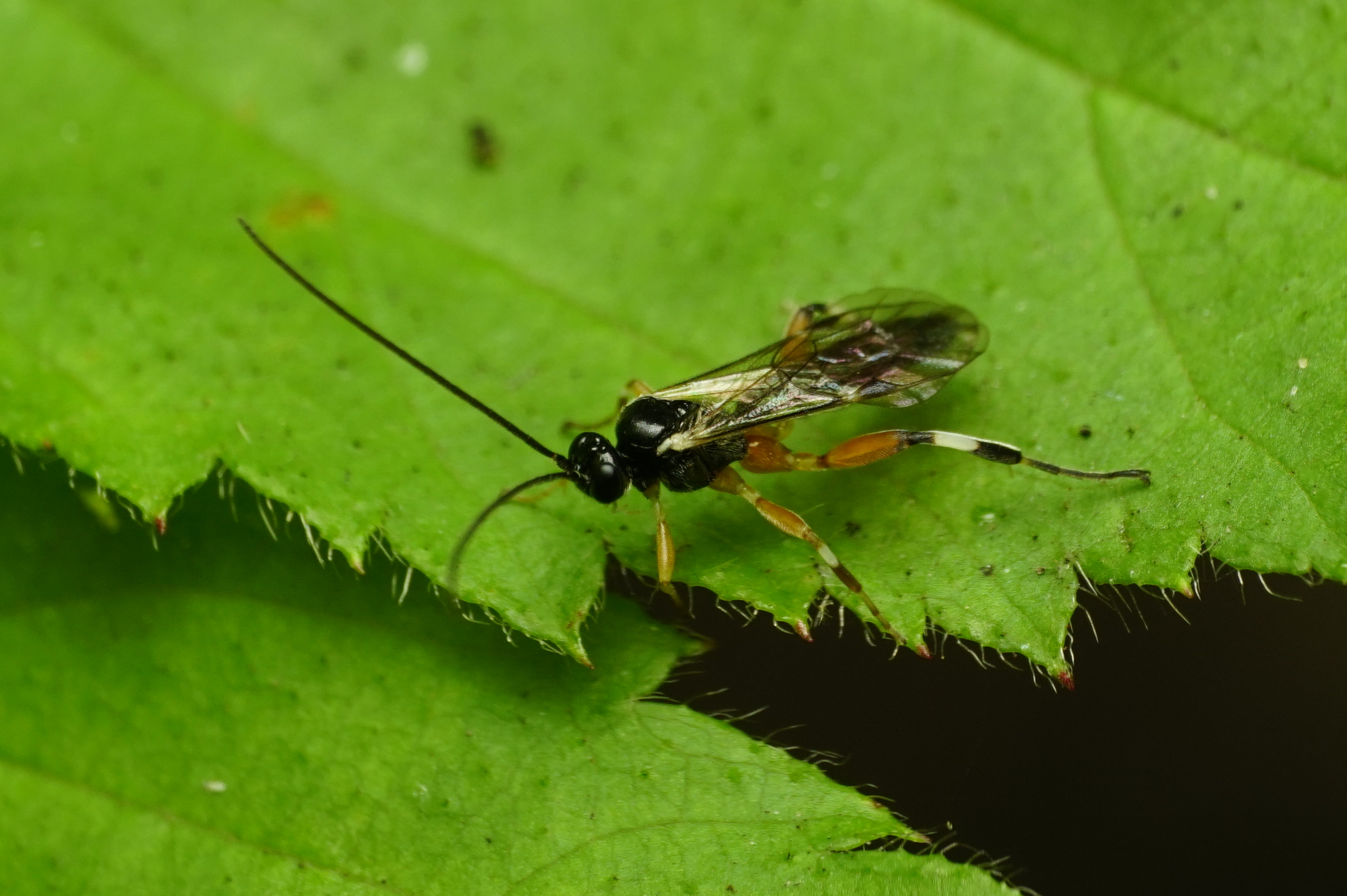
Ichneumonidae? There are some Pimplinae that look a bit like this.
Encyrtidae, but maybe Eupelmidae instead?
Polistes fuscatus, in Vespidae.
Trypoxylon. Distinguished from Pemphredoninae by the little notch protruding into the eye at the middle level.
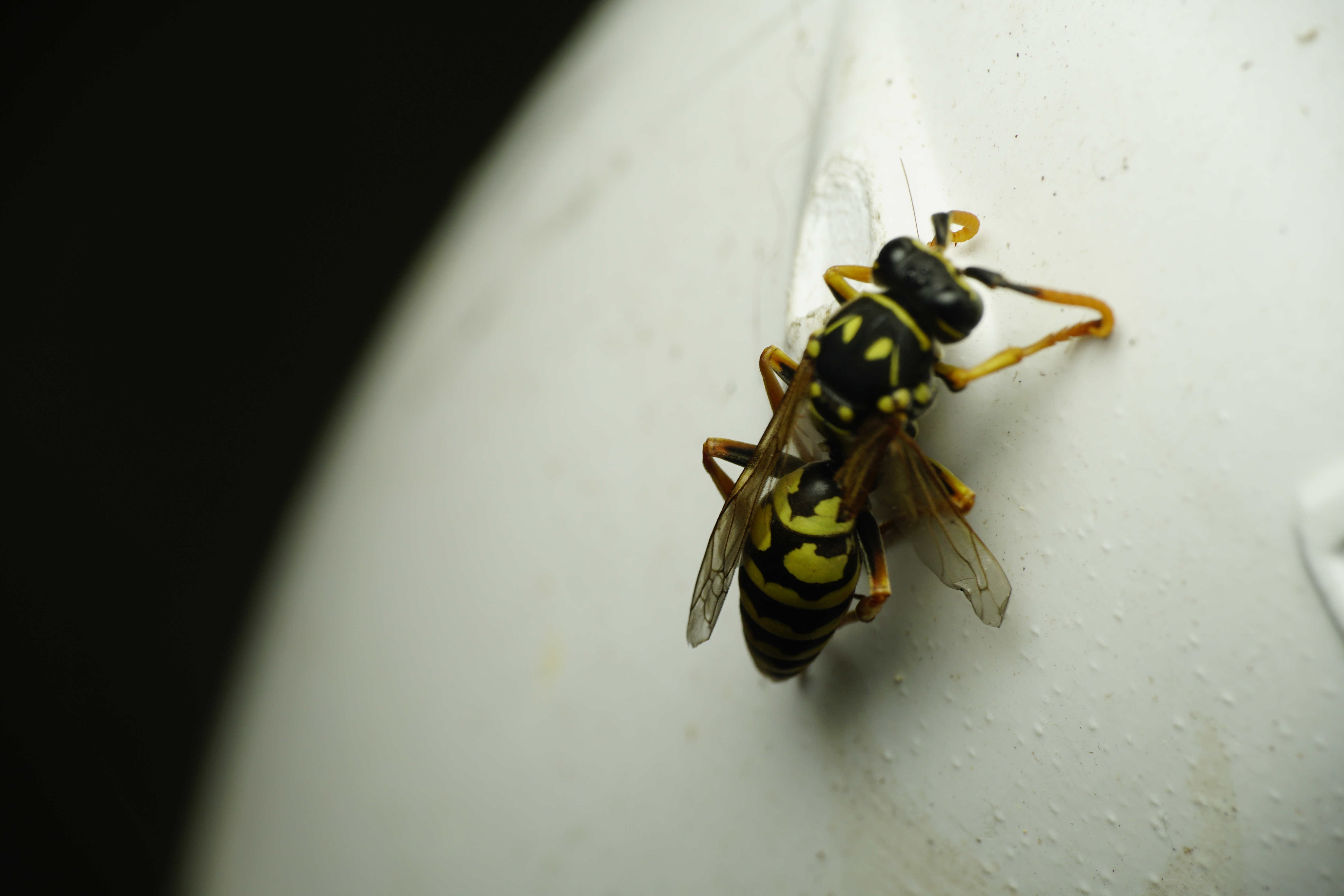
Vespidae. Polistes dominula.
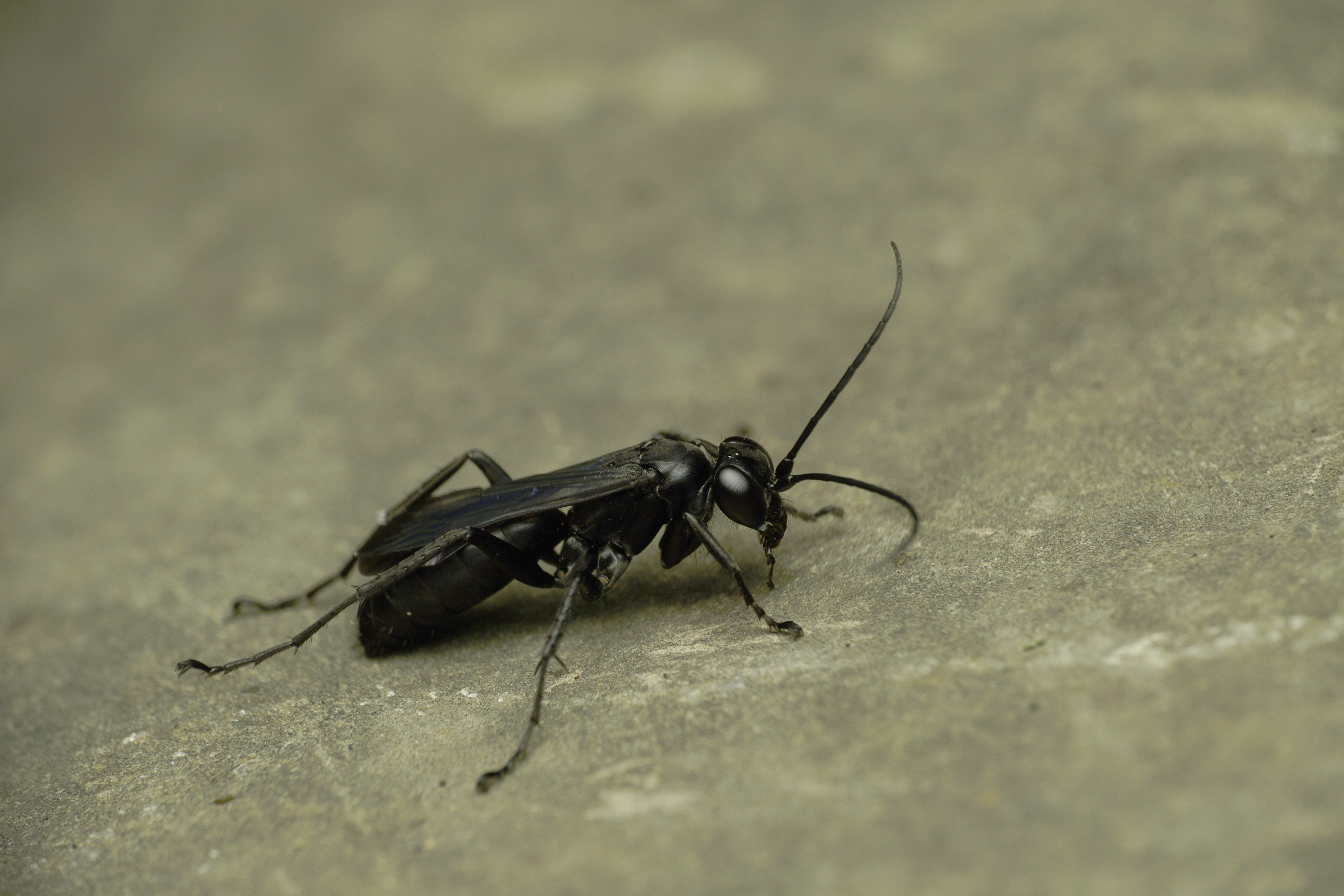
Pompilidae? Priocnemis? Auplopos? Both Priocnemis and Auplopus have been suggested by people who know more than I do.
Further Pimplinae?
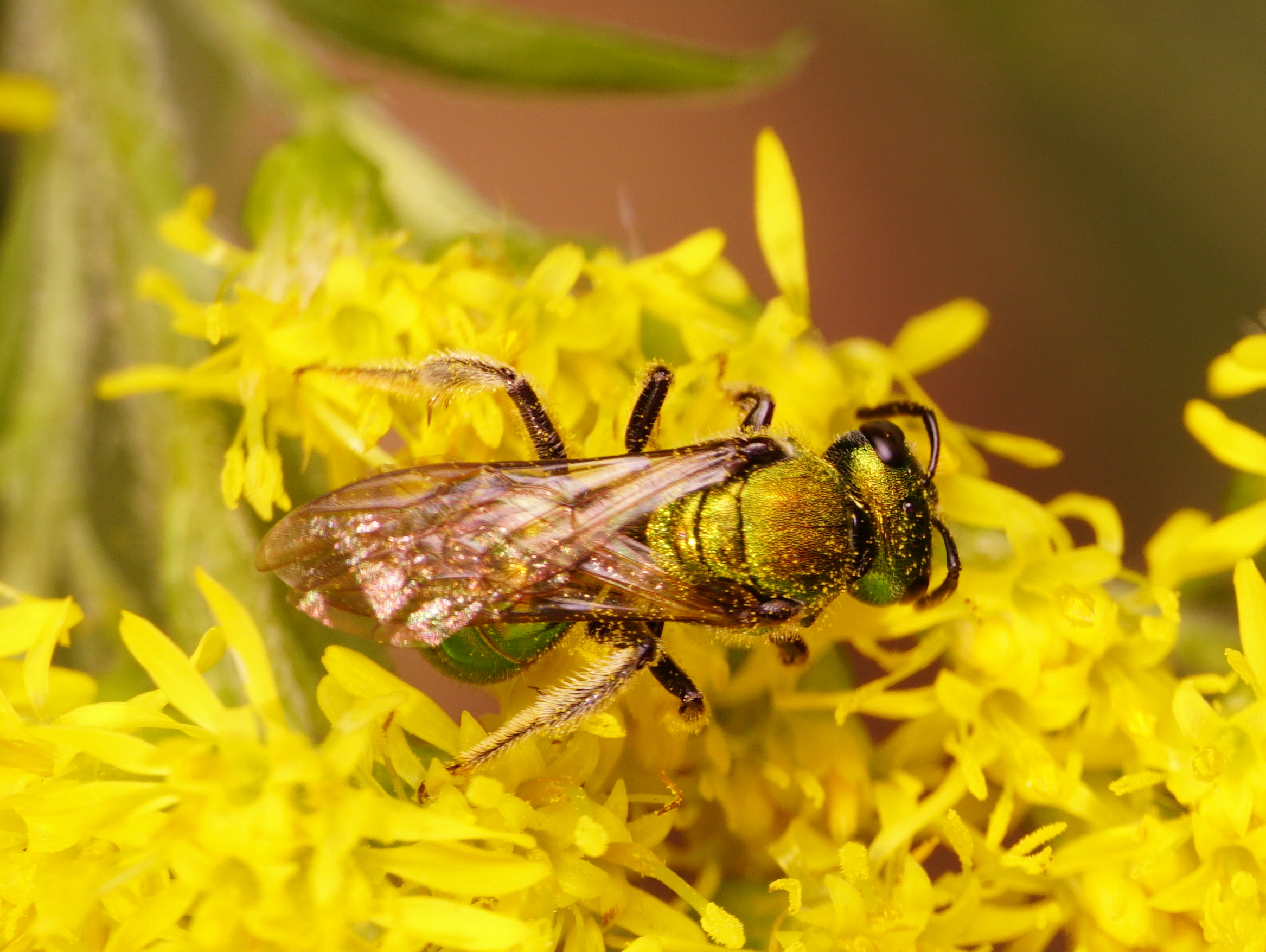
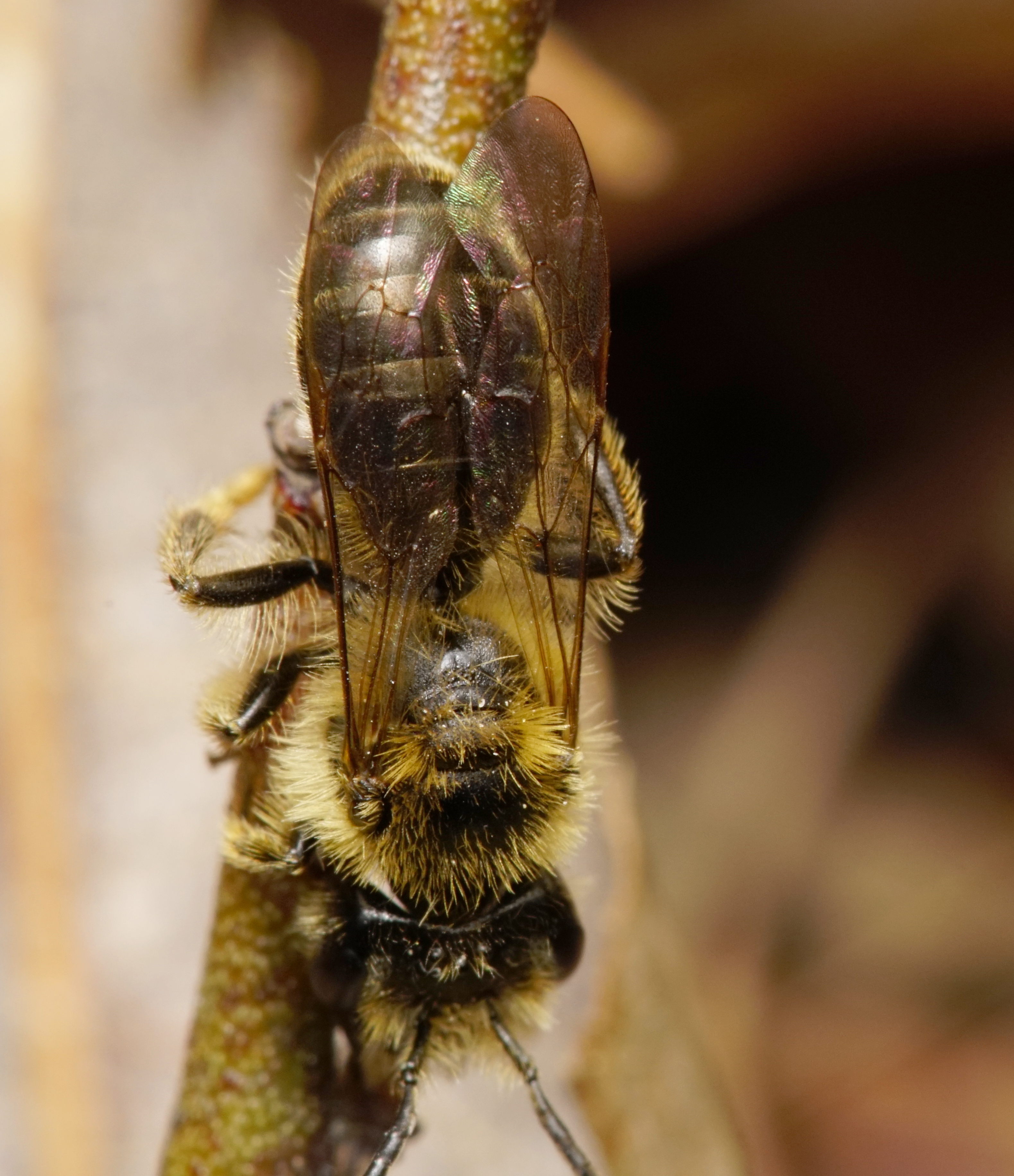
Halictidae. Augochlora pura?
Halictidae. Looks like Halictus.
Carpenter bee, Ceratina? I would guess subgenus Zadontomerus.
Augochlora pura.
Perhaps Apoidea –> Crabronidae, such as Crabronina –> Ectemnius or Crabro? Alternatively, Crabronidae –> Philanthus (beewolf)? I think Ectemnius or Crabro or something similar are the best match.
Distinguishing Crabro from similar genera (Crossecerus, Ectemnius, and Lestica)(3): Recurrent vein ending before distal third of submarginal cell Ocelli forming a low triangle Lacking orbital foveae (sharp groove along inner eye margin) Males front tibiae distinctly expanded
_________________________________
Distinguishing Ectemnius from similar genera (Crabro, Crossecerus, and Lestica)(3): Recurrent vein ending in distal third of submarginal cell Ocelli forming a low triangle Lacking orbital foveae (sharp groove along inner eye margin) Upper frons evenly punctate
Identified as Cerceris in Solitary Wasps Forum, Facebook
Cerceris in Crabronidae.
Spiders
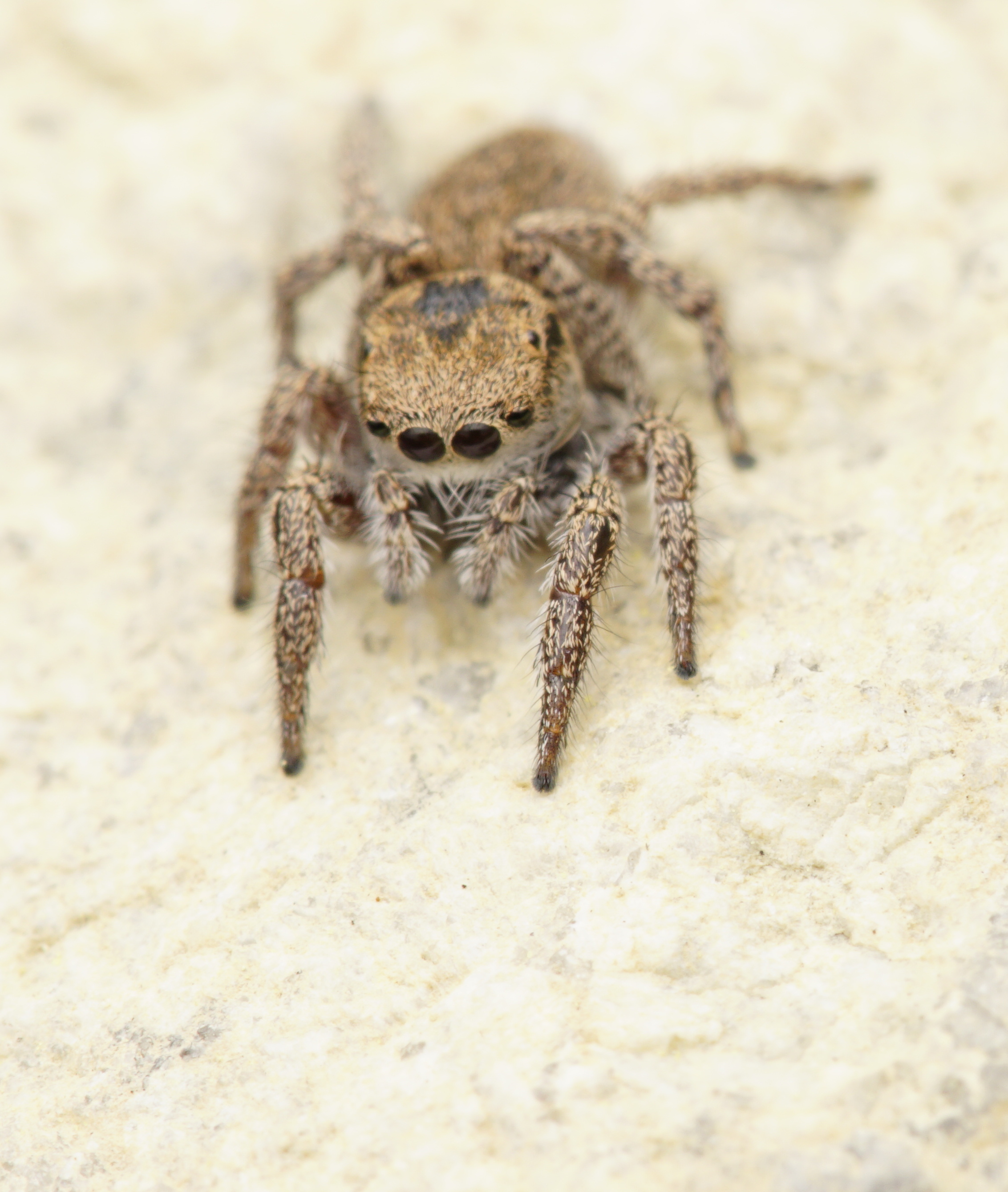
Platycryptus undatus, tan jumping spider, Salticidae.
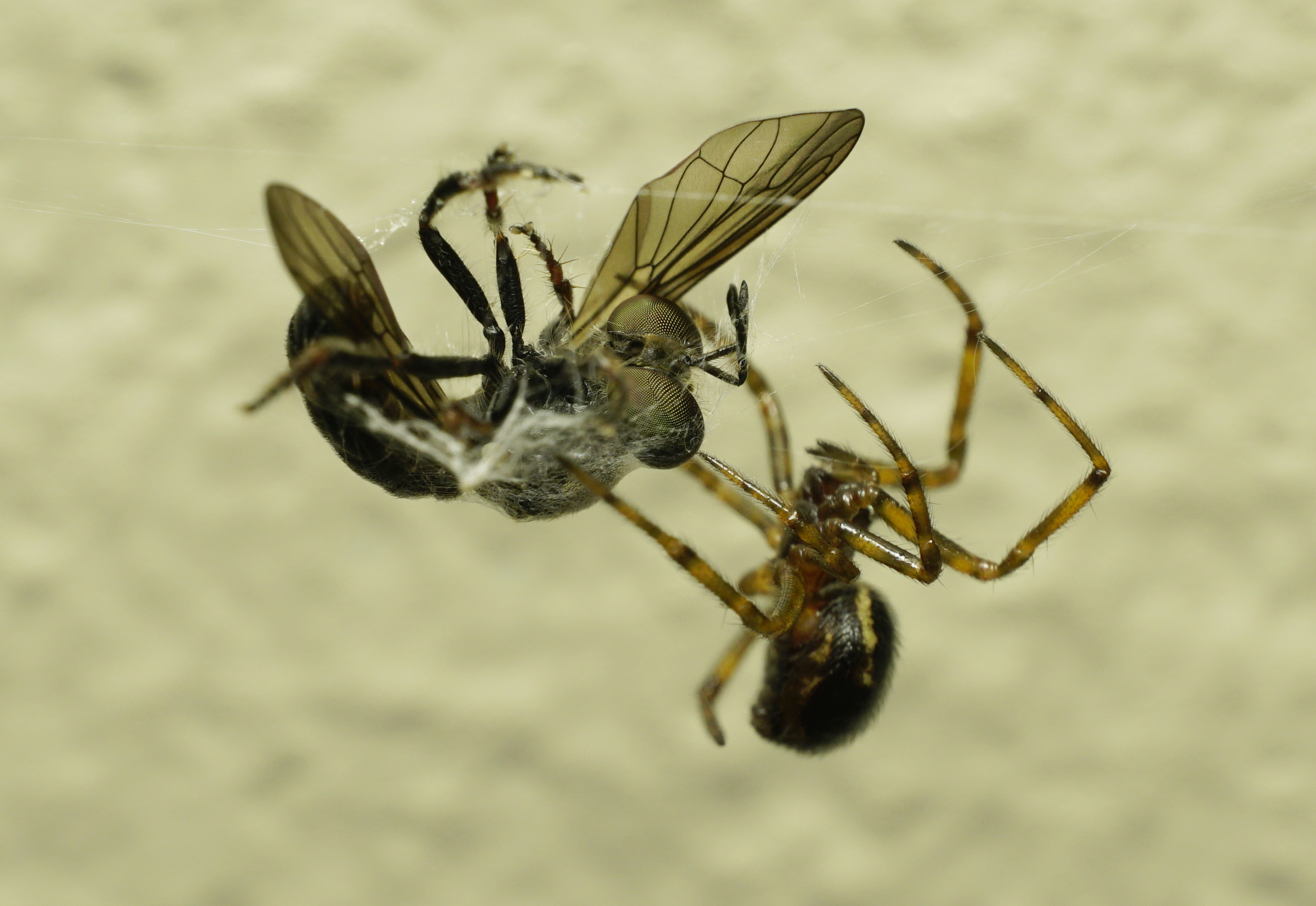
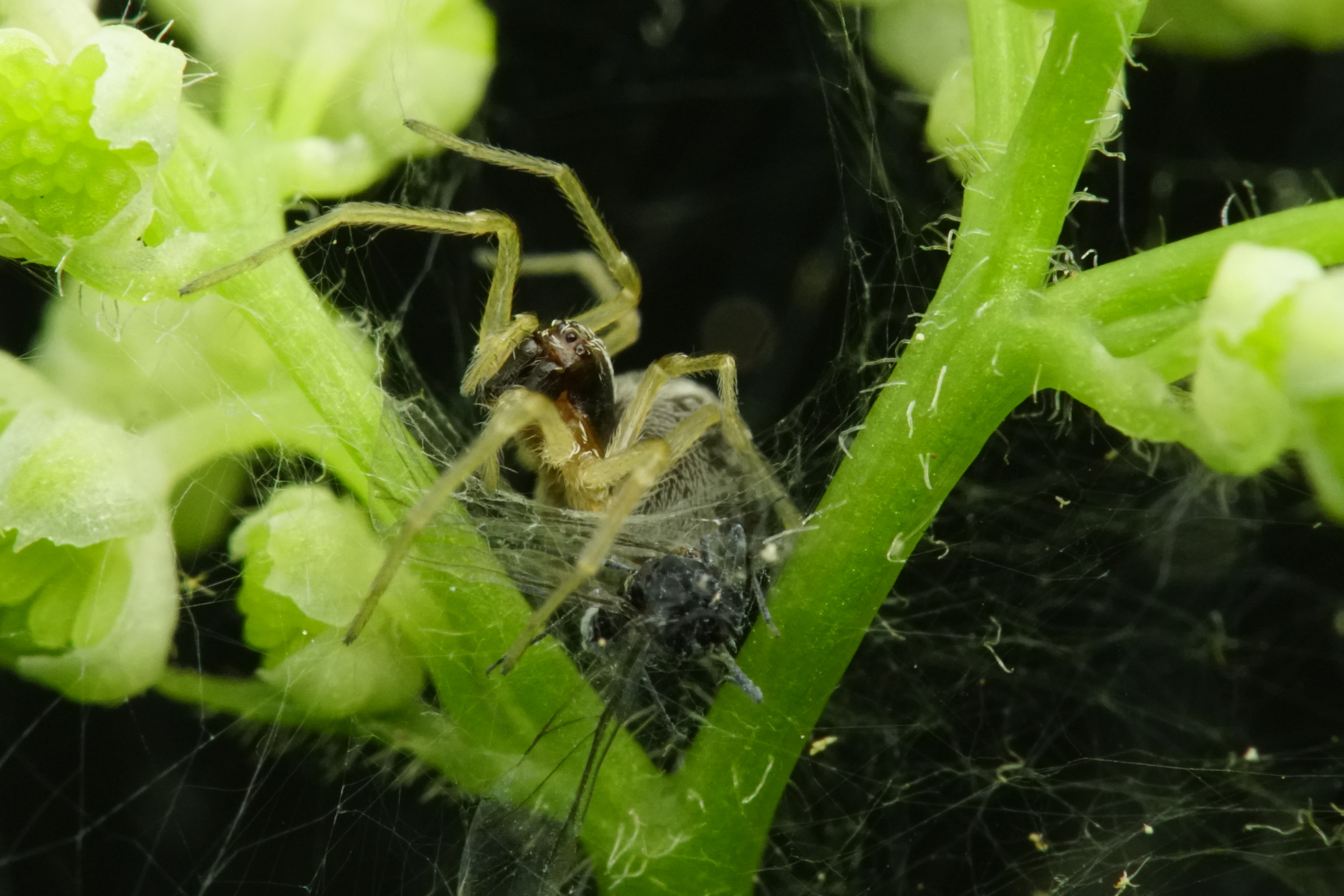
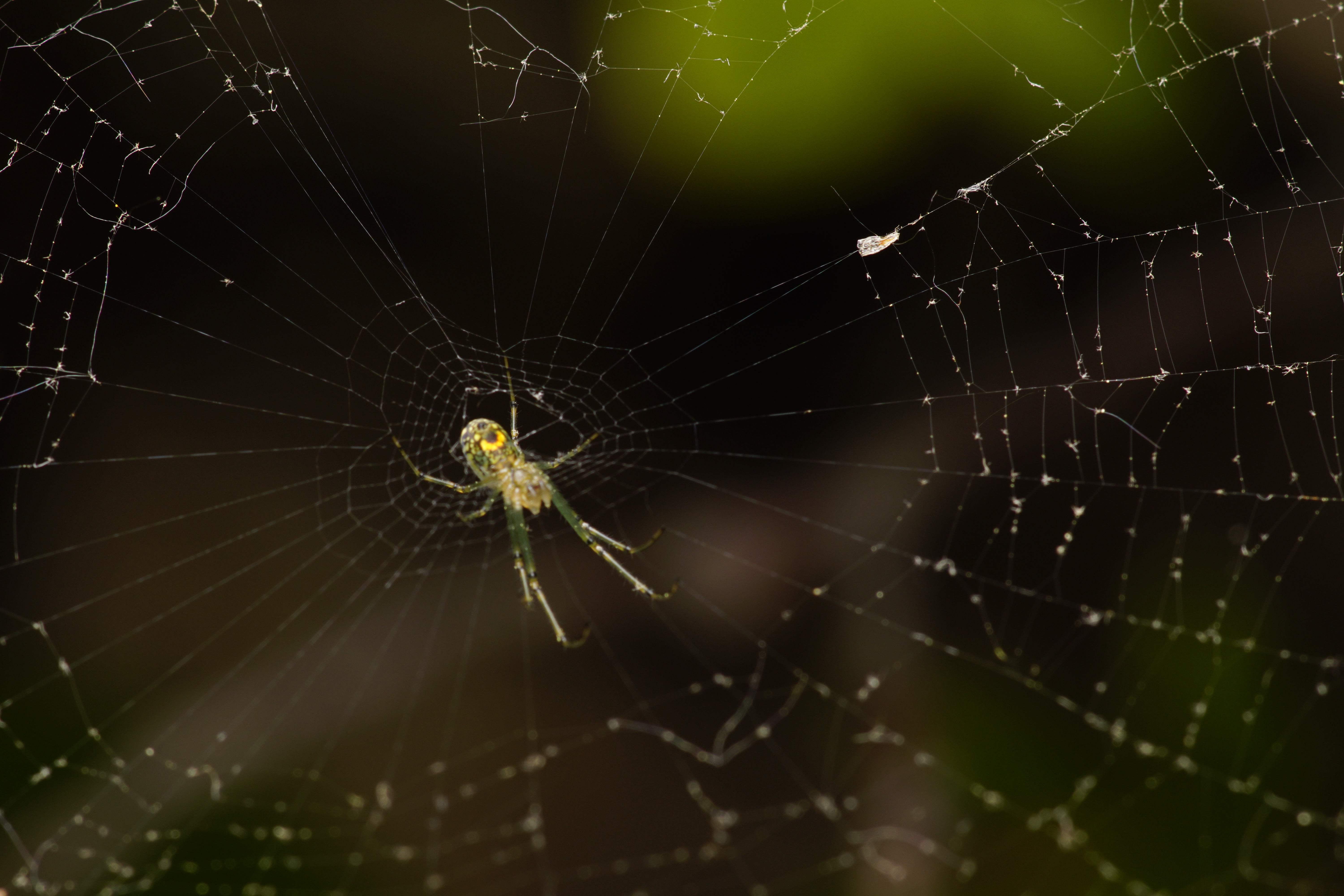
Theridiidae spider, what’s the prey? A robber fly, I believe.
An amazing hike. Ethan Pond to Zeeland Falls, Zeecliff, Thoreau Falls, and more. Three wonderful days, even if one of them was all Tropical Storm Elsa all day all the time. Some photos (without people, as always 🙂 ).
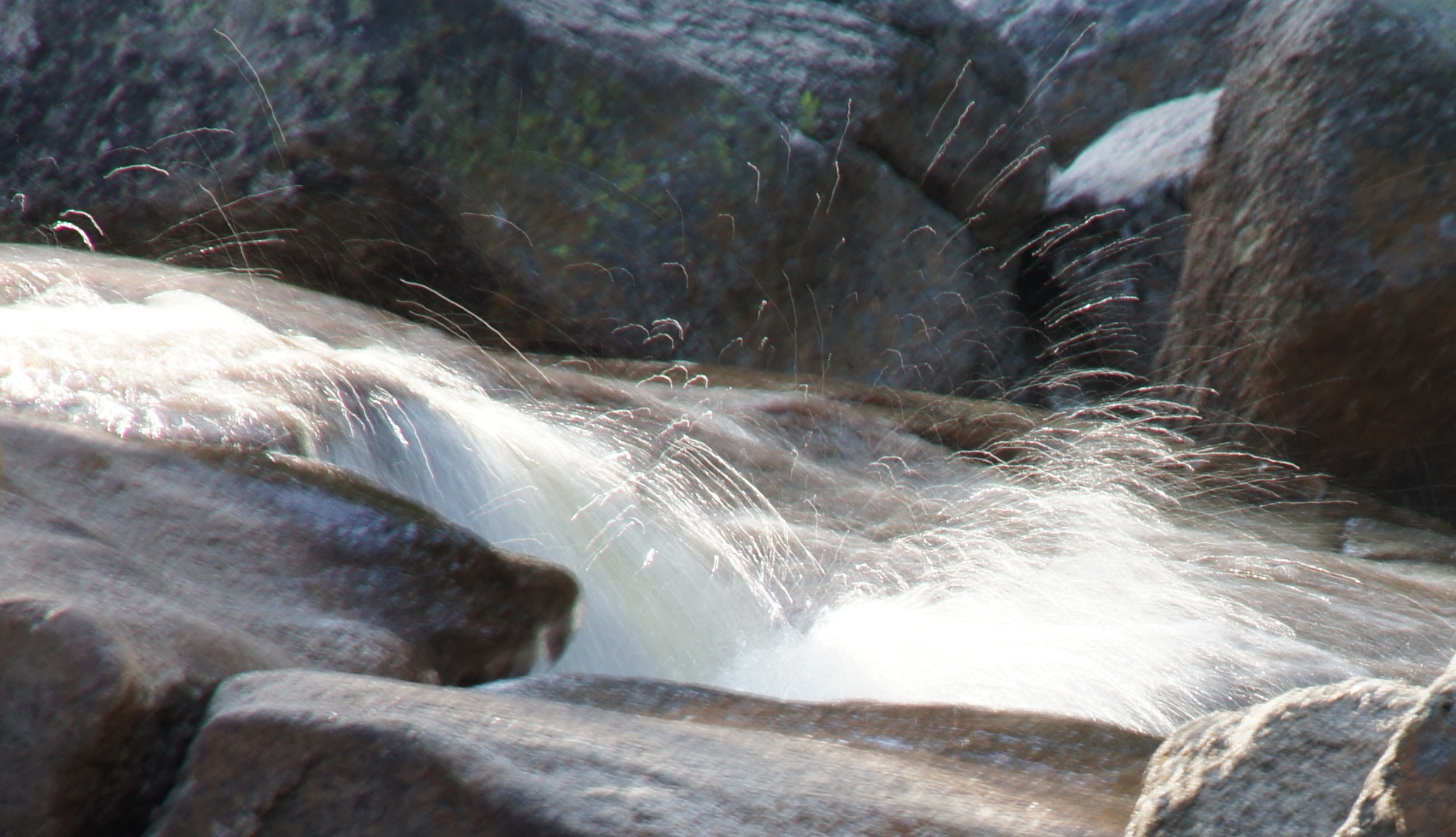
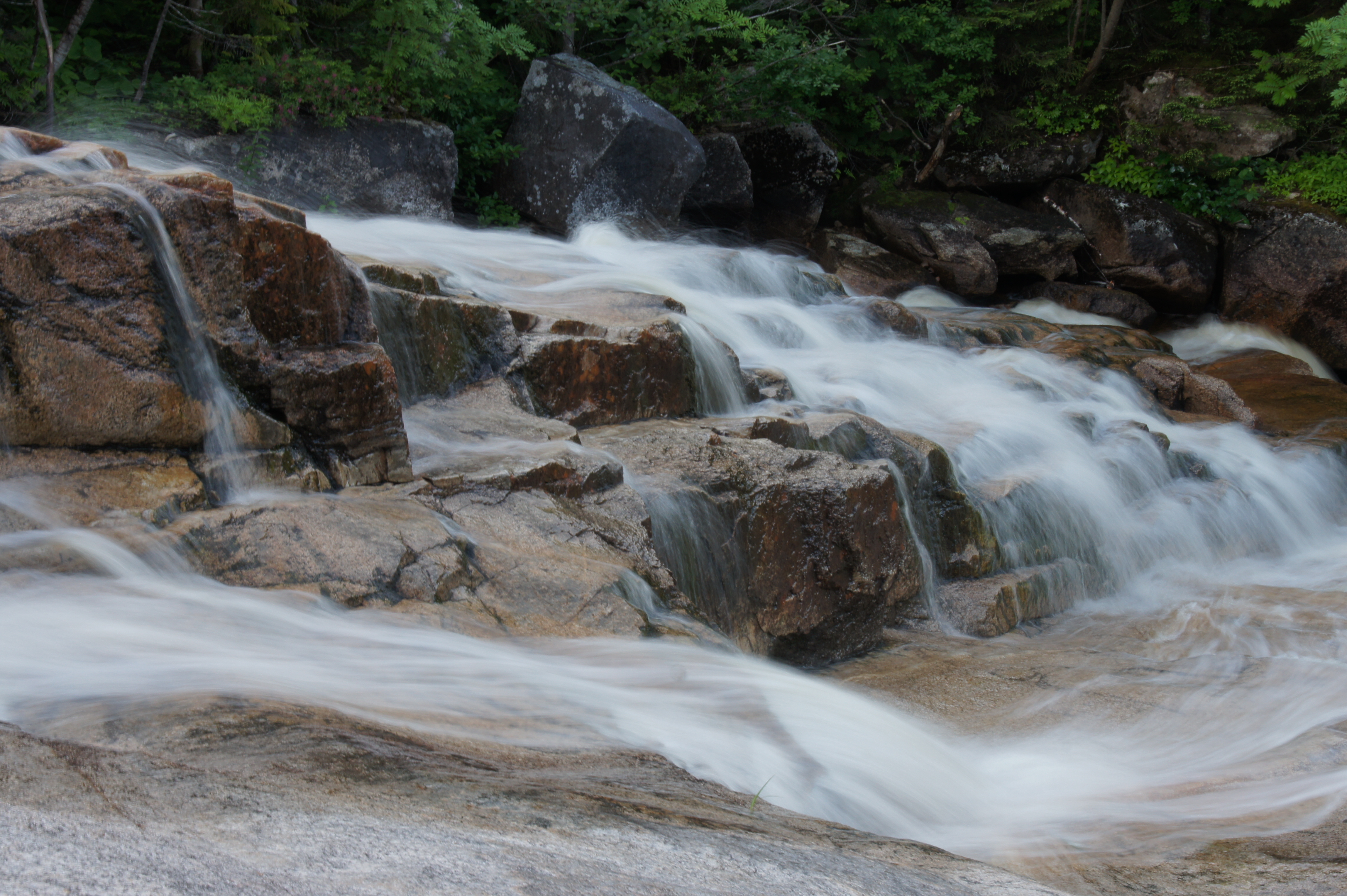
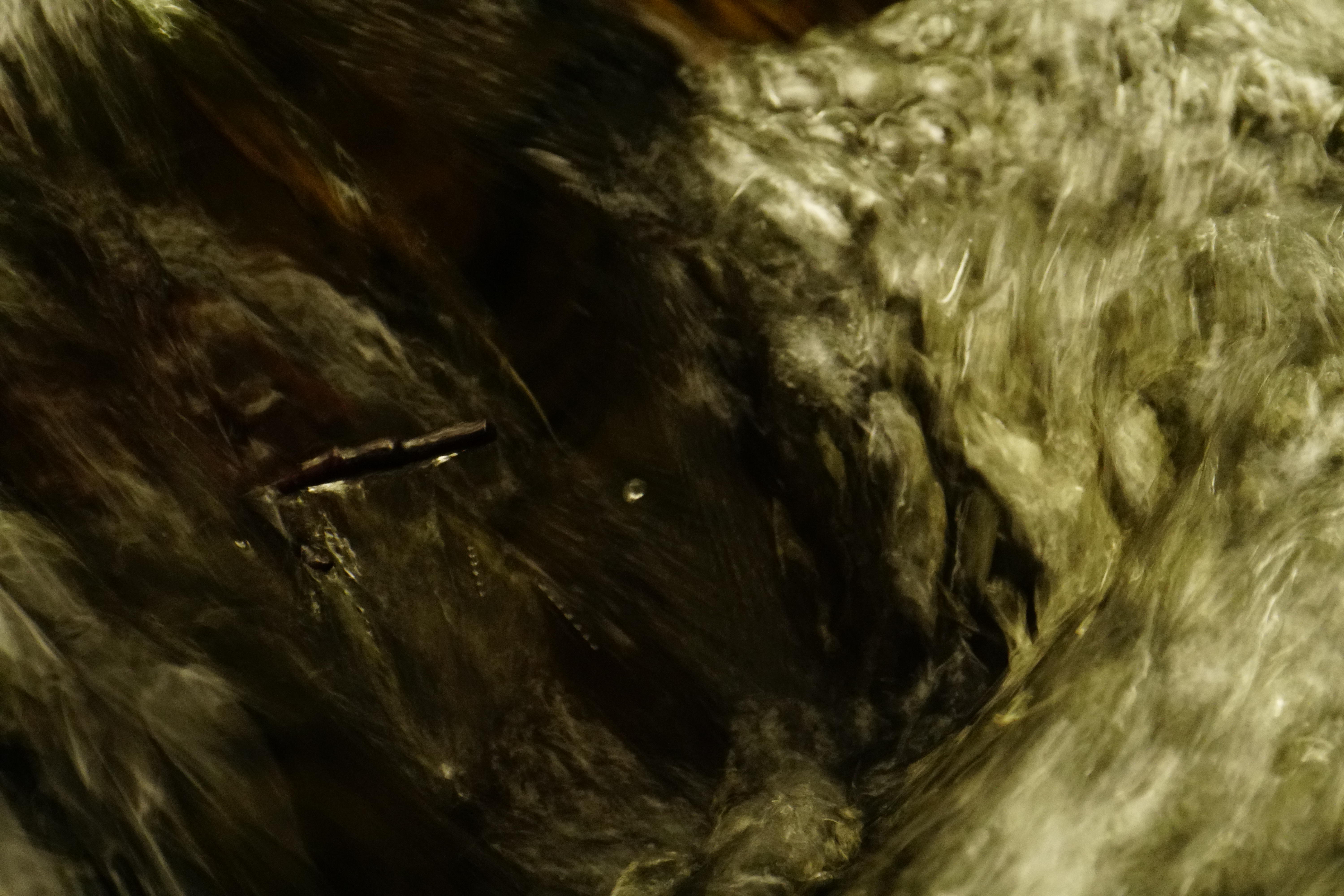
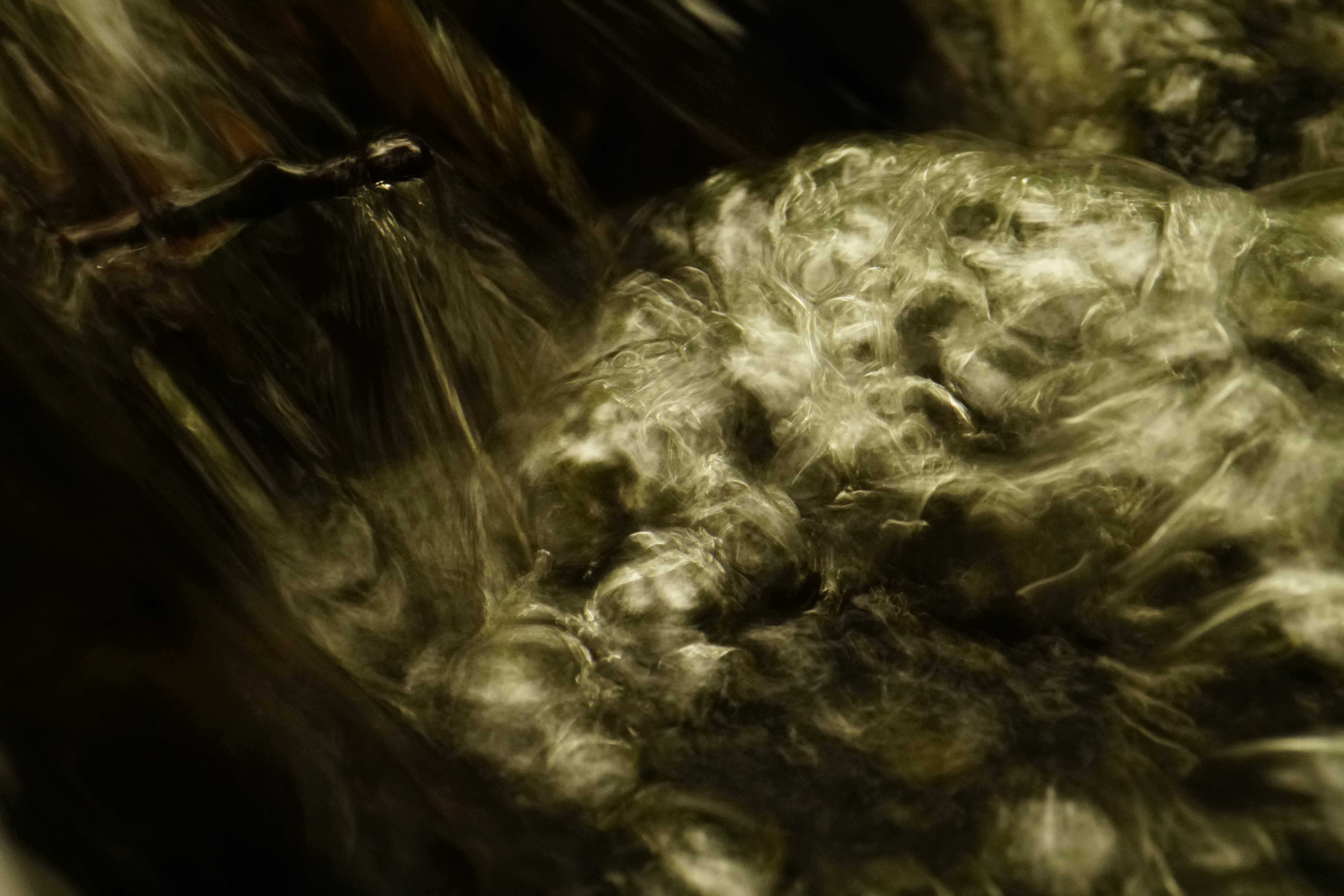
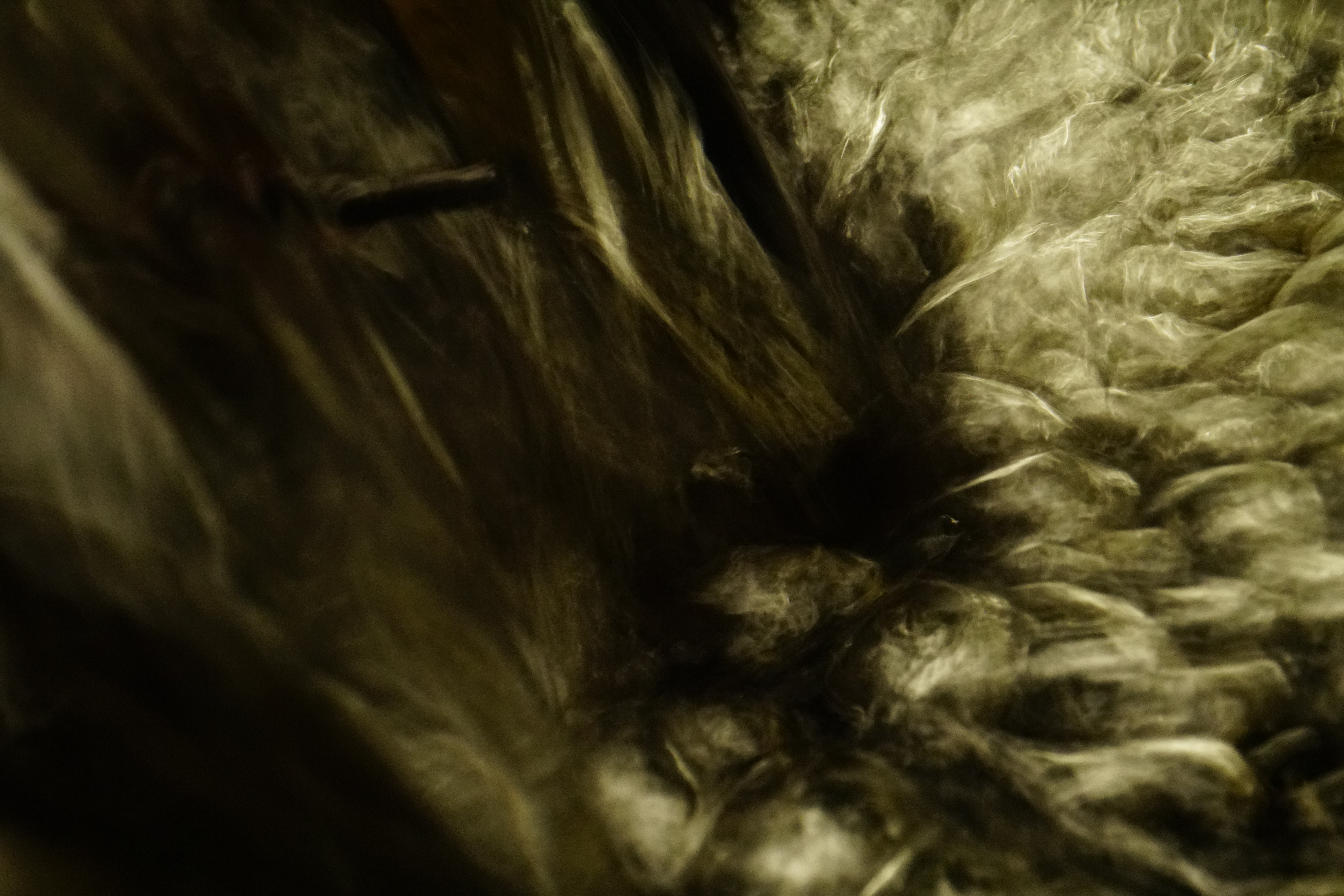
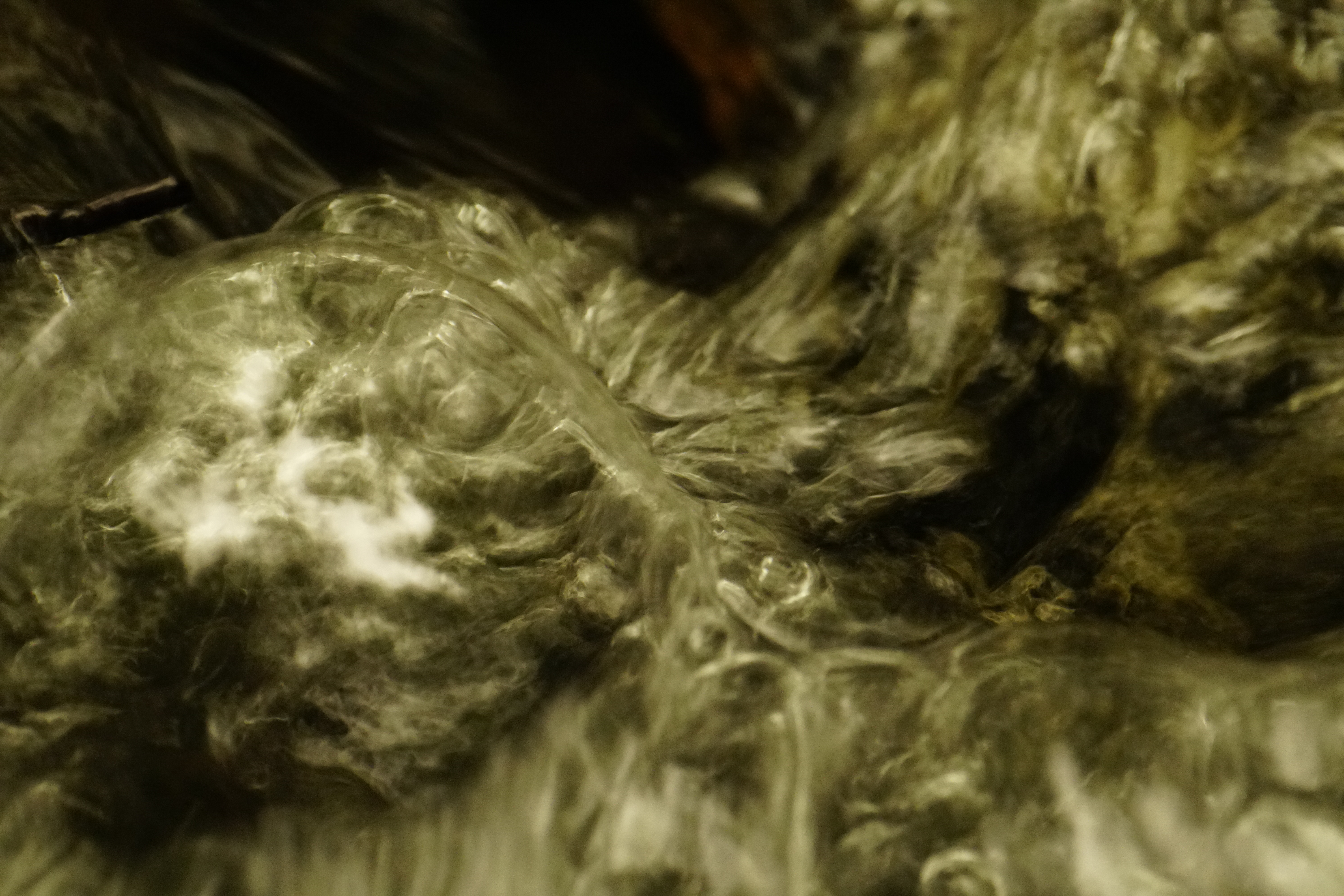
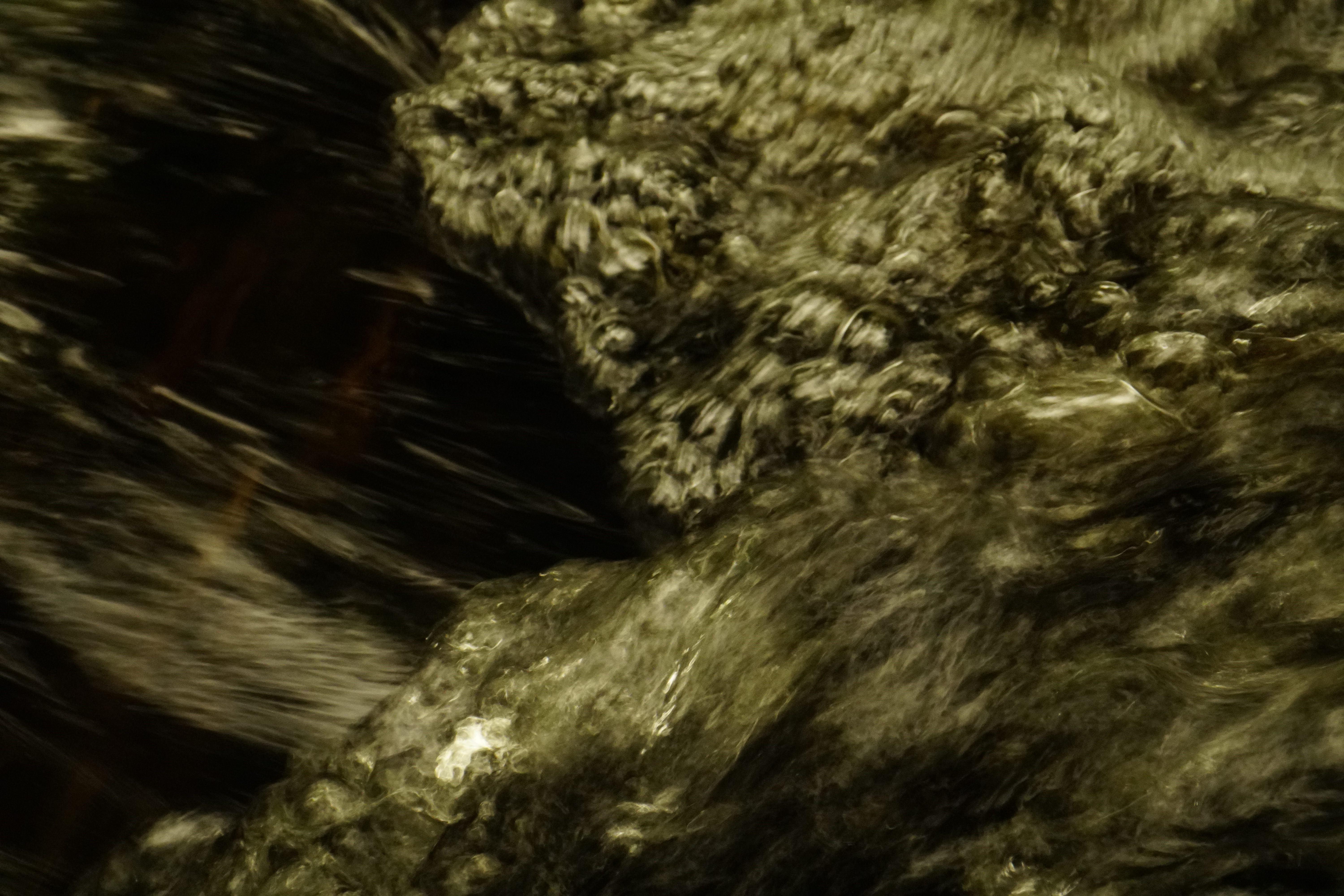
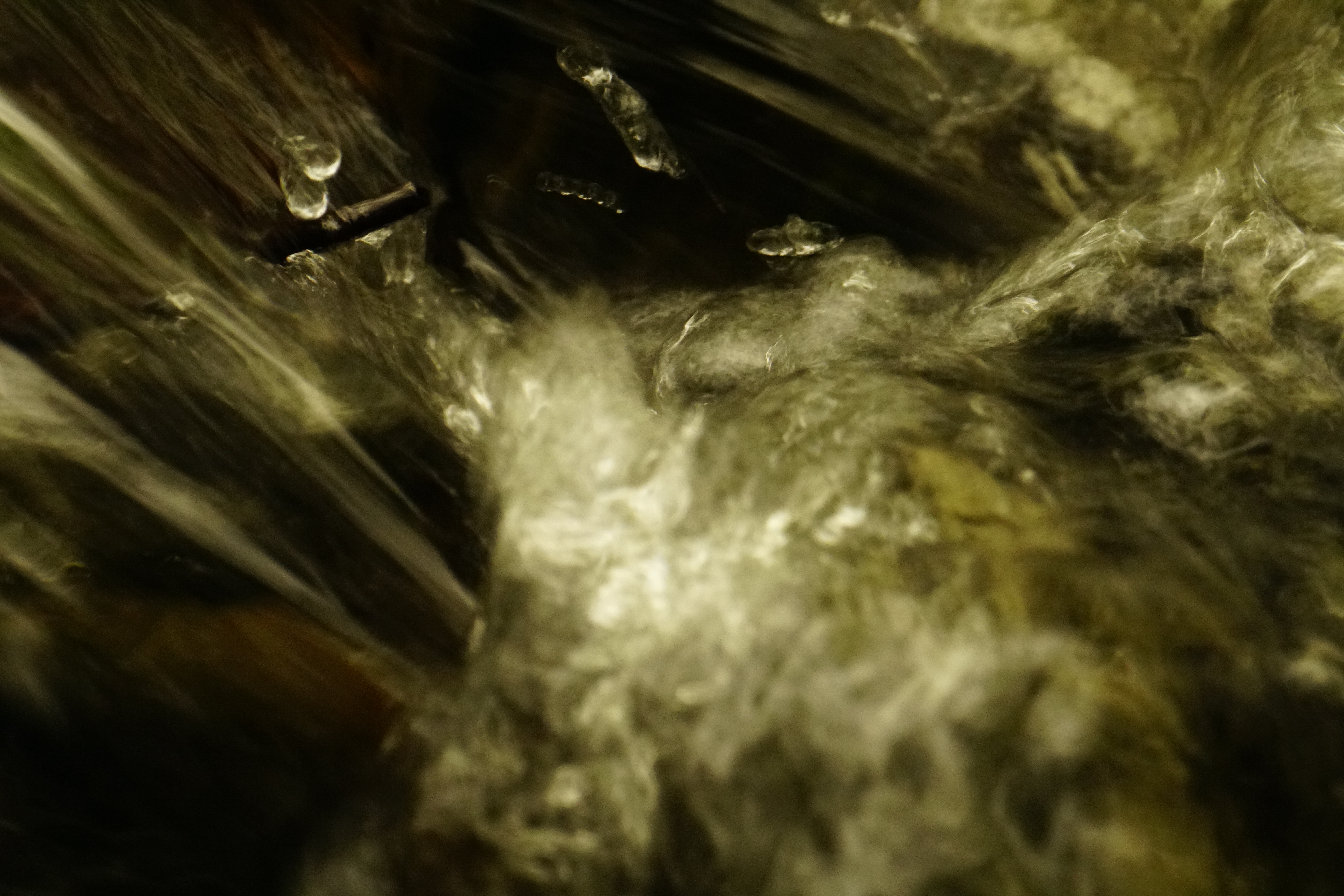
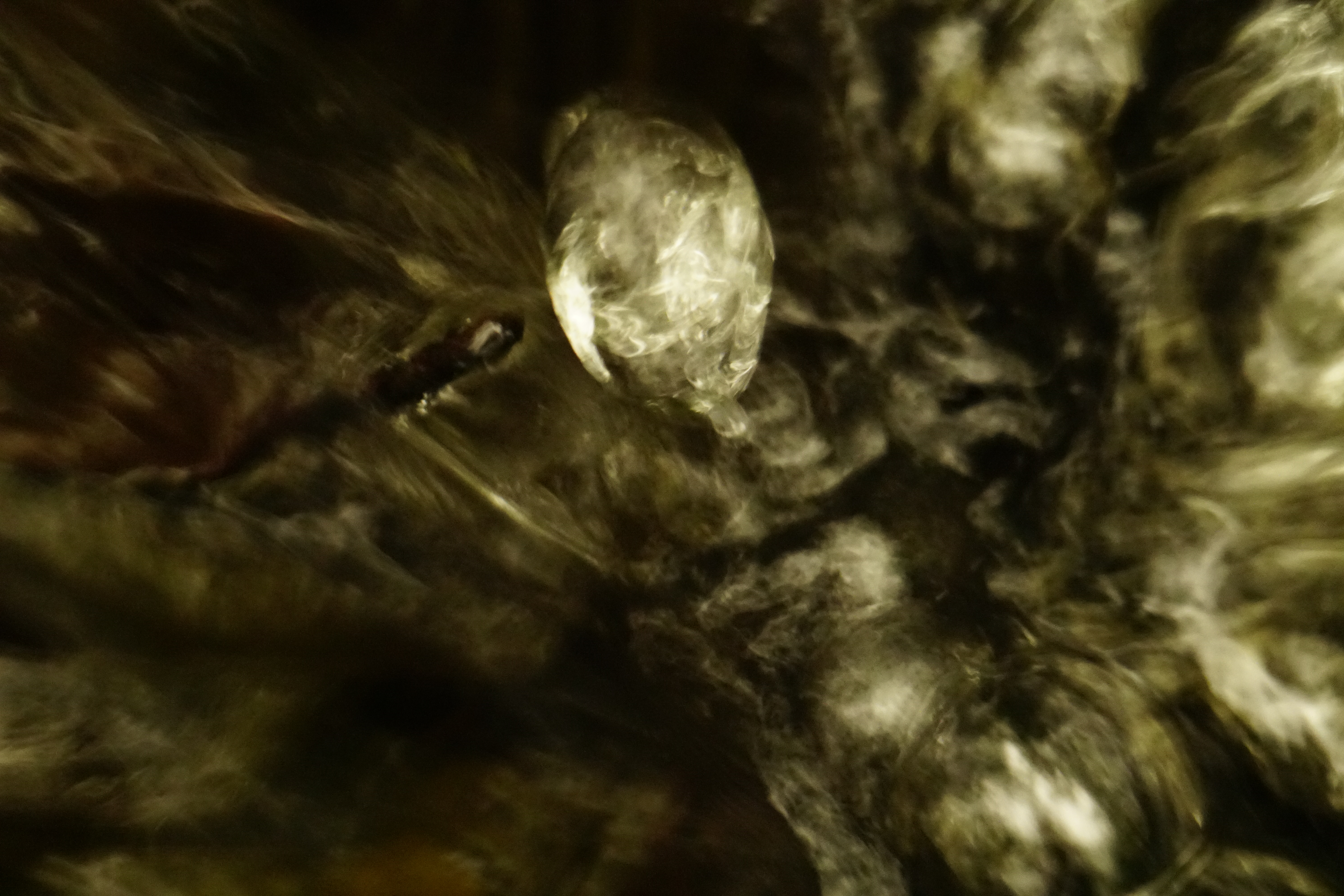
I’ve been posting a *lot* of flowing water photos. This set is a twist on that genre that I’ve never really seen done before.
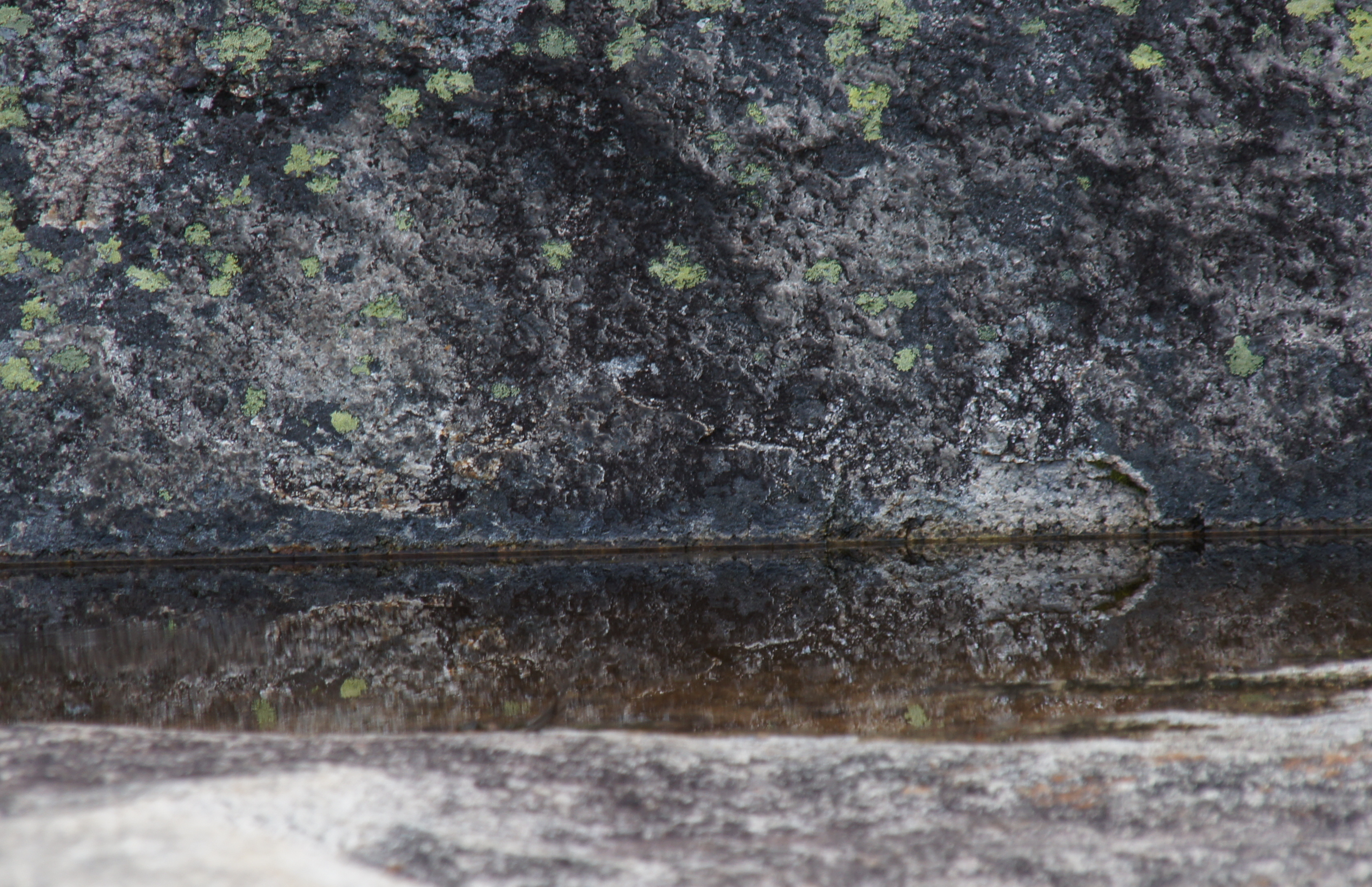
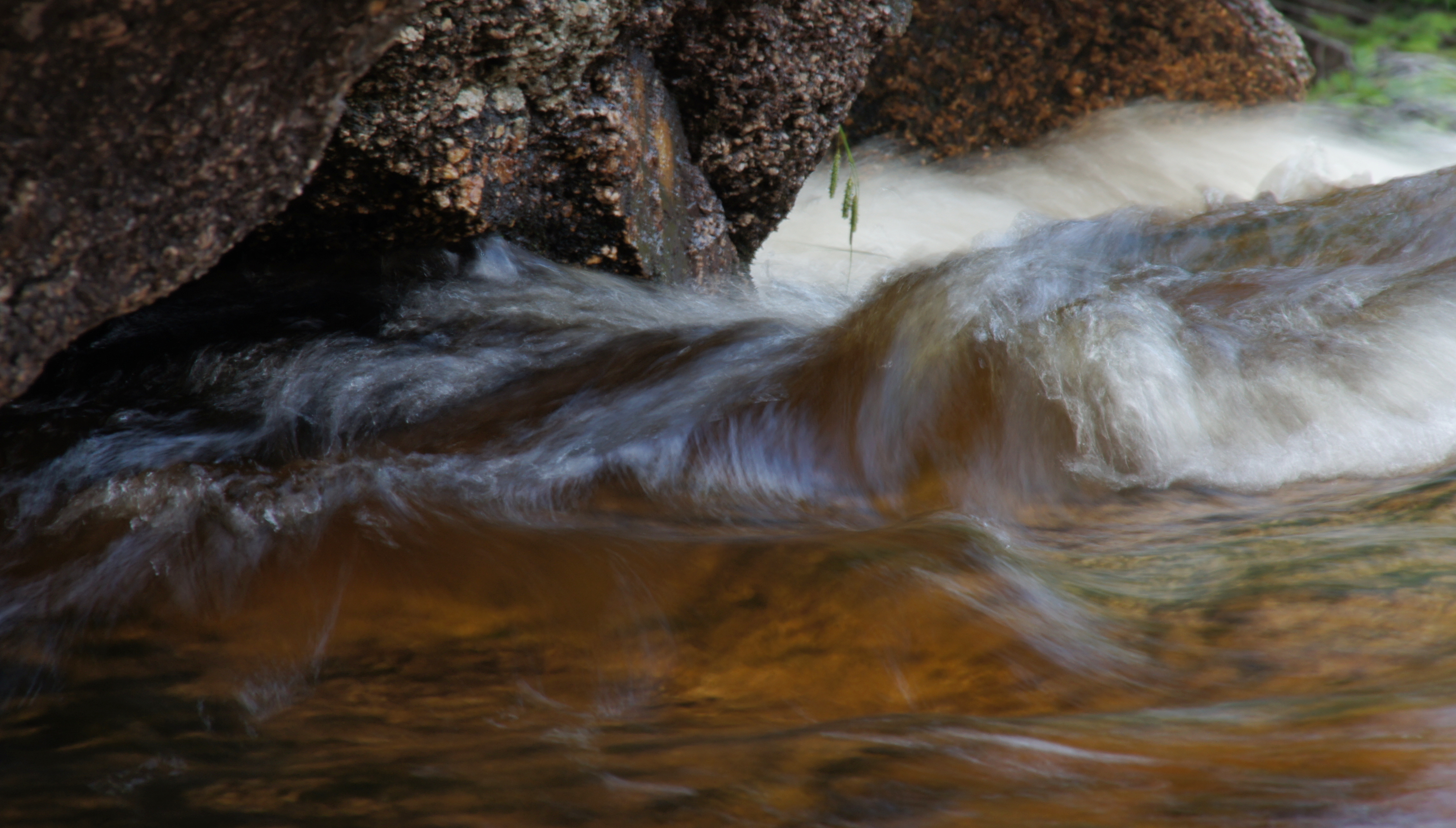
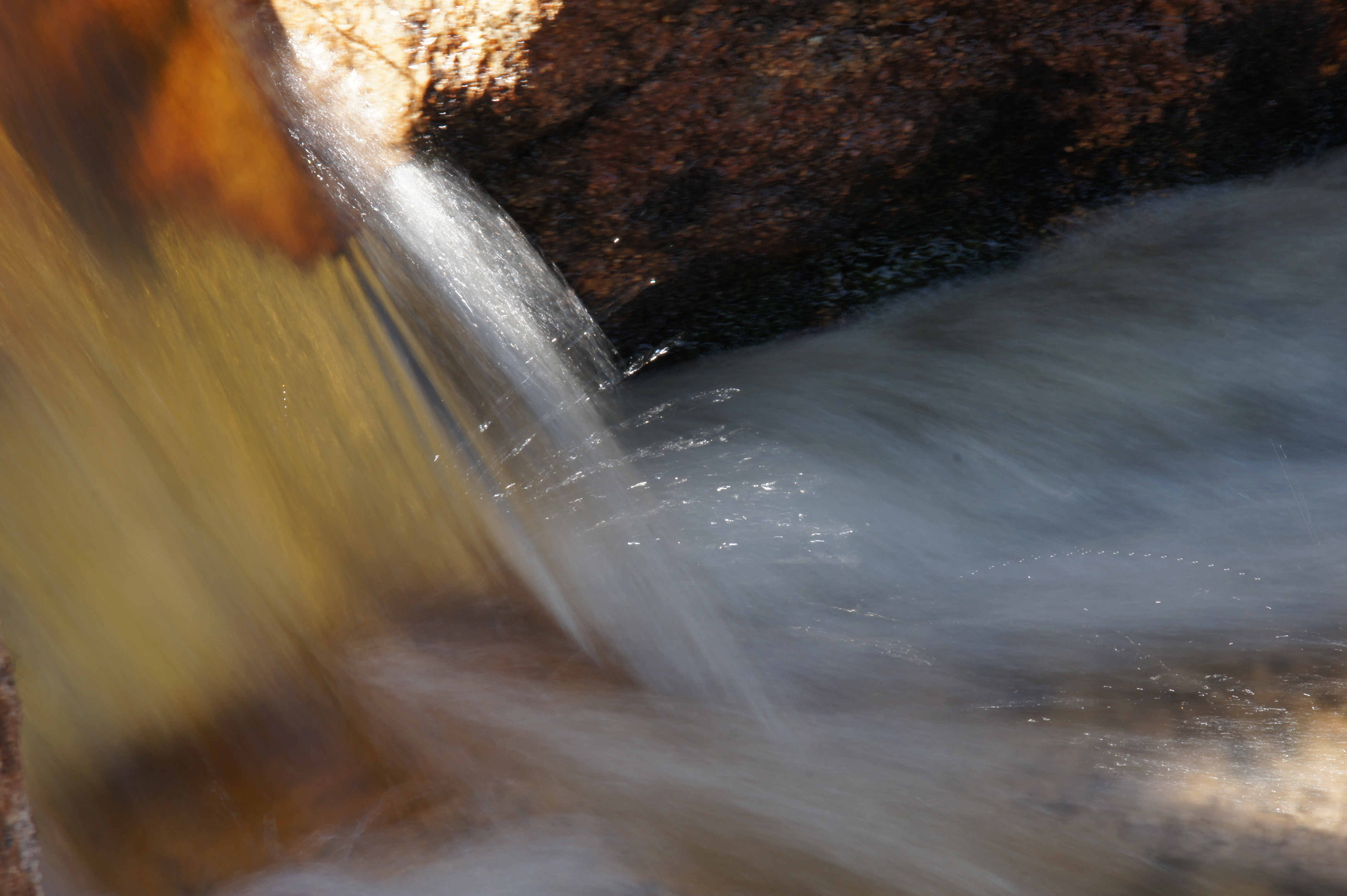
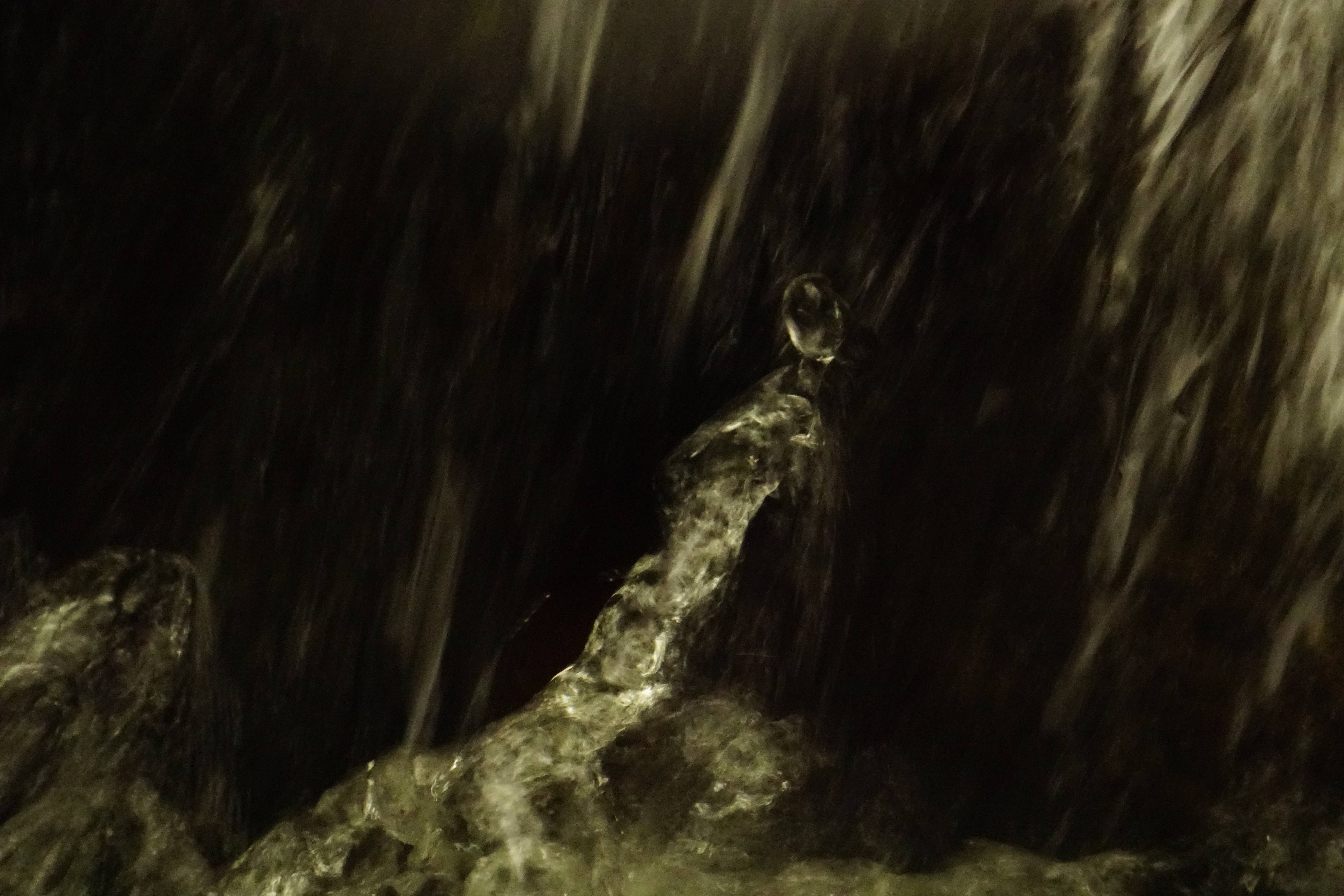
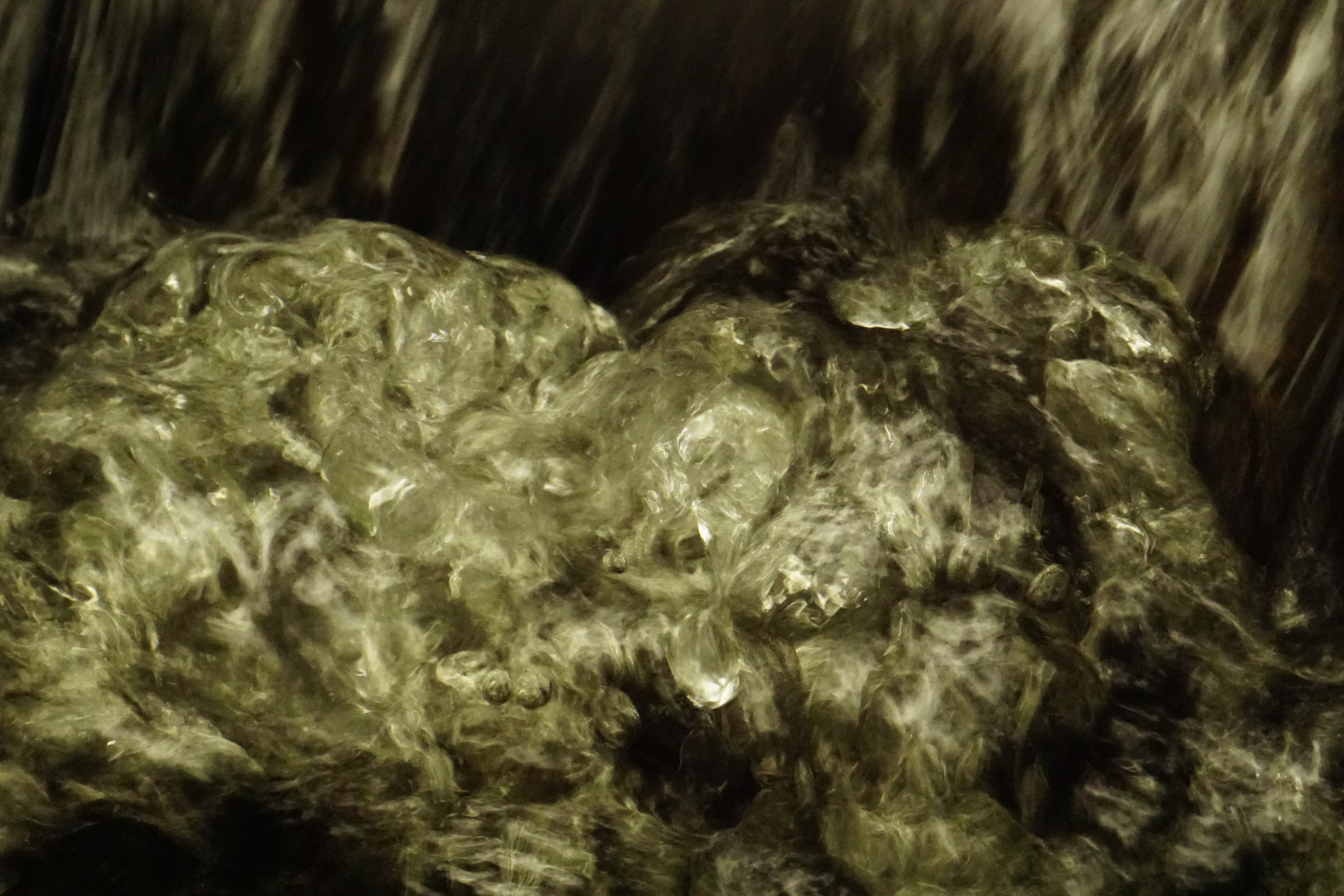
My issue with a lot of time exposure photos of flowing water is that they’re a long enough exposure to completely smooth out the flow, creating an illusion of utter calmness, but hiding the vitality and boisterousness of the flow. The little droplets playing around are what cause this, but they don’t usually come out in a photo — the eye can register smaller details that hide from most cameras. This has to be recorded by the right shutter time: too slow, as mentioned, smooths everything out, while too fast freezes everything. I want a sort of impressionistic feel to the photos, where you can recognize individual elements but also see that they’re in motion. Showing motion isn’t always easy in a still photo!
As mentioned, I recently bought a Laowa 24mm macro probe lens. This has a few unique properties: it’s a macro lens that can focus with a few millimeters of the subject; it’s very narrow; it’s waterproof. I decided to try to take closeup photos of the stream, and especially places where the smooth, laminar flow becomes chaotic and turbulent. It may be useful (or not) to realize that these are mostly Straight Out Of Camera photos.
In addition, when I take this kind of photo, I especially like to establish an “anchor” in the photo: something that clearly belongs to the solid world, to play off the time exposure, so the photo lands in the zone somewhere between representative and abstract.
There ended up being so many possible photos it was difficult to choose. It seemed almost blasphemous to discard so many, as if rejecting nature’s creativity, but there’s only so much space!
Let’s see if these photos are successful! Let’s start off with a view of the area I took most of the photos, to provide some context while you see the more abstract ones. In that little snap, there lie worlds.
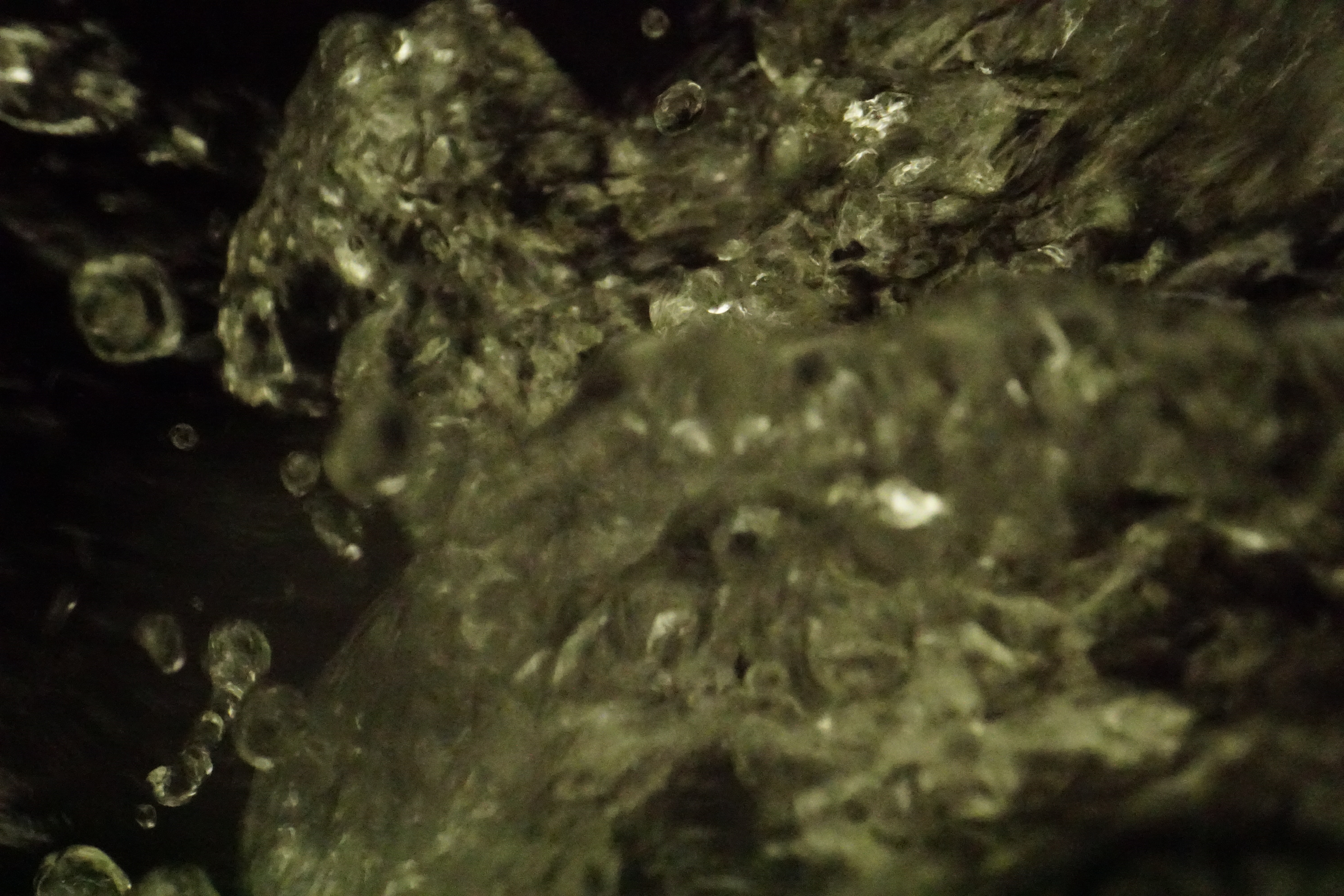
This one was taken completely underwater, of the bubbles in the turbulence under the surface:
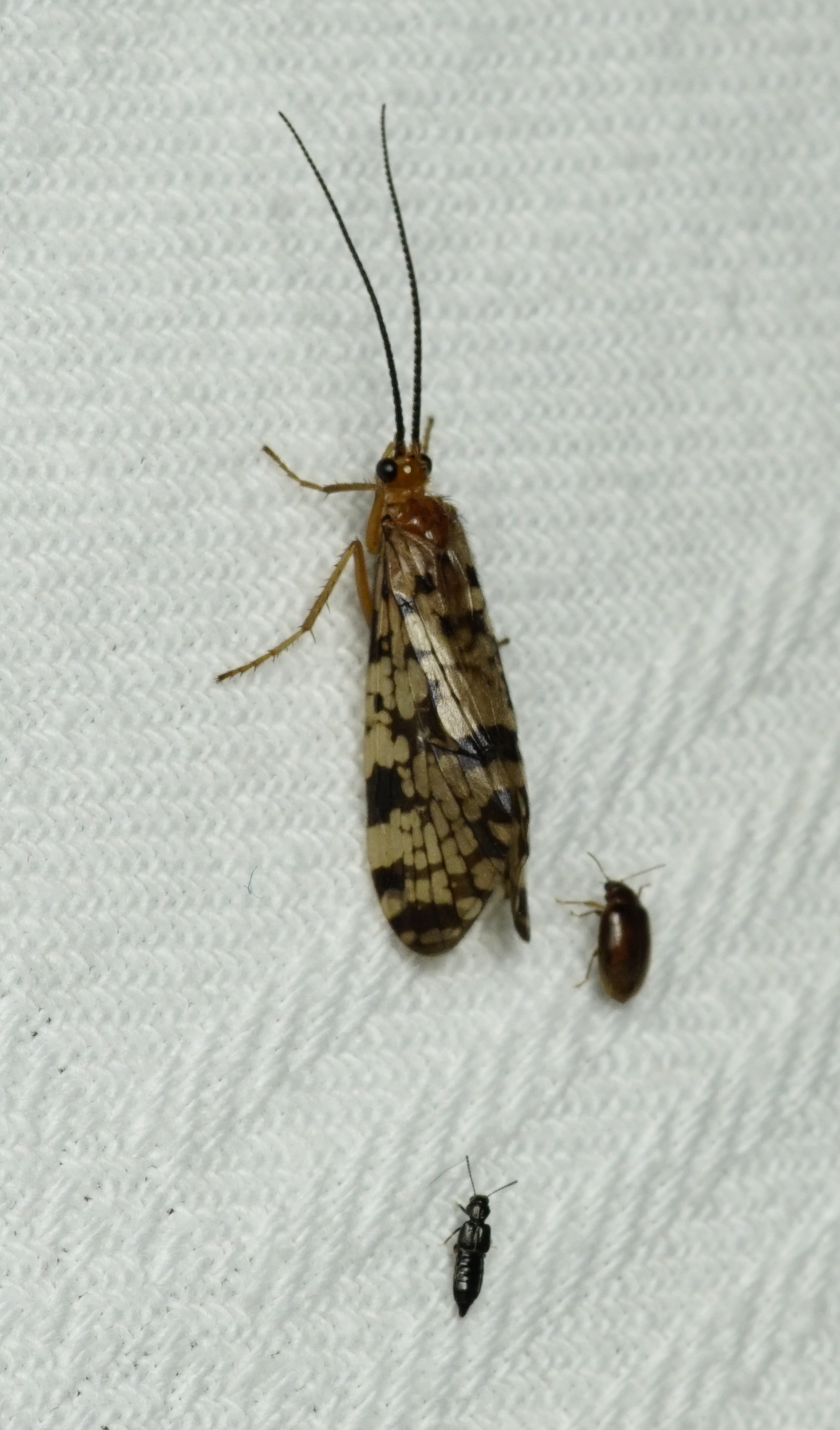
My first nighttime blacklighting for moths — mercury vapor lamp shining on a bedsheet. So many moth photos, and I can’t identify them very well, so I’m going to concentrate on non-moths.
Diptera
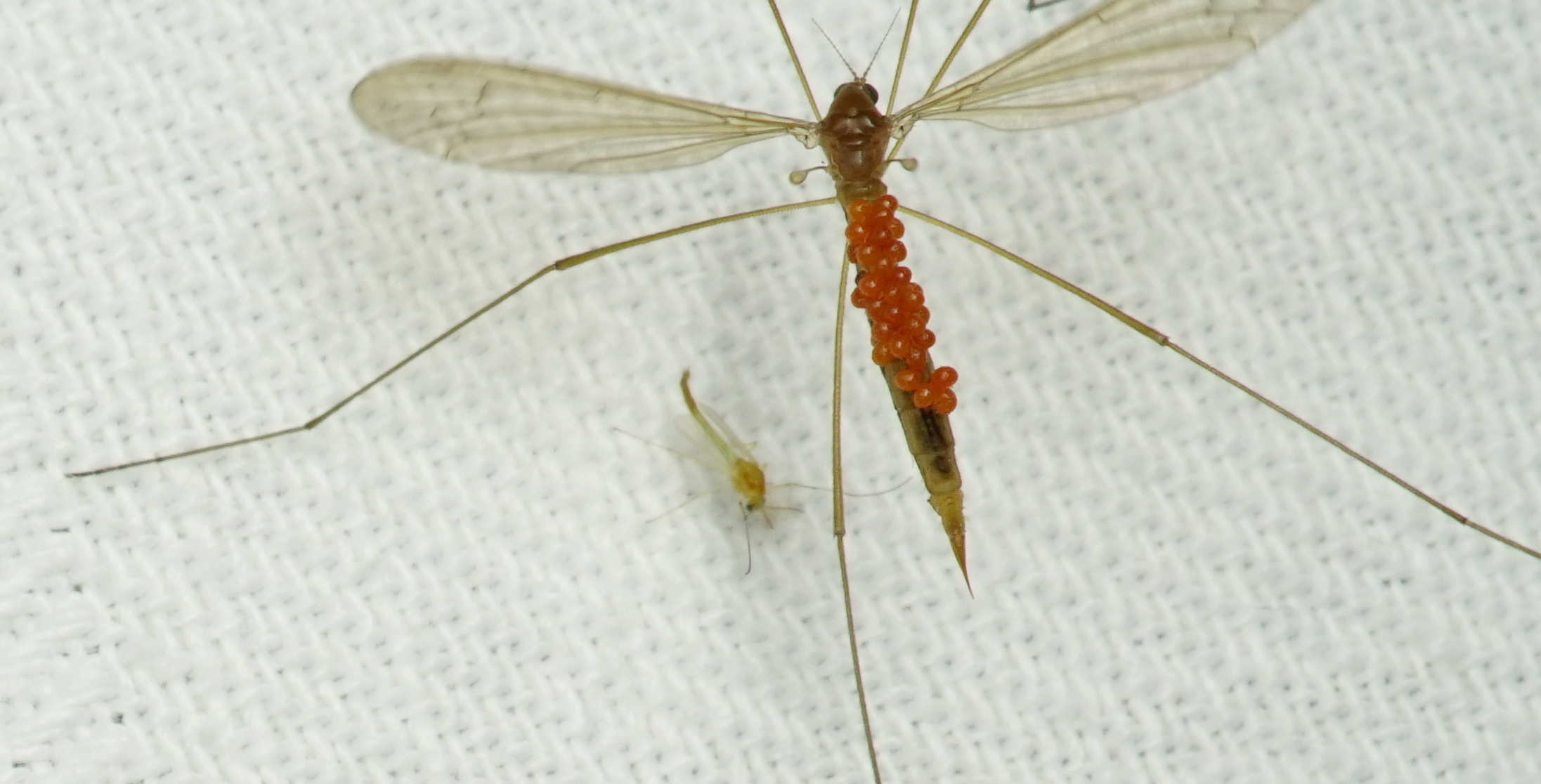
Limoniid crane fly?
Look at all the mites:
Toxomerus marginatus hanky-panky:
Hemiptera
Amphiaretus obscuriceps, a pirate bug. Introduced from Asia, first record in USA 1983.
Could by Gyponana.
My guess is Meadow Spittlebug, Philaenus spumarius.
Neuroptera
Probably a brown lacewing. Neuroptera –> Hemerobiidae. Perhaps Hemerobius?
Coleoptera
I think this is a rove beetle, Staphylinidae.
Carabidae, ground beetle.
Podabrus in Cantharidae?
Stenolophus lineola, in Carbidae.
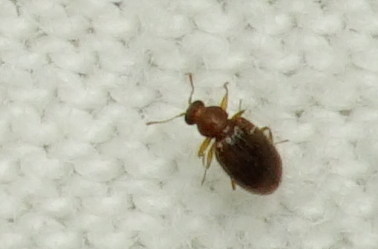
Maybe –maybe! – Paratenetus in Tenebrionidae.
Dystiscid, I think:
Hydrochus genus, in Hydrophilidae. A new family for me!
Perhaps Phyllophaga, in Scarabaeidae? In other news, I’ve discovered that I’ve been spelling it wrong all this time. I *think* legs like this are found in Scarabaeidae.
Another Dystiscid?
Trichoptera
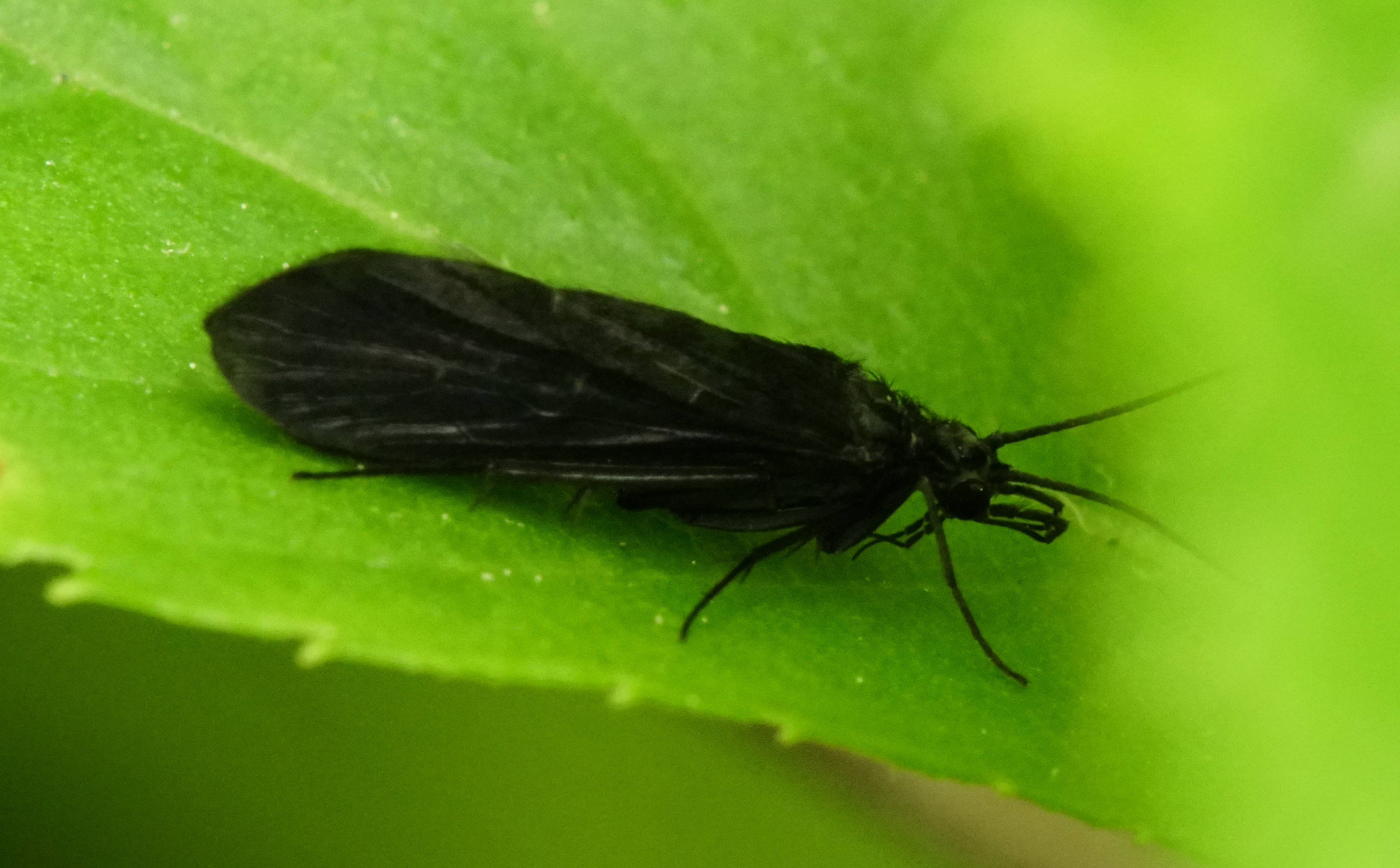
Caddisfly:
Corydalidae
Gorgeous fishfly
Hymenoptera
Ophion?
Another Ophion? This one was smaller?
Lepidoptera
Okay, *some* moths. But really, there were so many, and I’m so bad at identifying them, it’s tough to choose other than by aesthetics.
Looks to me like Ceratina, Carpenter bees. For Massachusetts in June, all I see in BugGuide are subgenus Zadontomerus.
Andrena?
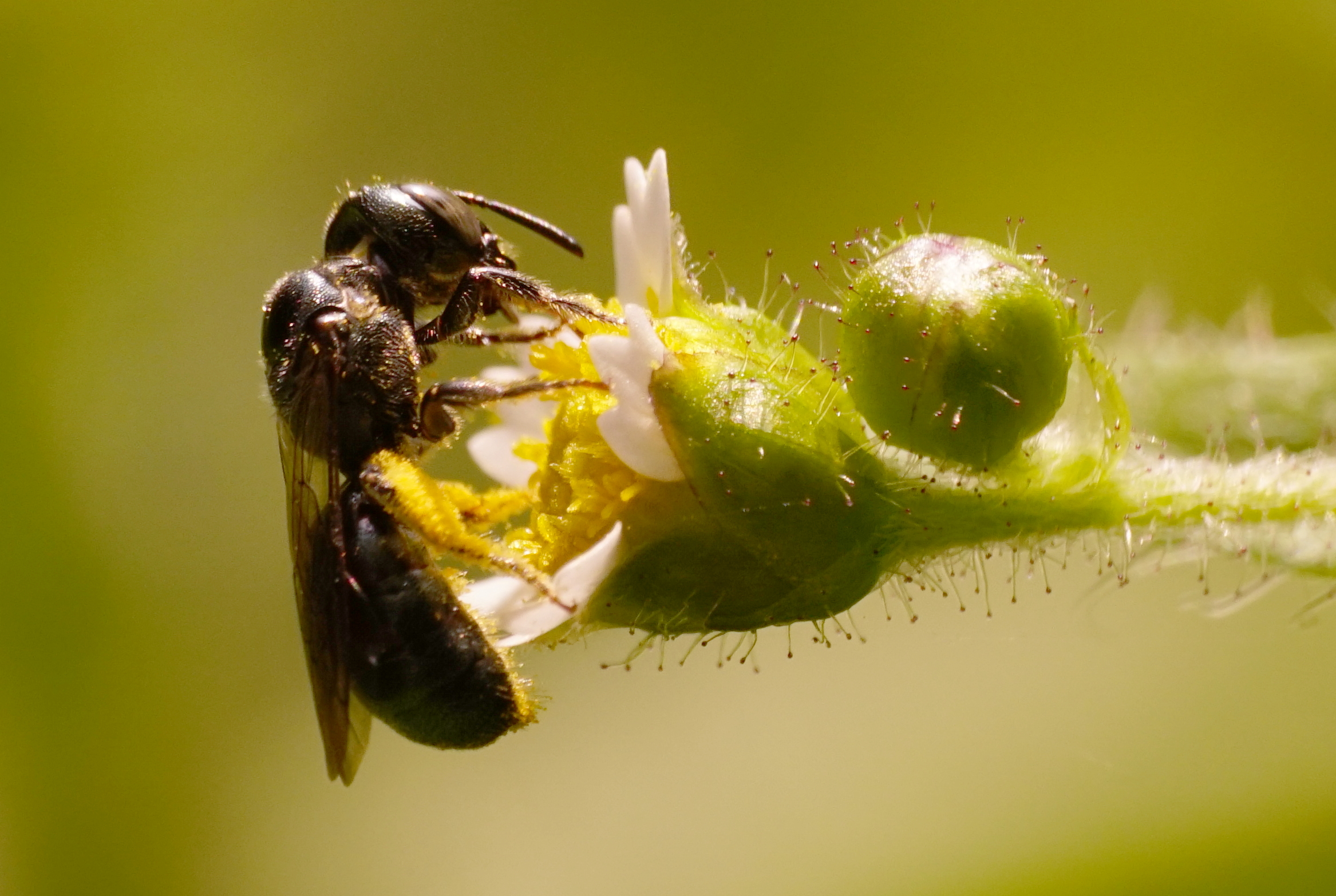
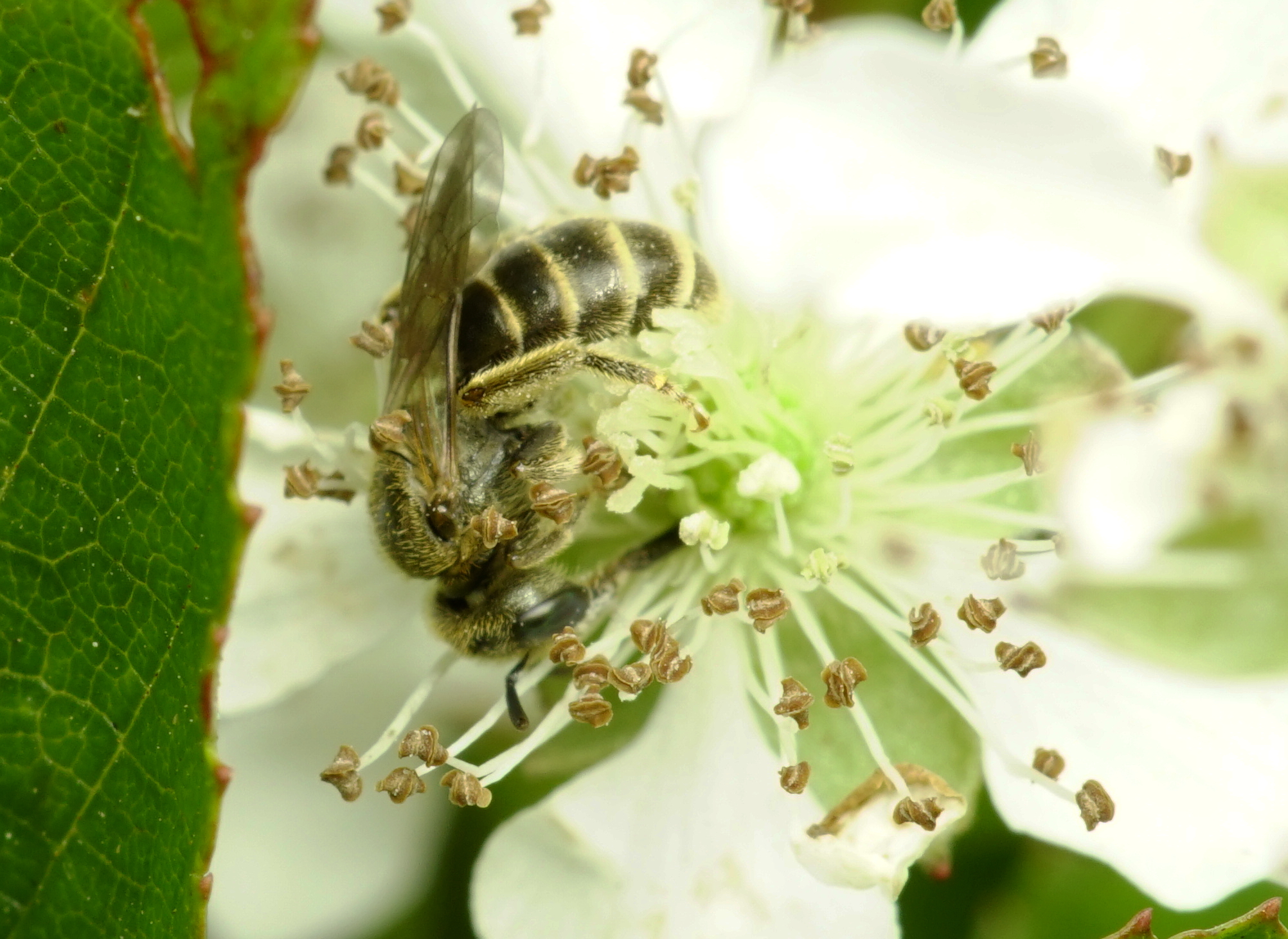
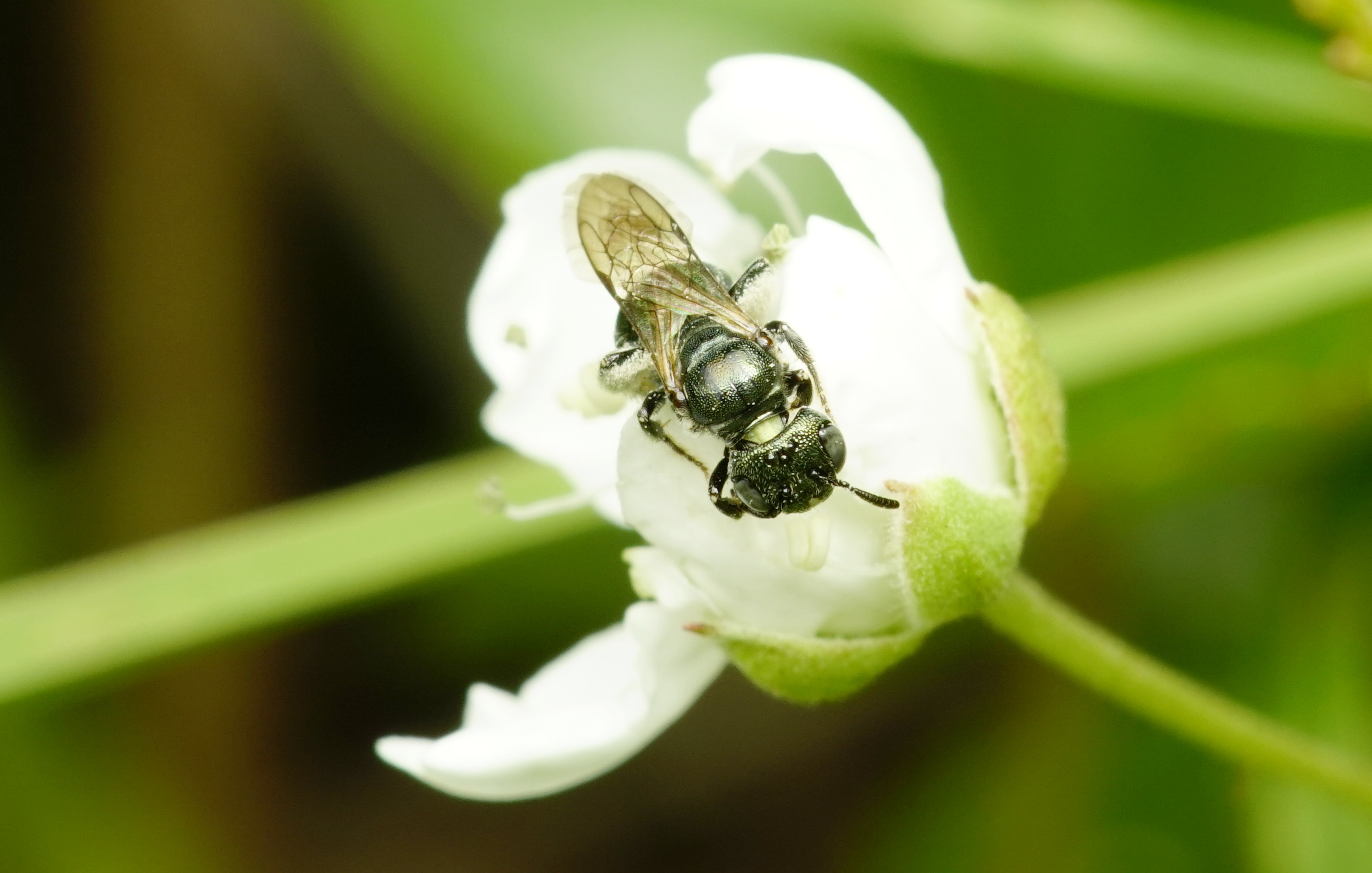
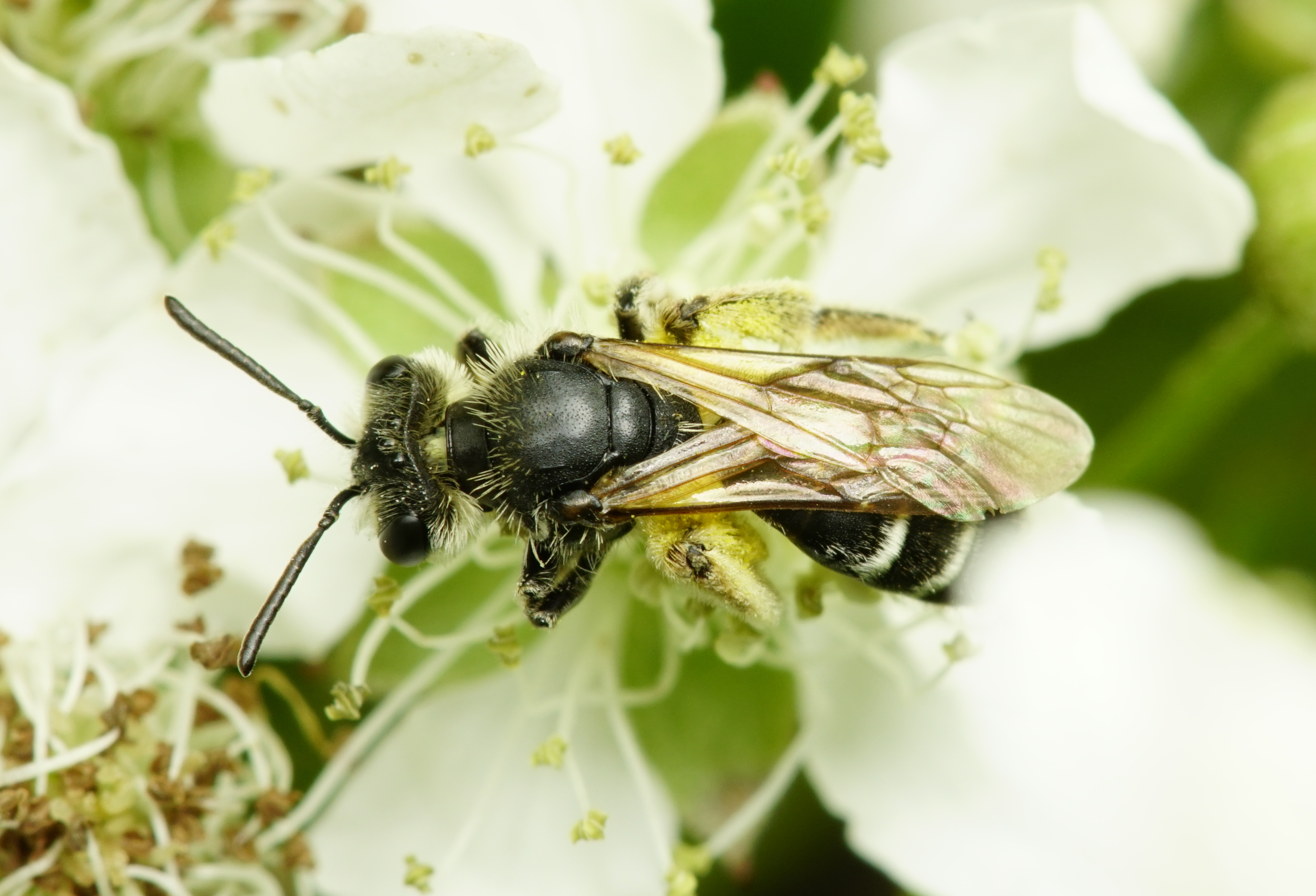
I haven’t been able to convince myself of any of the possible choices for this one. Maybe, just maybe, Lasioglossum? I’m not too sanguine about that. EDIT: could be Hylaeus, too.
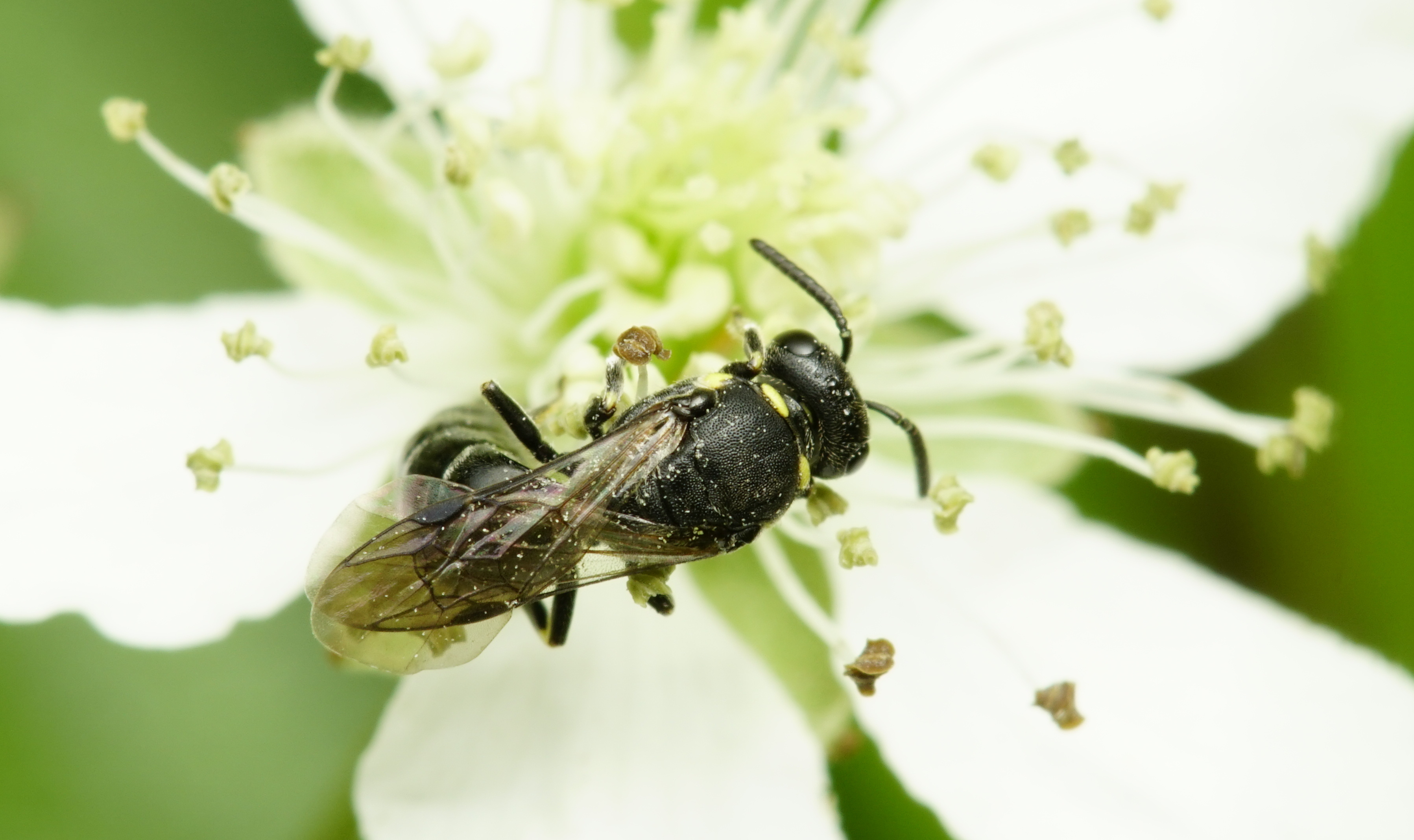
Hylaeus modestus? In Colletidae.
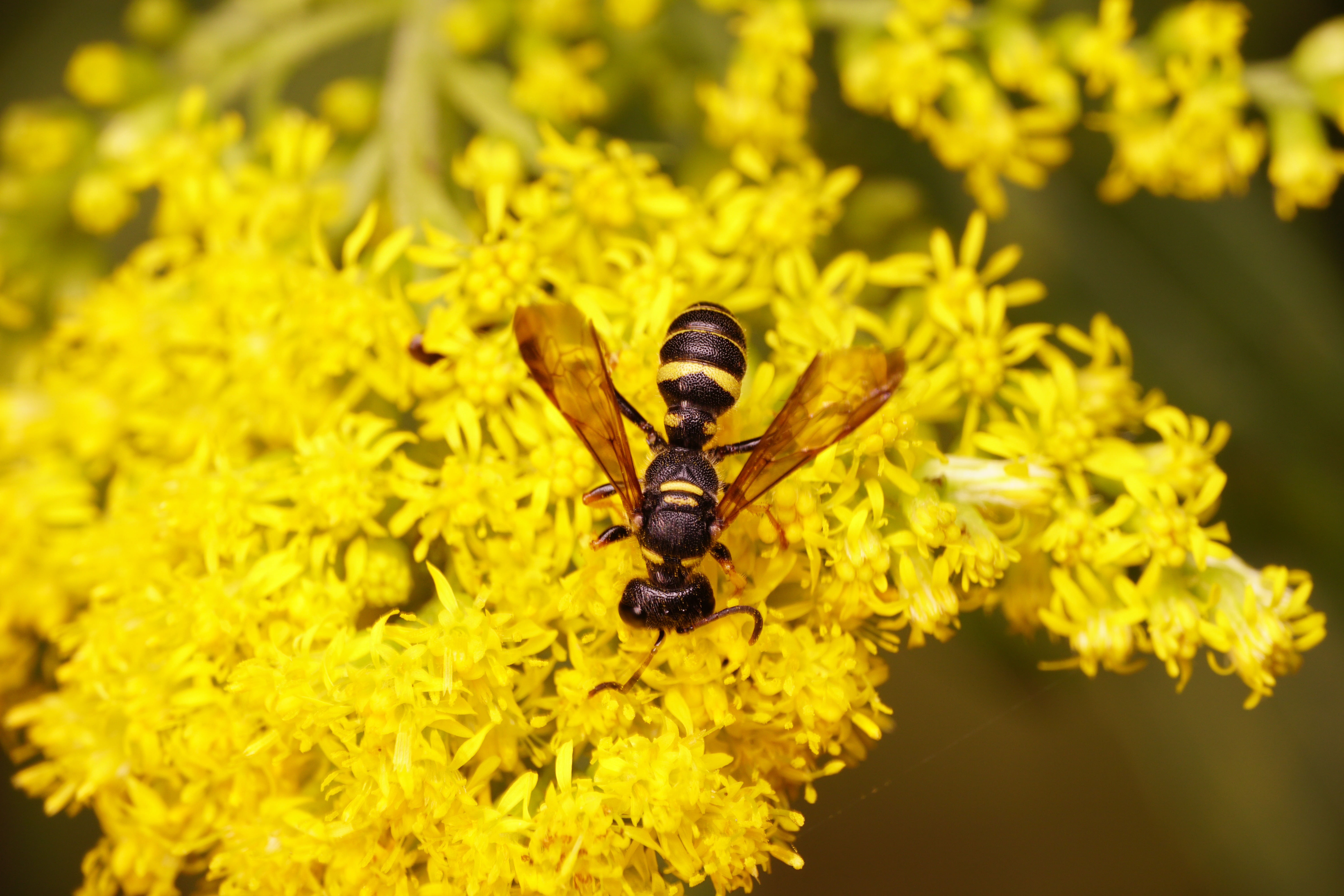
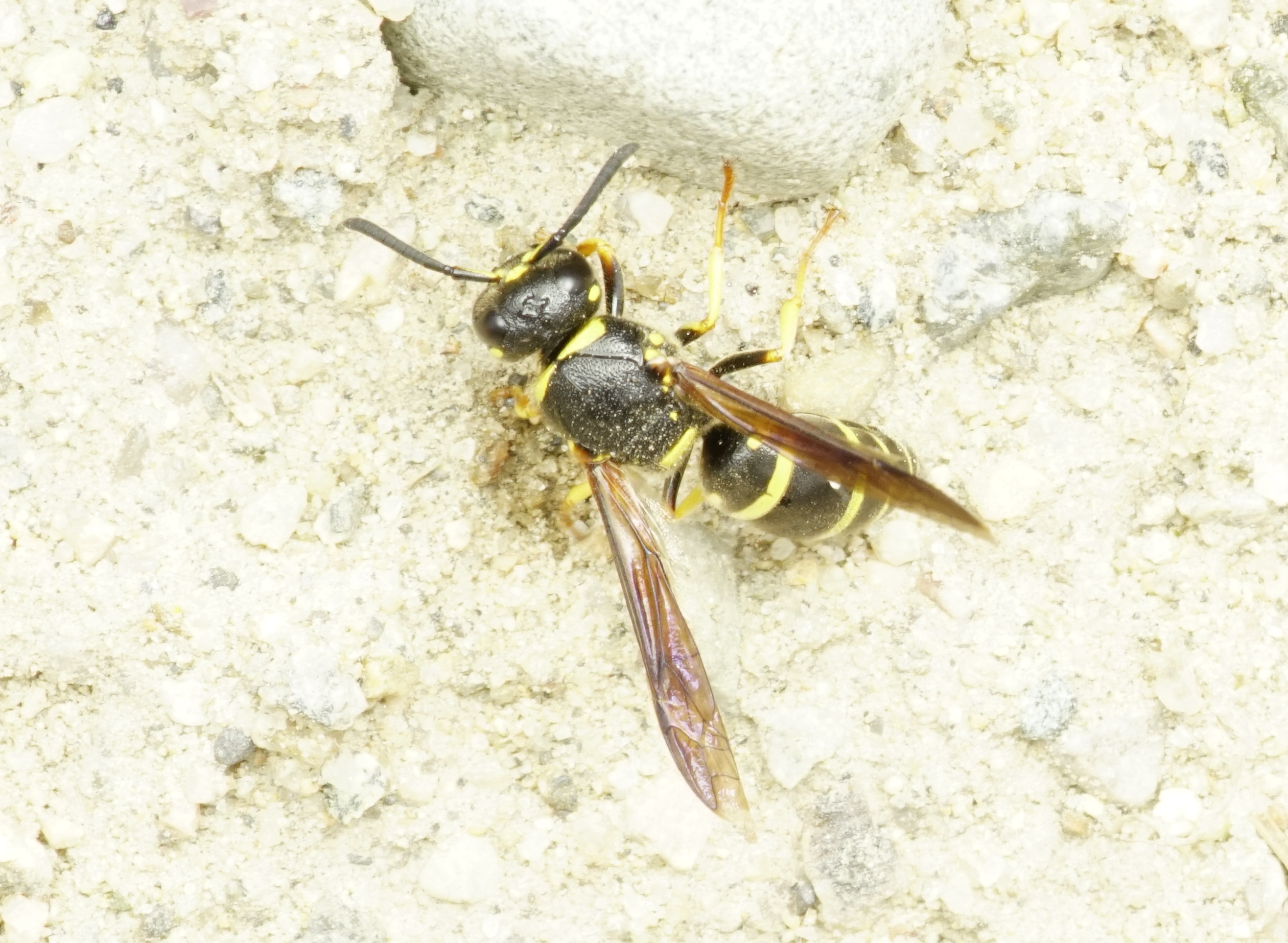
Eumeninae (potter and mason wasps). Parancistrocerus cf perennis? Euodynerus cf hidalgo? My guess is the first.
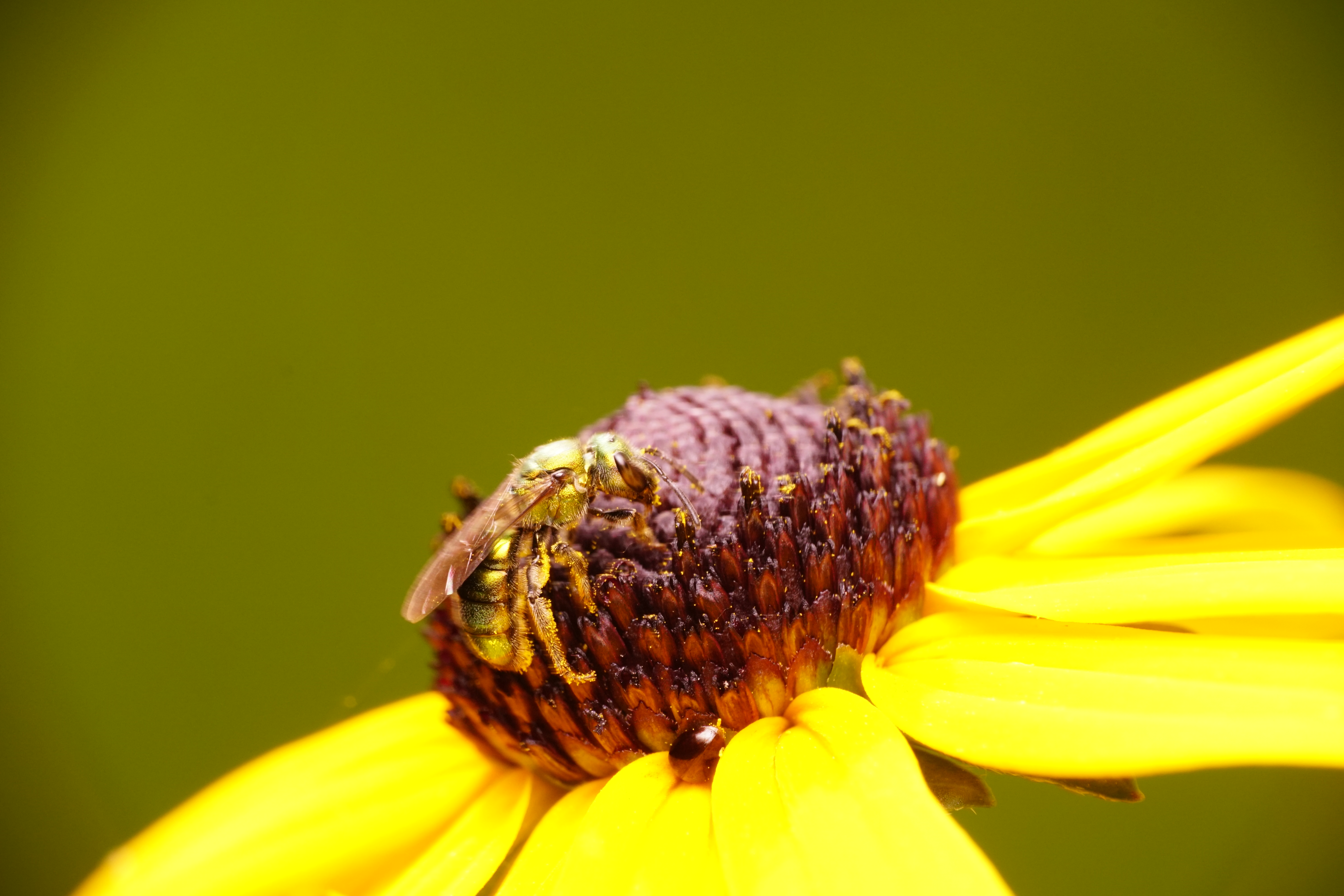
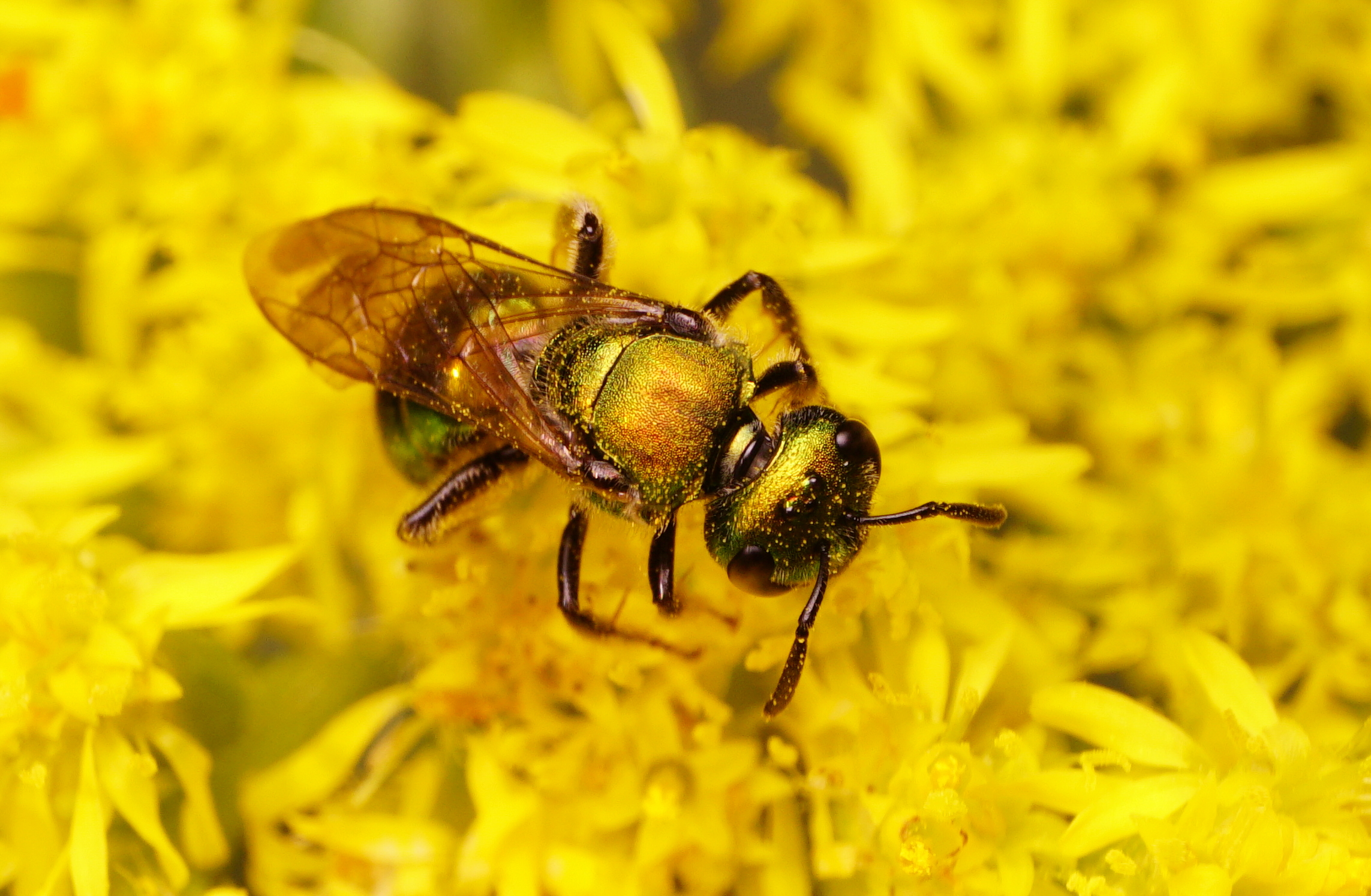
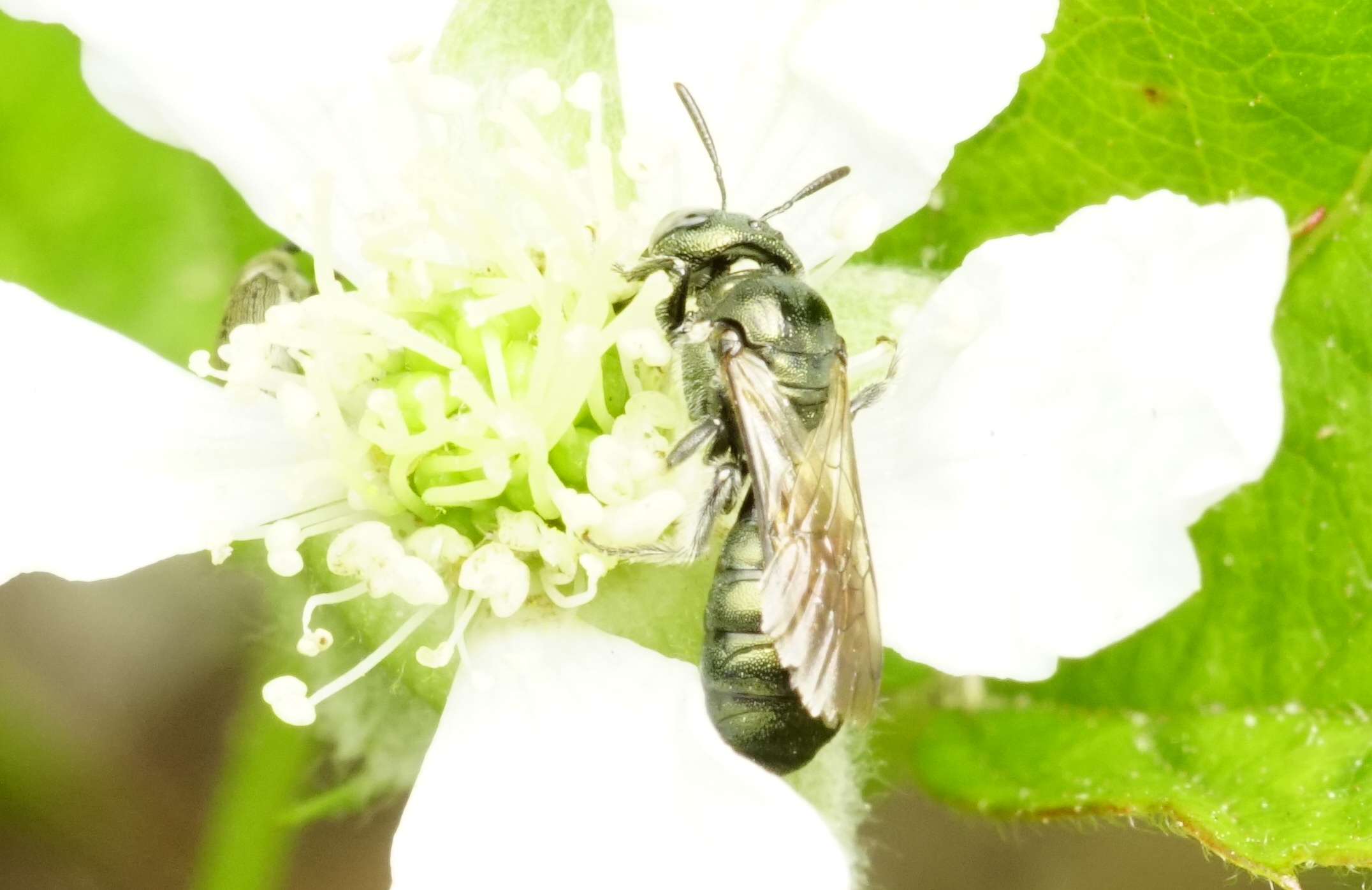
Ceratina, as evidenced by the more muted green color and the white behind the head.
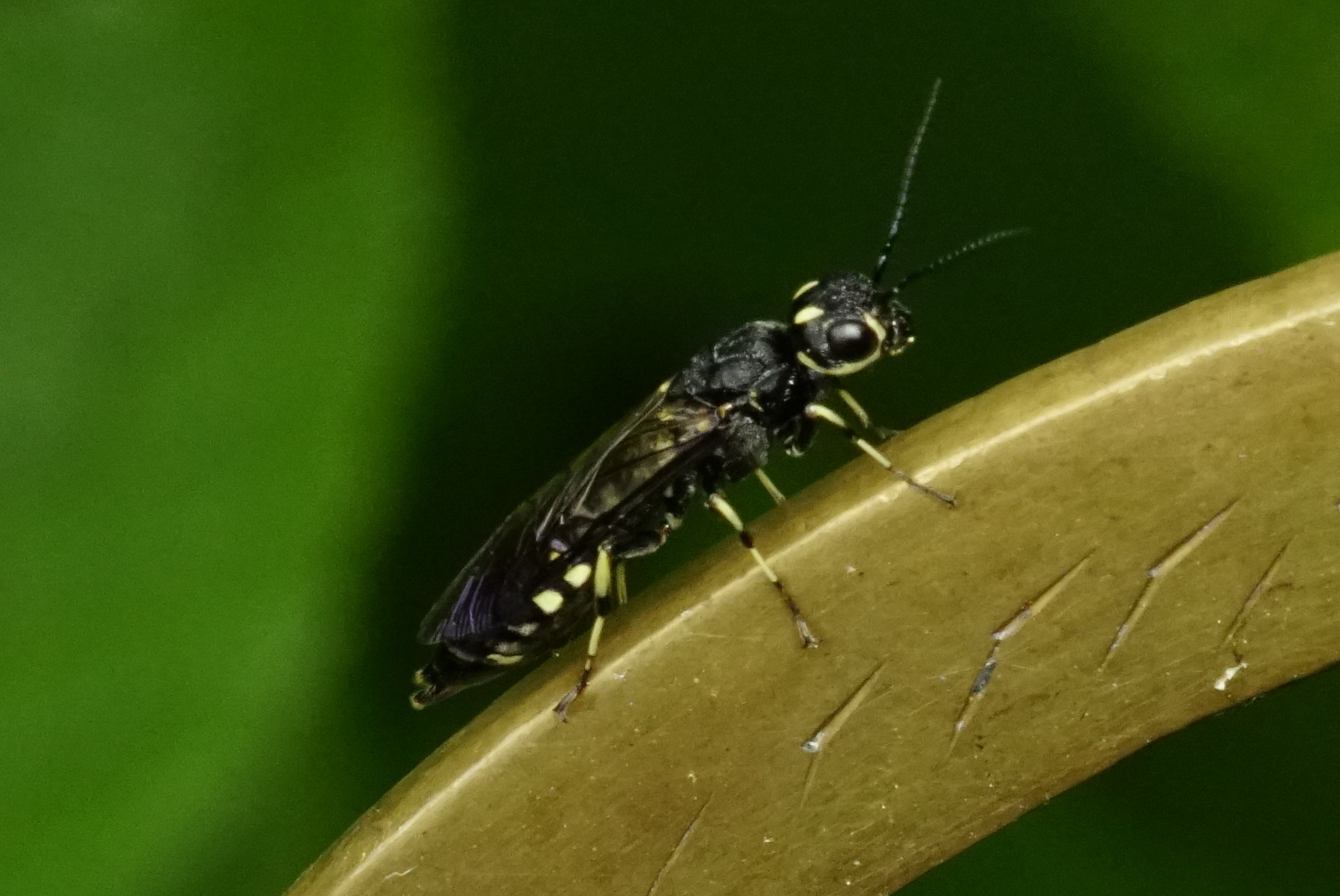
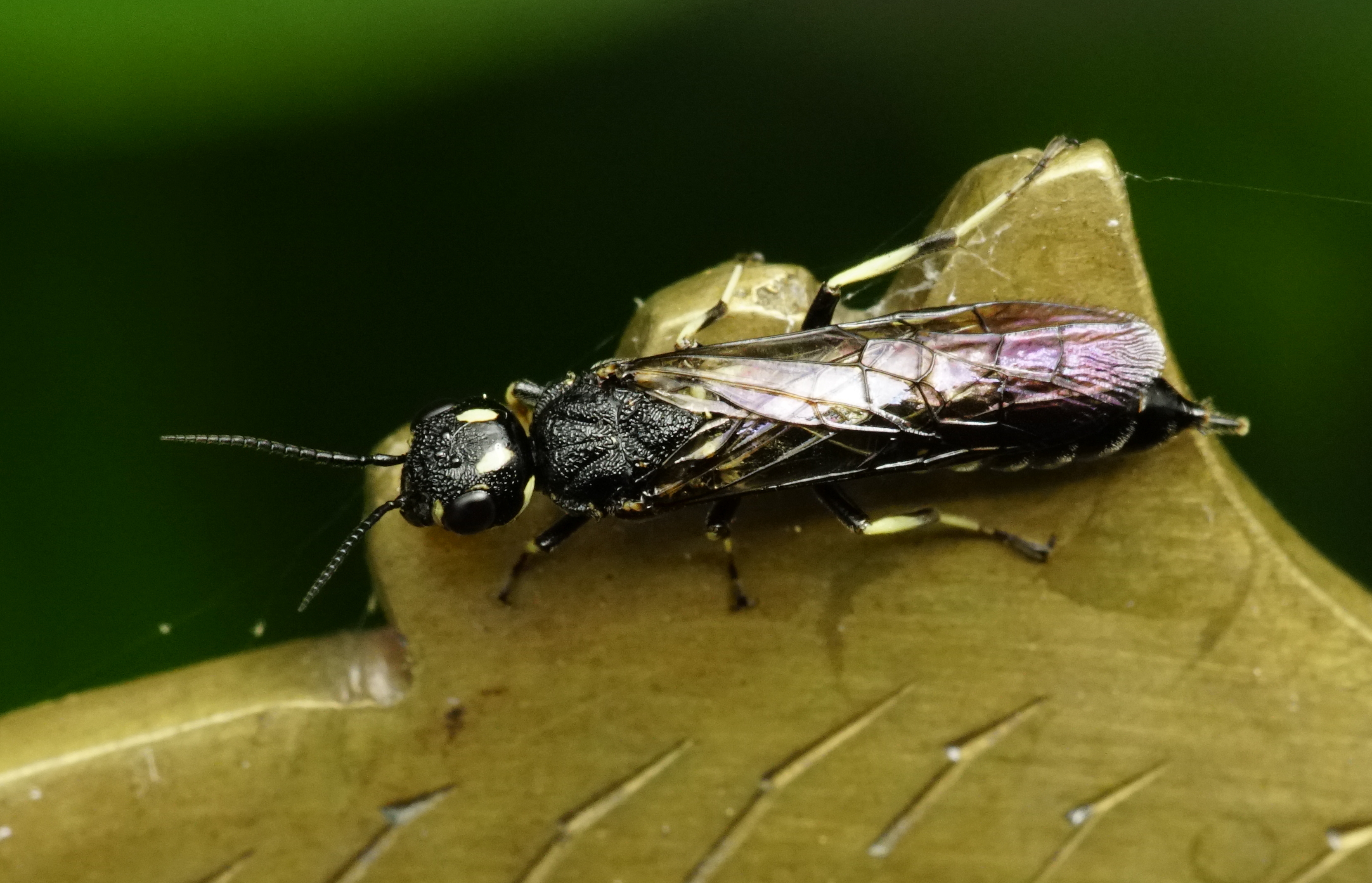
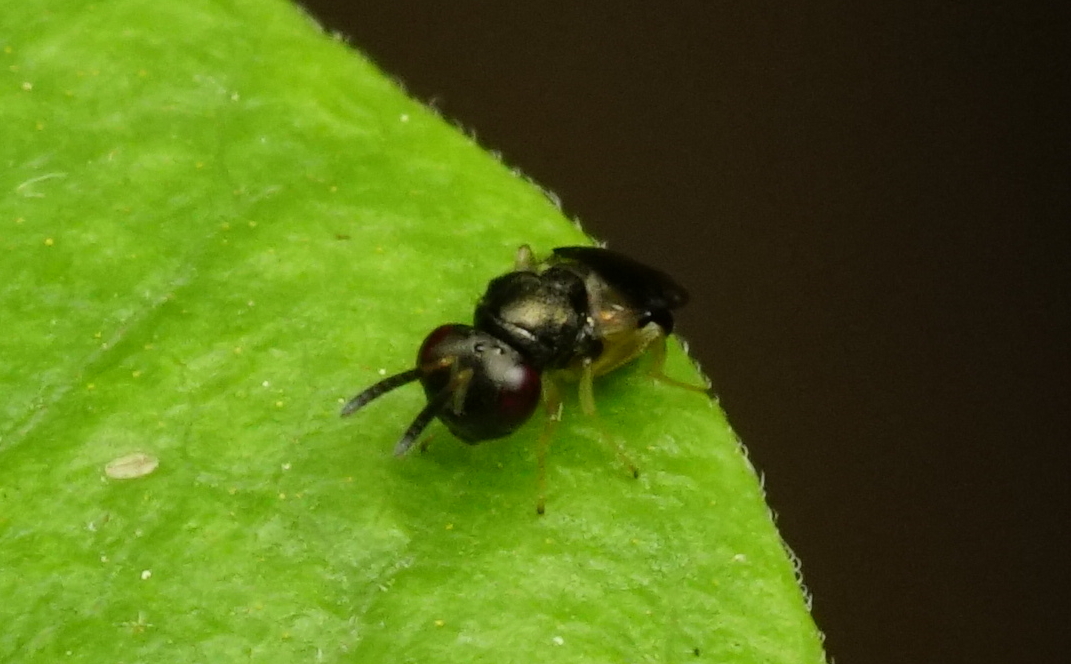
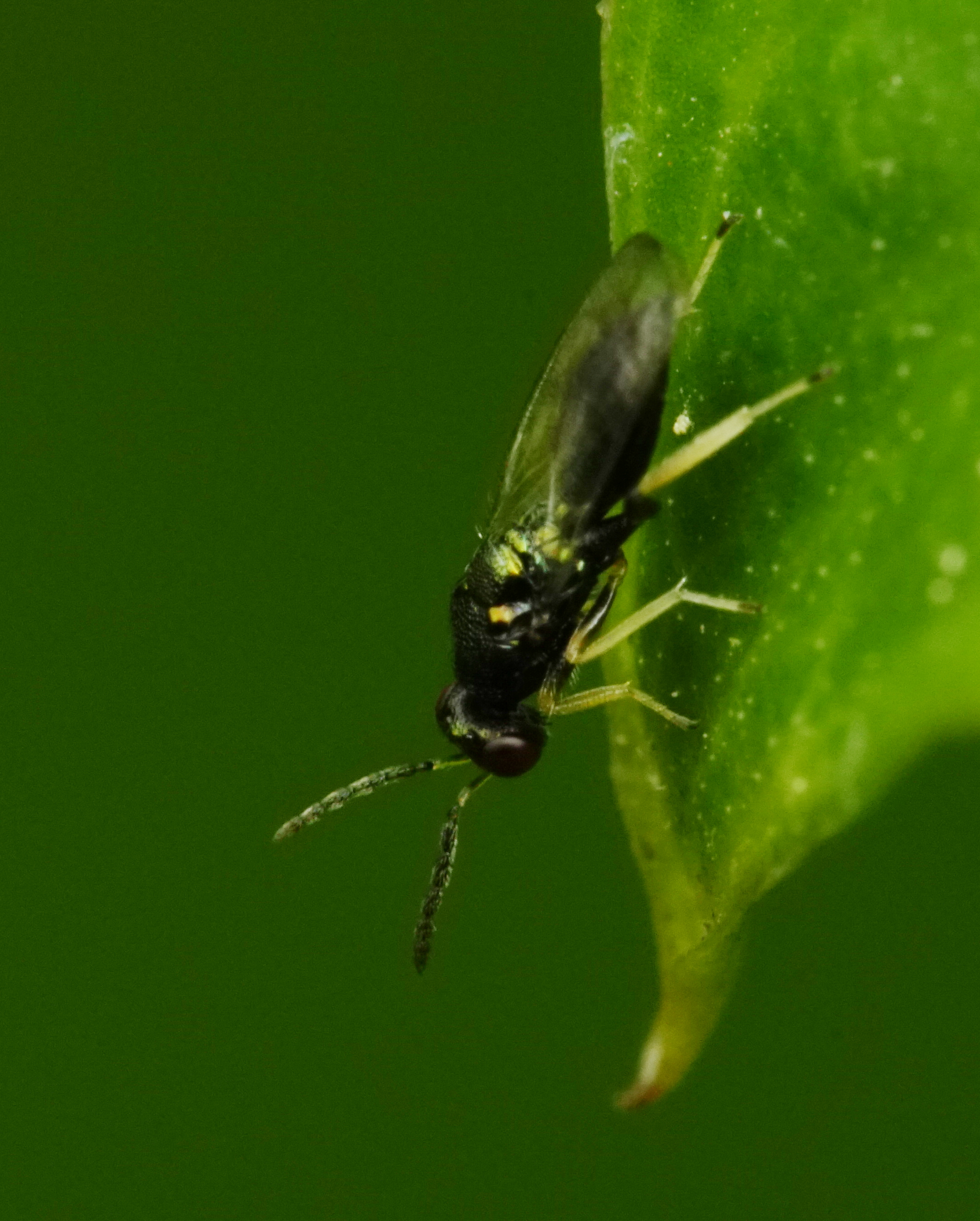
What the hell is going on here??? The first two photos show a fairly normal hymenopteran, but the third…!
EDIT: Identified as the sawfly Xiphydria. Maybe they all just look like this all the time?
What is going on here??
Encyrtidae:
Pteromalidae:
Maybe Chrysididae? Such as Holopyga or Hedychrum?
Eulophidae:
Orthoptera
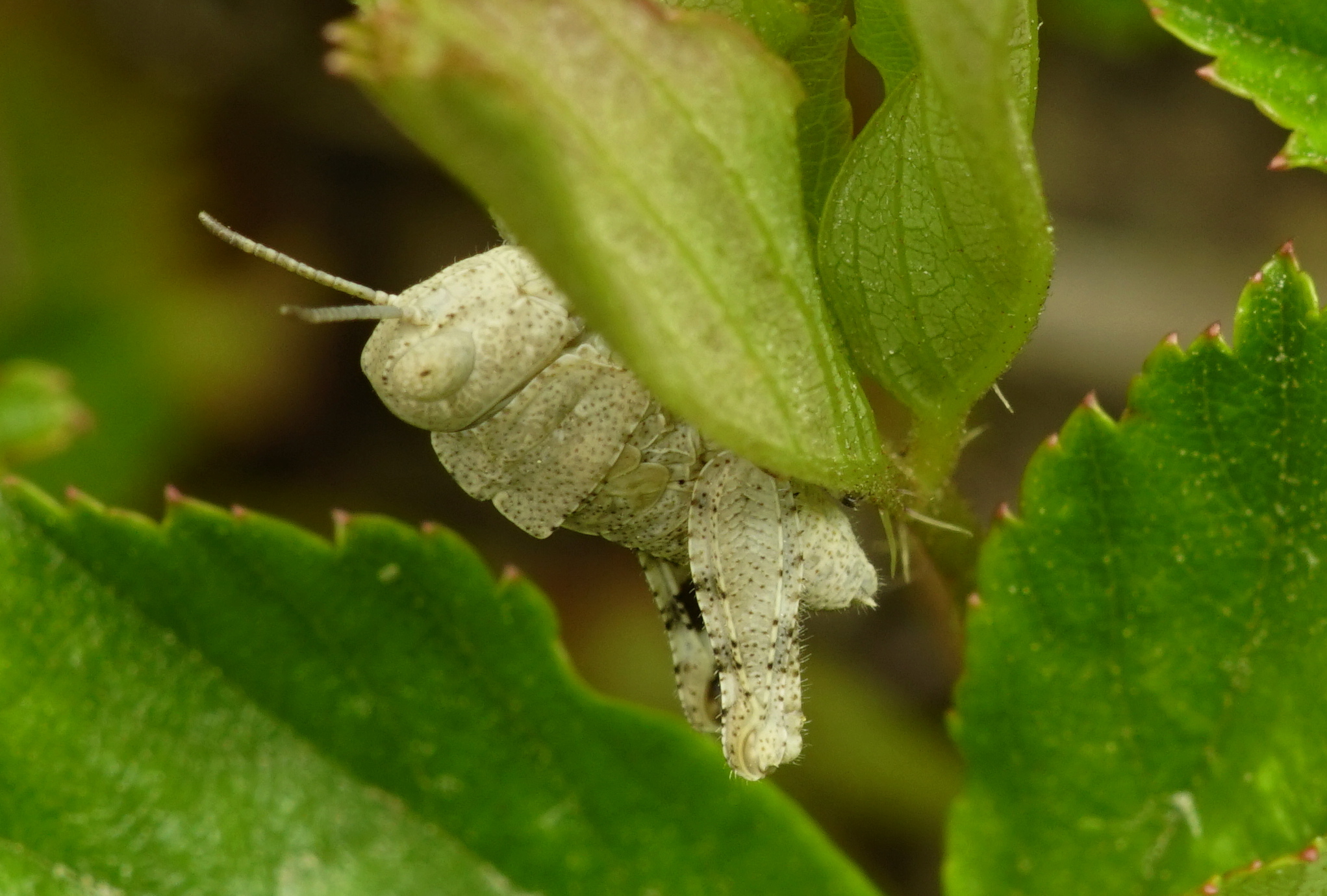
Grasshopper nymph. Takes a wiser man than me to figure out what kind it is from a photo at this age.
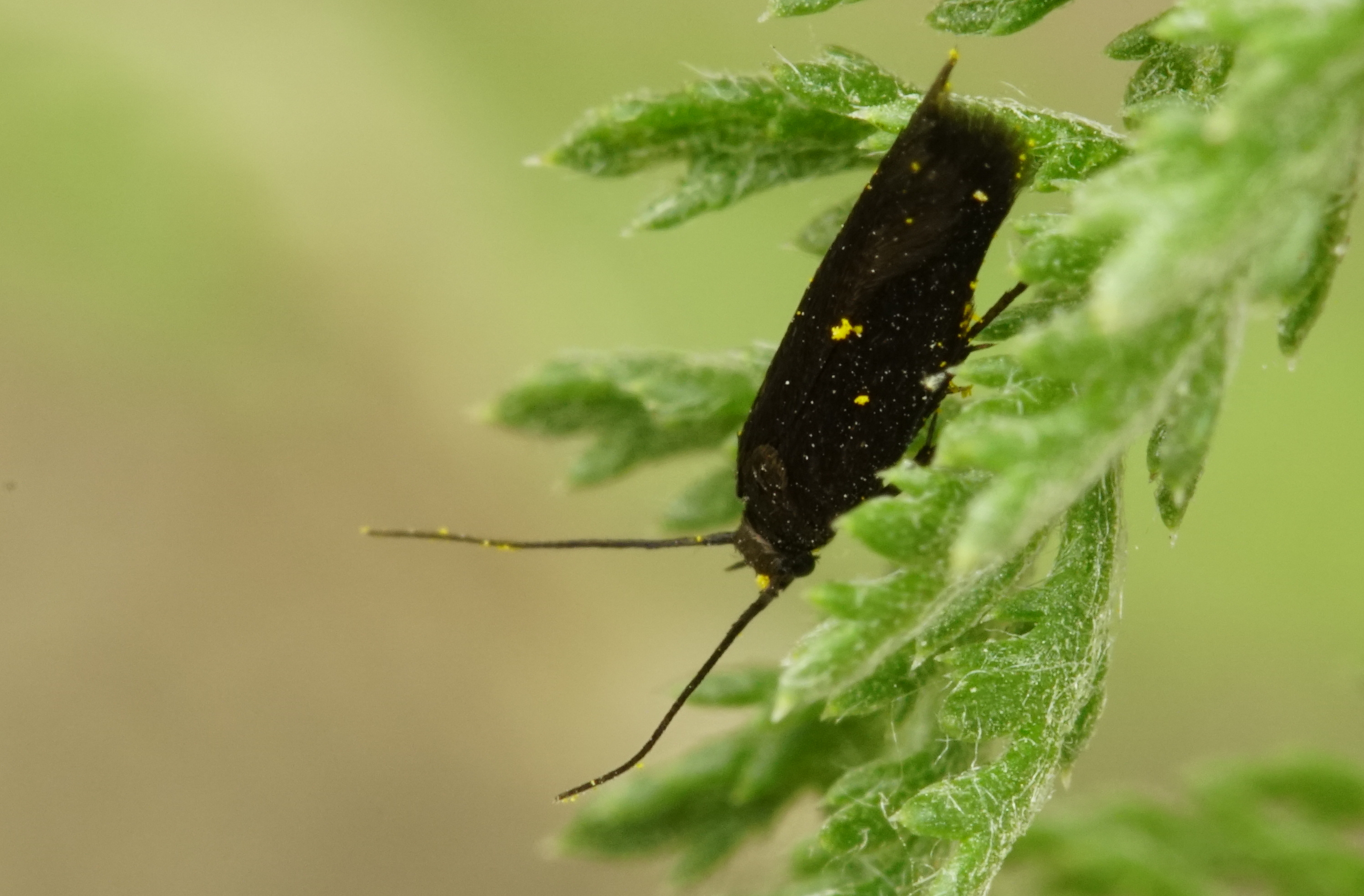
“The first two are Scythris species. Assuming they are both the same species, I would suggest S. fuscicomella, although there are two other possible species. S. fuscicomella has thickened antennae, which I think this does. We have only a single record of this species for Massachusetts – from Hyde Park in 1910! The other two possible species have also not been found in the State since the first half of the last century”
Trichoptera
Coleoptera
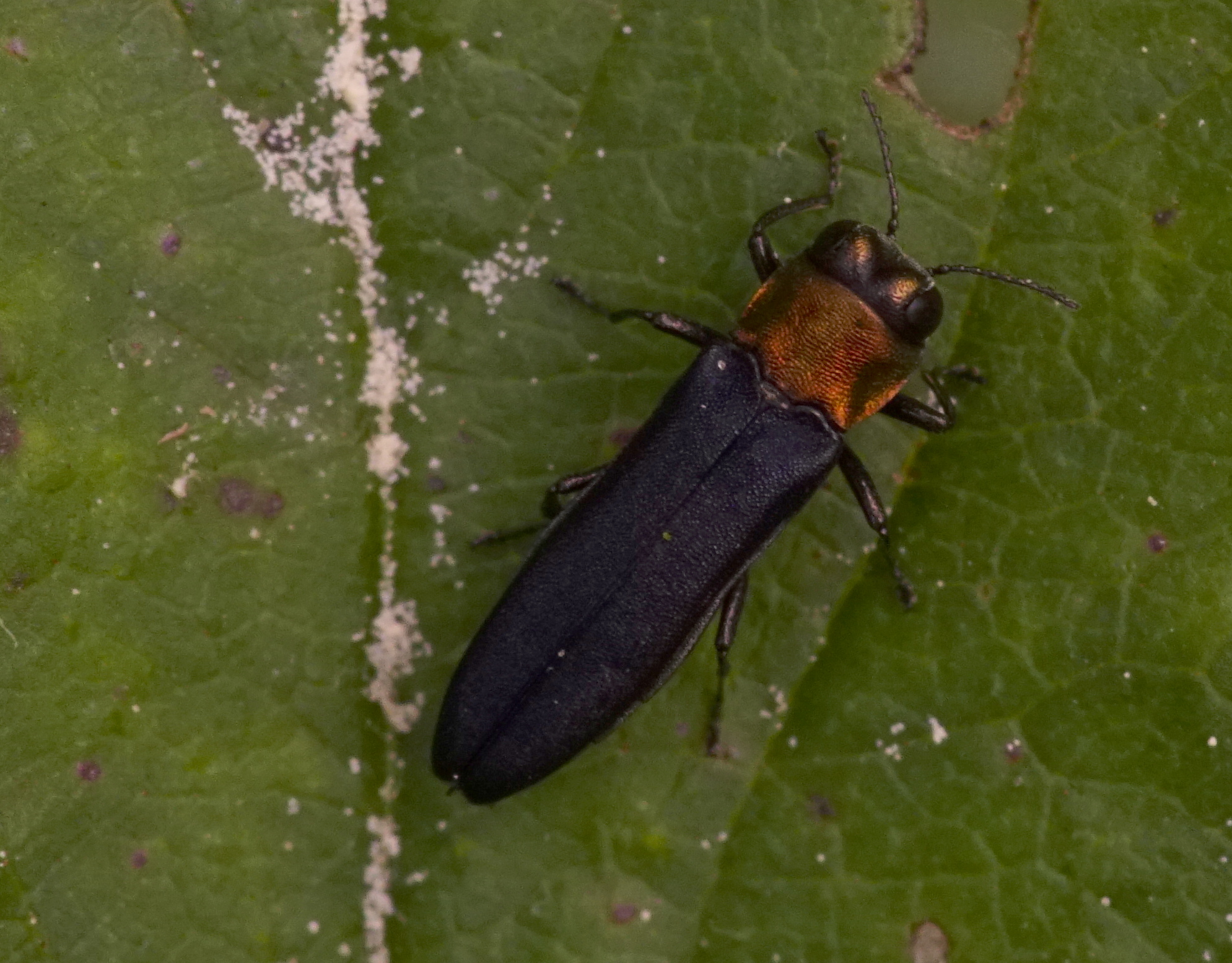
Agrilus ruficollis, red-necked cane borer, Buprestidae. Don’t see a Norfolk county, Massachusetts report of this, but they’re not rare.
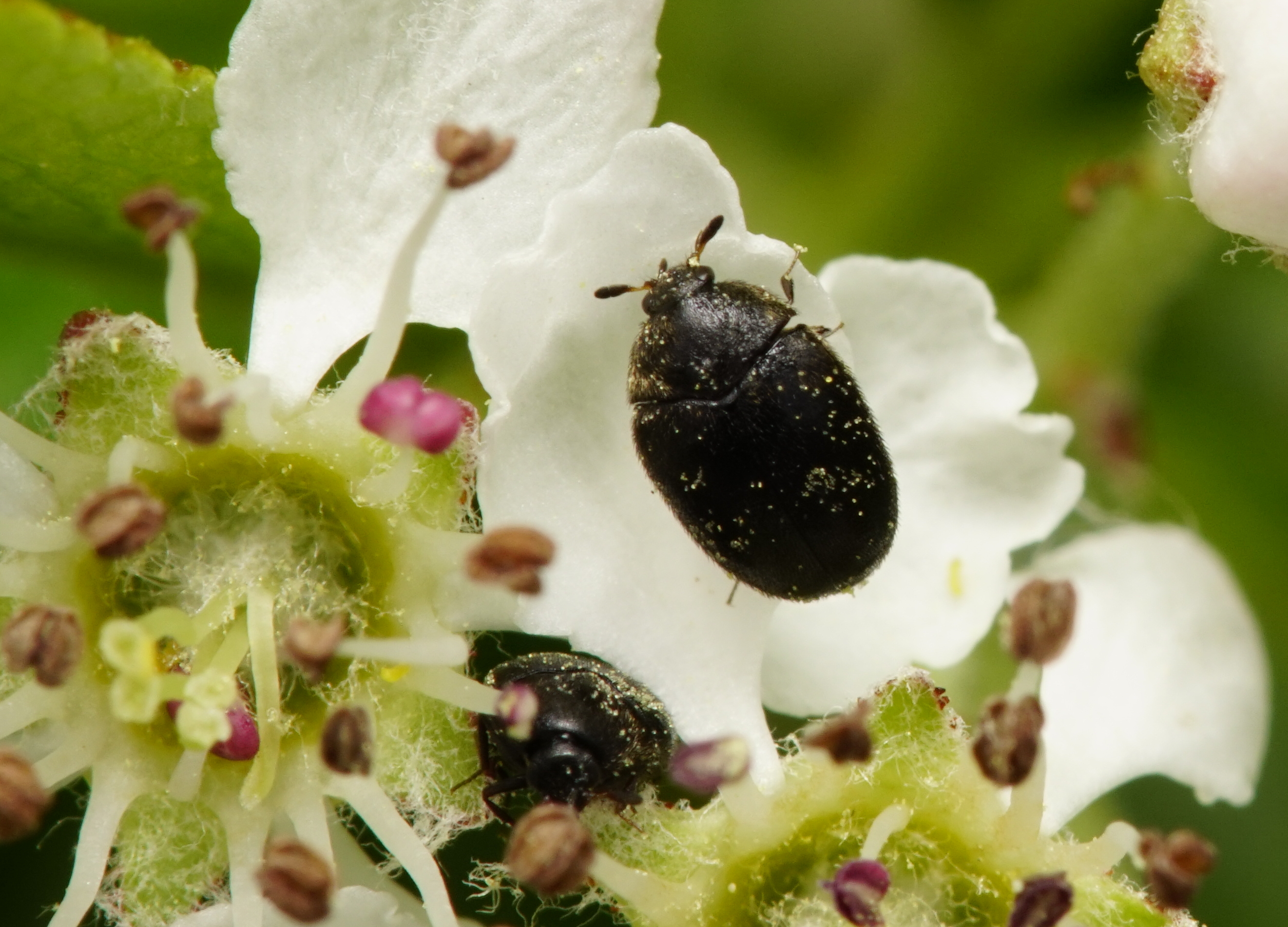
Cryptorhopalum triste in Dermestidae, were all over the place on the flowers.
Bad angle. Carabidae? Something like Stenolophus cf ochropezus? Agonum albicrus looks better. Amphasia seems to have rufous legs/antennae. Apristus looks similar-ish. I should stop now.
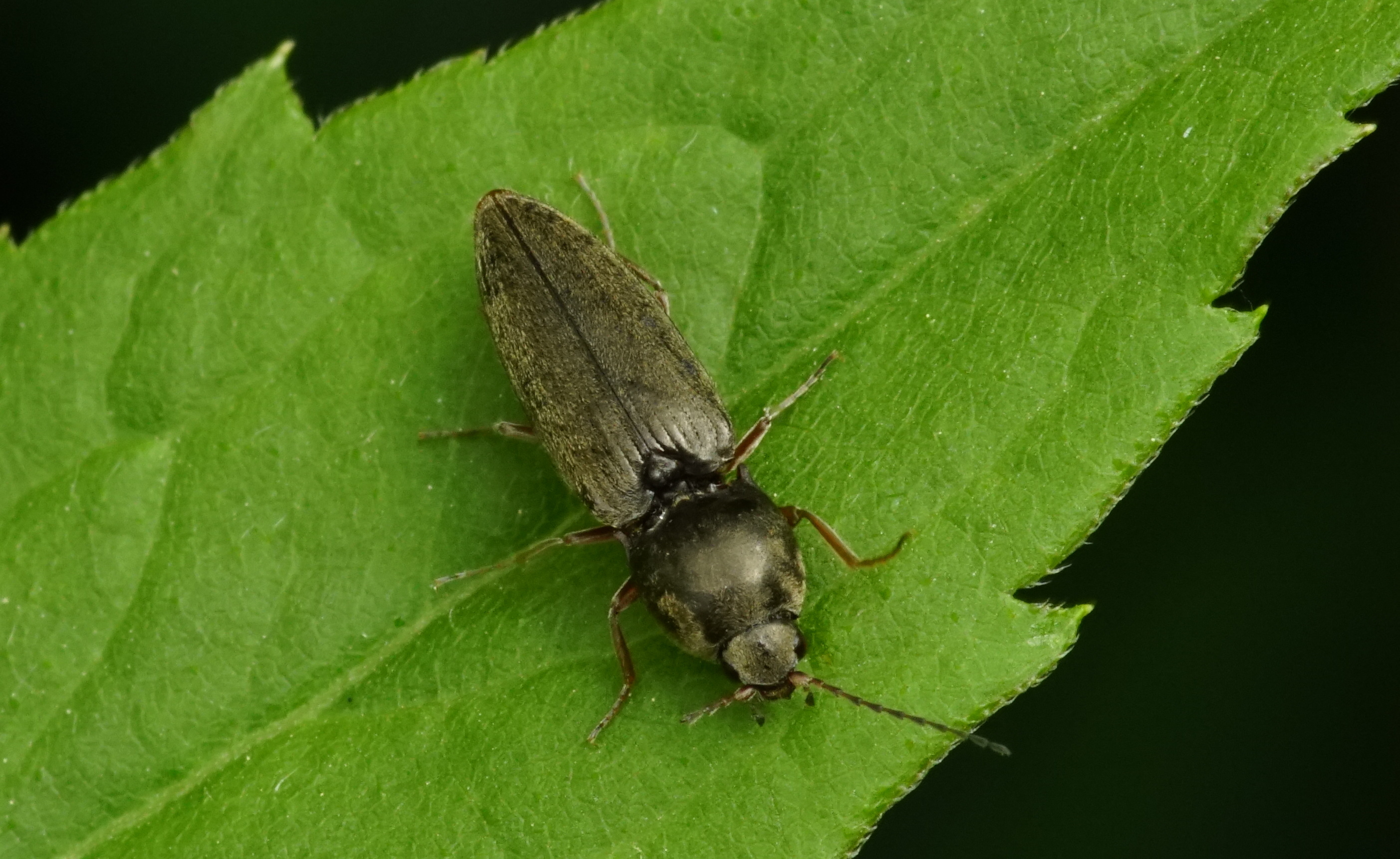
Elateridae. I do not dare go any further.
Cantharidae –> Rhagonycha?
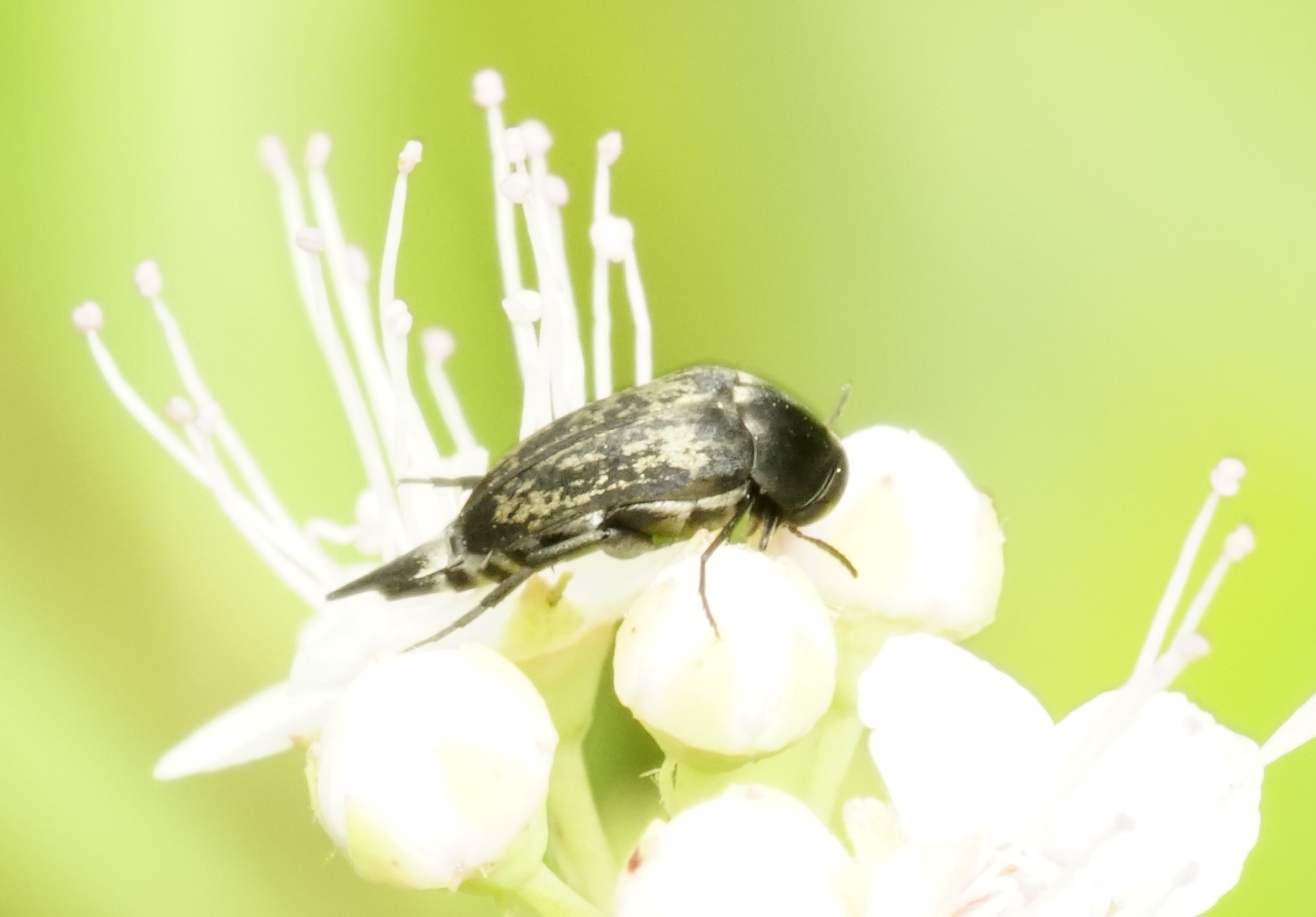
Mordellidae, tumbling beetles. Looks like Mordella marginata.
Diptera
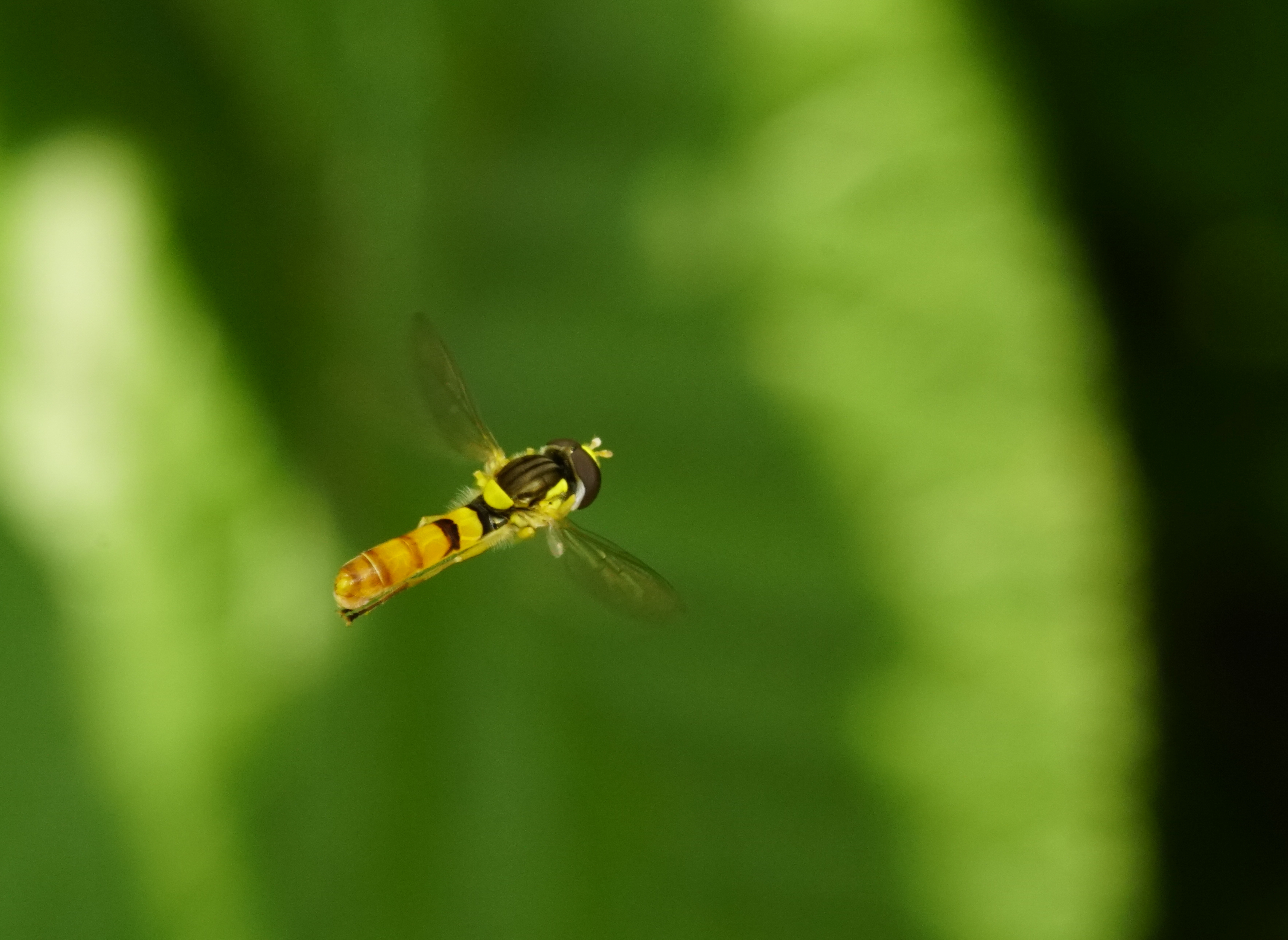
Excited to catch them flying!
Syrphid fly, looks like Sphaerophoria
Arachnida
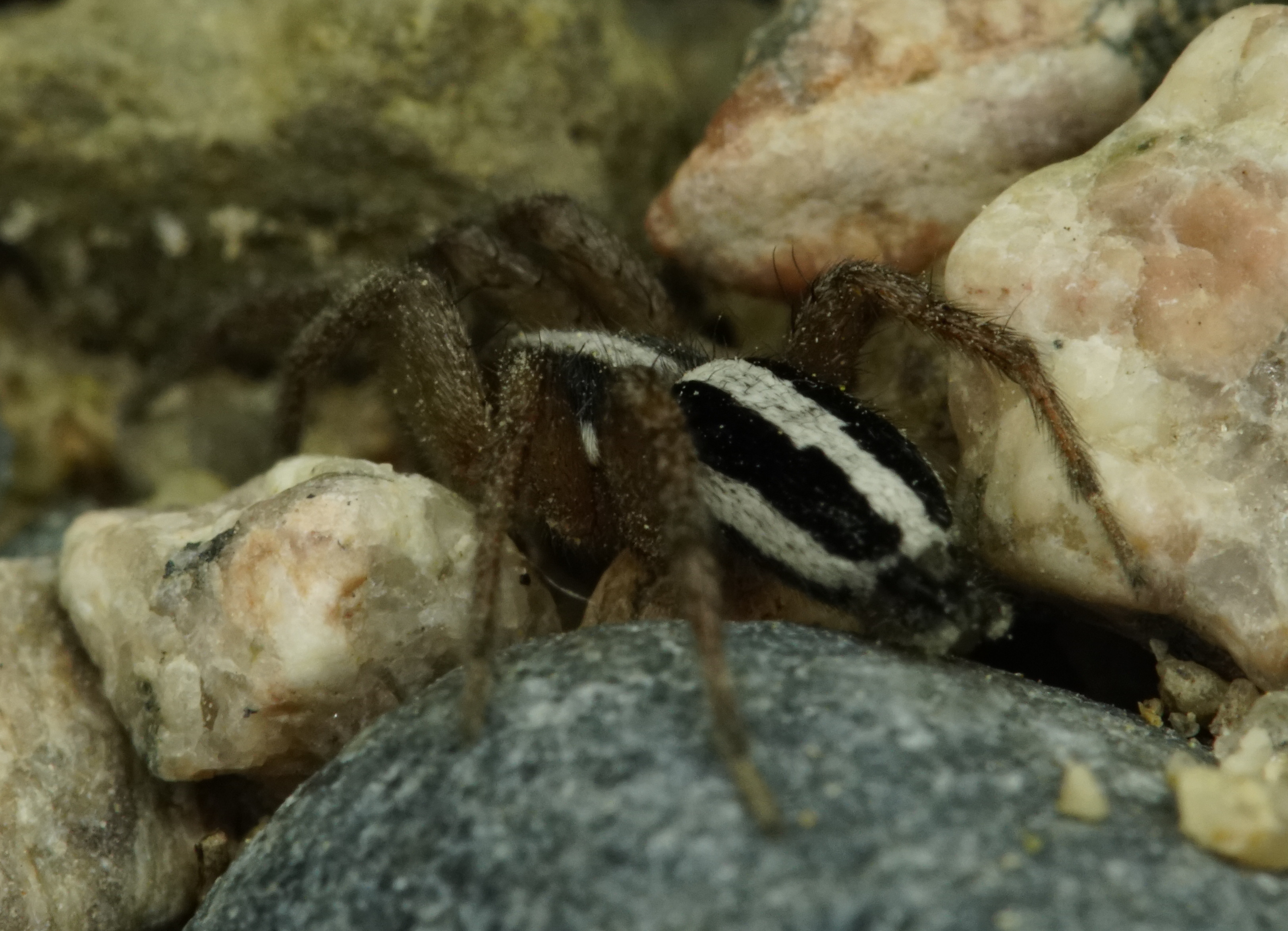
Cesonia bilineata in Gnaphosidae
Dictynidae
Beautiful mite! Balaustium, Erythraeidae.
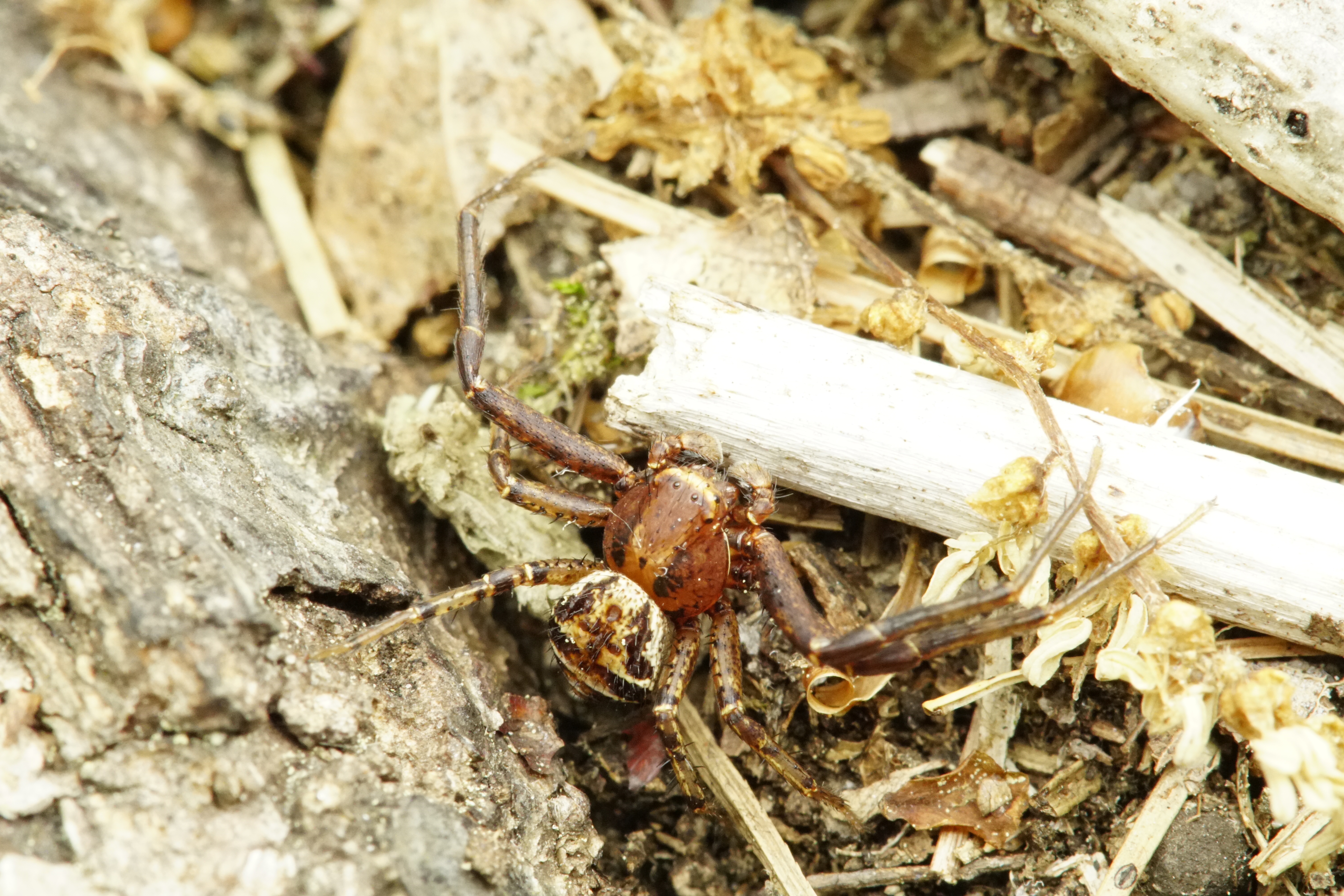
Thomisidae. Xysticus? Xysticus vs Bassaniana is tough.
Asagena americana in Theridiidae.
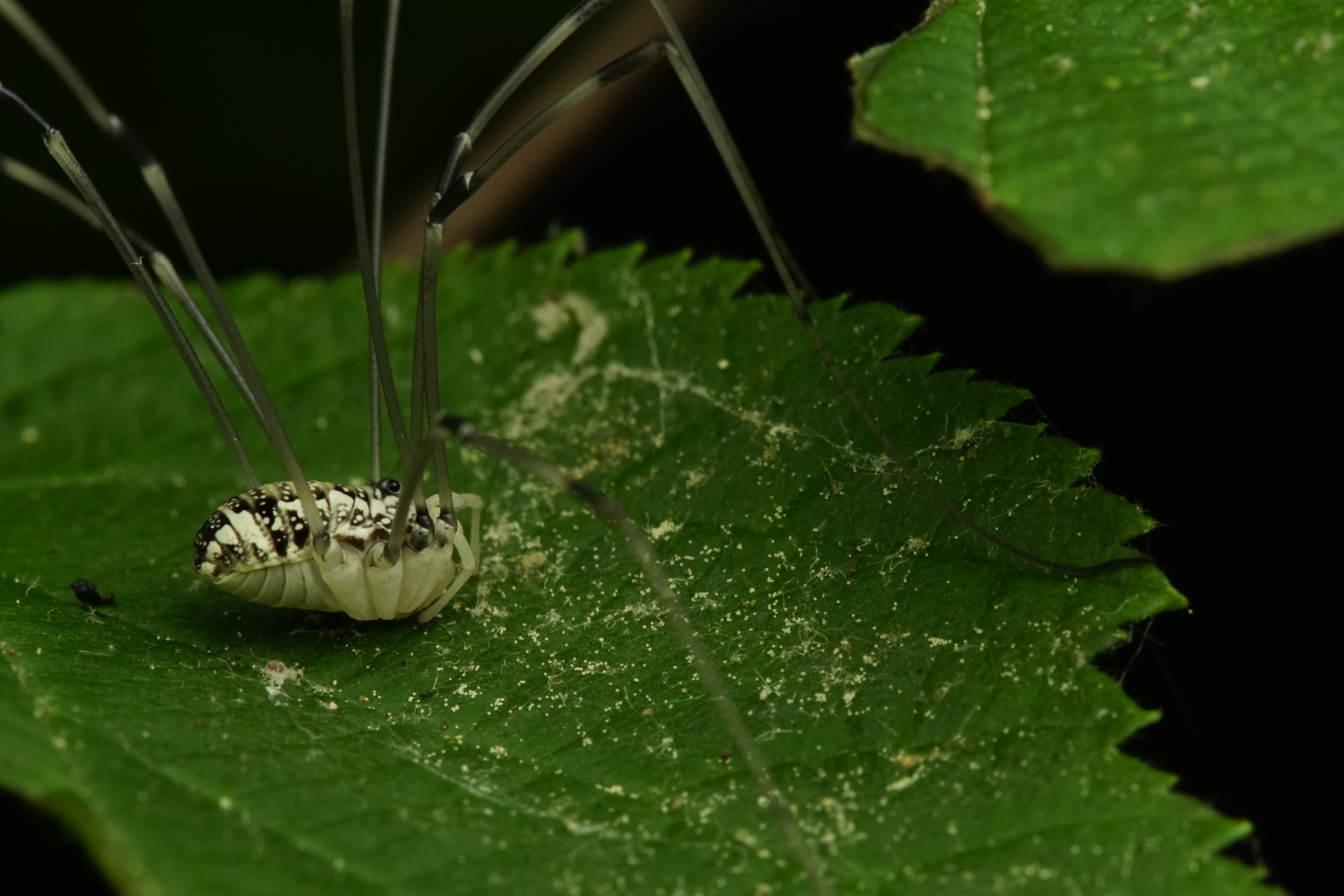
Opiliones, aka Harvestman. Leiobunum vittatum, I think.
No arthropods!
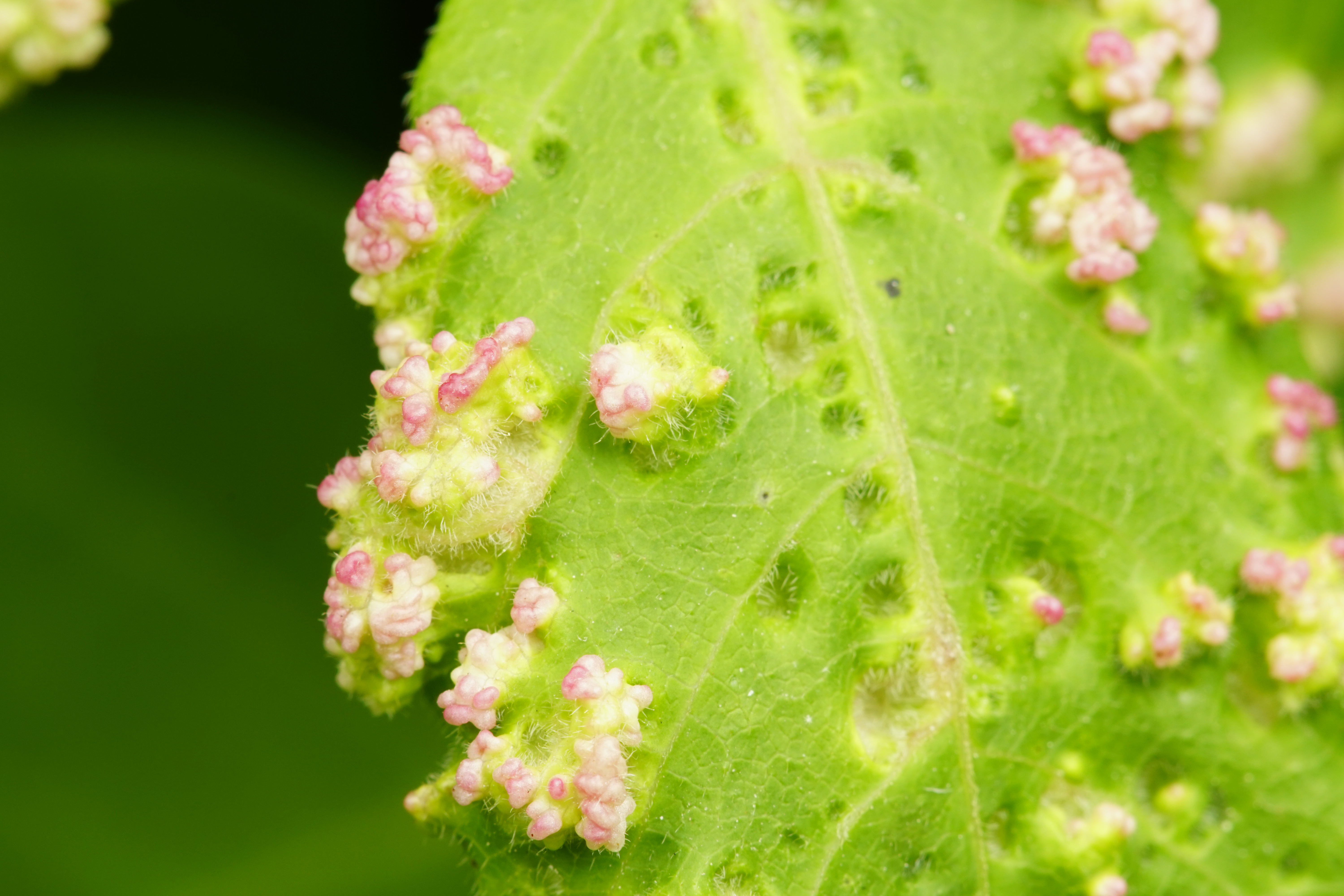
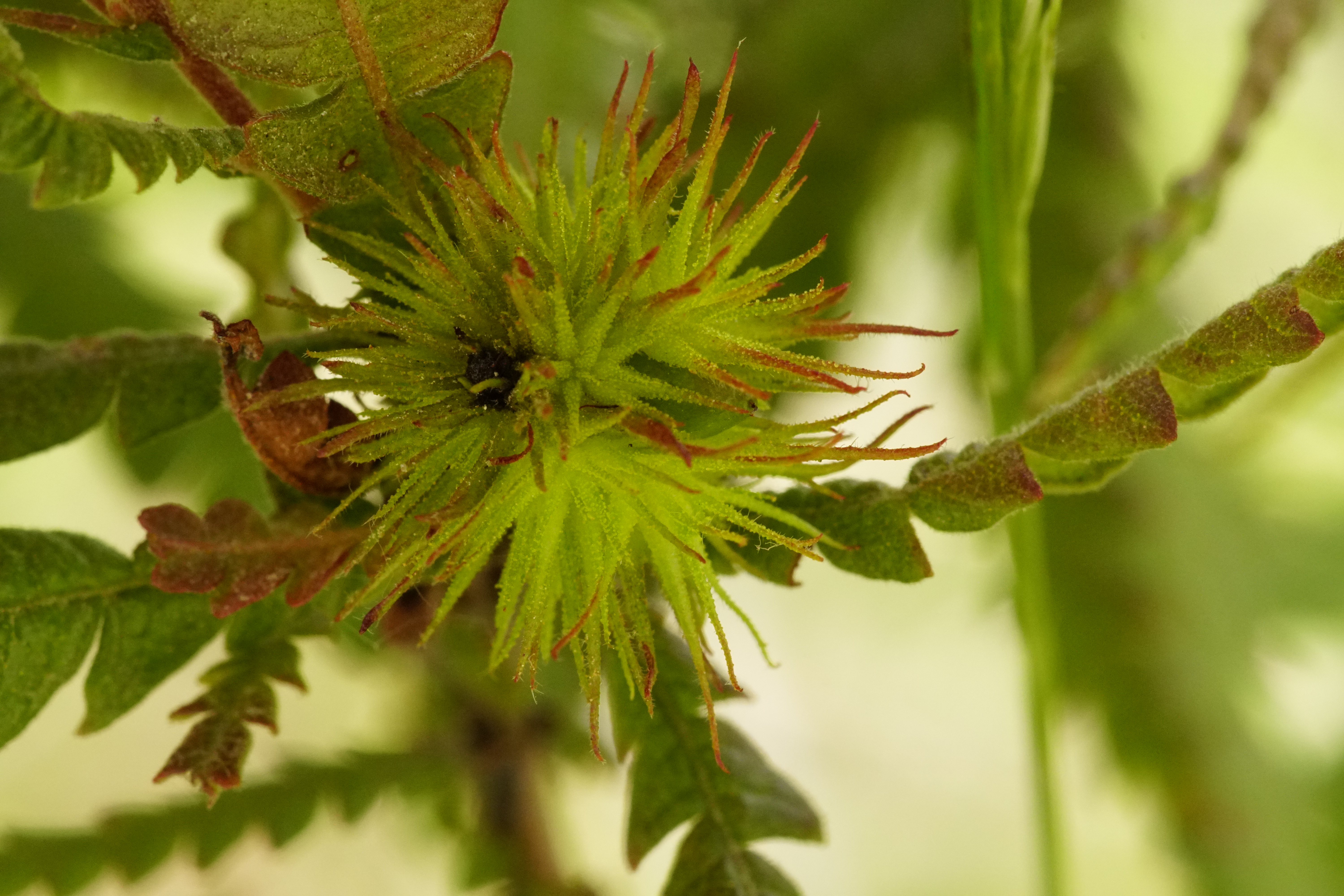
These galls look something like Aculops rhois galls (Eriophyidae, mites).
I haven’t been able to go out for a while. But I work from home near the porch, giving the insects the opportunity to drop by and distract me.
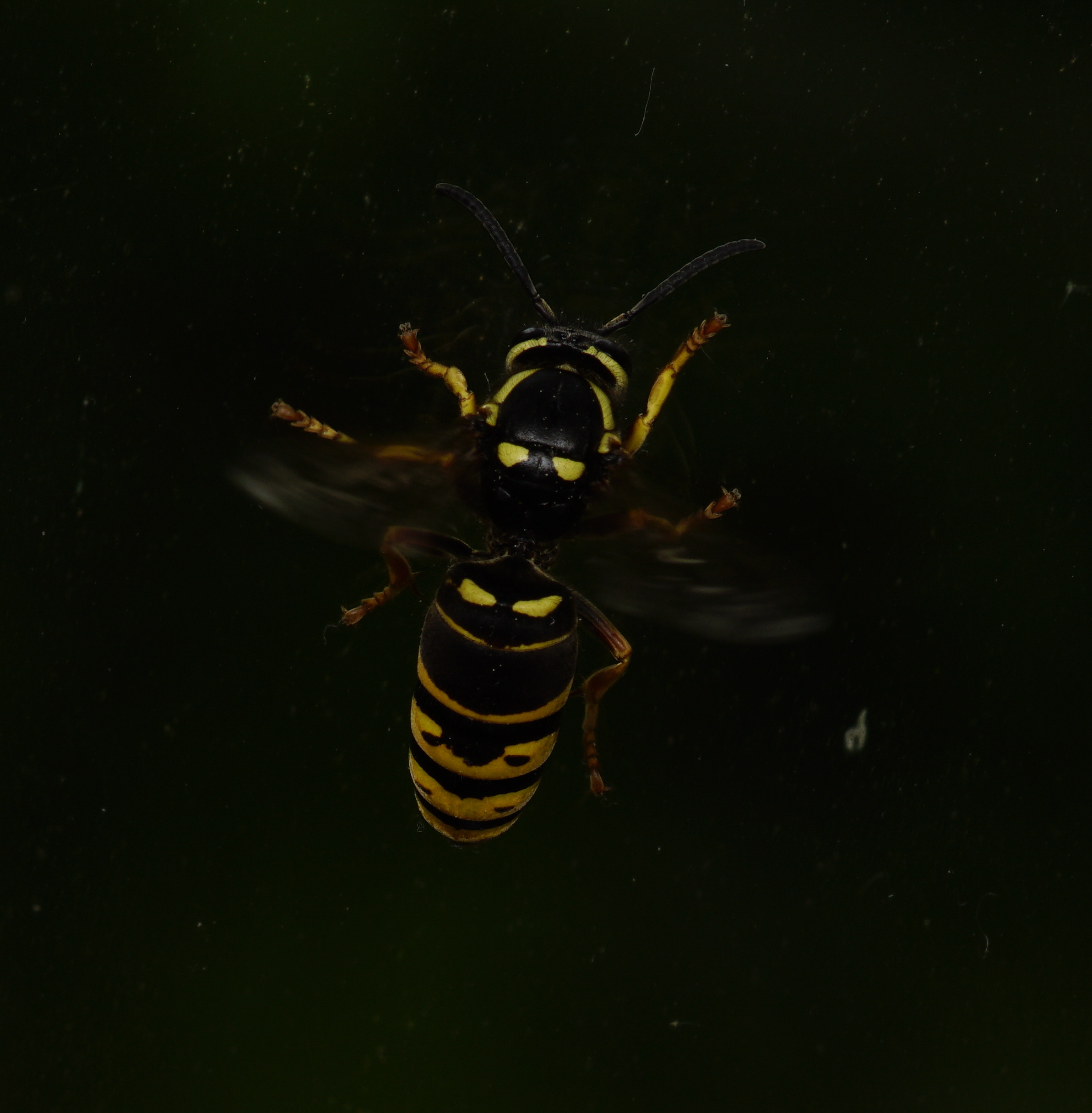
This wasp, I think, is Vespula vidua (the widow yellowjacket). That means there’s a yellowjacket nest near by. I’m fine with that — they are genuinely fascinating.
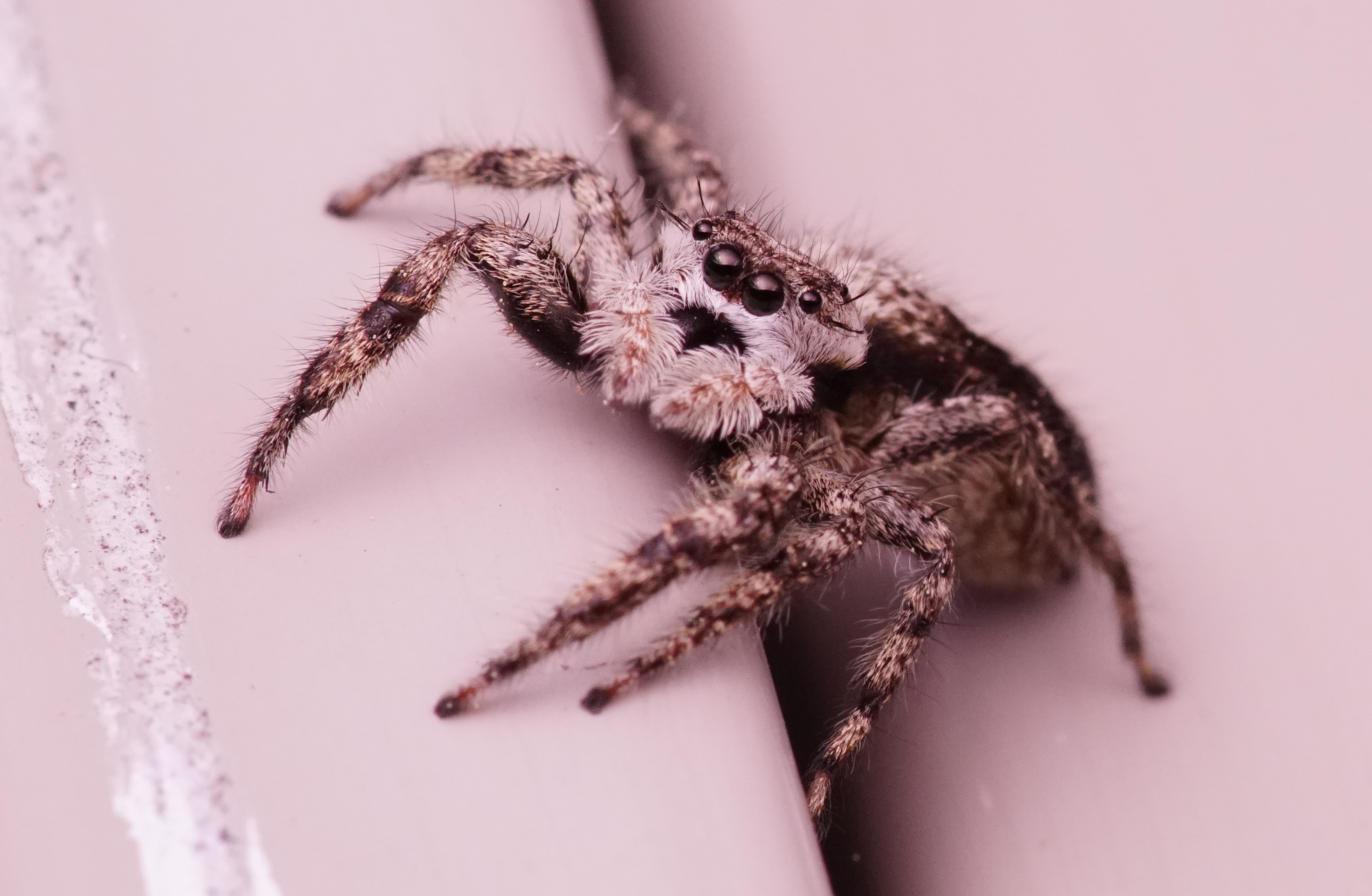
Then there’s this girl. I’ve seen her regularly when I step out onto the porch. She’s a Platycryptus undatus and I’ve named her Grizzlee. Not sure why the white balance got so red, by the way.
Walking along the powerline cut near Canoe River, Foxboro. Fantastic day for insects and spiders!
First, Diptera:
Conopidae, perhaps Myopa sp.
Lauxania in Lauxaniidae:
“Unmarked wings with very simple veination pretty much rules out Anisopodidae. Sciaroidea, I’d say, but not Mycetophilidae; Cecidomyiidae would be my guess, but it’s truly a guess.”
Sciaridae
Hymenoptera:
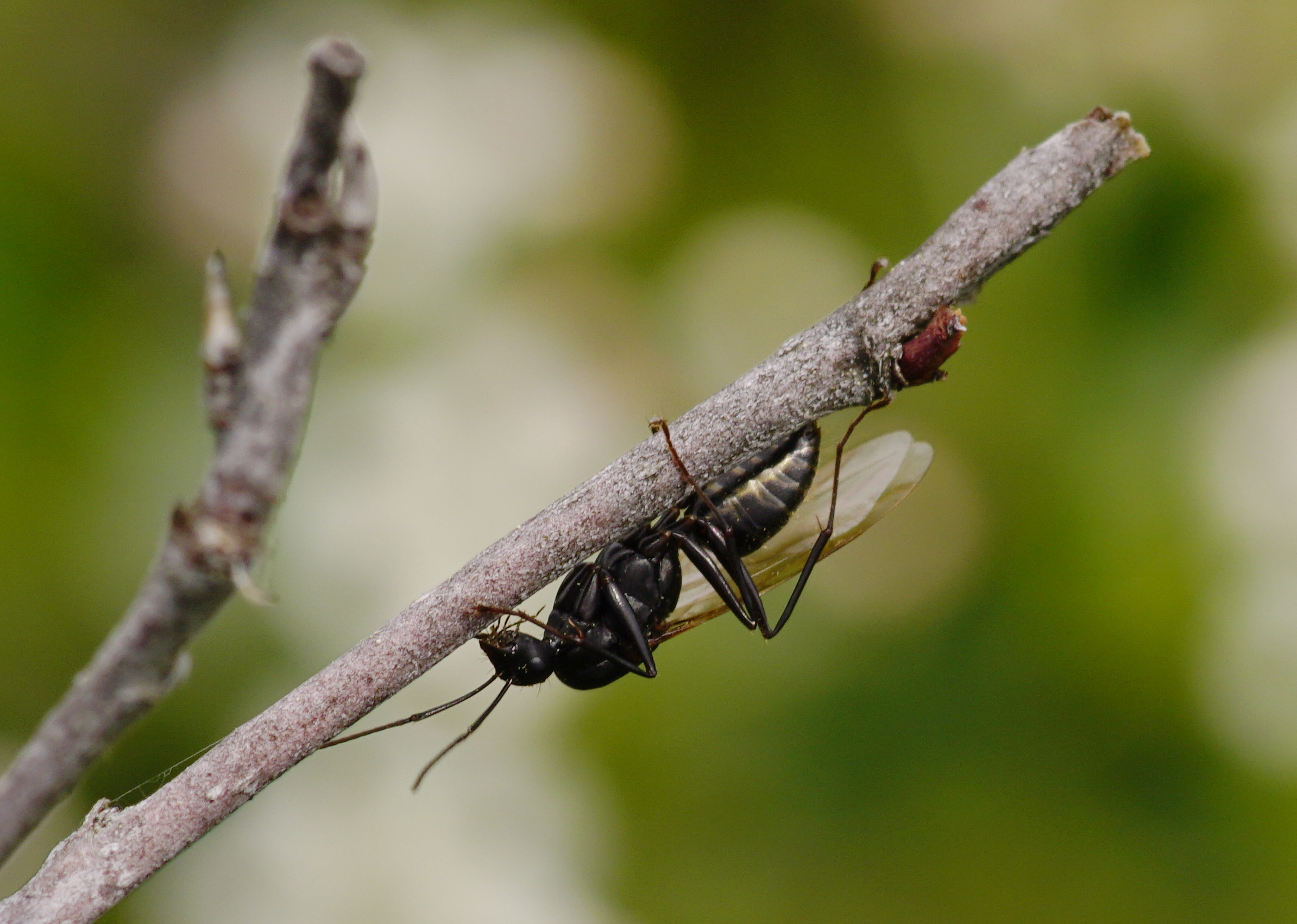
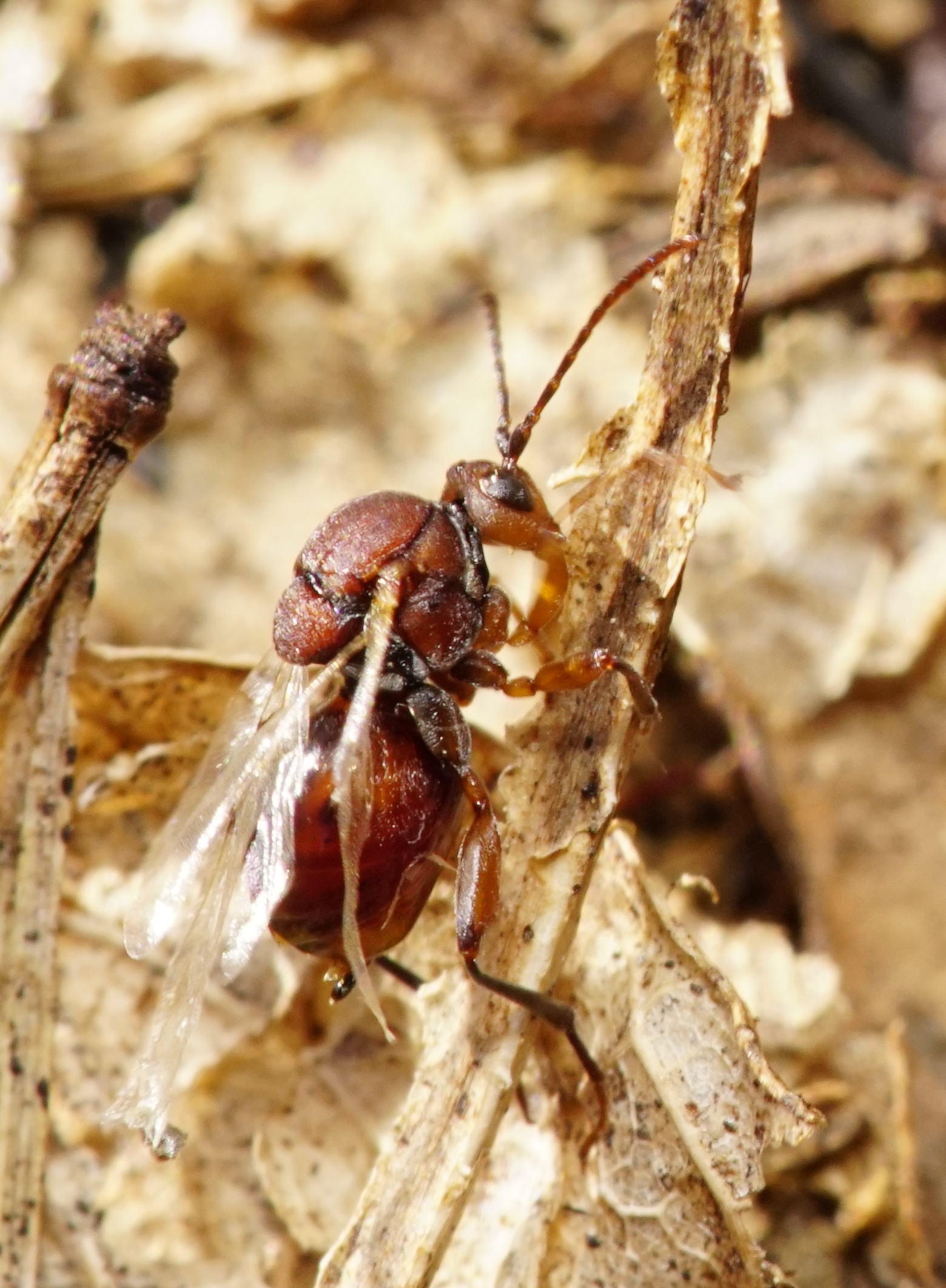
An ant alate?
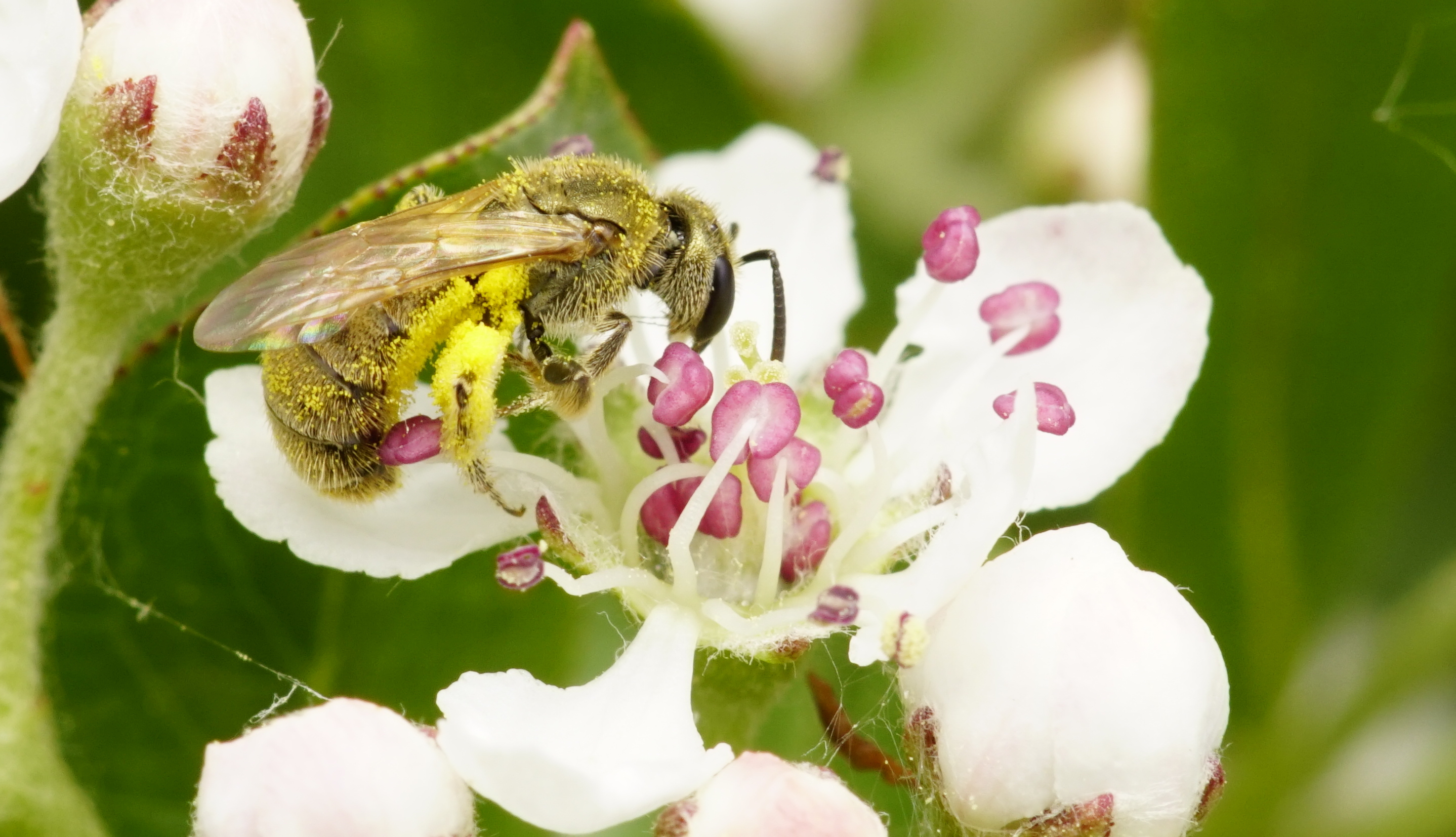
Halictidae. Maybe Lasioglossum (subgenus Dialictus)? Don’t really know how to distinguish from Augochlora.
Pompilidae, Priocnemis minorata seems to be the only one registered in Massachusetts in May.
Another Lasioglossum?
Another Priocnemis minorata?
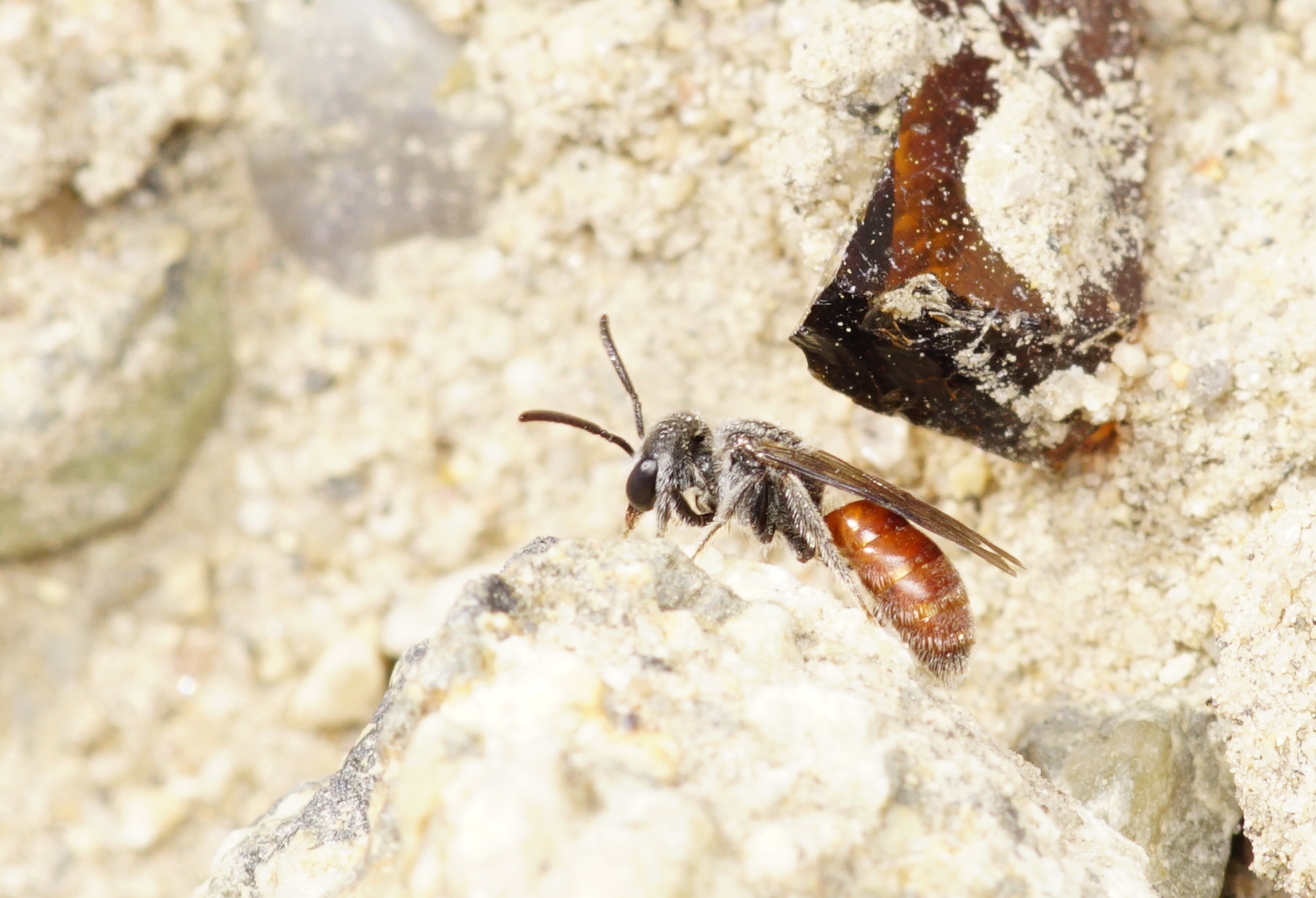
Looks like Sphecodes:
I caught a Sphecodes in flight!
I CAUGHT A SPHECODES IN FLIGHT!
I really don’t know how to tell Augochlorini from Lasioglossum.
Cynipidae?
Coleoptera:
Dermestidae: Cryptorhopalum cf triste
Cerambicidae! (I initially thought Staphylinidae). Molorchus bimaculatus.
Cryptorhopalum cf triste again
Chrysomelidae: Sumitrosis inaequalis
I spent a lot of time trying to see who was digging this whole but she never came out so it’s a mystery!
EDIT: Lytta sp. in Meloidae
Hemiptera:
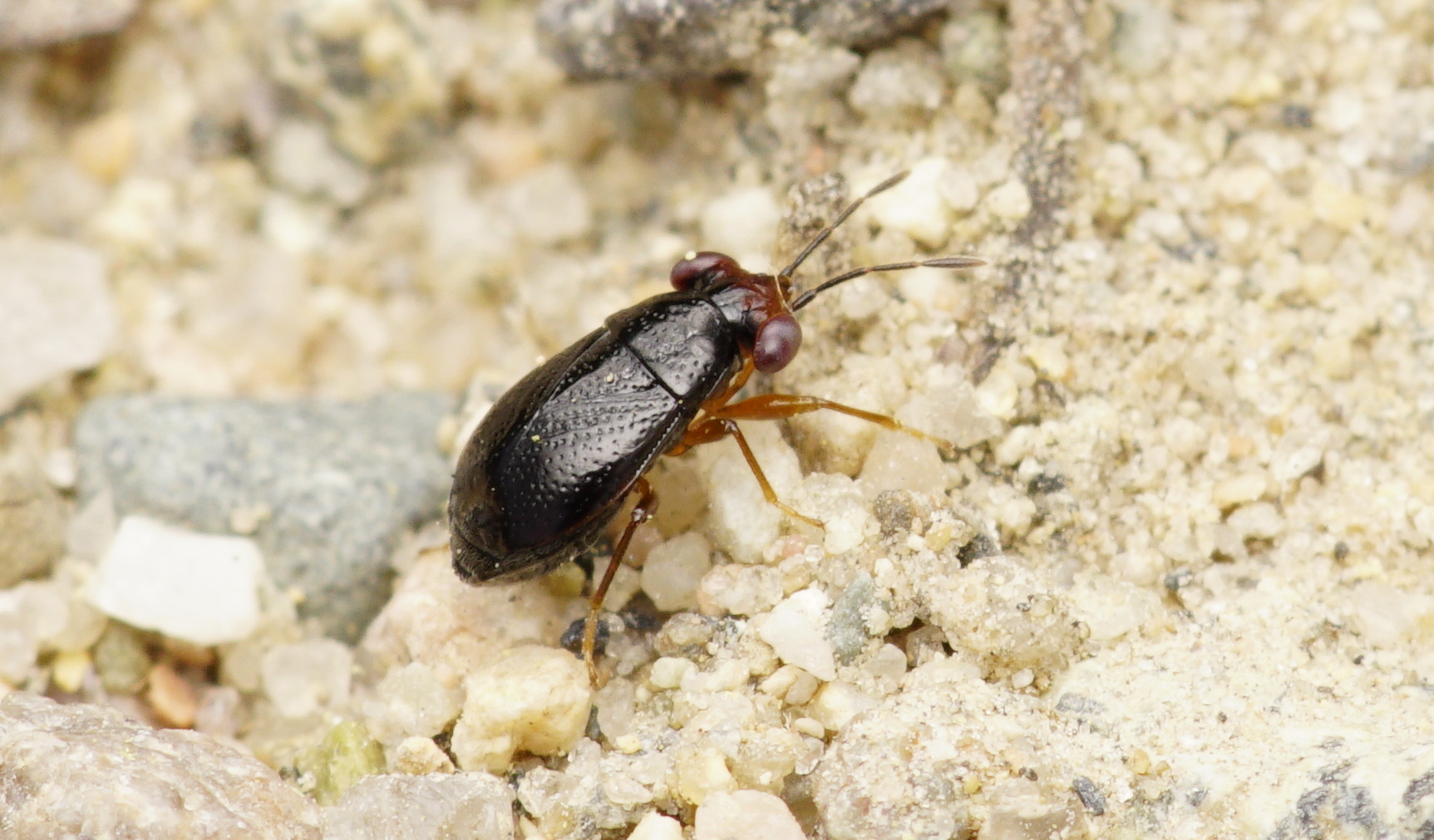
Isthmocoris piceus actually looks like a better fit, in Geocoridae. I first thought it was Salda in Saldidae. Compare with https://bugguide.net/node/view/1217135
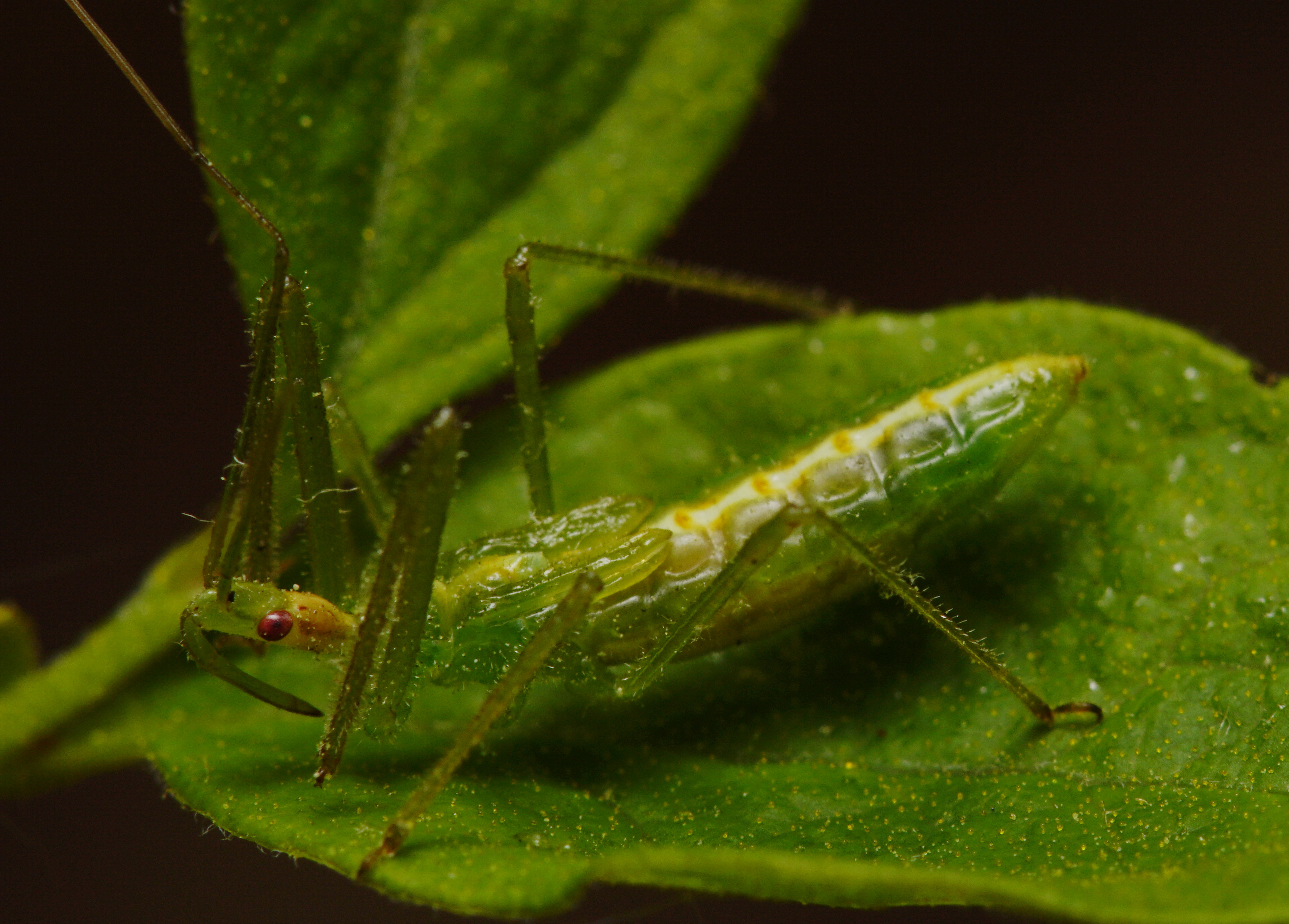
Zelus luridus nymph, always charismatic.
Thysanoptera:
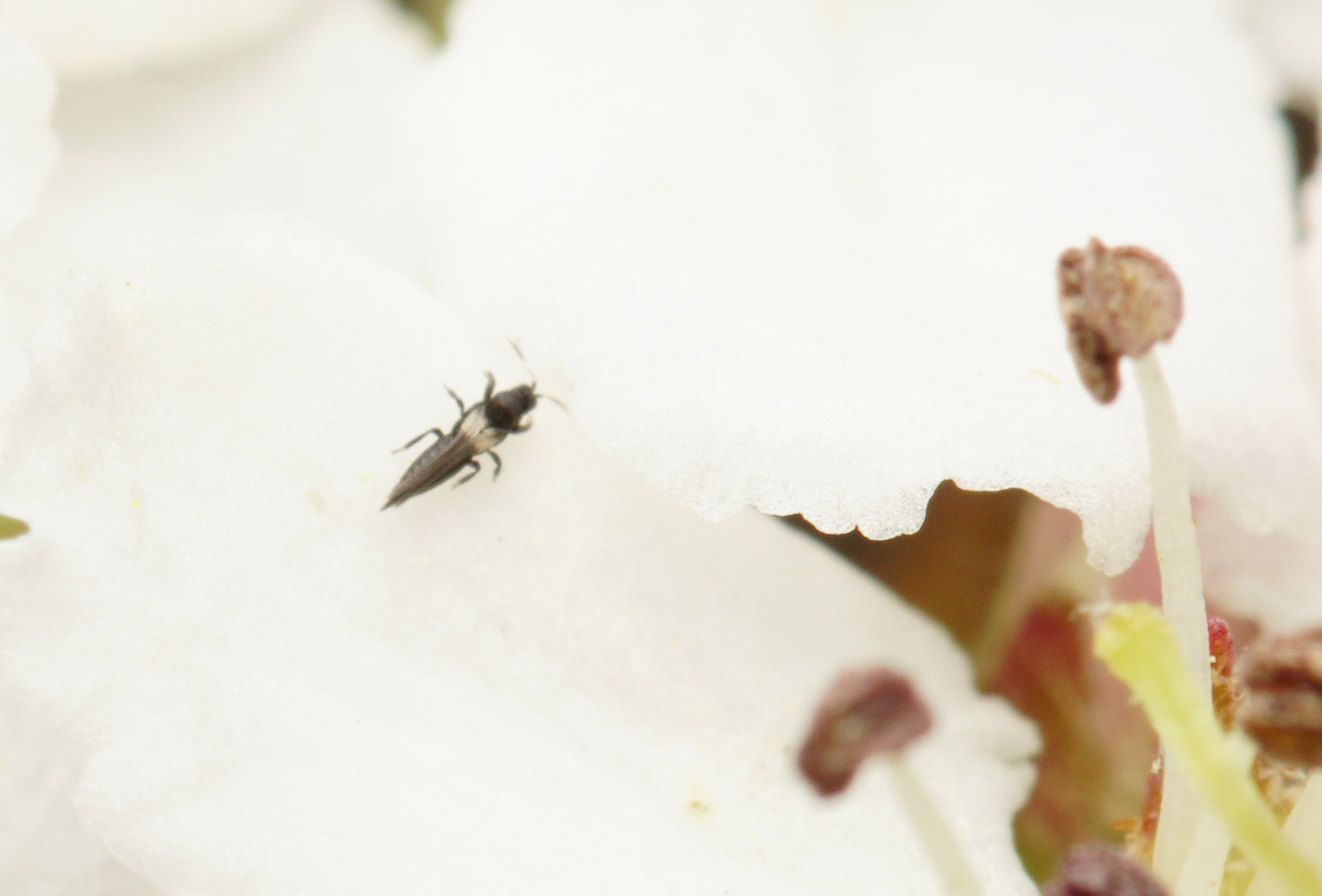
My first Thrips!!! But couldn’t find a good match. Aeolothrips, if I was forced to guess.
First bug walk of the season (as opposed to the vernal pool and the wetlands). I spent a lot of time (too much time) creating many, many candidate flash diffusers. Today was the first actual trial.
Plenty of insects and spiders!
Diptera:
My guess: Hexomyza schineri in Agromyzidae. However, I’m told that it could plausibly be many others that are acalypterate.
Lonchaeidae
Bibionid
Who is this? I was about to call it Bibio longipes — and then discovered that that is found only in fall. Maybe something like Bibio femoratus?
Anthomyidae, cf Anthomyia.
Another Bibio cf femorata?
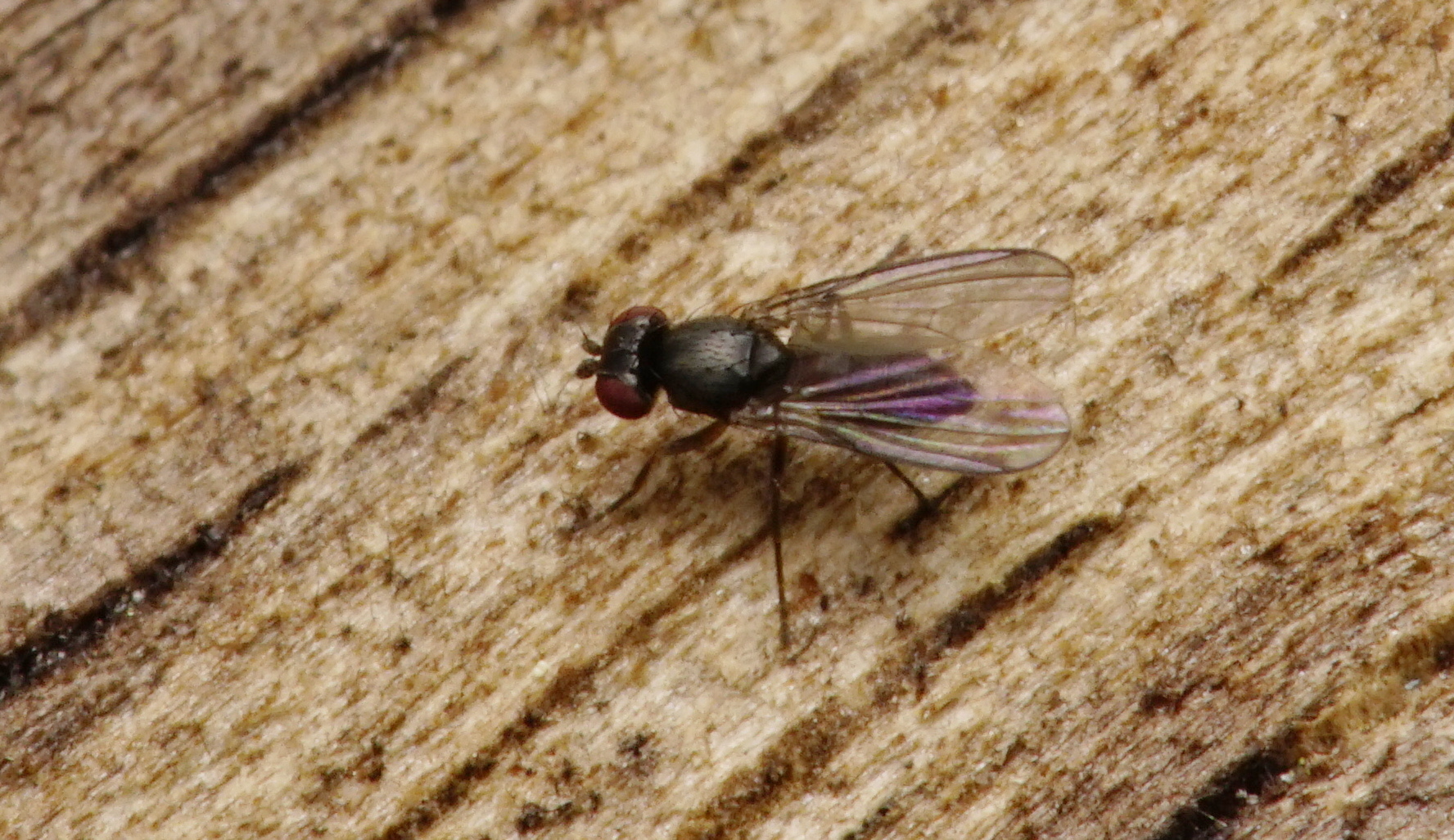
Such a striking fly, probably Agromyzidae.
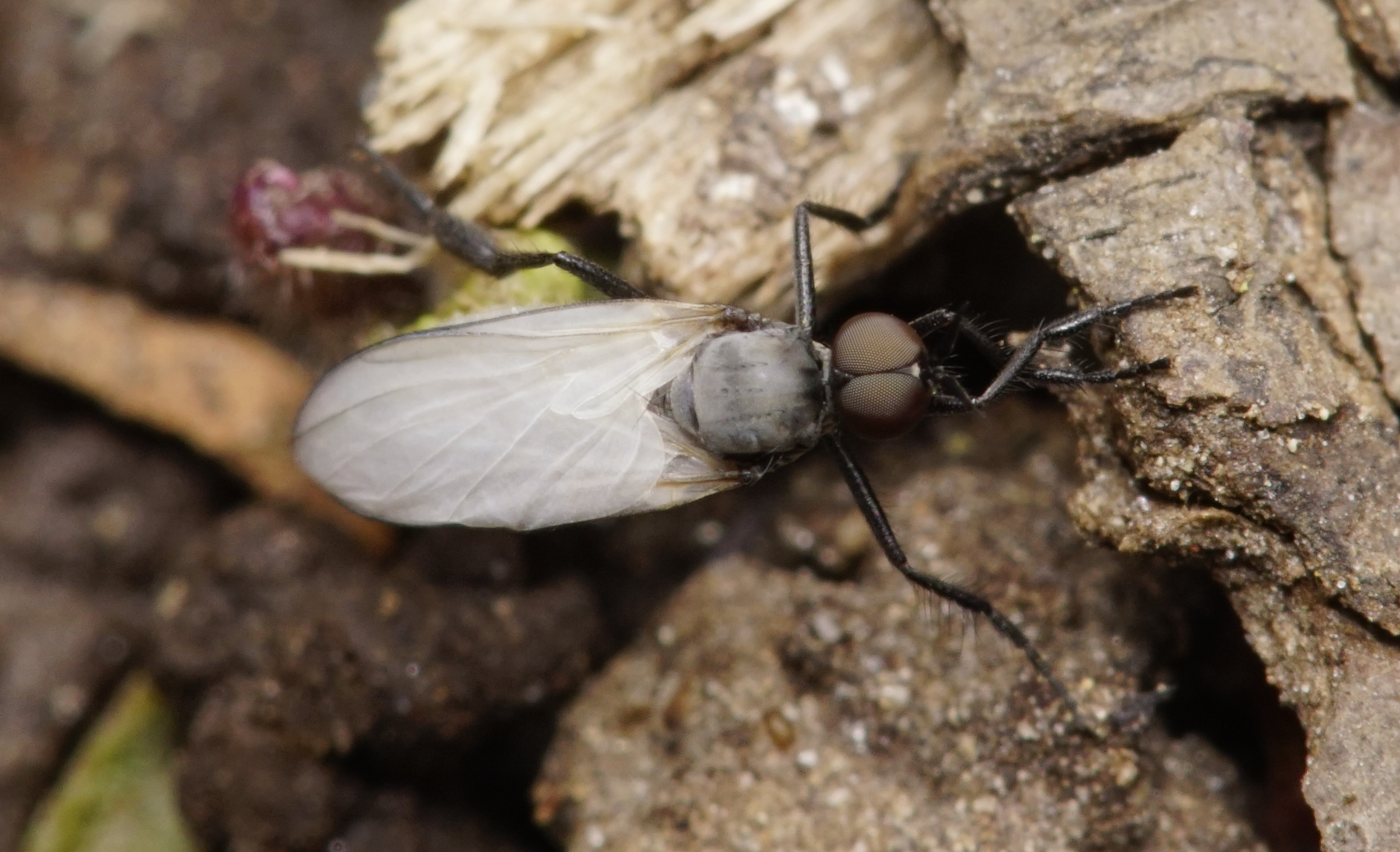
Male Bibionidae?
Hymenoptera:
A mutillid wasp. Pseudomethoca simillima?
Cynipid wasp
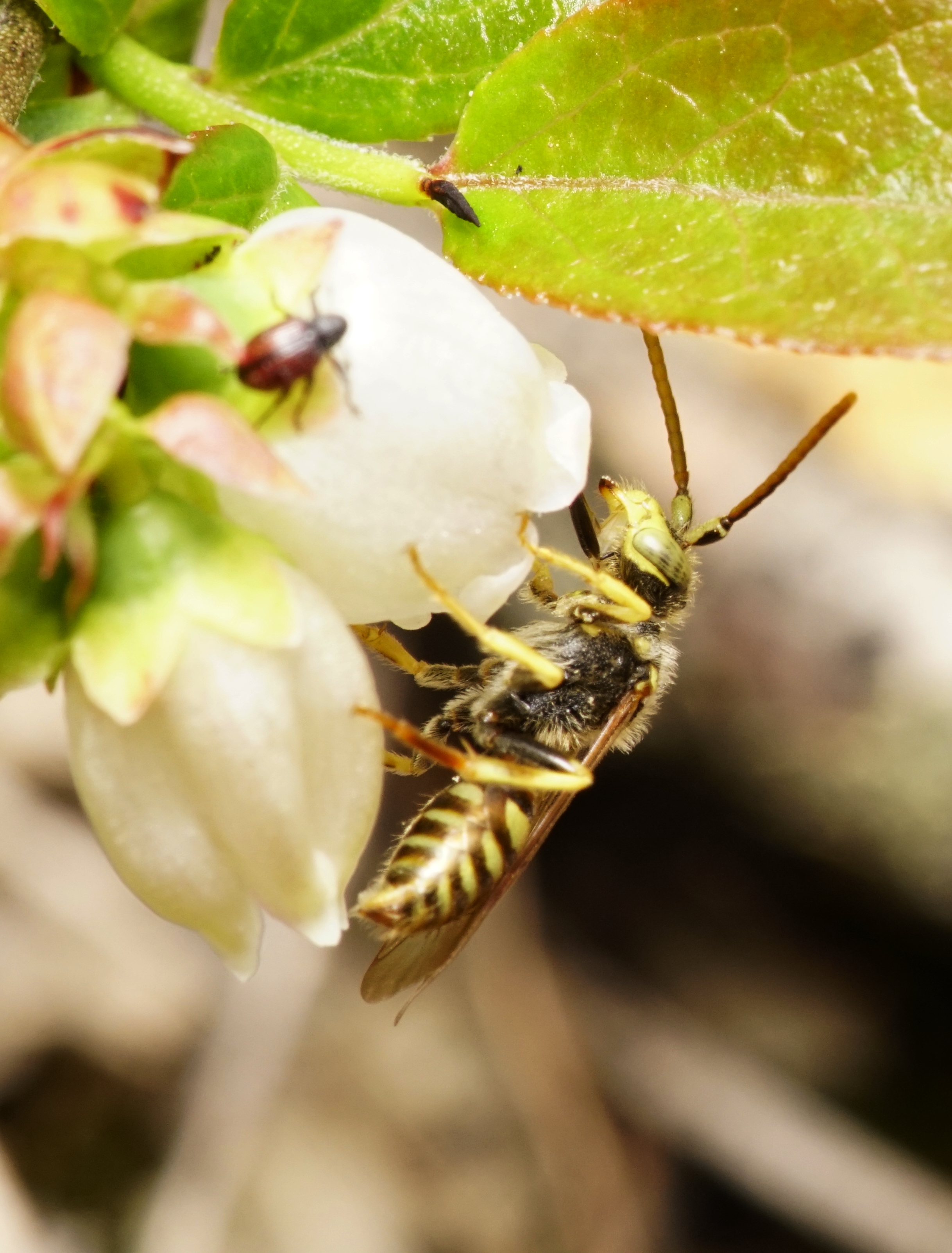
Nomada luteoloides?
Probably Andrena.
Coleoptera:
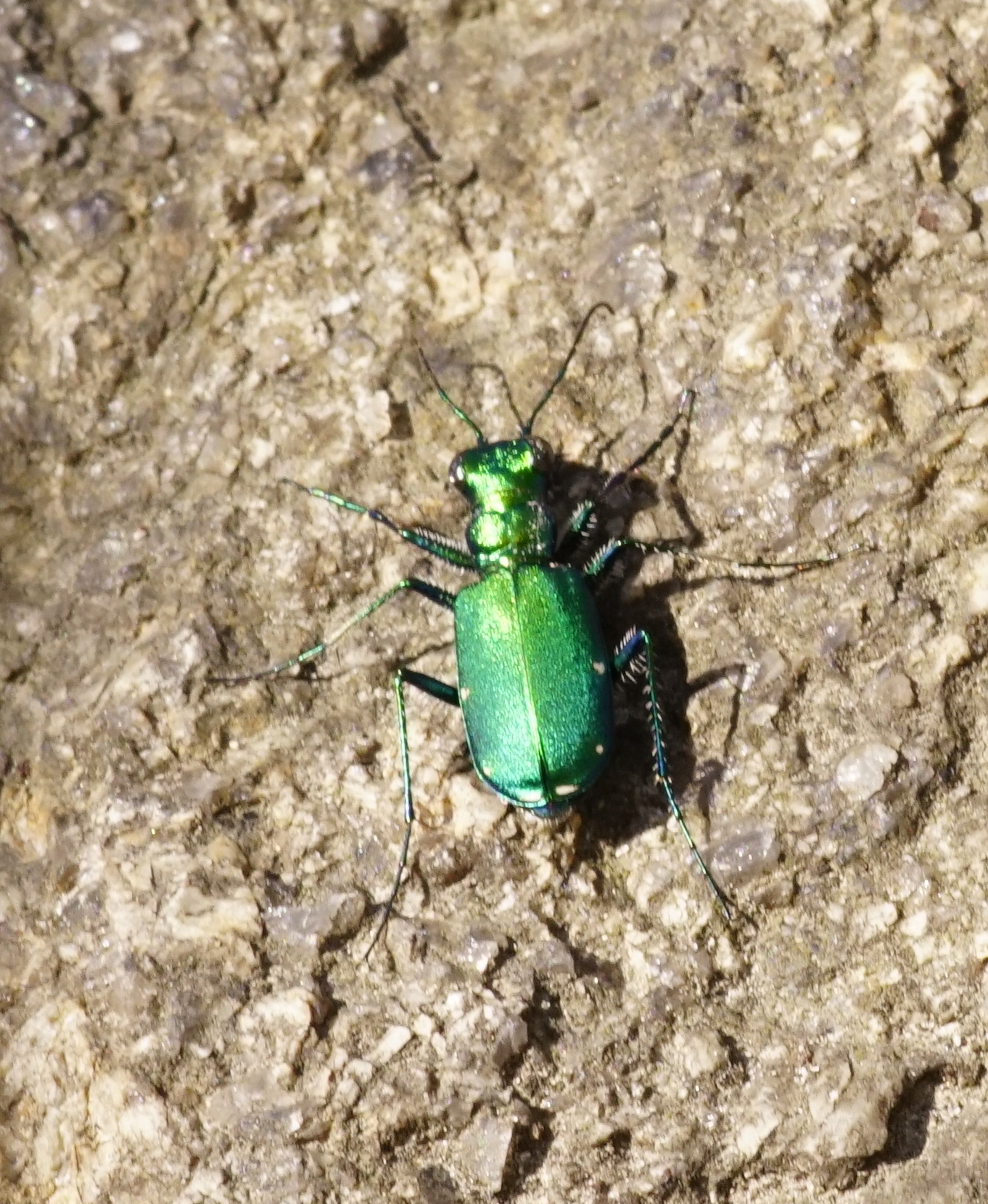
The requisite six spotted green tiger beetle:
Notiophilus cf biguttatus
False blister beetle, Asclera ruficollis, in Oedemeridae? Or Podabrus punctatus? I *think* it’s Asclera ruficollis. But Pedilus lugubris is another possibility. Okay, now I’m going with Pedilus lugubris.
EDIT: according to BugGuide, Silinae in Cantharidae is the best starting point.
“Anthonomus, I believe, either A. suturalis or A. musculus.”
Elateridae. Maybe Dolerosomus silaceus?
Tarpela micans. For some reason, I only seem to see dead ones.
Spiders:
This beautiful Lycosid. Pardosa sp.
Naphrys pulex. Except that it might be a Pseudeuophrys erratica, which I’m just learning about — introduced from Europe. Or Habronatus?
Thanatus, in Philodromidae.
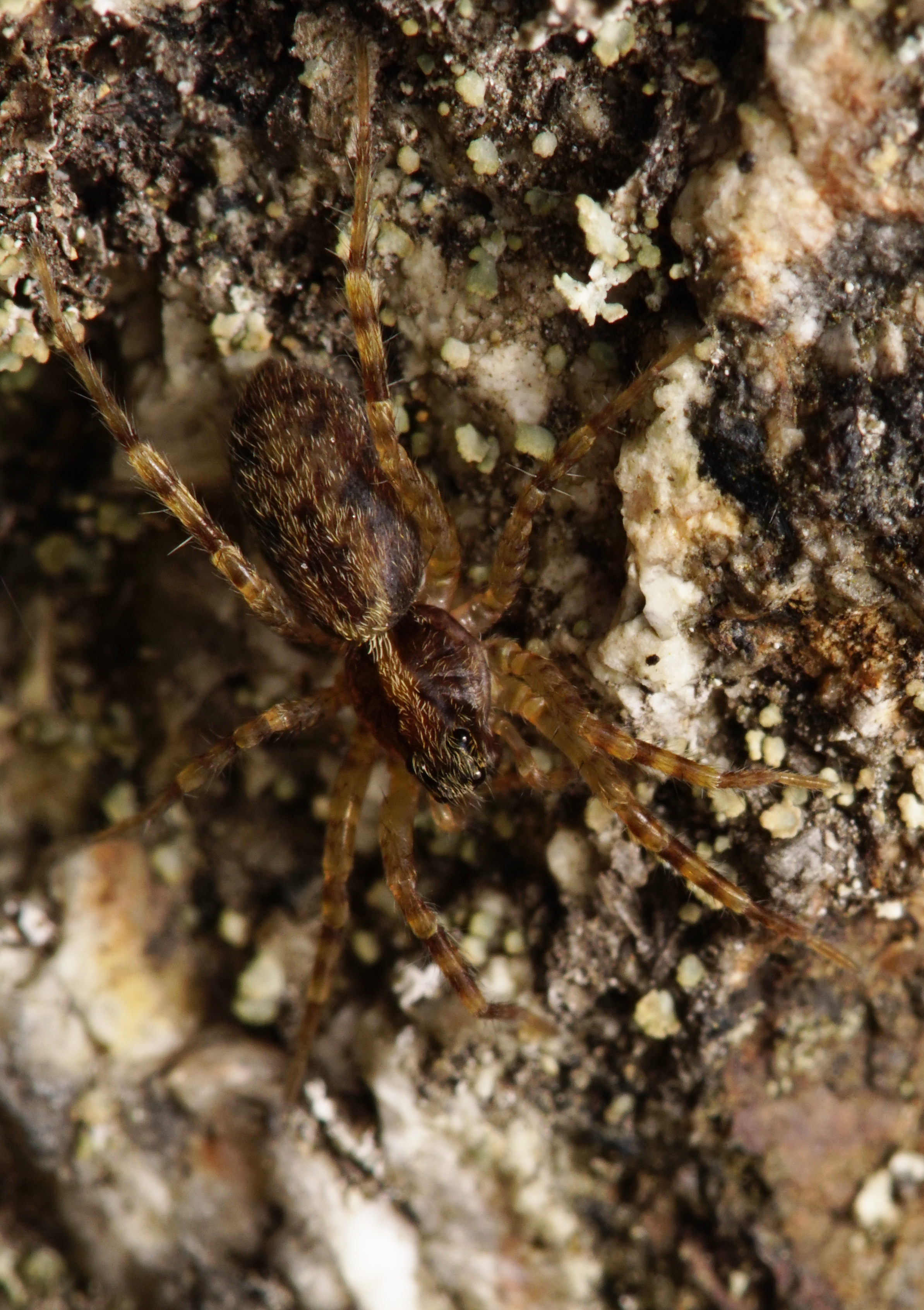
Solsticus insularis? Haplodrassus cf hiemalis? Callilepis pluto? Urozelotes isn’t confirmed in BugGuide near here, but I’ve seen it suggested (https://bugguide.net/node/view/1791543) for Massachusetts, so maybe this is that?
EDIT: Zelotinae looks good, but classifying any finer is highly questionable.


































































































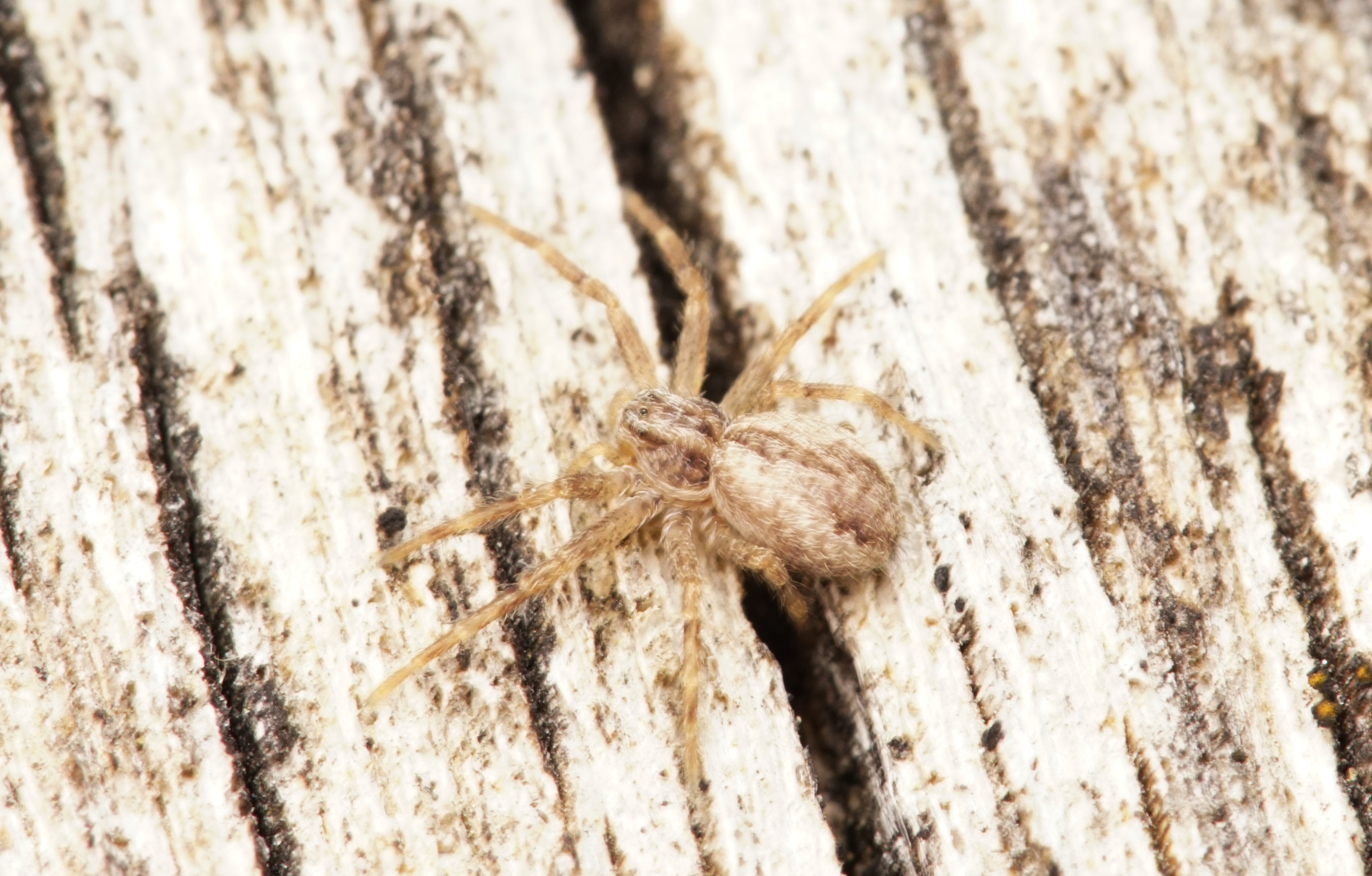




 a little wild