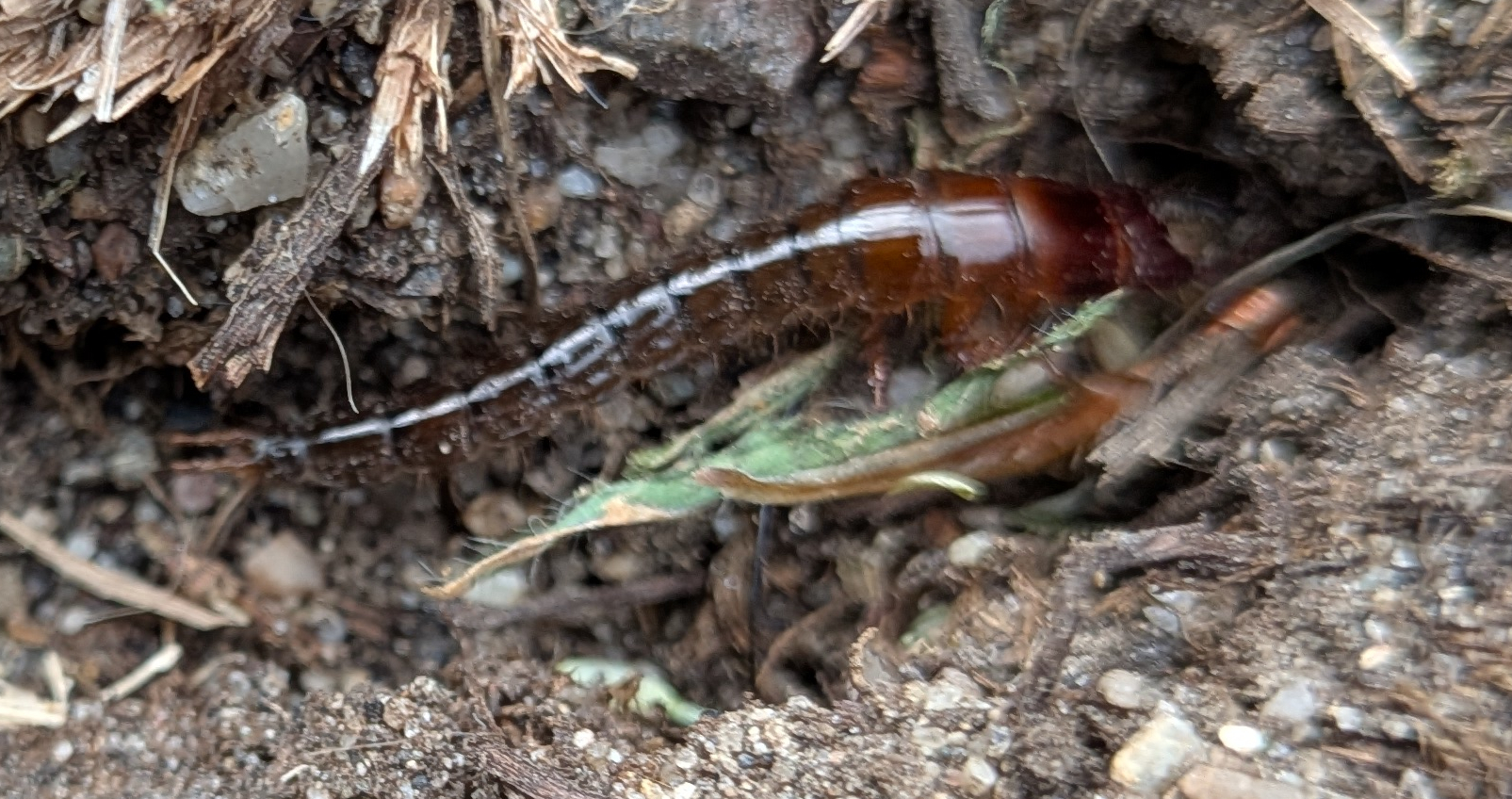
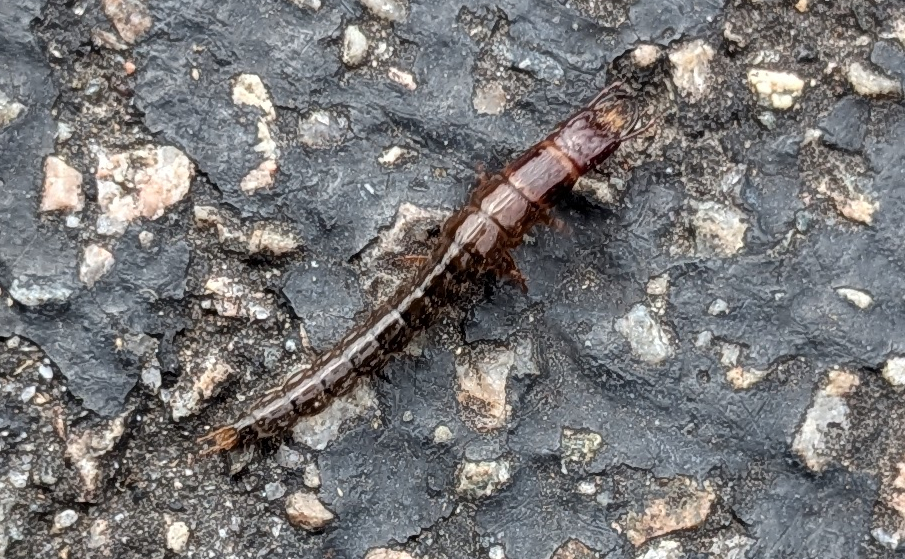
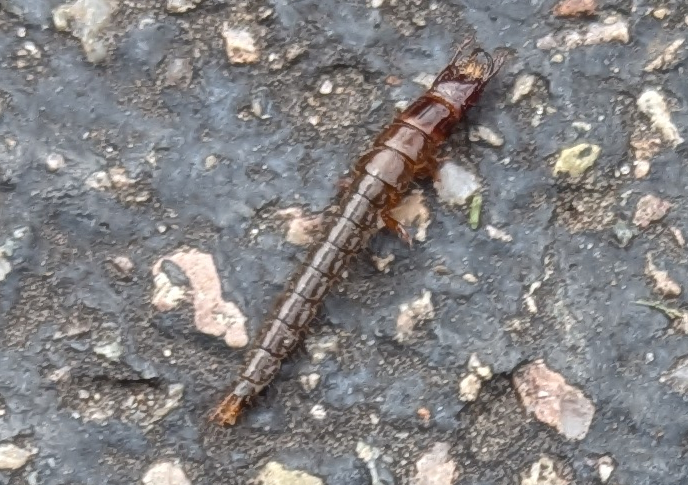
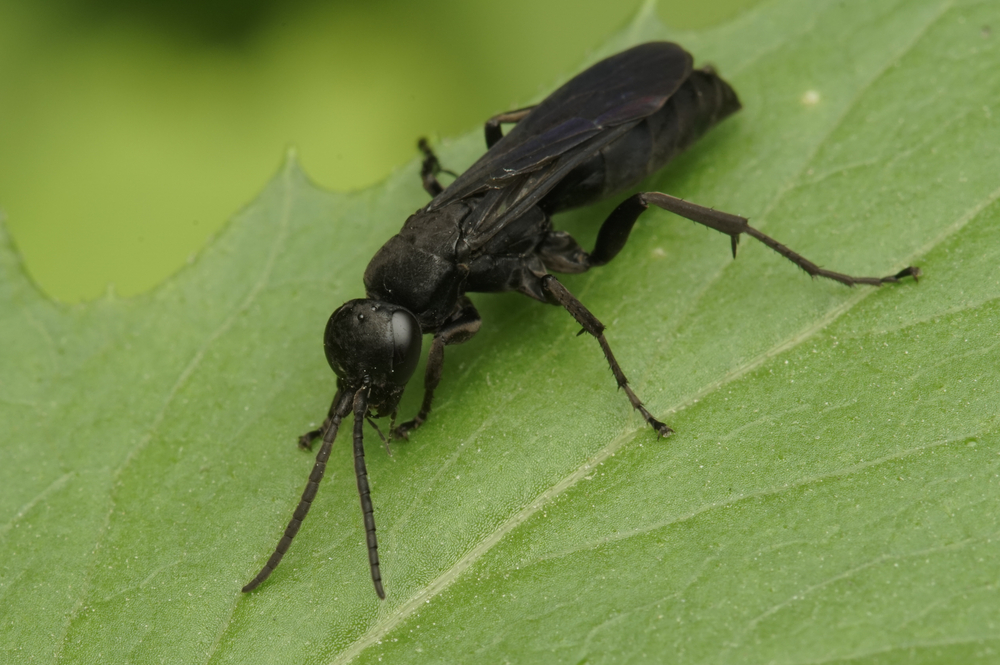
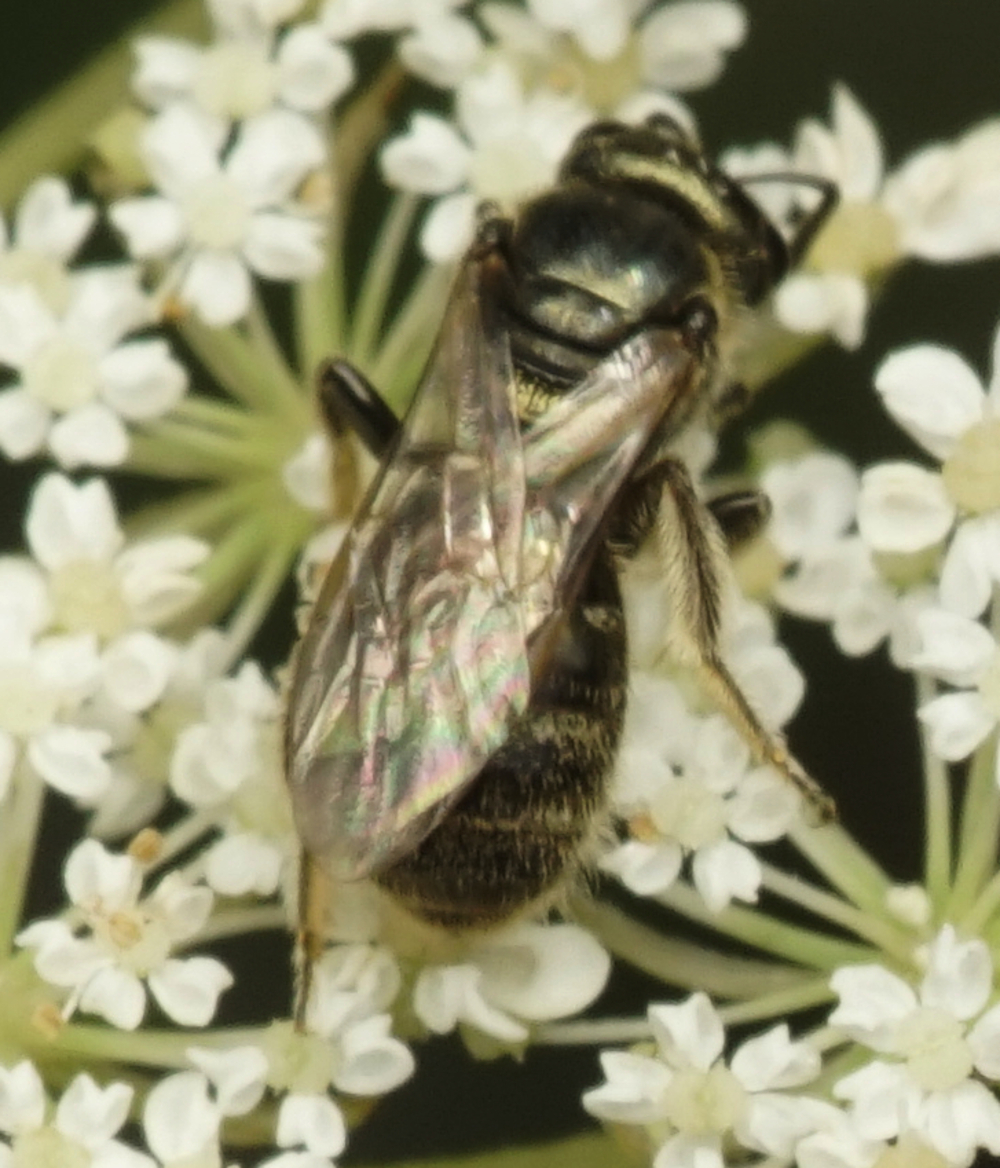
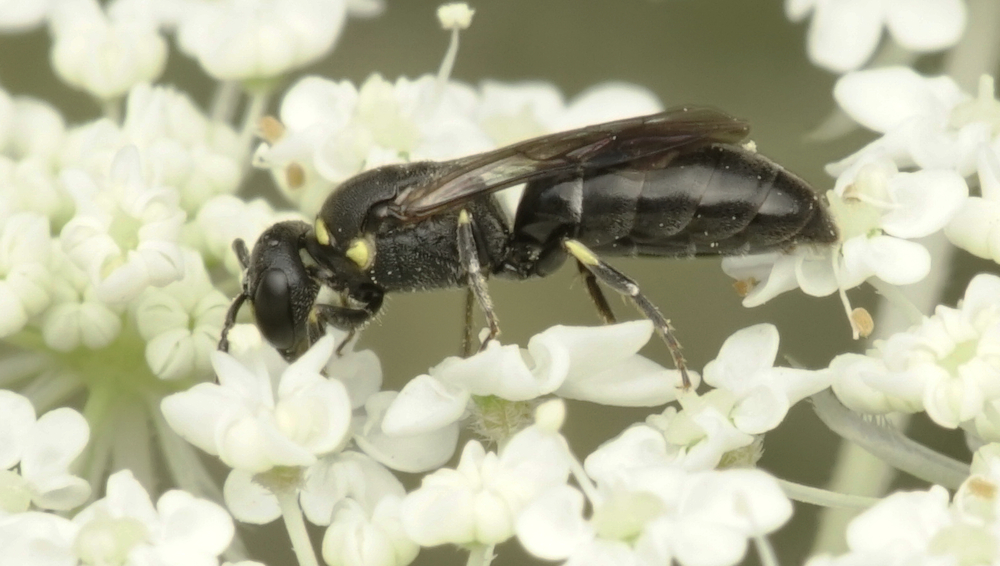
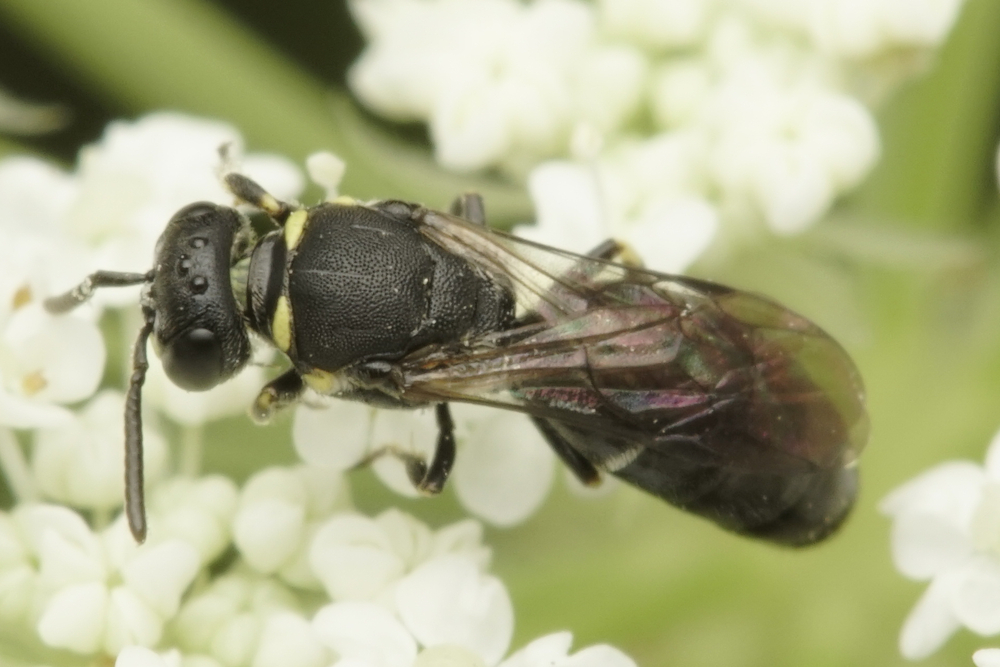
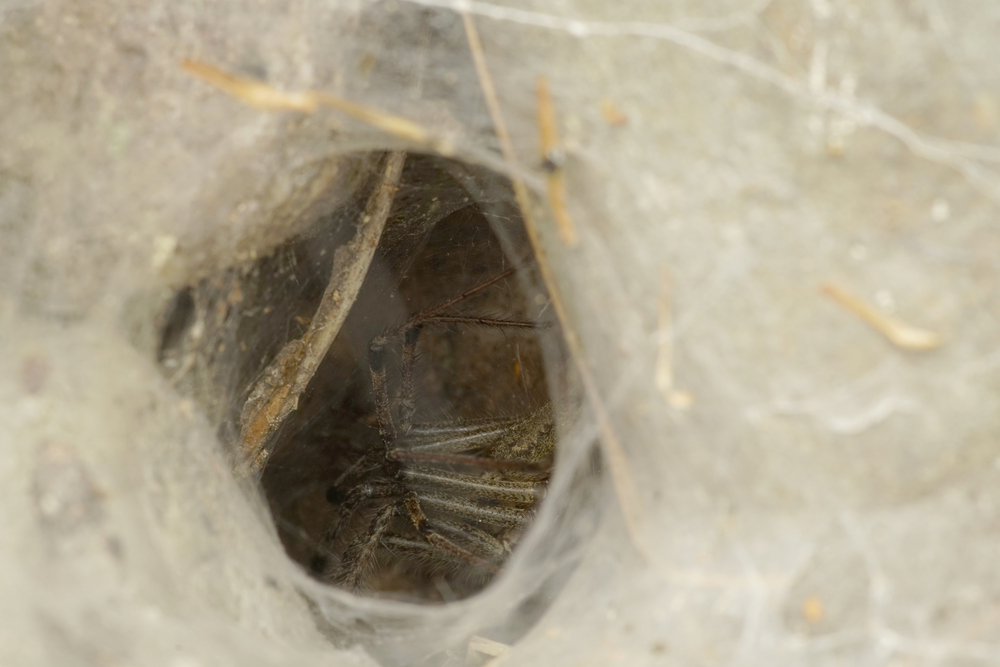
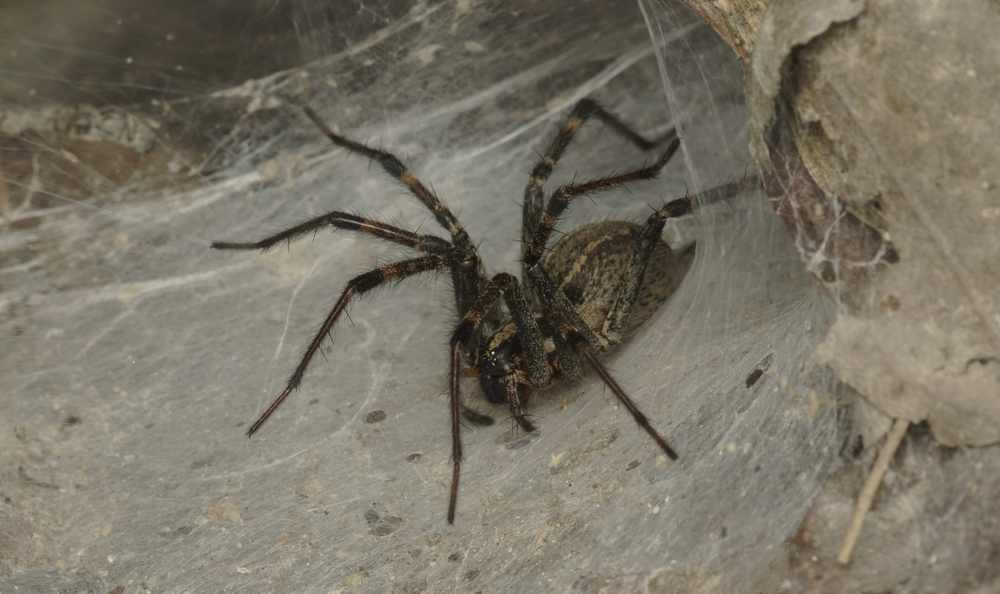
This turned out to be a beetle larva in the ground beetles, Carabidae, perhaps genus Scarites (“big headed ground beetles”). But my initial thoughts were that it was a pupa of the dobsonfly, fishfly, alderfly, snakefly cohort. Fascinating creature, always moving, and an unexpected blessing to see on our driveway!
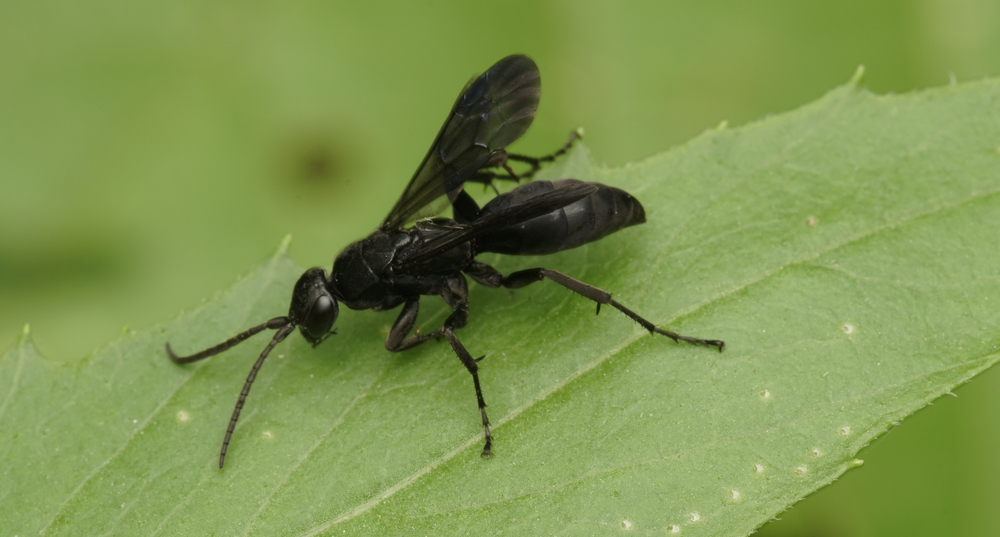
I think this is the great black wasp, Sphex ichneumoneous
Halictinae, perhaps Lasioglossum
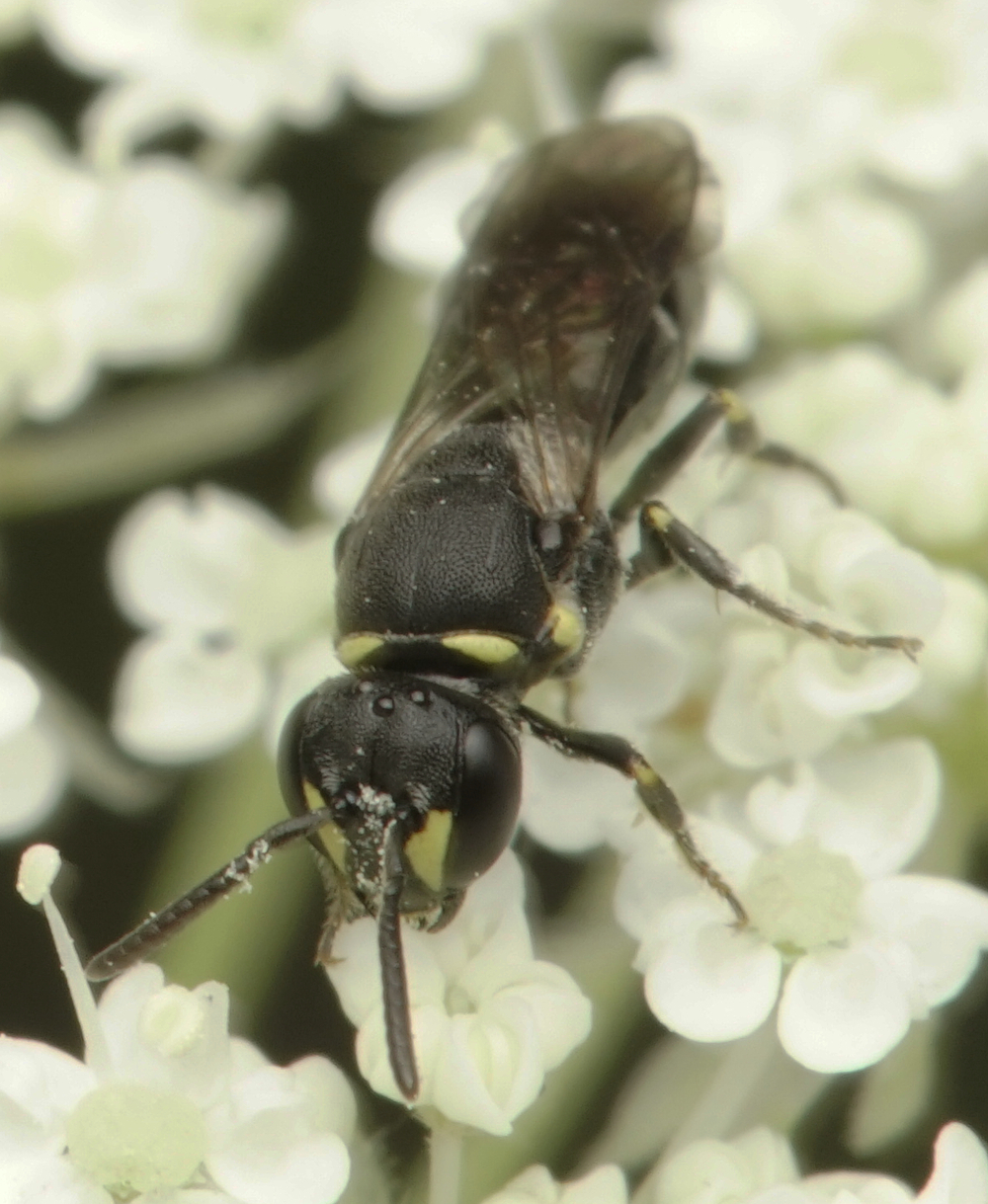
I think a Hylaeus masked bee
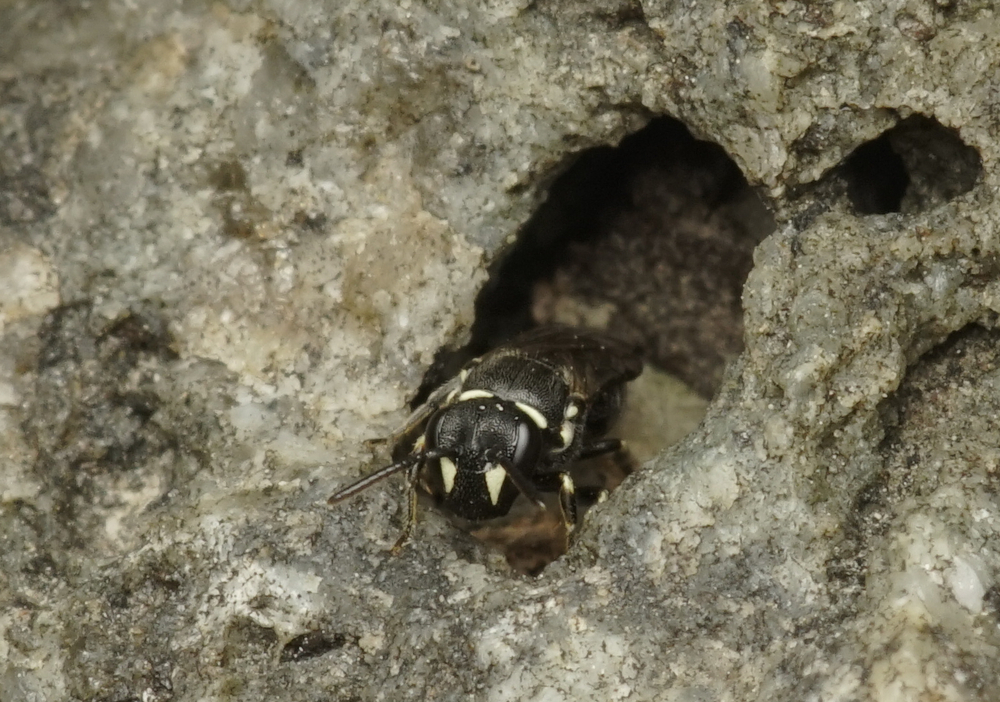
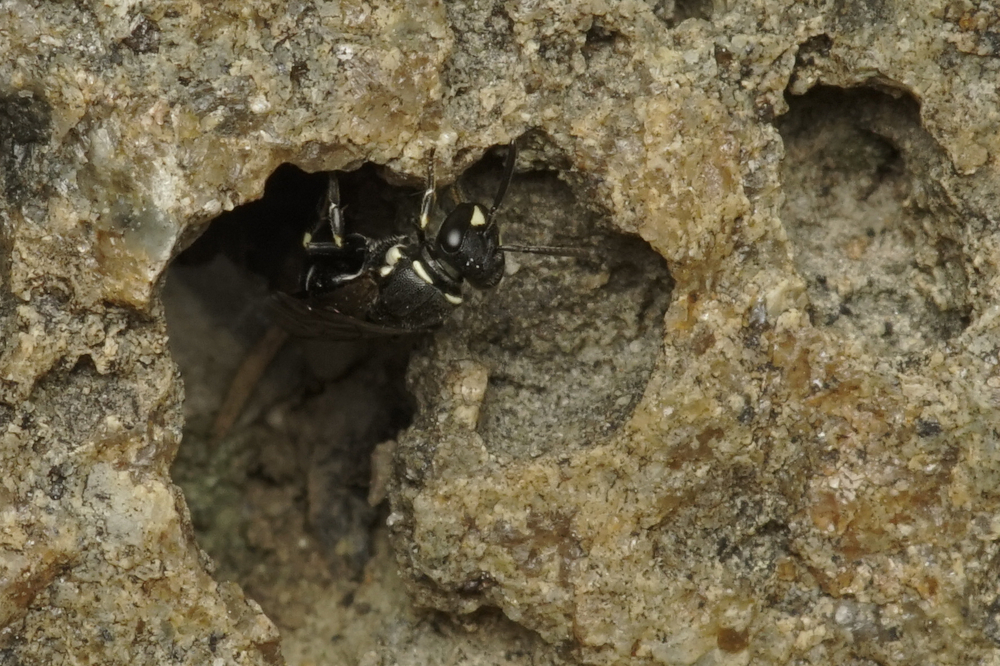
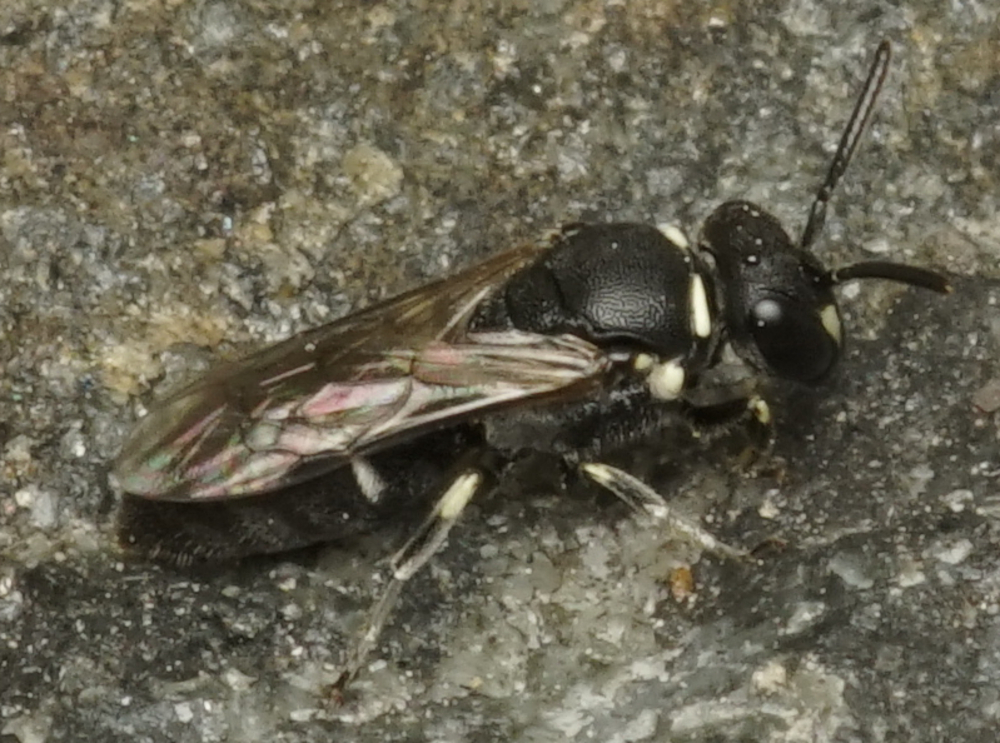
And another one. This one was crawling into one nock in the rock after another, clearly looking for something. I believe she was looking for a nesting hole. Here’s what Wikipedia says:
Nesting Biology
Hylaeus nests in premade holes and prefers to nest in wood, but will nest in dead stems, rocks, and earthworm burrows.
When a suitable premade hole is found, it is then divided by transverse partitions of clear cellophane-like material. The inner most cell is the one farthest from the nest entrance, and is characterised by a round distal end in order to fit the hole. Cell volumes are more or less constant. Lateral burrows are not constructed in this genus, but cells are placed end to end in the main nest.[24]
Hylaeus lines their nest with a waterproof and contaminant proof clear cellophane substance that does not melt or dissolve with strong chemicals. They also secrete a substance that protects the nest from fungi and bacteria. This substance is secreted from the mandibles.[25]
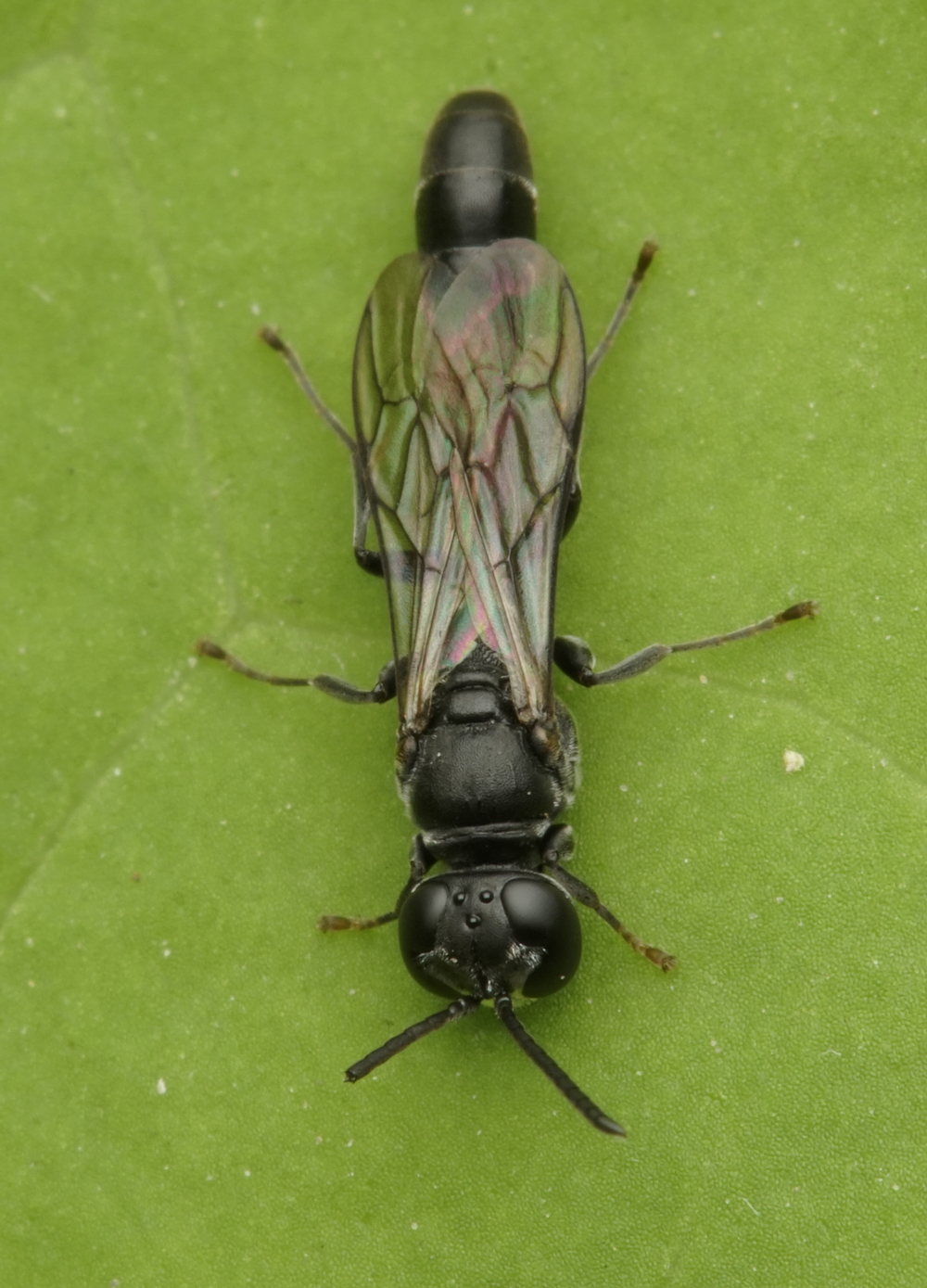
A Crabronid:
Lepidoptera
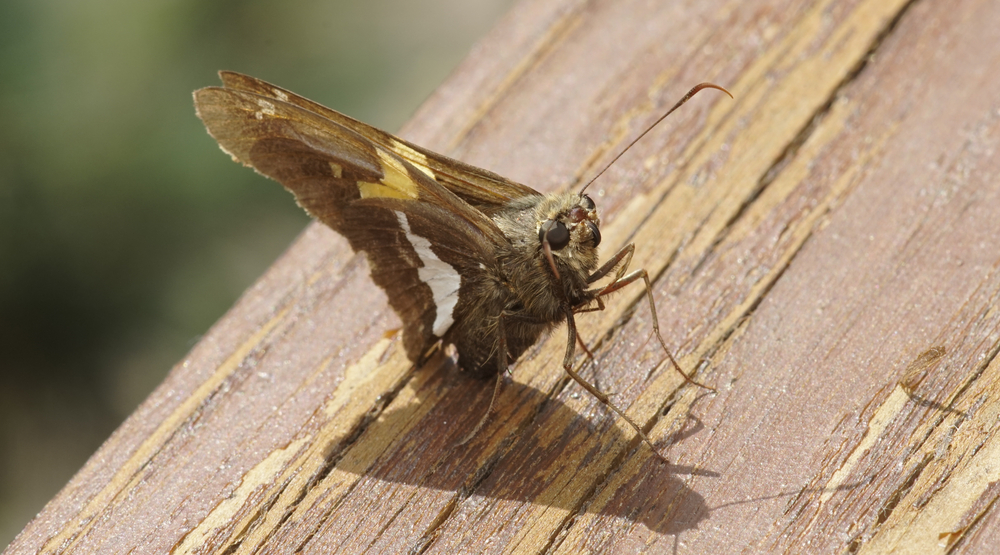
A skipper butterfly, probably silver-spotted skipper, ,Epargyreus clarus